Feeds:
Posts
Comments

Posts Tagged ‘Shelby Stephenson’

 . 
[with poems from Shelby Stephenson’s PRAISES]
 . 
The World Leads Us to the Arts and Back
+++ for Sam Ragan (December 31, 1915 – May 11, 1996)
 . 
How glad I am that my school helped move your hand toward journalism
and poetry and democracy with a little “d.” Cleveland High School:
This land of ours if full of schools, schools both great and
 . 
small; when it comes to praising them, why my school beats them all.
I’m proud you graduated from my Johnston County alma mater. I’m
sorry your family lost the farm in Granville, around Berea, Shake Rag,
 . 
Stem. You came to Bailey’s Crossroads, lived near Ebenezer Church,
among the Ogburns; your love of words showered acres, snuffling the
burning crosses. Hope was your story, lyric, svelte. Poverty? You
 . 
wrote in “That Summer”: “a wild turkey flew out of the woods / And
even if it was out of season, He fed a family for two days. / And it was
better than that mud turtle / That looked like mud and tasted
 . 
like mud.” I loved to walk into your office piled high with papers.
You’d peer over them, rise, jingle some change in your pocket and say,
“Well, what do you know?” “On a scale of one to five, Sam, about
 . 
minus two,” I’d say. Your vacations you took in your office, mostly.
Sunday mornings? When I’d drive by, I’d see your Buick parked beside
The Pilot.
 . 
Shelby Stephenson
from PRAISES, Main Street Rag Publishing Company, Charlotte, North Carolina. © 2021.
 . 
❦ ❦ ❦
 . 
Can a poem which is simply a list mean anything? Can a list of place names – counties and towns and neighborhoods and destinations – catch in the throat and widen the eyes? What are all these words if not the name someone has found for home?
 . 
Canton, Carolina, Carrollton, Carpinteria, Cary, Chapel Hill,
 . 
Driving south from Ohio, we exit I-77 at Pearisburg (the four-lane still under construction up the escarpment), careen switchbacks from Fancy Gap to Mount Airy, then cross the state line into North Carolina: at their first glimpse of Pilot Mountain, my parents break out in unison every time, “Here’s to the Land of the Longleaf Pine, a summer land where the sun doth shine . . . .”
 . 
Cleveland, Columbia, Dan, Dauphin, Durham, Edenton,
 . 
But I wasn’t born here. I didn’t grow up here. A couple of summer weeks in Morehead with Nana, Bogue Sound funk and fig preserves; in Hamlet, the iron bed in the back bedroom with Grandaddy’s snores, his Old Spice and gun oil; a swing past the house on Runymede near Old Salem where Mom grew up – phantoms, atavisms, only glimpses and dreams, none of them really my home. So why do the names in Shelby Stephenson’s Precedence, the introductory poem in his book PRAISES, why do they have the power to squeeze my heart?
 . 
Hamlet, Harnett, Highlands, Hillsborough, Huntersville,
 . 
Five days after we married Linda and I moved to Durham: June 20, 1974. That’s hot breath on the neck of fifty years in North Carolina and Lord how I have wanted to call this place my home! The generations of Griffins plowing fields in Union County, can they bring me home? Great-grandmother Griffin holding me on her knee in that old photo in Mt. Gilead above the dam, can she? Two kids born in Durham County General, two grandkids at Hugh Chatham in Elkin, surely they must be able. There must be something that can heal me of the apprehension that in any conversation someone may at any moment accuse, “You’re not from around here, are you?”
 . 
Nashville, New Bern, New Hope, Neuse, Northampton, North Wilkesboro
 . 
This book of Shelby’s has come as close as anything. His long and careful listing A to Z – I read and recall all the clay and sand and sod Linda and I have trod. That summer we lived in Clinton and she learned to drive. The sweet corn from his garden Dr. Murphy bestowed when I externed with him in Hillsborough. Two little kids with us on those rotations in Fayetteville, Goldsboro, Mt. Olive. Every detail of all the lighthouses climbed, of Tryon Palace, of the Town Creek Mounds, of our little patch of Blue Ridge. Hiking the state parks and greenways and nature trails in all seasons and all weathers, even Nags Head Woods in February and Roanoke Sound beginning to freeze. Years and changes and the earth moving beneath our feet.
 . 
Wake Forest, Waxhaw, Weaverville, Weymouth, Winston-Salem
 . 
Dang, I guess we are from around here. Thank you, Shelby, you who still live on Paul’s Hill in the house where you were born, thank you for opening the door that invites us all inside to discover that we’re home.
 . 
 . 
After that one prefatory poem, each page of Shelby Stephenson’s PRAISES is just that – praise and homage for those who have created literature and art in North Carolina for 300 years. He begins with John Lawson (b. 1674) and George Moses Horton (b. ~1798) and ends a hundred pages later with Jill McCorkle (b. 1958) and Randall Kenan (b. 1963). Many of the poems are rooted in anecdote and personal friendship but they reach into the heart of everything that makes the writing vital. Perhaps there is no North Carolinian past or present who could have created such a treasure. As Ron Smith writes on the cover, “Shelby Stephenson does not offer lyric effusion in a neutral space; he demonstrates that Emerson’s “the mind of the Past” is best encountered through the generous sensibility of a grounded poet. . . . This volume should be in every collection devoted to Southern Studies.”
 . 
. . . Every form grows beauty 
and impermanence, layers of voices, precise as one head, hand, face,
 . 
page, pen.
 . 
 . 
❦ ❦ ❦
 . 
Making Words Breathe Conscience
+++ for Jaki Shelton Green (June 19, 1953 – )
 . 
One day I went to her poetry reading.
I stole tones and breaths of her poet’s song.
I could hear Billie Holliday singing “Strange Fruit.”
I wanted to ask for mercy,
 . 
Undo history’s botched economics,
when the mercury’s 103 and there is
more to do with heat than trees.
 . 
I stubbed my toe in the room,
to doubt the river branching
blossoms, watery,
 . 
in Efland
running
with wild deer and rabbits,
Carolina wrens turning
oceans to hope,
a thing with hymns
and children whiling
desire, their shoes digging
ruts a flagpole schools.
 . 
Possums wobbled
cobbled swamps,
home of the blue-tailed hare.
 . 
Listen, she hears this.
 . 
Shelby Stephenson
from PRAISES, Main Street Rag Publishing Company, Charlotte, North Carolina. © 2021.
 . 
❦ ❦ ❦
 . 

 . 
❦ ❦ ❦
 . 
Looking for the Apple Tree
 . +++ for Fred Chappell (May 28, 1936 – )
 . 
+++ HIS NAME that was ever used was Stovebolt Johnson and he was a short
+++ black man, heavily muscled, a chunk of a man.” (The opening sentence in
+++ the story “Blue Dive” in Moments of Light)
 . 
++++++++++ I
 . 
He loves to salute with a drink
And raise a wrinkling thumb
Towards intellection, think,
I mean, then throw all thought to some
Seeming lore a shortstop
Might snag, talking up baseball.
He can carry on about a hog-box
And make you see the hog, a Farmall
In the mix, and Pope, too,
Alexander, I mean: never would he
Name a poem for any part of the pope, though.
His work’s morality plays the wee
Canton, his stomping ground, though he left
It here and there,
For occasional sightings as allegory.
 . 
++++++++++ II
 . 
I’ve seen Lee Jones ride a bucket down
To clean out our lot-well
And to retrieve my mother’s doggie, brownie.
I read River to a bunch of students
Once and they sprouted shoots and shouts
When I danced in front of them,
Letting Virgil Campbell swear he could
Shoot the god-raging Pigeon swurging
In his pants, the yard, the rose
Garden gate, open, debris watering fast
Familiar voices gushing from a cathedral funeral,
Yet common as a mule drinking water from a trough,
 . 
And, lo, Fred came out with three more volumes,
Bloodfire, Wind Mountain, Earthsleep,
And I was sore surprised the tenor
Of the faces of parents and grandparents,
The children passing by, the cornered bull
 . 
In the pasture, all lounged animals and human flesh
In lineages for miles to keep away
The drinking Virgil put into words,
The fish slapping and sliding for lures
Snagging murmurs of drifting glasses
Shot-filled and choked with gregarious whiffs
Undoing his own talking.
 . 
++++++++++ III
 . 
In prose, essays, fiction,
Short stories, forms diction,
Multi-told tales along
Side villanelles, sestinas, you name it, Infinity, Plus One,
The scattered debris of chewed billy goat wads,
the cuds of cows on the Blue Ridge, the lows
Murmuring indolence dependent
On freedom he lends
To every piece, hails,
Then takes on the world again and nails
A greeting the page spans – he makes me laugh right out and smile
Aslant at rhythms working syllables mile by mile
Until haints themselves
 . 
wallow down beside me, as if to say,
Goodnight, Somewhere, there’s a beyond
The world’s engine dawdles:
The raised fist for freedom
Shines humor for consolation;
Wanting not to be bored, the Muse of Music
Surprises him with more news,
A book of verse, collection of stories, another novel.
Universes, constellations, – lower
Shoals for minnows fanning
Swirling apple blossoms bedding
 . 
Shelby Stephenson
from PRAISES, Main Street Rag Publishing Company, Charlotte, North Carolina. © 2021.
 . 
❦ ❦ ❦
 . 
Shelby Stephenson earned many awards for teaching during his long tenure at UNC Pembroke, where he also edited Pembroke Magazine and raised it to national prominence. He served as Poet Laureate of North Carolina 2015-2018. Recent books: Possum (Bright Hill Press), winner of Brockman-Campbell Award; Elegies for Small Game (Press 53), winner of Roanoke-Chowan Award; Family Matters: Homage to July, the Slave Girl (Bellday Books), the Bellday Prize; Paul’s Hill: Homage to Whitman (Sir Walter Press); Our World (Press 53); Fiddledeedee (The Bunny and the Crocodile Press; reprinted by Press 53); Nin’s Poem (St. Andrews University Press); Slavery and Freedom on Paul’s Hill (Press 53); Shelby’s Lady: The Hog Poems (Fernwood Press). He lives at the homeplace on Paul’s Hill, where he was born.
 . 
Author Clyde Edgerton says of Shelby: “He writes poems that skin raccoons, sweeten the pot-likker, shine through the window, and sing like a gold and silver bird. I’m lucky to know the boy.”
 . 
 . 
❦ ❦ ❦
 . 
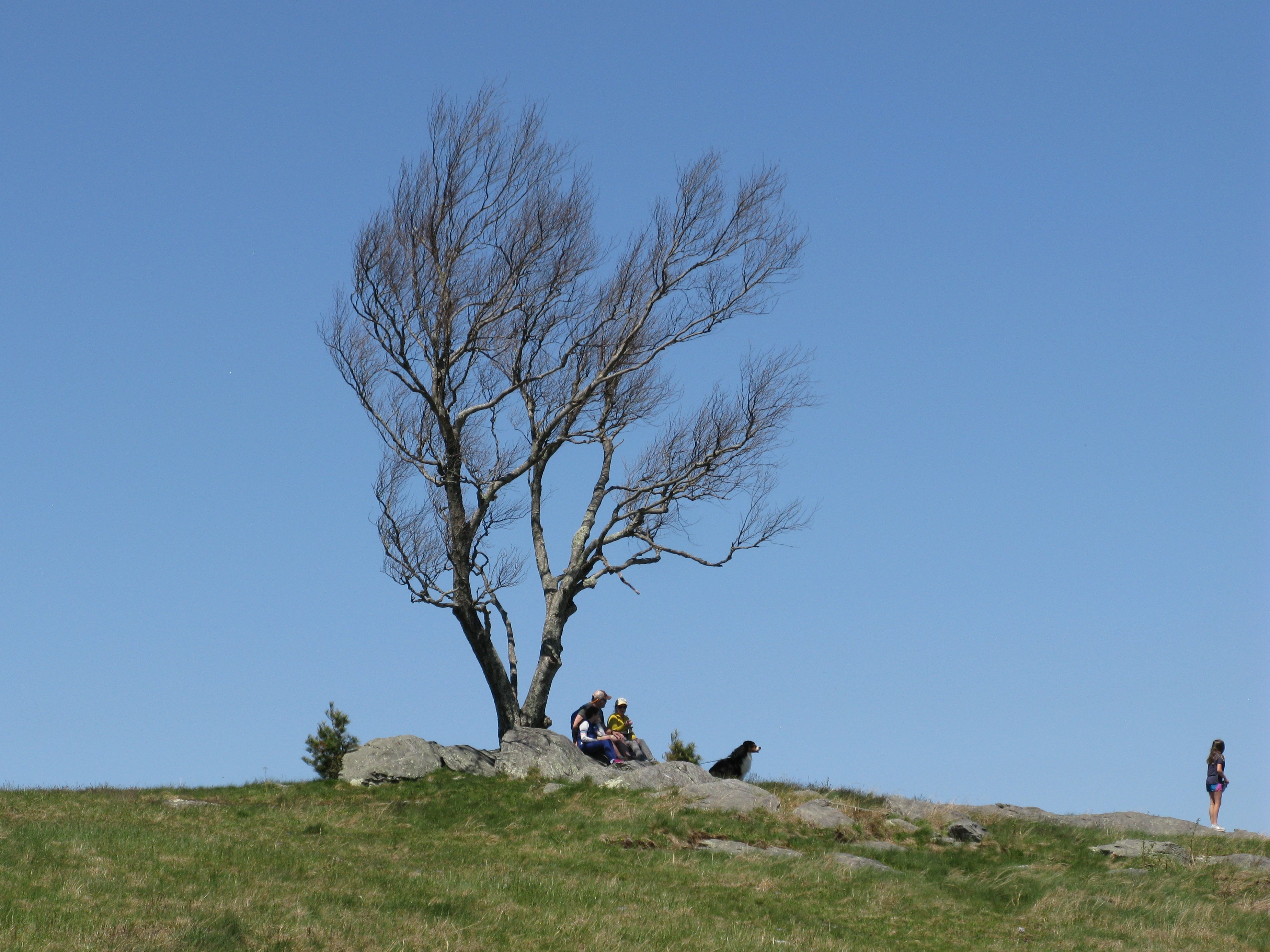
Doughton Park Tree -- 5/1/2021

Read Full Post »


[poems by Jaki Shelton Green, Joseph Bathanti, Shelby Stephenson]

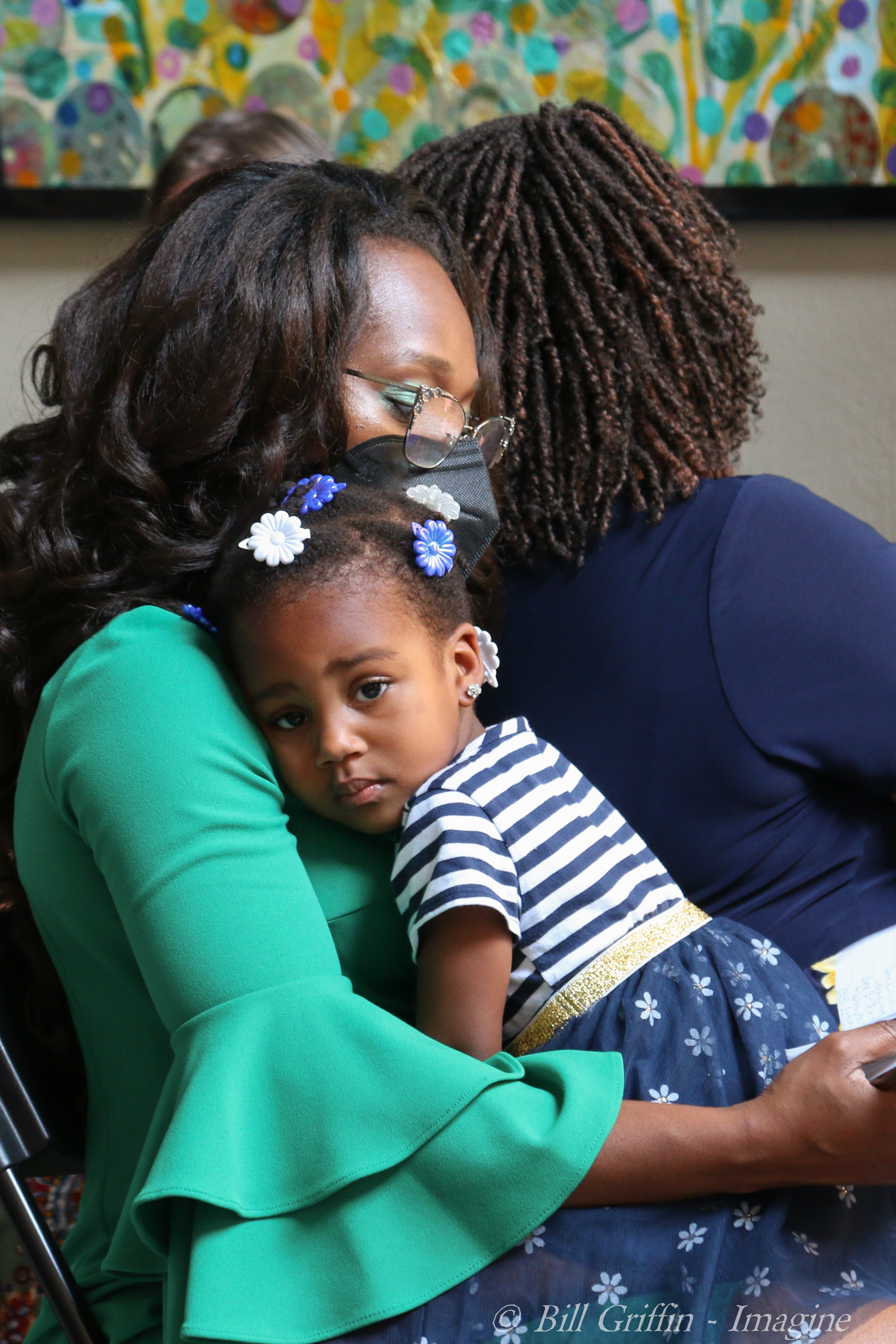
Perhaps you saw the photograph in last week’s news: Marine Sgt. Nicole Gee at Kabul Airport cradling an infant evacuee in her arms. A few days after the shot was taken, Sgt. Gee was killed by an ISIS-K suicide bomber while she worked at the airport gates. Twelve other American soldiers were killed; one hundred fifty Afghan civilians were killed. The world is full of hate which can only be answered with vengeance and punishment.

One the last day of her life, Sgt. Gee continued her mission to give Afghan women and children hope. She saved their lives. The world is full of hate which can only be answered with love.

.     .     .     .     .     .     .

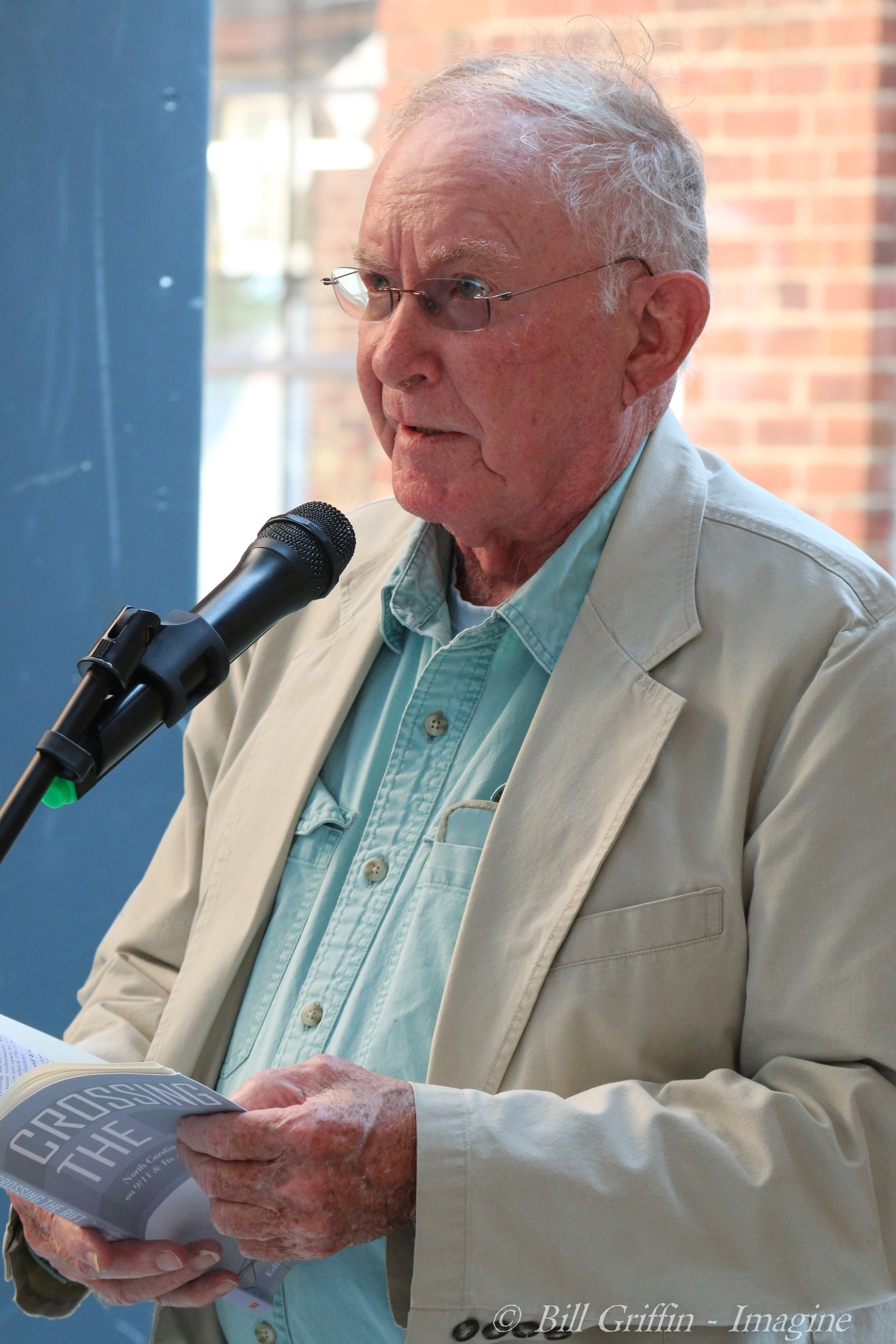
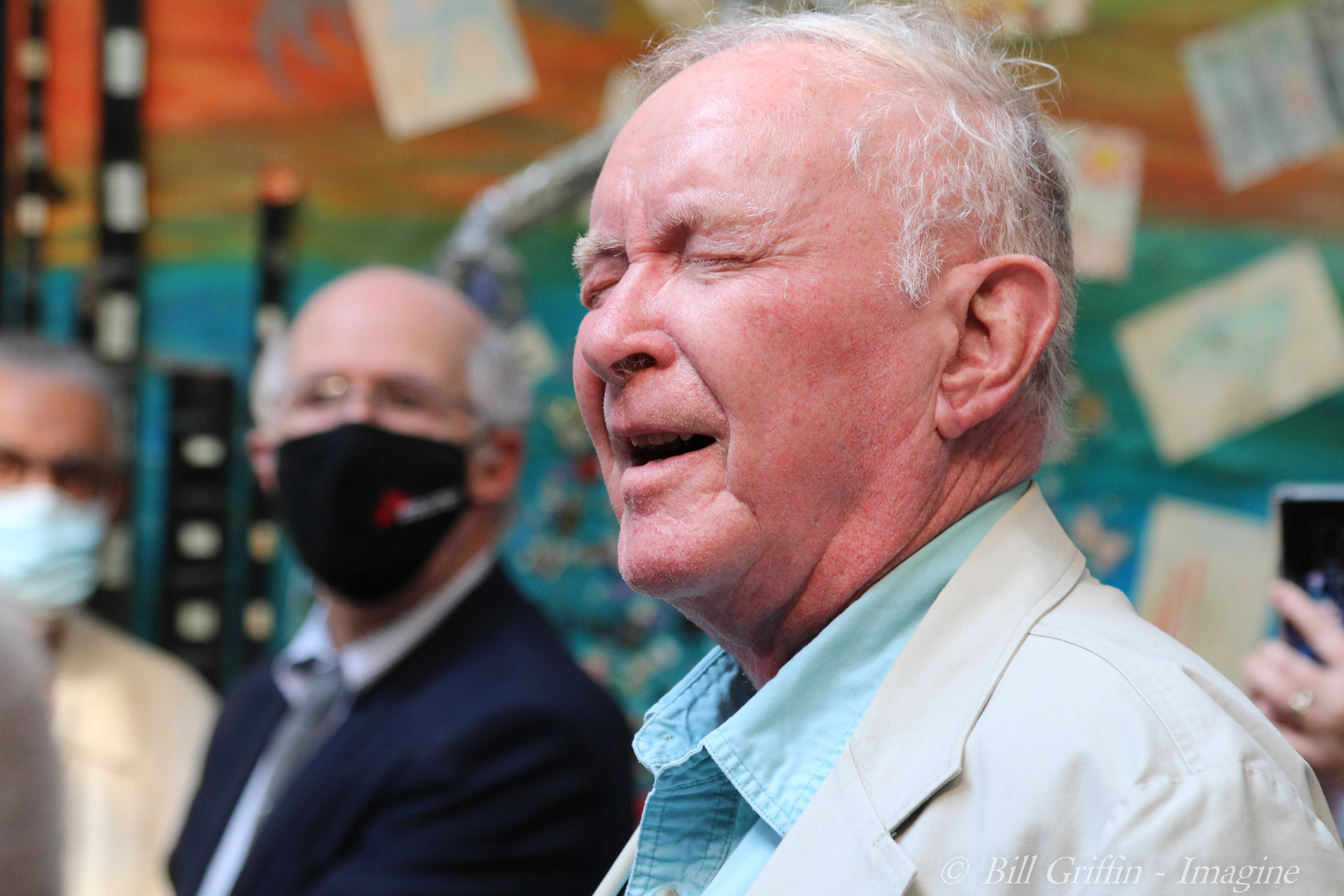
You are part of the human heart. With her beautiful voice and beautiful heart Chanda Branch opened the book launch for Crossing the Rift last Sunday (September 12) in Winston-Salem. Editors Joseph Bathanti and David Potorti shared the vision that led them to create this anthology of North Carolina poets writing on 9/11 and its aftermath. About a hundred of us gathered in the breezeway at Bookmarks on 4th St. to listen, to remember, to witness, to continue to heal.

Among the poems we heard that afternoon are these three by current NC Poet Laureate Jaki Shelton Green and former Laureates Joseph Bathanti and Shelby Stephenson. Twenty years: it’s hard to imagine it’s been that long; it’s hard to believe that it has been only twenty. The world changed on 9/11/2001. It’s hard, but if we seek them hard and also work hard to create them we may find some signs of change for the better. What is the answer for hate? Where will we be at the thirtieth anniversary?

.     .     .     .     .     .     .

lifting veils

++++ 11 september 2001

++++ ++++ I

it is a bloodstained horizon
whispering laa illaha il-allah
prelude to a balmy evening
that envelops our embrace
we stand reaching across
sands, waters, airs full of blood
in the flash of a distant storm
i see you standing on another shore
torn hijab
billowing towards an unnamed wind
we both wear veils
blood stained
tear stained
enshrouding separate truths

++++ ++++ II

misty morning
teardrops of dust
choke and stain lips
that do not move
will not utter
it is a morning of shores
sea shadows that caress memory
of another time
another veil
another woman needing
reaching
lifting

++++ ++++ III

into your eyes i swam
searching for veils
to lift
to wrap
to pierce
dance with
veils that elude such mornings
veils that stain such lips
veils tearing like music

++++ ++++ IV
it is the covering of spirit
not the body
my hijab your hijab
connecting interweaving crawling snaking binding
into a sky that will not bend

Jaki Shelton Green (ninth and current NC Poet Laureate, since 2018)

.     .     .     .     .     .     .


Katy

After the first plane,
Katy phoned her brother.
She was safe, in another building.

They were evacuating. DJ thought
she had said the other building—
the South Tower—crashed into

by United Flight 175 at 9:03,
moments after the line went dead.
That’s all Katy’s mother, my sister,

Marie, could tell me when I called.
All we had to cling to:
a single syllable, separating another

from other, negligible, mere nuance;
but, in this case, the difference
between escape and incineration—

a seam notched for her in the secret ether,
should she stumble into it,
to pass through unharmed.

To cast wider our search,
Marie and I tuned to different networks,
watching for Katy among the fleeing hordes.

They had talked the night before
about what she’d wear to her client meeting:
a brown suit, a black bag; her black hair

was shorter since last I’d seen her.
All day I peered into the TV—punching
the cordless: Katy’s office, home, cell,

office, home, cell, over and over—scanning
faces unraveling diabolically
like smoldering newsreels, smeared

with hallucinatory smoke and ash.
They came in ranks, wave upon wave,
leagued across the avenues:

the diaspora into John’s Apocalypse.
Those still on their feet staggered.
Others lay in the street snarled

in writhing weirs of fire-hose.
The firmament had been napalmed:
orange-plumed, spooling black. Volcanic stench.

Somewhere beyond the screen,
inside that television from which we all, that day,
received, like communion, the new covenant,

for all time, was my niece in her brown suit
and new haircut, her purse—outfitted
for her seventh day in Manhattan,

her fourth day at the World Financial Center,
six days past her twenty-second birthday.
I would spy her, coax her back to us

through the TV’s lurid circuitry
into my living room. Our perfect girl,
my princess—she had lost her shoes—

wandering the skewered heart of the future—
finally arrived, black-hooded, afire,
eerily mute—toward the Upper East side:

a bus, a shared cab with an old man
who befriended her, then barefoot blocks
and blocks to her apartment on 89th Street

where she dialed her parents and announced
with the sacrificial modesty of saints
that she had made it home.

Joseph Bathanti (seventh NC Poet Laureate, 2012-2014)

.     .     .     .     .     .     .

September Mourning

O limbo of life—
the wings dapple
mourning,
a twitter in the field,
color in the wind,
a spider on feet of purest gossamer.

Trust goes up in flames.

Girders

change

loved ones,

doors strange to touch,

all the lovely times

sinking

in the face of the steely plumes

breaking apart

brilliances
under the jet, so silver and
beautiful—
gone—

the going on
lifting

dreams

competing for truth

for dear life’s sake

holding the screams

held together by need.

Give me breath.

Cockleburs on an old man’s knees—
roses November leaves—

the memory of this place

catches us
off center

loses hold
and holds to nothing,

the world seeming
seamless
days of glory,

a tapestry
of women and men
dawdling
and scuffling their
shoes, eyeing their toes,

knowing there is nothing to say

that might lighten the load
turning around, coming back, onward,
never to finish telling the story

numb in the name
of the fluttering flag
o say can the tattered one
defend the fences fenced around
and in and through this century of all times
the way a baby’s wrapped in a shawl or shirt for the
tucking into the arms
clutching dear life so thin
the stubborn holding on
a giving in

Shelby Stephenson (eighth NC Poet Laureate, 2015-2017)

.     .     .     .     .     .     .

.     .     .     .     .     .     .


Crossing the Rift – North Carolina Poets on 9/11 & Its Aftermath
edited by Joseph Bathanti and David Potorti, © 2021
Press 53, Winston-Salem, North Carolina, USA

Available from Press 53 and from Bookmarks

Links to the NC Arts Council regarding current and past NC Poets Laureate

.     .     .     .     .     .     .


Read Full Post »

[with 3 poems by Shelby Stephenson]

While I sit with Dad in the hospital we make a checklist of everything we need to do to close up the house. He had a TIA last night – “a little health problem” is how he’ll describe it to the agent at the News & Observer to explain why he’s canceling his subscription. His scans show no stroke. We wait for the doctor to discharge him, then he’ll take it easy (will he?) for a few days while I do laundry and winterize the cottage in Pine Knoll Shores, avoid the Labor Day traffic for the drive back to Winston.

Check lists. Dad already has a dog-eared collection, each one another page on his yellow pad. I create an updated list on my phone while we wait – first entry, “check Dad’s check lists.” When we finally buckle in on Tuesday and tick off the last item we will have accomplished something.

Or so I want to think. The next five hours in the car generate their own list: find accessible bathrooms, some roadside shade for the lunch we packed. Damn, forgot to give Mom a COVID mask at the rest stop. Unload, unpack, raid the freezer for supper. Make sure we’ve sequestered all the medical records for his appointment with his local doctor.

When I shoot a macro of a flower I want that anther tack sharp, but the blur of stem and leaves hinders identification of the species. Hey, I know all these lists I make are just to keep me hopping from one moment’s task to the next but I see the big picture. I read Dad’s echocardiogram and joke that he’s 94 in the body of an 80-year old. I know there’s a check list whose final box is his final breath.

But then flip the page. Another list. At the top: Remember. Let me tell you all the stuff we talked about on that drive home.

.     .     .     .     .     .     .

[TIA – transient ischemic attack: a brief episode of decreased brain perfusion
that may herald an impending stroke]

.     .     .     .     .     .     .

The Local Falls

When I come home I walk to Middle Creek
through thirty minutes of springtime bushes
to where the Mouth of Buzzard Branch trickles
with water to bridge the bubbly rushes.

Dangling their legs, a few bank-fishermen
mumble to Chub Robin full moon in May,
cigars and cigarettes in roll-your-owns,
eyes on lead-lines for bottom feeders they

bait with grub-worms dug behind the outhouse.
They fish too with fat swamp-worms freed from mud
near head of Cow Mire’s spring, a pudding-souse
Time works into clumps like huge Angus cuds.

All’s quiet: Daddy sets a turtle-hook
and baits it with chicken guts, one motion
as he stabs the stob, slings the cord the brook
settles, waffling under his location.

His hands gather Nature’s complete cunning.
Love allows for fresh food on our table,
His tongue, lips, face, limbs, and actions winning
affection of his wife, my mother, Maytle.

He’s gone; I help turtles cross Sanders Road.
Interstate-40 whizzes loud nearby.
Every waking day’s a different load.
What glory warriors must have wooed with sighs.

Pollution’s out of honor and our shame.
The sunfish’s eyes bloat like old eyes.
They wear bumps like my psoriasis (blame
chemicals on crops – fertilizers).

I bid the owl keep me pitched with tenor
to carry this: run blue-tailed swamp-rabbit?
I hear the beagles yow-yowing: Jake Mills
says those rabbits taste like the swamp run-off.

Shelby Stephenson

.     .     .     .     .     .     .

These selections are from more, by Shelby Stephenson; Redhawk Publications, Hickory, North Carolina; © 2020 Shelby Stephenson. Used by permission of publisher.

A new book by Shelby Stephenson in his 82nd year is an anchor to the past and a beacon to the future. His lines settle you down and hold you fast like the mud near Cow’s Mire spring. His lines open your heart to love, death, redemption – to all of life. His lines advocate for the heritage of language and the language of heritage spoken in unflinching truth. There is no sentimentality here. And woven through each poem is the music of his tenor cum baritone – never forget Hank Williams! – and the gentle humor that wraps an arm around your shoulder and lets you know you’re welcome here.

Shelby has been professor, editor, NC Poet Laureate, minstrel, and most of all traveling ambassador of the word. If you’ve met him or heard him, you’ve been encouraged to read more, to write more. During years of submitting to Pembroke Magazine while Shelby was editor, I came to treasure his rejections, hand written on a tiny slip, invariably with a message like “not quite, Bill, but keep trying.”

Shelby Stephenson still lives on his family farm, Paul’s Hill; his family has “owned” it for generations. Shelby always adds those quotation marks. It must be quite a lofty hill because from there Shelby seems to be able to survey and discern all of human nature, as well as animal and earth nature. His poems may nest in the springtime bushes near Middle Creek but they fly over the countryside and lighten all the sky. He reminds me of North Carolina’s second Poet Laureate, James Larkin Pearson (1879-1981), who in his poem Fifty Acres (1937) sees all the world from his home in Boomer, Wilkes County, NC.

I’m just beginning to see a bit myself.

More please, Shelby – more!


.     .     .     .     .     .     .

Circling Sonnet Number Two

You call it “realistic” that we should stay
where we are, you among your friends for life
and I, here, on Paul’s Hill miles away
from you and the very feel of a knot
sanctimonious ceremonies would
sour tightly sweaty aspersions barren
of Discord and Disdain and just a ton
of regret that we two should let heaven
outstrip all praise for earthly things and fame.
The easy new is not décor but blood
turned jelly in emotions and refrain.
Your reputation may dull those whose load
might turn both sides from love’s scent
if we do not sound out Love’s instrument.

Shelby Stephenson

.     .     .     .     .     .     .

For Robert Frost

When you came to Memorial Hall to read,
Your black coat made your white shirt muss your hair,
As if you were standing outside in wind.
In a speech class I presented a “there”
in “Birches,” letting music in your lines
Lead the way of conversation in rhyme.

I did not try to imitate you, as ome would.
That crackle down in your throat, the doting
Tone seeking for you that turn in your woods,
When you paused, said someting about the road
You took that made for you the difference.
You reminded me of Luke the Drifter,

One of my childhood heroes who brought me
To songs and music, along with sermons
That wadded the pulpit at my Rehobeth
Primitive Baptist Church, yes, the come-ons,
A Brother, never a Sister, lining
Off a hymn for me in perfect timing.

I had never been to a poetry
Reading, by the way, would not have been there
Except for Charlie Whitfield who barged in
My dorm room in Lewis, saying, “Shelby,
You want to see a cadaver?” (Charlie
Was studying hard for medical school.)

I was silent; my mind flashed to Rehobeth,
Mortality, death, promises, and grace,
While there beside a long scalpel she lay,
Uncovered, more naked that a fish, scaled.
I said, “Charlie, let’s get out of this place.”
We arrived at The Hall; I sat blank-faced.

A few years later I failed the law; my
Memory never did lose your presence.
I bought easements, rights-of-way, for towers
Around New Hampshire, saw birches bending,
And boulders sunning, plus those rambling walls,
And I could hear you leading me, always.

Shelby Stephenson

.     .     .     .     .     .     .

.     .     .     .     .     .     .

.     .     .     .     .     .     .

2016-10-17a Doughton Park Tree

Read Full Post »

Older Posts »