Feeds:
Posts
Comments

Archive for the ‘poetry’ Category

 . 
4 poems by Wendell Berry from Sabbaths,
North Point Press, San Francisco CA; © 1987
 . 
1979 – I
 . 
I go among trees and sit still.
All my stirring becomes quiet
around me like circles on water.
My tasks lie in their places
where I left them, asleep like cattle.
 . 
Then what is afraid of me comes
and lives a while in my sight.
What it fears in me leaves me,
and the fear of me leaves it.
It sings, and I hear its song.
 . 
Then what I am afraid of comes.
I live for a while in its sight.
What I fear in it leaves it,
and the fear of it leaves me.
It sings, and I hear its song.
 . 
After days of labor,
mute in my consternations,
I hear my song at last,
and I sing it. As we sing
the day turns, the trees move.
 . 
❀    ❀    ❀
 . 
1979 – VII
 . 
What if, in the high restful sanctuary
That keeps the memory of Paradise,
We’re followed by the drone of history
And greed’s poisonous fumes still burn our eyes?
 . 
Disharmony recalls us to our work.
From Heavenly work of light and wind and leaf
We must turn back into the peopled dark
Of our unraveling century, the grief
 . 
Of waste, the agony of haste and noise.
It is a hard return from Sabbath rest
To lifework of the fields, yet we rejoice,
Returning, less condemned in being blessed
 . 
By vision of what human work can make:
A harmony between wood-land and field,
The world as it was given for love’s sake,
The world by love and loving work revealed
 . 
As given to our children and our Maker.
In that healed harmony the world is used
But not destroyed, the Giver and the taker
Joined, the taker blessed, in the unabused
 . 
Gift that nurtures and protects. Then workday
and Sabbath live together in one place.
Though mortal, incomplete, that harmony
is our one possibility of peace.
 . 
When field and woods agree, they make a rhyme
That stirs in distant memory the whole
First Sabbath’s song that no largess of time
Or hope or sorrow wholly can recall.
 . 
But harmony of earth is Heaven-made,
Heaven-making, is promise and is prayer,
A little song to keep us unafraid,
An earthly music magnified in air.
 . 
 . 
❀    ❀    ❀
 . 
1981
 . 
Here where the world is being made,
No human hand required,
A man may come, somewhat afraid
Always, and somewhat tired,
 . 
For he comes ignorant and alone
From work and worry of
A human place, in soul and bone
The ache of human love;
 . 
He may come and be still, not go
Toward any chosen aim
Or stay for what he thinks is so.
Setting aside his claim
 . 
On all things fallen in his plight,
His mind may move with leaves,
Wind-shaken, in and out of light,
And live as the light lives,
 . 
And live as the Creation sings
In covert, two clear notes,
And waits; then two clear answerings
Come from more distant throats—
 . 
May live a while with light, shaking
In high leaves, or delayed
In halts of song, submit to making,
The shape of what is made.
 . 
❀    ❀    ❀
 . 
1980 – IV
 . 
The frog with lichened back and golden thigh
Sits still, almost invisible
On leafed and lichened stem,
Invisibility
Its sign of being at home
There in its given place, and well.
 . 
The warbler with its quivering striped throat
Would live almost beyond my sight,
Almost beyond belief,
But for its double note—
Among high leaves a leaf,
At ease, at home in air and light.
 . 
And I, through woods and fields, through fallen days
Am passing to where I belong:
At home, at ease, and well,
In Sabbaths of this place
Almost invisible,
Toward which I go from song to song.
 . 
 . 
❀    ❀    ❀    ❀    ❀
 . 
When field and woods agree, they make a rhyme . . .
 . 
Wendell Berry, (August 5, 1934 – August 31, 2026) was a Kentucky farmer on land his great-great-grandfather bought after the war of 1812. And he was a poet, novelist, essayist, advocate, activist, and environmentalist, whose many award include the 2010 National Humanities Medal awarded by President Barak Obama. Place is a character in all that Wendell Berry has written. The land is his anchor. The contrast of field and woods, man-tilled earth versus wild spaces, is a constant theme, and not in the sense of conflict or incompatibility but with the admonition that field and wood must converge in our reverence and in our stewardship. We must care for our planet or perish. He listened and heard the song of Creation. He opens our ears, our eyes, our souls to know that song as well.
 . 
 . 
Wendell Erdman Berry obituary at the Kentucky Lantern:
 . 
Wendell Berry biography and letters at The Poetry Foundation:
 . 
 . 
❀    ❀    ❀    ❀    ❀
 . 
Thank you for visiting Verse and Image:
. . . . . every Friday I present one or more poems I’ve read this week that particularly speak to me;
. . . . . some Saturdays I present one or two poems submitted by YOU, my readers.
 . 
If you would like to offer a poem for consideration, either by a favorite author or your own work, please view these GUIDELINES for Saturday Readers Share:
 . 
 . 
If you would like to receive an email each time a post appears, please SUBSCRIBE to Verse and Image using the button on the Home Page.
 . 
If you have a hard time finding the SUBSCRIBE button on this WordPress site, you can send me your email address and I will add you to the subscriber list. Send your request to
 . 
COMMENTS@GRIFFINPOETRY.COM
 . 
Thanks again for joining the conversation.
 . 
– Bill
 . 
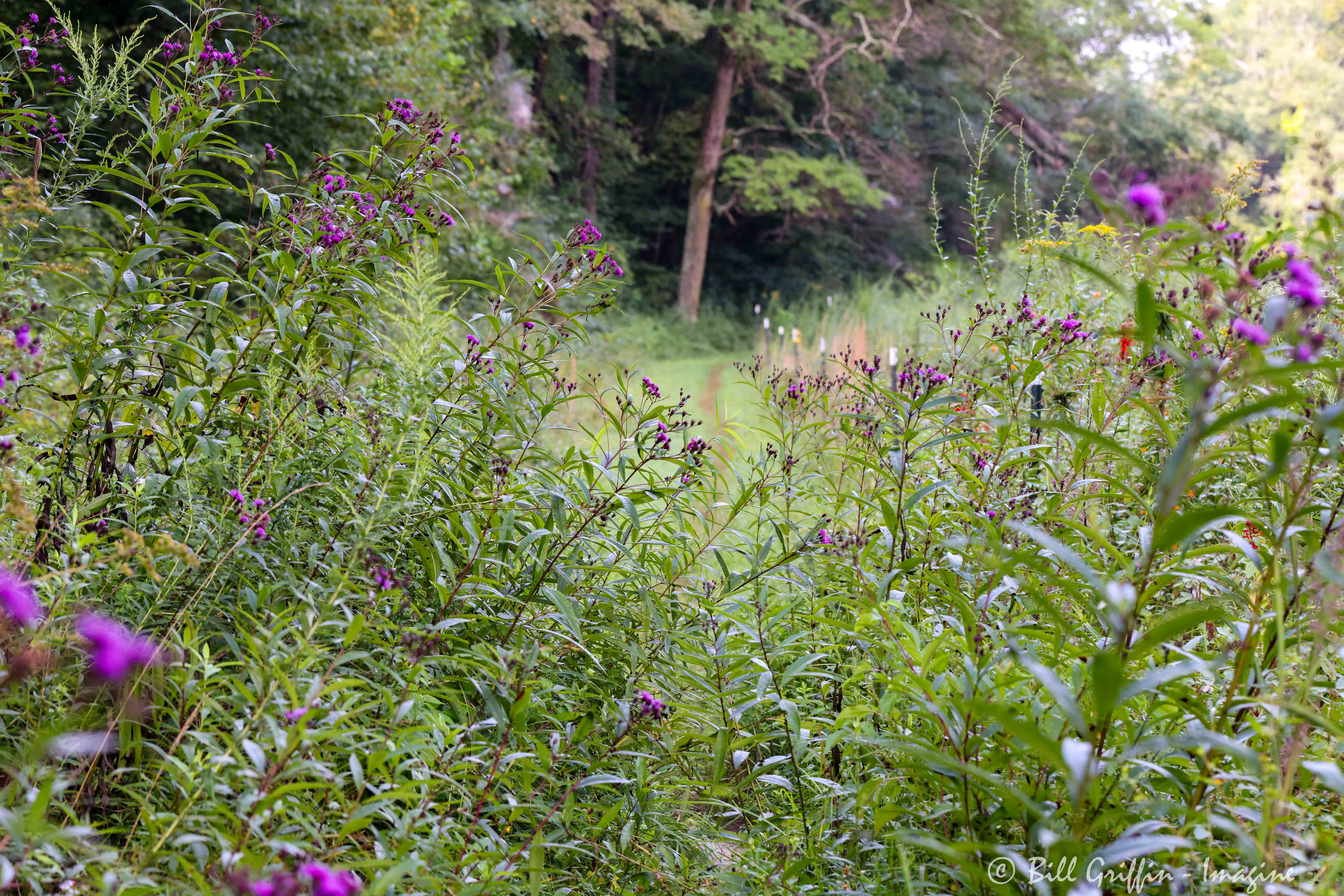
Mountains-to-Sea Trail, Surry County NC

 . 

MST, Doughton Park, Blue Ridge Parkway

Read Full Post »

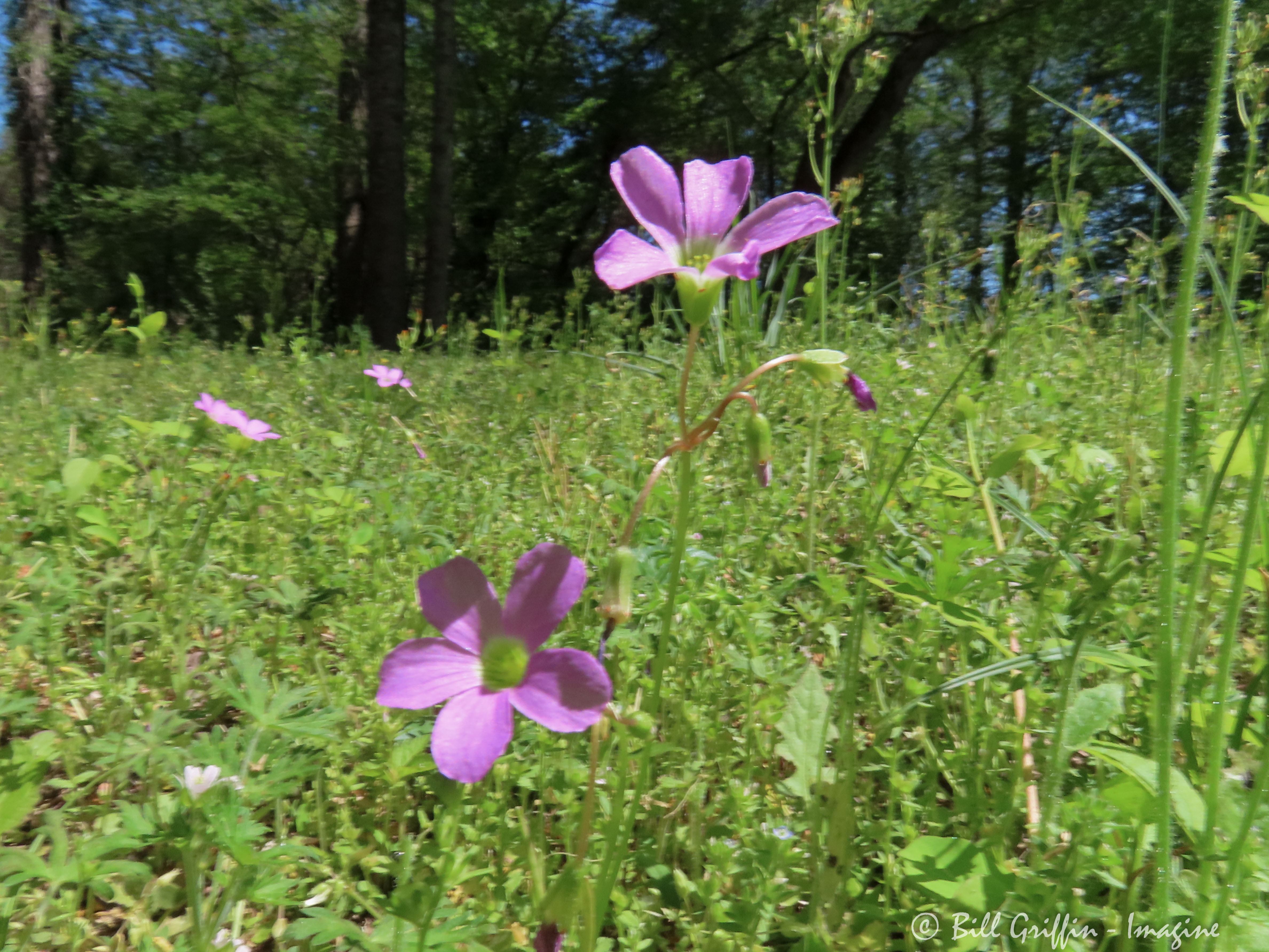
Violet Wood Sorrel, Oxalis violacea

 . . 
[ 3 poems from New and Selected ]
 . . 
Barbed Wire
 . . 
New strung, it sparks a live wire
when sun hits right, and can be
thumbed like guitar string, its tune
pure country twang, but given
enough time rain rusts metal,
fence posts wobble like loose teeth,
barbed wire burrows in laurel
and goldenrod before found
by fishermen or hunters.
As I found out once, deep in
the Smokies when something latched
to my calf—coil of old strands
not quite elemented back
into ground ore, and though I searched
no chimney-spill or hearthstone,
no sign but rusty fence-thorns
of one whose hammer tapped out
a claim on this land traveling
through bright lines from post to post,
traveling time to a moment
one man’s tenuous hold on
the earth snagged like memory
surfaced long after, time-dulled,
but still able to draw blood.
 . . 
Ron Rash
from POEMS, New and Selected, HarperCollins, New York NY; © 2016
 . . 
❀    ❀    ❀
 . . 
Plowing on Moonlight
I rose with the moon, left the drowsy sheets,
my nine months wife singing in her sleep,
left boots on the floor, overalls and hat
scarecrowing a bedpost so I could plant
my seeds with just a plow between
the earth and me, my pale feet deep
in the ridged wake where I labored,
gripped the handles like a divining rod,
my eyes closed to the few stars out.
All night I plowed, beard budded by frost,
chest nippled, my breath blooming white,
and felt in me the sway of the sea,
rain’s fall and soak, the taproot’s thrust,
the cicada’s winged resurrection.
I opened my eyes to dawnlight,
left my field and lay with my wife,
warming as I pressed against her body,
my hand listening to her waxing belly.
 . . 
Ron Rash
from POEMS, New and Selected, HarperCollins, New York NY; © 2016
 . . 
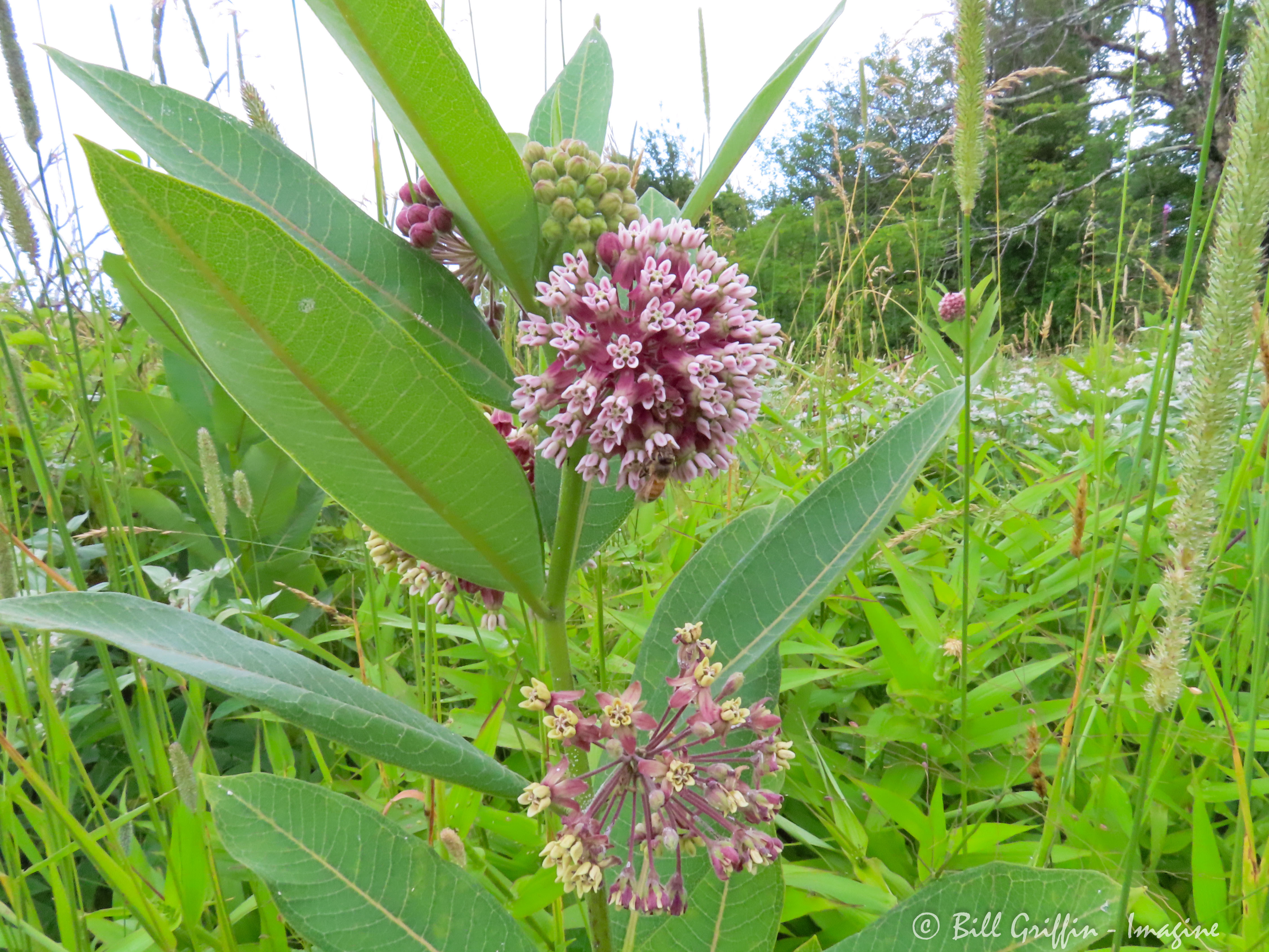
Doughton flora milkweed

Common Milkweed, Asclepias syriaca

 . . 
❀    ❀    ❀
 . . 
The Exchange
 . . 
Between Wytheville, Virginia,
and the North Carolina line,
he meets a wagon headed
where he’s been, seated beside
her parents a dark-eyed girl
who grips the reins in her fist,
no more than sixteen, he’d guess
as the come closer and she
doesn’t look away or blush
but allows his eyes to hold
hers that moment their lives pass.
He rides into Boone at dusk,
stops at an inn where he buys
his supper, a sleepless night
thinking of fallow fields still
miles away, the girl he might
not find the like of again.
When dawn breaks he mounts his roan,
then backtracks, searches three days
hamlets and farms, any smoke
rising above the tree line
before he heads south, toward home,
the French Broad’s valley where spring
unclinches the dogwood buds
as he plants the bottomland,
come night by candlelight builds
a butter churn and cradle,
cherry headboard for the bed,
forges a double-eagle
into a wedding ring and then
back to Virginia and spends
five weeks riding and asking
from Elk Creek to Damascus
before he finds the wagon
tethered to the hitching post
of a crossroads stone, inside
the girl who smiles as if she’d
known all along his gray eyes
would search until they found her.
She asks one question, his name,
as her eyes study the gold
smoldering there between them,
the offered palm she lightens,
slips the ring on herself so
he knows right then the woman
she will be, bold enough match
for a man rash as his name.
 . . 
Ron Rash
from POEMS, New and Selected, HarperCollins, New York NY; © 2016
 . . 
❀    ❀    ❀    ❀    ❀
 . . 
Ron Rash will take you there. He will take you deep into to the forest where the unvoiced past may suddenly reach up from the earth and bite your leg. Into the night where moonlight unveils dreams and deep desires. Up a lonesome mountain holler where one of his own kinsmen once scratched to farm a living. Even deeper, farther, he will carry you into generations long grown cold but where a story of his early ancestor can still wring a warm and sudden smile.
 . . 
This collection, Ron Rash’s New and Selected, covers decades of his writing but hundreds of years of settlement and stories, of life and death in the southern Appalachians. Each poem is the flare of a match that lights a lantern to limn a face, a moment, another turning point in another life. A history book might teach you about the Tennessee Valley Authority and farmers displaced by lakes filling behind its hydroelectric dams, but these poems will teach your heart how it felt to live on that land and watch it go under. The poems will teach you that poverty in possessions is not poverty of the soul. They might teach you that following your God can still involve some wrestling matches. Most of all, these poems connect – they tell one expansive enlarging straggling and struggling story of people and families each one of us is a part of. We are a part of these stories if we call ourselves Americans, and especially Southerners. Or if we just call ourselves human beings.
 . . 
 . . 
Ron Rash – POEMS, New and Selected is available at Bookshop.org.
 . . 
Also by Ron Rash at Verse and Image:
 . . 
 . 
NOTE: you can share three additional poems by Ron Rash at the sequel to today’s post, from July 17, 2026;
 . 

Common Buckeye, Junonia coenia

 . . 
❀    ❀    ❀    ❀    ❀
 . . 
Thank you for visiting Verse and Image:
. . . . . every Friday I present one or two poems I’ve read this week that particularly speak to me;
. . . . . some Saturdays I present one or two poems submitted by YOU, my readers.
 . . 
If you would like to offer a poem for consideration, either by a favorite author or your own work, please view these GUIDELINES for Saturday Readers Share:
 . . 
 . . 
If you would like to receive an email each time a post appears, please SUBSCRIBE to Verse and Image using the button on the Home Page.
 . . 
If you have a hard time finding the SUBSCRIBE button on this WordPress site, you can send me your email address and I will add you to the subscriber list. Send your request to
 . . 
COMMENTS@GRIFFINPOETRY.COM
 . . 
Thanks again for joining the conversation.
 . . 
– Bill
 . . 
IMG_0880, tree
 . . 

Read Full Post »

 .
 . 
[ with 3 poems by Scott Owens ]
 . 
Now and Then
 . 
The mountains came down to Hickory today.
It happens now and then.
Clouds low, mist hanging between the trees,
a coolness that makes everything feel
less urgent, more contemplative.
I saw a boy on a hillside, sitting,
back leaning against a tree,
not minding the fine mist
against his skin at all.
I imagine he was writing.
I imagine it was a poem
about the mountains coming down to Hickory.
I imagine he was me.
It happens now and then.
 . 
Scott Owens
from The Song Is Why We Sing, Redhawk Publications, The Catawba Valley Community College Press; Hickory NC © 2026
 . 
❀    ❀    ❀
 . 
Existential Knot
 . 
I picked up a knot from the ground today,
not an important knot,
not of significant size,
not of any significance really,
at least not initially,
but then I realized if not for the knot
I likely would not have noticed it at all.
In fact, the knot would have just been
 . 
a string, not of any special size,
not of any noticeable color,
not anything special about it at all,
but the fact that it was tied into a knot
made it not exactly like every other
unknotted expanse I’d seen.
Of course, I thought about unknotting the knot
but ultimately decided not to,
as the knottiness was exactly what made it
exactly what it was and continues to be,
 . 
a knot not like any other,
insured by its knottiness
not be left unnoticed.
 . 
Scott Owens
from The Song Is Why We Sing, Redhawk Publications, The Catawba Valley Community College Press; Hickory NC © 2026
 . 
 . 
❀    ❀    ❀     ❀     ❀
 . 
Ten. You, after all,
are half the poet, and in all
likelihood, the better half.
from 13 Ways of Reading a Poem
 . 
Reading a poem is like turning over a mossy log. As you approach, you appreciate the appealing form of the log without even thinking about it. Its green cushion, so inviting, perhaps a scent of fresh pungent life. But when you turn the log over, who knows? I am personally a fan of grubs and larvae, flabbergasted ants grabbing their white nits and sprinting in all directions, an oozy slug or two. Double bonus if there’s a salamander.
 . 
But beneath some logs there’s just not much. A few bark fibers lingering in their immediate pre-humus status. A tired worm casting. Dirt. If that’s all there is beneath the mossy log of the poem, I’m done. Maybe I’ll go turn over that rock over yonder instead. I, the reader, need something to discover when I get down on hands and knees and shift the poem. I have to do the work of coming closer, of noticing, and the poem has to do its work of sharing.
 . 
Scott Owens’s newest collection of poems, The Song Is Why We Sing, is about poetry. Writing poetry, to be certain, but even more this book is about reading poetry. And maybe most of all so many of these poems are about the partnership, let’s even call it companionship, between writer and reader. The lines and stanzas break down the fourth wall. I as reader become part of the process, part of the poem. Perhaps in reading no other book of verse have I been so intimately invited into the mind and life of the writer. Scott’s offer is sincere – here I can be half the poet.
 . 
Scott’s poems are existential knots that freely allow themselves to be untied. They offer up their essence like a flower offers nectar, hidden but discernable, just follow your nose, and always keeping the promise of a sweet droplet on the tongue. I first encountered the term “quiddity” in a philosophy book but I know I first read the word “dailyness” in a poem, and so are these poems, filled with essence and substance. Here is the world with its warts and its wonderfulness. Scott takes seriously his poet’s calling of showing you what you already know in a way you’ve never seen. That mossy log, what lies beneath? I am dying to turn it over. And throughout these pages I know I will find what this poet is determined to show me, because as he says, You have to care / enough about the world / and all who live in it / to take the time / to not just find the words / but also get them right.
 . 
 . 
❀    ❀    ❀     ❀     ❀
 . 
Chores
 . 
fr. Latin, chorus, those who do the work, who carry the play forward
(titles from Poetry in Plain Sight selections July 2025)
 . 
I rise from my knees, not from prayer,
not from planting autumn blooming crocuses,
but from fixing a table bending beneath
the weight of too many ovens. Still,
any rising is a good thing.
In the heat of early July in the South
I head out to make my monthly delivery
of poems. One called “Tomato Sandwich,”
transforming the taste of summer to art,
for the front window of my coffee shop.
One called “Hum,” for the community theater,
about a boy remembering the sound
of his father blowing on his face to cool him
off in a Louisiana Church on Sundays.
Another called “Wild Women,” for the wine shop,
about girls who were told they couldn’t be cowboys,
who hitched up their chaps and spat on the ground.
And one for the library, called “Song
to a Little Tree under the Eve of Terminal 2
at Raleigh Durham International Airport,”
just about a tree in an unlikely place
refusing not to grow.
 . 
Scott Owens
from The Song Is Why We Sing, Redhawk Publications, The Catawba Valley Community College Press; Hickory NC © 2026
 . 
❀    ❀    ❀
 . 
Scott Owens teaches at Lenoir Rhyne University, coordinates the Poetry Hickory program, and promotes poets and poetry year round at his coffee shop and gallery, Taste Full Beans. The Song Is Why We Sing is Scott’s twenty-sixth volume of poetry. Among his many honors and awards are two nominations for the National Book Critics Circle Award and appointment as Hickory, NC, Poet Laureate. Scott’s most recent books are available from Redhawk Publications.
 . 
Sample additional poetry by Scott Owens at Verse and Image:
 . 
 . 
❀    ❀    ❀    ❀    ❀
 . 
Perhaps you’d like to turn over a mossy log (metaphorically speaking)? Walk along Elkin Creek and discover Foamflower in bloom (for real beginning early April)? Watch a Blue Head Chub build its spawning nest in the creek? Breathe deep? Join me and other curious comrades on one of this spring’s naturalist walks, a program of Elkin Valley Trails Association. Upcoming dates are March 28, April 11, April 25. Details and registration (free!) here:
 . 
 . 
❀    ❀    ❀    ❀    ❀
 . 
Thank you for visiting Verse and Image:
. . . . . every Friday I present one or two poems I’ve read this week that particularly speak to me;
. . . . . every Saturday I present one or two poems submitted by YOU, my readers.
 . 
If you would like to offer a poem for consideration, either by a favorite author or your own work, please view these GUIDELINES for Saturday Readers Share:
 . 
 .  . 
If you would like to receive an email each time a post appears, please SUBSCRIBE to Verse and Image using the button on the Home Page.
 . 
If you have a hard time finding the SUBSCRIBE button on this WordPress site, you can send me your email address and I will add you to the subscriber list. Send your request to
 . 
COMMENTS@GRIFFINPOETRY.COM
 . 
Thanks again for joining the conversation.
 . 
– Bill
 . 
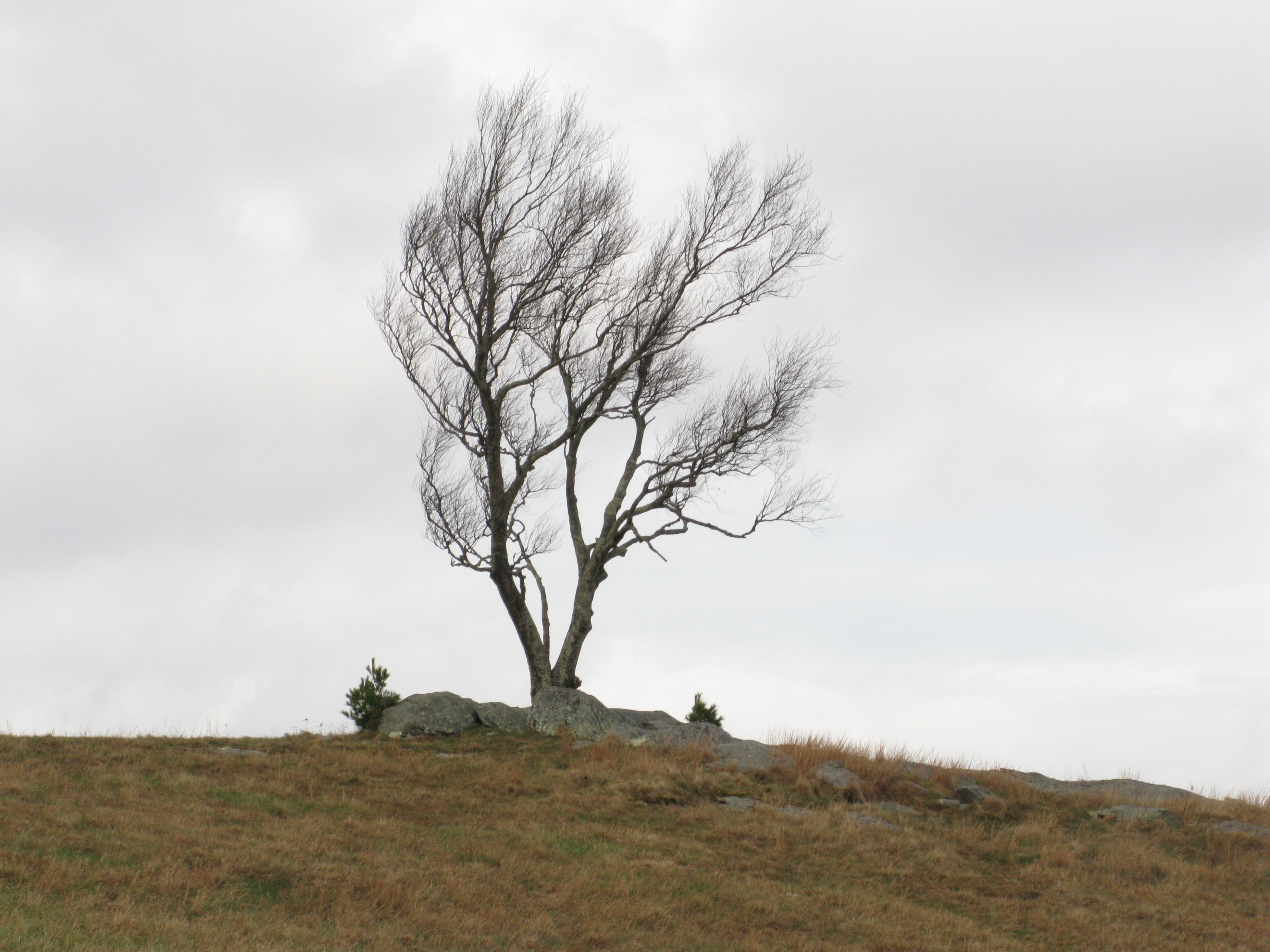
2016-10-17b Doughton Park Tree
 . 

Read Full Post »

Older Posts »