Feeds:
Posts
Comments

Posts Tagged ‘nature poetry’

 . 
[ poems by Connie Green, Kari Gunter-Seymour, 
Jenny Bates, Annie Woodford, Paul Jones]
 . 
Song at Daybreak 
 . 
Behind the mountains this morning
a soft curtain of pink, dawn dipping
into her palette, my soul the recipient
of her artistry, this small moment
that would not have occurred
had I not wakened early, wandered
sleep-deprived into the kitchen
and turned my face toward the ridges-
 . 
those ridges that daily wait for me
to look up, to accept, if only
for a minute, the gift they offer
and have offered since the forces
of nature, the work of time pushed
them from plain to towering majesty,
our common stardust knitting mountain,
kitchen, aging woman into song notes that lift
and drift, the finite urging toward the infinite.
 . 
Connie Jordan Green
selected by Kari Gunter-Seymour. First appeared in Women Speak, Volume Eleven (Sheila Na Gig Editions 2025)
 . 
This gorgeous Song at Daybreak by Connie Green reminds me that there is so much splendor and joy to be had if we let ourselves be still long enough to truly embrace all that the earth (and sky) has to offer, and that aging too is a gift, because it means we have been given so many more opportunities to stand in awe and wonder of it all.  — Kari Gunter-Seymour
 . 
 . 
Ten Miles North of Lore City, Guernsey County, Ohio
 . 
Oh, Salt Fork, I’ve come to hide
inside your autumn, walk
beneath the cathedral of your branches
become a meditative painting,
a Cézanne—your impressions
 . 
revealed in planes of pigment,
the slow study of light,
pin oak and American beech awash
in swaths of topaz and carnelian,
the lake a reverie of reflections.
 . 
The universe is out of whack, tremulous
in the pathos of floods, wildfires and drought.
Here, red squirrels wax comedic,
all bark, tuck and tumble, a white-tailed
snorting at their antics.
 . 
Tangy pockets of mugwort
and mountain mint intoxicate my airways
weak-knee me into giggles.
Chickadees hip-hop branch to thicket,
their black caps adorably gangsta.
   . 
Above, an osprey chirps its tea-kettle whistle,
ascends, thrusts,  disappears,
returns, as if parleying ancestral maps
stored inside the lace of its bones.
Cricket songs stitch the afternoon.
 . 
I don’t know how long your trails can hold
such abundance, your fervor of tints and textures
winding their way to my insides, transcendent
as a psalm, the rhythm of your balms and breezes
rumoring their promise of peace.
 . 
Kari Gunter-Seymour
First appeared in The Nature of Our Times (Paloma Press 2025)
 . 
Thank you for allowing me the opportunity to submit a poem I love by poet Connie Green and one of my own as well, in honor of Earth Day. KG-S
 . 
 . 
Connie Jordan Green lives on a farm in East Tennessee where she writes and gardens. She has published award-winning novels for young people, newspaper columns, poetry chapbooks and collections, most recently Nameless as the Minnows, Madville Publishing. Her poetry has been nominated for Pushcart Awards. She frequently teaches writing workshops.
 . 
Kari Gunter-Seymour is the immediate past Poet Laureate of Ohio and author of three award-winning poetry collections, including Dirt Songs (EastOver Press, 2024) winner of the 2025 IPPY Bronze, NYC Big Book and Feathered Quill Awards. Her newest collection, What Teethes Within is forthcoming from University Press of Kentucky, August 2026. Her work has been featured in a variety of publications including the American Book Review, Poem-a-Day, World Literature Today and The New York Times.
 . 
❀ ✿ ✾ ❁
 . 
 . 
Virga
 . 
Every raindrop panics me now
long before it arrives
I feel like an old Dog who hides
in the bathroom sniffing grey skies
 . 
I go out walking anyway make
myself brave but I don’t really don’t want
it to rain
I want fear to evaporate like a virga
line I want to become a cloud dropped
full of reflection and affection
when I listen to rain I hear echoes
of your voice not in my ears anymore
asking under any circumstance
will you want to make love again?
 . 
Jenny Bates
selected by Paul Jones
 . 
 . 
Love Poem for the Appalachian Rainforest 
 . 
The trees as rib cage, as sea-
bare branches tapping each other,
signing furiously the word
 . 
for wind. Temperate rainforest
filled with broken trees,
bracken tinder. I pray
 . 
for damp weather, fog, snow-
a proper frozen sojourn
among High Country clouds
 . 
plumping moss & lichen.
To keep fire at bay.
Needle and loam, trees breathing
 . 
wet breath against each other,
heavy enough to float, to form
their own ecology of hope.
 . 
Annie Woodford
selected by Paul Jones
 . 
 . 
In the Cards
 . 
Outside of Beaverdam, an old lady told the cards.
As close to a crone as the mountain side could grasp,
could hold there, cling-rooted and knotty as laurel.
 . 
She was sour on life by now, hers, which had been hard,
and the mountain itself. “It must change,” she rasped.
Fingering the whirling figure, she hissed, “This is the World.”
 . 
“It’s in the past. Better that the dancer held a sword.”
The next up, the seemingly indifferent Four of Cups.
“Ignoring the gifts and threats of the sky and earth. Peril.
 . 
That’s where we are now. In danger, but not acting. Bored
with it all. Not doing what we need to do.” She gasped,
“No not this! I would rather be telling the Devil,”
 . 
as if she already had seen, but dare not disregard,
the next card, the future told by the Tower. The last.
“The end that comes to us all both good and evil.”
 . 
Soon the storms came as they had never come before.
She and her house were washed away. Among the lost.
She saw but was not saved. Not found. Except her skull.
 . 
Paul Jones
 . 
Thanks for combining Poetry Month and Earth Day (all month long). These three poems are from the award winning anthology, Had I a Dove: Appalachian Poets on the Helene Flood, edited by Hilda Downer (Redhawk Publications 2025). Each of these poem connects human awareness and in some cases human agency in the face of the experience of the flood and what followed. The whole of the anthology is rich with the appreciation of nature during and due to climate based disaster. Besides the three poems attached, Virga by Jenny Bates, Love Poem for the Appalachian Rainforest by Annie Woodford, and In the Cards by me, the anthology holds many treasures. — Paul Jones
 . 
 . 
❀ ✿ ✾ ❁
 . 
We do not live in a Nuclear Age or an Information Age. We do not live in a Post-Industrial Age, a Post-Cold War Age, or a Post-Modern Age. We do not live in an Age of Anxiety or even a New Age. We live in an Age of Flowering Plants and an Age of Beetles. 
– Sue Hubbell, from Broadsides from the Other Orders
 . 
Thank you for celebrating the month of April with International Earth Day (April 22) and National Poetry Month. Readers have selected poems that connect us to our planet and each other. If you have a poem that has rooted you to the earth and spread your branches into bright sky, please share! It can be a poem by your favorite writer, living or dead, a poem of your own, or both.
 . 
Send a your poem(s) in the body of the email or as .DOC or .RTF to:
ecopoetry@griffinpoetry.com 
 . 
Please include your comments or reaction to the poem. And publication acknowledgments if previously published.
 . 
We will share one or two posts each week, multiple posts during the week of Earth Day, and we will keep sharing into May and beyond if you continue to respond!
 . 
Feel free to invite others to send their favorite Earth Day poems. Perhaps some day we will be able to say we live in the Age of Connection.
 . 
 . 
Thank you for visiting Verse and Image: If you would like to receive an email each time a post appears, please SUBSCRIBE to Verse and Image using the button on the Home Page.
 . 
If you have a hard time finding the SUBSCRIBE button on this WordPress site, you can send me your email address and I will add you to the subscriber list. Send your request to
 . 
COMMENTS@GRIFFINPOETRY.COM
 . 
Thanks again for joining the conversation.
 . 
— Bill
 . 
❀ ✿ ✾ ❁
 . 
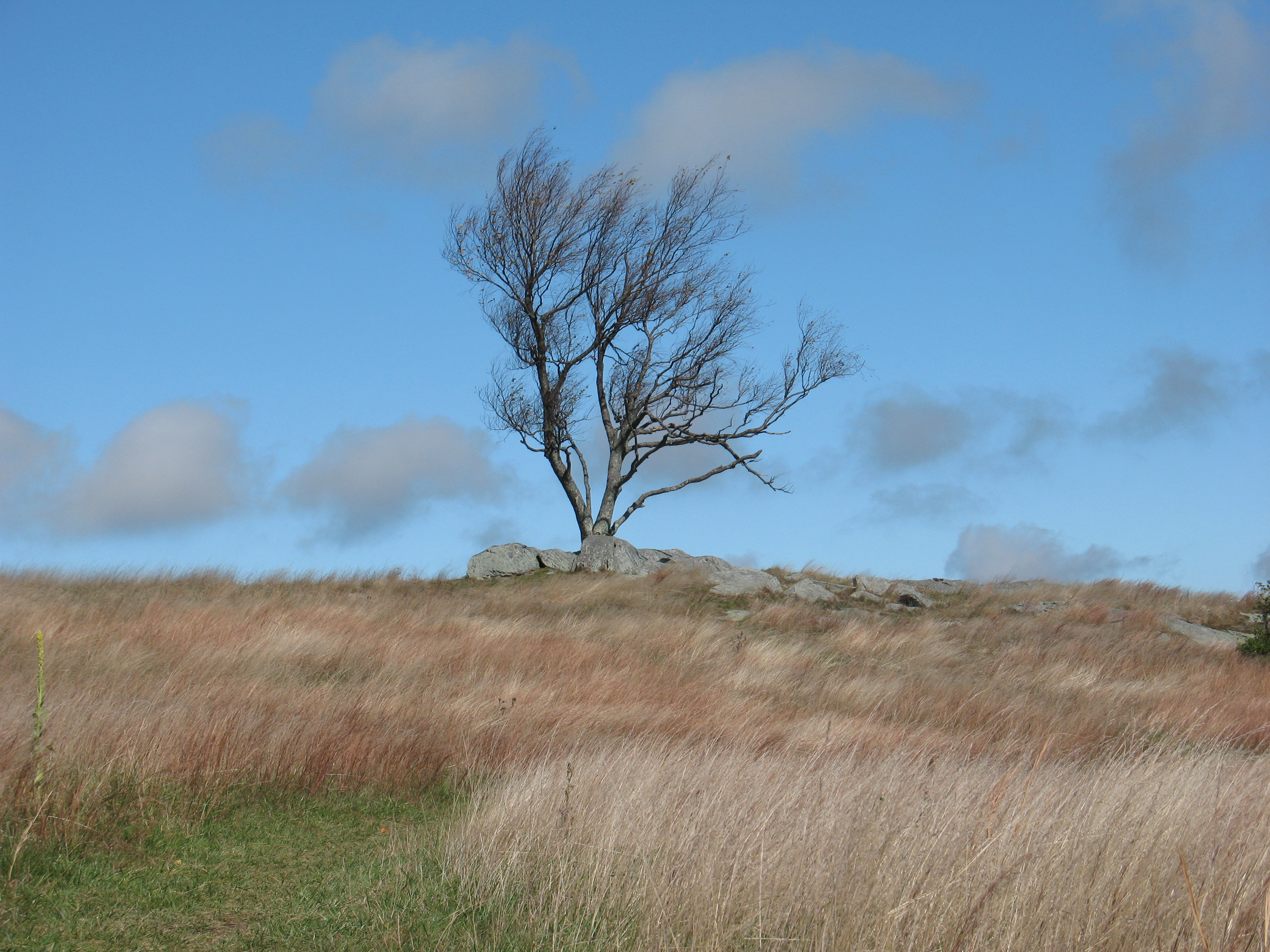
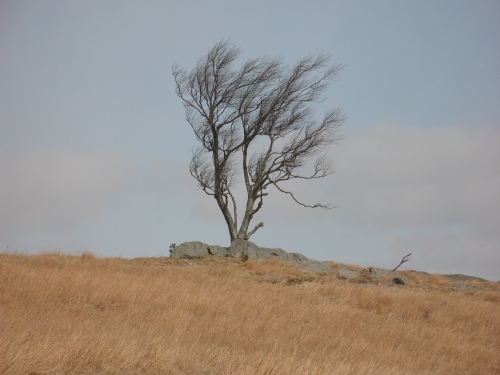
Doughton Park Tree, 2022-05-17B
 . 

Read Full Post »

 … 
[ 2 poems from Little Alleluias ]
 … 
❀    ❀    ❀
 … 
But tell me, if you would praise the world, what is it you would leave out?
Mary Oliver, Black Snake
 … 
❀    ❀    ❀
 … 
Crows
 … 
In Japan, in Seattle, in Indonesia—there they were—
each one loud and hungry,
crossing a field, or sitting
above the traffic, or dropping
 … 
to the lawn of some temple to sun itself
or walk about on strong legs,
like a landlord. I think
they don’t envy anyone or anything—
 … 
not the tiger, not the emperor,
not even the philosopher.
Why should they?
The wind is their friend, the least tree is home.
 … 
Nor is melody, they have discovered, necessary.
Nor have the delicate palates;
without hesitation they will eat
anything you can think of—
 … 
corn, mice, old hamburgers—
swallowing with such hollering and gusto
no one can tell whether it’s a brag
or a prayer of deepest thanks. At sunrise, when I walk out,
 … 
I see them in trees, or on ledges of buildings,
as cheerful as saints, or thieves of the small job
who have been, one more night, successful—
and like all successes, it turns my thoughts to myself.
 … 
Should I have led a more simple life?
Have my ambitions been worthy?
Has the wind, for years, been talking to me as well?
Somewhere, among all my thoughts, there is a narrow path.
 … 
It’s attractive, but who could follow it?
Slowly the full morning
draws over us its mysterious and lovely equation.
Then, in the branches poling from their dark center,
 … 
ever more flexible and bright,
sparks from the sun are bursting and melting on the birds’ wings
as, indifferent and comfortable,
they lounge, they squabble in the vast, rose-colored light.
 … 
Mary Oliver
from Little Alleluias, Grand Central Publishing, New York & Boston; © 2025 by NW Orchard LLC
 … 
❀    ❀    ❀
 … 
Gravel
 … 
6.
 … 
It is the nature of stone
to be satisfied.
It is the nature of water
to want to be somewhere else.
 … 
Everywhere we look:
the sweet guttural swill of the water
tumbling.
Everywhere we look:
the stone, basking in the sun,
 … 
or offering itself
to the golden lichen.
 … 
It is our nature not only to see
that the world is beautiful
 … 
but to stand in the dark, under the stars,
or at noon, in the rainfall of light,
 … 
frenzied,
wringing our hands,
 … 
half-mad, saying over and over:
 … 
what does it mean, that the world is beautiful—
what does it mean?
 … 
the child asks this,
and the determined, laboring adult asks this—
 … 
both the carpenter and scholar ask this,
and the fisherman and the teacher;
 … 
both the rich and the poor ask this
(maybe the poor more than the rich)
 … 
and the old and the very old, not yet having figured it out,
ask this
desperately
 … 
standing beside the golden-coated field rock,
or the tumbling water,
or under the stars—
 … 
what does it mean?
what does it mean?
 … 
8.
 … 
Listen, I don’t think we’re going to rise
in gauze and halos.
Maybe as grass, and slowly.
Maybe as the long-leaved, beautiful grass
 … 
I have known, and you have known—
or the pine trees—
or the dark rocks of the zigzag creek
hastening along—
 … 
or the silver rain—
 … 
or the hummingbird.
 … 
10.
 … 
This is the poem of goodbye.
And this is the poem of don’t know.
 … 
My hands touch the lilies
then withdraw;
 … 
my hands touch the blue iris
then withdraw;
 … 
and I say, not easily but carefully—
the words round in the mouth, crisp on the tongue—
 … 
dirt, mud, stars, water—
I know you as if you were myself.
How could I be afraid?
 … 
Mary Oliver
from Little Alleluias, Grand Central Publishing, New York & Boston; © 2025 by NW Orchard LLC
 … 
 … 
❀    ❀    ❀    ❀    ❀
 … 
The deep guttural imperative, that croak of authority – some afternoons we hear Raven down by the Yadkin River, some days lingering in the grove around the abandoned furniture plant. He, or she perhaps for they certainly know but I don’t, always sounds single. Alone. Perhaps a companion is nearby nodding, “Yes! Tell it!” but never is there any boisterous chorus. Life is a very serious thing for Raven.
 … 
Not so much for Crow. Jostling jokers. Bullies at times, they certainly don’t ever seem willing to share a tree with Owl or Hawk. Or Raven, apparently. This morning I heard Raven’s gravelly baritone right above the porch. I looked up through the screen and watched him raise his powerful beak again and declare. But there on another branch just a meter away perched Crow, matching Raven’s every croak with three tenor caws. Which cawing called in a fellow crow to circle above them both. Intimidating the big guy? For several minutes they battled with their call-and-response fugue, then they all flew off in different directions. A minute later I heard Raven in the cove a quarter mile away.
 … 
What meditation on my own life might Raven or Crow inspire? I admire both of these intelligent Corvids but which, if either, shall I emulate? This morning, after Raven’s departure, Linda and I are picking apart last night’s exhausting choral rehearsal. Our director, Lance, has selected John Rutter’s Requiem for May’s concert by our little ensemble, and some singers are not particularly overjoyed about the Latin pronunciation or the challenging rhythms, harmonies, and counterpoint of the score. We are struggling to come together. I’ll just confess – we ain’t there yet with this music. But during last night’s repetition and mistakes and measure-by-measure struggle, there also arose a few moments when a beautiful spirit of blessing surrounded our gathering. This morning Linda and I conclude that this is no music that a single voice can carry. In its great complexity, even because of that complexity, the whole tapestry can only come into being when each part, each voice, weaves itself into relationship with every other.
 … 
❀    ❀    ❀
 … 
In the introduction to Small Alleluias by Mary Oliver, poet Natalie Diaz writes this: What can any of us make of our momentary intimate lives in such an immense world, with equally immense unknowns, mysteries as great as death or the whale, as deep as love or the ocean, as sad and beautiful as a jellyfish torn and glistening in a small fortress of shore rock? This world in which we are of consequence, shaped as violently and tenderly as we also shape it. Marked by and marking. Though we might not always, or ever, know what it means, we can’t deny: the earth, the earth is beautiful. How lucky to be in it.
 … 
Little Alleluias, collected poetry and prose, gathers poems and essays from the last years of Mary Oliver’s life into a newly released collection. Mary Oliver was born in Ohio in 1935 and died in 2019. Through her life as poet and teacher she won innumerable awards, including the Pulitzer Prize in 1984 for American Primitive, her fourth book. Little Alleluias is available from Grand Central Publishing.
 … 
Enjoy poetry by Mary Oliver which has appeared in previous editions of Verse and Image, including just last week:
 … 
Raven crop 02

RAVEN, by Linda French Griffin, from SNAKE DEN RIDGE, A BESTIARY

 … 
❀    ❀    ❀    ❀    ❀
 … 
Thank you for visiting Verse and Image:
. . . . . every Friday I present one or two poems I’ve read this week that particularly speak to me;
. . . . . every Saturday I present one or two poems submitted by YOU, my readers.
 … 
If you would like to offer a poem for consideration, either by a favorite author or your own work, please view these GUIDELINES for Saturday Readers Share:
 … 
 … 
If you would like to receive an email each time a post appears, please SUBSCRIBE to Verse and Image using the button on the Home Page.
 … 
If you have a hard time finding the SUBSCRIBE button on this WordPress site, you can send me your email address and I will add you to the subscriber list. Send your request to
 … 
COMMENTS@GRIFFINPOETRY.COM
 … 
Thanks again for joining the conversation.
 … 
– Bill
 … 
Doughton Park Tree 2021-03-23
 … 

Read Full Post »

 . 
[ 2 poems from Little Alleluias ]
 . 
❀    ❀    ❀
 . 
Flare
 . 
1.
 . 
Welcome to the silly, comforting poem.
 . 
It is not the sunrise,
which is a red rinse,
which is flaring all over the eastern sky;
 . 
it is not the rain falling out of the purse of God;
 . 
it is not the blue helmet of the sky afterward,
 . 
or the trees, or the beetle burrowing into the earth;
 . 
it is not the mockingbird who, in his own cadence,
will go on sizzling and clapping
from the branches of the catalpa that are thick with blossoms,
that are billowing and shining,
that are shaking the world.
 . 
8.
 . 
The poem is not the world.
It isn’t even the first page of the world.
 . 
But the poem wants to flower, like a flower.
It knows that much.
 . 
It wants to open itself,
like the door of a little temple,
so that you might step inside and be cooled and refreshed,
and less yourself than part of everything.
 . 
12.
 . 
When loneliness comes stalking, go into the fields, consider
the orderliness of the world. Notice
something you have never noticed before,
 . 
like the tambourine sound of the snow-cricket
whose pale green body is no longer than your thumb.
 . 
Stare hard at the hummingbird, in the summer rain,
shaking the water-sparks from its wings.
 . 
Let grief be your sister, she will whether or no.
Rise up from the stump of sorrow, and be green also,
like the diligent leaves.
 . 
Scatter your flowers over the graves, and walk away.
Be good-natured and untidy in your exuberance.
 . 
In the glare of your mind, be modest.
And beholden to what is tactile, and thrilling.
 . 
Live with the beetle, and the wind.
 . 
This is the dark bread of the poem.
This is the dark and nourishing bread of the poem.
 . 
Mary Oliver
from Little Alleluias, Grand Central Publishing, New York & Boston; © 2025 by NW Orchard LLC
 . 
❀    ❀    ❀
 . 
Mockingbird
 . 
Always there is something worth saying
about glory, about gratitude.
But I went walking a long time across the dunes
and in all that time spoke not a single word,
nor wrote one down, nor even thought anything at all
at the window of my heart.
 . 
Speechless the snowy tissue of clouds passed over, and more came,
and speechless they passed also.
The beach plums hung on the hillsides, their branches
heavy with blossoms; yet not one of them said a word.
 . 
And nothing there anyway knew, don’t we know, what a word is,
or could parse down from the general liquidity of feeling
to the spasm and bull’s eye of the moment, or the logic,
or the instance,
trimming the fingernails of happiness, entering the house
of rhetoric.
 . 
And yet there was one there eloquent enough,
all this time,
and not quietly but in a rhapsody of reply, though with
an absence of reason, of querulous pestering. The mockingbird
was making of himself
an orchestra, a choir, a dozen flutes,
 . 
a tambourine, an outpost of perfect and exact observation,
all afternoon rapping and whistling
on the athlete’s lung-ful of leafy air. You could not
imagine a steadier talker, hunched deep in a tree,
then floating forth decorative and boisterous and mirthful,
all eye and fluttering feathers. You could not imagine
a sweeter prayer.
Mary Oliver
from Little Alleluias, Grand Central Publishing, New York & Boston; © 2025 by NW Orchard LLC
 . 
 . 
❀    ❀    ❀    ❀    ❀
 . 
We want to catch the mouse in our kitchen. The one who has nibbled a neat hole in the foil around a granola bar and carved its own delicate sculpture as if one of us had taken a single clean bite. The one who leaves a scatter of dark afterthoughts every place we have overlooked a crumb. We want to catch it so we can quit thinking about nibbles and droppings, but we want to catch it alive.
 . 
We want to catch it alive so we don’t have to worry that some evening while playing Scrabble at the kitchen table we will hear death’s sudden and irreversible snap. Alive so we don’t have to open the cupboard under the sink in the morning to a stiff shadow still sleek with gray fur and curled tail. Alive because it is another warm body and we ourselves are guilty of tempting it indoors with warmth and crackers and maybe the sunflower seeds falling from the feeder outside the window.
 . 
But the mouse is smarter than we are. On the first morning we find the live-trap open on its side and empty. Did the mouse panic in its dark enclosure and throw itself against the sides until it tumbled? Or did its mouse companion flip it from outside? The second evening, with tape holding the trap to the shelf, we hear scramble, slide, click as the trapdoor closes. Next morning I carefully carry the trap to the edge of the woods, release the little closure, but it is empty of mouse. All the peanut butter is still present and fragrant but I find incisor marks on the backside of the trap. The mouse has followed its nose to the bait but triggered the trap without entering.
 . 
This morning the trap is taped against the cupboard wall, no way to gnaw it from the back, and its door has snapped shut. I hold the trap’s little cover tight and carry it to the woods. It feels warm. Heavier than an empty trap. I release the door – no mouse. And no peanut butter. Mouse has figured out how to re-open the door even after it shuts and seals.
 . 
Perhaps I will simply place a mouse-sized portion of peanut butter in the cupboard under the sink every night and find a mouse proof box for the granola bars. Maybe that would be smarter.
 . 
❀    ❀    ❀
 . 
In the introduction to Little Alleluias by Mary Oliver, poet Natalie Diaz writes this: It isn’t so crazy to believe that this knowledgeable world imagined us itself, from its own values of life. We young human beings learn from this ancestor how to bloom into our existence, in constellation with and alongside the nonhuman beings of the world. Of consequence to one another.
 . 
In Mary Oliver’s poetry all things live together in consequence to one another: bird and flower, ocean and cloud, woe and joy. She sometimes referred to her poems as “little alleluias” and to herself as poet thus: “I am a woman nearly sixty years old, and glory is my work.” When I have gone too many weeks without reading Mary Oliver, I discover that my carapace has become brittle and dull. I find myself holding sorrow and self-pity close within instead of releasing myself into the sorrow and beauty that is the world. I might even find myself tempted to kill the mouse in my kitchen cupboard. Not today.
 . 
Little Alleluias, collected poetry and prose, gathers poems and essays from the last years of Mary Oliver’s life into a newly released collection. Mary Oliver was born in Ohio in 1935 and died in 2019. Through her life as poet and teacher she won innumerable awards, including the Pulitzer Prize in 1984 for American Primitive, her fourth book. Little Alleluias is available vailable from Grand Central Publishing.
 . 
Other poems by Mary Oliver featured at Verse and Image:
 . 
 . 
❀    ❀    ❀    ❀    ❀
 . 
Thank you for visiting Verse and Image:
. . . . . every Friday I present one or two poems I’ve read this week that particularly speak to me;
. . . . . every Saturday I present one or two poems submitted by YOU, my readers.
 . 
If you would like to offer a poem for consideration, either by a favorite author or your own work, please view these GUIDELINES for Saturday Readers Share:
 . 
 . 
If you would like to receive an email each time a post appears, please SUBSCRIBE to Verse and Image using the button on the Home Page.
 . 
If you have a hard time finding the SUBSCRIBE button on this WordPress site, you can send me your email address and I will add you to the subscriber list. Send your request to
 . 
COMMENTS@GRIFFINPOETRY.COM
 . 
Thanks again for joining the conversation.
 . 
– Bill
 . 
 . 

Read Full Post »

Older Posts »