Feeds:
Posts
Comments

Posts Tagged ‘poetry’

[with poems by Helen Losse]

Until we find the communal meaning and significance of the suffering of all life, we will continue to retreat into our individual, small worlds in our misguided quest for personal safety and sanity. – fr. Richard Rohr, Center for Action and Contemplation

Follow a six-year old around the yard when flowers are blooming. Most enticing, of course, is the dandelion puffball. Got to pick that one! It takes several tries for her to blow those little dancing featherettes into the breeze – a few seedlets stick to her unicorn t-shirt, a few in her hair. Will they grow there?

Next comes anything purple or pink. She must add a few grape hyacinths on their too-short stems to the bouquet of daffodils we’re cutting for Grandmommy. And some pink azalea, cut that one, Pappy. Oh my, and look what has opened since the sun came out yesterday! She pulls a single bleeding heart and holds it in her palm. We’ll float it in a paper cup of water so she can take it to Mom this evening.

Finally return to the everywhere-flowers, yellow in everyone’s lawn. Walking around the block it’s Truth or Dare – will they paint your fingers if you pick them? Tooth of the Lion, look at the notched incisored leaves. She chooses the brightest flower. Nothing is a weed if someone loves it.

Which is the theme of Easter and of Helen Losse’s book, A Flower More Enduring: Love redeems. God is God of life.

Yellow Blossoms

populate the uncut yard.
Weeds with purple blooms

create asphalt cracks.
Hardy wildflower,

tall blades of Bermuda grass
widen others. I fall to my knees

on the lawn near a budding
thistle. Saints and angels

present but silent, I pray
for a dandelion heart.

Helen Losse

IMG_2931


.     .     .     .     .     .     .

The poems in Helen Losse’s A Flower More Enduring are intensely personal but enticingly universal. Her conversion to the Roman Catholic Church has brought her assurance but also challenge. She finds herself in the company of Mary and the Saints yet still she seeks and seeks . . . what? Perhaps to discover what she had never expected to find.

And Helen’s readers who come from different faith traditions, I being one, or from no tradition at all, may still discover with her an experience which we never expected: the universe reaching toward us in unconditional love. The outstretched hand of human commonality that might unite us in our suffering. The hand we ourselves lift to return that touch, the reaching which is called hope.

.     .     .     .     .     .     .

I cry out to God

on the night of the knife-wind.
Thoughts rise, incense
under waning moon blows with fog.
Phlox darkens the soggy prairie:
downy phlox, moss pink,
phlox the color of lavender.

O, how I cherish God’s creation:
flora, small rocks, tall hills, mountains,
feral beasts, domesticated pets,
each human soul, the Savior
on the Cross: Eucharistic Morsel:
Source of Grace I can’t store
in a lidded basket.

I am a rabbit returning
each night to a summer garden.
I must eat again & again.

Helen Losse
A Flower More Enduring, Main Street Rag Publishing, © 2021 Helen Losse

.     .     .     .     .     .     .


I stand in the shaded bathroom

with it high useless mirrors
into which I cannot see,
asking, “Are we rich?”

Daddy holds me on his knee
but would never tell me (or
any innocent child)

he doesn’t know how he’ll pat the thirty-seven fifty
house payment due on Friday.

Instead, he explains,
“We are rich in love.”

Helen Losse


.     .     .     .     .     .     .

In the Christian liturgical calendar today, 15 April 2022, is known as Good Friday, three days before Easter. On Sunday morning our little congregation will adorn a rough wooden cross with flowers – death conquered by life. Perhaps there’s a subconscious bit of pagan homage to the vernal equinox, but to my mind the message of new life is our foundation. Consider: no person and no thing exists outside the sphere of God’s universal love of life. In the cosmological sense there is no outside; in the spiritual sense no outsider.

A Crucified God is the dramatic symbol of the one suffering that God fully enters into with us — not just for us, as we were mostly taught to think, but in solidarity with us. The Good News is we do not have to hold that suffering alone. In fact, we cannot hold it alone. As we approach Easter, let us remember that we too can follow this path, actively joining God’s loving solidarity with all. What starts in God ends in God. All of reality is moving toward resurrection.

fr. Richard Rohr, Center for Action and Contemplation: Transformed people working together for a more just and connected world.

.     .     .     .     .     .     .

Dandelion on green lawn

A girl bends low, picks a flower
to give to her mother.

The child loves the flower,
a weed adults tend to favor less.

The child blows seeds from the puffball,
whit feathery globe of potential.

The seed is the heart of the flower:
tiny perhaps but profoundly fecund.

Each seed floats with the wind, grows
where it lands, blossoms in sunshine and rain.

Helen Losse

.     .     .     .     .     .     .

.     .     .     .     .     .     .
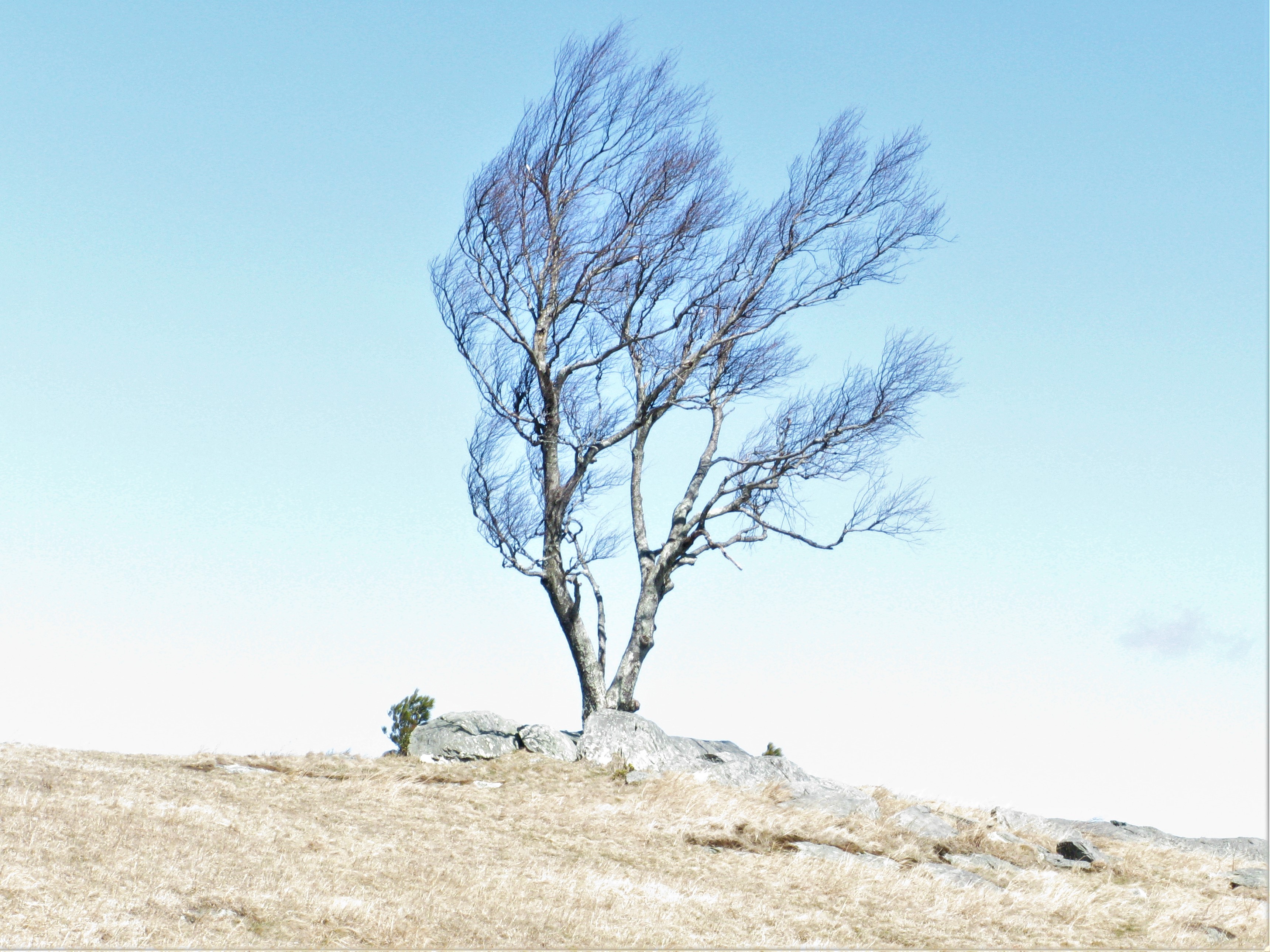


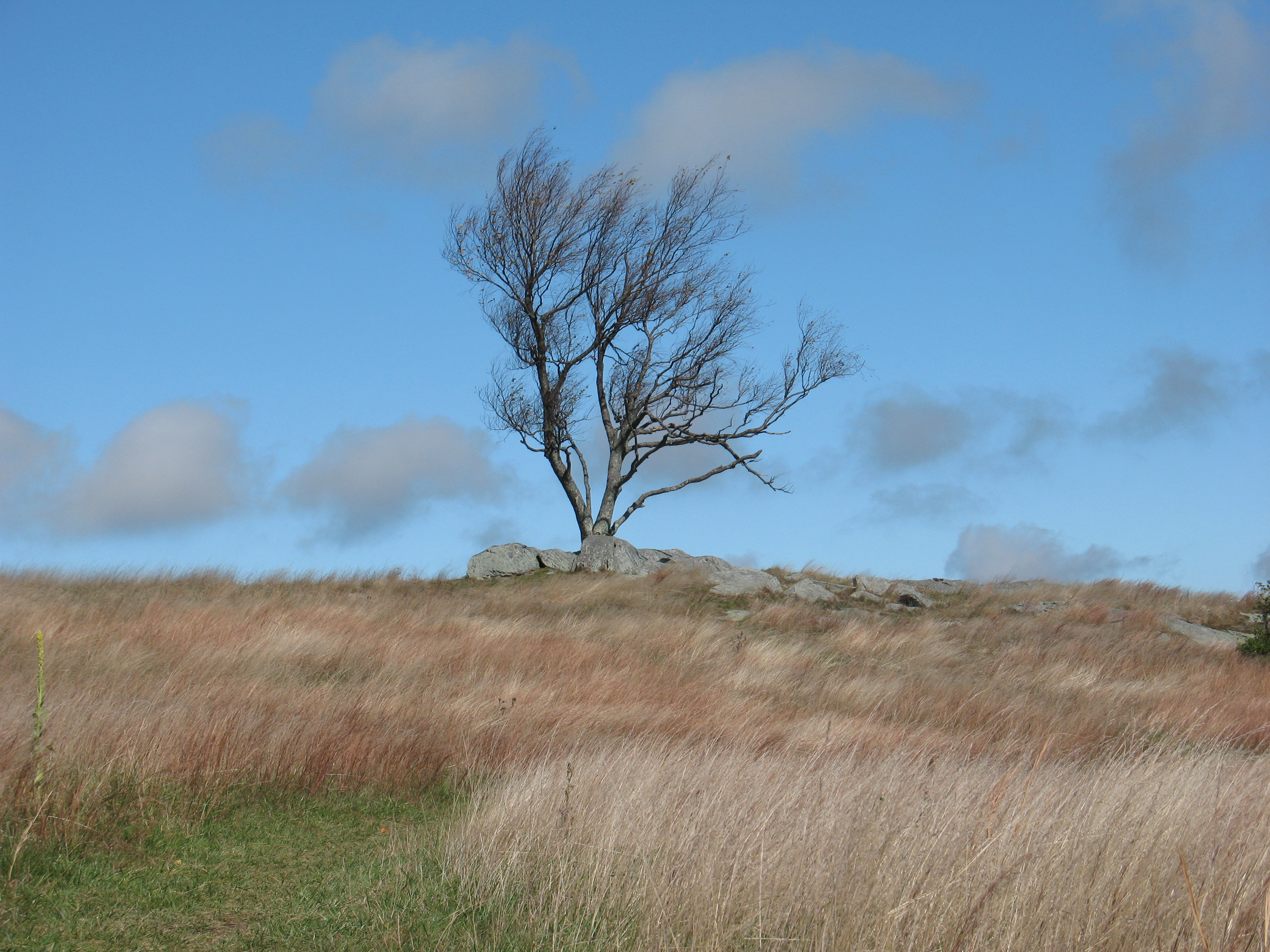
2020-03-07 Doughton Park Tree

Read Full Post »

Hepatica americana (Buttercup family), last year’s foliage and new barely opened blossoms

[with 3 poems by Sam Love]

On March 15 I walked an Elkin trail I hadn’t visited in months. The Elkin & Allegheny Nature Trail includes a couple of miles of restored railway grade and many more miles of side trails, loops, and spurs, plus 5-6 miles of intermediate level bike trail. I hiked most of those miles on the 15th but only partially for the exercise – I was walking mostly for ephemera.

Note the date. Looking back at my photos and notes I uncover Hepatica blooming as early as January 27, a single plant in a protected hollow, but usually here in Elkin, elevation around 1000 feet, the earliest Hepatica and Trout Lily emerge toward the middle or end of February. So who’ll be showing themselves mid-March? I ask myself, and how long will they last?

The study of cyclical biological phenomena is phenology. When do migrating warblers arrive from Central America? We saw our first Ovenbird March 19; I heard a Northern Parula out back on April 3. When do Wood Frogs lay eggs? When do Midges and Mayflies hatch out and Eastern Bluebirds build their nests? Sometimes local weather affects a given year’s record but longer term trends are linked to climate change. Can’t help worrying about those Parulas if the hatching of their chicks is out of sync with the juicy bugs. Phenology is a leading indicator of climate change impact, especially on vulnerable species.

For today, my phenology project is discovering tiny blooms just making their appearance.

And if that weren’t enough, as I walk a section of bike trail beside Elkin Creek a pair of wood ducks skitter up from the water and the male flashes his phenomenal colors before they veer around a bend.

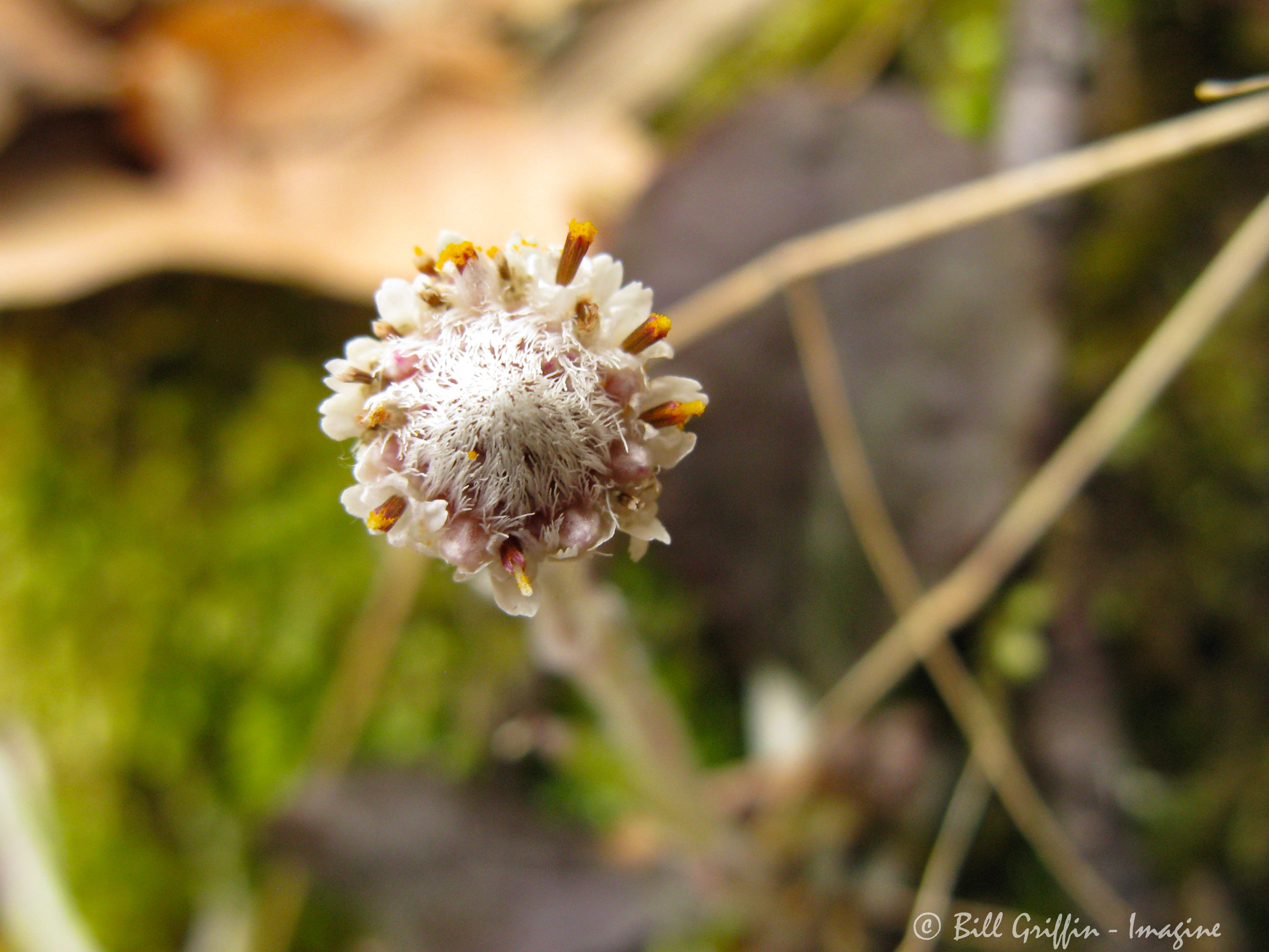
Solitary Pussytoes, Antennaria solitaria (Aster Family), flowers less than 10 mm in diameter

.     .     .     .     .     .     .

A Monument to Another Time

A winding rutted road
rambles through scattered rocks
to an abandoned homestead
that traces time backwards.

In the overgrown clearing
a hand laid stone chimney
pokes above winding vines
and gnarled tree limbs.

The fireplace stands as
tribute to an unknown mason
whose calloused hands
meticulously stacked the stones.

With the charred house gone
front porch music
no longer blesses the mountain
with notes and harmonies
that surf the Appalachian wind.

In spring wild flowers
scatter sun dappled beauty
among the crannies of this dream
of a simpler life, an abundant garden
and a small homestead taming nature.

Through winter the chimney
stands alone among
a palette of brown hues
that wait for spring shoots
to burst forth and repaint
the landscape.

Sam Love
Earth Resonance – Poems for a Viable Future, The Poetry Box, Portland, Oregon, © 2022

.     .     .     .     .     .     .


Bloodroot, Sanguinaria canadensis (Poppy family, Order Ranunculales), flower barely unfurling


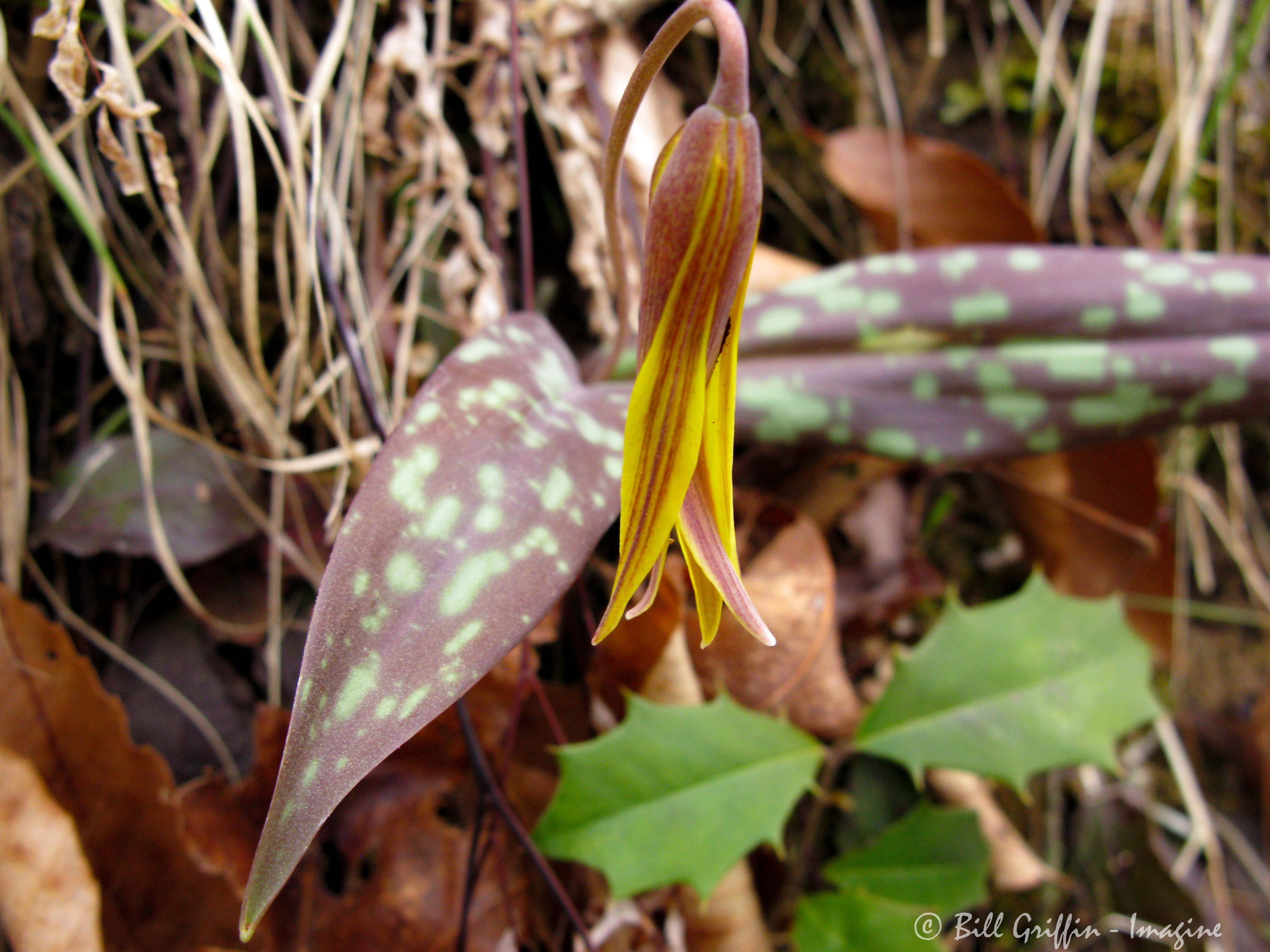
Yellow Trout Lily (Adder’s Tongue, Dogtooth Violet, Erythronium americanum (Lily family)


.     .     .     .     .     .     .

Thanks to Sam Love for alerting me to his new book of poetry about ecology and the environment: Earth Resonance – Poems for a Viable Future. Such an edgy relationship we humans have with all the other creatures in our biosphere. Mostly we ignore them except when they’re on our dinner plates. Any surprise that we have so much trouble getting along with things that creep and crawl and skitter and pounce (much less the ones that just stand there being green) when we can hardly get along with they guy whose yard sign doesn’t match ours?

And thanks to the Town of Elkin Recreation Department and the Elkin Valley Trails Association for all the great places to walk!

.     .     .     .     .     .     .

Visiting Khatyn
+++Peace Memorial in Minsk Region, Belarus

At sunset each step up the earthen berm
slowly reveals stone chimneys standing
as monuments to an unimagined darkness
that reduced hundreds of villages
to stone rubble and ashen timbers.

Across the field masonry memorializes
thousands of villagers burned alive
as Fascists sought revenge
for partisan guerilla attacks
launched from surrounding forests.

On hearths reaching to the horizon
urns rest filled with ashes and soil
scooped from the 628 flamed hamlets.
Each now lovingly stands as
a spiritual reminder of war’s insanity.

Three solitary birch trees and an eternal flame
symbolize the one quarter of Belarusians killed
in the world war that targeted their villages.
On this site twenty-six bells toll every hour
to remember the homes that once stood here.

The wind that whipped the flames
and charred the flesh, now cleanses the earth
leaving only spirits to haunt the memorial
and remind us of the horrors of war.

Sam Love

.     .     .     .     .     .     .


Virginia Pennywort, Obolaria virginica (Gentian family), flowers just about to open


.     .     .     .     .     .     .

Turtle Earth

In the Lenape creation story—Nanapush asks,
“Who will let me put cedar branches on top of you
so that all the animals can live on you?”
And the turtle says, “You can put them on me
and I’ll float on the water.”

In a vision the Native American holy man
sees the animals bringing earth
from under the water to make land
on the back of the turtle
to create a verdant Eden
where plants and animals flourish.

In another dream the Indian shaman
sleeps a long sleep and
sees a barren turtle
with writhing serpents
thrashing rattlers through portals
in its armor-plated shell.

This hollow eerie sound
resonates with a dry rattle
of primordial notes memorializing
the emerging death of nature.

Sam Love

Virginia Heartleaf, Hexastylis virginica, tiny brown jugs are the flowers just emerging

.     .     .     .     .     .     .


IMG_1948

Read Full Post »

NCPS Chappell Stephenson


C ++++ THE EPIGRAMMATIST

Mankind perishes. The world goes dark.
He racks his brain for a tart remark.

Fred Chappell

.     .     .     .     .     .     .

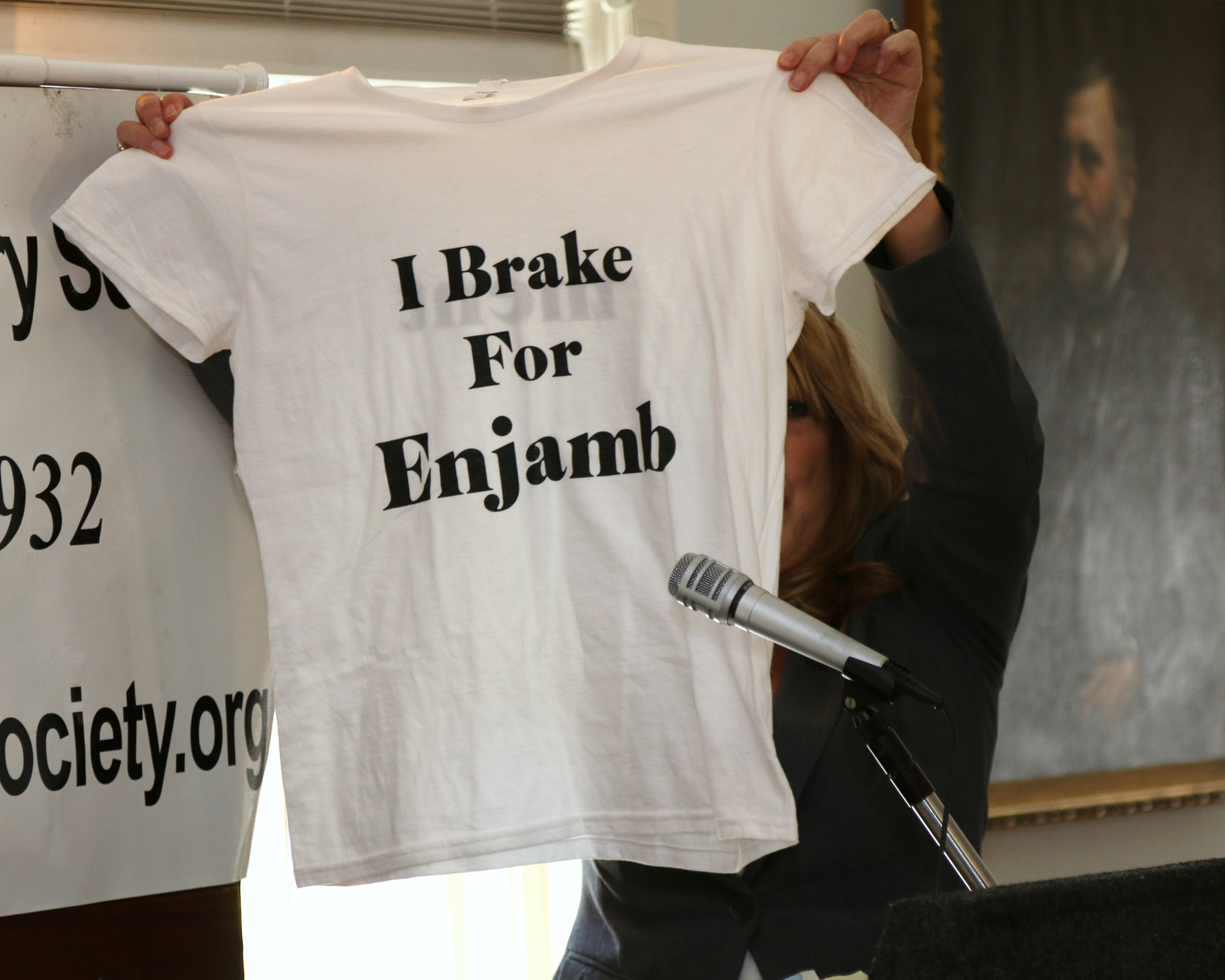
Poets are a sober and studious lot. Profoundly introspective, respectably staid. Their rhymes are the quintessence of conservatism and decorum, their meter most martial. Their lines are ever crafted and solid as Cold War architecture, their images invariably  illuminate and never titillate. Their thoughts are only a little lower than the angels’.

No poet and no poet’s poetry better represent these fundamental verities than Fred Chappell and Fred Chappell’s. For today’s APRIL FIRST missive we have selected the utmost in staid, respectable, and illuminating offerings from a book by Old Fred (as he has called himself) titled simply C (Roman numeral “100,” designating the exact number of poems in the book as well as Dr. Chappell’s initial, which this writer had not actually remarked upon for the first 29 years that he owned this book until today over lunch while he was reading aloud and his wife commented on the typeface, then pointed out the connection to the author’s last name). Illuminatio Lector.

.     .     .     .     .     .     .

V ++++ HOW TO DO IT

“Chappell – you who love to jest –
Hear the things that make life blest:
Family money not got by earning;
A fertile farm, a hearthfire burning;
No lawsuits and no formal dress;
A healthy body and a mind at peace;
Friends whom tactful frankness pleases;
Good meals without exotic sauces;
Sober nights that still spark life;
A faithful yet a sexy wife;
Sleep that makes the darkness brief;
Contentment with what you plainly need;
A death not longed for, but without dread.”
++++ ++++ ++++ ++++ – Martial

VI ++++ REJOINDER

Now let’s even up the score
And tell what things make life a bore:
Sappy girls who kiss and tell;
Televangelists’ threats of hell;
Whining chain saws, mating cats;
Republicans; and Democrats;
Expertly tearful on their knees,
Plushlined senators copping pleas,
Swearing by the Rock of Ages
That they did not molest their pages;
Insurance forms and tax reports;
Flabby jokes and lame retorts;
Do-gooders, jocks, and feminists;
Poems that are merely lists.

.     .     .     .     .     .     .

All of today’s poems, epigrams, epitaphs, enlightenment, and erudition are from C, by Fred Chappell, Louisiana State University Press, Baton Rouge & London, © 1993.

Fred Chappell is the author of more than thirty volumes of poetry and prose. He has received the Bollingen Prize, the T. S. Eliot Award, and the Thomas Wolfe Prize. His fiction has been translated into more than a dozen languages and received the Best Foreign Book Award from the Académie Française. He was the poet laureate of North Carolina from 1997 to 2002. [bio from LSU PRESS]

NCPS

.     .     .     .     .     .     .

XV ++++ UPON A CONFESSIONAL POET

You’ve shown us all in stark undress
The sins you needed to confess.
If my peccadilloes were so small
I never would undress at all.


XXIII ++++ LITERARY CRITIC

Blandword died, and now his ghost
Drifts gray through lobby, office, hall.
Some mourn diminished presence; most
Can see no difference at all.

XXVI ++++ ANOTHER

Blossom’s footnotes never shirk
The task of touting his own work.


NCPSNCPS


LIII ++++ EL PERFECTO

Senator No sets up as referee
Of everything we read and think and see.
His justification for such stiff decreeing
Is being born a perfect human being
Without a jot of blemish, taint, or flaw,
The Dixie embodiment of Moral Law,
Quite fit and eager to pursue the quarrel
With God Whose handiwork he finds immoral.

.     .     .     .     .     .     .


NCPS


LXXIX ++++ UPON AN AMOROUS OLD COUPLE

This coltish April weather
Has caused them to aspire
to rub dry sticks together
In hopes that they’ll catch fire.


XLI ++++ RX

Dr. Rigsbee
Drank all my whiskey.
He said, when I objected, “Hell,
Fred, you’re paying me to make you well.”
++++ ++++ ++++ ++++ – Martial


LXVIII ++++ EPITAPH: PREVARICATION

A lonely sorrow
This monument tells:
Here lies one
Who did nothing else.

NCPS Laughter

.     .     .     .     .     .     .

And the penultimate:

XCIX ++++ APOLOGY

If any line I’ve scribbled here
Has caused a politician shame
Or brought a quack a troubled night
Or given a critic a twinge of fear
Or made a poet’s fame appear
Transitory as candleflame,
Why then, I gladly sign my name:
Maybe I did something right.

.     .     .     .     .     .     .

And one last item, and about this there is no fooling:
HAPPY ANNIVERSARY MARGARET AND JOSH!


Margaret & Josh , April 1, 2016


LXII ++++ WEDDING ANNIVERSARY

Gale winds tore this tree
And drought and frost came near
To killing it. But see:
In its thirtieth year
It blooms like a candleflame,
And puts its youth to shame.

.     .     .     .     .     .     .


NCPS


.     .     .     .     .     .     .


2020-11-03b Doughton Park Tree

Read Full Post »

« Newer Posts - Older Posts »