Feeds:
Posts
Comments

Posts Tagged ‘NC Poets’

[with 3 poems by Rebecca Baggett]

How many grooves are there in a 12-inch 33 ⅓ rpm long-play record? The seven-year old doesn’t think us a bit odd when we fish out the big black discs and set them spinning: Burl Ives, Disney Princess theme songs, John Denver and the Muppets. She sings along with Miss Piggy, “Five Go-old Rings!” Would she have hopped off the couch last night and boogied with us to The James Gang cranked to the max on Funk 48?

We still have a landline at our house and until recently a rotary dial phone in the basement. I just read that only this year is Chuckie Cheese phasing out software updates shipped on 3.5 inch disks – which the article called “floppies” (remember? 5 ¼ inch, 360 kb, don’t toss them into a drawer with any magnets). Physical artifacts may be relegated to the landfill, but words remain our tools even if we’ve never knapped a flint. Dial it for me. The car won’t crank. Meet me at half-past (fractional arc of an analog circle?).

Last week I checked in at radiology for an x-ray. The young woman entered all my identifiers and when she got to my email address, she remarked, “Gee, AOL, I haven’t heard that one in a while.” Darlin’, that just means I’ve been jacked into the internet since before you were born. Juggling floppies. Writing DOS batch files before breakfast. And I’ll bet you don’t even know how many grooves.

Just one. That’s all it takes to be real groovy.

❦ ❦ ❦

Before the Stories Begin

Before the stories begin, the mothers die,
setting their daughters adrift, little coracles
bobbing rudderless, at the mercy of river currents
and ocean tides. Abandoned in forests so thick
no light touches their ferny floors, imprisoned
in crumbling towers guarded by rampant brambles,
banished to the dank depths of castle kitchens.

But here is the alternate reading:
Before the stories can begin, the mothers must die,
setting their daughters free – released from cautioning
fingers and pursed lips, from disapproving quirks
of a brow, from warnings weighted with echoes of warnings,
the line of foremothers frowning down the generations.

The daughters find themselves oddly light,
abruptly free to renounce titles and abandon kingdoms
for life on the high seas, to fall in love with a man-beast
deep in the forest, a stable boy, a fairy godmother.
To seclude themselves in towers full of groaning
bookshelves, to spend their days squinting
at the twisting calligraphy of ancient manuscripts,
to aim telescopes toward the night skies,
to rename all the stars.

Rebecca Baggett
from The Woman Who Lives Without Money, Regal House Publishing, Raleigh, NC, © 2022

❦ ❦ ❦

Words are artifacts by which we might glimpse the world. Words are not the world; words do not contain the world nor create the world; words are simply pebbles someone has painted, incised, knapped and dropped along the path. But Oh, how words may guide us along that path!

Rebecca Baggett is an inherent and inveterate sesquipedalian, as she confesses in the poem by that title in her book, The Woman Who Lives Without Money: a lover of complicated ‘foot-and-a-half long’ words. And yet the words she uses to craft these mysterious, marvelous, poignant, sad, hilarious poems are seemingly simple words. Everyone knows these words, these comfortable and familiar words. How Rebecca has painted, incised, and knapped these words, though! How she has lined them up and breathed into them meaning they had only dreamed of. How wonderful is the world she reveals in this ethereal and at once solid collection of words, such telling artifacts, these powerful words.

The Woman Who Lives Without Money (Regal House Publishing, 2022) is the winner of the 2020 Terry J. Cox Poetry Award. Rebecca has also published four chapbooks, including God Puts on the Body of a Deer, winner of the 2010 Main Street Rag Chapbook Contest. She was born in coastal North Carolina and his lived her adult life in Athens, Georgia.

❦ ❦ ❦

Weeping Willow

The willow missed
the children, their chatter –
like squirrels, but more various
and musical – missed
the sparrow-light bodies pressed
against her, the secrets
they whispered, how thy clung
to her branches with their small
hands, the way their legs twined
around her.

++++++++++ Nothing inhabited her
like that, nothing loved
so fiercely or so foolishly.
They believed they would be
hers forever,
++++++++++ did not understand,
at all, necessity, compulsion,

letting go

Rebecca Baggett
from The Woman Who Lives Without Money, Regal House Publishing, Raleigh, NC, © 2022

❦ ❦ ❦

Chestnut

I touched a chestnut sapling
in the Georgia mountains.

My friend writes of the great trees
and their vanishing,

but I have seen a young chestnut,
tender and green, rising from its ashes.

I, too, write of loss and grief,
the hollow they carve

in the chest,
but that hollow may shelter

some new thing,
a life I could not

have imagined or wished,
a life I would never

have chosen. I have seen
the chestnut rising,

luminous,
from its own bones,

from the ash of its first life.

Rebecca Baggett
from The Woman Who Lives Without Money, Regal House Publishing, Raleigh, NC, © 2022

❦ ❦ ❦

❦ ❦ ❦

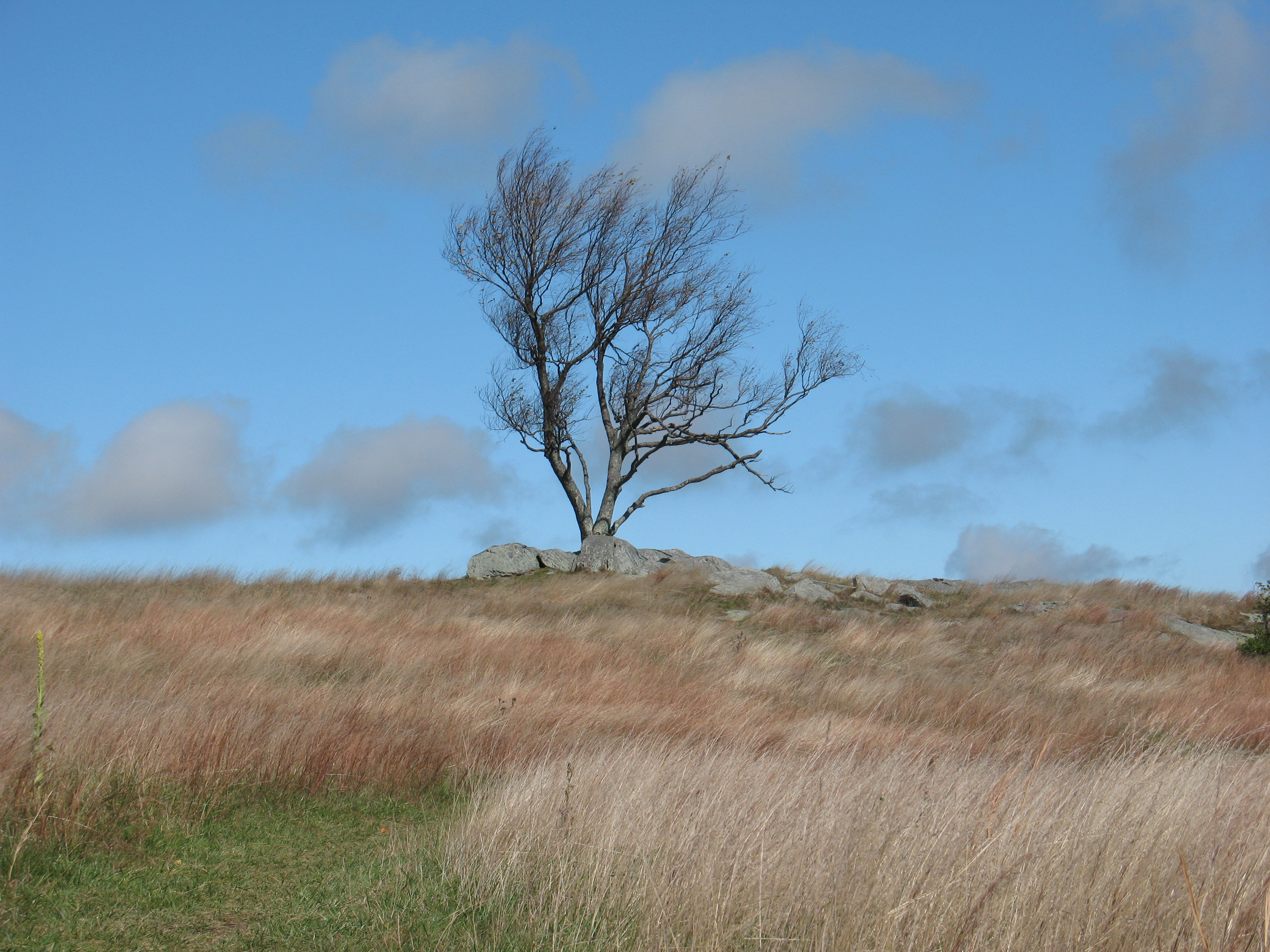
Doughton Park Tree 4/30/2022

Read Full Post »

[with 3 poems by Maria Rouphail]

A stroll down the beach at dusk – I was sixteen and she was almost. Would you call it our first date? I think we held hands. I know we didn’t kiss. Fifty-four years later the beach is still there, although not the pier we walked beneath, things the earth makes, less so human desires. This afternoon she is upstairs writing a letter and I have just cleaned up after lunch. Where have we been and where are we going? Well, in an hour we’ll take a walk beside the river.

Oh Wise One, long-married, specialist in domestic bliss and expert in the cultivation of love, impart your secrets! Are you kidding me? I’ve spent all morning making a list and it is exactly two items long: (ONE) Never Imagine You Know; and, (TWO) Never Quit Working to Find Out. Number One becomes apparent every time I assume or jump to a conclusion or utter as comfort some empty platitude (or, cardinal sin, just wasn’t paying attention). Number Two is the quick corollary as Number One’s immediate aftermath and the sooner engaged the better – not Working to Find Out usually invites conflagration.

Which is probably why love is such a necessary obsession of poetry. Infatuation is the hot minute of attraction; love is the cool hour of reflection. Poetry may germinate unseen underground as the temperature rises, but its sprout becomes visible when the creature is leaned back in chair, pen hovering listless over paper, the image of affection growing into clarity within the cool, reflective mind. And as I reflect further, I perceive that the seeds of most of my own love poems involve messing up with Number One and Two, above, only to be rescued and reconciled by the big sighs and small gods of forbearance and forgiveness.

Even now I imagine her at her desk, pen and paper, that elegant typographer’s script, those meticulous phrases – oh yes, I want to love her and I do.

❦ ❦ ❦

Annunciation
++++ (after Lynn Emmanuel)
+++++++ for Robert

He wants to be born.
So first he enters the dream of the woman
a doctor has told will never conceive.

He lets himself in through the gate
of her sleeping brain
during a hard snow
in late November.

He give himself eyes and hair like hers,
wraps himself in thick fleece, his fingers curving
over the hem, like a paws of a burrowing mammal.

She wakes with the dream of him still clinging,
I’ve birthed a back-eyed baby boy, I’ve carried him
up the aisle of the church to the baptismal font.

She goes to the window where slantwise
snow erases the houses across the street.
Only a curbside lamp on its iron stalk breaks through,
++++ a yellow clot in the boreal blur.

After she has laid aside the dream or forgotten it,
he enters her body sometime in January.
His arrival ignites engines and fires up turbines

with power unknown to her, making her whole
being a construction zone for the laying of foundations,
the framing of the many rooms of his evolving body.

In April, cornerstone and beam well set and level,
he shows her his brain and spine, a string of perfect lights
blinking the in the midnight sky of the sonogram.

The doctor is speechless. But the woman
rehearses the names of her beloved living and dead.
She will pick one of them.

She watches the tiny heart strobe in its cage.
Beacon of what is coming in October.
A swaddling blanket. A christening.

Maria Rouphail
from All the Way to China, Finishing Line Press, © 2022

❦ ❦ ❦

One line echoes in each poem I read in Maria Rouphail’s collection: Even then, / I could not say you did not love me. All the Way to China is a conversation between daughter and mother that spans decades, even generations. Many different speakers inhabit the poems, in many places and circumstances, but the voice of daughter/mother is audible in each, even if only as a whisper. Through harsh treatments, neglect, destructive choices, and pain that whisper of love still works to keep itself alive.

Love is work. In one of Fred Chappell’s novels, a youngster asks his old grandfather how is it possible that he and grandmother have managed to stay married for so many years. The old guy’s answer? “You don’t leave, and you don’t die.” In Maria’s poems, leaving is a frequent threat and dying too soon is a reality, but the magical work of poetry allows the dialogue to continue in spite of, maybe even because of, mortality. Telling a story allows it to discover its meaning. Telling a hard and painful story allows it to discover new meaning that just may open a door to healing.

The final two poems in the book bring meaning and healing forward and invited me to turn back to the first page and read the cycle again: Laudate Omnes (in praise of everything), and Mother and Daughter, Two Voices – III, Daughter. Yes, this collection is the work of love.

❦ ❦ ❦

Laudates Omnes
++++++(for Asher, young grandson)

Let’s talk
to the bees.

++++++Let’s say

Ladies, thank you
each and all

for coming this day
to the hyssop and bergamot.

Thank you
for diving

into the boggy throats
of pale blue sage.

Thank you
for letting sticky

pollen crawl
up your hairy legs.

Thank you
for the sweet spit of the hive.

Now to the trees turn and say,
Brothers,

I don’t know all your name
or what families you belong to,

but you over there,
tall and handsome with your spiky green:

if you and I were lone survivors
of a meteorological catastrophe,

I’d live with you.
I’d hole up under your branches.

Leaves and rain
would be our food and drink each day.

Now let’s say thanks and thanks and thanks
for the hive’s honeyed paradise,

for meadows of thick-maned mares
drowsing with their foals,

for bees, horses, and trees,
ocean, plains, and the sky.

Let’s say thanks
for the darkness between stars

which is not an emptiness,
but a rookery

where God dreams us.
And if we found ourselves

on a comet flying
beyond Pluto’s orbit,

even there we would
be not separate and alone,

but we would be
as now we are

in the heart of things,
the very heart.

Maria Rouphail
from All the Way to China, Finishing Line Press, © 2022

❦ ❦ ❦

Margie’s Daughter Talks Back

Wood. Shell. Bone. Buttons
in every size and color your mother saved for mending.

You, too, saved them,
in the round cookie tin on a high shelf.
Rainy days, and you’d take it down
and we’d remember
buttons from faded summer dresses,
buttons from coats returned from war,
buttons with bits of garments still clinging,
flesh and tendon of them. Red grosgrain,
shock of silver wedding silk,
fingers of fragrance still clinging.
Attar of rose and vetiver still clinging.
Heft and pour, the cascading clack and clatter
of buttons, like coins or pretend jewels.

You, too, loved them.
You and I together breathed the old secrets hanging
like the kitchen smells in that Bronx apartment.
Buttons from a man’s flannel before zippers were.
Your father’s, you said. And the blue bruise
your mother tried to hide with a lock of hair when
you, looking, and in your small voice, asked,
What happened to your eye, Mama?
as she reattached the right arm of your school sweater.
In the next room the bleats of a baby boy,
and a darkness you hoisted onto your twelve-year-old hip
and hauled through the rest of your life.
Hauled it into my life, too.

Would you believe me if I told you?
I have survived the winter.
Here is the faith I’ve entered with myself,
rule, rite, and rigor of it:
I will not belong to whatever happens to me.
It’s OK to say these things.

Maria Rouphail
from All the Way to China, Finishing Line Press, © 2022

❦ ❦ ❦


❦ ❦ ❦

2019-02-09 Doughton Park Tree

Read Full Post »

[with 3 poems by Katherine Soniat]

This morning is the thirteenth day of the first month in the Gregorian calendar. Outside my window the sunlight is thin and pale and all the birds wear their winter flannels. New Year, you say? Seems pretty frayed and achy this morning. Like me.

Not every culture celebrates the new year in the depths of Winter. Chinese New Year, based on a lunisolar calender, arrives with the new moon between January 21 and February 20. In much of Asia this timing includes the first glimmers of Spring, so New Year is a celebration of new growth and new arrivals. In 2023 that date is January 22.

The Islamic calendar is strictly lunar; the new year commemorates the Hijrah, the migration of Mohammed from Mecca to Medina (year 622 in the Gregorian). This can fall in any season of the year; for 2023 it’s Summer, July 19.

Rosh Hashanah (“head of the year”) is the Jewish New Year. By tradition this is the anniversary of the creation of Adam and Eve. It is celebrated 163 days after first day of Passover at the new moon closest to the Autumn equinox, between Sept 5 and Oct 5. For 2023 that’s September 15.

In every season, a new year. God’s course is one eternal round. Gray, dormant, stuporous, on hold, nothing happening you say? Linda and I enjoy celebrating the New Year with the arrival of our NC Wildlife Federation Journal. On the back page of every issue is a seasonal almanac, “Jeff Beane’s Guide to Natural North Carolina.” Just a sampling –

Dec 25 – Christmas fern, running-cedar, mistletoe — plenty of GREEN
Dec 28 – Winter holly and yaupon berries are RIPE AND READY
Jan 2 – hardy butterflies out & about on warm afternoons:
+++++++++ buckeye, fritillary, red admiral
Jan 7 – Bald Eagles are laying eggs
Jan 12 – Great Horned Owls nesting and hooting up a storm

And my favorite, on my birth date:

Feb 11 – Gray squirrels are having babies

Life goes on. Time is not standing still. The year is no straight line but a circle always new.

❦ ❦ ❦

For Sweet Dreams

Crimson with rash, I’m in bed in a hotel, my box of blue
capsules for sleep labeled: por sueños, dulce y tranquilos

beside me. Swallowing three with red wine, I doze off
to wander from door to door calling – I’m here for sweet dreams

until a figure ushers me into the room where you’re dying. Winter here,
embers smolder in the grate. The scarlet rug with a bear woven at its center
covers you, almost up to the eyes – as if I need a reminder in this room with your
white metal bed on wheels.

Again, I insist that I’ve come only for dreams, knowing that when you’re gone,
part of our darkness will be complete.

From down the hall comes the smell of stew, that domestic porridge,
and I want you, the father of my children, not to die. I promise to stay on the path
with our basket of food as slowly you rise from bed

to hold me from behind. With your hands on my stomach, you say
we’re headed home, and this time it feels right to be going, sundown
in a gold winter day.
++++ ++++ ++++ Then, as if doused,

++++ ++++ ++++ ++++ that dream goes black,

++++ ++++ ++++ ++++ ++++ blank –

++++ ++++ ++++ ++++ ++++ ++++ my basket stone-heavy
++++ ++++ ++++ ++++ ++++ ++++ ++++ and empty.

Katherine Soniat
from Polishing the Glass Storm, Louisiana State University Press, © 2023 Katherine Soniat


❦ ❦ ❦

I’ve been stretched on the couch for an hour reading Polishing the Glass Storm. I close my eyes. Pale lights, words with subtle breath, stalking figures fourstep slowly. They don’t make sense – they are sense. But now I’ve opened my eyes and they release my hands and the dance moves elsewhere. On and back.

Katherine Soniat’s poem sequence is the birthing place of memory, dreams, archetype. Time is fluid; memory shifts, now deceitful, now suddenly tangible. The speaker is child and mother, daughter to the dying, confessor, lover. The poems are conversations with the speechless, conversations of the soul with those living and those past living. Katherine recommends reading each section and its poems in sequence so that context can dissolve and reassemble. The images weave and drift; from an expressionistic landscape emerges the story of a life.

This is a challenging collection but worth the sojourn, the journey. From one comment on the cover: Soniat has the audacity to create a mythic language for the soul’s adventure that is utterly unguaranteed, adamantly open to the unknown . . . . More than a sequence, this is a cycle, a turning into and around. No straight line but a circle always new.

❦ ❦ ❦

In Bed at Night

In my mother’s house there was no heart.
In my mother’s heart she was always looking
for a home.
++++ ++++ I threaded stories of her, ones neither
of us had heard. Soft ones with feathers
at the bottom.

When my son had a daughter, she came into this blueness
knowing details with a past.

In bed at night playing puppets with the covers, she had
the smallest one whisper, You know, there’s so much sadness in this world.
She was three, and I almost didn’t hear that.

It was dark in the room, and inside her head. ++++ She thought in stride
with nothing — humped-up sheet, her cave in a city on earth
that must might go away.

Katherine Soniat
from Polishing the Glass Storm, Louisiana State University Press, © 2023 Katherine Soniat

❦ ❦ ❦

Place Where the Wind is Born

My promise is to stay by the bed, one finger tracing
his forehead into a fountain – up and out of the hospice,
over the garden wall.

He stays and I stay, the loping past, tail to mouth,
circles the room. Feeding. Time twisted about, only hours
left to count forward.
++++ ++++ ++++ Sound disappears. His vocal cords
sigh a bit – the syllabics of this life, done.

Silence enters every muscle. Visceral stillness. His lungs keep
breathing. Little motion but mine that afternoon in the shade-slated
room, the Dalai Lama’s chant playing by another sickbed. The fan
moves back and forth, as I blow breath on him.

He receives me like a sail.
Old Fudo, I tell him, purrs at this feet, the ocean vast and clear –
the tiller in his hand. In a strange, fierce tongue I speak
of what is no more.

Not much to let go – diminished relic of a man, something Franciscan
and medieval about him. ++++ ++++ By the window Buddha sits

with a load on his jade back.

Katherine Soniat
from Polishing the Glass Storm, Louisiana State University Press, © 2023 Katherine Soniat

❦ ❦ ❦

❦ ❦ ❦

2020-03-07 Doughton Park Tree

Read Full Post »

« Newer Posts - Older Posts »