Feeds:
Posts
Comments

Posts Tagged ‘NC Poets’

[with 3 poems by Scott Owens]

. . . walls that don’t line up, some bricks
uneven, some not quite the right size,
and that’s what the mortar’s for,
the gray areas of tolerance,
forgiveness, understanding,
empathetic appreciation of things
being left imperfect, only as good
as we can stand to make them be.
+++++++ from Reclamation

E&A Nature Trail, Elkin rec center, Mountains-to-Sea, Forest Bathing – none of these trails today. Instead Mom and Dad and I walk their customary course behind the townhouse, traversing maybe 200 meters of blacktop. They tap their canes on the far curb to mark the first turnaround; it’s a little uphill and a lot slower approaching the second turn but then all downhill back to their doorway. Some days we keep going a little farther. This afternoon we feel like it’s been enough.

And why do we spend 45 minutes on our little trek, 3 or 4 careful steps per meter? Just needing the exercise? A breath of fresh air? Halfway through our circuit, Maggie’s owner appears and drops her leash, little fluffdog who gallops to Dad because she knows he always carries biscuits in his pockets. Norris stops to share the latest (oldest) joke. Here’s Peggy to check on how Mom and Dad made it through family travels over New Year’s (and to say Hi to this particular family person still staying with them tonight). Wave at Julia who’s expecting company for supper, wave at the FEDEX guy. Comment on all the little gardens behind each townhouse – Nice wreath! Is that a new bench?

This slow-gaited noticeably-hunched deliberate meander is the mortar of Mom and Dad’s days. These few folks they greet, and never overlook the dogs, are their neighborhood. “I’m going to get better, I’m going to walk farther,” says Dad, but even this afternoon it no doubt strengthens him just as much to hear, “I just can’t believe you’re 96.” Acceptance, understanding, empathy for the relentlessness of aging and decline – these hold the chipped, uneven bricks together. Let’s take another walk tomorrow, no matter how meager, no matter how slow.

And you can keep an eye out with me – I have yet to catch Dad slipping those dog biscuits into his pocket.

❦ ❦ ❦

Common Ground

My brother has never kept a single lake,
a single lost grave to himself.
Always he calls, then waits until I
can come, lets me lead the way,
find it like the first time,
proclaiming the names I know, the shapes
of bird and stone, cloud and tree.

Once in the same day I saw
a kestrel, a mantis, an arrowhead
and took it as a sign, though since
I have seen each in their own days
and miles away from each other.

I do not believe God will bend
to kiss this mouth. I do not believe
the wine will turn to blood. But something
knows the moment of sunflower,
the time of crow’s open wing,
the span of moss growing on rock,
and water washing it away.

In the pictures I remember, there is you
letting me stand on the fallen tree
as if it were mine. There is you
letting my arm rest on top of yours
around our mother. There is you
lifting me up to the limb I couldn’t reach.

This is the faith I’ve wanted, to know
that even now we are capable of such
sacrifice, such willingness to love.

Scott Owens
from Prepositional, New and Selected Poems, Redhawk Publications, The Catawba Valley Community College Press, © 2022 Scott Owens.

❦ ❦ ❦

Scott Owens travels through life in this solid, substantial collection of poems, Prepositional. He is coming from it, being of it, finding its deep inside and its dark under, discovering its thrall over and above. And as Scott sees through and into life, he invites us to accompany, to courageously push things forward.

As the newest in a long line of books from a prolific poet, this collection yet seems to be an inflection, an exhalation of breath long held. These poems walked a long way to take their seats here. Some are new but all have been selected to become new. Or maybe it’s their relationships to each other that have grown new, as Scott explains in 13 Ways of Prepositions: every way a squirrel can be / in relation to a tree. These are poems about poetry, its art, its craft, but more so the arising of something greater out of something lesser. These are poems about students and teaching and being a student; these are poems about family ties in every Venn you can imagine. All these poems have gathered here, though, for a common purpose: to water the seeds of relationship; to somehow connect with each other and with you and me, their readers.

When I finished the last poem and laid the book down, this is the reverberation I still heard ringing in my mind: “The world is a wonderful place. You are a wonderful person. I’d like the two of us to sit down and share something of these two wonderful facts.”

❦ ❦ ❦

Words and What They Say

Some say you can’t tell anything
from the language that people use,
that Eskimos in fact have no
more words for snow than we,
nor Anglo-Saxons more
for cut, stab, thrust,
and the fact that our words for animals
when we eat them, beef, pork,
poultry, all come from French
doesn’t prove they’re better
cooks or bigger carnivores,
any more than 23 acronyms
for laughter shows that texting
teens just want to have fun,
but when I hear my carful of 2nd graders
from Sandy Ford Montessori School
making up names for the sun,
and the moon, and the stars that only
come out when you’re camping and the fire
goes out, and you turn off your flashlights
while our mother holds you in her arms,
I can’t help but believe
that not only is there hope for us all
but that the hope we have
is strongest when we find a way
to put it into words.

Scott Owens
from Prepositional, New and Selected Poems, Redhawk Publications, The Catawba Valley Community College Press, © 2022 Scott Owens.


❦ ❦ ❦

Of

Poetry is contrary to productivity.
Poetry encourages idleness.
Poetry stands at the window
because it is curious about the flowers,
this flower with its yellow fringed face
around its one brown eye.
Poetry stands at the window
because it is curious about the trees,
this tree with heart-shaped leaves,
some turning yellow in the first
days of fall, some fallen off and still
the limbs reaching up to the sky.
Poetry stands at the window
because it is curious about the sky,
how it got there, where it goes,
what it’s like where it ends.
Poetry wants the window down.
Poetry walks back and forth
through a field going nowhere.
Poetry thinks it’s okay to look
at the same sky day after day,
sometimes minutes at a time,
sometimes with no other purpose
but remembering blue.

Poetry refuses to follow the rules
of efficiency: get in line,
speak only when spoken to,
never say anything that would embarrass your mother.

The first poem ever written was a drum.
The first poem ever written was a foot
tapping on the side of the crib.
The first poem ever written was a rope
slapping the red clay playground
of William Blake Elementary School.

It is not necessary for poetry
to be beautiful
though sometimes it is.
It is not required of poetry
that it be profound
though it rarely closes its eyes.
It is not expected that the face
of poetry be etched with tears,
the hair dripping with sweat,
the mouth expressing awe.
Poetry owes nothing to anyone.

Still, poetry wakes up each morning,
walks to the edge of the world
and jumps, believing one time
it will fly, believing one time
the dive will not end, believing one time
an answer will rise from somewhere beyond.

Scott Owens
from Prepositional, New and Selected Poems, Redhawk Publications, The Catawba Valley Community College Press, © 2022 Scott Owens.

❦ ❦ ❦

Redhawk Publications; The Catawba Valley Community College Press;
2550 US Hwy 709 SE; Hickory, NC 28602.
Prepositional, New and Selected Poems by Scott Owens.

❦ ❦ ❦

Read Full Post »


[with 4 poems by Joan Barasovska]

In just a few days our home planet will reach that point in its yearlong circumsolar peregrination at which it will feel the maximum effect of its 23 degree axial tilt off the perpendicular. In other words, today is way too close to the solstice for us to have waited until 3:30 to begin our 5 mile hike.

Byrd’s Branch to Grassy Creek and out to the far terminus of Forest Bathing: when we turn at last to retrace our steps we see that the shadows have lengthened into no shadows at all. Splitting the utter stillness as we skirt Klondike Lake, fifty geese suddenly spook and lift and wheel over us. The urgency of their wings is the sound night makes when it is falling too fast. As we leave the creek and climb up from the shadowy vale, we do regain a bit of skyglow from the western horizon, that thin chill winter platinum that can’t penetrate between the gray trunks closing around us but which persists in the pale leaves covering the path. Light still leads us on.

Serenely quiet here. No breath of breeze, no quarreling crows, no road noise. The squirrels have hushed their startled rattling up the hickory trees. We can’t see into the cloaked woods; we imagine we’re entirely alone until our last companion calls. A Towhee sings his plaintive two-note motet, his mate answers, and they ferry us along the trail.

Here’s the road crossing, isolated rural lane. Only another mile to our car – a mile through Mr. Byrd’s close-planted white pine woodlot. Shall I describe the pathway leading down into the embrace of those lowering dense-woven needled boughs?

It’s dark!

❦ ❦ ❦

Sore Throat

The best light in our rowhouse on St. James Street
is from the tall front windows in the living room.
I wait by the window in my pajamas for Dr. Barol
to ring the doorbell and for his jolly voice.
I’m to sit on the piano bench where he can see best,
his black leather bag beside me, its jaw wide open.
He stands above me in horn-rimmed glasses and bow tie,
shakes down the mercury in his glass thermometer.
He tells me to say AH and says, Open wide.
My tonsils are infected again, he tells my mother.

I want him to convince her to pity me.
Tell her I must stay in bed for a week.
Tell her to be nicer when she talks to me.
Don’t tell my mother that sickness
is what I crave most of all.
I’m sure he can tell. He’s shined a light
in my throat and ears so many times
he must know my trick.
I’m a little girl who believes she can
make herself sick just by being sad.

The nurse at school, Mrs. Marx, knows me well.
She rolls crinkly paper down the padded leather
table so I can rest with her if no one else is there.
She plays the opera music she loves on her radio.
I know she knows my secret, but maybe
she forgives me. From the bottom of my being
I want the gentleness that only sickness gets you.

But it doesn’t really work that way.
My throat is so sore. My mother’s angry
that I’m sick again. She has too much to do.
She makes me Cream of Wheat
with brown sugar. She pours medicine
from a brown bottle into a spoon.
She takes my temperature, gives me baby aspirin,
puts cool washcloths on my forehead, changes
the sheets. She does all that she should do.
I need what I can’t name.

Joan Barasovska
from Orange Tulips, Redhawk Publications, The Catawba Valley Community College Press, Hickory NC, © 2022

❦ ❦ ❦

Darkness. It creeps to overtake you whether you mark its arrival or not. Once surrounded, engulfed, overwhelmed, you may imagine that the darkness is all. That there is no way out, that there is nothing other than darkness.

Joan Barasovska’s Orange Tulips, a memoir in narrative verse, is a path into darkness. The world of this girl child opens with joy but already hints of inexplicable sadness; the adult journeys through suffering, doubt, pain, the wrenching temptation of hopelessness. Despair is palpable.

But no life is a single arc. There are many stories and their outcomes are not foreordained. An unexpected door may open into light. The arc of another person entwines with our own and we are touched, changed. As memoir, Joan’s story begs to be read cover to cover, front to back in a single sitting. I am lifted into the promise of light by the possibility of healing and redemption in its final pages. I am finished with the book, but it is not finished with me.

❦ ❦ ❦

1963

I’m a merry Girl Scout in green uniform
and felt beret. My troop is walking east across
the Schuylkill River Bridge. It’s an old bridge,
prickly sandstone under our palms.

You can sit on the ledge if you’re brave.
You can stand on the ledge if you’re foolish.
We look between the columns way down ito the water.
How deep is it? Miss Kelly doesn’t know.

What I care about, in one breath, is the impact of a fall.
The magnet of the gray river. The sick.
I don’t ask Miss Kelly why people jump.
She knows about hikes, knots, campfires.
Starting today, I’m the authority on jumping.

Merit badges, saddle shoes, jokes I am famous for.
I am nine, maybe ten.
Now I have a secret so strong it makes me dizzy.
On my honor, for God and my country,
it’s 1963 and I have fallen down.

Joan Barasovska
from Orange Tulips, Redhawk Publications, The Catawba Valley Community College Press, Hickory NC, © 2022

❦ ❦ ❦

All Wrong

Done so many things wrong
I don’t know if I can do right.
+++++++++++++ – Tracy Chapman

The built world defeats me.
My apartment, the building
where I answer phones,
the sidewalks I walk on,
have all done great things
to my nothing at all.

If I were in charge
this city would be empty,
wind blowing soot.
Just look at me!
A shandah, disgrace,
such a smart girl,
dropout, breakdown,
breakup, crackup.

I am twenty.
I read long novels.
I walk and walk.
I only feel well
on trains and buses.
I draw odd diagrams
in small books.

I don’t wonder
why I’m done for.

I only want to be
as useful as a sidewalk,
to hammer one nail straight.

Joan Barasovska
from Orange Tulips, Redhawk Publications, The Catawba Valley Community College Press, Hickory NC, © 2022

❦ ❦ ❦

The Day I Walked on Fire

it wasn’t fire
it was gingko leaves
the sun lit them yellow
they were juicy with heat

the day I walked on ginkgo leaves
I imagined they were fire
that my shoes were melting
that my feet were burning

and I felt no pain
on that autumn day
when I burned to be
a holy woman

Joan Barasovska
from Orange Tulips, Redhawk Publications, The Catawba Valley Community College Press, Hickory NC, © 2022

❦ ❦ ❦

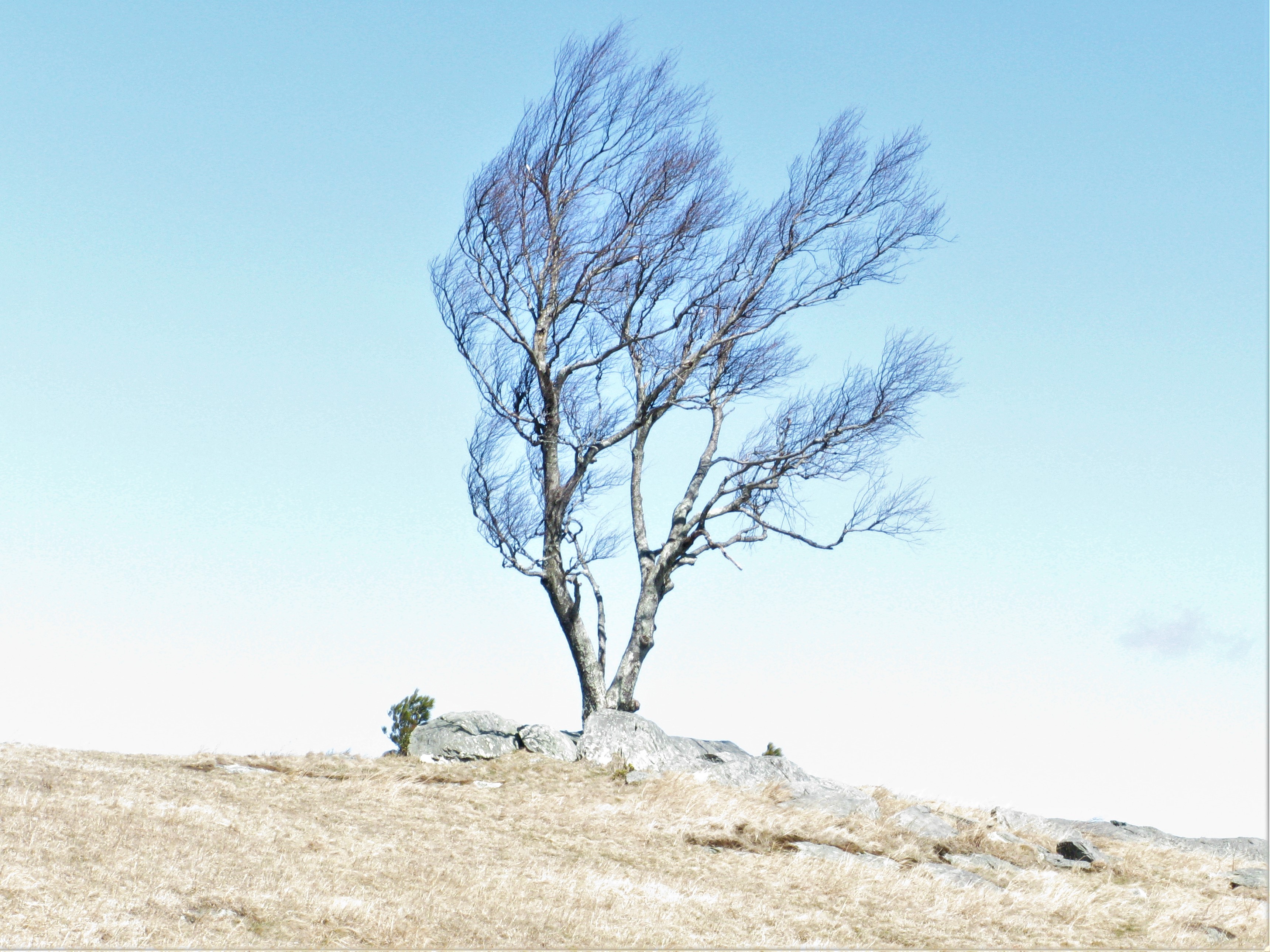
2017-02-11 Doughton Park Tree

Read Full Post »

[with poems by Kimberly O’Connor]

We walk out of the pines and hear it, a throaty chuff and grumble from somewhere across the corn field. A plume of dust and chaff is one clue but the clincher is the field’s gnawed border twelve rows wide, a swath of brittle stalks and husks eaten and spat out. And a scatter of yellow kernels in the weeds.

After we cross the road our trail re-enters the woods but still parallels the field. The combine is laboring well out of sight but its growling swells and fades. Linda and I hike this particular bit of Mountains-to-Sea trail every week and we’ve been wondering why these acres have been standing so long unharvested. Great day for an answer, this Wednesday before Thanksgiving – school’s out! – and the grandkids with us. Hardwoods now. In the leafless shadows we can smell corn dust even when we can’t see the field through the undergrowth. Saul hangs back to talk philosophy and politics with Linda while Amelia skips ahead and dares me to jump over every rock and root.

At our turning-back-to-the-car point, the trail branches north to Grassy Creek and south into the corn field. Machinery noise has receded; I want to see the carnage. We all walk up the red clay bank. Most of the stalks are now stubble but a few have been pushed over, unconsumed. I wander a few rows and pick up dry ears to show Saul and Amelia. Moldy toward the silks, but mostly each ear is clean hard kernels clinging to cob. I put a few nuggets in my pocket. Saul keeps two unshucked ears to carry home for evidence.

Back at the road crossing the uproar reaches its crescendo. We see the top of the cab as it approaches, pulling rows of stalks into its jutting incisors, and then it finishes its row and roars past us. A man and his son sit high in the glassed-in booth! They wave back to us and we watch for a few more minutes as more of the field is mown down.

When we turn back into the woods, Amelia says, “I’m sure glad they weren’t mad at us for taking some of their corn.” Small miracles – and another is that on today’s hike we heard nary a complaint from the kids even when I confessed I’d forgotten to bring the snacks.

❦ ❦ ❦

Old Dominion

Remove arteries,
veins, and clotted blood
around heart

was the start of a recipe
for chicken pie in
a 1920’s cookbook

I found and read in the house
of friends we were staying with
in Charlottesville. It was

an heirloom. Their whole house
was antique, old fashioned:
mason jars, strawberries

resting in colanders, milk
in a white porcelain pitcher.
Worn embroidered linen dishcloths.

She canned. He cut wood
for fires in winter but
this was summer. The air

almost tropical, unbreathable.
Azaleas. Wisteria. Roses.
When I breathed in, it hurt.

The house hurt me and
I didn’t know why.
Everything was white.

Clotted blood around heart
I wanted that cookbook.
I almost stole it. I was

a terrible houseguest. I wanted
to go home. I cried beside
the clawfoot bathtub

throughout the afternoon.
I wanted to go home and
I wanted to own that house.

Kimberly O’Connor
from White Lung, Saturnalia Books, Ardmore PA, © 2021


❦ ❦ ❦

Kimberly O’Connor’s poetry is the surgeon’s dispassionate blade. Lie straight and still and watch the blood well up. Yes there will be pain, yes invasion, yes you are vulnerable, but what is cut from you may offer your best chance to live.

Kimberly O’Connor’s poetry is the surgeon’s passion and point of compassion. Yes there is pain in our world, both of us know it, both feel it, both of us have at times caused the pain. But here is our best chance for hope, for a world where we dig out the pain, find its roots, put it in a place where we can all see it for what it is. Maybe it won’t have to hurt us forever.

In White Lung, Kimberly explores every painful vein and clot of her Southern heritage and upbringing. She doesn’t flinch, although she cries and so do we, her readers. Several of her poems share the same title, The History of My Silence, which proclaims one of the major themes of the book and can be extended to the silence of not just one individual but of our society and culture: by extension, the silence of our history. Not only are the individual poems tense with emotion and meaning, but the poems communicate with each other to weave a personal story, and interconnect to bring their painful, hopeful, glorious epiphanies into masterful wholeness.

The North Carolina Poetry Society awards its annual Brockman-Campbell Award to the best volume published by a North Carolina writer in the preceding year. Kimberly O’Connor and White Lung are the winner for 2022. Kimberly is a NC native who lives in Golden, Colorado and has over 20 years of experience teaching and working with writers ages eight to adult. This is her first book.

[More information about the Brockman-Campbell Award, White Lung, and another poem by Kimberly O’Connor, available here: ]

❦ ❦ ❦

Portrait of a Lady

her father an electrician her mother
a hairdresser (it’s not that simple)
(you want her to be nice
and quiet) she’s a girl reading
in her tiny bedroom in the trailer
she does not say a word

you don’t want to read the word
n_____ but there it is her mother
says it her father says it the trailer
echoes with its two-syllable
thud & poison you can read
(here) where she wrote it in her diary a nice

(straight white) girl straight hair straight A’s nice
and quiet (like you want) says not a word
sits in the beauty shop reading
spinning a chair while her mother
cuts hair (she imagines she is special)
they drive the dirt road to the trailer

they move out of the trailer
build a house (big wood nice)
when her father wins a sweepstakes
they look at the letter repeating the words
over and over (it’s true) her mother
gives her the letter to read

there it is in red
(one hundred thousand dollars) the trailer
becomes a memory her mother
moves the shop to the new nice
spare room the ladies get shampoo & styles words
hum white nose white ladies scissors

swish you can see it (it’s simple)
a whit girl grows up in the South its red
& pink mimosas dripping scent the words
they say there taking root trailing
tendrils in even nice
girls’ minds (everyone says them even mothers)

Kimberly O’Connor
from White Lung, Saturnalia Books, Ardmore PA, © 2021


❦ ❦ ❦

Untitled (By the End)

By the end, we won’t remember what
happened when. We’ll remember hardly
any of it. The only thing that makes it

bearable is all the blossoming. The trees
turn white, then green. What unfolds
for me unfolds secondhandedly.

While they’re injecting the midazolam,
I am watching little girls in black
leotards play tag. Or it takes longer

than I think and we are already driving
home for dinner. But let’s go back
to before that. There was a murder.

It was violent. It was not an accident.
A young woman died and a young man
went to prison. Elsewhere, unrelated,

I want to be a poet. I fall in love with
someone. He becomes a lawyer.
We become a mother and a father.

We move to Denver. My husband meets
the young man in prison. He’s no longer
young. He becomes a kind of friend.

Of course this takes years. I learn things
like in supermax, the inmates are required
by law to have access to one hour

of sunlight per day. On death row,
the light though a skylight counts.
The men can’t touch their families

or each other. The day before their
executions, their mothers cannot hug
their sons good-bye. No one cares about this.

Why should they? Their victims’ parents
didn’t get to hug their children before—
yes. That is correct. So what’s wrong

with me? My husband sends his client books.
Should I say his name? He likes
vampire books. Mysteries. Thrillers.

When my husband calls him with the news
that the last appeal has been denied,
Clayton says Have a good weekend

when they hang up the phone. My husband
flies to Oklahoma City. I wait.
Amelia’s dance class is in a church.

I sit in the sanctuary and imagine
I am holding Clayton’s hand.
I am ridiculous. But my hand feels

warm for a minute. My husband calls
and he is weeping. Or he is furious.
He’s not dead yet, he says.

They kicked us out. They closed
the curtain and they made us leave.
It’s the end of April; everything’s in bloom.

It snows, then the sun comes back.
By summer, we should feel better.
By autumn, we might forget.

Our garden grows. We harvest. I walk
through the alley carrying vegetables.
When I get home and dump out the cucumbers,

I’m filled suddenly with joy. I pirouette
around the kitchen and imagine Clayton
is dancing with me, his spirit, anyway.

I think he is. I wish for it. I imagine
his victim’s mother wishing deeply
for my death, and I don’t blame her for it.

Kimberly O’Connor
from White Lung, Saturnalia Books, Ardmore PA, © 2021

❦ ❦ ❦

❦ ❦ ❦

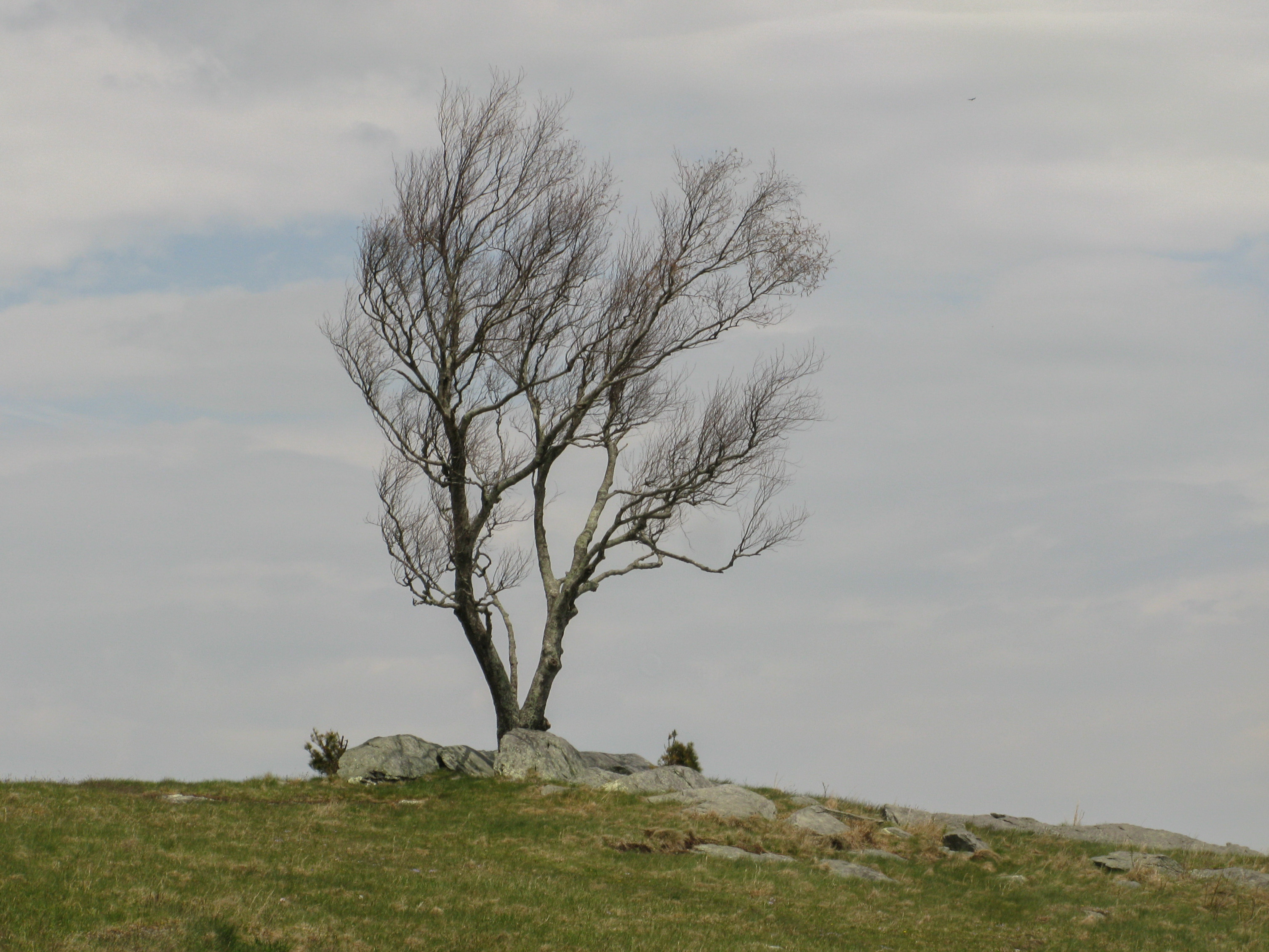
2020-09-08b Doughton Park Tree

Read Full Post »

« Newer Posts - Older Posts »