Feeds:
Posts
Comments

Posts Tagged ‘NC Poets’


[with poems by Jennifer Atkinson, David Radavich,
Barbara Bloom, Diane Seuss]

Today is Earth Day, April 22. Yesterday, today, and tomorrow we are publishing posts for Earth Day featuring poems submitted by our readers that touch the theme, Wild & Rewild.

Rewilding is a conservation effort aimed at restoring habitat, revitalizing ecosystems, and reintroducing animals and plants that historically occupied these wild spaces.
Rewilding may be as small as converting cow pasture to a bit of riparian Piedmont Prairie along the Mitchell River in Surry County, NC.
It may be as large as creating wildlife corridors down the chain of the Rockies for migrating pronghorns.
It may be as simple as replacing introduced invasives in your yard with native species; as complex as legislation to set aside vast tracts as wilderness.

How does the poet encounter and respond to wildness? A native wildflower struggling in an urban park? A remote mountaintop far from human presence? A wild voice speaking to the heart; wild urges propelling the soul into the unknown?

A wild call from the past, the present, into the future?
For Earth Day 2023, touch the wild. Rewild yourself.

Thank you to the readers of these pages
who have responded to my call for poems this Earth Day.
Watch for new posts on April 21, April 22, and April 23.

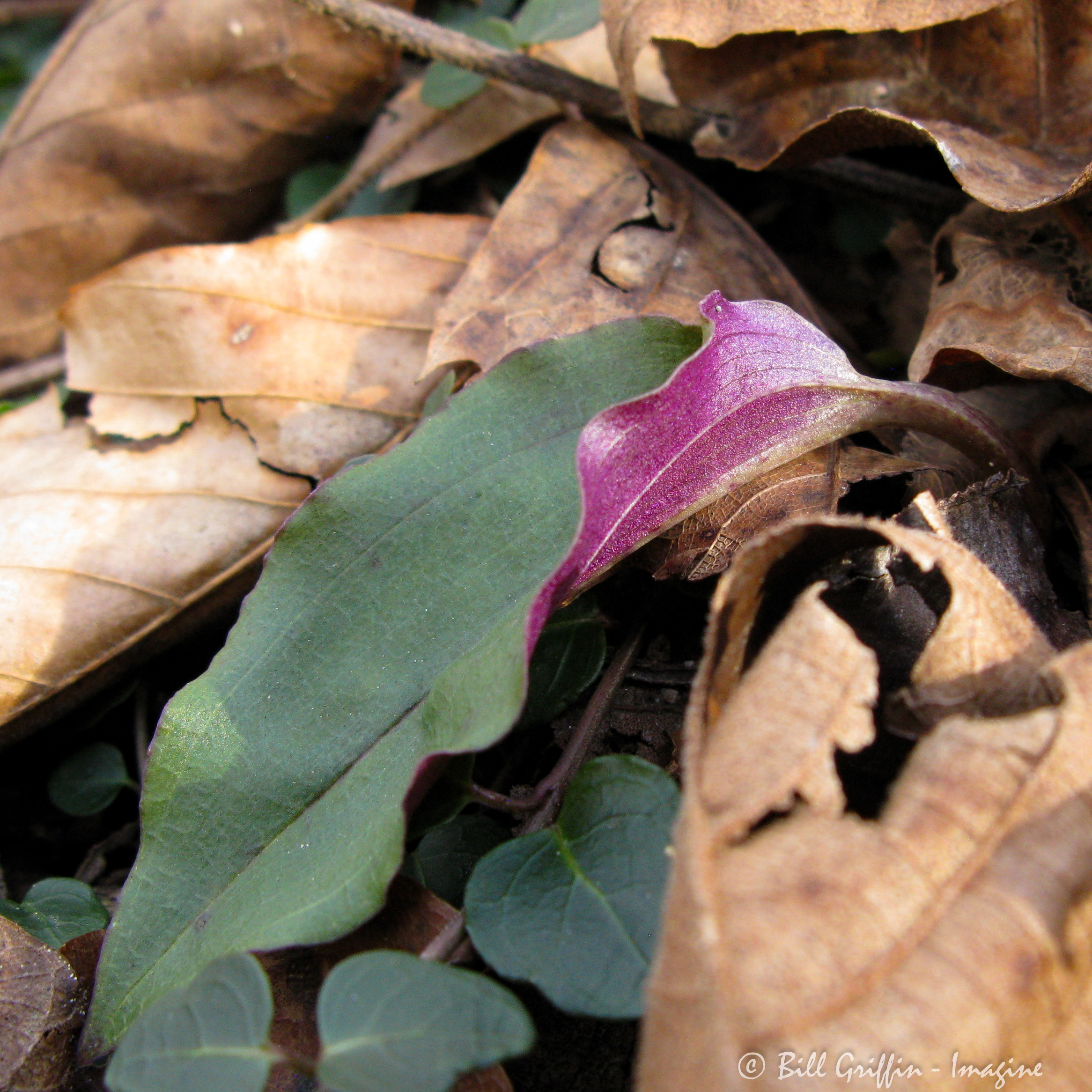
All photographs were taken April 11-17, 2023,
along the Elkin & Allegheny Nature Trail,
part of the Mountains-to-Sea Trail in North Carolina, USA.

Earth Day 2023 art by Linda French Griffin.

❦ ❦ ❦

Landscape with Jeffers and the Connecticut River

Oat stalks hang their oat-heavy heads.
Panic grass shakes in the wind
off a goldfinch’s wing. Cause,
++++ ++++ ++++ ++++ ++++ effect, and cause.

Drone, like the bee, of goldenrod and aster,
tool of the stick-tight and cockleburr,
I park and wade into high riverside grasses.

A dog gnaws on a box turtle, a spider rides
a floating log, straining the air of its midges and leafbits.
A fisherman lazy as late summer current,
++++ ++++ ++++ ++++ casts, reels, and casts.

It occurs to me I am alive, which is to say
I won’t be soon. Robinson Jeffers
from Carmel Point, in “an unbroken field of poppy and lupin”

ashamed of us all (of himself ), took solace in time,
in salt, water, and rock, in knowing
all things human “will ebb, and all/
++++ ++++ ++++ ++++ Their works dissolve.”

Me, too. And I’m not always so patient. I’ve caught myself
wishing our spoiler species gone, just swept away,
returned to rust and compost for more deserving earthly forms.

Meanwhile, flint arrowheads turn up among the plastic
picnic sporks, the glacial crags and bottom silt.
Hawks roost across the river on the now defunct
++++ ++++ ++++ ++++ ++++ nuclear power plant cooling tower,

flotsam left at the human high water mark.
Like mussel shells, like driftwood or seedpod,
like the current’s corrugations in the sand.

Here, on this side, a woodchuck sits up, lustrous,
fat on her chestnut haunches, (she thinks herself
queen of her narrow realm) and munches
++++ ++++ ++++ ++++ the fisherman’s crust.

Who wouldn’t smile? Who doesn’t pity—and love—
the woodchuck not only despite but for her like-human smugness?
How can I not through her intercession forgive
++++ ++++ ++++ ++++ ++++ for now a few things human.

Jennifer Atkinson
Selected by Bill Griffin; from the book THE THINKING EYE, Parlor Press
Appeared online at Poem-a-Day, Poems.com, on March 13, 2023

Jennifer Atkinson’s comments: “But how do we live with our knowledge and the emotional cloud of fear, guilt, anger, grief, and helplessness, a cloud that surrounds us, each of us alone, and all of us together? That cloud has become intrinsic to my ecopoetical work. Burdened with the beauty and loss and malicious awfulness ahead, weighted with the anxiety that hits whenever a winter day dawns without frost on the ground or another ‘unprecedented’ downpour rings in the gutter, how do I live?”

Who wouldn’t despair? Who wouldn’t smile? The daily slog through politics and pollution is too heavy to be borne. The daily green that lights my kitchen window while I make coffee is too beautiful to bear. This poem drives me into the inescapable reality of damaged Earth but also offers a leafy twig of hope.

– Bill Griffin / Elkin, North Carolina

[and I couldn’t resist that title after all the Robinson Jeffers I’ve been reading this past year.]

❦ ❦ ❦

Back Woods

Only in the hills behind
comes solace,

winter white against
the brown verticality of reaching

bare as need,
a few lingering green

hold-outs
crying for mercy,

leaves curled
atop themselves quiet

as abandoned
lovers.

I have already
sided with the deep creviced

ravine and its snow
cheeks incised

with cares in shadow

under a sun that
promises

open sky
open hearts.

David Radavich
first published in Blueline in 2008

This poem is marked by jagged line lengths and abrupt stanza breaks that emphasize the rawness and otherness of the natural world. The speaker feels attracted to the sharp contrasts in color and juxtaposition of “creviced ravine” with the softer “snow cheeks,” but s/he is nonetheless distant from it and can only admire the scene from afar with a kind of wishful, empathetic watching.

– David Radavich / Charlotte, North Carolina

❦ ❦ ❦

Night Swim: Phosphorescence

We’d run down the path to the dock,
our feet knowing the rocks, never stumbling,
never falling, and we’d jump right in,
the ocean calm under the summer stars,
and swim out a little ways,
lifting our hands out of the water
to watch the drops linger and fall from our fingers,
like pearls, like diamonds, and kick our legs hard
for the trail of bright silver we’d leave behind-
and finally climb out, trembling with the chill,
sorry to wipe those jewels from our bodies.

Barbara Bloom
originally published in Pulling Down the Heavens (Hummingbird Press, 2017).

I grew up on a remote coastal homestead in British Columbia, Canada. Living in such a wild and demanding place has shaped the way I see the world. The poem demonstrates how as children we were amazed by the natural world around us, but saw no separation: it was ours to be experienced. I now live in Bellingham, Washington, not too far from where I lived as a child, and surrounded by much of the same beauty and wildness. I count myself lucky for that!

– Barbara Bloom / Bellingham, Washington

❦ ❦ ❦

Young Hare

Oh my love, Albrecht Dürer, your hare
is not a spectacle, it is not an exploding hare,
it is not a projection of the young hare
within you, the gentleness in you, or a disassembled hare,
nor a subliminal or concealed hare,
nor is it the imagination as hare

nor the soul as a long-eared, soft-eared hare,
Dürer, you painted this hare,
some say you killed a field hare
and brought it into your studio, or bagged a live hare
and caged it so you could look hard at a wild hare
without it running off into thorn bushes as hares

will do, and you sketched the hare
and laid down a watercolor wash over the hare
and then meticulously painted in all the browns of hare,
toast brown, tawny, dim, pipe-tobacco brown of hare,
olive, fawn, topaz, bone brown until the hare
became dimensional under your hand, the thick hare

fur, the mottled shag, the nobility of the nose, the hare
toenails, black and sharp and curved, and the dense hare
ears, pod-shaped, articulated, substantial, erect, hare
whiskers and eyebrows, their wiry grace, the ruff of hare
neck fur, the multi-directional fur over the thick hare
haunches, and did I say the dark inside the hare

ears, how I want to follow the darkness of the hare
and stroke the dark within its ears, to feel the hare
ears with my fingers, and the white tuft, the hare
anomaly you painted on its side, and the fleshy hare
cheeks, how I want to squeeze them, and the hare
reticence, how I want to explore it, and the downturned hare

eye, it will not acknowledge or appease, the black-brown hare
eye in which you painted the reflection of a window in the hare
pupil, maybe your studio window, in the hare’s
eye, why does that window feel so intimate in the hare’s
unreadable eye, why do I press my face to the window to see the hare
as you see it, raising your chin to look and then back to the hare

on the page, the thin hair of your brush and your own hair
waving gold down your back, hair I see as you see the hare.
In the hare’s eye you see me there, my swaying black hair.

Diane Seuss
Selected by Joan Barasovska; appears in Still Life with Two Dead Peacocks and a Girl (Graywolf Press, 2018). Albrecht Dürer’s painting is titled “Young Hare.”

I’ve selected this ekphrastic poem because it reflects the artist’s fascination with capturing an exact likeness of nature, his extravagant love of the animal so clearly displayed, and the paradox of killing or caging the hare in order to worship it. Diane Seuss’s masterful craft—see the line endings—and genius for description are on display here.

– Joan Barasovska / Chapel Hill, North Carolina

❦ ❦ ❦

Read Full Post »


[with poems by Stan Absher, Kathleen Wakefield, Bill Griffin]

How does science work? What does it mean for me to think scientifically? I notice something (empirical observation); I draw a conclusion (hypothesis via inductive reasoning); I check it out (experimentation, testing the hypothesis); it doesn’t all hang together so I try again, maybe noticing a little more closely (refining the hypothesis).

That final bit is the kicker. Even scientists can be seduced by their theories. Scientific knowledge, however, is never fixed and final. The most beautiful deduction can be proven false by the more precise observation. A posteriori trumps a priori. Anyone can be wrong.

The Naturalist Method is a subset of the Scientific Method. When I lead a nature hike, I advise folks, “Pay attention . . . ask questions . . . make connections . . . share.” And I am not the least bit shy about announcing that I myself don’t know everything. Not knowing (but wanting to!) is my defining characteristic. Semper Plus Discere – Always More to Learn. Bring books!

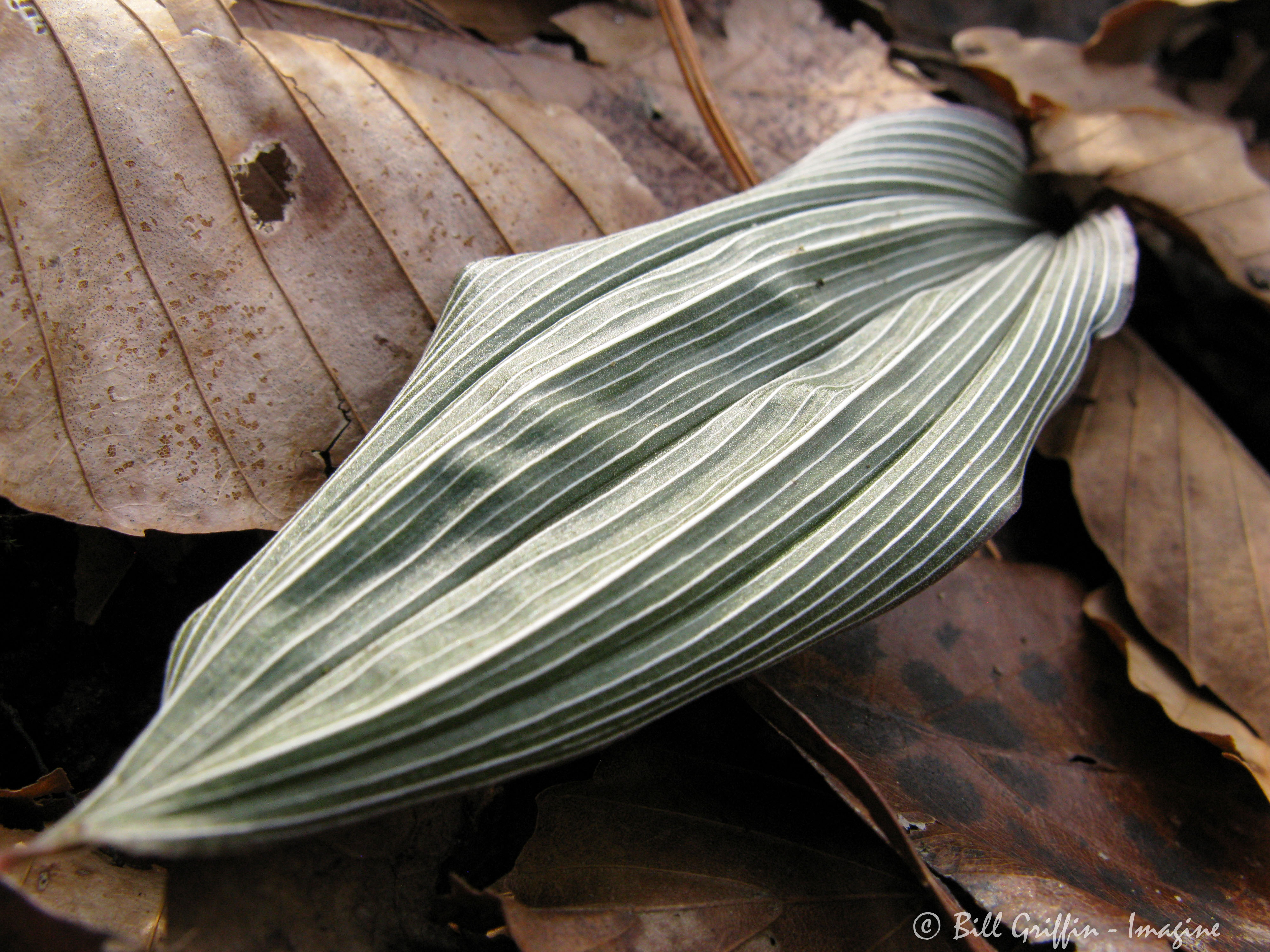
Which bit me on the butt a few weeks ago. For years I’ve walked a little section of trail where trout lilies carpet the banks every March. The first time I saw them – mottled fish-scale leaves, bright yellow recurved tepals, pendulant maroon anthers – I opened my trusty old field guide and confidently proclaimed, “Yellow Trout Lily, Erythronium americanum.” Firm, final, and correct. Never even gave it a second thought until this spring, when I decided to photograph some prime specimens in my SEEK app to add to my iNaturalist log. Click. Searching. Erythronium umbilicatum flashes up on my screen. No, no, that’s not right. Just shot ‘em from the wrong angle, try again. Every flower, every time the same – Dimpled Trout Lily.

When I got home I tore open my newer guides and references and discovered this: some thirty years ago taxonomists split the one species into two. And this: of the two, Dimpled is by far the most common in the foothills where I live. So how do you tell them apart? After a couple of hours on the NC State plant science websites, and after tracking down online photos (which I ultimately determined were mislabeled as americanum 52.3% of the time) I had my armamentarium. Back to the woods, this time with a hiking group I enlisted to find all the Trout Lily they could, especially ones gone to seed.

And what we observed was this — if still in bloom, no auricle (“ear”) at the base of the inner tepals; if gone to seed, a distinct dimple at the end of the ovary, and often lying prone on the ground. Every dang plant we found was Erythronium umbilicatum. I stand humbled and corrected.

But here is another observation to add to the guide books. Yellow Trout Lily is described as holding onto its style, still attached to the ovary after forming seeds. Many, even most, of the Dimpled we found also retained their style. Maybe we’ll come back in a week and observe again. Maybe notice a little closer.

❦ ❦ ❦

Heifer

Destined for slaughter
she wades into the water
to the belly and drinks deep.

Does she see her own sad eyes
wide and innocent in the pool
looking up out of the sky?

Soon fear will make her bellow,
but now her muzzle is cool
and wet. Her skin twitches,

scattering flies; her switch
brushes them off. Across the water
she sees a pasture

she will never graze
a clump of trees
that will never give her shade.

J. S. Absher
from Visions International #107, Black Buzzard Press, © 2023 Visions International Arts Synergy

Erythronium umbilicatum

Erythronium americanum

❦ ❦ ❦

Thirty or so poems in a modest package; writers from Europe, Asia, the Americas; no page numbers but a few hand-drawn illustrations – all this and a remarkable meditative companionability create the magic of each issue of Visions International. I ask myself how editor Bradley R. Strahan manages to pull me into these pages so warmly. Some insistent human voice calls us, the readers, to encounter distant circumstances and experiences and realize they have become close, familiar, our own. How has Brad, through the decades, made this so?

My friend Stan Absher suggests: Because he often publishes poets over a long period of years, Bradley’s readers can get to know some poets rather well. I’ll mention only the late Michael Mott (he died in 2019) and Nikolaï Kantchev, a Bulgarian poet who died in 2007 and whom Brad continues to publish in translation, but there are several others.

And Kathleen Wakefield, after reading Issue #107, commented this to Bradley: I love the cadence of these poems, their subjects and very particular visions, language that skewers you or lures you in. Some are simply magical to me, others have the strangeness and dark absurdity, fused with love, that points me back to Simic, one of my favorite poets. So glad you honored him and are always including poets from other parts of the world who write of something vital at stake. All of these poems jar me out of my usual forms of speech. That is a very good thing. It’s not just mental; the heart is altered.

I am honored to appear in these particular pages with two friends I’ve come to know through shared poetry, Stan Absher and Kathleen Wakefield. As I continue to read each issue of Visions, my circle of companions expands.

Subscribe to Visions International. For four issues, mail $25 to:
Visions International / Black Buzzard Press / 309 Lakeside Drive / Garner, NC 27529

❦ ❦ ❦

Summons

1.
I am practicing my lying down
beside the stripped spines of jay feathers,
the azures unwinged, seed heads gone to must
and rot, bones of mice cradled in mycelia
tangled and ghostlike.

I am asking the names of wildflowers to ease me into sleep,
saying them over and over, Bloodroot, Evening Lychnis,
Celandine, Enchanter’s Nightshade, Coltsfoot,
Wood Groundsel dissolving
on my tongue.

The faces of those gone before me rise up,
and those I will leave behind, my children
far flung as seeds carried by wind
and pelt and rain.

2.
Go ahead, let the dankness of earth
seep into your thighs, let dust
silt your lungs, your spine
crack like river ice

but the mind pulls you back up through snake skin and mist,
through dry creek and river bed to the trees’
green asylum, rain smacked leaves
waking you to the body’s arterial hum.

Get up while you can, full of your hunger and regret.
Get up from your knees. Taste
what you are, cloudburst, mud, burnt grass,
words buried in iron, bone, lips, and breath,
in this sorrow and honey,
this skin and ash.

Kathleen Wakefield
from Visions International #107, Black Buzzard Press, © 2023 Visions International Arts Synergy

❦ ❦ ❦

Albedo

Rare to discover you
+++++ aloft in the afternoon
your eye so blue
I can see right through
+++++ the curving edge of sight
and your face so bright
+++++ I believe the fire
of your glow must burn
within – but no,
+++++ reflected whole
where you hang on the arm
of your golden man.

Bill Griffin
from Visions International #107, Black Buzzard Press, © 2023 Visions International Arts Synergy


❦ ❦ ❦

EARTH SCIENCE: Albedo is a measure of how much light is reflected by the surface of a planet or moon; an albedo of 1 means all light is reflected; an albedo of 0 means no light is reflected – all light is absorbed by the surface and it will appear dark. The albedo of the moon is 0.12, pretty dark as celestial bodies go. Saturn’s moon Encedalus has an albedo of 0.99 due to its covering of snow and ice.

The albedo of Arctic ice is much higher than the albedo of open ocean. As more of the Arctic becomes ice-free in summer, more light (heat energy) is absorbed by the darker water. This has produced a positive feedback loop so that the Arctic is warming much faster then the remainder of the planet.

PLANT SCIENCE: The female reproductive part of a flower is the pistil, composed of the ovary (containing the ovules), the style, a slender column projecting up from the ovary, which is tipped by the stigma. Pollen lands on the stigma and sprouts tubules down through the style to fertilize the ovules and produce seeds. Of the 450+ families of flowering plants containing more than 260,000 species, each contributes its own variation to the configurations and shapes of flower, pistil, and stamen, and the strategies for insuring that pollen and ovule meet.

When the outer whorl of structures on a flower can’t be sussed out as sepals or petals, the blades are often called tepalsSepals are the outer whorl that cover and protect the bud and petals are the inner whorl, usually colored to attract pollinators. Especially in many members of the Lily family, Liliaceae, the two layers merge or fuse; the term tepal was compounded to describe them.

❦ ❦ ❦

2020-09-08b Doughton Park Tree

Read Full Post »

[poems from Word and Witness: A. R. Ammons, Julie Suk, Peter Makuck]

Carnage ensues at the table while I make coffee. As all the other animals look on in abject silence, large plush Starfish (carnivore, you know) has captured Baby Chick and is eating him with authentic suck-the-juice-right-out-of-you sound effects.

I remark that I’m going to be sad to miss little yellow Chicky. My grandson looks up, all innocence, and simply reminds me, “That’s just the way the food chain works.”

So it must be. Nine years before the publication of Darwin’s The Origin of Species, Alfred Lord Tennyson had already warned us (“she” being Nature, “types” being species):

. . .
She cries, ‘A thousand types are gone:
I care for nothing, all shall go.

‘Thou makest thine appeal to me:
I bring to life, I bring to death:
The spirit does but mean the breath:
I know no more.’ And he, shall he,

Man, her last work, who seem’d so fair,
Such splendid purpose in his eyes,
Who roll’d the psalm to wintry skies,
Who built him fanes of fruitless prayer,

Who trusted God was love indeed
And love Creation’s final law–
Tho’ Nature, red in tooth and claw
With ravine, shriek’d against his creed –

Who loved, who suffer’d countless ills,
Who battled for the True, the Just,
Be blown about the desert dust,
Or seal’d within the iron hills?

+++++ from In Memoriam A. H. H. (1850)

Shall we weep for Baby Chick? For the extinctions accelerating around us? For ourselves, our loss? A few years back I was leading a group of Junior Highs on a nature walk when we spotted a marvelously large spider shuffling along the path ahead of us. When we reached it, though, we found it was not the legs of the spider that were walking but the legs of the pint-sized wasp that had stung and paralyzed it and now dragged it to a favorable spot for egg laying. In an instant the spider transformed from an object of fear and loathing to a spike of compassion in our hearts.

This week a very talkative red shouldered hawk is haunting the woods out back. No coincidence: that’s where the bird feeders hang. We hope he’s eyeing the squirrels – there are more than enough squirrels, eat all you want Sir Hawk. And the mice that come for the seeds dropped to the ground from the feeders, and then store them in our basement, yes, eat them, too. But please, not the cute chipmunk who hides in the ivy or the finches we love. Alas, I guess we don’t get to choose. That’s just how the food chain works.

But wait – do all our choices come to nothing? Our love, our suffering of countless ills, our battles for the True and Just – is the end of all these to be blown to desert dust? Can’t we choose to engage with embattled Nature? Can we reduce our relentless consumption of the planet, choose leaders of vision and intelligence, make peace with our brothers and sisters? How lengthy shall I extend this list? Shall we abandon hope and just accept our place in the food chain while the warming earth devours us?

If a spider can inspire a moment of compassion in a 13-year old, I will have to accede that there may yet be hope for our species.

❦ ❦ ❦

The Yucca Moth

++ The yucca clump
is blooming,
++ tall sturdy spears
spangling into bells of light,
++ green
in the white blooms
++ faint as a memory of mint.

I raid
++ a bloom,
spread the hung petals out,
++ and, surprised he is not
a bloom-part, find
++ a moth inside, the exact color,
the bloom his daylight port or cove:

though time comes
++ and goes and troubles
are unlessened,
++ the yucca is lifting temples
of bloom: from the night
++ of our dark flights, can
we go in to heal, live
++ out in white-green shade
the radiant, white, hanging day?

A. R. Ammons
collected in Word and Witness: 100 years of North Carolina Poetry, Carolina Academic Press, © 1999 North Carolina Poetry Society

❦ ❦ ❦

This week a friend asked me to send him the table of contents of Word and Witness for a project on biodiversity he’s considering The book was published by the North Carolina Poetry Society in 1999 and edited by Sally Buckner with an afterword by Fred Chappell, who was NC Poet Laureate at the time. It spans the full 20th Century of North Carolina poetry and poets, and as I was scanning the TOC to email my friend a PDF, I re-discovered the names of so many folks who have inspired and befriended me over the last two decades.

Poetry continues to thrive in “the writingest state.” Word and Witness is 261 pages; it would be a real challenge to prepare Volume II for just the first quarter of the 21st Century and limit it to that length. I believe it is still possible to purchase a copy from Carolina Academic Press. You need to get yourself one.

❦ ❦ ❦

Waiting for the Storyteller

Once more we wait for the storyteller
to step into the margin and reveal intentions:
why the first letter flowered,
spiraling down the page with intricate designs,
the hand translating what the tongue began.

Clues drop, mostly forgotten,
so on and so on stacked like bricks,
crumbling when we look back,
a voice once close now a stranger.

All through the book we wild-guess the villain,
so deceived by this one or that
we look for reprieve, a surprise ending,
the page turning to a house in the woods,
dogs locked up, gun put a way.

In the still forest of words,
where the hidden appears in its season,
hills darken and move in.
Like lean horses that have rocked a long way home,
they circle the pool of our hands.
A deer riffles through leaves, then a bird
sings begin again, begin again.

Julie Suk
collected in Word and Witness: 100 years of North Carolina Poetry, Carolina Academic Press, © 1999 North Carolina Poetry Society

❦ ❦ ❦

Dogwood Again

Home from college, I’d leave my reading,
climb the hill through trees behind the house,
listen to a rough wind suffer through
new leaves and, too aware of myself, ask why?

The answer could have been stone wall,
wind or some other words. In April, our house
lived in the light of those first white petals
and now I think more about hows than whys –

How, whenever we fished at Pond Meadow,
my father dug a small one up, carefully
wrapped the rootball in burlap, and trucked it
home until our hard blazed white all around,

and how, at Easter, those nighttime blossoms
seemed like hundred of fluttering white wings.
Again that tree goes into the dark loaded
with envy, those leaves full of light not fading.

And this morning, a fogbright air presses
against the blank white pane and would have us
see the way mist burns from within, shimmers,
slowly parts, and flares upon an even whiter tree,

tinged now with orange, and how a soft fire
runs to the farthest cluster of cross-like petals,
each haloed with clear air, finely revealed.

Peter Makuck
collected in Word and Witness: 100 years of North Carolina Poetry, Carolina Academic Press, © 1999 North Carolina Poetry Society

❦ ❦ ❦

Bios adapted in part from Word and Witness:

After growing up on a tobacco farm near Whiteville, A. R. Ammons (1926-2001) received a degree from Wake Forest College, and served as an elementary school principal, but he lived most of his adult life outside his native state. His interest in writing developed during long hours aboard ship when he served a term of duty with the Navy. In 1964 he joined the faculty at Cornell University, where he was ultimately Goldwin Smith Professor of English. Among his many honors are the Bollingen Prize, the national Book award (twice), the MacArthur Fellowship, and the 1998 Tanning Prize from the Academy of American Poets.

A native of Alabama, Julie Suk (b. 1924) has lived for many years in Charlotte, where she worked in a nature museum. In addition to authoring six volumes of her own poetry, she has co-edited (with Anne Newman) Bear Crossings: An Anthology of North American Poets. Her collection The Angel of Obsession won the 1991 University of Arkansas national poetry competition, and in 1993 she won the Bess Hokin Prize given by Poetry magazine. In 2004 Julie received the Irene Blair Honeycutt Lifetime Achievement Award from Central Piedmont Community College; her book The Dark Takes Aim won the 2003 North Carolina Poetry Society’s Brockman-Campbell Book Award and The Oscar Arnold Young Award from The Poetry Council of North Carolina.

Among previous occupations, Peter Makuck (b. 1940) lists, “truck driver, painter, mechanic,” but he is best known as writer and as Distinguished Professor of Arts and Sciences at East Carolina University. Pilgrims won the Zoe Kincaid Brockman Award for the best book of poems by a North Carolinian in 1989. In 2010 Long Lens: New & Selected Poems was nominated for a Pulitzer Prize. In addition to his eight collections of poetry, he has published numerous short stories and essays. Peter has received the International Poetry Forum’s Charity Randall Citation; a Connecticut native, he has been a Fulbright Lecturer at the Universite de Soavoie, Chambery, France. He founded Tar River Poetry in 1978 and served as editor until 2006.

❦ ❦ ❦

Doughton Park Tree 2021-10-23

Read Full Post »

« Newer Posts - Older Posts »