Feeds:
Posts
Comments

Posts Tagged ‘Earth Day Every Day’

 . 
[ poems by Robert Hass, Debra Kaufman, Hilda Downer, 
Richard Wilbur, Paul Karnowski ]
 . 
The Image
 . 
The child brought blue clay from the creek
and the woman made two figures: a lady and a deer.
At that season deer came down from the mountain
and fed quietly in the redwood canyons.
The woman and the child regarded the figure of the lady,
the crude roundnesses, the grace, the coloring like shadow.
They were not sure where she came from,
except the child’s fetching and the woman’s hands
and the lead-blue clay of the creek
where the deer sometimes showed themselves at sundown.
 . 
Robert Hass
selected by Debra Kaufman
 . 
I love how this poem speaks to the creative spirit and how the basic elements of the earth inspire and sustain us. There is here a delicate, a reverent, interdependence. Had the creek and earth not made the clay, had the child not brought the clay to the woman, had the deer not visited the creek, had the poet not observed the wonder of it all, the spark that inspired the poet would not exist, and we would not have this poem. I admire the brevity and apparent simplicity of the poem, knowing that the poem, like the clay, had been worked over so that every line (as every curve of the figure) is a work of art. A gift. A wonder.
— Debra
 . 
 . 
Off-White
 . 
This Sunday the sky is an eerie
off-white, as if dawn began rising,
then stood still, reluctant to let
the day begin. And no wonder.
I read of collapsing buildings,
 .      . 
people scurrying for shelter,
burning oil fields, smoke and ash
roiling toward heaven. But heaven
refuses our cruelty:
The clouds do not budge.
 . 
I believe, we used to recite,
in the Holy Spirit, and although I could
only picture it as a tattered cloud,
I did believe, as easily as I believed
in God, in America, hand over heart.
 . 
To believe made my small heart soar.
I’d skip home singing This Little Light of Mine.
I had a crush on Jesus, with his
soft brown eyes, who said, Be ye kind
and Suffer the children to come unto me.
 . 
The clouds begin to shred. Any prayer
I might offer dissolves on my tongue.
My body says time to move.
Today, the second day of spring,
will be uncommonly hot.
 . 
Debra Kaufman
 . 
 . 
❀ ✿ ✾ ❁
 . 
— Drill, Baby, Drill
 . 
Drill because the rich get richer
and the rest get drilled.
 . 
Drill us in your own image
a colander that can’t hold water,
farms caving in drained sink holes beneath.
Drill until amalgams turn our teeth grey,
our bones fracked and fractured.
 . 
Drill it in
that billionaires are a superior race
because we still don’t get it.
Drill our skulls into frontal lobotomies,
milling our brains with the inane premise
that veterans don’t deserve healthcare
and the elderly don’t deserve
funds they worked for.
 . 
We know there are more than the two genders
of white male and Stepford wife.
 . 
Drill it into normalcy—
the military unleashed on its own people,
the masked orange taco gestapo
as they go from field to field,
door to door.
 . 
Then, drill some more.
Put us on mute—
multimedia censorship.
Undermine libraries and public schools.
We already knew history repeats itself—
on two sides of the penny bitcoin.
The indigenous, forbidden to speak their language,
kept their power alive behind closed doors.
The enslaved, not allowed to read or write,
followed the signs sewn into quilt patterns.
Monarchs and oligarchs,
books burning, bullets drilling
in revolution, civil war, world war—
we will find another way, a better way.
Erase history if you can.
Erase the mentally ill, the homeless,
the poor, the disabled, the elderly,
those on a spectrum,
those bona fide with a genius IQ,
the artists, the writers, musicians
except for an American band
to play for your disgusting dance
like that of a tick before
jumping on its prey.
Oh, what a day
for supporters who hate melatonin
more than felons and pedophiles!
 . 
DOGE data drilling might locate
and make us disappear,
but memory only fosters our courage.
We will remember.
We will not be remembered for our fear.
What more will you be remembered for?
 . 
Drill until you hit rock bottom,
blaming Canada for Fentanyl.
Drill until you come out in China.
Drill until you try to buy
a Nobel Peace Prize
by trading Alaska to Russia
for an interim cease fire
during your term.
Drill and chisel
a moonscape across Earth
to better view your golf courses
and Gaza Resort
safely from your starship
in outer space,
while we get grilled.
 . 
Your fake resuscitation
with a syringe of adrenaline
drilled into the heart of Appalachia.
X marks the rot
where oil and coal
are still dead.
 . 
Drill until the bowels of Appalachia erode
creeks and rivers with toxic sludge.
Deforest the temperate rain forest
by way of tropical hurricane from climate change.
 . 
We already learned from coal mine strikes
and strategic planning at Highlander
how to organize—
protest songs on standby,
“Which side are you on?”
When you start deporting our people,
“We shall not be moved.”
 . 
Spill out Bibles that spell out
the commandments you break,
that the meek shall inherit the Earth.
Go ahead. Drill, Baby, drill.
We see clearly still—
through each hole
drilled long ago into these lands
and through Christ’s hands.
 . 
Those first four years
were just a drill.
 . 
This is not a Drill.
I repeat. This is not a Drill:
 . 
children under school desks,
hands covering heads.
Hands off what’s in and out of their heads!
From redwood forests to blue ridge mountains,
children too hungry to learn,
hands off Head Start,
14-year-old girls,
and countless young women.
You can no longer drill.
 . 
Hilda Downer, High Country Poet Laureate
 . 
Joseph Bathanti passed your call onto me as he knows I am Appalachian through and through. I live about 50 miles from where I grew up beside the oldest mica mines in the world. Mitchell County is mineral laden, and now threatened by AI’s demand. When I wrote this poem, I was only thinking about the greed behind the use of fossil fuels, decimating the environment, and denying global warming. Now, the demon is sniffing at the windows of my home. Thank you for considering this highly political poem I read at the first Hands Off Rally in my town of Boone, NC. However, I am sure you might be expecting something more like the second poem I am sending you, Mother Tree.
— Hilda
 . 
 . 
Mother Tree
The way the Mother Tree cares for the forest
makes me ashamed of selfish humans.
The tall Mother Tree can harvest more sun
though holes leak light from her leaf-knit shawl
to showcase a pink lady’s-slipper here
or pat a moss draped root there.
Through phototropism and photosynthesis,
she toils harder than the rest
to produce excess carbon and sugar
for sharing not only with her saplings
but also with other species,
both deciduous and conifer.
She can recognize her own kin
but serves the whole community.
Her roots spread far, symbiotic with fungi
that network with other trees.
If one is sick, she sends healing nutrients.
If one is in danger, she warns them all.
Loggers that cut the big trees
allow frail ones to grow,
leaving the forest to pine
without diversity.
Think of the old growth forest
where the Mother Tree lay dying.
Think of the roads cut through.
Just one house is built,
and gone is the sharp, dark smell of black walnut.
Gone is the wizened Carolina hemlock, twisted at its base.
Think of the trees felled,
replaced by utility poles
for communication far inferior
to the Mother Tree’s instinctive telepathy.
I think of my own mother, gone now,
her mind gone long before.
What traditions still bind us?
After my grandmother passed,
aunts, uncles, and cousins no longer met in Bandana
for a fried chicken dinner after church
or made an apple stack cake for the Buchanan reunion
after the Decoration at Silver Chapel Church.
We all grew up playing house under the umbrella shade of laurel,
disclosing angry crawfish under creek rocks,
and plummeting from grapevine swings.
How do we recognize our kinship
or ourselves
if not in the chapel of the woods?
The entrance hugs us
with the wide-open arms of orange azalea.
Our traditions rest upon a log pew
cushioned with the clean scent of moss and musky mushrooms,
centered by autumn’s kaleidoscope;
flanked by crepuscular rays
filtered by the Mother Tree.
 . 
Hilda Downer, High Country Poet Laureate
 . 
 . 
❀ ✿ ✾ ❁
 . 
A Wood
 . 
Some would distinguish nothing here but oaks,
Proud heads conversant with the power and glory
Of heaven’s rays or heaven’s thunderstrokes,
And adumbrators to the understory,
Where, in their shade, small trees of modest leanings
Contend for light and are content with gleanings.
 . 
And yet here’s dogwood: overshadowed, small,
But not inclined to droop and count its losses,
It cranes its way to sunlight after all,
And signs the air of May with Maltese crosses.
And here’s witch hazel, that from underneath
Great vacant boughs will bloom in winter’s teeth.
 . 
Given a source of light so far away
That nothing, short or tall, comes very near it,
Would it not take a proper fool to say
That any tree has not the proper spirit?
Air, water, earth and fire are to be blended,
But no one style, I think, is recommended.
 . 
Richard Wilbur
selected by Paul Karnowski
 . 
The trees in Wilbur’s woods remind us that we all live together, and each of us, big or small, has an important role to play.
— Paul
 . 
 . 
Gaze
 . 
How to spend my days,
and where to fix my gaze?
 . 
Out a wistful window,
to soar with swirling swallows,
brushing wings against
the summer sky.
 . 
Or at the misty mirror,
looking at a lump of flesh
tethered to the ground,
no feathers to be found.
 . 
Paul Karnowski
first published in Grey Sparrow Journal, January, 2026
 . 
❀ ✿ ✾ ❁
 . 
Health is the capacity of the land for self-renewal. Conservation is our effort to understand and preserve this capacity.   
— Aldo Leopold
 . 
A thing is right when it tends to preserve the integrity, stability, and beauty of the biotic community. It is wrong when it tends otherwise.     
— Aldo Leopold
 . 
Thank you for celebrating the month of April with International Earth Day (April 22) and National Poetry Month. And thank you, Readers, who have selected poems to share that connect us to our planet and each other. We will continue posting EARTH POETRY throughout the month of April – and beyond April as well, of course, since EVERY DAY is EARTH DAY!
 . 
 . 
Thank you for visiting Verse and Image: If you would like to receive an email each time a post appears, please SUBSCRIBE to Verse and Image using the button on the Home Page.
 . 
If you have a hard time finding the SUBSCRIBE button on this WordPress site, you can send me your email address and I will add you to the subscriber list. Send your request to
 . 
COMMENTS@GRIFFINPOETRY.COM
 . 
Thanks again for joining the conversation.
 . 
— Bill
 . 
❀ ✿ ✾ ❁
 . 
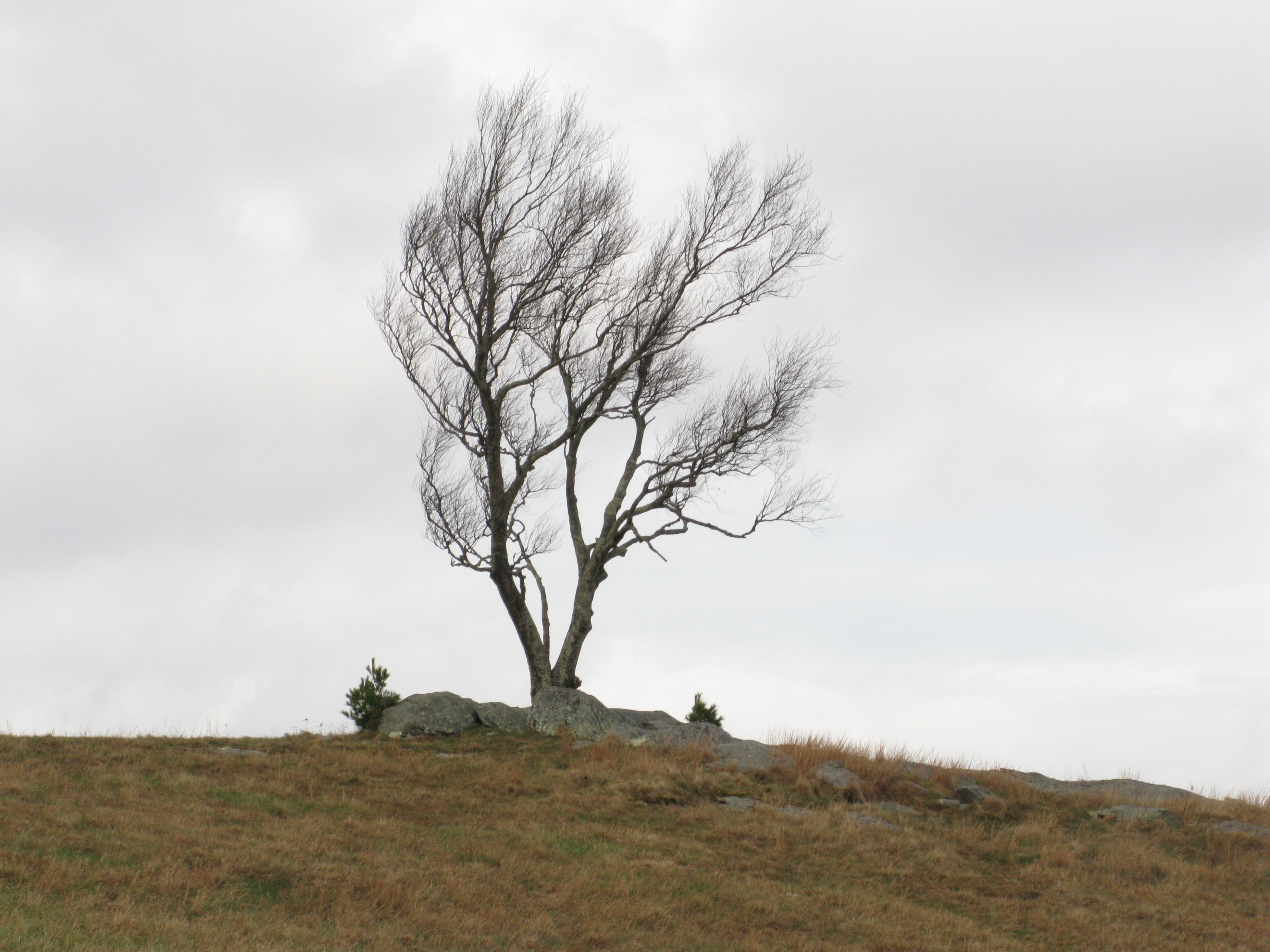
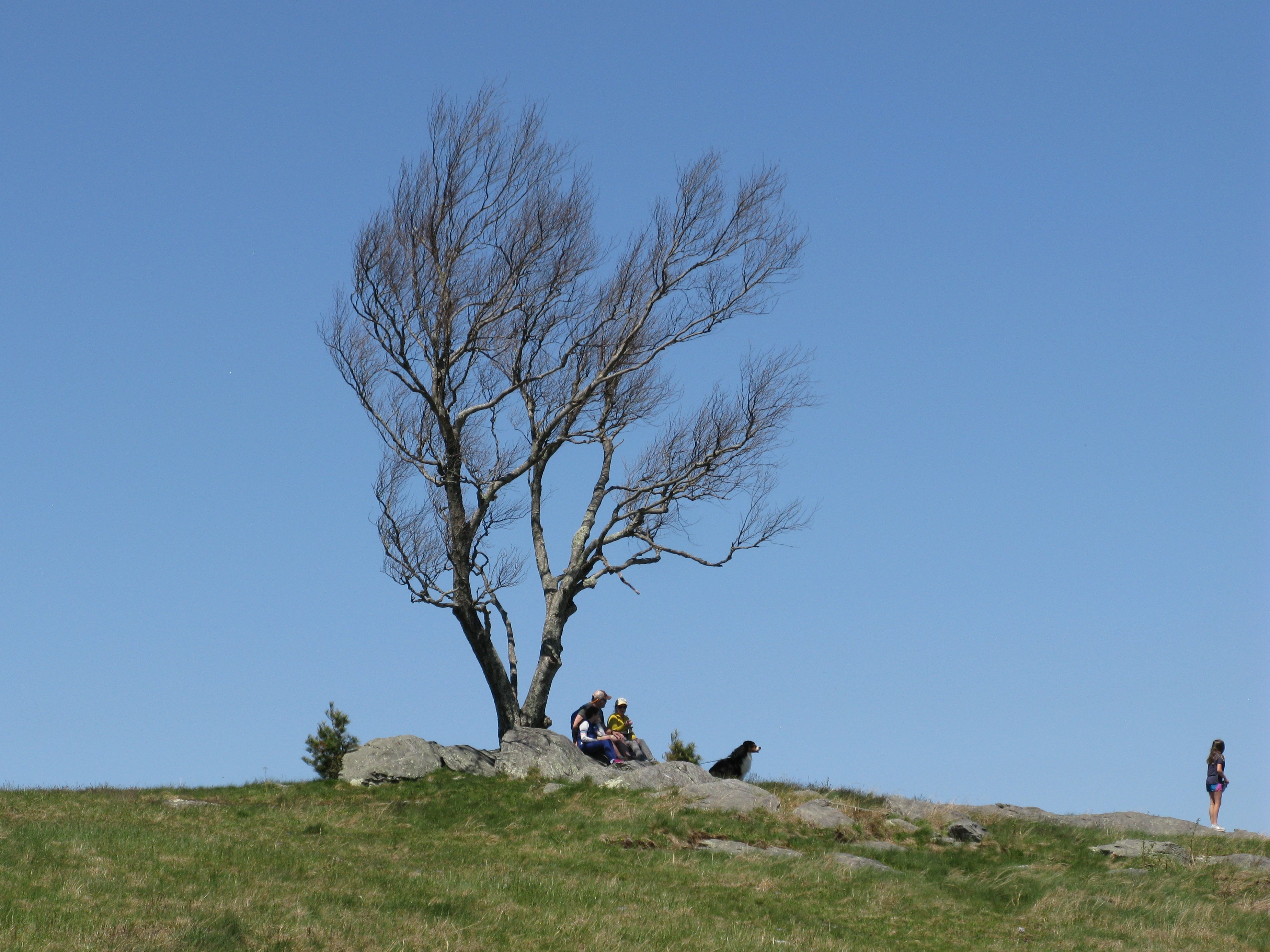
Doughton Park Tree 2020-11-22
 . 

Read Full Post »

 . 
[poems selected by and written by the students
of West Carteret High School, Morehead City, North Carolina, USA]
 . 
Earlier this month I asked Jessi Waugh, teacher/scientist/poet and instructor in Earth and Environmental Science, if she would like to have her high school students contribute Poems for the Earth. Jessi replied Yes! and then this:
 . 
Several days before the poem-writing lesson, I gave my students the assignment to post an EcoPoem to a class discussion. They could post any poem or song lyrics related to nature. In this discussion format, students are able to see each other’s posts and like or comment. Few interacted, but they did see each other’s poems as I scrolled through the class submissions.
 . 
This assignment saw some of the expected favorites: Robert Frost, Shel Silverstein, Dr. Seuss. It also saw poems obviously chosen by a Google Search for “ecopoem example,” as I knew it would. But I got unexpected and delightful responses as well, such as:
 . 
Stick your leaves back on
 . 
My mother planted you the day I was born.
I grew with you.
I remember trying to stick your leaves back on in autumn;
I was scared of you changing.
Yet as time passed, my attempts stood no chance.
The cruel seasons ripped apart your branches.
The cruel season ripped me apart, too.
You looked so unrecognizable by the time winter ended,
I didn’t even wanna be near you.
My mother made me blow out a candle for you every year.
She hasn’t lit one in 1…2…3… I lost count.
I grew without you.
You stood tall, but I only kept changing.
I was scared of changing.
I’m 16 now.
A storm ripped you from the earth.
I’m trying to stick your leaves back on.
I wish you could do the same to me.
 . 
Emily M
 . 
 . 
The Rose that Grew from Concrete
 . 
Did you hear about the rose that grew
from a crack in the concrete?
Proving nature’s law is wrong it
learned to walk without having feet.
Funny it seems, but by keeping its dreams,
it learned to breathe fresh air.
Long live the rose that grew from concrete
when no one else ever cared.
 . 
Tupac Shakur
 . 
 . 
❦ ❦ ❦
 . 
Before they wrote a poem, Jessi gave her students this assignment: “Analyze the connections between the biosphere and other Earth systems (geosphere, hydrosphere, atmosphere).” She took them to the back soccer field at their school, which is surrounded on three sides by forest and powerline land. She had cut 2′ x 2′ pieces of an old tarp for them to sit on, and once they were outdoors she handed them a clipboard along with the assignment log sheet and told them to sit facing the forest and far enough apart so they couldn’t distract each other.
 . 
When we first got out there, many students sat in the middle of the field or facing away from the forest, and I came around to encourage them to sit near the wild areas and turn towards them. Most did. Others were not comfortable and chose to stand or remain near the middle of the field, especially girls wary of jumping spiders.
 . 
Students documented the abiotic and biotic factors in the ecosystem, reinforcing those terms, and created a food web with the 10 organisms they observed. These were concepts from class (trophic level, energy flow, limiting factors) put into practice. They then answered a series of questions about interactions between ecosystem components and biodiversity, and then crafted their poems, all while outside.
 . 
Before taking them outside that day, I read the students one of my own poems, Dunation, but didn’t tell them it was mine. I told them to listen for the repetition of sounds and them suggested they repeat sounds in their poems as an easy literary device.
 . 
It was a beautiful day, perfect for sitting in the back field for an hour. We saw at least 20 species between all the different insects, herbaceous perennials, trees, and birds. Likely closer to 50. In general, students were quiet and reflective and did a great job of observing the ecosystem.  – Jessi Waugh
 . 
❦ ❦ ❦
 . 
selected student poems . . .
 . 
The Great Outdoors
 . 
When I step outside to the great outdoors
I see nothing but change, out of our culture nothing
stays the same
not the trees, not the grass, not the very ground you stand on
everything around us is just waiting on its moment
 . 
When I step outside to the great outdoors
I notice change is inevitable but nothing to fear
everything changes even just saying
“the last time I was here”
or the time and age you got, like the sound
of the creek, of the animals above, or even the things
that all of us take for granted like a mother’s love
 . 
Everything changes
please don’t be afraid
be glad you have what you have
and enjoy the change
 . 
Kevin Hunter, Student at West Carteret High School
 . 
 . 
In the Back Soccer Field 
 . 
With all these limiting beige walls I’m stuck with
for over 5 hours a day, it feels
refreshing to see the leaves, feel the breeze
crunch the brittle soil like the wandering ant
I make my pilgrimage
toward NATURE
 . 
My eyes are stimulated by something that isn’t
a screen but the echoes of human
development still make their unpleasant sounds
nature is something that can’t be replicated
truly by plastic or plaster models or
the dull green of money, as nature is
VIBRANT and cannot be comprehended by man
no matter what
 . 
Kyndall Griffin, Student at West Carteret High School
 . 
 . 
Life Cycle
 . 
Green
Life abounds
Sunlight kisses leaves
Insects buzz, a symphony of life
Grass
 . 
Tiny world
Hidden, teeming
spiders spin, frogs leap
nature’s dance, a vibrant scene
Balance
 . 
Stillness
Whispers softly
Decomposers working
Life to death, death into life
Cycle
 . 
Jazireyah Johnson, Student at West Carteret High School
 . 
 . 
❦ ❦ ❦
 . 
and another favorite selected by Jessi’s students . . .
 . 
rises the moon
 . 
Days seem sometimes as if they’ll never end
Sun digs its heels to taunt you
But after sunlit days, one thing stays the same
Rises the moon
 . 
Days fade into a watercolour blur
Memories swim and haunt you
But look into the lake, shimmering like smoke
Rises the moon
 . 
Oh-oh, close your weary eyes
I promise you that soon the autumn comes
To darken fading summer skies
 . 
Breathe, breathe, breathe
Days pull you down just like a sinking ship
Floating is getting harder
But tread the water, child, and know that meanwhile
Rises the moon
 . 
Days pull you up just like a daffodil
Uprooted from its garden
They’ll tell you what you owe, but know even so
Rises the moon
 . 
You’ll be visited by sleep
I promise you that soon the autumn comes
To steal away each dream you keep
Breathe, breathe, breathe
 . 
lyrics and music by Liana Flores
 . 
❦ ❦ ❦
 . 
Dunation
 . 
The sorrows they pile heart-high
head-high, sky-high like peaks
of primary dunes against winter-white
an accumulation of minutia
a hummock too precipitous to persist
Spring’s avalanche comes
grains slip-slide down dune slipfaces
so suddenly, the sound akin to arctic ice breaking
tern eggs crackling, oak limbs fracturing
in furious full-February gales
Hearts, heads, skies on fire
here comes March’s awakening
dunes crash-topple into manageable talus
Here we come
tip-toeing across the tops
paper children tumbling
over ridges and ruins
 . 
Jessi Waugh, Earth and Environmental Science Teacher, West Carteret High School
 . 
The main reaction from students to this project was appreciation for the time sitting outdoors, and they enjoy the social aspect of posting “favorite’ ecopoems on our class discussions. As much as I’d like to turn it into a week of poetry discussions, that would be terribly off-topic for my science class, and I used it primarily as a way to reflect on the connections between earth’s “spheres” (atmo, hydro, litho, geo) and how they interact in ecosystems. In general, I notice that students are disillusioned with politics and technology. They, like all students I’ve taught, enjoy hands-on experience and labs. I think poetry and teens could mix well in many places. – Jessi Waugh
 . 
❦ ❦ ❦
 . 
West Carteret High School is in Morehead City, North Carolina, in the southeastern USA. It is a public 9-12th grade high school, with about 1100 students. Approximately 40% of students are economically disadvantaged. Jessi Waugh teaches Earth and Environmental Science, since 2000 a required course for graduation. She also teaches Biology and Marine Science as needed, and has been a teacher for 12 years. Her students are all 9th & 10th grade, ages 14-16. The poems submitted are from both the honors and standard classes. She holds a Master’s in Teaching Secondary Science and an undergraduate Biology degree. I like teaching this course and age group; it’s my niche.
 . 
IMG_0345
 . 
❦ ❦ ❦
 . 
IMG_1783
 . 

Read Full Post »

 . 
April 24, 2024
 . 
Our true home lies outside, deep in the wilderness of forest and mountain, river and desert and sea, the source of our being and the destiny of our great meandering blundering dreaming journey through time. Like Odysseus in his wanderings, we are homeward bound whether we know it or not.
++++++ Edward Abbey
 . 
Wilderness has drawn humans closer to God throughout history. Why should we, in the twentieth century, believe this is suddenly no longer true? Long after the Exodus, in a time of recurring apostasy, Hosea spoke of God wishing to ‘allure’ the people back into the wilderness yet again — this time to the parched hills beyond Jericho. There, wrote the prophet, God would ‘speak tenderly’ to them.
++++++ David Douglas
 . 
The clearest way into the Universe is through a forest wilderness.
++++++ John Muir
 . 
❦ ❦ ❦
 . 
[Come wilderness into our homes]
 . 
Come wilderness into our homes
break the windows come
with your roots and your worms
spread yourself over our wishes
our waste-sorting systems our prostheses
and outstanding payments
cover us with your rustling greenery
and your spores cover us that we may
become green: green and reverent
green and manifest green and replaceable
come weather with your storms
and sweep the slates off the roofs come
with snow and hail smash
through the collective sleep
we are all enjoying in our beds
our worn rationalizations come ice
and form glaciers over the shadow banks
and our drive for liquidity
come through the cracks under the doors
you desert with your sands fill
our desolation up until it forms into a solid mass
rise up over the search-and-rescue teams
and our growth compulsion trickle into
the control panels of the missiles
and the missile defense systems into
the think tanks and the hearts of internet trolls
just leave the hedgehogs with their
snuffling so that it may calm us
come rising sea levels
up over our shorelines both the developed
and the undeveloped the homey
lowland areas wash
jellyfish into our soup bowls
and ramshorn snails into our hair
as we swim in each other’s direction panicked
with our yearning for one another
because almost nothing is left because it’s all gone
and thoroughly soaked through with regrets
finger-pointing and tranquilizers
come earthquakes shatter the apartments
which we built on the foundations
of how we always did everything
come tremors fill the mine shafts
the end of work and
the literature of redemption bury anger
and affection and all manner of added values
swallow up the memories come tremors
hurry so that the bedrock covers us
so we are covered with water desert weather
and over everything that which covers all the wilderness
 . 
Daniela Danz
Translated from the German by Monika Cassel
[Komm Wildnis in unsere Häuser] from the journal POETRY,December 2023
 . 
Shared by Bill Griffin, Elkin NC, who writes:
 . 
To the ancient mind, wilderness was dangerous, something to be feared and held at bay even while mysterious and fascinating. In recent times, as we’ve come to consider ourselves ‘modern’, wilderness has been conquered – we control it, we rule it, we exploit and use wilderness. Indigenous voices tell us we are one with the wild and can only be fully ourselves when we know and respect wildness. Romantic voices long to return to Eden and live in harmony with wilderness. The voices of mystics and spiritual seekers remind us that wildness is in us and part of us, that all things are one and that we have cut off a vital part of ourselves when we separate ourselves from the wild.
 . 
This poem by Daniela Danz brings us full circle to our 21st century shuddering realization – wild nature is back and beyond our control. For a few centuries we’ve kept wilderness at arm’s length, just outside the widening circle of our campfires, but now the seas rise and the storms mount. All of our consumption economies and gods of growth and development will not keep us safe. In the literal sense, wilderness comes into our homes, welcome or not. In the metaphorical sense, perhaps it is not too late indeed to invite it in, ‘come’. Perhaps we are on the threshold of a new age in which we admit our part in wild nature and its part in us. Or perhaps we shall be covered.
 . 
++++++ Bill
 . 
 . 
 . 
My own poem, Spent, begins with fatalism and regret but discovers, I hope, some communion with wild nature to end on a note of connection. – Bill
 . 
Spent
 . 
Coreopsis spent, limp rays curling,
curdled disk and one lone fly like aster’s
dry winged seed perched on delusion
that the head still holds some promise:
I turn away from everything sere
and brown – where else would I turn
this sullen afternoon? until
 . 
she calls me to join her, leaf strewn trail
beside Grassy Creek where it sings
to itself oblivious, two soft pairs
of footfalls among fern and shadow,
partridge berry makes its own warm light
and ground cedar runs rings around us:
 . 
I crouch before a cranefly orchid, determined
buds dainty as dewclaws still unopened
mid-July (and absent basal winter leaves
pocked olive but upturn them for satin
underleaf maroon), yet while she reminds me
 . 
about co-evolution, blossoms that couple
with their pollinators, I can’t stop seeing
that useless fly, bulging maroon ommatidia,
wings’ blush iridescence, proboscis needle
dripping one sour jewel spent, until
 . 
for just this moment the world opens itself
around us and I open to its secrets, kingfisher
rattle from another planet, fecund dank
of moss and fungus, every vireo our familiar,
swelling benediction breeze that gossips
among beech and laurel and promises
 . 
always, always something new.
 . 
Bill Griffin
finalist for the James Applewhite Poetry Prize of North Carolina Literary Review, 2023
 . 
❦ ❦ ❦
 . 
Nature is trying very hard to make us succeed, but nature does not depend on us.  We are not the only experiment.
++++++ R. Buckminster Fuller
 . 
We cannot be truly ourselves in any adequate manner without all our companion beings throughout the earth.
++++++ Thomas Berry
 . 
 . 
❦ ❦ ❦
 . 
The Tyger
 . 
Tyger! Tyger! burning bright
In the forests of the night,
What immortal hand or eye
Could frame thy fearful symmetry?
 . 
In what distant deeps or skies
Burnt the fire of thine eyes?
On what wings dare he aspire?
What the hand, dare sieze the fire?
 . 
And what shoulder, & what art,
Could twist the sinews of thy heart?
And when thy heart began to beat,
What dread hand? & what dread feet?
 . 
What the hammer? what the chain?
In what furnace was thy brain?
What the anvil? what dread grasp
Dare its deadly terrors clasp?
 . 
When the stars threw down their spears,
And water’d heaven with their tears,
Did he smile his work to see?
Did he who made the Lamb make thee?
 . 
Tyger! Tyger! burning bright
In the forests of the night,
What immortal hand or eye
Dare frame thy fearful symmetry?
 . 
William Blake (1757-1827)
https://poets.org/poem/tyger ; this poem is in the public domain
 . 
Shared by Les Brown, Troutman NC, who writes:
 . 
I love Blake’s Tyger not only because of its incredible poetic craft and rhythm, but for its recognition of the beauty and duality of the tiger as a creature of strength and beauty but also an instrument involved in the balance of nature.
 . 
++++++ Les
 . 
 .
❦ ❦ ❦
 . 
The brawling of a sparrow in the eaves,
The brilliant moon and all the milky sky,
And all that famous harmony of leaves,
Has blotted out man’s image and his cry.
++++++ William Butler Yeats
 . 
It seems clear, as I’ve argued, that the humanities can be broadened enough to make the connection [with science] in three ways. First, escape the bubble in which the unaided human sensory world remains unnecessarily trapped. Second, sink roots by connecting the deep history of genetic evolution to the history of cultural evolution. And third, diminish the extreme anthropocentrism that hobbles the bulk of humanistic endeavors.
++++++ Edward O. Wilson, The Origins of Creativity (2017)
 . 
❦ ❦ ❦
 . 
Bread and Roses
 . 
When the big sea has stopped rising
and the maps we’re through revising
and I can think of storms as friends,
I’ll go down to the beach again.
 . 
I’ll stand still there in that bright surf
and sing a song to this dear Earth.
I’ll sing for climate change to end.
I’ll sing tears for where we have been.
 . 
I’ll sing to things that we have learned –
the fossils we should not have burned
releasing the power of former suns,
bringing losses that cannot be undone.
 . 
Sad losses the children will inherit.
Species gone without much credit,
thanks to the piles of money earned
and all the corners left unturned.
 . 
I’ll sing to anger rising still.
Our leaders let firms do their will.
The people did assert control
but not before the barons stole.
 . 
Our job is now to make the best,
finding purpose in what is left.
It is a joy to live to fight
and on that beach to fly two kites.
 . 
Gus Speth
from Let Your Tears Water the Earth, Watershed Publications © 2023
 . 
Shared by Sam Love, New Bern NC, who writes:
 . 
I love the lyrical nature of this poem using the “songs” as a way to tie assaults on our planet’s web together. Also the transition from songs for the abuses to singing “to anger rising still”. A call to action. And here is one of my poems that is more literal with the theme of Earth Day and all things being connected.
 . 
++++++ Sam
 . 
 . 
 . 
The Web
 . 
No one is alone
We are all part
of life’s web
 . 
In each breath we inhale
remnants of star dust
and exhale nourishment
for the Earth’s plants
 . 
Each action we take
to support our bloated
lifestyle tugs on a strand
of the planet’s web
 . 
To understand our impact
visualize a spider’s web where
pulling on one strand
alters the whole
 . 
Sam Love
from Earth Resonance, The Poetry Box ©  2022
 .
Shared by Gus Speth, South Carolina, who writes:
 . 
The following poem by Sam Love is lovely but cautionary. It reminds us that we humans are part of an interconnected web of life here on Earth and part also of the journey of the universe. And gently it says we should act like it.
 . 
++++++ Gus
 . 
 . 
❦ ❦ ❦
 . 
We need the tonic of wilderness… the silence, the cold and solitude… to be refreshed by the sight of inexhaustible vigor… pasturing freely where we never wander.
++++++ Henry David Thoreau
 . 
Wildness made man but man cannot make wildness. He can only spare it.
++++++ David Brower
 . 
Wilderness is two things — fact and feeling. It is a fund of knowledge and a spring of influence. It is the ultimate source of health — terrestrial and human.
++++++ Benton MacKaye, the man who planned and conceived the Appalachian Trail
 . 
Any creative deed at the human level is a continuation of the creativity of the universe.
++++++ Thomas Berry
 . 
Life is a chemical system able to replicate itself through autocatalysis and to make mistakes that gradually increase the efficiency of autocatalysis.
++++++ National Geographic, Jan. ‘03
 . 
❦ ❦ ❦
 . 
 . 
Special thanks throughout these Earth Day celebrations to my hiking buddy and nature guide Mike Barnett, who has let me into the wilderness and won’t let me leave. Most of the quotations included in these sections are compiled in Mike’s Medicine Bag, which he carries with him into every new adventure
 . 
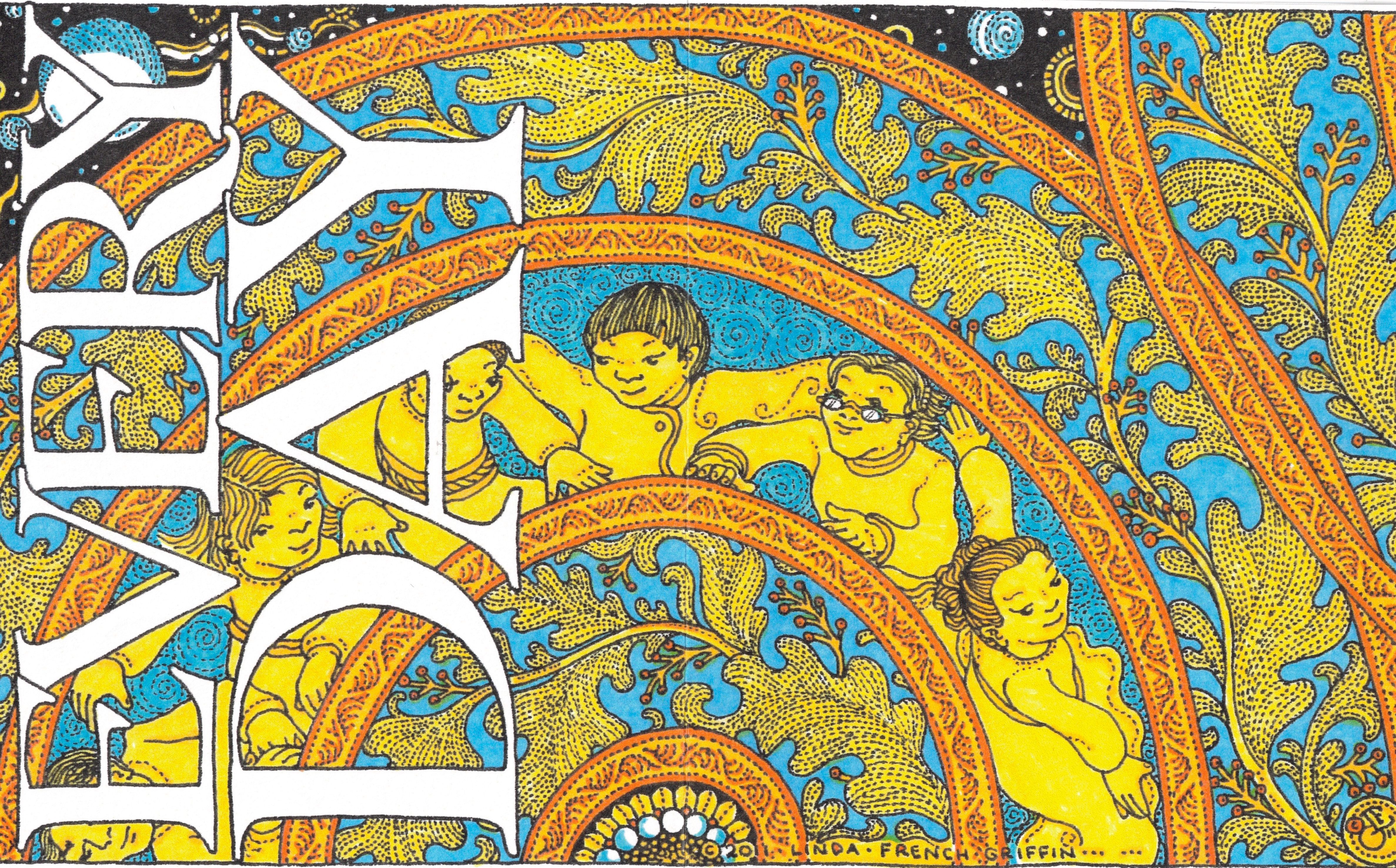
And EXTRA SPECIAL THANKS to my companion in the universe, Linda French Griffin, who allows the cosmos to flow through her pen onto paper. She has given permission for me to use a few of her drawings throughout these Earth Day celebrations.
 .  
++++++  Bill . 
Doughton Park Tree -- 5/1/2021
 . 

Read Full Post »

Older Posts »