Archive for the ‘ecology’ Category
Poetry and Earth – Water
Posted in ecology, Ecopoetry, tagged Christina Baumis, Dana Levin, David Winship, Earth Day 2026, Janice F. Booth, Natalie Canavor, Sherry Siddall on April 17, 2026| 3 Comments »
.
[ poems by Dana Levin, Christina Baumis, Janice F. Booth,
Natalie Canavor, David Winship, Sherry Siddall ]
.
Watching the Sea Go
.
Thirty seconds of yellow lichen.
.
Thirty seconds of coil and surge,
fern and froth, thirty seconds
of salt, rock, fog, spray.
.
Clouds
.
moving slowly to the left—
.
A door in a rock through which you could see
.
__
.
another rock,
laved by the weedy tide.
.
Like filming breathing—thirty seconds
.
of tidal drag, fingering
the smaller stones
down the black beach—what color
.
was that, aquamarine?
Starfish spread
.
their salmon-colored hands.
.
__
.
I stood and I shot them.
.
I stood and I watched them
right after I shot them: thirty seconds of smashed sea
while the real sea
.
thrashed and heaved—
.
They were the most boring movies ever made.
I wanted
.
to mount them together and press Play.
.
__
.
Thirty seconds of waves colliding.
Kelp
.
with its open attitudes, seals
riding the swells, curved in a row
.
just under the water—
.
the sea,
.
over and over.
Before it’s over.
.
Dana Levin
from Banana Palace. Copyright © 2016 by Dana Levin and Copper Canyon Press, http://www.coppercanyonpress.org. At The Poetry Foundation.
selected by Tina Baumis
.
❀
.
Ms. Levin’s poem evokes sadness each time I read it. Her image of the vast empty ocean is aimed to convey loss with minimal words. The title is perfect as she ebbs and flows leading our thoughts along with hers. Ms. Levin’s poem brings the encroaching shadow while I reflected on nature’s generous glow.
— Tina
.
.
❀ ✿ ✾ ❁ ❀
.
Lake Freeman
.
Curled against the nestling seat curve,
strands of hair blowing like dandelion seeds.
Dipping fingers in clear lake water
impermanent patterns sparkle,
.
break and dance in the sun’s bountiful balm.
Crisp water loosens pent up tension
eases into soothing meandering thoughts
as those densities are flung turbulently behind
.
in the boat’s churning frothy wake.
I am young, once again.
.
Tina Baumis
.
❀ ✿ ✾ ❁ ❀
.
Blue Spaces Elegy *
.
Anchored by a wide, lazy creek, the street I live on
climbs to a four-square farmhouse on the bluff
with its dilapidated carriage stable standing sentry;
the old barn collapsed years ago.
The land along our street— clay now,
once pristine blue space.
.
Long ago, the farmer grew corn and tobacco on this land.
A lane, rutted and raw descended from barn
to creek through blue space.
The plow, farmhands, and wagons piled with the harvests
moved down to the creek and up the lane,
and the farmer’s family prospered.
.
Skiffs plied the creek and brought their catch
to the farmer’s dock at the end of the lane.
The creek’s rich stock of Bay crabs and fish
surpassed the land’s bounty.
And the lane morphed into a gravel road
where rusty pickups ladened with
bushels of crabs and shellfish came and went.
And the farmer’s family prospered.
.
When the depleted land failed,
the farmer sold it as lots to watermen
and small clapboard cottages popped up beside the creek.
But the watermen’s catch dwindled;
and town folks bought the plots, tore down the cottages
and built sturdy ranchers and split-levels with driveways.
Curbs were added, and the gravel road was paved,
burying three small tributaries beneath the street,
cutting off the spring water that fed the old creek.
When the rains came, soil and lawn fertilizer
washed down the paved street, over the
buried springs, into the tired creek,
but the farmer’s family prospered.
.
The old farmhouse watched;
the carriage stable and barn emptied.
The farmer and the farmer’s wife died.
The neighborhood grew.
Builders came and went.
People prospered,
homes expanded.
The creek bed clogged with silt and runoff.
The farm was gone, the watermen were gone
from the now brown and turgid creek,
.
and the farmer’s family lives
somewhere else.
.
Janice F. Booth
* Blue spaces are environments with prominent water features known to improve our well-being, similar to “green spaces.”
.
✾
.
Thank you, Bill, for this opportunity to let my work speak, in my own small way, of the earth’s suffering. Having lived on my creek-side street for over 40 years, I have watched changes both micro and macro in the tiny part of the planet I inhabit. I was moved to write this poem as our creek turned brown and thick with algae from the winter run-off and spring rains.
— Janice
.
❀ ✿ ✾ ❁ ❀
.
City Trees
.
Back then it was safe for a 5-year old
to elevator down to the street and jump rope
or play potsy with other kids on the block,
hopping between chalked boxes on the sidewalk.
No mothers hovering to watch.
A safe world if not a pretty one,
hundreds of such blocks with
precisely aligned 6-story buildings:
a bleak ocean of brick in shades of muddy brown.
.
But East 177th Street harbored something alien.
Lining the street for exactly one block,
Grand Concourse to Morris Avenue,
a row of majestic, giant trees endured.
Huge dark trunks rising way past the flat rooftops,
branches arcing over the six stories.
Like no other street I’d seen.
.
I never knew why they grew in such unwelcoming habitat.
Nor what kind of trees they were,
the shape of their leaves, their color in autumn.
In truth my young self hardly noticed the trees.
Yet these icons of nature hovered over my childhood.
Made my drab street unique and colorful,
gave me something to look up to-literally.
.
Hinted at vistas way beyond my limited view.
I did not understand those trees, but loved them.
.
Natalie Canavor
from The Song in the Room
.
✾
.
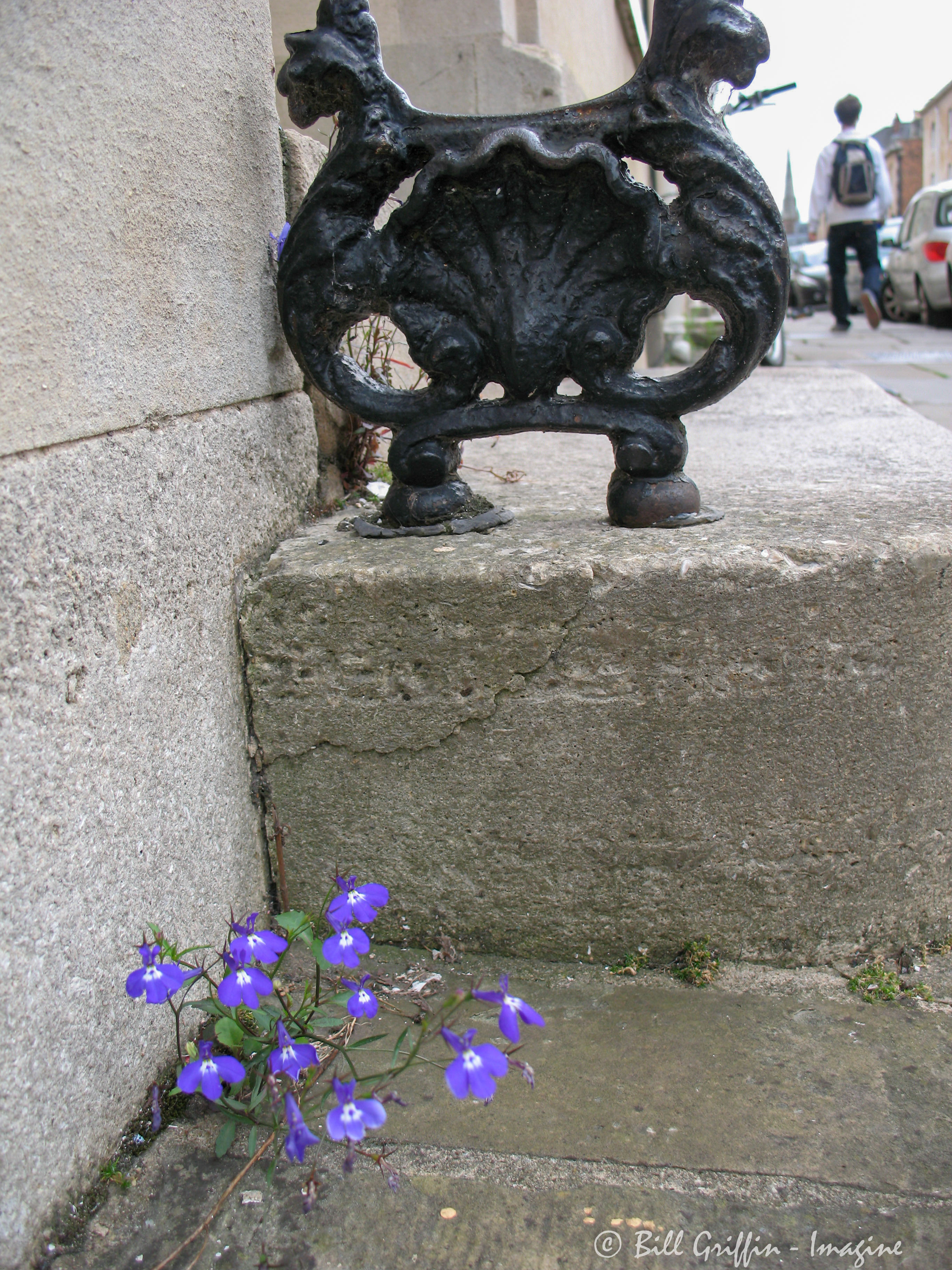
Growing up in a New York City neighborhood gave me little early exposure to nature beyond trips to a few parks and an occasional picnic to the Westchester “countryside.” Animal life meant squirrels. Pigeons and sparrows were the birds we knew. And if anything green graced the immediate environment, I can’t recall it. Except for the trees. I had a chance to revisit the Bronx recently and found that my trees had vanished from the street. I feel sorry for the new crops of kids living on this not-so-special-anymore city block.
— Natalie
.
.
❀ ✿ ✾ ❁ ❀
.
Watershed Community
.
We live in a Watershed Community.
Water here since the dawn of time
will be here after the sunset of time
same water, going round and round
circulating by our solar pump engine
a closed cycle circling our Earth
coursing through our hills
our bodies, our communities
connecting through our water
around us, in the air, in the ground
flowing in the streams, rising in the air
falling in the rain
.
over and over.
.
Water is our source, our soul
keeping us growing by its flowing
through our watershed
sustaining us, nourishing us, enlivening us.
We are baptized into life on Earth
through this ancient water
tumbling through these hills
dripping through our watershed
down the mountains to the sea
nurturing our fellow life forms
eroding surfaces, changing form
shaping our lives.
.
Do for others downstream
as you would have
others upstream
do for you.
.
David Winship
Bristol, Tennessee
.
❀ ✿ ✾ ❁ ❀
.
October Tide
.
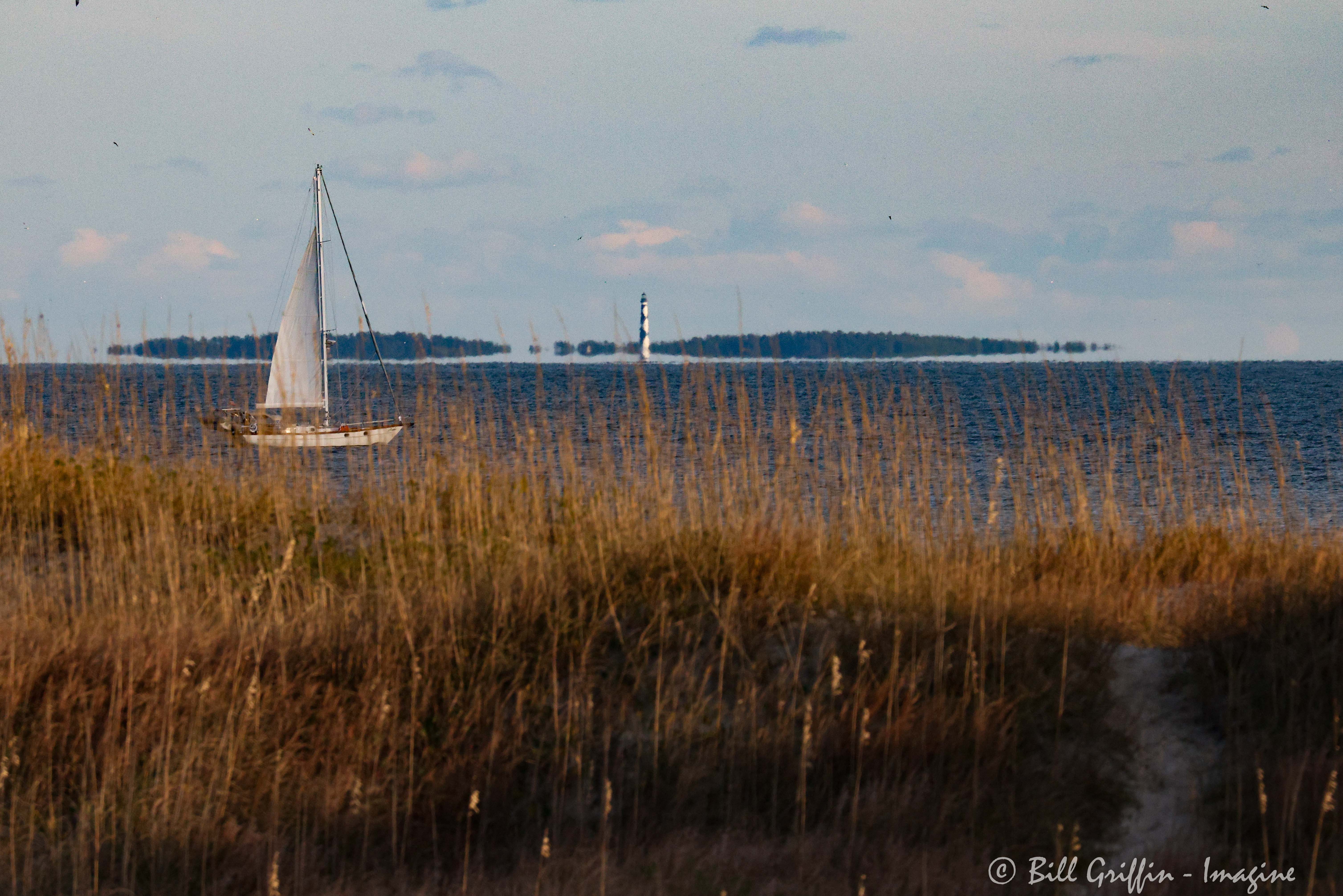
A nor’easter dabbles off the coast
raising the water to whiteness,
the wind to forgetting itself
in gusts and lurches.
.
Back canals are sober enough
for cormorants to lounge
wings stretched in worship
as deep cicadas drone in the cedars.
.
The tide escapes as it always does
twice a day, responding to the
slippery Moon, pulling the blood
in flood time, neaps and springs.
.
Gravities align, Sun and Moon
dance out of habit,
the perfect mathematics
just enough to keep us here.
.
Sherry Siddall
.
✾
.
October Tide appears in my first full length book, Transformed and Singing, recently published by Main Street Rag. If you stop to think about the almost impossible coming together of life on our planet, you have to sit down and take a breath. This idea occupies a lot of my time as a poet, and in Transformed and Singing (hint: cicadas abound).
— Sherry Siddall
.
.
❀ ✿ ✾ ❁ ❀
.
I am sure it is a great mistake always to know enough to go in when it rains. One may keep snug and dry by such knowledge, but one misses a world of loveliness.
— Adeline Knapp
A rainy day is the perfect time for a walk in the woods.
— Rachel Carson
.
Thank you for celebrating the month of April with International Earth Day (April 22) and National Poetry Month. Readers have selected poems that connect us to our planet and each other. If you have a poem that has rooted you to the earth and spread your branches into bright sky, please share! It can be a poem by your favorite writer, living or dead, a poem of your own, or both. We will continue sharing Earth poems as long as you send them.
.
Send a your poem(s) in the body of the email or as .DOC or .RTF to:
ecopoetry@griffinpoetry.com
.
Please include your comments or reaction to the poem. And publication acknowledgments if previously published.
.
Feel free to invite others to send their favorite Earth Day poems. Please refer them to this link for instructions: EARTH DAY EVERY DAY. Perhaps some day we will be able to say we live in the Age of Connection.
.
❁
.
Thank you for visiting Verse and Image: If you would like to receive an email each time a post appears, please SUBSCRIBE to Verse and Image using the button on the Home Page.
.
If you have a hard time finding the SUBSCRIBE button on this WordPress site, you can send me your email address and I will add you to the subscriber list. Send your request to
.
COMMENTS@GRIFFINPOETRY.COM
.
Thanks again for joining the conversation.
.
— Bill
.
❀ ✿ ✾ ❁ ❀
.
.
Creation and Desecration — Liza Wolff-Francis
Posted in ecology, Ecopoetry, tagged 48 Hours Down the Shore, Ecopoetry, Kelsay Books, Liza Wolff-Francis, nature poetry, NC Poets, poetry, Southern writing on February 13, 2026| 3 Comments »
.
[ 3 poems by Liza Wolff-Francis ]
.
The land before we came
.
i.
.
My friend Shelly gets a text
from a woman she’s dating
down south with a picture
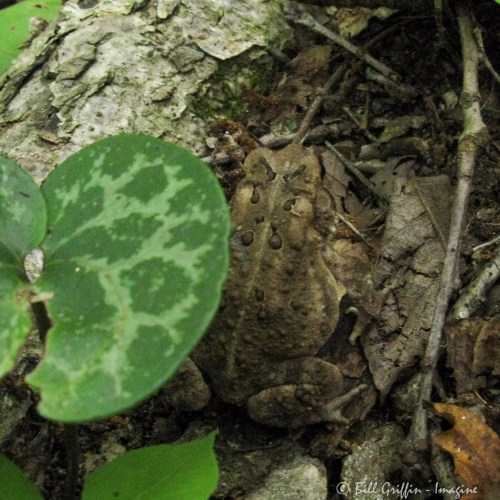
of a bullfrog the size of my
hand, caught in a bucket.
.
Its circle ear, a tympanum,
its habitat, the sound of a waltz,
its body, green camouflage.
.
As a teenager, I wore combat boots,
though never camouflage.
.
Camouflage for people is military wardrobe.
Parts of Atlanta were like battlefields,
.
people fist fighting about race, others
hobbling along asking for spare change.
.
To walk through those streets, I needed
combat boots, to run, to kick, to escape,
.
but, as part of the natural world,
I don’t camouflage well into city.
.
I could make a list of all the ways
people get by
and all the things to change.
.
The bullfrog doesn’t live well on asphalted land.
.
We are meant to be in connection with each other,
where no one is spare.
.
ii.
.
I imagine the land before we came.
Acres of thicket, trees and bramble.
.
Humans measure all of this by acreage,
kilometers, miles, rather than
the jump reach of a bullfrog,
rather than the size of its tympanum
and whether it is larger than the eye.
.
.
❀ ❀ ❀
.
Wheelchair in Sand
.
Even in this cool air,
a woman in a magenta
.
bathing suit, unable
to stand alone, is held,
.
at the edge of ocean,
by a man her height.
.
Water billows and turns.
He stands her up as if
.
he plans to stand her up
over and over again.
.
Ocean pulls her into tide,
swallows her with mouth
.
of whale. Her legs dangle
like bait, she is steady
.
in his arms and I think
he must be a man with
.
the heart of a whale. A young
woman yells Hold on Mama,
.
runs for the chair, drags
its robot wheels through
.
beach and saltwater until
it’s behind her and they push
.
against swelling ocean
and sinking sand.
.
❀ ❀ ❀
.
Atlantic City’s Great Black-Backed Gulls
.
Each one like an animal
++++ you could spoon or cradle if they wouldn’t fly away.
They stand facing the wind, lined up
++++ away from the ocean.
.
Even people who’ve never seen the ocean, I think,
must know its waves, like a rhythm of Earth
that water must know even without knowing,
.
just as grass knows sun,
like desert cactus know rain.
.
It’s different just beyond the gulls.
.
Shiny baubles and buildings,
casinos and their flashing lights,
siren sounds, bell-clanging promises,
.
oohs, and ahhhs.
.
Perfume brings back my grandmother.
A gasoline smell reminds me of riding
on a boat on a Georgia lake.
.
I could never know a casino in my body
in the same way as I know
how thirst is quenched with water.
.
If there were a hurricane here, like
the one headed toward Florida,
I would sense it in my muscles,
.
my legs, my head, the heaviness
heaving my body into the menace.
I know that feeling, knew it once,
.
don’t think it every completely left me.
Shape of storm pushes at all of nature—
and I feel it within me,
.
like Earth feels it’s coming.
.
I learn it at every threat of destruction.
.
Liza Wolff-Francis
from 48 Hours Down the Shore, Kelsay Books, American Fork UT; © 2024
.
.
❀ ❀ ❀ ❀ ❀
.
Three writer friends escaping the grinding dailies for a few days together: on the one side ocean, mystery and seduction, infinite expanse of watery planet; on the other side greed and tinsel and different seductions, the exploited and the exploiting. Liza Wolff-Francis’s poems can be arms spreading wide cymbals of glass before they clash and shatter, or arms that lift again the creature in its brokenness and wish for healing. During 48 hours down the shore, as one says in New Jersey, Liza celebrates love and kindness and the dignity of surf and sea-creature. Never, though, does she overlook the struggle all around us, of person and of planet. She describes herself as ecopoet. I feel in these poems not only the ecology of our threatened and suffering earth, but also the social ecology, cultural ecology, human ecology so twisted and strained, so threatened and threatening that it is easy to become overwhelmed.
.
What to do when overwhelmed? My reptilian hindbrain is more likely to retreat than lash out. Close your eyes, close your ears and ignore the impending destruction. Or do lash out – hurt someone before they can hurt you. Or look there – a man is introducing his crippled lover to the surf. Listen – gulls are laughing with you as much as at you, and the waves’ approach and retreat murmur . . . you belong here. Small acts will save our planet, a million small acts of love, a billion. A poem is just such a small act of invitation. You are invited to advance rather than retreat. To embrace rather than to strike. Each act of love declares we are not giving up.
.
❀ ❀ ❀
.
Liza Wolff-Francis is the 8th Poet Laureate of Carrboro, North Carolina, USA. She teaches creative writing workshops, has written plays and reviews, and whatever is happening around the world or down the street, she never looks away. 48 Hours Down the Shore is available from Kelsay Books. More about Liza at http://www.lizawolff.com.
.
.
❀ ❀ ❀ ❀ ❀
.
Thank you for visiting Verse and Image:
. . . . . every Friday I present one or two poems I’ve read this week that particularly speak to me;
. . . . . every Saturday I present one or two poems submitted by YOU, my readers.
.
If you would like to offer a poem for consideration, either by a favorite author or your own work, please view these GUIDELINES for Saturday Readers Share:
.
.
If you would like to receive an email each time a post appears, please SUBSCRIBE to Verse and Image using the button on the Home Page.
.
If you have a hard time finding the SUBSCRIBE button on this WordPress site, you can send me your email address and I will add you to the subscriber list. Send your request to
.
COMMENTS@GRIFFINPOETRY.COM
.
Thanks again for joining the conversation.
.
– Bill
.
.
Maura High – Field as Auditorium
Posted in ecology, Ecopoetry, Imagery, poetry, tagged Ecopoetry, Field as Auditorium, imagery, Maura High, nature, nature photography, nature poetry, NC Poets, poetry, Southern writing on January 30, 2026| 2 Comments »
.
[ 2 poems by Maura High ]
.
Excursions in Moss
+++++ — for Barbara
.
They were here, all this time,
in this same world,
here for the seeing:
.
green shag and starfield, clumps, pinheads,
frilled with lichen,
.
and poking up through them the green
first leaves of violet, wood sorrel,
for example, among the ephemera —
.
here, in the piedmont of North Carolina,
all the greens in creation:
a landscape within landscapes,
slow as,
quiet as,
.
as back along
the rims of lakes and drainages in the early Cambrian.
In this same old world:
the same creep and cling
and drill into the surface
.
with their fragile rhizoids, into rock fissures,
now bark, now exposed root,
.
into the Anthropocene and still
green between paving stone,
on verges, stuck fast
.
to rocks along the banks of Bolin Creek,
down a grit-and-gravel driveway.
.
A green gift
my friend gave me:
moss scrapings, from her yard
.
over in the next county;
in late summer
.
the waggly spore capsules
pop open, and a million spores float
off and up into whatever wind.
.
❀ ❀ ❀
.
Reprise
+++++ — for Frances
.
One leaf falls from the hickory
+++++ outside my window—
.
+++++ a slow loop right,
an about turn, and squiggle—
.
so cursory a gesture, it looks
+++++ like something written
.
+++++ in an alphabet of leaves:
a charm against insects
.
and woodpecker; a plea
+++++ for all the leaves that fall,
.
+++++ blacken, and rot, and leach
into the earth, and rise again
.
to new petiole, new leaf,
+++++ singing the green song of desire
.
+++++ and the brown of thrift;
the whispery, creaky name
.
the tree gives itself;
+++++ or the name we have given it,
.
+++++ full of ourselves and our own
histories, as a child
.
writes her given name and sees
+++++ herself there, her first self-portrait.
.
Maura High
from Field as Auditorium, Redhawk Publications, The Catawba Community College Press; Hickory NC; © 2025.
.
.
❀ ❀ ❀ ❀ ❀
.
Maura High speaks the language of wild. She writes in an alphabet of leaves. Her poems sometimes withdraw entirely from the touch or consideration of human presence and become encompassed entirely by field, by forest – crownbeard setting seed in the wilding meadow, Bolin Creek about its business of undercutting a bank of clay, moss creating soil from stone. Maura translates for us the deep language of life and of time. Where did this come from? Where are we going?
.
As I read Maura High’s poetry, I consider the many lives I have overlooked, forgotten, ignored. I am reminded to listen for the soft peeps of sparrows and finches settling into the shrubbery at sunset. Listen closer – the seep of water in the dirt beneath my feet and the striving of rootlets and mycelia. Closer yet – the movement of seasons, long connections across time, encircling connections gathering life and nudging forward. From careful observation and contemplation of the unremarkable features of a creek, a tree, a flower, Maura creates an opportunity for us, her readers, to participate in the most remarkable story of all.
.
❀
.
Maura High was born in Wales but grew up on Planet Earth. She has established tender rhizoids in piedmont North Carolina but the wind is apt to blow her to distant climes at any moment. These two poems are from her newest book, Field as Auditorium, from Redhawk. She has also published The Garden of Persuasions, winner of the Jacar Press chapbook contest (2013), and Stone, Water, Time in collaboration with artist Lyric Kinard, Lyric Art Publishing (2019). Sample more of her poetry at MauraHigh.com.
.
.
❀ ❀ ❀ ❀ ❀
.
Thank you for visiting Verse and Image:
. . . . . every Friday I present one or two poems I’ve read this week that particularly speak to me;
. . . . . every Saturday I present one or two poems submitted by YOU, my readers.
.
If you would like to offer a poem for consideration, either by a favorite author or your own work, please view these GUIDELINES for Saturday Readers Share:
.
.
If you would like to receive an email each time a post appears, please SUBSCRIBE to Verse and Image using the button on the Home Page.
.
If you have a hard time finding the SUBSCRIBE button on this WordPress site, you can send me your email address and I will add you to the subscriber list. Send your request to
.
COMMENTS@GRIFFINPOETRY.COM
.
Thanks again for joining the conversation.
.
– Bill
.
.


Thanks Les. Witness to the pain and the joy. ---B