Feeds:
Posts
Comments

Archive for the ‘poetry’ Category

[with poems by Kim O’Connor, AE Hines, Cheryl Wilder, Yvette Murray]

The North Carolina Poetry Society was organized in 1932 at the Charlotte home of Edna Wilcox Talley. The six members present elected Zoe Kincaid Brockman, well known poet and women’s editor of the Gastonia Gazette, as the organization’s first president. Could those six writers have imagined that ninety years later their idealistic endeavor would be thriving, with a membership of over 500 and sometimes more than a hundred persons from all across the state attending meetings? That through the decades the North Carolina Poetry Society would be the forerunner of additional writers’ organizations such as the Poetry Council of North Carolina, NC Writer’s Network, and NC Writer’s Conference, not to mention numerous local and regional groups in NC towns and counties? That poetry would be happening in schools with Poetry Out Loud, in shop windows and on buses through Poetry in Plain Sight, in countless books and journals published in North Carolina every year?

Zoe Brockman, Edna Talley, and friends knew the truth long before Doris Betts coined the phrase: North Carolina is the “writingest state.” Perhaps they wouldn’t have expressed it so eloquently but they would have agreed with Ed Southern, NC Writers’ Network executive director, that “one cannot spit, piss, or throw a rock in the Old North State without hitting a writer.” I like to believe those women of an earlier time would have been pleased but unsurprised at the many poets inducted into the NC Literary Hall of Fame after its inauguration by Sam Ragan at Weymouth Center in 1996; they especially would have applauded when all the inductees in 2014 were poets – Shelby Stephenson, Betty Adcock, Ron Bayes, Jaki Shelton Green. The Charlotte Six would no doubt have volunteered to serve as mentors in the Gilbert-Chappell Distinguished Poet Series, helped set up tables at the Sam Ragan Poetry Festival, and host open mic on Zoom during the pandemic. We who participate in the North Carolina Poetry Society of 2022 benefit from their high ideals, keen vision, and energy – we uphold a worthy tradition, and we have embraced the creativity, inclusion, and diversity that now make this tradition our own.

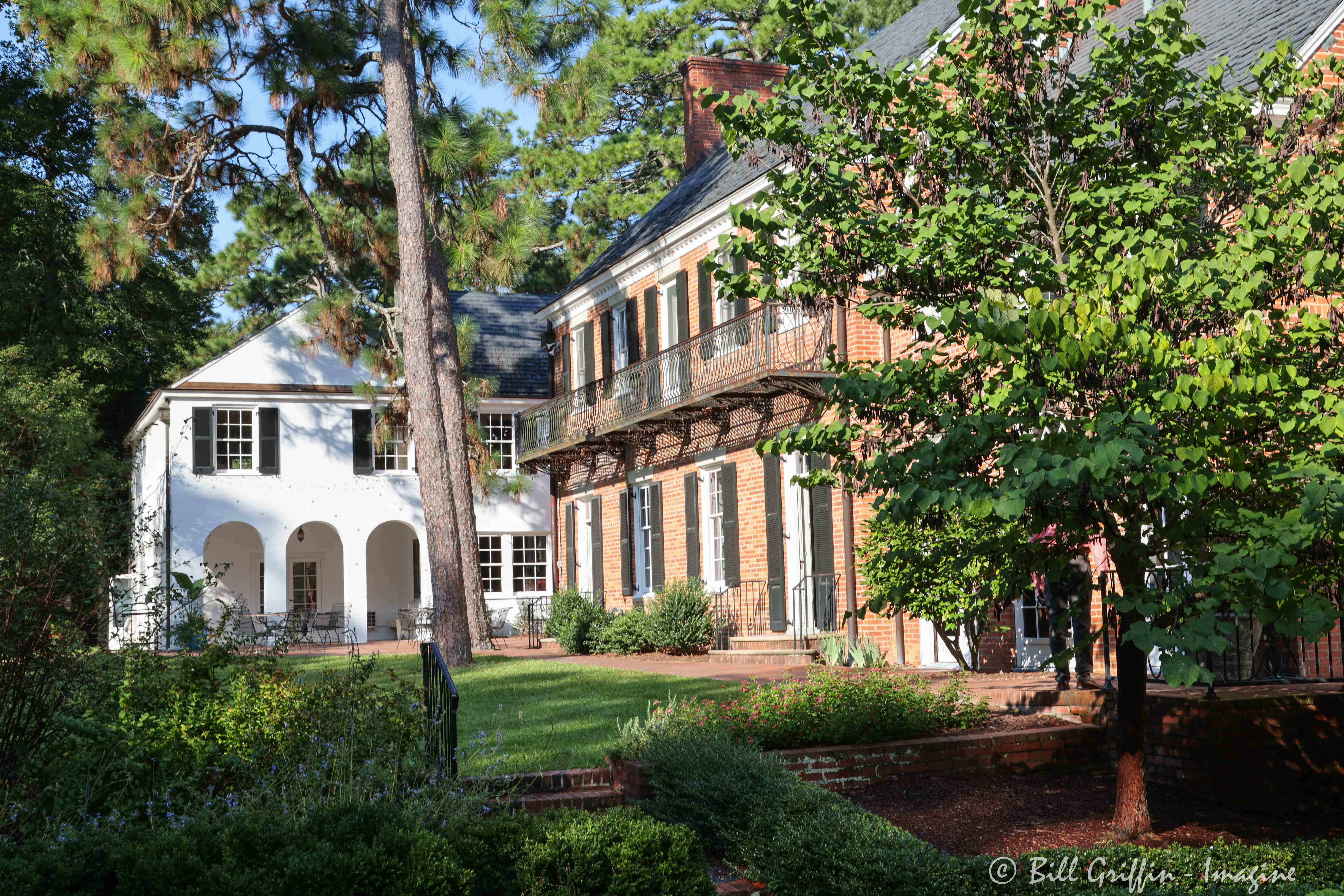
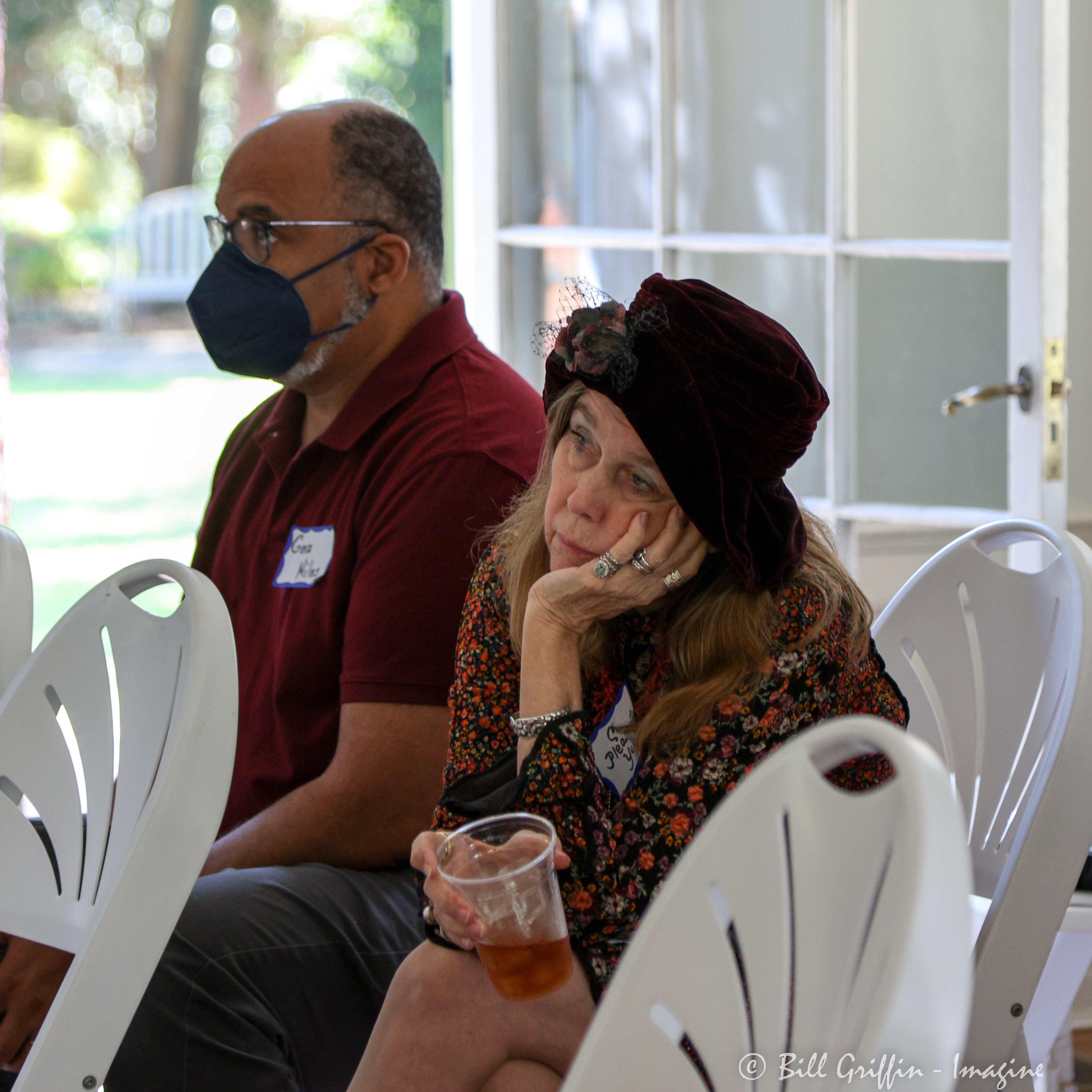
NCPS gathered to celebrate its 90th anniversary on September 17 at Weymouth Center for the Arts & Humanities, Southern Pines, NC – the first meeting in person in two and a half years. We look back and we look forward. We pay tribute to those who have taught and inspired us, and we open ourselves to the newest voices among us. We listen to the words of poets who dedicated their lives to building the power of literature in North and South Carolina: Joseph Bathanti reading Kathryn Stipling Byer, Shelby Stephenson reading Marty Silverthorne, David Radavich reading Susan Laughter Meyers. And we listen to the words of today’s poets reading the poems of now.
The Brockman-Campbell Book Award is the most prestigious honor bestowed by NCPS, awarded annually for the best book of poetry published by a North Carolina poet in the preceding year. Past winners have included Fred Chappell, AR Ammons, Betty Adcock, and Robert Morgan, among many others. The 2022 winner is Kimberly O’Connor for her book White Lung. Finalists are Anything That Happens by Cheryl Wilder and Any Dumb Animal by AE Hines.

❦ ❦ ❦

The History of My Silence
Hendersonville, North Carolina, 1961

white people sit in the front my great-grandmother
says my mother is angry
she wants to sit in the back

my mother is six years old
her first time on a bus
she wants to sit in the back

why? she stamps her foot

my great-grandmother does not answer the rest of the world
the boycotts the marches the fire
hoses let loose on children burning
crosses any of it does not
exist for them

they sit in the front like good white
women I think that

their silence their
compliance
has flowed into me
a river I have to swim
even as the water turns to flame.

Kimberly O’Connor
from White Lung (Saturnalia Books, Ardmore PA, © 2021)
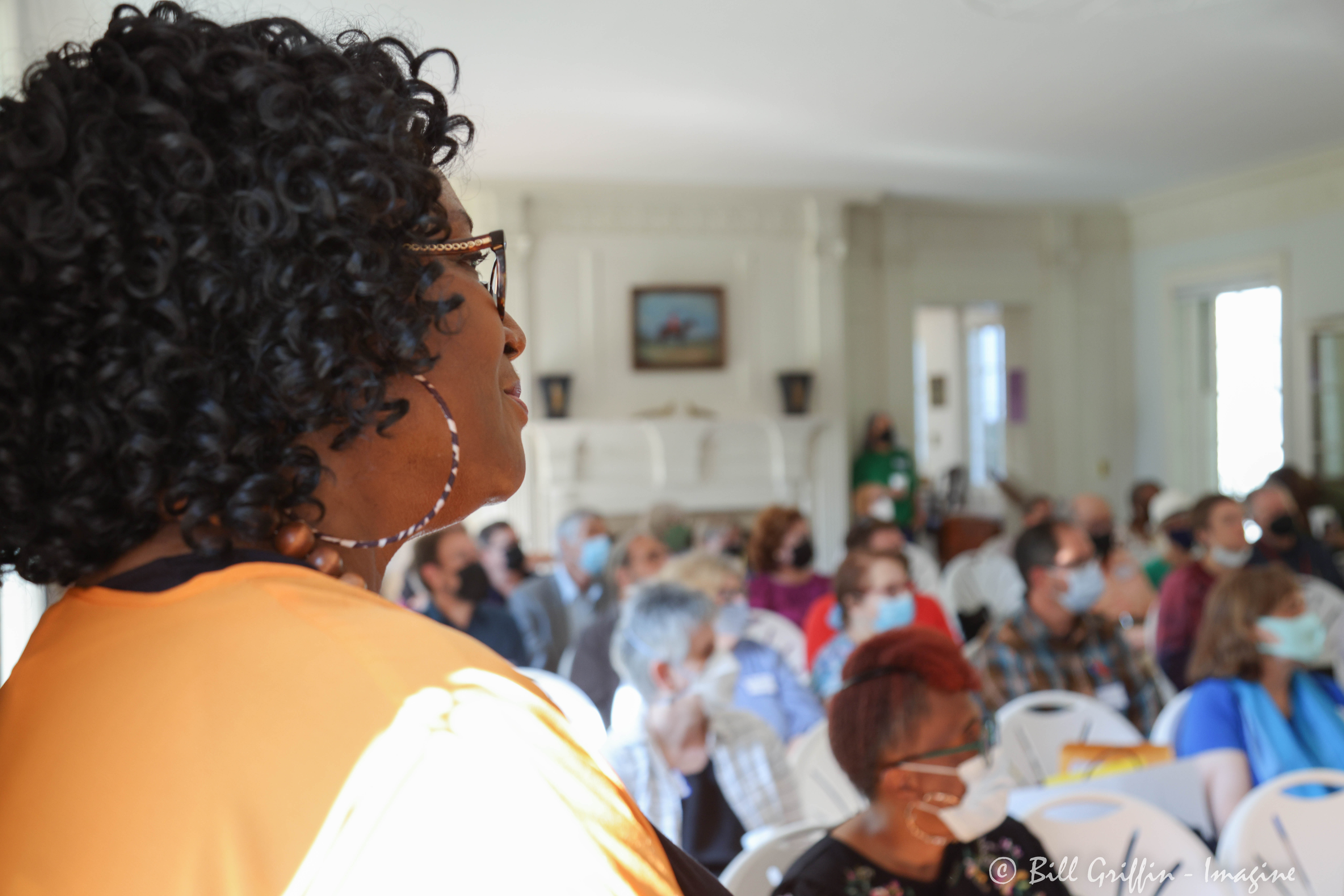
Kim is a North Carolina native who lives in Golden, Colorado. She received an MFA from the University of Maryland and has taught creative writing and literature in middle school, high school, and college classrooms in Colorado, Maryland, West virginia, and North Carolina.

❦ ❦ ❦

Naturalization

We’d been lucky. I’d made it out of Guatemala
alone with the baby, and the baby still alive.
I hadn’t let him crawl out a hotel window.
I hadn’t let him swallow a button from my sleeve.
Managed to feed him and change him
and carry him in taxis and embassies, through
markets and airports, beneath the electric barbwire
of US Immigration. In Houston, I watched
badged women and men berate
brown men in shackles while they sat
tethered to stiff chairs beside us. Most stared
at their shoes. I am embarrassed to admit
I did nothing. Said nothing. Didn’t catch a man’s
tired eye and offer him even a nod, my feeble Spanish.
Instead, I just called my little son’s name over
and over, and bounced him on my lap.
Then we were ushered back into the land
I’d promised him. Bound together by law,
and off to our next gate without a glance back
at the men on their way to whatever place
they no longer called home.

AE Hines
from Any Dumb Animal (Mainstreet Rag Publishing, Charlotte NC, © 2021)

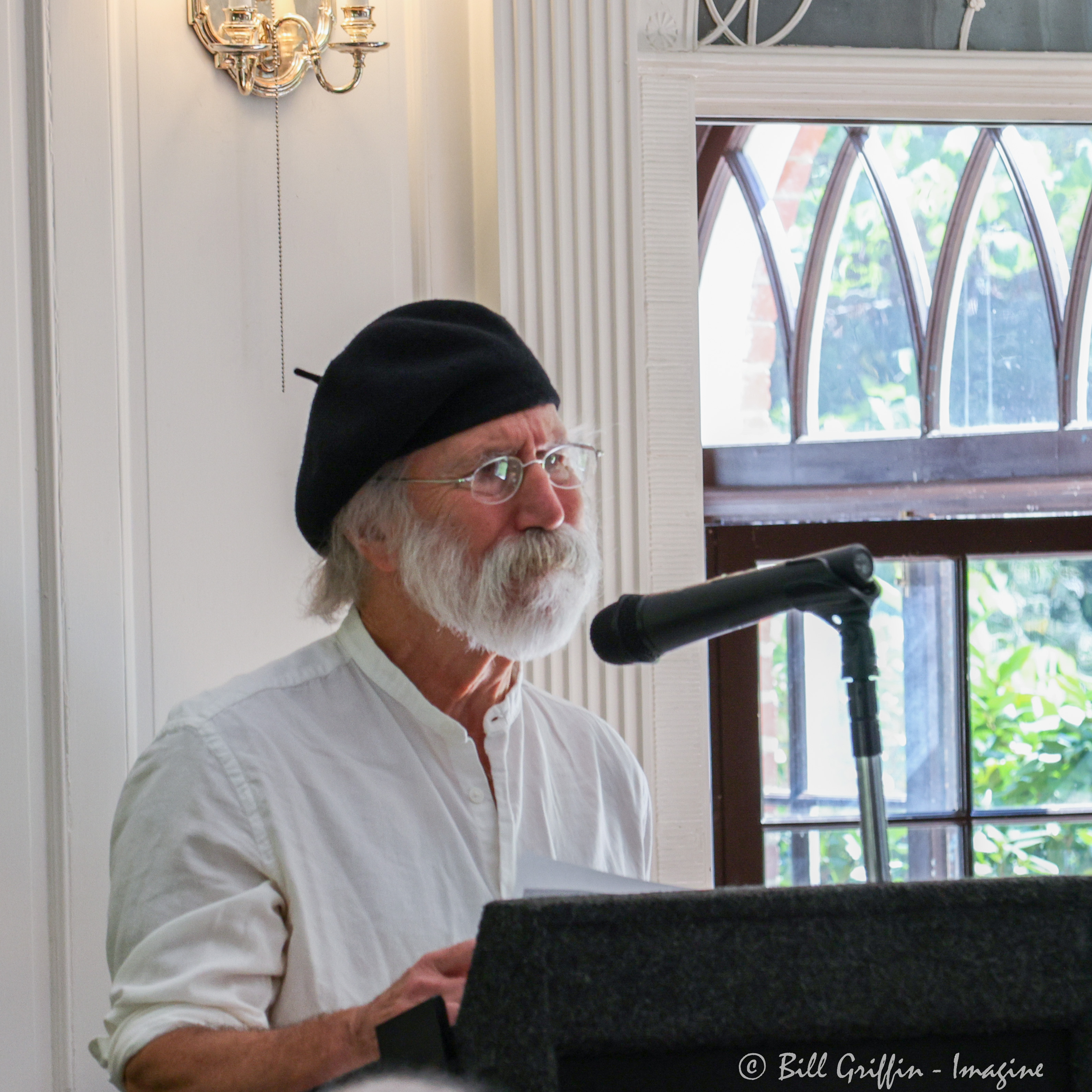
Earl grew up in rural North Carolina and currently resides in Portland, Oregon where he is pursuing his MFA from Pacific University. He is winner of the Red Wheelbarrow Prize and a finalist for the Montreal International Poetry Prize.

❦ ❦ ❦

Bailed Out

The house stirs with my stirring.
I am the elephant, the devil’s minion.
Secure in my arms a woven afghan

blue and darker blue. I run
fingers through holes and open
like a wish bone but cannot pull

them apart. A wish not wished
establishes habit, like sleep-dancing
or tangling the vacuum cord around my wrist

to make love. I am two people now—
the before and the after; one I’ve already forgotten
the other I have not met. I hear voices whisper

what if—a crossroad so difficult to leave
I build a roadside bench. At some point
I will rise from this bed, speak though I only hear

his curdled breath, allow my first taste of bone
in the broth I can smell, but no one will notice
my stained hands, the bloody prints on the wall.

Cheryl Wilder
from Anything That Happens (A Tom Lombardo Poetry Selection, Press 53, Winston-Salem NC, © 2021.)

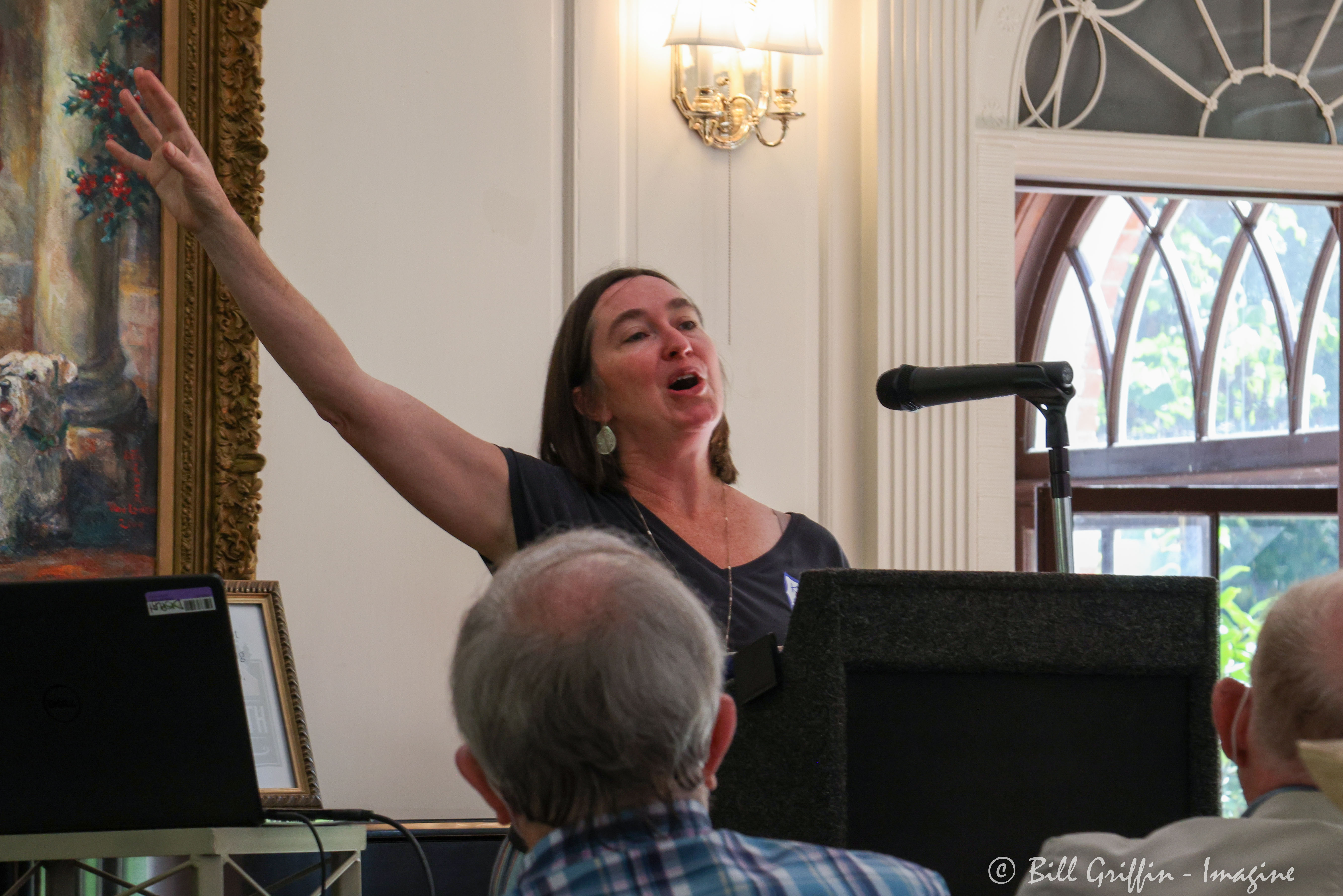
Cheryl lives near the Haw River in North Carolina, where she gives talks and workshops on art and writing, serves as president of the Burlington Writers Club, and owns a small web development company. She is co-founder and editor of Waterwheel Review.

❦ ❦ ❦

The Susan Laughter Meyers Fellowship in Poetry was established in 2017 in memory of former president of both the North Carolina and South Carolina Poetry Societies, Susan Meyers. The annual merit-based fellowship for one North Carolina or South Carolina poet requires submission of five poems with blind judging by a three-judge panel. It is co-sponsored by NCPS and the Weymouth Center for the Arts and Humanities, and includes a one-week residency at Weymouth Center plus an honorarium. The 2022 Fellowship recipient is Yvette R. Murray.

Poem In Which Words

don’t deserve this.
They have been around a long time; served us well.
Why then do we use them like poisoned blue darts?
Words have been so kind as to adapt.
They want to stay relevant too.
But we spit them into red plastic cups like
‘bacca juice and leave them on the side of the road.
They never harmed us,

Yet we turn them ugly side out,
Pit them against each other,
Use our fangs to inject venom.

The poor words can’t be unheard,
the ring after of their scent,
makes folk mad.

I hope they don’t cry,
I hope they don’t die by suicide,
I hope they don’t vanish within.

Then we will never again find the words.
They might like that though.
Scrubbed clean with different color hair
They can hold hands,
stroll the streets,
carry their shopping bags,
or look for a bistro
in peace.

Yvette R. Murray
from a gathering together literary journal, Spring 2021

Yvette is a Gullah poet from Charleston, SC. She writes because she has to. The words bump around in her head and give her headaches. Just kidding! For Yvette, Poetry is the most beautiful event space on the planet.

THANK YOU to so many who made this North Carolina Poetry Society 90th Anniversary gathering not only possible but truly worthy of the banner, Infusing Ceremony with Celebration: Poetry with Light, Soul, and Sound: Lynda Rush-Myers, for a year of planning and countless hours of preparation and presentation; Celestine Davis, ever-present ever-encouraging ever keeping the wheels on the bus; Regina Garcia, heart and soul and thrilling Tribute introductions, and Romeo Garcia making sure we all got lunch; the entire NCPS Board of Directors, setting up, hanging signs, welcoming and greeting, picking up the trash; and special thanks to the staff of Weymouth Center and Executive Director Katie Wyatt, we/you couldn’t do it without you/us.

NEXT WEEK: NCPS 90th Anniversary celebrations continue with the Lena Shull Manuscript Prize: poems by winner Ana Pugatch, finalists David Poston and Maureen Sherbondy, and workshop presenter Joan Leotta

❦ ❦ ❦

Portions adapted from The North Carolina Poetry Society: Part 5 – 2012-2022, Ninety Years of Creativity, Challenge, and Change; compiled and composed by Bill Griffin with special collaborator David Radavich; © 2022 The North Carolina Poetry Society.

Why We Are “The Writingest State”; Southern, Ed. North Carolina Literary Review; Greenville NC, Nr. 25 (2016): 92-99.
 

Read Full Post »

[with 3 poems by Joan Barasovska]

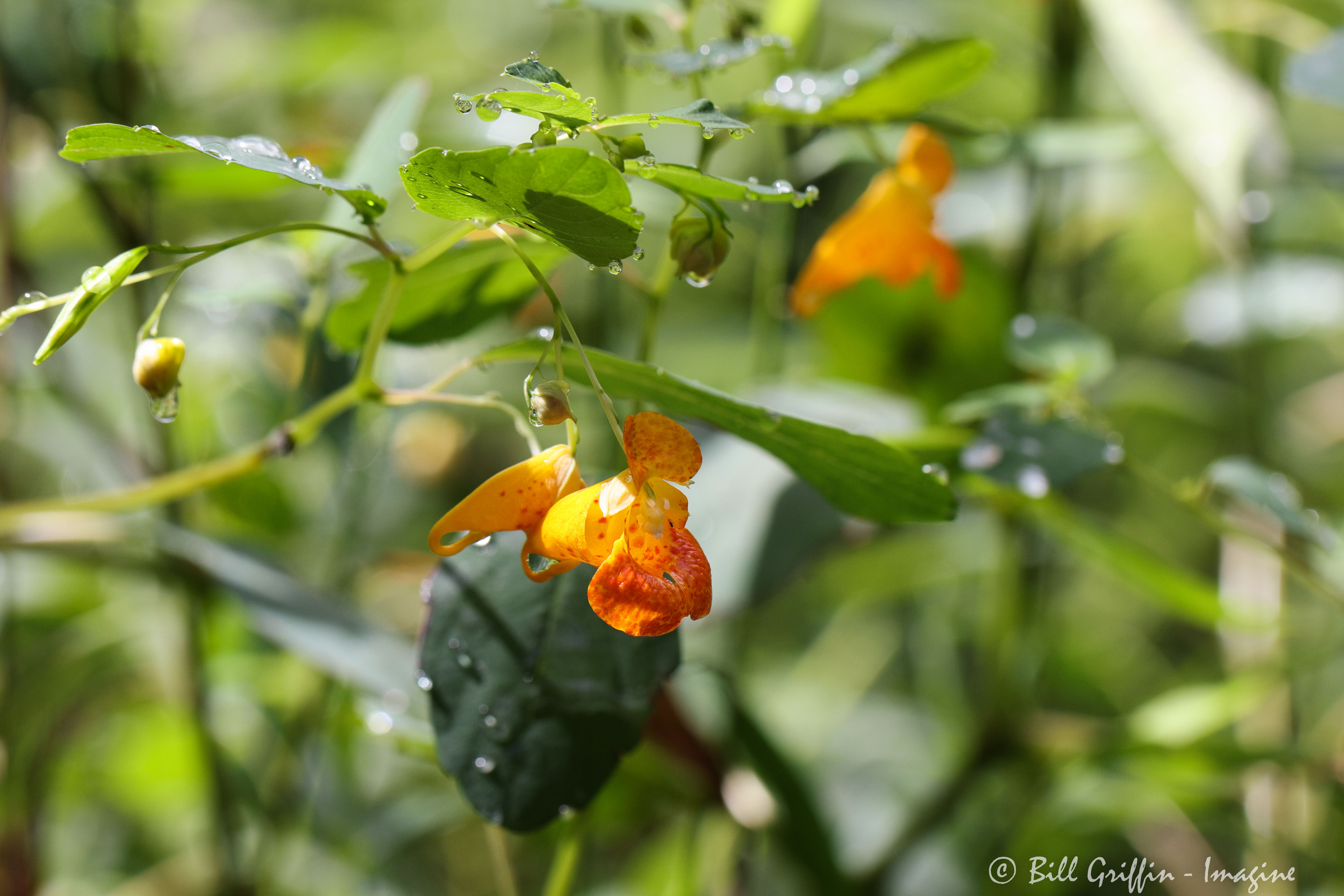
What is the perfect ripeness of Touch-Me-Not to pop its pods into my hand? How will the little brown kernels taste? How far would they fly if I didn’t catch them?

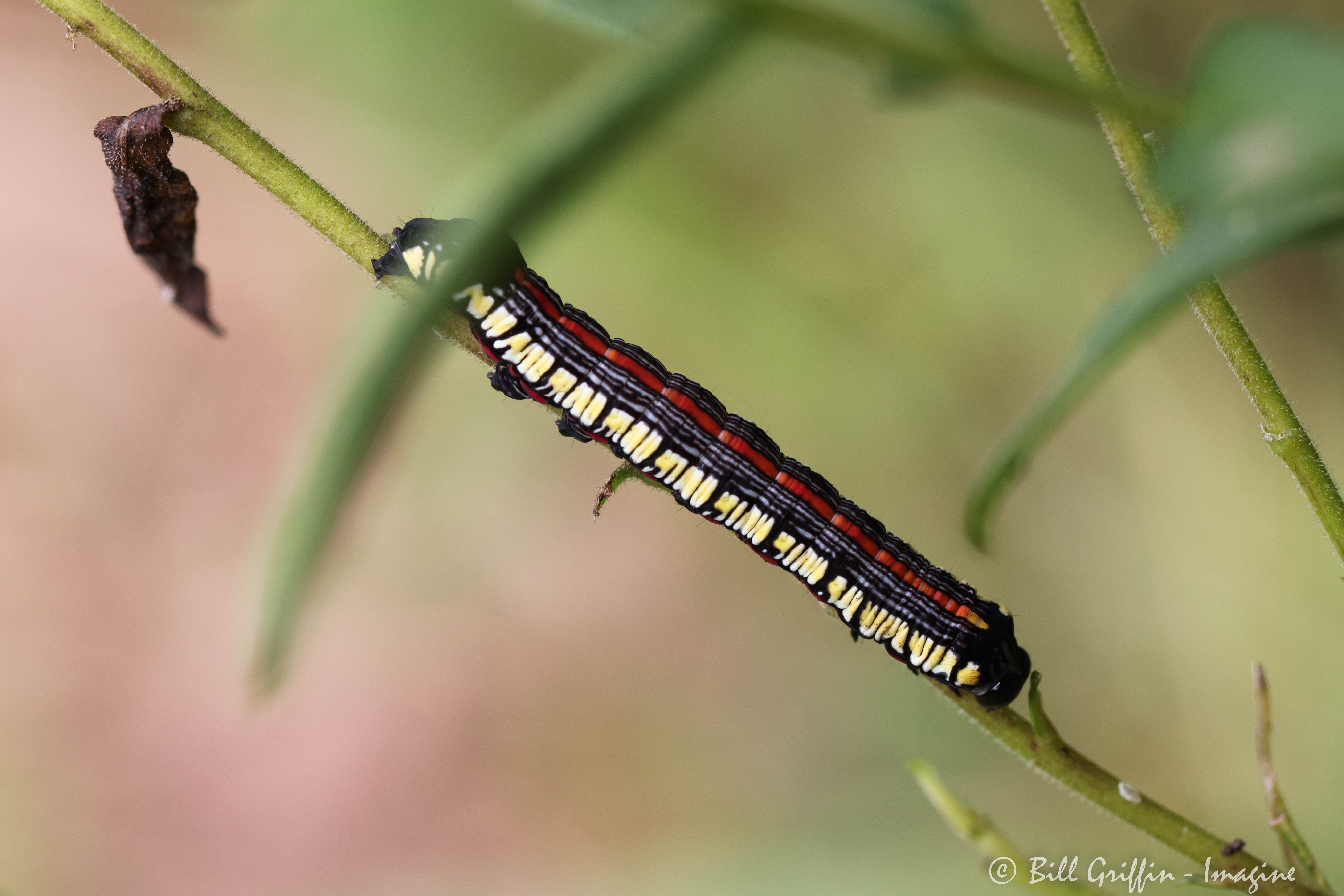
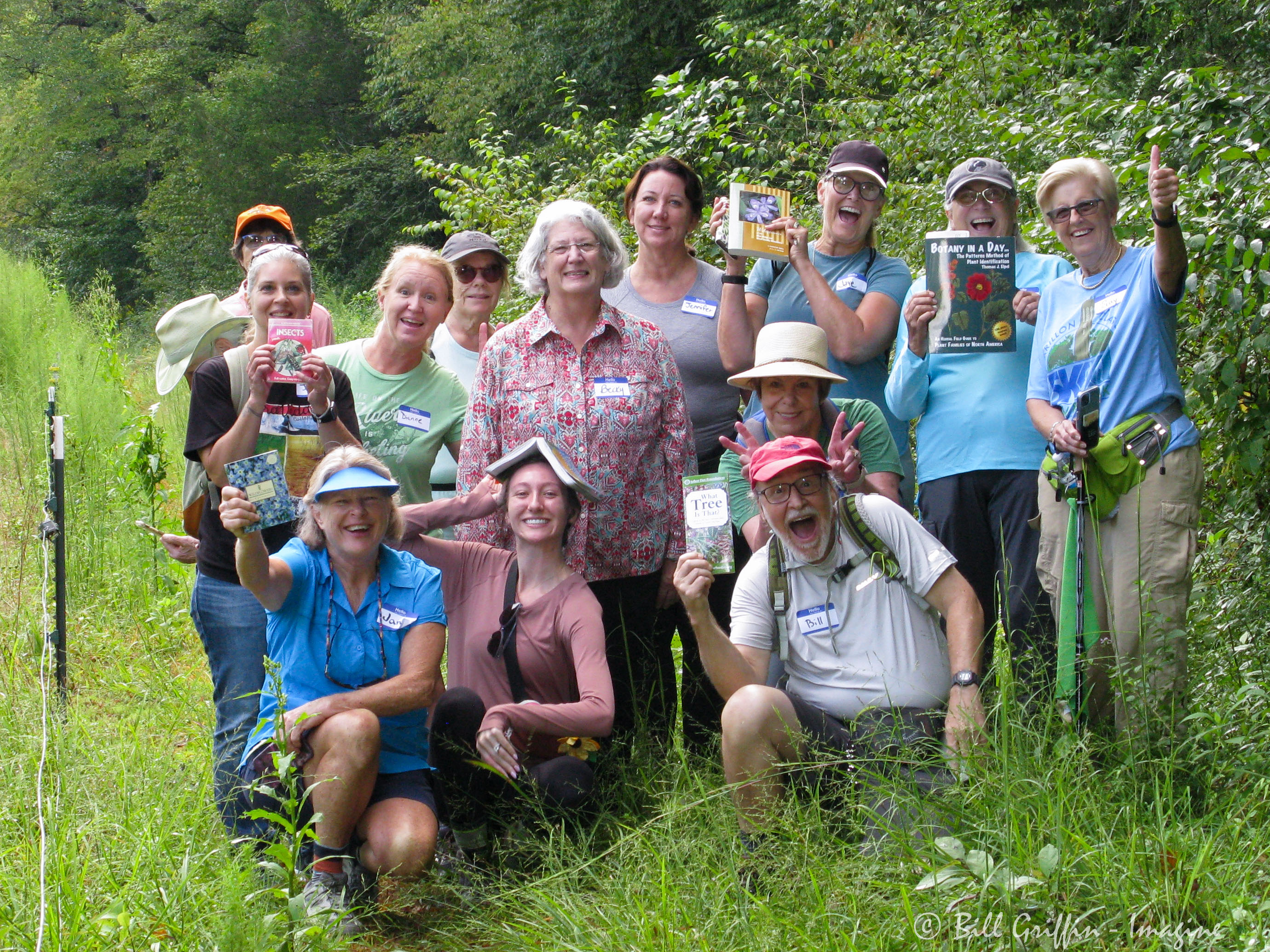
These questions I ask of myself, but I also ask them for the thirteen curious women who have enlisted me as their nature guide. Together we chew the little seeds – like untoasted sunflower. Together we are curious about everything. This tiny pale bloom with the three-lobed lip, how is it related to bright scarlet three-lobed Cardinal flower, gigantic by comparison? The white-striped red-lined caterpillar, what will its moth look like? Every one of these ferns, vines, sedges, mints, asters along the trail we’re walking, what is their family, who are their cousins, how did they get these odd names?

Maybe I’m too curious. Most of the other hikers have left me behind as we near trail’s end. It’s hard to pass even one speck of lilac among the Meadow Beauties and Dog Fennel. Hello, what’s this? A year ago near here I discovered a first (for me), a single plant, blue flowers with improbable arching stamens and pistil like dainty tusks. I thought it was extirpated when the farmer sprayed herbicide along his electric fence line last Spring. I have to kneel to examine this one small survivor. A single flower. Lamiaceae, Mint family – well, mints do make lots of seeds.

❦ ❦ ❦

Carrying Clare

Mystery conceived in passion
spreads a tent inside my body,
scoops out space
I’d blithely claimed as mine.

I grow heavy with her campsite
and the gear we’ve taken on.
After work each day I buy
a secret chocolate éclair
and eat it at Nelson’s Bakery,
where I’ll soon show off my baby.

Her father grants me
naming rights if it’s a girl.
On a cold day at the beach,
jacket straining to span my belly,
with one booted foot I trace
her name in giant letters
in wet sand: CLARE.

I pray this hidden daughter,
now assembling all she’ll require,
will live to be my better self,
take chances I could never take.
I pray for a safe birth.
I pray to be the mother she will need.

Her father and I wait for March.
He says she could easily be a boy,
but our daughter’s eyes, not yet open,
greedily seek mine.

Joan Barasovska
from Carrying Clare, Main Street Rag Publishing, Charlotte NC, © 2022

❦ ❦ ❦

Joan Barasovska’s Carrying Clare is a memoir in verse about the life of a family with a child who is critically and chronically ill. Will the baby live? Will the little girl’s illness rob her of childhood’s joy? How will a new baby brother shoulder his way into this picture? And most of all where does it arise, this deep well of strength in the mother who must watch her child fade and perhaps fail? Strength for the hours waiting outside surgical operating rooms, for the administering of medications and IV’s at home, for the nights bereft of hope? Where does it come from, the strength of such unrelenting love?

I ask myself one more question. What strength must it have taken to gather these poems across the decades of struggle they convey, to look them squarely in the eye and relive each moment once more, and then to share them?

❦ ❦ ❦

Strength

Ten-day-old Clare wails on an X-ray table,
her tiny ovaries protected, but she’s naked
on metal, flailing under strange light.
I sit rigid against the wall.

No one ever called me strong.
Fragile, even frail, a waif
without endurance. Not strong.
People have had to rescue me.

My baby’s body is red from screaming,
her back arched, skull uncradled.
I croon to her, my breasts leak for her,
but in her agony I can’t yet save her.

The technician finishes at last.
I dress and swaddle Clare,
give her my breast,
sate her with my power.

Joan Barasovska
from Carrying Clare, Main Street Rag Publishing, Charlotte NC, © 2022

❦ ❦ ❦

January Walk

Winter claims the day.
It hikes the road,
roams the fallow fields.
It lifts and stirs the air.

The horses I pass eat hay
and miss sweet grass.
Under a heavy coat
my heart beats hot.

I think of the baby tossing
in my daughter’s womb.
He floats in a weatherless world
while I lean into cold wind.

The horses stand side-by-side,
breath streaming hot in one fog.
The baby stirs in tight orbit,
waiting for March.

Joan Barasovska
from Carrying Clare, Main Street Rag Publishing, Charlotte NC, © 2022

❦ ❦ ❦

Thank You to Dee Neil and the Ladies Elkin Valley Trail Association for inviting me to be your naturalist for a morning. Walking out from Isaacs’ Trail Head on the Mountains-to-Sea trail for a couple of hours, we lost count of the number of wild flowers, ferns, vines, sedges, mosses, and other plants we discovered. And one boldly decorated caterpillar capped the day.

❦ ❦ ❦

2016-05-08a Doughton Park Tree

Read Full Post »

[with 3 poems by J. S. Absher]

Building bridges. Maybe as a metaphor the phrase is not quite as worn down, rusty, and liable to drop chunks of concrete as the old Elkin bridge that carried US 21 high above the Yadkin River and railroad tracks. Built in 1931, stretching 1509 feet, named for Hugh G. Chatham, even after it was condemned by DOT in 2008 we still couldn’t bring ourselves to call in the demolition crews for that old bridge until 2010. Spanning a treacherous gulf. Lowering barriers between two rival communities. Safe passage, a more elevated view of life, making connections. Grand old metaphor.

The bridge we built today, though, is not a metaphor. It’s a 50-foot aluminum frame that will span a creek near the Mitchell River to extend the Mountains-to-Sea trail a few more miles. Mike, the engineer, showed us how to lay out the dozens of struts and braces and then we were on them like chicks on a Junebug. We put it together in three sections inside the big Surry County maintenance building at Fisher River Park; later we’ll move it into place, bolt the last connectors, and add planking. Amazing to see pallets of unrecognizable metal pieces becoming a structure.

Some of these volunteers today were born with a torque wrench in their fist but some are like me, tinkering all day with my Erector Set when I was 10. Sweating even with the giant fan blowing, pinching our fingers, joking. I still can’t get the smell of Anti-Seize out from under my fingernails. Someday soon will I hike across that bridge with my grandkids and say, “Hey, that’s one of my bolts!?” Moving out into a new world. Grand old metaphor.

September, 2022, all that’s left of the old Chatham Bridge on the Surry County side is a pleasant pedestrian garden with a long stairway from Gwyn Avenue down to Main Street. And, near the former base of one of those mighty pylons, the Angry Troll Brewery.

❦ ❦ ❦

The Day

The little room’s only window looked out
towards the ridgetop, the Dunkard church in the curve
of the two-lane, and, just beyond, the graveyard.

The morning sun sidled in past the partly
closed slats and resolved into rays and flecks
burning in the light – dust motes, I know,

and likely knew then, too, but still I watched
entranced one morning after our breakfast.
On this day I’d have otherwise forgotten,

probably my grannies were in the kitchen –
Emma with arms stretched out to read who’d died
(she’d be in the Dunkard cemetery soon),

half-crippled Sallie stringing the green beans
(years of suffering and strokes lay just ahead) —
while I stood quietly in the little room

watching the random sparkles in the sunbeam,
worlds I could move with a single breath
of poem or prayer, but could not control.

J. S. Absher
from Skating Rough Ground, © 2022 J. S. Absher, Kelsay Books, American Fork, UT

❦ ❦ ❦

worlds I could move with a single breath / of poem or prayer, but could not control

I have often been moved by Stan Absher’s poetry. Not moved as by a shiver of emotion or a momentary ah ha at his thesis or his craft. Rather I’ve felt myeself shifted into a different awareness, a new plane of being. Translocated. Enlightened. Despite the deep bedrock of conviction in all his work, despite the scholarship and the epiphany, he writes as if he is still searching, searching for truth. A spiritual seeker. So he may claim, but I consider Stan Absher a spiritual finder. I can’t help believing as I read these poems that he has encountered and grasped the numinous, wrestled with God as did Jacob.

Worlds he can move but not control? Perhaps that is the secret Stan conveys and which I would do well to take into my own heart. The seeking itself is intrinsic to the desideratum. The bridge. The poems in Skating Rough Ground cover such a lot of ground. Family history, Christian history, art history, and every topic and observation is put to diligent good work unfolding the petals of the human flower. Stan is in perfect control of his art, which makes even more believable his message that our condition enfolds a great mystery.

One other remark: even though Stan mentions Wittgenstein and his book includes sixteen erudite endnotes, his poems are never high-flown or inaccessible. He is not looking down on us mortals from the heights; he is right here among us. And he is not above a little poke in the ribs or the murmur of a wry joke. These poems are companionable companions – pick up the book and come along on the journey.

[additional information on works by J. S. Absher . . . ]

❦ ❦ ❦

The Conversation of Matter

I could hear things talk. When something was lost,
I stood in the room, asked it to show itself.
Sometimes it spoke an image in the mind – a drawer
++++ to search, a cherry
++++ bureau to look under.

Those who have spent their lives mastering tools
and techniques can hear their material speak,
David crying naked out of Carrara marble
++++ to be rescued from
++++ Agostino’s botched start.

But things usually speak by resisting –
weight too heavy to lift, edge too sharp to hold,
a moving part that grinds and heats and breaks, a poem’s
++++ application of
++++ friction to language –

slow it! stoke it hotter than Gehenna!
salt its path with grit!
keep it from slip-sliding
away on its own melt! flick sawdust into the eye
++++ to make it dilate!
++++ Without friction – so said

Wittgenstein, older and word-worn – language
does not work. If it wears skates on rough ground, it
takes a tumble. Even prayer needs resistance – a stick
++++ crosswise in the throat
++++ garbling words like a sob.

How hard to admit we love the world – how
hard it ought to be – yet its unrequiting
beauty resists abandonment: Show yourself, come out
++++ of hiding, come out
++++ of quarantine, and live.

J. S. Absher
from Skating Rough Ground, © 2022 J. S. Absher, Kelsay Books, American Fork, UT

❦ ❦ ❦

The Creator Praises Birds

Vent and crissum,
lores and crest and comb: I
made them all – the

nares, nape, those
horny bill plates – I in
feathered trochees

made them: peacock,
sparrow, tufted titmouse,
flitting jenny

filled with joy of
beaking worm, of strut and
glide, of piping

double on their
syrinx. Praise how flock and
murmuration

call out warning,
call to fly or roost or
call for pleasure:

See me! Hear me!
Pur-ty! Pur-ty! Pur-ty!
Cheer up! Pibbity!

Praise the brave-heart
tender fledgling, wobbly
winging over

houses, over
pavement, risking all to
climb the air by

beating wind I
too created, rising
heavenward in joy.

J. S. Absher
from Skating Rough Ground, © 2022 J. S. Absher, Kelsay Books, American Fork, UT

❦ ❦ ❦

Read Full Post »

« Newer Posts - Older Posts »