Feeds:
Posts
Comments

Posts Tagged ‘EVTA’

Henbit, Lamia amplexicaule

 . 

Taken from my monthly naturalist article for the Elkin Tribune, May 2026.
You are invited to join the ethnobotany hikes June 5 and June 6
at NC TRAIL DAYS!

 . 

Back towards the end of winter, before the first glimmer of spring, before your grass even dreamed of the roar of the mower, did you notice odd sprigs of green appearing in your yard? Around the mailbox, at the edges of the garden, places where well-behaved plants aren’t usually invited to grow? There is an entire menagerie of little herbs looking for an opportunity to get a head start on blooming, some native and some non-native (and hush, don’t call them weeds!). And some of them are good to eat!
 . 

Start with henbit. This hardy non-minty mint with lovely tiny purple flowers is native to Europe but is now found throughout the eastern US. It’s possible that the colonists brought it with them on purpose to feed chickens! If you drive out through the farms in Zephyr before spring planting, you’ll see fields covered with a lilac haze – henbit blooming, along with its cousins deadnettle and creeping charlie. I’ve even seen henbit flowers in the Rec Center parking lot in January. And if you pick the leaves while they’re tender, they make a tasty addition to a tossed salad.
 . 

And toss in some corn salad. No golden kernels involved: this little plant is a native leafy green that gets its name because it grows between the rows of grain and corn. The leaves remain edible even as the plant gets lanky and leggy, and they taste like butterhead lettuce. Here are three questions you should ask yourself, though, before you forage for local wild edibles: #1 – Am I 100% certain of my identification? Some plants in the carrot family are spicy and herby, others are deadly poison. #2 – If I pick this, how will it affect the experience of anyone who comes after me? NEVER remove plants from public parks, and get permission on private land. #3 – How am I affecting the local ecosystem? Bugs, birds, and critters need to live, too! (And I’ll throw in question #4 – Do dogs poop here?)

 . 
“SOME FEED US, SOME HEAL US, SOME KILL US.”
Ethnobotany is the study of how different cultures use plants. For food? For medicine? In rites and rituals? I am hosting two ethnobotany hikes on the E&A Nature Trail for NC Trail Days 2026 in Elkin, NC:
June 5 and June 6
9:00 AM
Meet at Elkin Rec Center to walk the E&A Nature Trail
I hope to see you there!
 . 

NC TRAIL DAYS in Elkin and Jonesville is June 4-7, 2026. Find the full schedule of events at https://www.nctraildays.com/schedule.

 . 
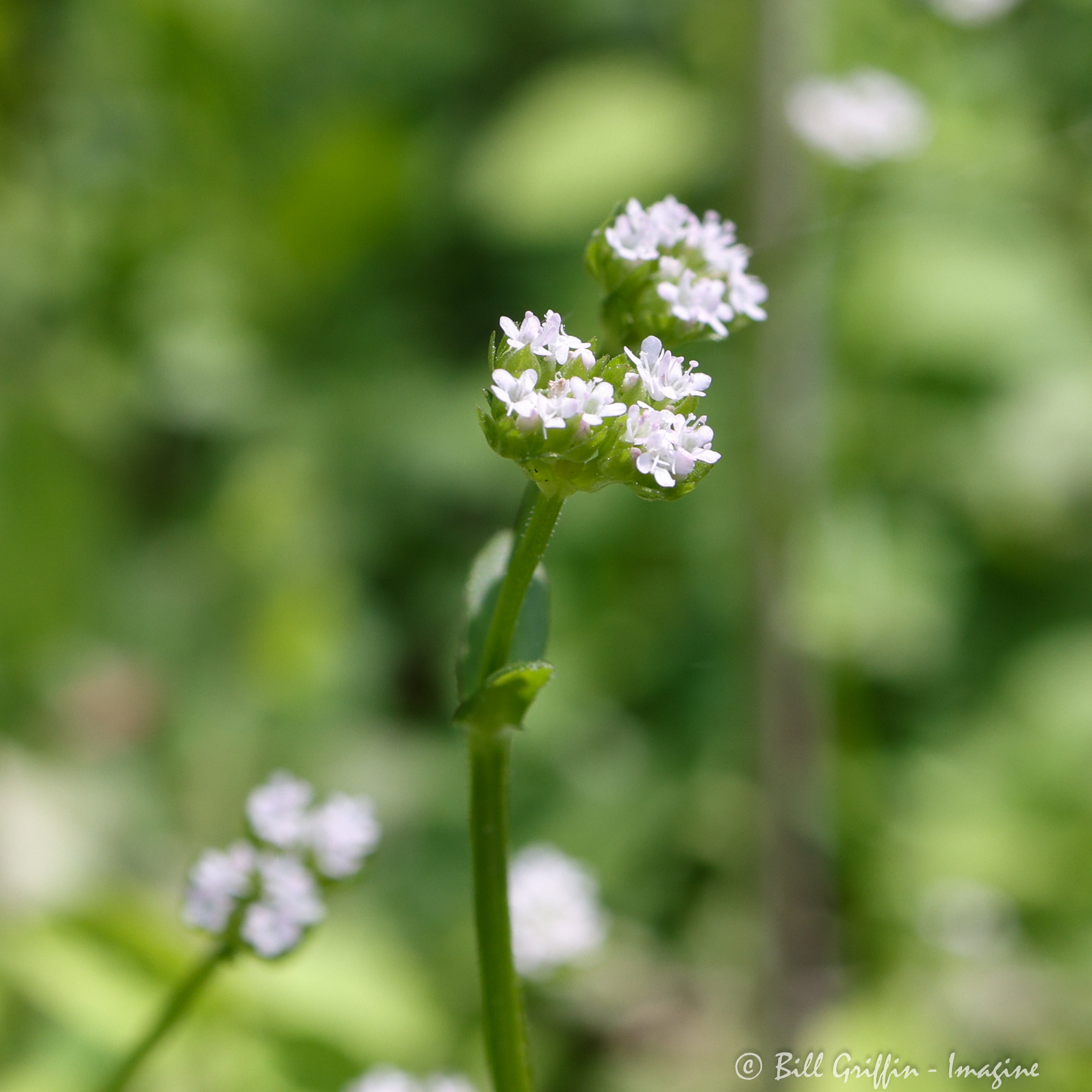
Beaked Corn Salad, Valerianella radiata

 . 

LINKS:
June 5 Naturalist Hike 
June 6 Naturalist Hike
NC Trail Days full schedule of events 
Elkin Valley Trails Association
Contact Bill Griffin, EVTA naturalist, at ElkinNatureHikes@gmail.com

.
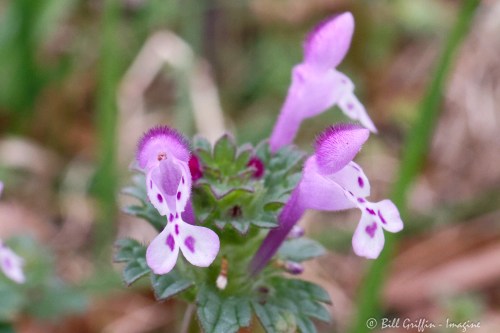
Henbit
Read Full Post »

[with 3 poems by Joan Barasovska]

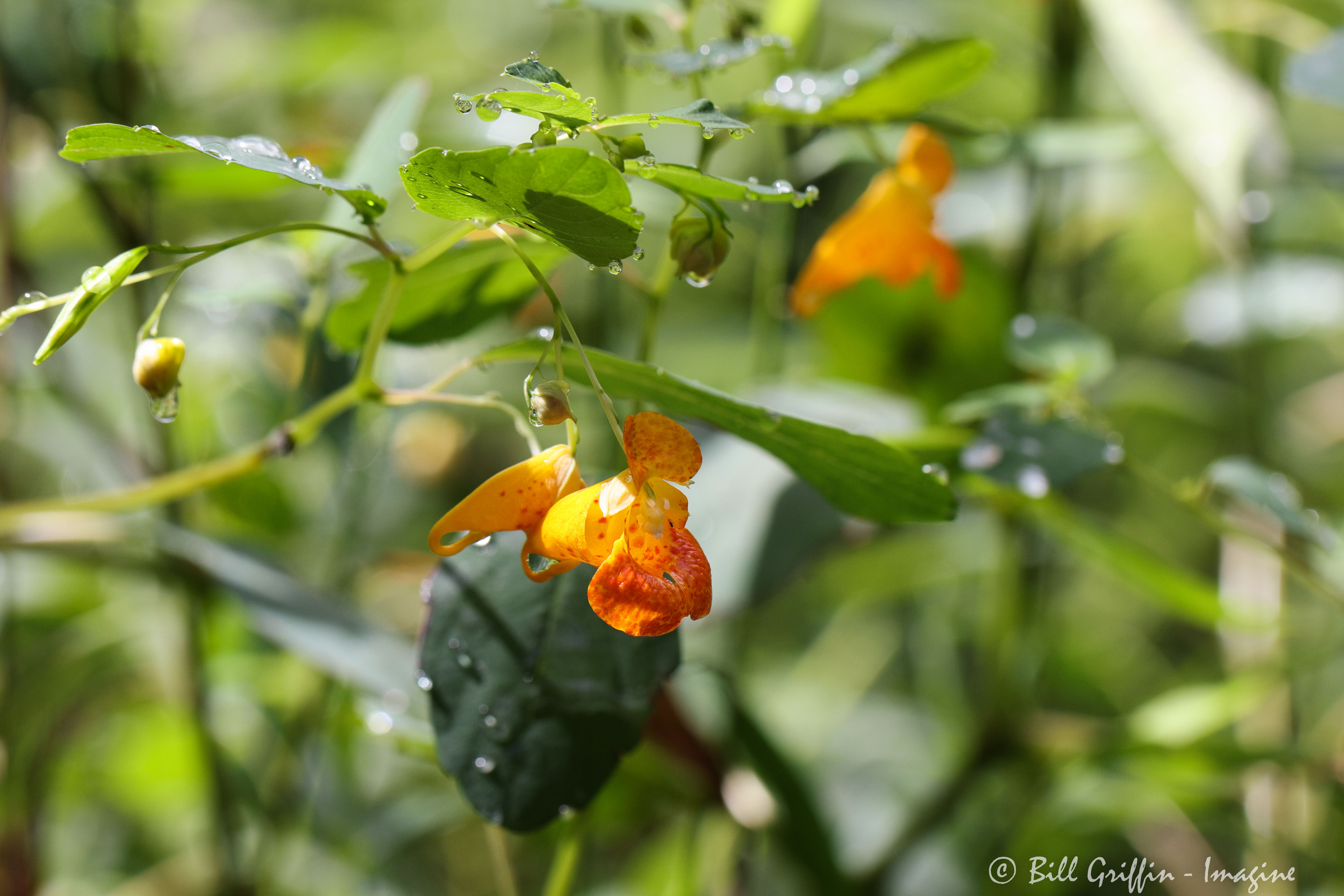
What is the perfect ripeness of Touch-Me-Not to pop its pods into my hand? How will the little brown kernels taste? How far would they fly if I didn’t catch them?

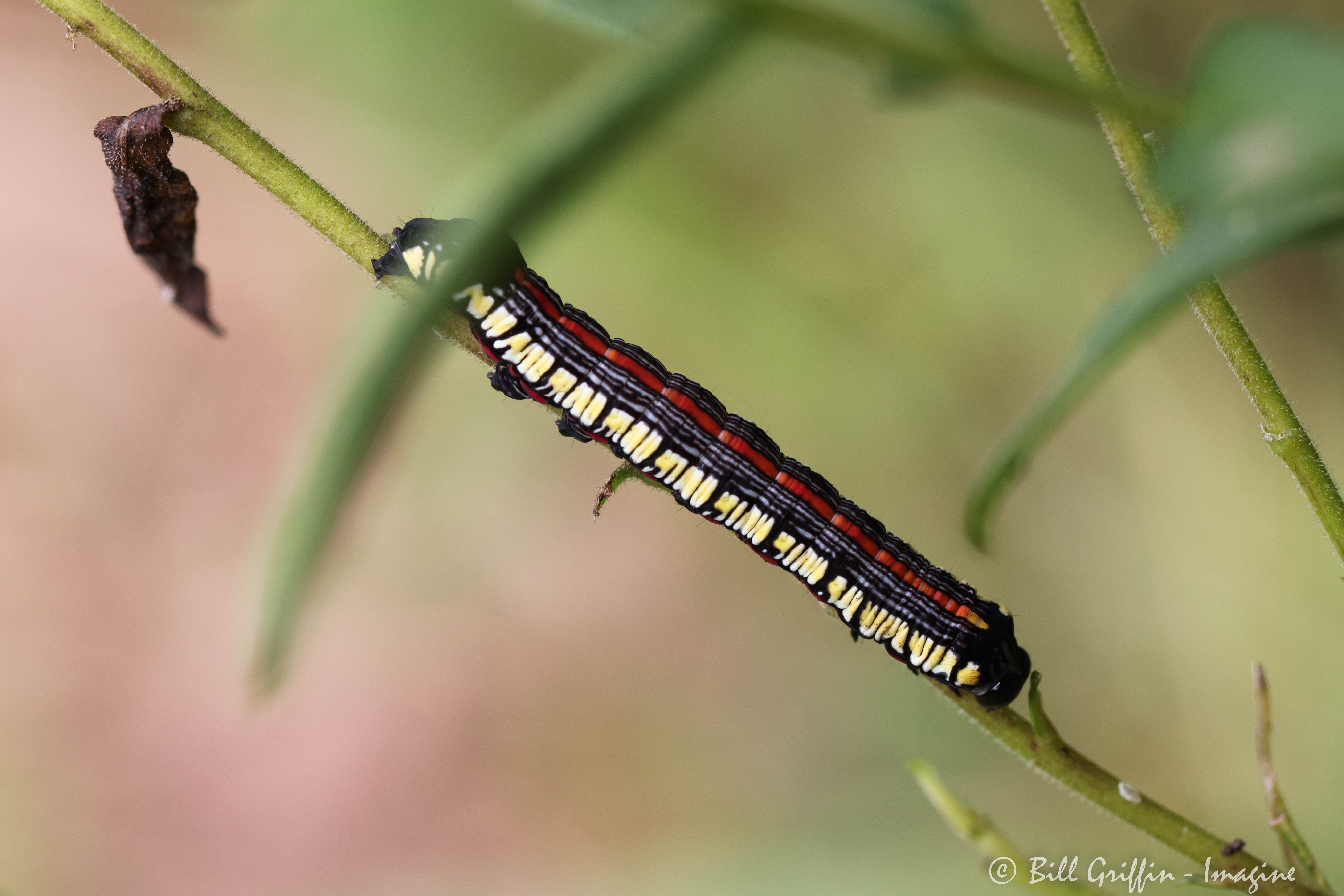
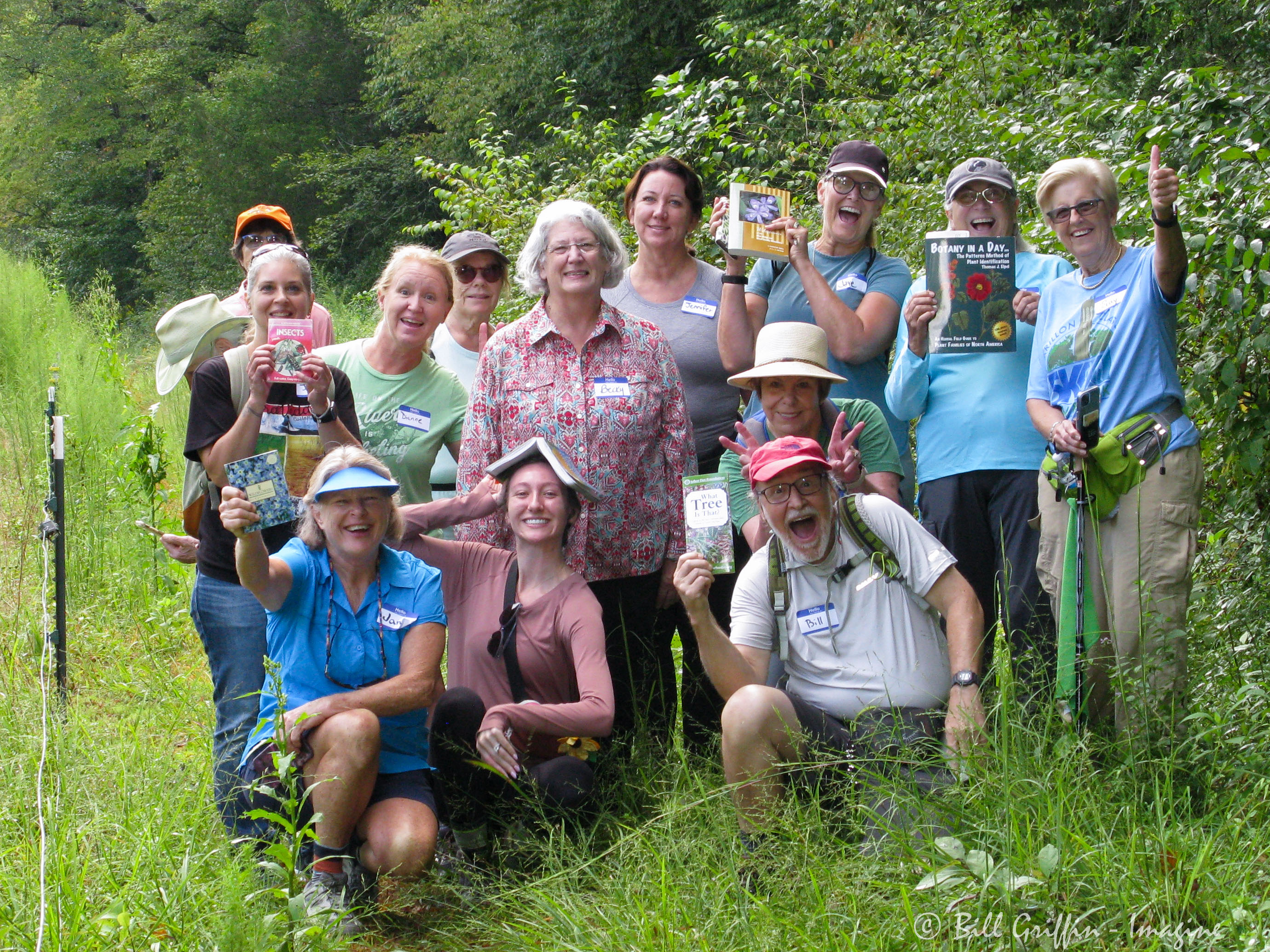
These questions I ask of myself, but I also ask them for the thirteen curious women who have enlisted me as their nature guide. Together we chew the little seeds – like untoasted sunflower. Together we are curious about everything. This tiny pale bloom with the three-lobed lip, how is it related to bright scarlet three-lobed Cardinal flower, gigantic by comparison? The white-striped red-lined caterpillar, what will its moth look like? Every one of these ferns, vines, sedges, mints, asters along the trail we’re walking, what is their family, who are their cousins, how did they get these odd names?

Maybe I’m too curious. Most of the other hikers have left me behind as we near trail’s end. It’s hard to pass even one speck of lilac among the Meadow Beauties and Dog Fennel. Hello, what’s this? A year ago near here I discovered a first (for me), a single plant, blue flowers with improbable arching stamens and pistil like dainty tusks. I thought it was extirpated when the farmer sprayed herbicide along his electric fence line last Spring. I have to kneel to examine this one small survivor. A single flower. Lamiaceae, Mint family – well, mints do make lots of seeds.

❦ ❦ ❦

Carrying Clare

Mystery conceived in passion
spreads a tent inside my body,
scoops out space
I’d blithely claimed as mine.

I grow heavy with her campsite
and the gear we’ve taken on.
After work each day I buy
a secret chocolate éclair
and eat it at Nelson’s Bakery,
where I’ll soon show off my baby.

Her father grants me
naming rights if it’s a girl.
On a cold day at the beach,
jacket straining to span my belly,
with one booted foot I trace
her name in giant letters
in wet sand: CLARE.

I pray this hidden daughter,
now assembling all she’ll require,
will live to be my better self,
take chances I could never take.
I pray for a safe birth.
I pray to be the mother she will need.

Her father and I wait for March.
He says she could easily be a boy,
but our daughter’s eyes, not yet open,
greedily seek mine.

Joan Barasovska
from Carrying Clare, Main Street Rag Publishing, Charlotte NC, © 2022

❦ ❦ ❦

Joan Barasovska’s Carrying Clare is a memoir in verse about the life of a family with a child who is critically and chronically ill. Will the baby live? Will the little girl’s illness rob her of childhood’s joy? How will a new baby brother shoulder his way into this picture? And most of all where does it arise, this deep well of strength in the mother who must watch her child fade and perhaps fail? Strength for the hours waiting outside surgical operating rooms, for the administering of medications and IV’s at home, for the nights bereft of hope? Where does it come from, the strength of such unrelenting love?

I ask myself one more question. What strength must it have taken to gather these poems across the decades of struggle they convey, to look them squarely in the eye and relive each moment once more, and then to share them?

❦ ❦ ❦

Strength

Ten-day-old Clare wails on an X-ray table,
her tiny ovaries protected, but she’s naked
on metal, flailing under strange light.
I sit rigid against the wall.

No one ever called me strong.
Fragile, even frail, a waif
without endurance. Not strong.
People have had to rescue me.

My baby’s body is red from screaming,
her back arched, skull uncradled.
I croon to her, my breasts leak for her,
but in her agony I can’t yet save her.

The technician finishes at last.
I dress and swaddle Clare,
give her my breast,
sate her with my power.

Joan Barasovska
from Carrying Clare, Main Street Rag Publishing, Charlotte NC, © 2022

❦ ❦ ❦

January Walk

Winter claims the day.
It hikes the road,
roams the fallow fields.
It lifts and stirs the air.

The horses I pass eat hay
and miss sweet grass.
Under a heavy coat
my heart beats hot.

I think of the baby tossing
in my daughter’s womb.
He floats in a weatherless world
while I lean into cold wind.

The horses stand side-by-side,
breath streaming hot in one fog.
The baby stirs in tight orbit,
waiting for March.

Joan Barasovska
from Carrying Clare, Main Street Rag Publishing, Charlotte NC, © 2022

❦ ❦ ❦

Thank You to Dee Neil and the Ladies Elkin Valley Trail Association for inviting me to be your naturalist for a morning. Walking out from Isaacs’ Trail Head on the Mountains-to-Sea trail for a couple of hours, we lost count of the number of wild flowers, ferns, vines, sedges, mosses, and other plants we discovered. And one boldly decorated caterpillar capped the day.

❦ ❦ ❦

2016-05-08a Doughton Park Tree

Read Full Post »

[with poems by Donald Hall and Charles Martin]

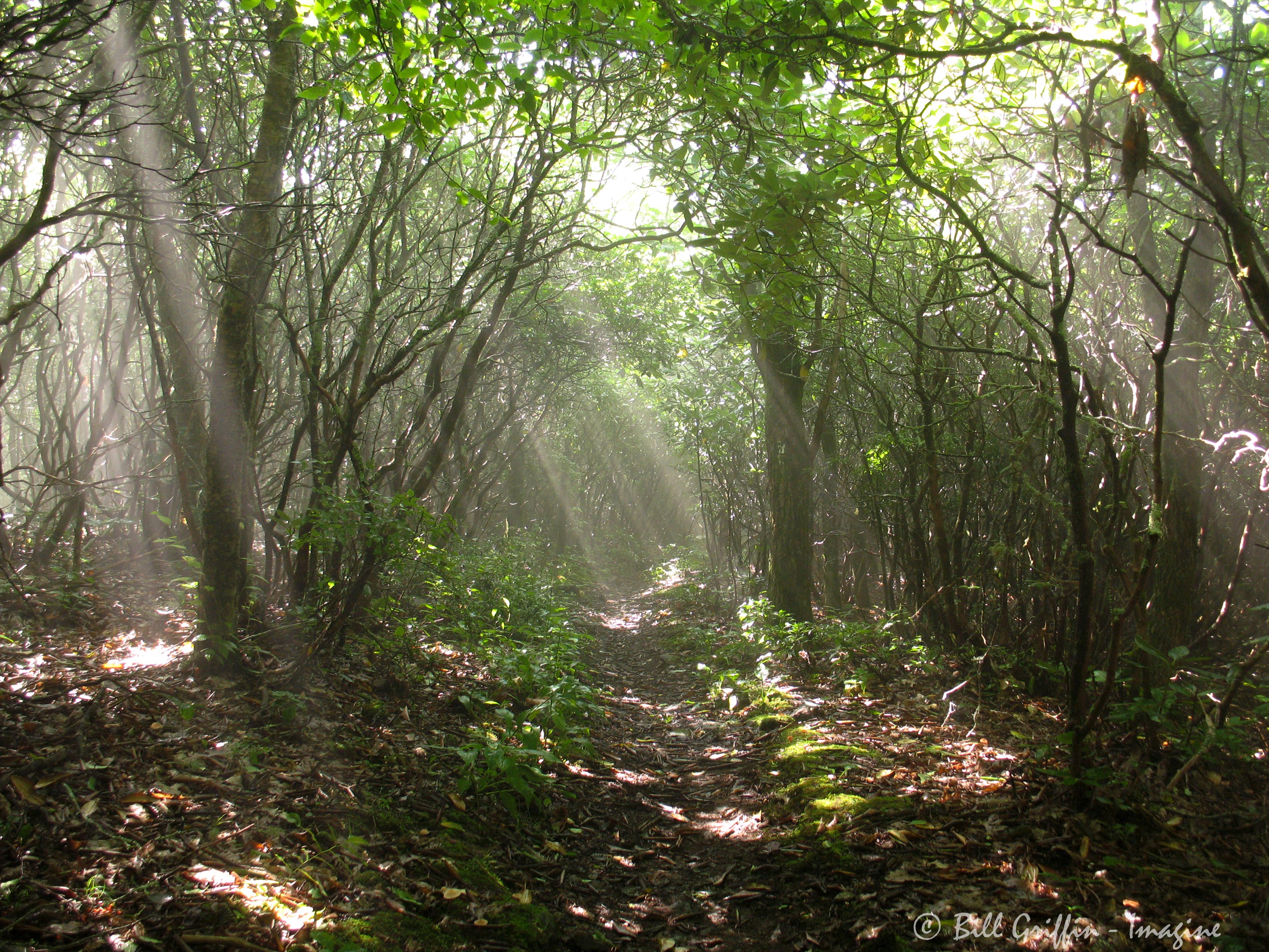
Have you ever imagined, while walking a well-worn woodland trail, simply stepping off into the forest? What if you moved just ten feet, twenty, into the trees? Would you be standing on a spot untouched by human feet for years? Decades? Forever?

I considered this years ago when I led, with my son Josh as co-leader, a little crew of Boy Scouts on a 10-day canoe trek in the Boundary Waters Wilderness of northern Minnesota. We camped each night on the shore of different lake. Some mornings (sunrise 0400) while they still slept I walked away from the water into the trackless forest. Did the last human rest on this lichen crusted boulder more than a hundred years ago, a French voyageur taking a break from trapping? A thousand years ago, a young Anishinaabe scout hunting meat for his village? Ten thousand years ago?

Now Josh spends every day it’s not raining trekking the Blue Ridge & foothills as a surveyor. When did a human foot last jump this creek or climb this unforgiving steepness? This corner marked by a chestnut ten feet in girth – today Josh must discover the remnant of its stump. How long must the earth rest from the tread of human feet before all sign of our passage is erased? How far is it from here to the middle of nowhere?

Last Saturday I joined a trail crew to maintain a little section of the Mountains-to-Sea trail near Elkin. The MST is a work in progress – departing Elkin hiking east, you follow Rte 268 most of the way to Pilot Mountain. Our day’s assignment was an orphan – 1 ½ miles of footpath leading away from the road and on through the woods with no trailhead or connectors. Probably no one had walked this way since it was last maintained in 2020.

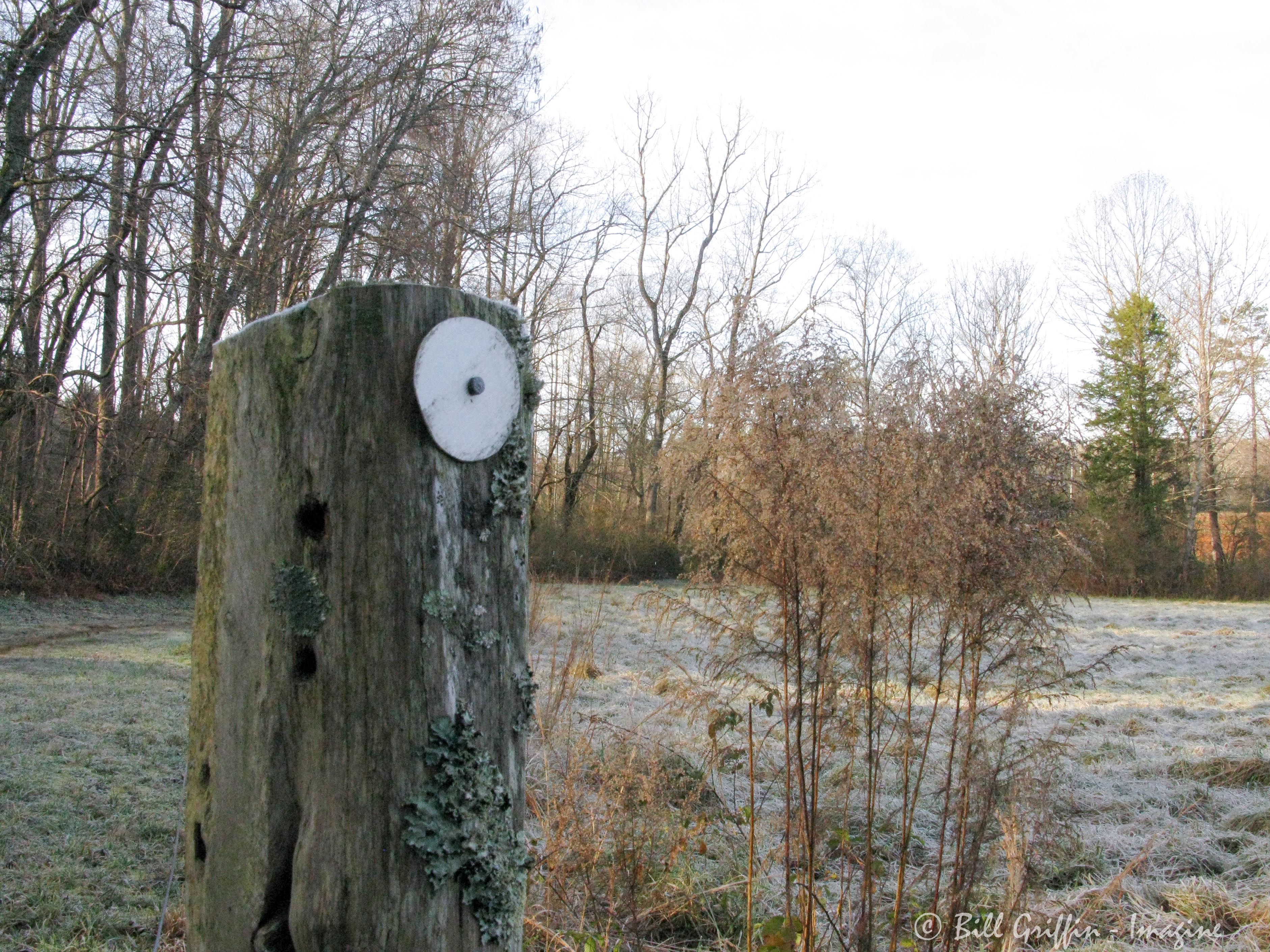
Everywhere a little sun penetrates the undergrowth thrives: Goldenrod, Burnweed, Wingstem, Boneset, all manner of grasses native and exotic – summer asters up to eight feet tall, especially through the Duke Energy right-of-way beneath power lines. Add obstructions from grapevine, Smilax, fallen trees and in one single year the trail had become impenetrable, almost disappearing except for the white circular MST blazes on the trees.

In a few more years it might have lead to the middle of nowhere. Which is how you get to the middle of everywhere. Which is the trail I want to walk.

.     .     .     .     .     .     .

.     .     .     .     .     .     .

Surface

The surveyor climbs a stonewall into woods
scribbled with ferns, saplings, and dead oaktrees

where weltering lines trope themselves into stacks
of vegetation. He sees an ash forced around a rock

with roots that clutch on granite like a fist
grasping a paperweight. He stares at hemlocks

rising among three-hundred-year-old sugarmaples
that hoist a green archive of crowns: kingdom

of fecund death and pitiless survival. He observes
how birch knocked down by wind and popple chewed

by beaver twist over and under each other, branches
abrasive when new-fallen, turning mossy and damp

as they erase themselves into humus, becoming
polyseeded earth that loosens with lively pokeholes

of creatures that watch him back: possum, otter,
fox. Here the surveyor tries making his mark:

He slashes a young oak; he constructs a stone
cairn at a conceptual right-angle; he stamps

his name and the day’s date onto metal tacked
to a stake. His text established, he departs

the life-and-death woods, where cellular life keeps
pressing upward from underground offices to read

sun and study slogans of dirt: “Never consider
a surface except as the extension of a volume.”

Donald Hall

from Poems for a Small Planet: Contemporary American Nature Poetry. Edited by Robert Pack & Jay Parini, A Bread Loaf Anthology, © 1993, Middlebury College Press.

.     .     .     .     .     .     .

.     .     .     .     .     .     .

Both of today’s poems are from Poems for a Small Planet, edited by Robert Pack & Jay Parini. This next one by Charles Martin stuck to my soul like beggar lice – I’ve imagined myself stuck in a dry spell for the past several weeks. I can’t resist the epigraph by Randall Jarrell, one of North Carolina’s most luminous poets. While waiting for lightning to strike I’ll learn to endure the rain running off my chin.

.     .     .     .     .     .     .

Reflections after a Dry Spell

++++ A good poet is someone who manages, in a
++++ lifetime of standing out in thunderstorms, to be
++++ struck by lightning five or six times.
++++ — Randall Jarrell

And the one that took this literally
Is the one that you still sometimes see
In the park, running from tree to tree

On likely days, out to stand under
The right one this time – until the thunder
Rebukes him for yet another blunder. . . .

But the one who knew it was nothing more
(That flash of lightning) than a metaphor,
And said as much, as he went out the door –

Of that one, if you’re lucky, you just may find
The unzapped verse or two he left behind
On the confusion between World and Mind.

Charles Martin

from Poems for a Small Planet: Contemporary American Nature Poetry. Edited by Robert Pack & Jay Parini, A Bread Loaf Anthology, © 1993, Middlebury College Press.

.     .     .     .     .     .     .

.     .     .     .     .     .     .

[My immense gratitude to the Elkin Valley Trails Association for imagining, creating, maintaining, and improving the Mountains-to-Sea Trail from Stone Mountain State Park to Elkin and onward east through Surry County, North Carolina. And for inviting this lunkhead with a shovel to join in.]

.     .     .     .     .     .     .

2016-10-17a Doughton Park Tree

Read Full Post »

Older Posts »