Feeds:
Posts
Comments

Posts Tagged ‘Southern writing’

[with poems from PINESONG 2023, NC Poetry Society Anthology]


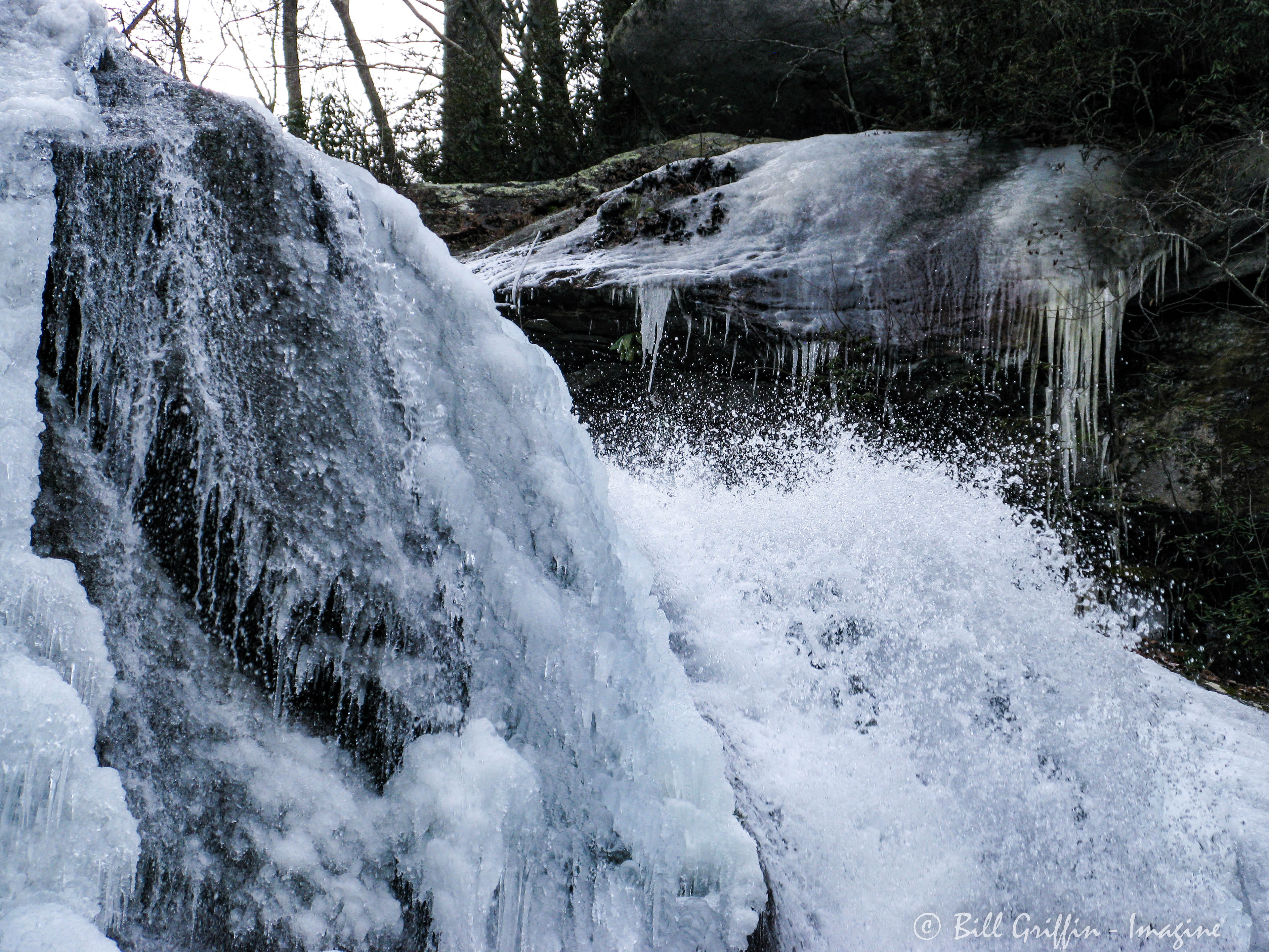
Ghazal: Ghost Apples (Kent County, Michigan)


Ice-encrusted boughs from which transparent versions
of apples hang – each fragile as hand-blown glass.
+++
Their history: fruit on the cusp of rot, winter storm trundling
down a hillside, sleet coating each apple in sudden glass.
+++
Viscous fruit leaked from apertures until only icy shells
remained – December trees bearing quicksilver bulbs of glass.
+++
Imagine them a vivid red or green, like cascades of apples
even humble grocery stores offer on the far side of plate glass.
+++
If we shattered these globes, would they taste like hard cider
or the cloying sweetness of pulp, like edible versions of glass?
++++++
Soon these crystalline shells will melt to nothingness, the way
we all disappear. Beloved, step lightly upon grief’s bitter glass.
+++
Lavonne Adams
Joanna Catherine Scott Award First Place, Pinesong 2023
+++
❦ ❦ ❦
+++
Diversity often blooms at the edge. This little trail heading out from Isaac’s Trail Head on the MST is limn upon limn . . . boundary . . . transition. The wide riparian border along Grassy Creek attracts neotropical migrants for a rest stop each spring; Louisiana Waterthrush, White-Eyed Vireo, and Common Yellowthroat stay behind to breed here. The footpath parallels a pasture fenceline, and while cows with their calves stand flank-deep in meadow grass and blackberry bramble, all manner of wildflowers hug the margin of No Grazing: Blue Toadflax, Venus’s Looking Glass, Carolina Crane’s-Bill. Leaving creekside, the trail is hemmed by a moist rising woodland: Rattlesnake Fern, Sensitive Fern, Southern Lady Fern. And by the end of summer, if the farmer hasn’t sprayed, the trail edges will fill with Blue-Curl, Cardinal Flower, Goldenrod, Wingstem.
+++
Smaller fields and many interruptions make for many edges; diversity begets diversity. At one point along the trail a wide acreage of corn abuts a small hay field of mixed grasses. The corn field is solemn in its solitude; above the hay the air is filled with swallows, Bluebirds and Phoebes perch along the wire, and as we hike past we’re apt to flush an Indigo Bunting foraging.
+++
But then there are Cowbirds. For centuries they followed prairie bison herds and no doubt also the woodland bison of the Carolina piedmont. Now they follow every human disturbance, common in cow pasture but just as common on suburban lawns. Cowbirds are exclusively brood parasites, known to lay their eggs in the nests of over 220 other species. To their detriment. Kirtland’s Warbler has been pushed beyond the edge of “endangered” by Cowbird predation, and most birds do not have the ability to recognize the foreign eggs which will hatch and out-compete the rightful occupants. How to resist? Escape the edges. Reverse the fragmentation. Cowbirds will not follow into deep woods – warblers nesting deep in the forest are safe.
+++
It isn’t the Cowbird that threatens wood warblers, whip-poor-wills, vireos. It is shrinking habitat. Many species thrive at the edge. Some, though, require wide wild expanses. How much wild can we leave?
+++
+++
Upon which side of the boundary does poetry perch, thrive or decline? And what would it look like, that restored, invigorated poetry habitat, a definite nudge toward thriving? More fifth graders setting pen to page and seeing their lines is print, as they have in this year’s annual Pinesong anthology by the North Carolina Poetry Society? More opportunities and promptings to write – whatever one’s background, training, preferred theme, chosen form? And more readers?
+++
That’s where we come in. This morning I broke a nice sweat hiking miles along meadow and creek, through upland forest to lakeshore and back. This afternoon with feet up I’ve covered another rewarding meander through the pages of Pinesong. Student poets, grades 4 through undergrad; dozens more of adult poets, many names entirely new to me. I’ve traveled new places, I’ve encountered the unexpected and enlightening, I’ve paused long to reflect, and I’ve even laughed out loud. As Robert Frost wrote in The Pasture: “You come, too.”
+++
❦ ❦ ❦
+++
Eleven Lines In Search of the Perfect Rhyme
+++
Is it accidental that bereft almost rhymes with death?
+++
Watching geese rise in a chevron formation The New River
at Grassy Creek, flying south to warmer waters, I think of how
+++
sons and daughters grow up, how the nest – that like death
almost rhymes with bereft, – empties with their flight.
+++
How these words fly out of my mouth like startled birds.
+++
How we dream of loved ones who are dead. How we forget
what happened in the dream, what we did, what we said.
+++
How there are hundreds of ways to leave, not only the 50 ways
in Paul Simon’s song, and thousands of ways to grieve, bereft.
+++
How you can both the lover leaving and the lover left.
+++
Beth Copeland
Carol Bessent Hayman Poetry of Love Award Honorable Mention, Pinesong 2023
+++
❦ ❦ ❦
+++
Pinesong is the annual publication of contest winning poems by the North Carolina Poetry Society, founded in 1932. Pinesong 2023 is Number 59, edited by Sherry Pedersen-Thrasher with assistance from Joan Barasovska. This year’s volume is dedicated to David Radavich, former NCPS President and steadfast supporter of poetry and the arts.
+++
You can learn more about North Carolina Poetry Society and its contests, plus read previous years’ editions of Pinesong . . . here.
+++
If you would like to purchase Pinesong ($12, postage included) please contact NCPS Vice President of Membership Joan Barasovska: msjoan9[at]gmail[dot]com
+++
A free issue of Pinesong is available to all NCPS members in good standing who request ($2 mailing expense). Please contact Joan, as above.
+++
❦ ❦ ❦
+++
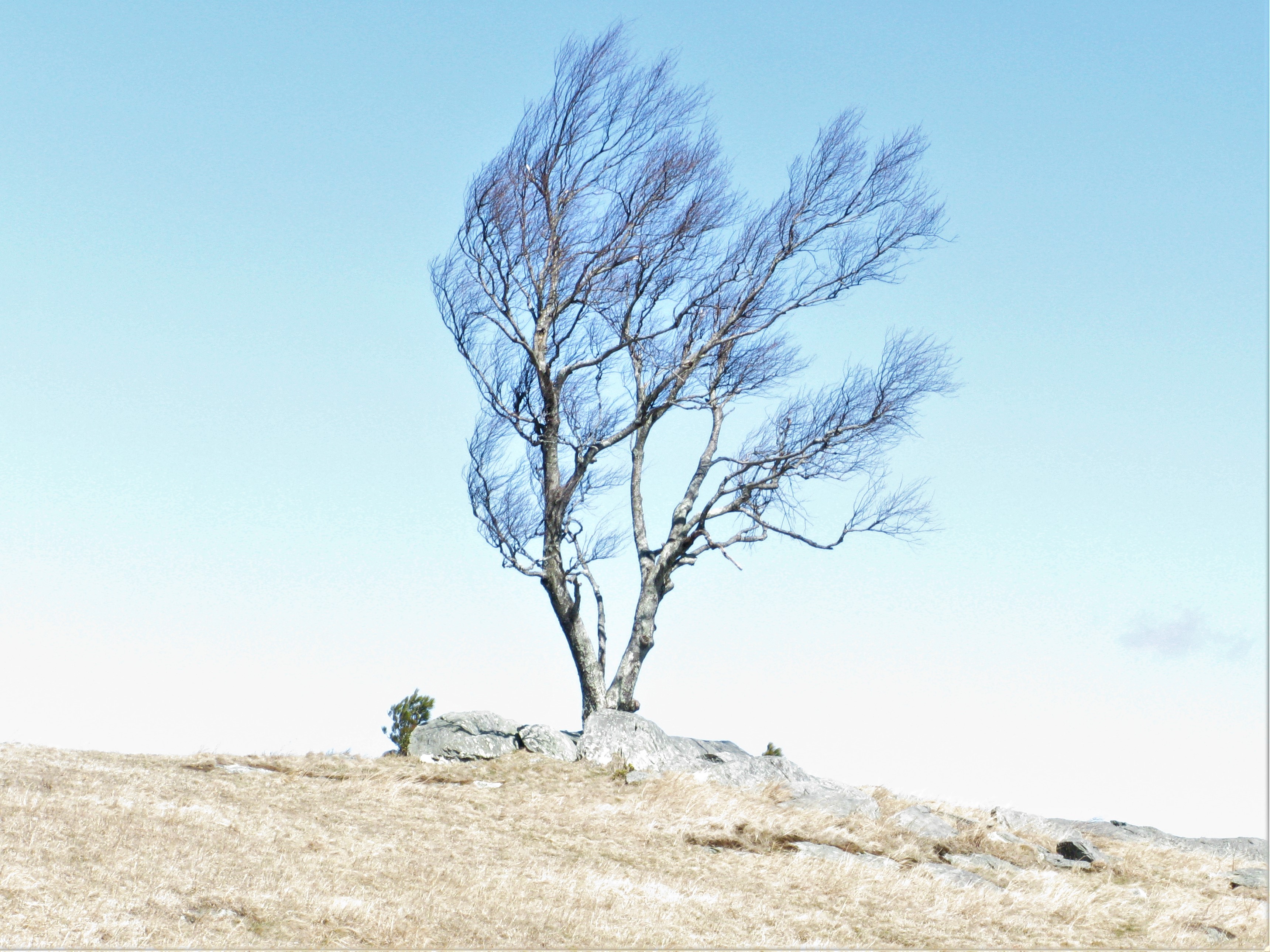
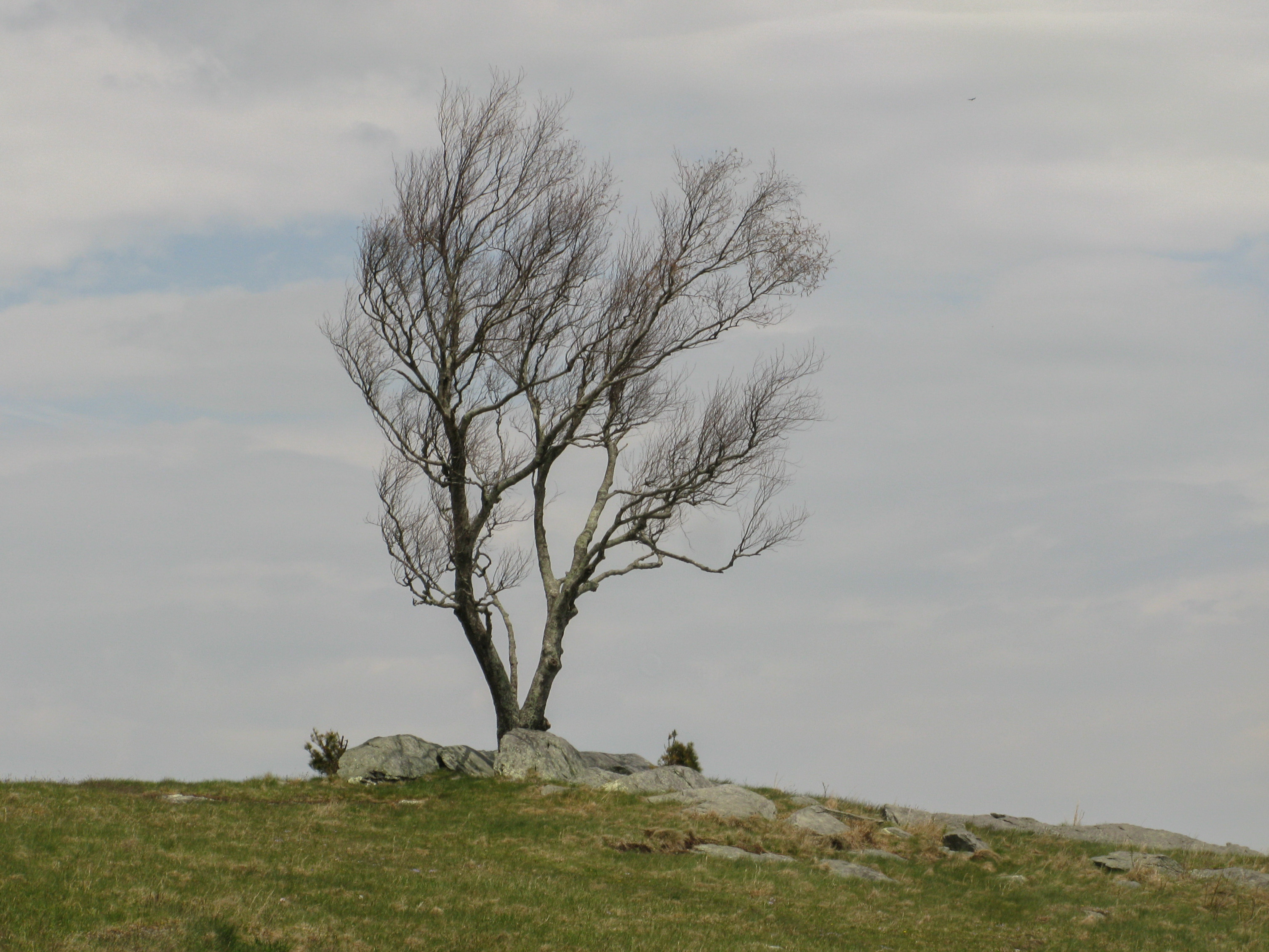
2020-09-08b Doughton Park Tree

Read Full Post »


[with poems by Jennifer Atkinson, David Radavich,
Barbara Bloom, Diane Seuss]

Today is Earth Day, April 22. Yesterday, today, and tomorrow we are publishing posts for Earth Day featuring poems submitted by our readers that touch the theme, Wild & Rewild.

Rewilding is a conservation effort aimed at restoring habitat, revitalizing ecosystems, and reintroducing animals and plants that historically occupied these wild spaces.
Rewilding may be as small as converting cow pasture to a bit of riparian Piedmont Prairie along the Mitchell River in Surry County, NC.
It may be as large as creating wildlife corridors down the chain of the Rockies for migrating pronghorns.
It may be as simple as replacing introduced invasives in your yard with native species; as complex as legislation to set aside vast tracts as wilderness.

How does the poet encounter and respond to wildness? A native wildflower struggling in an urban park? A remote mountaintop far from human presence? A wild voice speaking to the heart; wild urges propelling the soul into the unknown?

A wild call from the past, the present, into the future?
For Earth Day 2023, touch the wild. Rewild yourself.

Thank you to the readers of these pages
who have responded to my call for poems this Earth Day.
Watch for new posts on April 21, April 22, and April 23.

All photographs were taken April 11-17, 2023,
along the Elkin & Allegheny Nature Trail,
part of the Mountains-to-Sea Trail in North Carolina, USA.

Earth Day 2023 art by Linda French Griffin.

❦ ❦ ❦

Landscape with Jeffers and the Connecticut River

Oat stalks hang their oat-heavy heads.
Panic grass shakes in the wind
off a goldfinch’s wing. Cause,
++++ ++++ ++++ ++++ ++++ effect, and cause.

Drone, like the bee, of goldenrod and aster,
tool of the stick-tight and cockleburr,
I park and wade into high riverside grasses.

A dog gnaws on a box turtle, a spider rides
a floating log, straining the air of its midges and leafbits.
A fisherman lazy as late summer current,
++++ ++++ ++++ ++++ casts, reels, and casts.

It occurs to me I am alive, which is to say
I won’t be soon. Robinson Jeffers
from Carmel Point, in “an unbroken field of poppy and lupin”

ashamed of us all (of himself ), took solace in time,
in salt, water, and rock, in knowing
all things human “will ebb, and all/
++++ ++++ ++++ ++++ Their works dissolve.”

Me, too. And I’m not always so patient. I’ve caught myself
wishing our spoiler species gone, just swept away,
returned to rust and compost for more deserving earthly forms.

Meanwhile, flint arrowheads turn up among the plastic
picnic sporks, the glacial crags and bottom silt.
Hawks roost across the river on the now defunct
++++ ++++ ++++ ++++ ++++ nuclear power plant cooling tower,

flotsam left at the human high water mark.
Like mussel shells, like driftwood or seedpod,
like the current’s corrugations in the sand.

Here, on this side, a woodchuck sits up, lustrous,
fat on her chestnut haunches, (she thinks herself
queen of her narrow realm) and munches
++++ ++++ ++++ ++++ the fisherman’s crust.

Who wouldn’t smile? Who doesn’t pity—and love—
the woodchuck not only despite but for her like-human smugness?
How can I not through her intercession forgive
++++ ++++ ++++ ++++ ++++ for now a few things human.

Jennifer Atkinson
Selected by Bill Griffin; from the book THE THINKING EYE, Parlor Press
Appeared online at Poem-a-Day, Poems.com, on March 13, 2023

Jennifer Atkinson’s comments: “But how do we live with our knowledge and the emotional cloud of fear, guilt, anger, grief, and helplessness, a cloud that surrounds us, each of us alone, and all of us together? That cloud has become intrinsic to my ecopoetical work. Burdened with the beauty and loss and malicious awfulness ahead, weighted with the anxiety that hits whenever a winter day dawns without frost on the ground or another ‘unprecedented’ downpour rings in the gutter, how do I live?”

Who wouldn’t despair? Who wouldn’t smile? The daily slog through politics and pollution is too heavy to be borne. The daily green that lights my kitchen window while I make coffee is too beautiful to bear. This poem drives me into the inescapable reality of damaged Earth but also offers a leafy twig of hope.

– Bill Griffin / Elkin, North Carolina

[and I couldn’t resist that title after all the Robinson Jeffers I’ve been reading this past year.]

❦ ❦ ❦

Back Woods

Only in the hills behind
comes solace,

winter white against
the brown verticality of reaching

bare as need,
a few lingering green

hold-outs
crying for mercy,

leaves curled
atop themselves quiet

as abandoned
lovers.

I have already
sided with the deep creviced

ravine and its snow
cheeks incised

with cares in shadow

under a sun that
promises

open sky
open hearts.

David Radavich
first published in Blueline in 2008

This poem is marked by jagged line lengths and abrupt stanza breaks that emphasize the rawness and otherness of the natural world. The speaker feels attracted to the sharp contrasts in color and juxtaposition of “creviced ravine” with the softer “snow cheeks,” but s/he is nonetheless distant from it and can only admire the scene from afar with a kind of wishful, empathetic watching.

– David Radavich / Charlotte, North Carolina

❦ ❦ ❦

Night Swim: Phosphorescence

We’d run down the path to the dock,
our feet knowing the rocks, never stumbling,
never falling, and we’d jump right in,
the ocean calm under the summer stars,
and swim out a little ways,
lifting our hands out of the water
to watch the drops linger and fall from our fingers,
like pearls, like diamonds, and kick our legs hard
for the trail of bright silver we’d leave behind-
and finally climb out, trembling with the chill,
sorry to wipe those jewels from our bodies.

Barbara Bloom
originally published in Pulling Down the Heavens (Hummingbird Press, 2017).

I grew up on a remote coastal homestead in British Columbia, Canada. Living in such a wild and demanding place has shaped the way I see the world. The poem demonstrates how as children we were amazed by the natural world around us, but saw no separation: it was ours to be experienced. I now live in Bellingham, Washington, not too far from where I lived as a child, and surrounded by much of the same beauty and wildness. I count myself lucky for that!

– Barbara Bloom / Bellingham, Washington

❦ ❦ ❦

Young Hare

Oh my love, Albrecht Dürer, your hare
is not a spectacle, it is not an exploding hare,
it is not a projection of the young hare
within you, the gentleness in you, or a disassembled hare,
nor a subliminal or concealed hare,
nor is it the imagination as hare

nor the soul as a long-eared, soft-eared hare,
Dürer, you painted this hare,
some say you killed a field hare
and brought it into your studio, or bagged a live hare
and caged it so you could look hard at a wild hare
without it running off into thorn bushes as hares

will do, and you sketched the hare
and laid down a watercolor wash over the hare
and then meticulously painted in all the browns of hare,
toast brown, tawny, dim, pipe-tobacco brown of hare,
olive, fawn, topaz, bone brown until the hare
became dimensional under your hand, the thick hare

fur, the mottled shag, the nobility of the nose, the hare
toenails, black and sharp and curved, and the dense hare
ears, pod-shaped, articulated, substantial, erect, hare
whiskers and eyebrows, their wiry grace, the ruff of hare
neck fur, the multi-directional fur over the thick hare
haunches, and did I say the dark inside the hare

ears, how I want to follow the darkness of the hare
and stroke the dark within its ears, to feel the hare
ears with my fingers, and the white tuft, the hare
anomaly you painted on its side, and the fleshy hare
cheeks, how I want to squeeze them, and the hare
reticence, how I want to explore it, and the downturned hare

eye, it will not acknowledge or appease, the black-brown hare
eye in which you painted the reflection of a window in the hare
pupil, maybe your studio window, in the hare’s
eye, why does that window feel so intimate in the hare’s
unreadable eye, why do I press my face to the window to see the hare
as you see it, raising your chin to look and then back to the hare

on the page, the thin hair of your brush and your own hair
waving gold down your back, hair I see as you see the hare.
In the hare’s eye you see me there, my swaying black hair.

Diane Seuss
Selected by Joan Barasovska; appears in Still Life with Two Dead Peacocks and a Girl (Graywolf Press, 2018). Albrecht Dürer’s painting is titled “Young Hare.”

I’ve selected this ekphrastic poem because it reflects the artist’s fascination with capturing an exact likeness of nature, his extravagant love of the animal so clearly displayed, and the paradox of killing or caging the hare in order to worship it. Diane Seuss’s masterful craft—see the line endings—and genius for description are on display here.

– Joan Barasovska / Chapel Hill, North Carolina

❦ ❦ ❦

Read Full Post »

[with poems by Ursula K. LeGuin, Sandra Dreis,
Jenny Bates, Galway Kinnell]

After a recent post which featured poems from the journal ecotone, Bradley Strahan commented, “Thanks. We need constantly to be reminded of how much we are dependent and damaging.” It made me think: it must be no coincidence that Poetry Month and Earth Day are both in April. This is the month of convergences, when we are truly grateful that the last frost is past and beastly summer has not yet smothered us. We watch new shoots erupt and bloom, but we worry that some will arrive too early and get nipped, and that blossoms and pollinators may emerge out of sync. We’re grateful for the songs of neotropical migrants, but we notice their diminished numbers and worry about desecrated wintering grounds and fragmented breeding grounds. We head out for a hike or a bird count and find the woodlots leveled, the streams silted up, and new homes and trailers in every cornfield.

We are surrounded by the reality of relentless human impact on the planet. We are living smack dab in the middle of the Anthropocene epoch.

It is difficult
to get the news from poems
yet men die miserably every day
for lack
of what is found there.
+++++++ William Carlos Williams, from Asphodel, That Greeny Flower

Poetry is able to speak the news we need to hear for Earth Day. Poetry may crystallize a truth we can grab and hold on to when bad news threatens to overwhelm us. Poetry may grab us by the lapels and jerk us to our feet when our motivation has drained away. Poetry may shed light on despair and offer some path into hope.

Thank you to the readers of these pages
who have responded to my call for poems this Earth Day.
Watch for new posts on April 21, April 22, and April 23.

All photographs were taken April 11-17, 2023,
along the Elkin & Allegheny Nature Trail,
part of the Mountains-to-Sea Trail in North Carolina, USA.

Earth Day 2023 art by Linda French Griffin.

❦ ❦ ❦

Kinship

Rootless and restless and
warmblooded, we
blaze in the flare that
blinds us to that slow,
tall, fraternal fire of life
as strong
now as in the seedling
two centuries ago.

Ursula K LeGuin
Selected by Bill Griffin; appeared online in The Dewdrop, March 26, 2022

What truth is more profound, more amazing, more assuring, more urgent than our kinship? That Ur-puddle’s restless swirl of nucleotides and amino acids, way back in time before there was ever a cell, is still reflected in the minutest truth of our bodies, every glint and dark crevice of them. All of us are neighbors.

– Bill Griffin / Elkin, North Carolina

❦ ❦ ❦

Raven’s Beak

But you’d have to understand
Raven’s beak,
drive that comes before
all else,
plunges for praying mantis,
plucks, disbands dirt,
stabs a wrangled tuft of weed.

And you’d have to
be
the bird, inhabit
black eyes that beam location,
yes, stealing sweetness
even
from the cocky cat,

feasting on envy.
This hunger lives beyond prey
I tell you, a wild want
not to be tamed
by blood, sinew or travail.
In dreams I gather others.
I grow feathers and wait.

Sandra Dreis
originally published in CREOSOTE, Spring 2021. (East Arizona)

This, my first published poem, was inspired by a walk with my two small dogs, stopping by a grassy ultra-green, pampered lawn. There, under a pin oak, was a sizable raven, beak inserted into the earth. In that moment, while I held my leashed dogs, a cat on a nearby stoop kept the raven in her sights. My dogs begged after the cat. I felt the perfect continuum. The balance. The tame. The wild.

– Sandra Dreis / Winston-Salem, North Carolina

❦ ❦ ❦

Otherworldly

Odd trick of the wind in leaves,
water flowing over stones.

You don’t have a mouth, said Fox.

Moth never blinked, rippling its crescent
tail wings.

You only live for a week, said Fox.

Moth lifted its wings, flew the moon up
to meet the night.

You and I are daydreams, soughed Fawn.

It’s been a long time. Think back and listen.
Voices in the woods. Angelic, untarnished.

Articulate, I can hear words rising

then falling,

a benediction.

Jenny Bates
originally published in Dark Forest, Planisphere Q, 2021

I want to bring the kindness and wonder I have found in wild creatures as well as their courage and pragmatic truth. I want my voice to be their voice as I believe they will teach us appropriate ways to heal the wild land. The wild is mysterious but also thrilling, nostalgic, liquid, musical when we listen.

– Jenny Bates / Germanton, North Carolina

❦ ❦ ❦

The Bear

+++++ 1
In late winter
I sometimes glimpse bits of steam
coming up from
some fault in the old snow
and bend close and see it is lung-colored
and put down my nose
and know
the chilly, enduring odor of bear.

+++++ 2
I take a wolf’s rib and whittle
it sharp at both ends
and coil it up
and freeze it in blubber and place it out
on the fairway of the bears.

And when it has vanished
I move out on the bear tracks,
roaming in circles
until I come to the first, tentative, dark
splash on the earth.

And I set out
running, following the splashes
of blood wandering over the world.
At the cut, gashed resting places
I stop and rest,
at the crawl-marks
where he lay out on his belly
to overpass some stretch of bauchy ice
I lie out
dragging myself forward with bear-knives in my fists.

+++++ 3
On the third day I begin to starve,
at nightfall I bend down as I knew I would
at a turd sopped in blood,
and hesitate, and pick it up,
and thrust it in my mouth, and gnash it down,
and rise
and go on running.

+++++ 4
On the seventh day,
living by now on bear blood alone,
I can see his upturned carcass far out ahead, a scraggled,
steamy hulk,
the heavy fur riffling in the wind.

I come up to him
and stare at the narrow-spaced, petty eyes,
the dismayed
face laid back on the shoulder, the nostrils
flared, catching
perhaps the first taint of me as he
died.

I hack
a ravine in his thigh, and eat and drink,
and tear him down his whole length
and open him and climb in
and close him up after me, against the wind,
and sleep.

+++++ 5
And dream
of lumbering flatfooted
over the tundra,
stabbed twice from within,
splattering a trail behind me,
splattering it out no matter which way I lurch,
no matter which parabola of bear-transcendence,
which dance of solitude I attempt,
which gravity-clutched leap,
which trudge, which groan.

+++++ 6
Until one day I totter and fall-
fall on this
stomach that has tried so hard to keep up,
to digest the blood as it leaked in,
to break up
and digest the bone itself: and now the breeze
blows over me, blows off
the hideous belches of ill-digested bear blood
and rotted stomach
and the ordinary, wretched odor of bear,

blows across
my sore, lolled tongue a song
or screech, until I think I must rise up
and dance. And I lie still.

+++++ 7
I awaken I think. Marshlights
reappear, geese
come trailing again up the flyway.
In her ravine under old snow the dam-bear
lies, licking
lumps of smeared fur
and drizzly eyes into shapes
with her tongue. And one
hairy-soled trudge stuck out before me,
the next groaned out,
the next,
the next,
the rest of my days I spend
wandering: wondering
what, anyway,
was that sticky infusion, that rank flavor of blood, that poetry, by which I lived?

Galway Kinnell
Selected by Paul Jones; appears in Three Books (Houghton-Mifflin, 2002)

Galway Kinnell speaking for himself about himself: “I don’t recognize the distinction between nature poetry and, what would be the other thing? Human civilization poetry? We are creatures of the earth who build our elaborate cities and beavers are creatures of the earth who build their elaborate lodges and canal operations and dams, just as we do … Poems about other creatures may have political and social implications for us.”

I first heard Kinnell read this poem in maybe 1977 at the UNC English Department. I was thinking of taking a job at UNC. I did and The Bear has been with me ever since.

– Paul Jones / Chapel Hill, NC


❦ ❦ ❦


Read Full Post »

« Newer Posts - Older Posts »