Feeds:
Posts
Comments

Posts Tagged ‘Southern Appalachians’

[including poems by Mary Oliver and Bill Griffin]

Because they are themselves and we have begun to see that they are,
++++because we are not humble but have been humbled,
++++because we can’t begin to love ourselves until we love them,
++++because we can’t love them unless we know them,
++++because in a world that scoffs at the word “sacred” we have
++++++++ accepted a sacred calling,
for all these reasons and more we protect them from us.

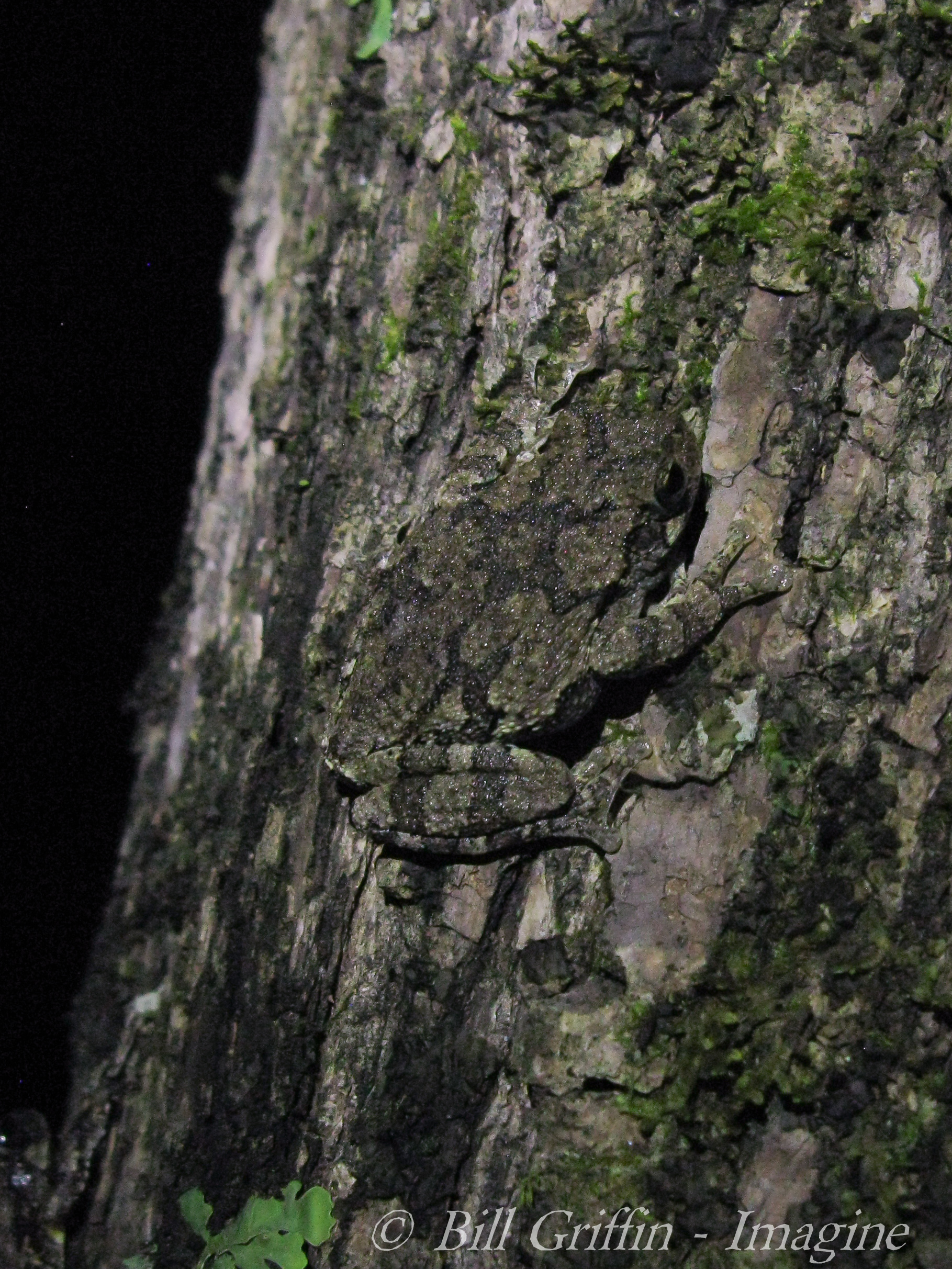
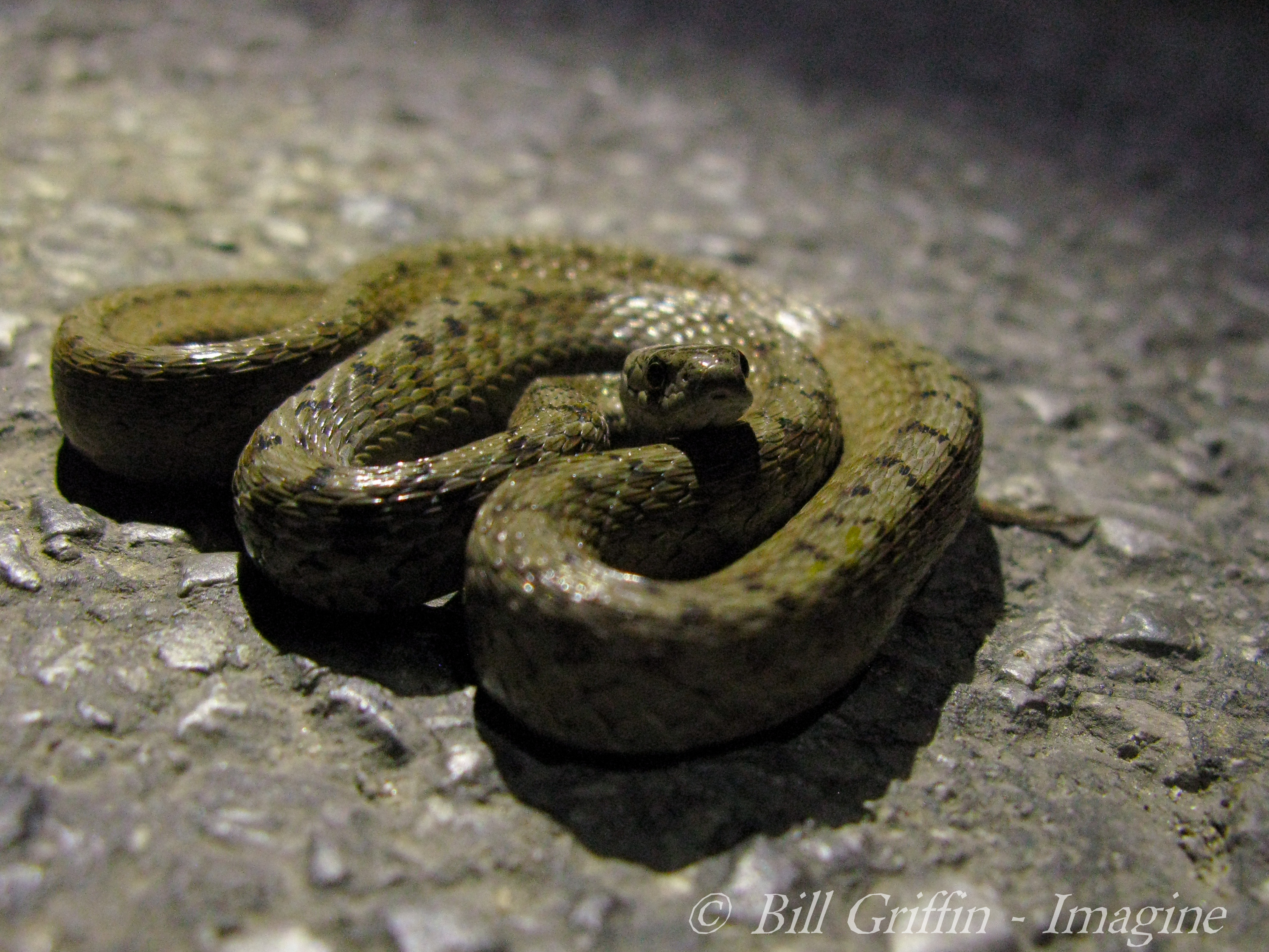
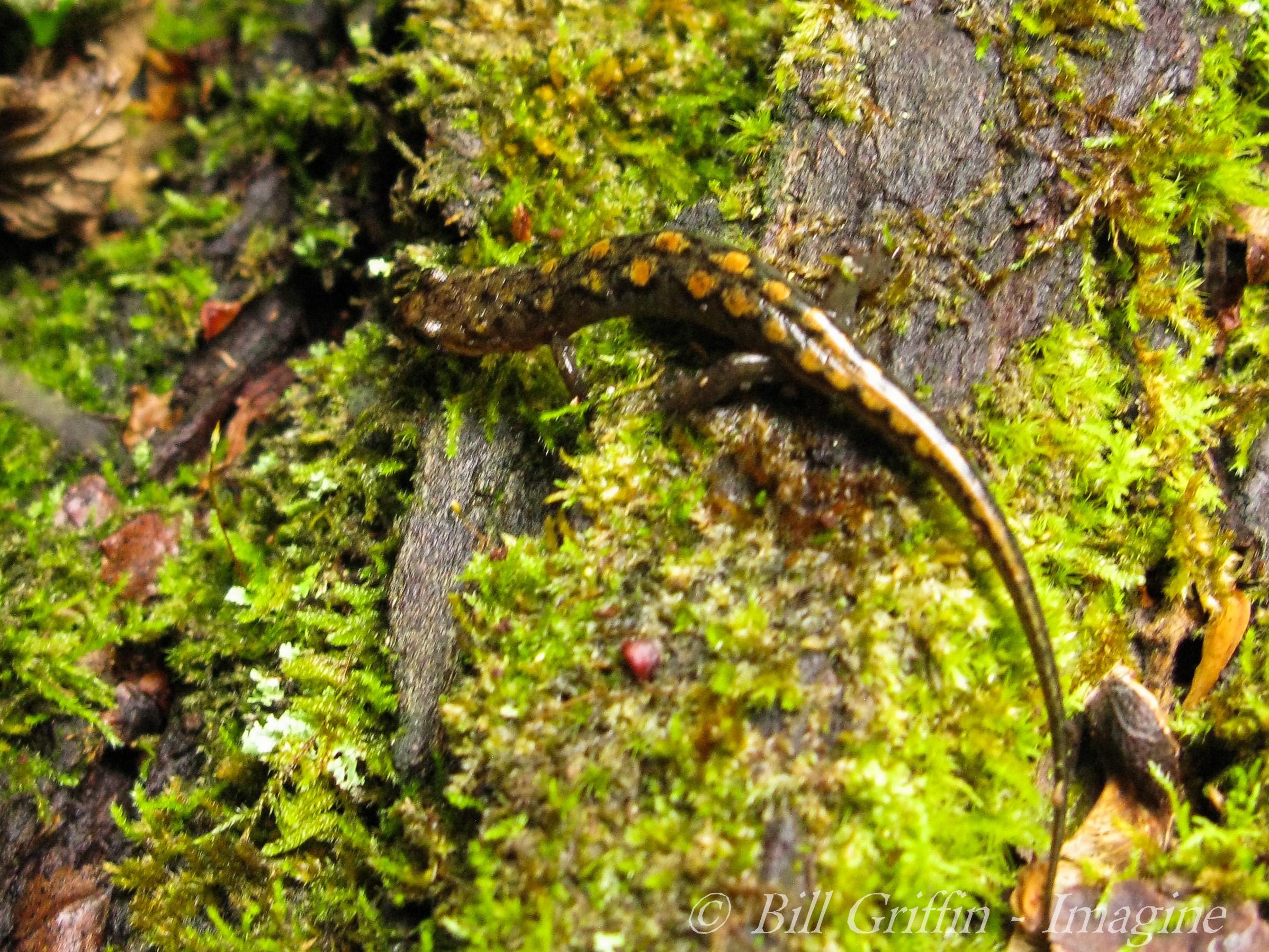
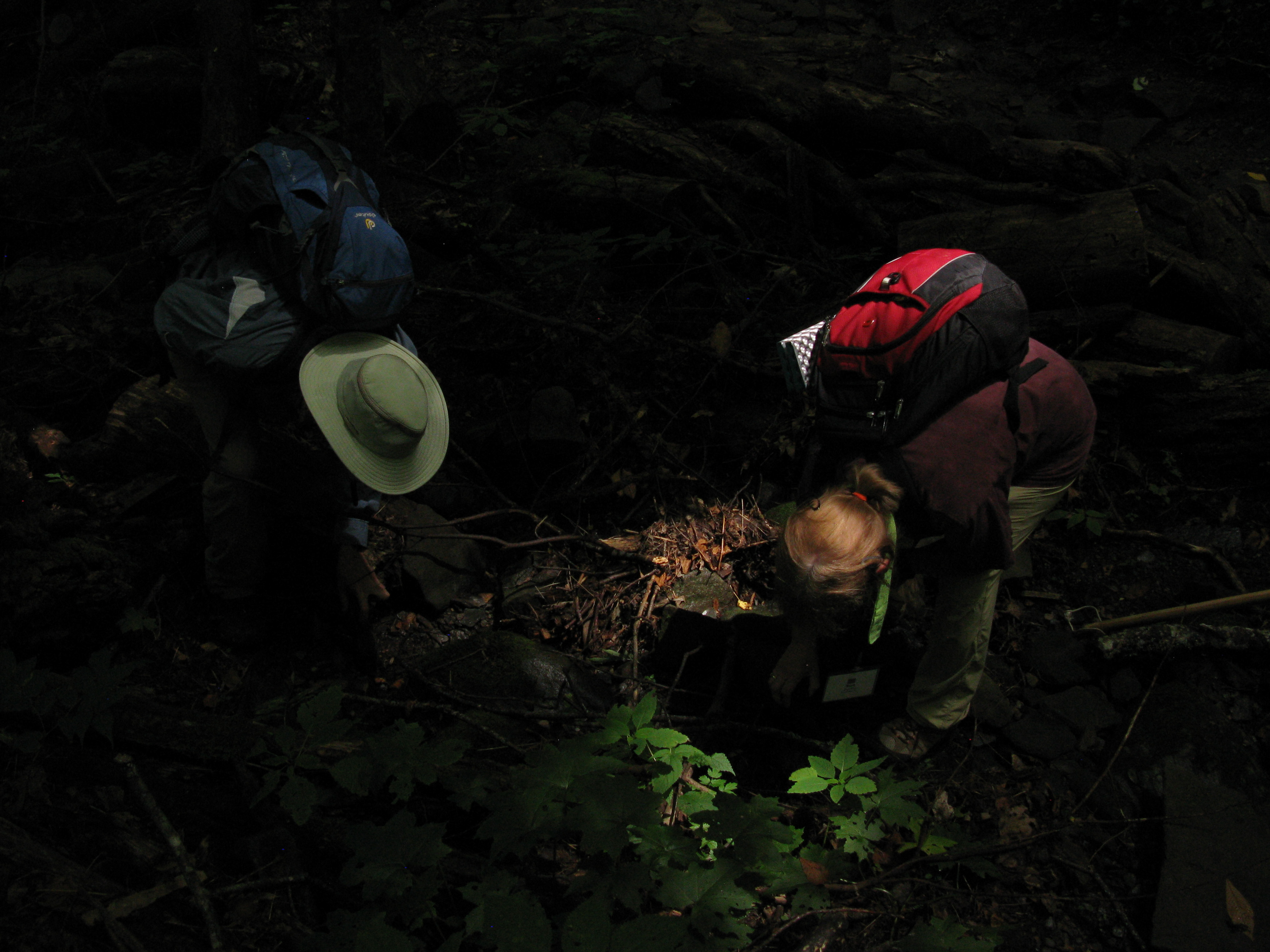
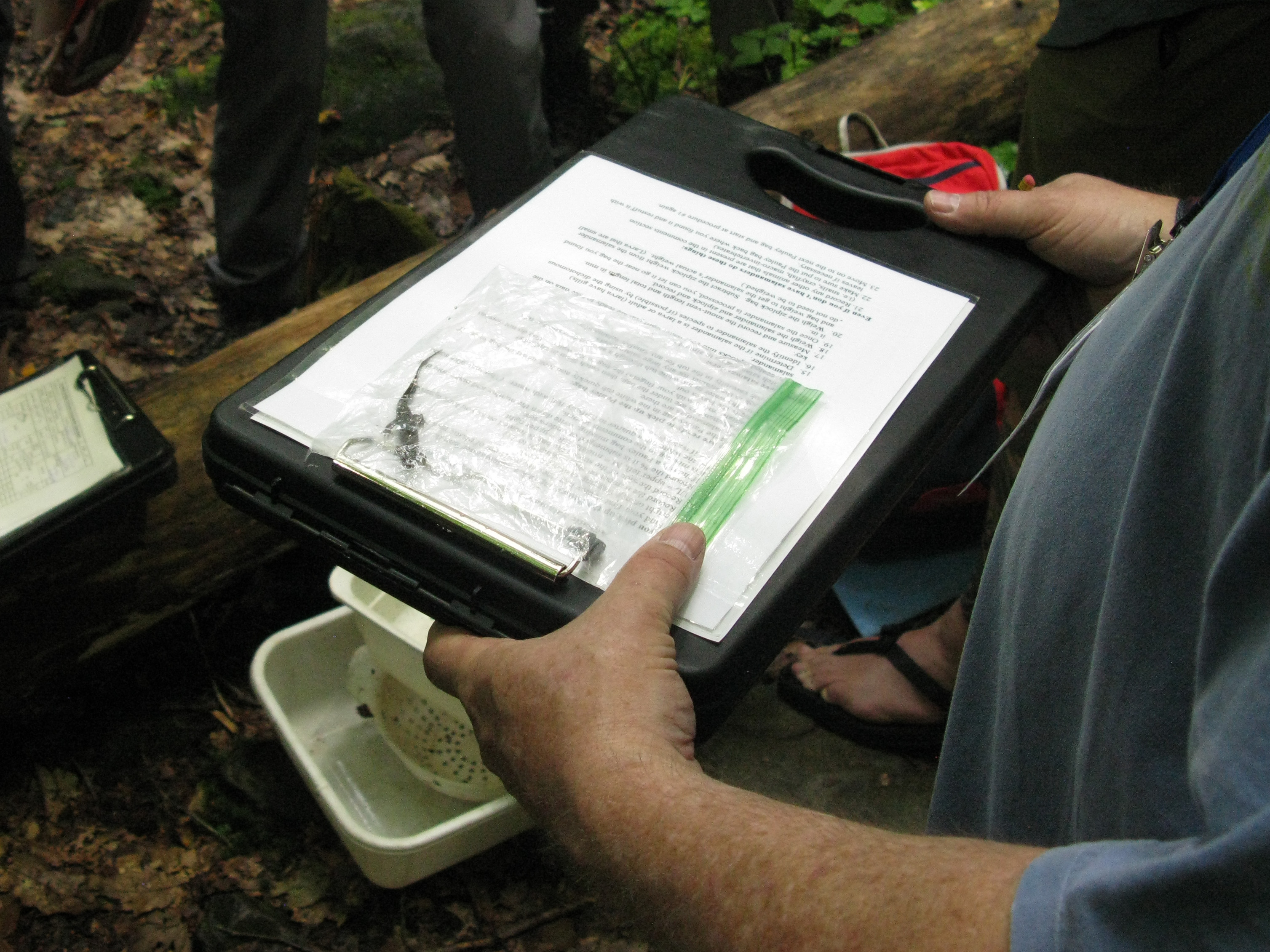
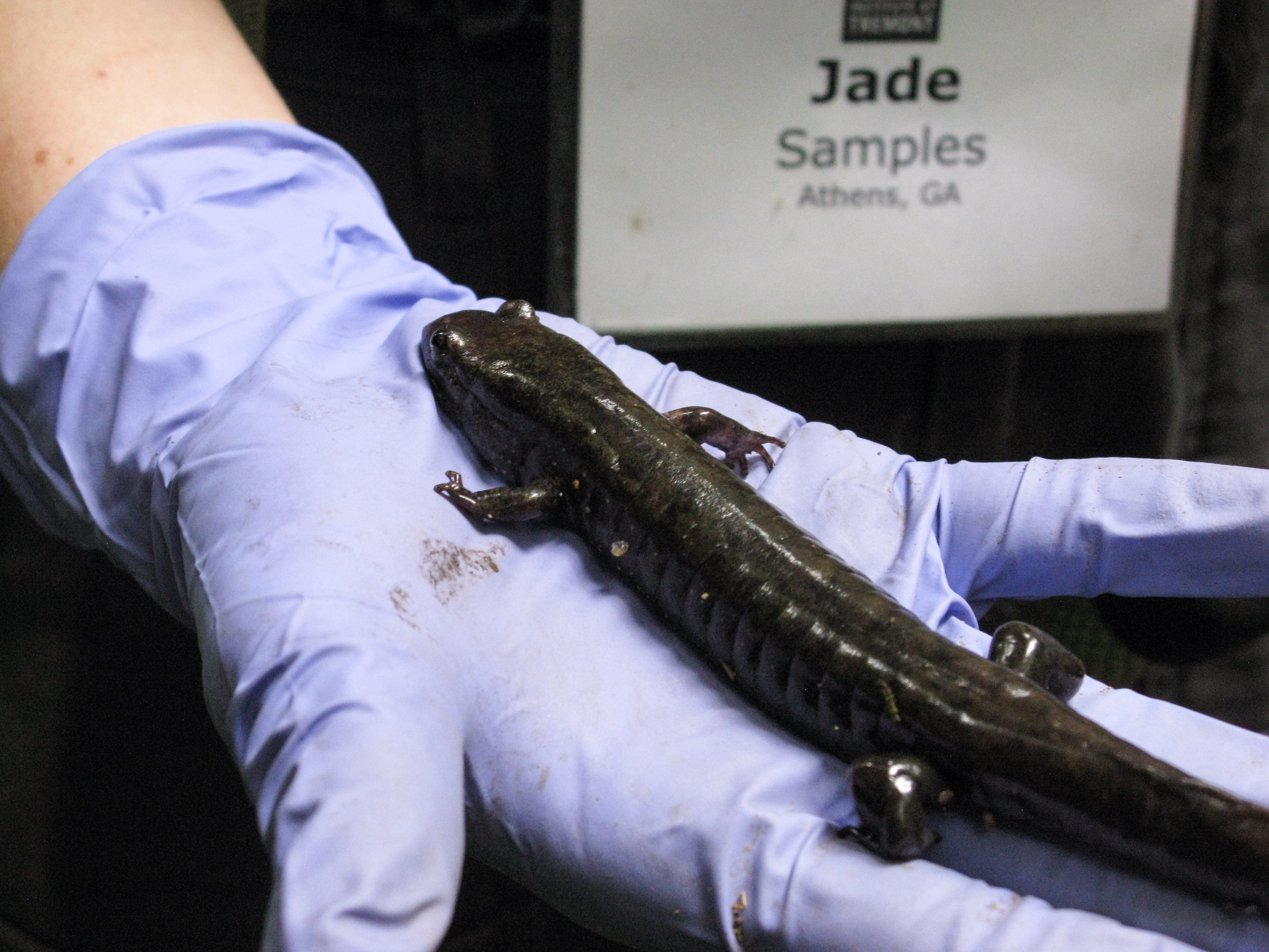
We are going to count the salamanders in Dorsey Creek. Before we leave Tremont and hike to their watershed we spray our boots with weak bleach (to kill the Ranavirus). We wear gloves so that we don’t smear them with our own flora (they have a rich commensal surface bacterial that keeps them healthy). We touch them only briefly and hold them in water in bags, not in our hands (a scant few grams of flesh, thin and magical skin, even the heat of our palms would stress them). Just a few minutes to check for gills if they’re still larvae, to count their spots and markings, look for cheek chevrons, flip and inspect the tint of their bellies, then we take them back to the leaf litter or flashing stream where we found them. Perhaps each one may be counted again, perhaps dozens of times over a ripe salamander lifespan of 20 years.

And perhaps, rising from our knees with new names in our mouths (Desmognathus monticola, quadramaculatus, conanti) and something sacred in our hearts, perhaps we will see the world as if for the second time, the way it really is.

.     .     .     .     .     .     .

.     .     .     .     .     .     .

Alligator Poem
++++ Mary Oliver (1935-2019)

I knelt down
at the edge of the water,
and if the white birds standing
in the tops of the trees whistled any warning
I didn’t understand,
I drank up to the very moment it came
crashing toward me,
its tail flailing
like a bundle of swords,
slashing the grass,
and the inside of its cradle-shaped mouth
gaping,
and rimmed with teeth –
and that’s how I almost died
of foolishness
in beautiful Florida.
But I didn’t.
I leaped aside, and fell,
and it streamed past me, crushing everything in its path
as it swept down to the water
and threw itself in,
and, in the end,
this isn’t a poem about foolishness
but about how I rose from the ground
and saw the world as if for the second time,
the way it really is.
The water, that circle of shattered glass,
healed itself with a slow whisper
and lay back
with the back-lit light of polished steel,
and the birds, in the endless waterfalls of the trees,
shook open the snowy pleats of their wings, and drifted away,
while, for a keepsake, and to steady myself,
I reached out,
I picked the wild flowers from the grass around me –
blue stars
and blood-red trumpets
on long green stems –
for hours in my trembling hands they glittered
like fire.

from New and Selected Poems, © 1992 by Mary Oliver, Beacon Press, Boston. Reprinted in The Ecopoetry Anthology, edited by Ann Fisher-Wirth and Laura-Gray Street, © 2013, Trinity University Press, San Antonio, Texas.

.     .     .     .     .     .     .


.     .     .     .     .     .     .

Sorceress’ lizard, bellows breath, fire worm, winged dog – O, little salamander, how you inspire us with your magic! Pliny the Elder recognized that you are not a lizard but ancient Greeks still rumored that you quench fire with the chill of your body. The Talmud explains you are a product of fire and immune to its harm. Perhaps during the long winters of the Middle Ages you emerged miraculously from the log thrown onto the hearth to substantiate your reputation. Marco Polo believed your true nature to be an “incombustible substance found in the earth.” And let’s not forget the fearful excretions of your skin, poisonous enough to kill the entire village if you fall into the well, fundamental ingredient of witches’ brews, irresistible aphrodisiac.

Little wriggling Caudata, the reality of your nature is more wondrous than myth. You eat small things that would starve larger creatures and yet you thrive; your biomass exceeds that of all the mammals in Great Smoky Mountains National Park. Your skin breathes – most of you don’t even have lungs! – and brews up a constellation of compounds that confound the biochemist. Some of you live 4 years with gills in the swift chill stream before becoming adults, others metamorphose within your eggs beneath forest duff and emerge fully formed, but all of you with your efficient ectothermic life plan grow and grow, make eggs, survive perhaps for decades. And Great Smokies holds more of your diversity than any other place in the world.

We are amazed! We students of SANCP Reptiles and Amphibians Course of 2021 are just astonished and awestruck. You are the coolest of the cool (ectotherms, that is)! We thank your Chief Sorcerer of Knowledge, Professor John Maerz, and Acolyte of Hands-On, Graduate Research Assistant Jade Samples, for sharing their lore, showing us how to find you, leading us to love you.

Salamanders – you rule!

.     .     .     .     .     .     .

Salamander
++++ Bill Griffin

This is my gift –
++++++++ to change.
From Inadu Creek I leave behind
my frilly gills and climb
the spire of blue-eyed grass.
Having become a creature of air bathing
myself in dew, am I not still
a creature of water?

I invite you to discover
in each of my family our variations,
discern that every runnel, every spring,
every palm-sized cup of moisture
holds its lithe expectation, for this
is my gift to you –
++++++++ to notice changes.

I will let you lightly touch
the welcome of my smoothness
while I drink a little warmth
from your hand. Now count
the dapples down my length,
measure the blush of my cheek,

then find when you descend
the eastern face of Snake Den Ridge
those subtle alterations my cousins
are accumulating until finally
they acquire a new name.

And when you have returned me
to my bed of blue-bead lily, then touch
a smooth place within yourself
and carry with you into the world
++++++++ your own changes.


from Snake Den Ridge: a bestiary, © 2008 by Bill Griffin, March Street Press, Greensboro, NC. Illustrations and historical preface by Linda French Griffin.

.     .     .     .     .     .     .


.     .     .     .     .     .     .

The Southern Appalachian Naturalist Certification Program is an adult education endeavor of Great Smoky Mountains Institute at Tremont and the University of Tennessee, Knoxville. Their mission of connecting people with nature continues even during pandemics! The science-based educational programs have evolved with science-based precautions and modifications to allow small communities to form for a weekend at a time.

Many thanks to John DiDiego, GSMIT Education Director, and to the awe-inspiring instructors for the July, 2021 SANCP Reptiles and Amphibians course, Dr. John Charles Maerz from University of Georgia, and his intrepid research assistant, Jade Samples. We crammed a semester’s worth of herpetology into 36 hours out of doors in the Smokies. (Did I sleep? Maybe a little.)

All photographs by Bill Griffin. Plethodon jordani on blue-eyed grass by Linda French Griffin. Header art also by Linda Griffin.

.     .     .     .     .     .     .

2014-06-30a Doughton Park Tree

Read Full Post »

[with 3 poems by Tony Abbott]

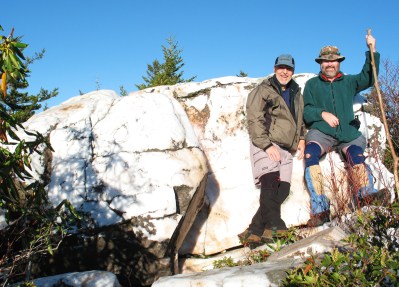
Mike and I met at a remote trailhead below Mt. Pisgah to hike up into Shining Rock Wilderness. We planned to spend one night at our favorite site after reaching it by this unfamiliar approach. End of September, gorgeous reds and golds, brittle blue sky, and we were prepared for cold above 5,000 feet.

No camp fires permitted in a Wilderness Area. We made tea over a little alcohol stove, sat on the ground, and talked until it grew too dark to see. The ultralight 2-person tent Mike had packed was cozy, which is to say it was more like a 1 ½-person tent. We’d be keeping each other warm.

I woke up after midnight in dense darkness and couldn’t breathe. Got out of the tent, pulled on my balaclava, walked away to pee, sat on a log – deep silence, no owl hoot, no chitter of flying squirrels, not one breath of wind. When my butt started to freeze I tried squeezing back into my mummy bag. No good. My chest tightened, the thick black pushed down on my face, I had to claw its hand away. Worst claustrophobia ever.

I finally dragged my sleeping pad and bag out to a level space in the pine needles, wrapped a jacket around my feet, and hunkered in just as the moon rose through the red spruce. Cold light expanded my lungs. At some point, hours creeping, moon in my eyes, I fell asleep. Mike woke me at first sun.

.     .     .     .     .     .

What can bring light into darkness? What hand comforts the clench of fear? What consoling faith casts away doubt? What companion banishes loneliness?

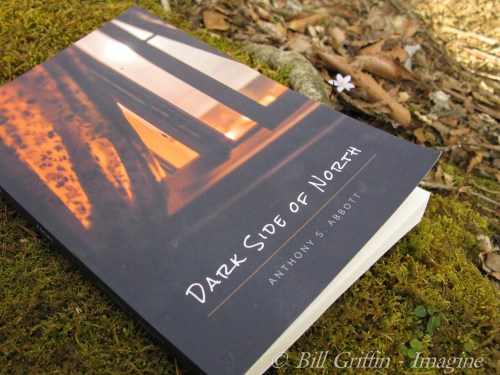
The forward to Anthony S. Abbott’s book Dark Side of North, published posthumously by Press 53 this year, consists of a remembrance presented by Dr. Jacqueline Bussie at Tony’s memorial service on October 17, 2020. Here is an excerpt:

Suffering didn’t make Tony unique. What he did with it did. Tony was the first adult, and the first teacher, I’d ever met in life who was willing to talk about the hard stuff. He taught us that suffering sucks. That suffering denied is suffering unhealed. He taught us to never sugarcoat suffering, smack a pink bow on it, or shove it to the back of the drawer. In one of my favorite lines in Tony’s poetry, he urges us to get down to “the Humpty-Dumpty business of trying to make a jewel out of the cracked pieces of the heart.”

Dr. Jacqueline Bussie, page xiv, Dark Side of North

.     .     .     .     .     .

The Boy from Somewhere Else

lived in the open mouth of the world.
He chewed on the dry branches of time.
He was handsome enough, to be sure,

but there was in his voice
the deep well of absence.
He was with them, but not of them.

His speech was familiar, but not theirs,
and when he told tales
of his drunken uncles and stage-struck

sisters, they nodded politely
and they spoke in their apple-round voices
of kith and kin, and told how their

grandfathers had founded the first
bank in Hitchcock County.
He would wait, this boy.

He would find one day the person
who could hear his music
as blood red leaves matched autumn.

He could not be mistaken about this.
When she came, he would recognize her
at once – as one knows the coming storm

by the first, distant clap of thunder.
Perhaps he could not keep her.
Perhaps one can never keep such a gift.

But, still, she would grace his years – the buds
of his growing up, the rattling trains of the
middle passage, the brittle bones of the slow

descent, the icy nights of the final coming down.

from Dark Side of North, Anthony S. Abbott, Press 53, Winston-Salem NC, © 2021 by the estate of Anthony S. Abbott

.     .     .     .     .     .

The Light in the Window
In memory of Nancy Abbott Hieronymus (1926-2017)

How early I must have known that she was
my true mother, that when she packed her bag
I must go with her. She would keep me safe.

How early I must have known that she was
my true teacher, making the sounds of the words
with her mouth so I could learn them, too.

How early I must have known that she was
my true protector, throwing herself across me
slashing her knee on the broken windshield glass.

Later, when I was nearly grown, cocky sophomore
in prep school, riding the subway home at 2 a.m.,
she left a light in the window on that I

would turn out when I came in. I didn’t know
she stayed awake until she heard the door open
and close, heard the click of the light going off.

Now I sit by her bed and watch her sleep and wake,
sleep and wake, and tell me how she loves
her precious Dick, how she will hold his hand

all the way to heaven. Beyond the light in her window
the evening comes over the island, the deer prick up
their ears, the foxes peek from their dens. In the pines

the gold crowned kinglet waits. She is coming, they say,
our friend is coming, the one who loved us all these years.
Tonight I will go home, and the friends who loved her so

will arrive, one by one, to take her in their arms,
and the next night the angel will stand at the foot
of her bed. You are loved, he will say, and enfold her

with his bright wings. And she will go where that brightness
is and, like a light in the window, shine upon us all.

from Dark Side of North, Anthony S. Abbott, Press 53, Winston-Salem NC, © 2021 by the estate of Anthony S. Abbott

.     .     .     .     .     .

The Long Afternoon

All through the long afternoon
the wind moved in the branches.
I had lived in the city and had seen
only the dust from the tires,
the diesel gas from the gray brown
buses with their leaden burdens.

Here it was different. Here on the grass
we had found by chance, walking
away, just away from everything
and then, a clearing and green
grass and the wind moving
like silver over the water
and in the branches, too. Yes,

all through the long afternoon
the wind moved and we were silent
in awe of the day and leaves
yellow and red and orange,
which floated slowly down
into our waiting hands.
aaaaaaaaaaaaaaaaa Later
I found these leaves in a book
where you had put them for
safe keeping, a book you knew
I would take down and read
some distant starry night.

from Dark Side of North, Anthony S. Abbott, Press 53, Winston-Salem NC, © 2021 by the estate of Anthony S. Abbott


.     .     .     .     .     .

Thank you, Tony. We will continue trying, and we will not stop trying, to make something beautiful from the brokenness that we are. Together. May it be and become so.

.     .     .     .     .     .

The North Carolina Poetry Society has honored Anthony S. Abbott’s memory and shared Tony’s poetry at its January, 2021 literary meeting and with a commemoration in the Winter, 2021 edition of its quarterly publication, Pine Whispers.

The line “the Humpty-Dumpty business of trying to make a jewel out of the cracked pieces of the heart.” is from Tony’s poem Before Forty in his book The Girl in the Yellow Raincoat (St. Andrews Press, 1989) and collected in New & Selected Poems (Lorimer Press, 2009).

.     .     .     .     .     .


.     .     .     .     .     .

2015-06-15Doughton Park Tree

Read Full Post »


[with a Possum Poem]

In case you missed it, February 7, 2021 was Smoky Mountains ‘Possum ‘Preciation Day. Not that we blame you for overlooking the date – Joyce, Kimber, and I had just declared it that very morning. As part of our presentation on Didelphis virginiana to the Mammals class at Tremont we were determined to remedy the bad rap opossums get. And since we’re all friends here let’s just call them ‘possums’.

Possums are not big gross rats. Well, yes, when you try to shoo them away from the compost heap they do hiss and show all 50 teeth in their long pointy jaws, but let’s give them credit for having the most teeth of any North American mammal. And a pouch – they’re our one and only marsupial. Plus possums can be positively stylish and glowing when you give them a nice shampoo, blow dry, and brush up, although unfortunately that’s usually done by the taxidermist.

Back to those teeth – one of Ms. Possum’s super-powers is time travel. Her jawbone and dentition haven’t changed much at all from those little early mammals who lived side by side with Cretaceous dinosaurs. From Ms. Possum, mammalogists can figure out how those prehistoric critters chewed and what they most likely ate. Which by the way for our current day possums is basically anything and everything. (If we refer here to Ms. Possum it’s because Mr. is totally out of the picture after the mating is finished. Like, two minutes. And he doesn’t have a pouch – boring.)

At this point you’ll certainly be ready to agree it’s no coincidence that Possum rhymes with Awesome. Joyce, Kimber, and I were very happy to enlighten our classmates about the admirable features of this little pouched prehensile-tailed omnivorous non-endangered darling. And hey, we could have drawn the assignment that one of the other teams got stuck with: Appalachian Wood Rat.

.     .     .     .     .     .     .

Requiem

I won’t walk back this way tonight
to not-see in the darkness the damp splay of fur,
the jawful of Pliocene needles, the blind worm
of a tail. And not only for fear that I’ll tread
on the red-brown seep or the pitiful snout;
no, I also don’t wish to meet its little ghost
ranging, anxious to cross the road,
baffled by its body’s long play of possum,
denied its marsupial rest.

But perhaps in mercy I should return
and pronounce, O pouched spirit,
linger only until the crows have said grace
and the sun awakens your baking humors, then flee
with the blessing of one who has swerved
to avoid your brothers. Go now and find peace
on the other side.

© Bill Griffin; first appeared in North Carolina Literary Review Number 12, 2003

.     .     .     .     .     .     .

One of the numerous hands-on nature experiences offered by Great Smoky Mountains Institute at Tremont is the Southern Appalachian Naturalist Certification Program. Eight weekend courses (which may be completed over a span of years) are designed to provide fundamental and specialty skills in Southern Appalachian ecology, biodiversity, and interpretive techniques. Most of the time is spent outdoors; for the winter Mammals course we spent Saturday in Cades Cove discovering tracks, scrapes, signs, and scat that testify of the denizens and their activities. Each course also involves keeping a nature journal and practicing interpretation skills – sharing Nature with others. Upon completion the student receives the non-credit Southern Appalachian Naturalist Certificate from the University of Tennessee.

Joyce, Kimber, and I were Team Possum. We did not discover any possum tracks during the weekend and we reprimand Tremont for not providing us with a possum skull to play with among all the other skulls, bones, and pelts in their collection. We are DEEPLY grateful, however, to master tracker and instructor Wanda DeWaard, who brought with her a little jar of possum scat. Treasure!

.     .     .     .     .     .     .


.     .     .     .     .     .     .


2014-07-13 Doughton Park Tree

.     .     .     .     .     .     .

POSTSCRIPT

My birthday is February 11. Here’s the card I opened from Mike and Nancy that day. Mike is the guy who first invited me to come backpacking in the Southern Appalachians 25 years ago and talked me into enrolling for my first SANCP course at Tremont. And he did not know I’d pulled Virginia Opossum for my small group presentation — he’s just prescient.

Read Full Post »

« Newer Posts - Older Posts »