Feeds:
Posts
Comments

Posts Tagged ‘Southern Appalachians’


[poems by Joyce Compton Brown and Billy]

Happy Birthday to Me!

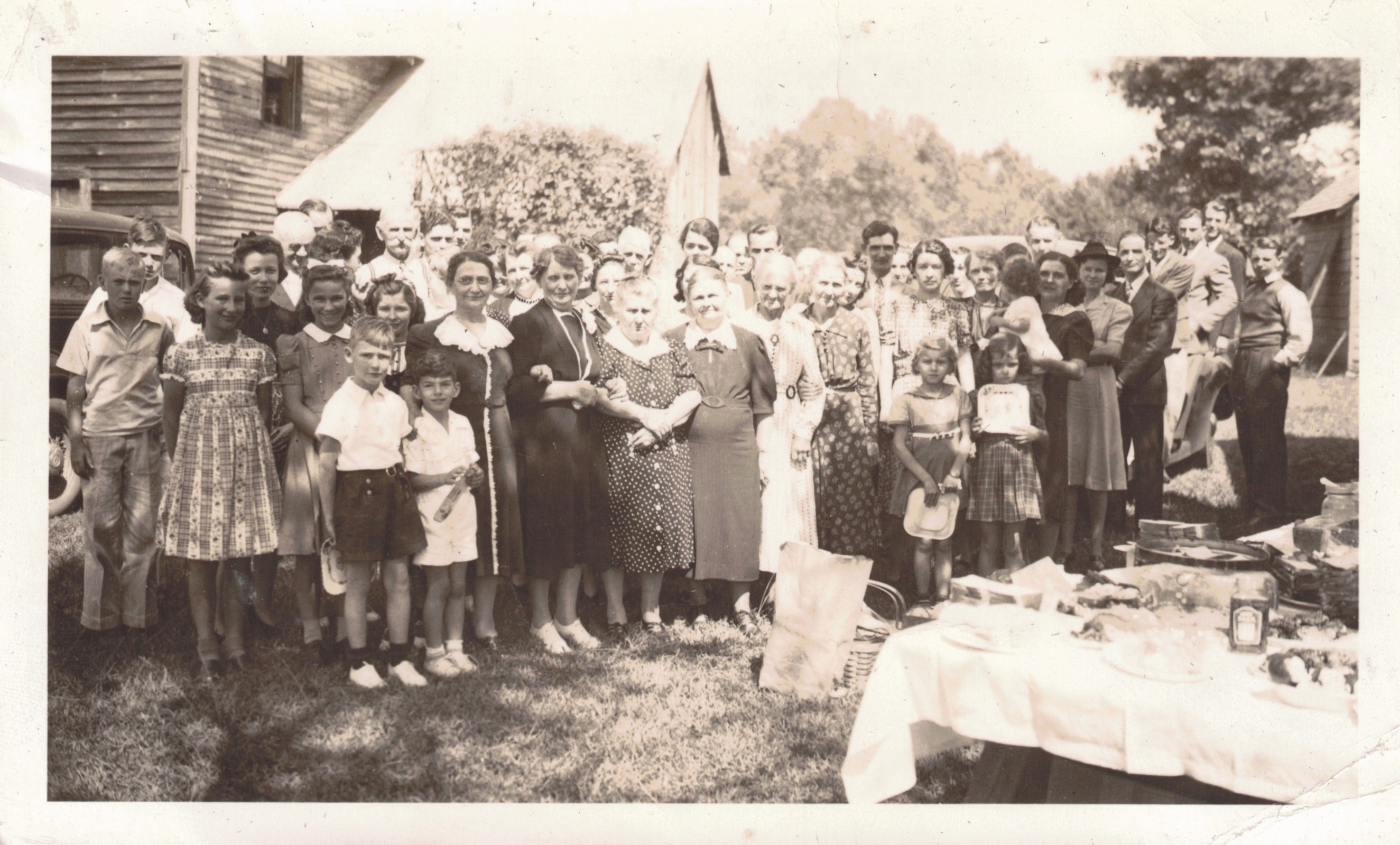
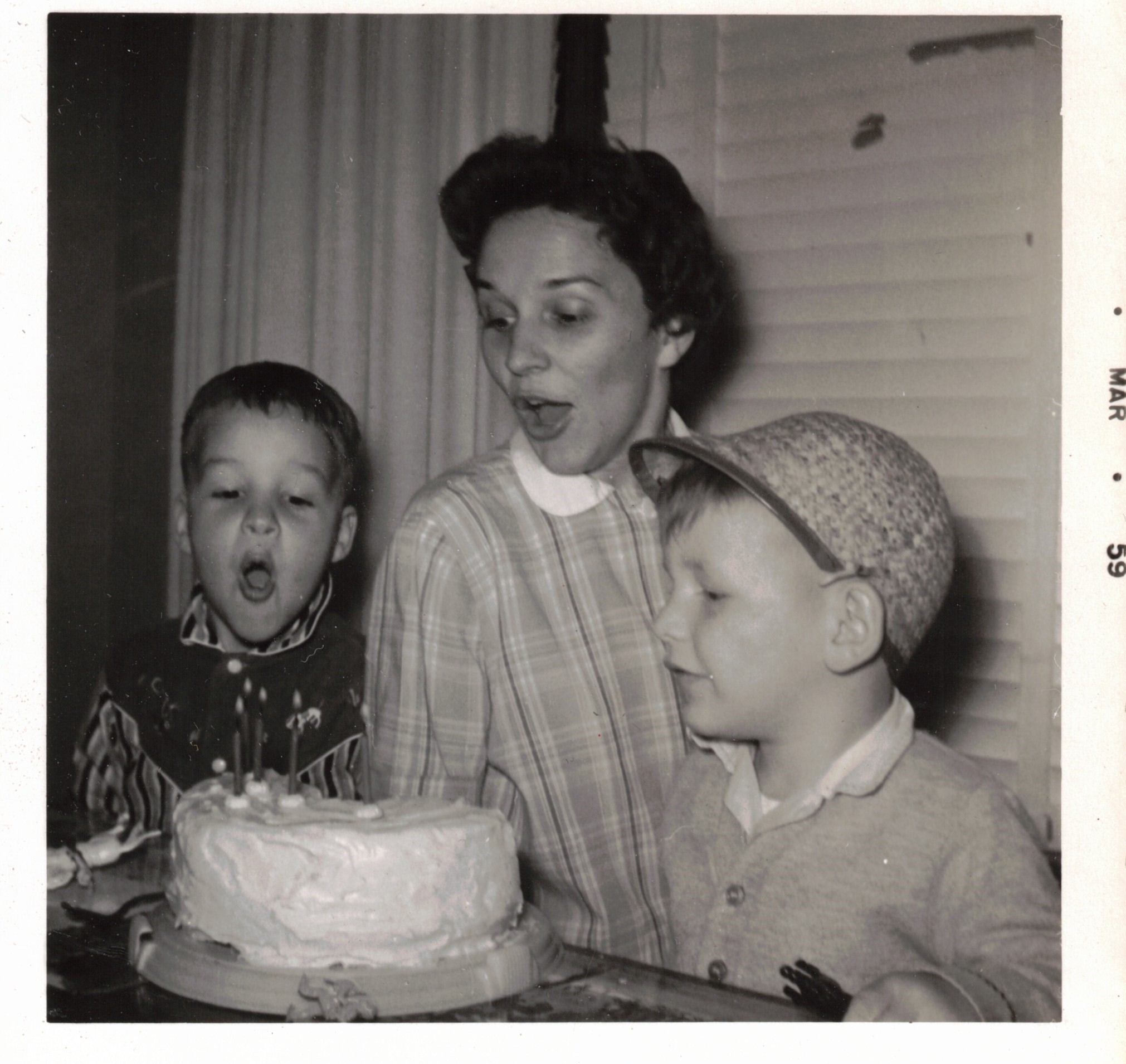
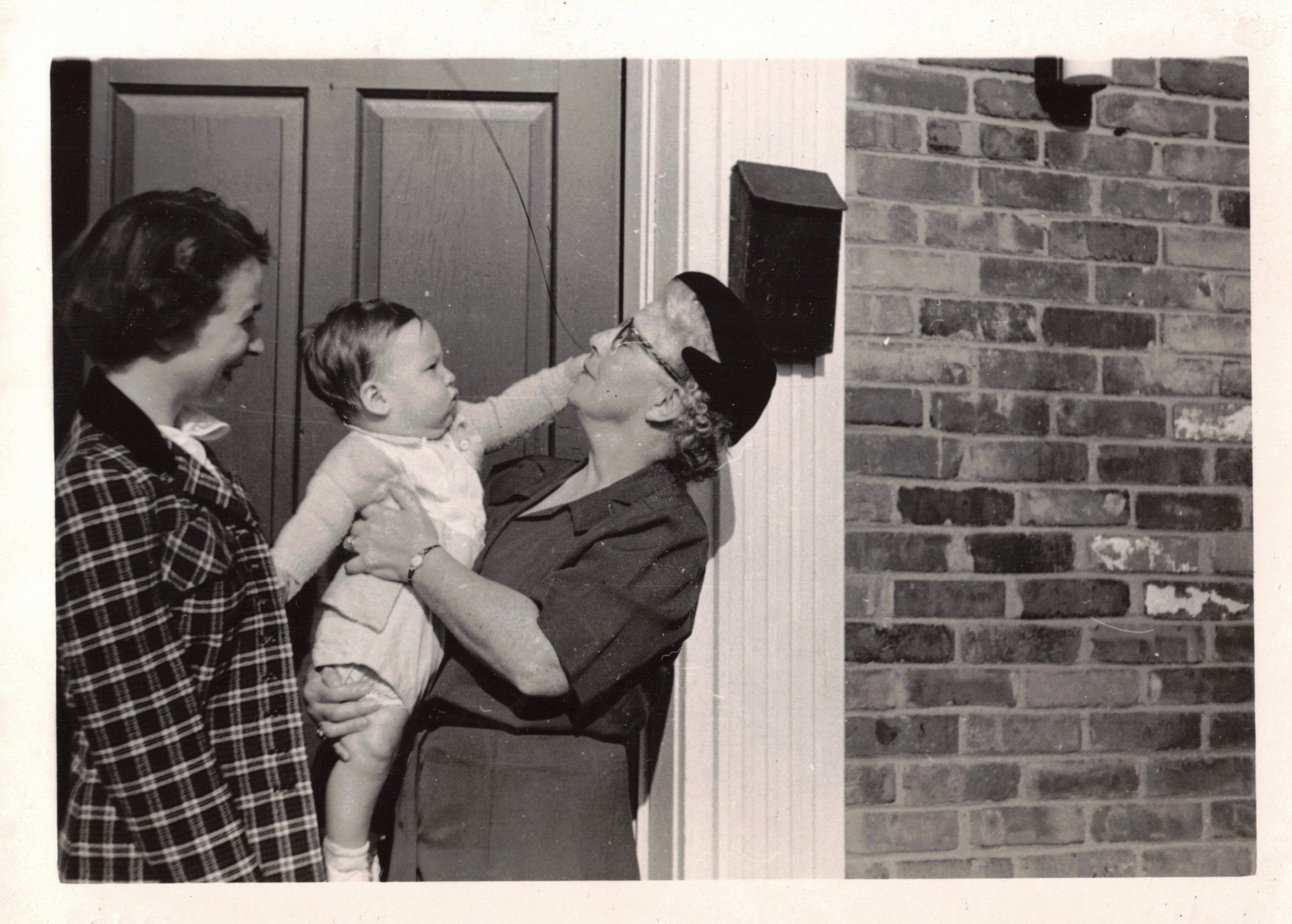
Yep, February 11, this is my day. Sixty-nine years ago my Mom was probably feeling the Niagara rumble from her birthing bed on the umpteenth floor of St. Mary’s. On the American side of the Falls, if you were wondering. Name already picked out – Eugene Wilson the Third – but already in use by Dad and Granddaddy so nickname picked out as well – Billy.

In a few years Mom and Dad moved back down south – Memphis, this time – then over the next ten years to Delaware, Michigan, finally Ohio, but never back to their home state of North Carolina. “Here’s to the land of the Long-Leaf Pine, a summer land where the sun doth shine.” Linda and I moved to NC a week after our wedding – to Durham, Duke Med – and held a place for them here. Just in case.

It’s a good thing. Ten years ago Mom and Dad at last resettled near us, Winston-Salem, where Mom grew up and went to Reynold’s High. They’re right across the street from historic Old Salem. I visited yesterday (secretly hoping there might be cake and candles – Birthday Party #1-of-many). Today I’m expecting Margaret and Bert (4) from Raleigh. Maybe tomorrow Saul (13) and Amelia (6) from across just around the corner. Maybe more cake?

So what do I actually want for my birthday? In Russia I’d have a pie with my name in the crust; in China a longevity noodle that fills the entire bowl (with scallions & bok choy); Hungarians would pull my earlobes (69 times); Jamaicans would dust me with flour.

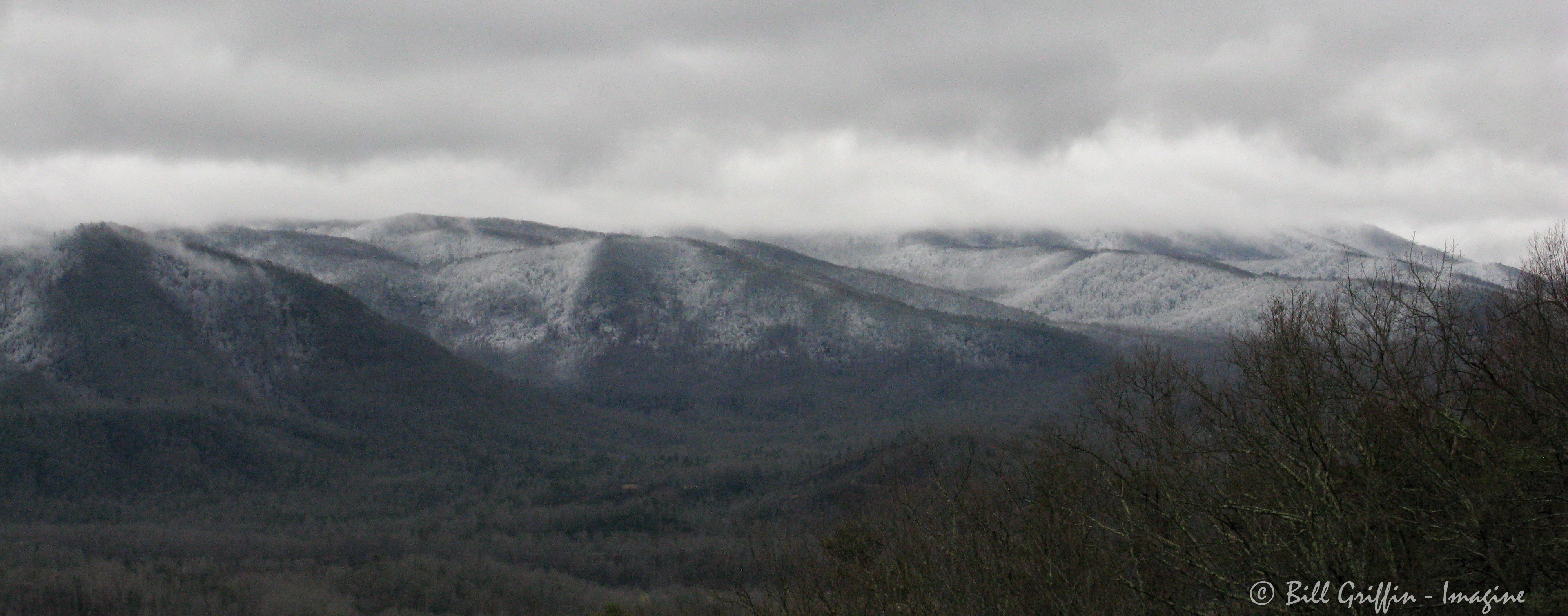
All those sound awesome, but no, don’t bring presents. I have a walk in the woods with Linda planned. I have Grandkids to wear me out and make me laugh. We have the Blue Ridge with its arms spread to hold us here, not saying much, not needing to. Trees and mountains, family, homeplace – happy birthday to me!

.     .     .     .     .     .     .

.     .     .     .     .     .     .

Looking Across

the fog shuffles
++++ within
++++ ++ the folded mountain

whispers
++++ old stories
++++ ++ of before we were

Joyce Compton Brown
++++ from Standing on the Outcrop, Redhawk Publications, © 2021

.     .     .     .     .     .     .

I’ve heard Joyce Compton Brown read her poetry at many a gathering and my admiration still grows and grows. There is a treasure of different voices in this collection from Redhawk, Standing on the Outcrop, but they all have in common their deeply felt truth, authentic as hunger and earth. These are rural voices, Southern voices, mountain voices, mostly from the first half of the twentieth century; they are telling urgent stories in danger of being lost if Joyce does not hear them and reveal them to us. Places, history, personal struggle, hard-won triumph — these are Joyce Brown’s specialties and she here treats them well.


.     .     .     .     .     .     .

Mattie, 1955

Before our families came
++++ there wasn’t much.
They say there were some old forts,
++++ and arrowheads
the men turned up
++++ in the plowing.
We mad collections,
++++ sent them to school
++++ ++++ for the kids to show.

They say these pastures
++++ were good hunting grounds,
And I don’t wonder,
++++ look at this land, these two mountains –
Linville, with its craggy top, Honeycutt
++++ folding on up toward the highlands,
this river, the clearest water.
++++ Any living thing would be drawn
++++ ++++ to this valley.

they say the Catawba and Cherokee fought
++++ over it till we came.
Then they fought us.
++++ It was perfect for these farms.
You can still see,
++++ those big old white houses
from before the land got too divided
++++ and people had to find work.

They say it had a name,
++++ Conasaga, an Indian word
for beautiful valley.
++++ That may just be talk.
But we use the name
++++ for our cookbook, and the kids use it
for their school yearbooks.
++++ They like the way it sounds.

Joyce Compton Brown
++++ from Standing on the Outcrop, Redhawk Publications, © 2021


.     .     .     .     .     .     .

Stroke

Afterwards he was free
to speak a new language,
come back to tell them all.

They strained to understand
to interpret his assertions
to feel his newfound power.

He told them how
he’d hated factory saws
the whine of lathe and blade

Told them how
the smoldering glow
held by tight-closed lips

kept him from
trying to tell
what they didn’t

want to hear.
How he’d loved
his fingers shuffling

guitar strings
that flatpick style
speaking its own sad voice

milking the cow
in his own sweet barn
before everybody else was up

They couldn’t see
the fiery tongue
above his head.

They couldn’t feel
the pyretic fury
in his mind.

But now he was
at center, felt the
glow from lips of fire,

felt the heat
in seething brain,
felt the gift

of flaming tongue,
watched them all
leaning inward.

Joyce Compton Brown
++++ from Standing on the Outcrop, Redhawk Publications, © 2021


.     .     .     .     .     .     .


.     .     .     .     .     .     .

I’ll close my Birth Day post with a poem I wrote almost 20 years ago. Oldest son, first grandson, I was always the good boy. Never got into trouble (or at least never got caught). High school class pres. Early admissions, graduations with honors. Married my high school honey and we’re still best buds.

(Although when we were college Juniors and told my parents we wanted to get married, my Mom said, “Oh thank goodness, I’m so glad you didn’t decide to run off and live in a commune!” I guess maybe my hair was a little on the long side that year.)

Being the eternal good boy might become a burden – especially when one knows full well that one is not nearly as good as everyone makes out. (But anyway I prefer, Linda too, the silence of a forest to the company of people – no dang commune for this good boy.)

.     .     .     .     .     .     .

Good Boy Turns 50
++++ “I ain’t no physicist, but I knows what matters.” – Popeye

How did he earn this golden sobriquet
first christened by Nana for the merest trait
of being born the first grandchild, the grinning gay
toddler who could do no wrong? And wait,
how did he keep it all through the sixties when
pick up your toys and set the table gave way
to a ponytail and poems by Ho Chi Minh
(though there was no doubt he’d still bring home the A)?
Forever the glass-half-full sort of guy,
in marriage, too, he hefts vows more abundant
than Old Fred’s prescription, “Don’t leave and don’t die” –
the grace of wanting to want what she may want.
++++ So let’s give him what he needs in the next fifty
++++ if he ever discovers what that might be.

Bill Griffin
++++ first appeared in Pinesong, annual anthology of the NC Poetry Society;
++++ ++++ first place in the “formal poetry” category, 2004
++++ collected in Crossing the River, Main Street Rag Publishing, © 2017


.     .     .     .     .     .     .

.     .     .     .     .     .     .

Read Full Post »

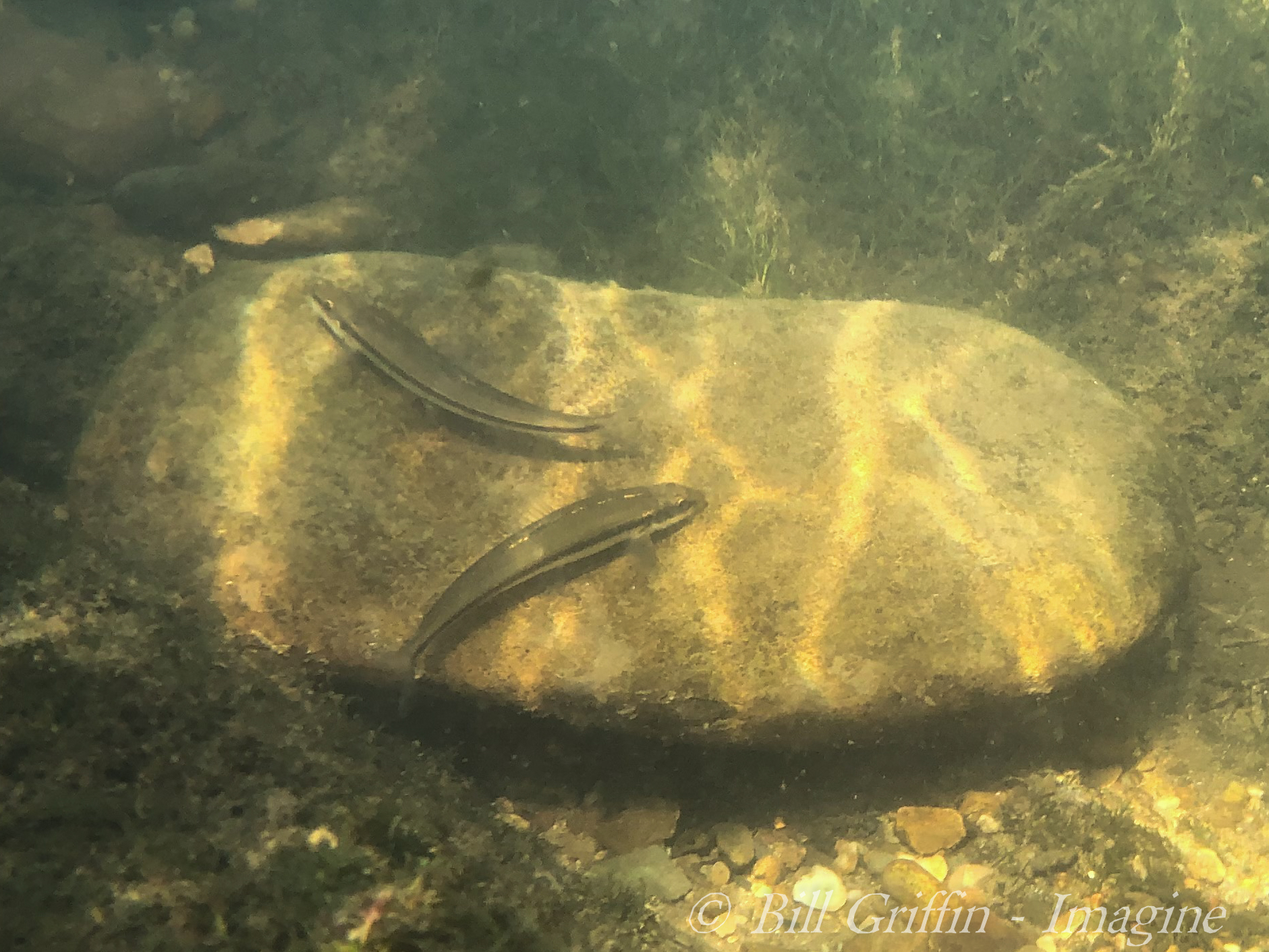
Warpaint Shiner – Luxilus coccogenis

[with poems by Robert Wrigley and Kenneth Rexroth]

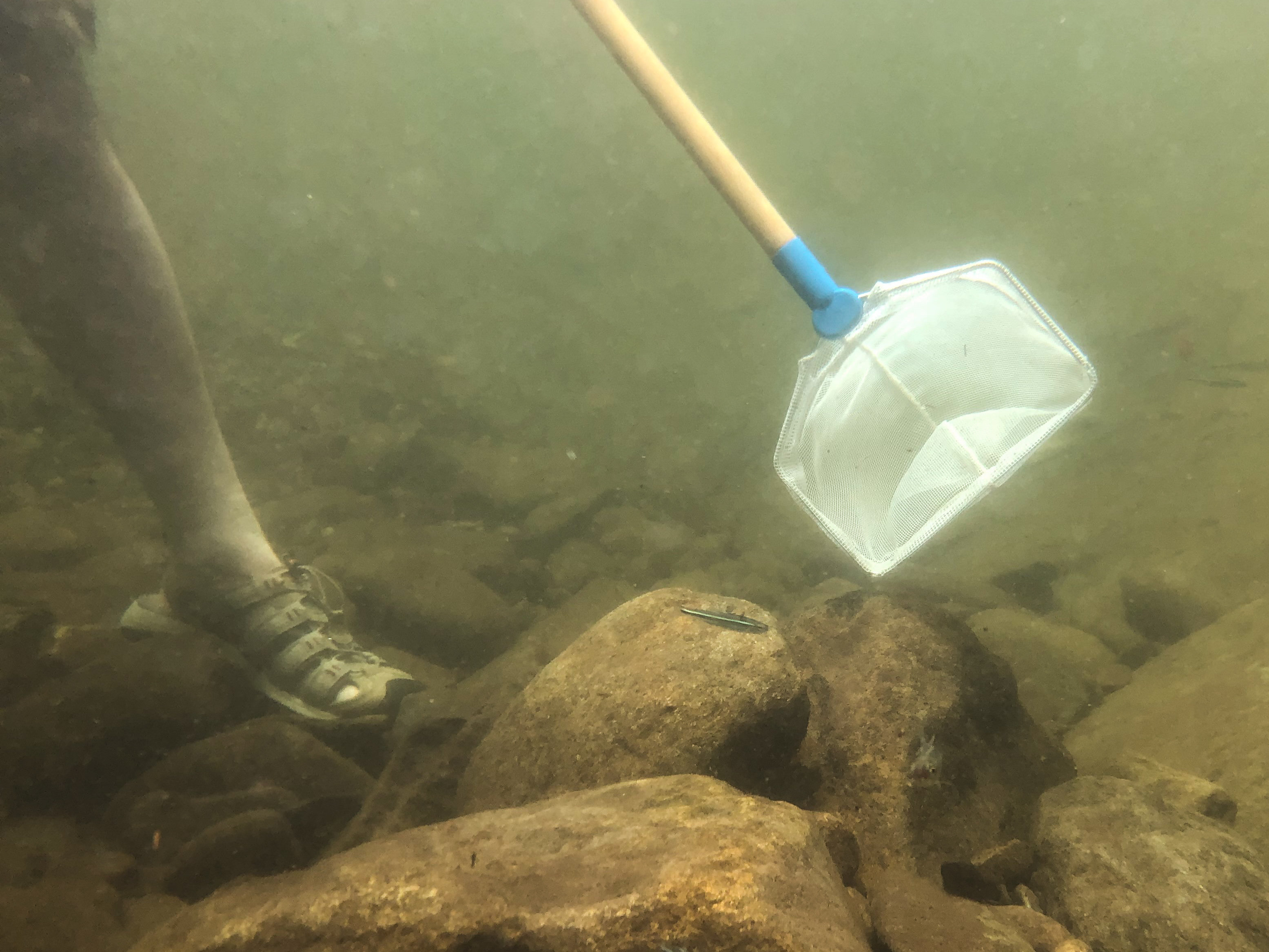
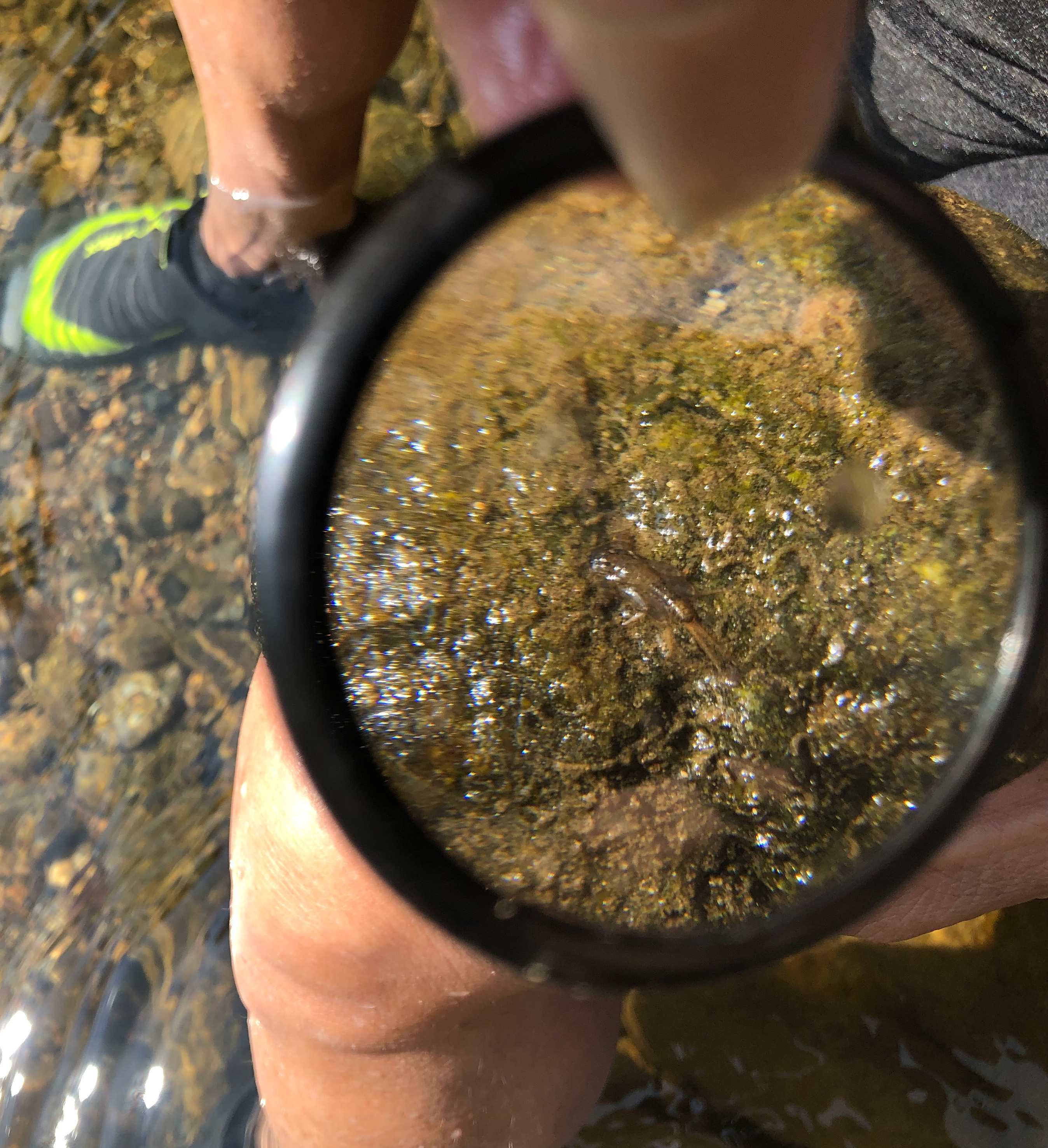
Rheophilic. Current loving. The shiners and darters face upstream while the swift clear river fetches them good things to eat. Nymphs of dragonfly, stonefly, alderfly have hooks on their feet to creep after prey across the slick stones. Salamander larvae protected in the cobbles breathe oxygen washed over their gills by the flow.

And the most unexpected, the strangest, the most fully adapted to current: the water penny – one with the rock, clinger and creeper, beetle larva, flexible carapace completely shielding it from the torrent. One among multitudes in the punch and spray, swirl and eddy, immersed in the flash and grasp of water from which all make their living.

All things flow. The first ancestors of all mayflies clung or crept or climbed or burrowed and now there are 600 species of mayfly. Symbols and images spin an unbroken thread which if I think about it I call thinking. Words whirl into new meanings. Today we dunk our faces in the Middle Prong to share its life. Tonight the current will fetch us good things to dream. Tomorrow will be a whole new river.

[* 600 species of Mayfly in the United States, 3,000 species worldwide.]

.     .     .     .     .     .     .

Anything the River Gives
++++Robert Wrigley

Basalt, granite, tourmaline, the male wash
of off-white seed from an elderberry,
the fly’s-eye, pincushion nubbins yellow
balsamroot extrudes from hot spring soil,
confetti of eggshell on a shelf of stone.
Here’s a flotilla of beaver-peeled branches,
a cottonwood mile the shade of your skin.
Every day I bring some small offering
from my morning walk along the river:
something steel, blackened amber with rust,
an odd pin or bushing shed by the train
or torqued loose from the track, a mashed penny,
the muddy bulge of snowmelt current.
I lie headlong on a bed of rocks,
dip my cheek in the shallows,
and see the water mid-channel three feet
above my eyes. Overhead the swallows
loop for hornets, stinkbugs, black flies and bees,
gone grass shows a snakeskin shed last summer.
The year’s first flowers are always yellow,
dogtooth violet dangling downcast and small.
Here is fennel, witches’ broom, and bunchgrass,
an ancient horseshoe nailed to a cottonwood
and halfway swallowed in its punky flesh.
Here is an agate polished over years,
a few bones picked clean and gnawed by mice.
Here is every beautiful rock I’ve seen
in my life, here is my breath still singing
from a reedy flute, here the river
telling my blood your name without end.
Take the sky and wear it, take the moon’s skid
over waves, that monthly jewel.
If there are wounds in this world no love heals,
then the tings I haul up – feather and bone,
tonnage of stone and pale green trumpets
of stump lichens – are ounce by ounce
a weight to counterbalance your doubts.
In another month there won’t be room left
on the windowsills and cluttered shelves,
and still you’ll see me, standing before you,
presenting some husk or rusty souvenir,
anything the river gives, and I believe
you will love.

from Earthly Meditations: New and Selected Poems by Robert Wrigley, © 2006, Penguin. Reprinted in The Ecopoetry Anthology, edited by Ann Fisher-Wirth and Laura-Gray Street, © 2013, Trinity University Press, San Antonio, Texas.

.     .     .     .     .     .     .

Common Snapping Turtle – Chelydra serpentina

.     .     .     .     .     .     .

Lyell’s Hypothesis Again
++++ Kenneth Rexroth (1905-1982)

An Attempt to Explain the Former
Changes of the Earth’s Surface by
Causes Now in Operation — subtitle of Lyell: Principles of Geology

The mountain road ends here,
Broken away in the chasm where
The bridge washed out years ago.
The first scarlet larkspur glitters
In the first patch of April
Morning sunlight. The engorged creek
Roars and rustles like a military
Ball. Here by the waterfall,
Insuperable life, flushed
With the equinox, sentient
And sentimental, falls away
To the sea and death. The tissue
Of sympathy and agony
That binds the flesh in its Nessus’ shirt;
The clotted cobweb of unself
And self; sheds itself and flecks
The sun’s bed with darts of blossom
Like flagellant blood above
The water bursting in the vibrant
Air. This ego, bound by personal
Tragedy and the vast
Impersonal vindictiveness
Of the ruined and ruining world,
Pauses in this immortality,
As passionate, as apathetic,
As the lava flow that burned here once;
And stopped here; and said, ‘This far
And no further.’ And spoke thereafter
In the simple diction of stone.

Naked in the warm April air,
We lie under the redwoods,
In the sunny lee of a cliff.
As you kneel above me I see
Tiny red marks on your flanks
Like bites, where the redwood cones
Have pressed into your flesh.
You can find just the same marks
In the lignite in the cliff
Over our heads. Sequoia
Langsdorfii before the ice,
And sempervirens afterwards,
There is little difference,
Except for all those years.

Here in the sweet, moribund
Fetor of spring flowers, washed,
Flotsam and jetsam together,
Cool and naked together,
Under this tree for a moment,
We have escaped the bitterness
Of love, and love lost, and love
Betrayed. And what might have been,
And what might be, fall equally
Away with what is, and leave
Only these ideograms
Printed on the immortal
Hydrocarbons of flesh and stone.

from The Collected Shorter Poems. Copyright © 1966 by Kenneth Rexroth. New Directions Publishing Corporation, http://www.wwnorton.com/nd/welcome.htm. Reprinted in The Ecopoetry Anthology, edited by Ann Fisher-Wirth and Laura-Gray Street, © 2013, Trinity University Press, San Antonio, Texas.

.     .     .     .     .     .     .

Stargazing Minnows grazing — Phenacobius uranops

Greenside Darter – Etheostoma blennioides

.     .     .     .     .     .     .

.     .     .     .     .     .     .

The Southern Appalachian Naturalist Certification Program is an adult education opportunity created and administered by Great Smoky Mountains Institute at Tremont and the University of Tennessee, Knoxville. Their mission – connecting people with nature. SANCP certification requires completing eight weekend-long courses; I took my first course, Birds of the Smokies, in May, 2017, and finished my final course, Aquatic Ecology, on July 25, 2021.

Many thanks to the ecology superpowers of Erin Canter, Manager of Science Literacy and Research and master of making connections; to John DiDiego, GSMIT Education Director; to Jeremy Lloyd, Manager of Field and College Programs; and to all the educators and staff at Tremont.

Psephenidae field sketch by Bill Griffin. All photographs by Bill Griffin.

.     .     .     .     .     .     .

Mayfly nymph – Order Ephemeroptera

Water Penny – family Psephenidae


.     .     .     .     .     .     .

2020-11-03a Doughton Park Tree

Read Full Post »

[with poems by Wendy Battin and A.R.Ammons]

We can hear them from the trailhead. By the time we reach the little pond they are so loud our ears are pounding. A slough, a seep, scarcely more water than you could spit across, but it holds maybe a hundred Cope’s Gray Treefrogs in full raw raucousness, along with the occasional plunk of a Green Frog or wheep of a peeper.

We can spot them in the beams of our headlamps – all males. They cling to reed and vine and branch, air sacs bulging and throbbing, true masters of circular breathing (that incredible noise erupts as the sac inflates, not deflates). Calling all lady gray treefrogs – this is a great pond, great guys here, come on in and we’ll make a great number of tadpoles. Did I mention LOUD!?

And then they stop. All at once every one of them just quits singing. All of our headlighting and capturing and inspecting over the past hour didn’t phase them. Why stop now? We turn back up the trail but within a few minutes one frog starts, then two more, and within seconds they’re all revved up and back in chorus.

.     .     .     .     .     .     .

Frog. Little Eden.
Wendy Battin (1953-2015)

Amphibious, at home
on the surface

tension, in
over my head, not
out of my depth, not deep
deep deep,

not in far. Not
high and dry, not
even in treetops,
where I sing water
into the root-hairs.

It seeks me, will not
forsake me.
Hand over hand it climbs.
It breaks
the first law of water,

all for my song.
Into the trunk and up, it greens
the leaves that the leaves may be
-emerald me.
The leaves breathe it out and I drink,

then sing

lest the water forget to rise
and the world be kindling.

Wendy Battin, “Frog. Little Eden.” from Wendy Battin: On the Life & Work of an American Master. © 2020 by Wendy Battin.

.     .     .     .     .     .     .

Cope’s Gray Treefrog, Hyla chrysoscelis

.     .     .     .     .     .     .

Midnight in Cades Cove, Great Smoky Mountains National Park – what could be more mysterious & magical? Just sixteen humans in all those pitch dark square miles in the company of charismatic megafauna (bears, y’all) and the millions of smaller creatures we’ve come here to notice. Get right down in the face of that American Toad: what a pout of grumpy sagacity. Grab that little Brownsnake, but gently: in its mind it’s three feet long. And while you’re noticing, don’t forget all the eyes in the shadows noticing you.

The lesson of Cades Cove is set it aside and let it be. Other than backcountry hikers, most of the Park’s 12 million annual visitors never venture more than a few yards from their cars. And none of them except us are in Cades Cove tonight. The little frog pond near the old church, or Gum Swamp, or the many other unique and remote habitats, they are all full of creatures free to be themselves, to slither by day or sing by night. We might glimpse a little of what gives their lives meaning. We might learn a little of our own.

.     .     .     .     .     .     .

Gravelly Run
A. R. Ammons (1926-2001)

I don’t know somehow it seems sufficient
to see and hear whatever coming and going is,
losing the self to the victory
+++of stones and trees,
of bending sandpit lakes, crescent
round groves of dwarf pine:

for it is not so much to know the self
as to know it as it is known
+++by galaxy and cedar cone,
as if birth had never found it
and death could never end it:

the swamp’s slow water comes
down Gravelly Run fanning the long
+++stone-held algal
hair and narrowing roils between
the shoulders of the highway bridge:

holly grows on the banks in the woods there,
and the cedars’ gothic-clustered
+++spires could make
green religion in winter bones:

so I look and reflect, but the air’s glass
jail seals each thing in its entity:

no use to make any philosophies here:
+++I see no
god in the holly, hear no song from
the snowbroken weeds: Hegel is not the winter
yellow in the pines: the sunlight has never
heard of trees: surrendered self among
+++unwelcoming forms: stranger,
hoist your burdens, get on down the road.

A. R. Ammons, “Gravelly Run” from The Selected Poems, Expanded Edition. Copyright © 1988 by A. R. Ammons. W. W. Norton & Company, Inc.

Reprinted in The Ecopoetry Anthology, edited by Ann Fisher-Wirth and Laura-Gray Street, © 2013, Trinity University Press, San Antonio, Texas.

.     .     .     .     .     .     .

American Toad, Anaxyrus americanus

.     .     .     .     .     .     .

The Southern Appalachian Naturalist Certification Program is an adult education endeavor of Great Smoky Mountains Institute at Tremont and the University of Tennessee, Knoxville. Their mission of connecting people with nature continues even during pandemics! The science-based instructional programs have evolved with science-based precautions and modifications to allow small communities to form for a weekend at a time.

Many thanks to John DiDiego, GSMIT Education Director, and to the awe-inspiring instructors for the July, 2021 SANCP Reptiles and Amphibians course, Dr. John Charles Maerz from University of Georgia, and his intrepid research assistant, Jade Samples. We crammed a semester’s worth of herpetology into 36 hours out of doors in the Smokies. (Did I sleep? Maybe a little.)

All photographs by Bill Griffin. Header art by Linda Griffin.

Dekay’s Brownsnake, Storeria dekayi

.     .     .     .     .     .     .

2016-10-17a Doughton Park Tree

Read Full Post »

« Newer Posts - Older Posts »