Feeds:
Posts
Comments

Posts Tagged ‘Rebecca Baggett’

 . 
[with 4 poems from I-70 Review]
 . 
Bears Active in This Area
 . 
++++ warning sign in my mountain cabin
 . 
This time, others have seen you,
treading circles on the gravel drive,
shouldering through grapevine tangles.
The possibility of you was always here,
in the night-mouth of the cave that gapes
below my porch, in dark boulders
hulking along the trail.
 . 
Your presence countermands silence –
I chatter and sing as I walk the open road,
snatches of carols, toddler songs –
and shy from the path that meanders
to a sunlit filed strewn with windfalls
from long-neglected trees. I imagine
you keeping pace, just out of sight,
your huffs mocking my jabber,
your heavy steps a counterpoint
as I scurry past thickets, scan uneasily
the curving trail ahead, intruder
in a world that was never mine,
though you are the first to insist
that I acknowledge it.
 . 
Rebecca Baggett
from I-70 Review, Eighteenth Edition, 2024
 . 
❦ ❦ ❦
 . 
What would a toddler remember about moving away? The apartment in Niagara Falls is a dream of stairwells and windows and darkness outside; the new house in the new subdivision with no grass at all is a neighbor’s dog named Bishy. Or was Bishy the neighbor’s toddler I played with?
 . 
I am four when we move away again, from New York to Tennessee, and I remember plenty about Marion Road: Bob and I watching Little Rascals until Mom declares, “You’re going to turn into rascals!”; our little sun room Aunt Ellen fitted up as a bed-sit while she attended Memphis State, and we kids hiding giggling under her covers until she came home each afternoon; the neighbor boy who introduced us to the word butt and we thought we were the first humans ever to utter something so outrageous. Memories of the neighborhood, yes, but memories of moving there? Packing and unpacking? Worrying that Puppy would get lost in the shuffle or that somehow Mom wouldn’t be there when we arrived? None of that remains.
 . 
Our family makes one more inconsequential move just blocks away when I am six, but then when I’m twelve the Big Away arrives. Up until this what a tranquil 1950’s childhood: I walk to Colonial Elementary every morning with my friends and play with the same friends every evening until the streetlights come on. Serene. Now I’m midway through sixth grade, still coasting, when the bomb drops. Did I protest when Dad announced in January we were leaving Memphis to move to Delaware? Maybe, I don’t recall; that memory is muddy, but this one is sharp as crystal – I walk into class in my new school and my new classmates all turn to look. My clothes aren’t right, my accent is a joke (literally – within about sixty seconds I will have the nickname “Memphis,” which sticks), and I have a different teacher for every subject. And then in just six more months we will move to Michigan. Just over a year beyond that, two months into eighth grade, we move to Ohio.
 . 
So, my friend, is it any wonder that some sixty years later I have trouble remembering your name until the fourth or fifth time we meet? That as we converse in a group you notice me smiling and nodding and slowly drifting off into space? That I would rather write this blog into the wee hours than drop by your house for coffee? I want to be a good friend to you, and in fact I like you and this hug from me to you is real, but ah, it’s risky. There’s always that possibility, without warning and with no desire on my part, that someday soon I might be moving away.
 . 
 . 
It never occurred to me to wonder how Dad felt about all those moves. The moving was his fault, after all, necessary for his promotions and advancement with DuPont, for whom he worked all his life. I can scarcely imagine the million details he had to sift through to put his family into boxes and take them out again hundreds of miles away. I’m not surprised that as I clean out his house I find drawers full of lists on yellow pads, on the backs of junk mail, on bills and receipts. Half the time when he calls me, it’s to add something to the shopping list. And then there are still those boxes in the attic labeled Allied Van Lines.
 . 
But what about the rest of us? Did Dad wake sweating in the middle of the night worrying how moving away would affect his family? Just one time he blinked: after I was married and gone but Mary Ellen was still at home, a junior in high school, Dad turned down a promotion so she could graduate with her class. A sacrifice that stalled his career for a decade.
 . 
Tomorrow is Dad’s last moving day. Since Mom died in July, Dad has agreed to move closer to us. For a week I’ve ferried boxes and duffels, checked off my lists and then made new ones, and tomorrow after lunch I’ll drive Dad to a nursing center just two miles from our house. He says he’s willing to move as long as the food is good (it is). We’ve hung portraits of the grandkids, pastels by Mom. His Duke pillow is on the recliner and his new Duke banner hangs on the door of room 507 to welcome him. God knows I’ve been waking in the middle of the night sweating the million details. Let us hope that after 98 years of moving, Dad will discover in this new and final home a place to rest.
 . 
 . 
❦ ❦ ❦
 . 
Porta Nigra   *
 . 
++++ Trier, Germany
 . 
The breath of sun and rain
only darkens on my face.
The cat-claws of millennia,
the graffiti of tourists,
fade into my walls.
 . 
I, who guarded this city so long,
sit truncated now.
My frieze the sweaty flesh
of lovers on cool bare stones.
 . 
Catch me in another thousand years,
your eyes as hard and dark as mine.
See if these holes will match
the mysteries of death
and flesh on blackened stone.
 . 
Bradley Strahan
from I-70 Review, Eighteenth Edition, 2024
 . 
* a gate in the remaining piece of Trier’s old Roman wall
 . 
❦ ❦ ❦
 . 
The 2024 issue of I-70 Review arrived in last week’s post. Besides many wonderful voices new to me, I discovered within its pages several old friends who’ve agreed to let me reprint their poems.
 . 
I-70 Review, Writing and Art from the Middle and Beyond is based in Kansas, USA, but publishes poetry, short fiction, and art from around the world. They also sponsor the annual Bill Hickok Humor award for poetry.
 . 
Submission guidelines HERE
Purchase a copy HERE
 . 
 . 
❦ ❦ ❦
 . 
Messenger in Early November
 . 
++++++ – in memory of Jay Klokker
 . 
Driving past Agate Bay, I catch a glimpse
of this deer in a splotch of sun and shadow –
the brown-tail’s flanks on the edge of the road
in yellow leaves, thin branches. Las May
after your death, a bear cub loped beside my car
like a lost Labrador, seemed to disappear
under my front bumper. Slamming on the brakes,
I felt no thud, heard nothing. Amazing, the cub
as if uninjured, clambered up the ditch-bank.
Only later, after your memorial, did I reread
your last poems, that black bear nosing
at your sleeping bag in the camp site
in Arizona; recalled marmots whistling
in the pillow basalt near Mt. Baker; the grouse
thumping its tail near our driveway,
feasting on red hawthorn berries.
You noticed. I cannot believe you said no
to another go-round on the cancer wish machine,
you called it, completed your book First Stars.
On you last hike, you raced downhill
in your wheelchair, shouting. You must
be in these sun spots, mottled shadows.
Too excellent a camouflage, my friend –
thin, flickering branches, a few gold leaves,
before all the color goes away.
 . 
Richard Widerkehr
from I-70 Review, Eighteenth Edition, 2024
this poem will appear in Richard’s new book, Missing The Owl (Shanti Arts Press)
 . 
❦ ❦ ❦
 . 
The Other
 . 
Last night coyotes laughed
at the neighbor’s bulked-up lab restrained
behind his chain-link, his fearful bark,
their yips of liberty and mild derision;
 . 
are coyotes such demons, or just particular
about whom they allow to know them?
Or are they perhaps spirits of the other,
avatar of all we hominids in our marrow
 . 
know to fear? How to live beside that feeling?
Afraid of attack I stab; afraid of pain I cause it.
 . 
In the woods before daylight willingly lost,
soft tread, a twist in the trail then face to face –
perhaps she and I look into each other’s eyes
for two seconds, perhaps the rest
 . 
of my life; coyote impassive,
considerate, measures our distance,
our closeness, then softly pivots
and pads away, prudent, fearless,
 . 
willing to allow the two of us
to share the universe.
 . 
Bill Griffin
from I-70 Review, Eighteenth Edition, 2024
 . 
❦ ❦ ❦
 . 
 . 
❦ ❦ ❦
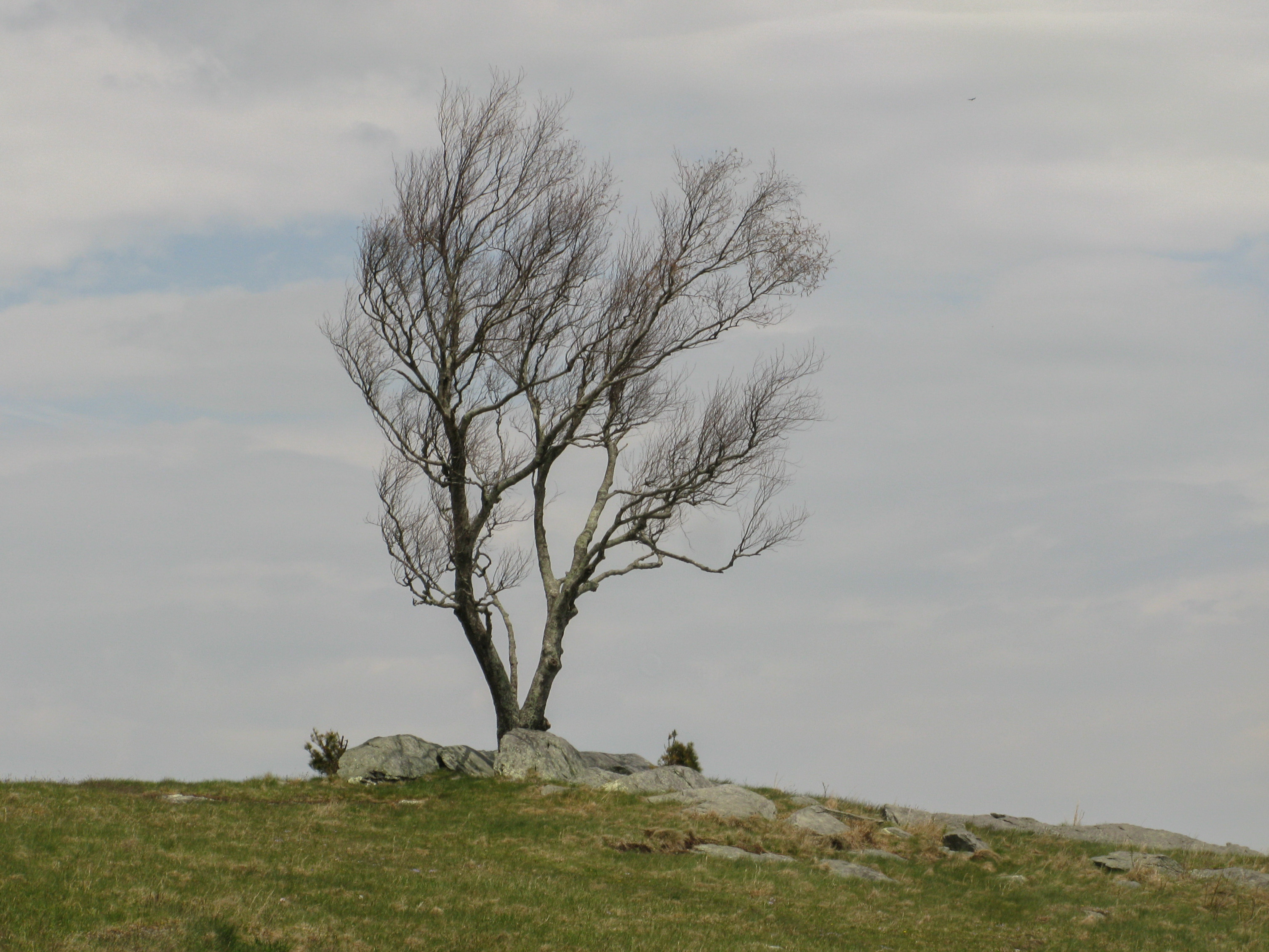
Doughton Park Tree 2020-09-08b

Read Full Post »

[with 3 poems by Rebecca Baggett]

How many grooves are there in a 12-inch 33 ⅓ rpm long-play record? The seven-year old doesn’t think us a bit odd when we fish out the big black discs and set them spinning: Burl Ives, Disney Princess theme songs, John Denver and the Muppets. She sings along with Miss Piggy, “Five Go-old Rings!” Would she have hopped off the couch last night and boogied with us to The James Gang cranked to the max on Funk 48?

We still have a landline at our house and until recently a rotary dial phone in the basement. I just read that only this year is Chuckie Cheese phasing out software updates shipped on 3.5 inch disks – which the article called “floppies” (remember? 5 ¼ inch, 360 kb, don’t toss them into a drawer with any magnets). Physical artifacts may be relegated to the landfill, but words remain our tools even if we’ve never knapped a flint. Dial it for me. The car won’t crank. Meet me at half-past (fractional arc of an analog circle?).

Last week I checked in at radiology for an x-ray. The young woman entered all my identifiers and when she got to my email address, she remarked, “Gee, AOL, I haven’t heard that one in a while.” Darlin’, that just means I’ve been jacked into the internet since before you were born. Juggling floppies. Writing DOS batch files before breakfast. And I’ll bet you don’t even know how many grooves.

Just one. That’s all it takes to be real groovy.

❦ ❦ ❦

Before the Stories Begin

Before the stories begin, the mothers die,
setting their daughters adrift, little coracles
bobbing rudderless, at the mercy of river currents
and ocean tides. Abandoned in forests so thick
no light touches their ferny floors, imprisoned
in crumbling towers guarded by rampant brambles,
banished to the dank depths of castle kitchens.

But here is the alternate reading:
Before the stories can begin, the mothers must die,
setting their daughters free – released from cautioning
fingers and pursed lips, from disapproving quirks
of a brow, from warnings weighted with echoes of warnings,
the line of foremothers frowning down the generations.

The daughters find themselves oddly light,
abruptly free to renounce titles and abandon kingdoms
for life on the high seas, to fall in love with a man-beast
deep in the forest, a stable boy, a fairy godmother.
To seclude themselves in towers full of groaning
bookshelves, to spend their days squinting
at the twisting calligraphy of ancient manuscripts,
to aim telescopes toward the night skies,
to rename all the stars.

Rebecca Baggett
from The Woman Who Lives Without Money, Regal House Publishing, Raleigh, NC, © 2022

❦ ❦ ❦

Words are artifacts by which we might glimpse the world. Words are not the world; words do not contain the world nor create the world; words are simply pebbles someone has painted, incised, knapped and dropped along the path. But Oh, how words may guide us along that path!

Rebecca Baggett is an inherent and inveterate sesquipedalian, as she confesses in the poem by that title in her book, The Woman Who Lives Without Money: a lover of complicated ‘foot-and-a-half long’ words. And yet the words she uses to craft these mysterious, marvelous, poignant, sad, hilarious poems are seemingly simple words. Everyone knows these words, these comfortable and familiar words. How Rebecca has painted, incised, and knapped these words, though! How she has lined them up and breathed into them meaning they had only dreamed of. How wonderful is the world she reveals in this ethereal and at once solid collection of words, such telling artifacts, these powerful words.

The Woman Who Lives Without Money (Regal House Publishing, 2022) is the winner of the 2020 Terry J. Cox Poetry Award. Rebecca has also published four chapbooks, including God Puts on the Body of a Deer, winner of the 2010 Main Street Rag Chapbook Contest. She was born in coastal North Carolina and his lived her adult life in Athens, Georgia.

❦ ❦ ❦

Weeping Willow

The willow missed
the children, their chatter –
like squirrels, but more various
and musical – missed
the sparrow-light bodies pressed
against her, the secrets
they whispered, how thy clung
to her branches with their small
hands, the way their legs twined
around her.

++++++++++ Nothing inhabited her
like that, nothing loved
so fiercely or so foolishly.
They believed they would be
hers forever,
++++++++++ did not understand,
at all, necessity, compulsion,

letting go

Rebecca Baggett
from The Woman Who Lives Without Money, Regal House Publishing, Raleigh, NC, © 2022

❦ ❦ ❦

Chestnut

I touched a chestnut sapling
in the Georgia mountains.

My friend writes of the great trees
and their vanishing,

but I have seen a young chestnut,
tender and green, rising from its ashes.

I, too, write of loss and grief,
the hollow they carve

in the chest,
but that hollow may shelter

some new thing,
a life I could not

have imagined or wished,
a life I would never

have chosen. I have seen
the chestnut rising,

luminous,
from its own bones,

from the ash of its first life.

Rebecca Baggett
from The Woman Who Lives Without Money, Regal House Publishing, Raleigh, NC, © 2022

❦ ❦ ❦

❦ ❦ ❦

Doughton Park Tree 4/30/2022

Read Full Post »

[with poems from Tar River Poetry]

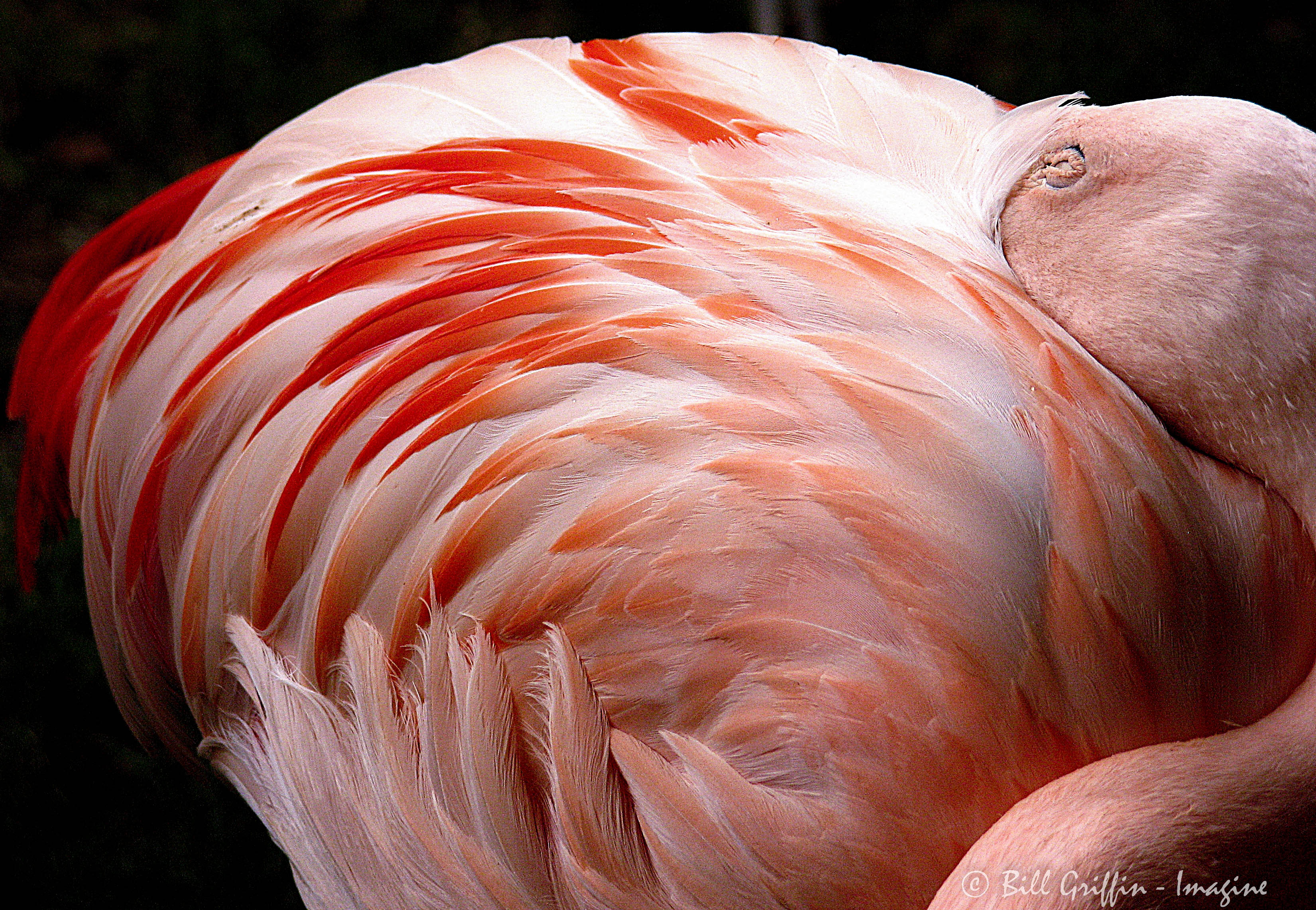
Neon yellow, fluorescent orange, that’s a lingo we can understand: road work ahead; survey crew; litter pick-up. Why on earth, though, did Robert Price dress all his lawn & landscape guys in this eye-popping pink, his name in big bold black across the back? So no one would want to steal their shirts? So we’d be sure to notice?

Oh, and we do notice. Our three-year old adores the stilt-legged birds in her favorite color, one last night on her little jammies, a sudden mob of them last weekend in the neighbor’s yard turning 50. Now she startles as we drive past them with their zero-turn radius mowers and tyrannosauric leaf blowers – recognition, yes! Excitement! From her car seat she points and announces . . . !

❦ ❦ ❦

If You Could

Would you unstitch the world,
pick it apart until you held in your cupped hands
a burning heap of atoms that glowed
like the last stars fading
into the sun? Say if you believe
the plants are doing God’s work
when they insinuate themselves
into foundation cracks and chips
in ancient stone walls, when
they tease apart the edges of brick,
begin crumbling concrete back to sand.

Tell me, if you believe
you could have done better,
what you would have omitted
when you spit into that handful
of dark earth and stardust
and worked it in your palm
to make a mannikin, when you breathed
your sweet breath with its scents
of rainwater and crushed clover
into its lips, when you watched it rise
and strut around the world, eyeing its riches
like a hungry dog eyes meat. What
would you have done to make it
less arrogant, less dangerous –
or could you? Would you have simply
smashed it, declared the world
complete?

Rebecca Baggett
from Tar River Poetry, Volume 61 Number 2, Spring 2022; © 2022 Tar River Poetry

insect


❦ ❦ ❦

Why am I featuring Tar River Poetry in the same post as Falingos / Flamingos? Is this twice-a-year journal as arresting as a yard full of men in pink, as much fun as a yard full of plastic birds? Is it because when each new issue arrives in the post I exclaim from my car seat and want to point it out to the world? Is it that the words it contains and the way they’re arranged are so deliciously novel, so eye-popping, such exotic new sensations on the tongue?

All of the above and none of the above. Who knows why, as I was sitting on the porch reading TRP as I have most every issue for a bunch of years now, I suddenly remembered that story of our granddaughter at 3? Who knows why bits of hippocampus are jangled and what bits of limbic system will be spangled when one reads a poem that jumps up and shivers? All I know is the poems of TRP are always so various, so beguiling, so full of and stimulating to imagination that I always want to read them all.

Oh, and maybe I’ve been wanting to share that Falingo story for a good while now.

❦ ❦ ❦

The Rope

Today a junco –
And yesterday, I think, some kind of sparrow.

Their lives flown on
Without them, they now lie still. Were these two drawn

By what they saw
As a threat in the glass they didn’t see? Claws

Raised for a foe
That wasn’t there, they pierced the air that froze

And knocked them out
Of this world. Seeing such things, it’s hard to doubt

A flight can end
In the middle of its arc. We like to pretend

The path is clear
Straight to the goal. We think music we hear

Means all is well,
So we ignore it. But the inverted well

Of a bell is full
Of nothing, most hours: silence. Someone must pull

Its rope to knock
Its music loose. Had these two birds been hawks,

I want to insist
I’d have watched. But is this true? I barely noticed

Their flights and songs.
I only write them down now that they’re gone.

Michael Spence
from Tar River Poetry, Volume 61 Number 2, Spring 2022; © 2022 Tar River Poetry

❦ ❦ ❦

Rebecca Baggett is the winner of the 2020 Terry J. Cox poetry award from Regal House Publishing; her collection The Woman Who Lives Without Money was published in March 2022.

Michael Spence was awarded the New Criterion Poetry Prize for his collection Umbilical.

Pam Baggett was awarded the 2019-2020 Fellowship in Literature from the NC Arts Council; her book Wild Horses (2018) is from Main Street Rag Publishing.

Tar River Poetry: Editor – Luke Whisnant; Founding Editor and Editor Emeritus – Peter Makuck; Associate Editor – Carolyn Elkins; Advisory Editor – Melinda Thomson; Assistant Editor – Caroline Puerto; Contributing Editors – Phoebe Davidson, Elizabeth Dodd, Brendan Galvin, Susan Elizabeth Howe, James Kirkland, Richard Simpson, Tom Simpson. East Carolina University, Greenville NC.

❦ ❦ ❦

The Losses to Come

A mild April day, the smell of death
leads me past half-grown oaks to pond’s edge,
where I find a snapping turtle,
big as a hay bale, flipped on its back,
startle a vulture that lifts away, leaving holes
where the turtle’s head and feet belong.
Nothing that stalks these woods strong enough
to capsize a creature whose slashing tail,
snapping jaw held such fury. Then I spot
the pond’s dam, short but steep,
pond shrunk by drought so the turtle
tumbled down it onto dry ground.

The horror hits like a hard fall –
I walked this path every day
as the snapper paddled its stubby legs
in mid-air, sank into stillness.

++++++++++++ ~

Early November, leaves sifting down,
I see the shell in the woods a hundred feet
from where I first found it. Bleached
beige, a dishpan, nowhere near a hay bale.
What had made me believe I mourned
so huge a creature, except the size of this grief,
insistent as sunrise, over losses to come:
catfish and bream, bullfrogs and peepers,
the pond’s dragonflies that swoop and dive,
seeking mosquitoes –

all may perish, along with the snapper,
on Earth for sixty-five million years,
built to survive almost anything.

Pam Baggett
from Tar River Poetry, Volume 61 Number 2, Spring 2022; © 2022 Tar River Poetry

❦ ❦ ❦

IMG_6432


Read Full Post »

Older Posts »