Posts Tagged ‘Bradley Strahan’
Saturday Share – Bradley Strahan
Posted in family, tagged Bradley Strahan, NC Poets, poetry, Saturday readers share, Southern writing, Verse and Image, Visions International on May 23, 2026| 4 Comments »
.
Saturday morning readers share:
Bradley Strahan
.
To My Father, as He Should Be in Paradise
.
Surely there’s a baseball diamond there
where you could be the pitcher you were meant to be.
.
And Marilyn, not Mom, must be on your arm,
sexy as the picture you kept on your shop wall.
.
There would be beaches with ice cream stands
and real hot dogs with gobs of mustard leaking out.
.
No bills you can’t pay, no demands you can’t meet . . . .
You’d have your ’55 two-tone Chevy back, bright as new.
.
Oh, and that odd sense of humor would have those angels
rolling in heavenly aisles at your mangled puns.
.
There’d be tons of swinging there, and not just chariots:
Benny’s boys and Glen and Tommy too, all playing just for you.
.
Funny, I never saw you dance but I know you could.
Cut a rug Dad! And those pennies from heaven are all yours too.
.
B.R. Strahan
.
.
Bradley R. Strahan is best known to North Carolina writers and readers as the long time editor and publisher of the poetry journal Visions International. His creative influence, however, spans continents, with a worldwide following for his work since 1976. His publications include several books of poetry and over 500 poems in journals in North America, the UK, Ireland, Belgium, and Korea. He has been anthologized in numerous collections and translated into French, Spanish, Dutch, Serbian, Macedonian, Korean, etc.. He has lectured and read his work in America, Europe and Asia; is a former Fulbright Professor of Poetry & American Culture; taught poetry at Georgetown University; for over 20 years sponsored a series of international poetry readings at Rock Creek Gallery in DC and other venues; and in 2001 replaced John Ashbery as the American poet at the “Literaire Podia Amsterdam” in Holland.
NOTE: Brad has a few copies left of his book “A Parting Glass.” See the link below from 2022 for sample poems. If you would like a copy contact him at brs.poetry@gmail.com; $5 to cover postage and a bit of the printing.
.
❀ ❀ ❀
.
Additional poetry by Brad Strahan at Verse and Image:
.
VISIONS INTERNATIONAL featured at Verse and Image:
.
.
❀ ❀ ❀ ❀ ❀
.
Thank you for visiting Verse and Image:
. . . . . every Friday I present one or two poems I’ve read this week that particularly speak to me;
. . . . . Saturdays I present one or two poems submitted by YOU, my readers.
.
If you would like to offer a poem for consideration, either by a favorite author or your own work, please view these GUIDELINES for Saturday Readers Share:
.
.
If you would like to receive an email each time a post appears, please SUBSCRIBE to Verse and Image using the button on the Home Page.
.
If you have a hard time finding the SUBSCRIBE button on this WordPress site, you can send me your email address and I will add you to the subscriber list. Send your request to
.
COMMENTS@GRIFFINPOETRY.COM
.
Thanks again for joining the conversation.
.
– Bill
.
.
Moving Day
Posted in family, Photography, poetry, tagged Bill Griffin, Bradley Strahan, family, I-70 Review, nature photography, NC Poets, poetry, Rebecca Baggett, Richard Widerkehr, Southern writing on October 18, 2024| 7 Comments »
.
[with 4 poems from I-70 Review]
.
Bears Active in This Area
.
++++ warning sign in my mountain cabin
.
This time, others have seen you,
treading circles on the gravel drive,
shouldering through grapevine tangles.
The possibility of you was always here,
in the night-mouth of the cave that gapes
below my porch, in dark boulders
hulking along the trail.
.
Your presence countermands silence –
I chatter and sing as I walk the open road,
snatches of carols, toddler songs –
and shy from the path that meanders
to a sunlit filed strewn with windfalls
from long-neglected trees. I imagine
you keeping pace, just out of sight,
your huffs mocking my jabber,
your heavy steps a counterpoint
as I scurry past thickets, scan uneasily
the curving trail ahead, intruder
in a world that was never mine,
though you are the first to insist
that I acknowledge it.
.
Rebecca Baggett
from I-70 Review, Eighteenth Edition, 2024
.
❦ ❦ ❦
.
What would a toddler remember about moving away? The apartment in Niagara Falls is a dream of stairwells and windows and darkness outside; the new house in the new subdivision with no grass at all is a neighbor’s dog named Bishy. Or was Bishy the neighbor’s toddler I played with?
.
I am four when we move away again, from New York to Tennessee, and I remember plenty about Marion Road: Bob and I watching Little Rascals until Mom declares, “You’re going to turn into rascals!”; our little sun room Aunt Ellen fitted up as a bed-sit while she attended Memphis State, and we kids hiding giggling under her covers until she came home each afternoon; the neighbor boy who introduced us to the word butt and we thought we were the first humans ever to utter something so outrageous. Memories of the neighborhood, yes, but memories of moving there? Packing and unpacking? Worrying that Puppy would get lost in the shuffle or that somehow Mom wouldn’t be there when we arrived? None of that remains.
.
Our family makes one more inconsequential move just blocks away when I am six, but then when I’m twelve the Big Away arrives. Up until this what a tranquil 1950’s childhood: I walk to Colonial Elementary every morning with my friends and play with the same friends every evening until the streetlights come on. Serene. Now I’m midway through sixth grade, still coasting, when the bomb drops. Did I protest when Dad announced in January we were leaving Memphis to move to Delaware? Maybe, I don’t recall; that memory is muddy, but this one is sharp as crystal – I walk into class in my new school and my new classmates all turn to look. My clothes aren’t right, my accent is a joke (literally – within about sixty seconds I will have the nickname “Memphis,” which sticks), and I have a different teacher for every subject. And then in just six more months we will move to Michigan. Just over a year beyond that, two months into eighth grade, we move to Ohio.
.
So, my friend, is it any wonder that some sixty years later I have trouble remembering your name until the fourth or fifth time we meet? That as we converse in a group you notice me smiling and nodding and slowly drifting off into space? That I would rather write this blog into the wee hours than drop by your house for coffee? I want to be a good friend to you, and in fact I like you and this hug from me to you is real, but ah, it’s risky. There’s always that possibility, without warning and with no desire on my part, that someday soon I might be moving away.
.
❦
.
It never occurred to me to wonder how Dad felt about all those moves. The moving was his fault, after all, necessary for his promotions and advancement with DuPont, for whom he worked all his life. I can scarcely imagine the million details he had to sift through to put his family into boxes and take them out again hundreds of miles away. I’m not surprised that as I clean out his house I find drawers full of lists on yellow pads, on the backs of junk mail, on bills and receipts. Half the time when he calls me, it’s to add something to the shopping list. And then there are still those boxes in the attic labeled Allied Van Lines.
.
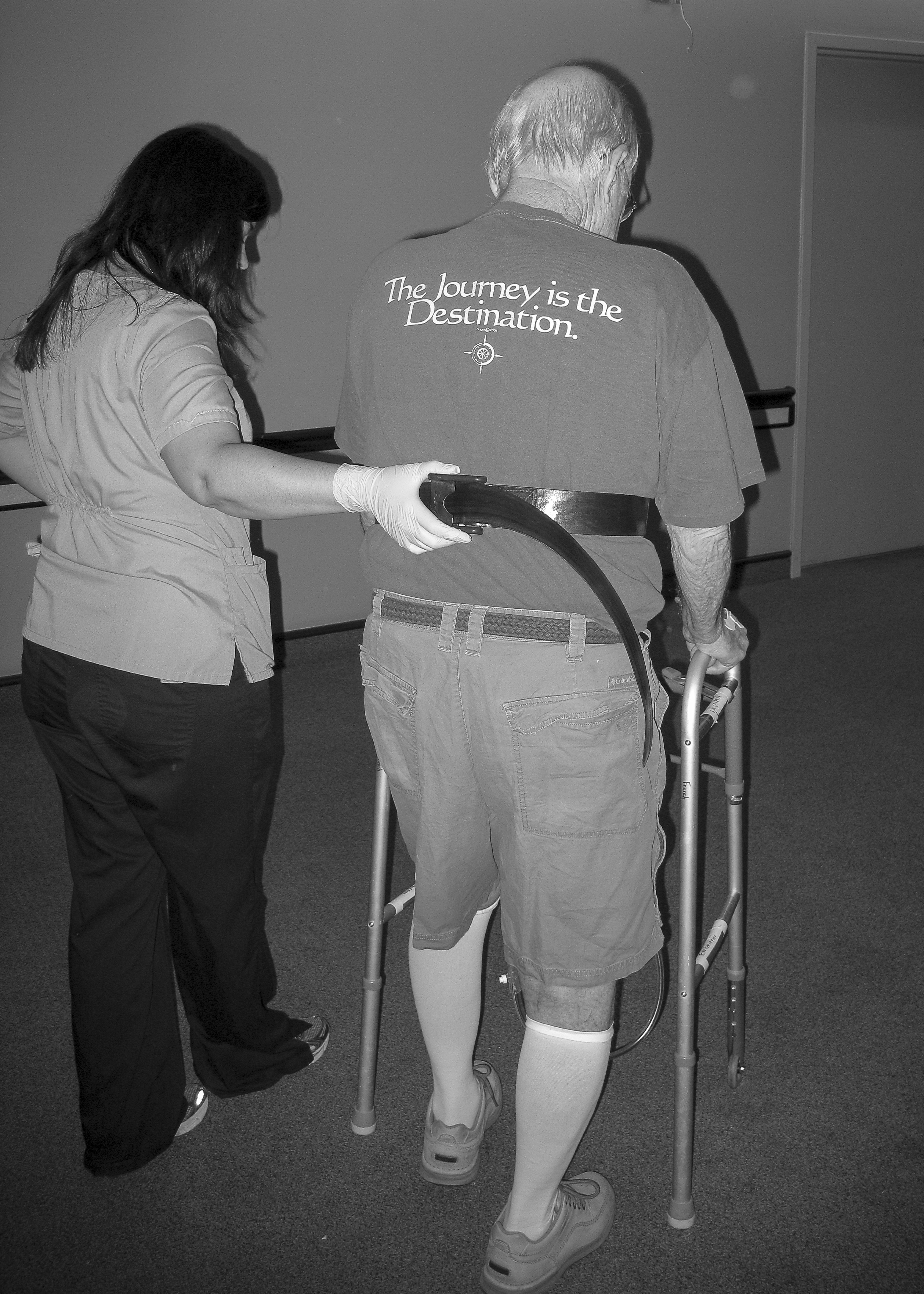
But what about the rest of us? Did Dad wake sweating in the middle of the night worrying how moving away would affect his family? Just one time he blinked: after I was married and gone but Mary Ellen was still at home, a junior in high school, Dad turned down a promotion so she could graduate with her class. A sacrifice that stalled his career for a decade.
.
Tomorrow is Dad’s last moving day. Since Mom died in July, Dad has agreed to move closer to us. For a week I’ve ferried boxes and duffels, checked off my lists and then made new ones, and tomorrow after lunch I’ll drive Dad to a nursing center just two miles from our house. He says he’s willing to move as long as the food is good (it is). We’ve hung portraits of the grandkids, pastels by Mom. His Duke pillow is on the recliner and his new Duke banner hangs on the door of room 507 to welcome him. God knows I’ve been waking in the middle of the night sweating the million details. Let us hope that after 98 years of moving, Dad will discover in this new and final home a place to rest.
.
.
❦ ❦ ❦
.
Porta Nigra *
.
++++ Trier, Germany
.
The breath of sun and rain
only darkens on my face.
The cat-claws of millennia,
the graffiti of tourists,
fade into my walls.
.
I, who guarded this city so long,
sit truncated now.
My frieze the sweaty flesh
of lovers on cool bare stones.
.
Catch me in another thousand years,
your eyes as hard and dark as mine.
See if these holes will match
the mysteries of death
and flesh on blackened stone.
.
Bradley Strahan
from I-70 Review, Eighteenth Edition, 2024
.
* a gate in the remaining piece of Trier’s old Roman wall
.
❦ ❦ ❦
.
The 2024 issue of I-70 Review arrived in last week’s post. Besides many wonderful voices new to me, I discovered within its pages several old friends who’ve agreed to let me reprint their poems.
.
I-70 Review, Writing and Art from the Middle and Beyond is based in Kansas, USA, but publishes poetry, short fiction, and art from around the world. They also sponsor the annual Bill Hickok Humor award for poetry.
.
Submission guidelines HERE
Purchase a copy HERE
.
.
❦ ❦ ❦
.
Messenger in Early November
.
++++++ – in memory of Jay Klokker
.
Driving past Agate Bay, I catch a glimpse
of this deer in a splotch of sun and shadow –
the brown-tail’s flanks on the edge of the road
in yellow leaves, thin branches. Las May
after your death, a bear cub loped beside my car
like a lost Labrador, seemed to disappear
under my front bumper. Slamming on the brakes,
I felt no thud, heard nothing. Amazing, the cub
as if uninjured, clambered up the ditch-bank.
Only later, after your memorial, did I reread
your last poems, that black bear nosing
at your sleeping bag in the camp site
in Arizona; recalled marmots whistling
in the pillow basalt near Mt. Baker; the grouse
thumping its tail near our driveway,
feasting on red hawthorn berries.
You noticed. I cannot believe you said no
to another go-round on the cancer wish machine,
you called it, completed your book First Stars.
On you last hike, you raced downhill
in your wheelchair, shouting. You must
be in these sun spots, mottled shadows.
Too excellent a camouflage, my friend –
thin, flickering branches, a few gold leaves,
before all the color goes away.
.
Richard Widerkehr
from I-70 Review, Eighteenth Edition, 2024
this poem will appear in Richard’s new book, Missing The Owl (Shanti Arts Press)
.
❦ ❦ ❦
.
The Other
.
Last night coyotes laughed
at the neighbor’s bulked-up lab restrained
behind his chain-link, his fearful bark,
their yips of liberty and mild derision;
.
are coyotes such demons, or just particular
about whom they allow to know them?
Or are they perhaps spirits of the other,
avatar of all we hominids in our marrow
.
know to fear? How to live beside that feeling?
Afraid of attack I stab; afraid of pain I cause it.
.
In the woods before daylight willingly lost,
soft tread, a twist in the trail then face to face –
perhaps she and I look into each other’s eyes
for two seconds, perhaps the rest
.
of my life; coyote impassive,
considerate, measures our distance,
our closeness, then softly pivots
and pads away, prudent, fearless,
.
willing to allow the two of us
to share the universe.
.
Bill Griffin
from I-70 Review, Eighteenth Edition, 2024
.
❦ ❦ ❦
.
.
❦ ❦ ❦
Chimney Swifts
Posted in Imagery, Photography, poetry, tagged Bill Griffin, Bradley Strahan, Heron Clan, imagery, nature photography, NC Poets, poetry, Preston Martin, Priscilla Webster-Williams, Southern writing on July 28, 2023| 5 Comments »
.
[with poems from Heron Clan X]
.
Chimney Swifts at the Historic Carolina Coach Garage
.
Two now more arrive and flit into the swirl,
swelling hive mind they shift and shape
the wind, counter then clockwise whirl
above old brickwork’s beckoning gape
.
left standing here erect as testament,
our conservational intent to leave
some landmark urban respite, benevolent
perhaps, perhaps self-serving; we’ve
.
taken advantage of their propulsive drive,
pushed our chairs back from the table
in the court to lean & steal their lives
and freedom open mouthed, rapt, able
.
for these few moments until darkness falls
to rise with them, untethered, bold
venture to where the elemental almost calls
but too soon bedtime, now our supper’s cold.
.
.
[For decades this warehouse and shop in Raleigh, North Carolina was a hub of activity servicing Carolina Coach Company buses, in the 1940s the nation’s largest regional bus company.]
.
Bill Griffin
from Poems from the Heron Clan Ten, Katherine James Books, Chapel Hill NC. © 2023
.
❦ ❦ ❦
.
Mom can no longer hear their restless chitterings up the flue on summer evenings. When we sit on the front porch she doesn’t notice their atmospheric ellipsis, punctuating summer afternoons with their aerobatics. She can’t believe they’re calling constantly to each other and to us until I try to mimic that chatter and she laughs. What she most definitely can, though, is wish to see them diving into her chimney at dusk, especially when I tell her I’d seen one do just that last night.
.
Revered ornithologist Roger Tory Peterson described Chimney Swifts as little dark cigars with wings. Tapered on the head end and the tail end with sharply tapered wings jutting out mid-fuselage, fluttering so rapidly you’d swear those wingbeats were uncoordinated and asynchronous, well, yes they do look like airborne cigars. Although they often appear in field guide pages adjacent to those other famous aerial foragers, the Swallows, taxonomists place Swifts most closely related to Hummingbirds (based on wing structure). No hovering, though, for these Chimney Swifts – always forward, forward, forward with their loops and barrel rolls. Some species of Swift only alight to lay eggs, spending all the rest of their lives in the air.
.
Once you recognize a Chimney Swift’s fricative titter, you’ll realize they’ve accompanied you on hot afternoons and evenings all your life (assuming you live in the Eastern US). Although they winter in Peru, all summer long from the Great Plains to the Atlantic coast Chimney Swifts are widespread and common, probably more common today than they were pre-colonization, when they depended on hollow trees for breeding. These days they sometimes nest by the hundreds in abandoned chimneys, great clouds spiraling in at dusk, perhaps mistaken for bats. You can even buy chimney-like roosting boxes to attract them to your yard to eat the mosquitos.
.
After supper, I carry our chairs to the deck for a clean line of sight to the chimney. No smoke has risen from these three pots for decades. Mom and I watch. And watch. The birds circle and tantalize, gyre away, spiral out of earshot then back again so swiftly she misses their brief passage. Keep looking. Don’t blink. Two Swifts buzz the opening but then pull up in a high-G climb. Sky darkens. Dusk wants to coalesce around us, trundle us back indoors. Suddenly one little bird at full throttle blips straight down into the chimney. Then another. It’s become too dark to count the rest, but when we return to the couch beside the fireplace we hear the nestling together of a congenial company who’ll rest here with us until first light.
.
❦
.
Doug Stuber, Ed Lyons, and Richard Smyth Ph.D. hatched the idea for Poems from the Heron Clan in Rochester, New York in 1998. After Doug returned in 2015 from a seven-year professorship in South Korea, the anthology has been published every year. Not only does Volume Ten encompass a wide geography – poets from five continents, poets from Turkey, Brazil, Dominican Republic, Montenegro, and a dozen other countries – it also embraces a lavish geography of style and theme. The editors explicitly state: “We aim to represent well-established poets and emerging writers, young and mature poets, and poets of color.”
.
And North Carolina. NC poets populate these pages abundantly. JS Absher, Glenn Cassidy, Earl Huband, Shelby Stephenson, Steve Cushman, Anna Dallara, the three founders themselves – if you live in the South and read poetry, you’ll recognize these voices accompanying you all summer, all seasons. I’m drawn to all of the Carolina poetry in this volume and tempted to sample each one in this post. Alas, perhaps you’ll just have to purchase a copy. Meanwhile, here are Priscilla Webster-Williams, Preston Martin, and Bradley Strahan from Heron Clan X.
.
.
❦ ❦ ❦
.
Morton Salt
.
Under a purple umbrella, a girl in a yellow raincoat
carries a box of salt, the cover art singing out
When It Rains It Pours. I studied the dark blue carton
that lived on the kitchen table, the Morton Salt Girl
smiling with each shake of the cylinder.
.
Morton, my father, toured with the big bands,
playing what he called Mickey Mouse Music,
tunes too tame for one who’d grown up crating
spicy Chicago jazz with Red Nichols and Jimmy Dorsey.
.
Morton met Jean, my mom-to-be, at the Nicollet,
where she was hostess of the grand dining room:
Grant Wood murals, double white linens,
real silver silverware, and a stage
for the musicians and the act.
.
Morton must have winked at Jean
from behind his golden trombone,
the vocalist crooning I’ll be seeing you
in all the old familiar places.
He must have whispered some kind of proposal
as they floated like movie stars across the dance floor.
.
When I was six, Mother shredded my Father’s photo,
set her stoic Midwestern jaw, and never spoke
of him again. She didn’t need to, his features etched
on my face like the grooves in one of his Bluebird records,
the same strawberry-blond hair appearing in my mirror.
.
Each day, I gazed at his name on that dark blue box
stamped with the Good Housekeeping Seal of Approval,
and over time, Morton, my founding father,
became a pillar of salt.
.
Priscilla Webster-Williams
from Poems from the Heron Clan Ten, Katherine James Books, Chapel Hill NC. © 2023
originally published in The Narrative Possibilities of Coral, Main Street Rag Publishing, Charlotte NC. © 2017
.
.
❦ ❦ ❦
.
Elegy, Gloria Died in Eden
.
She took the well-traveled road
two nights ago.
No more tractoring up the back hills
or brush cutting lower fields,
or using her Daddy’s walking stick
++++ down beside the creek –
or oiling the mower or
penciling in the Reds box score,
or sipping an evening sweet wine
on the porch
++++ as nightly geese call down,
close overhead, descending to the reservoir.
.
She noted in her diary the day the flew on south.
And who will shoot the coyotes now?
.
Preston Martin
from Poems from the Heron Clan Ten, Katherine James Books, Chapel Hill NC. © 2023
.
❦ ❦ ❦
.
Empty Places
.
In the end we are all archaeologists,
sifting through the ruins of existence
to find shards of pottery
inscribed in a strange tongue:
a letter from a friend left on a picnic table
a poem written on the back of a menu,
the sketch of a girl whose name you can‘t recall,
a yellowed photograph with stranger’s eyes.
.
We keep on struggling with left over pieces
from a childhood puzzle, trying to fill the gaps
left my smiling lips missing from a face,
tears frozen on eyeless cheeks,
fingers absent from an outstretched hand.
But somehow cannot fill the empty place
and the dark comes creeping in.
.
Bradley Strahan
from Poems from the Heron Clan Ten, Katherine James Books, Chapel Hill NC. © 2023
originally published in Gargoyle
.
❦ ❦ ❦
.
The editors of Poems from the Heron Clan invite you to buy a copy, explore their previous issues at their BLOG, and consider submitting three poems and a 50-word bio to:
katherinejamesbooks@gmail.com
.
.
❦ ❦ ❦
.


Thanks and good to hear from you. ---B