Feeds:
Posts
Comments

Posts Tagged ‘poetry’

#8: 200 yds uphill from True Word Baptist Church on L past brick house R

It’s a little before 6:30 a.m. on May 28, 2022, when I pull into the dew soaked grass and walk up to the pasture fence: Stop #8. Stop #1 was 5:33, Venus rising above the tree line, the chorus just rustling awake led by Chuck-will’s-widow. Now the eastern sky is peach and the birds are full throat.

For 25+ years I’ve been counting a route for the annual Breeding Bird Survey of the US Geologic Survey (Patuxent Wildlife Research Center). These courses were established in 1966 to monitor North American bird populations; there are more than 4,000 of the 25 mile courses in the US and Canada. It’s no coincidence that the impetus arose to study declining bird numbers around the same time Rachel Carson’s Silent Spring was published (1962).

Since 1995 I’ve counted the Copeland route in southern Surry County into Wilkes. This year I added a second route, Mt. Airy, mainly northern Stokes County. Start ½ hour before dawn, fifty defined roadside stops a half mile apart, count every bird you hear and see in three minutes.

Stop #8. The knob of Pilot Mountain emerges from shadow. Mist rising in the hollows. Click my timer. Listen!

❦ ❦ ❦

On March 31, 2011 I posted the first offering on my new blog, including the poem Hymn by A.R. Ammons, which is still my favorite. I named the blog Griffin~Poetry, Verse and Image – I imagined combining powerful metaphor and poetic imagery with my own photography. For the past two years I’ve posted at least once a week, usually Friday mornings: today (a Wednesday) is post # 208.

Today I’m changing the site’s name. I’m dropping “Griffin~Poetry.” I’m stepping back from the spotlight. For one thing, only about 5% of the poems I’ve ever included are written by me. I’ve so far featured about 185 poets, everyone from Abbott, Tony to York, Carolyn. This blog is not about Griffin’s Poetry as author, it’s about poetry I treasure as reader.

Secondly I’m changing the header photo to Pilot Mountain at dawn from Stop #8. The Pilot has always been a landmark for our family, an ensign of home. When we lived in Ohio and drove to North Carolina once a year to visit my Grandparents, spotting the knob from Rte. 52 meant we were almost there. Every April I’ll restore the header to artwork by my wife Linda French Griffin in honor of Earth Day, but for now let Pilot Mountain guide us.

Finally, there’s this:
It belongs to the nature of every ‘being’ that it is a potential for every ‘becoming.’
++++++++++++++++++++ Alfred North Whitehead, Process and Reality
Whitehead is saying that the fundamental building blocks of reality are not atoms or quarks or anything that ‘is’ but rather the constant flux of moments coming into being, ‘becoming.’ Everything changes but everything is connected. Whitehead’s book is all but impenetrable (although there are some excellent guidebooks, not unlike the ones about birds, ferns, and flowers I carry in my pack on every outing), but a world that is obtuse, confusing, seemingly malevolent can open to enlightenment via metaphor. Through poetic imagery.

Thank you, Poetry, for offering to give us a glimpse of reality.

❦ ❦ ❦

Birds – perfect metaphor for the struggle to find meaning. Familiar but elusive, civilized but wild, possible to recognize but impossible to fully know. The Dawn Chorus begins and we are inspired to go on pilgrimages to discover our place among them.

Cuckoo Song ++++++++++++++++++ Anonymous c. 1250

SUMER is icumen in,
++ Lhude sing cuccu!
Groweth sed, and bloweth med,
++ And springth the wude nu—
+++++ Sing cuccu!

Canterbury Tales   (lines 9-12) +++++++ Geoffrey Chaucer (1340(?)–1400)

And smale fowles maken melodye,
That slepen al the night with open ye,
(So priketh hem nature in hir corages:
Than longen folk to goon on pilgrimages,

❦ ❦ ❦

And of course here are three minutes of birds from Stop #8:
American Crow (2)
Carolina Wren (2)
Gray Catbird
Yellow-breasted Chat
Northern Cardinal
Indigo Bunting

❦ ❦ ❦

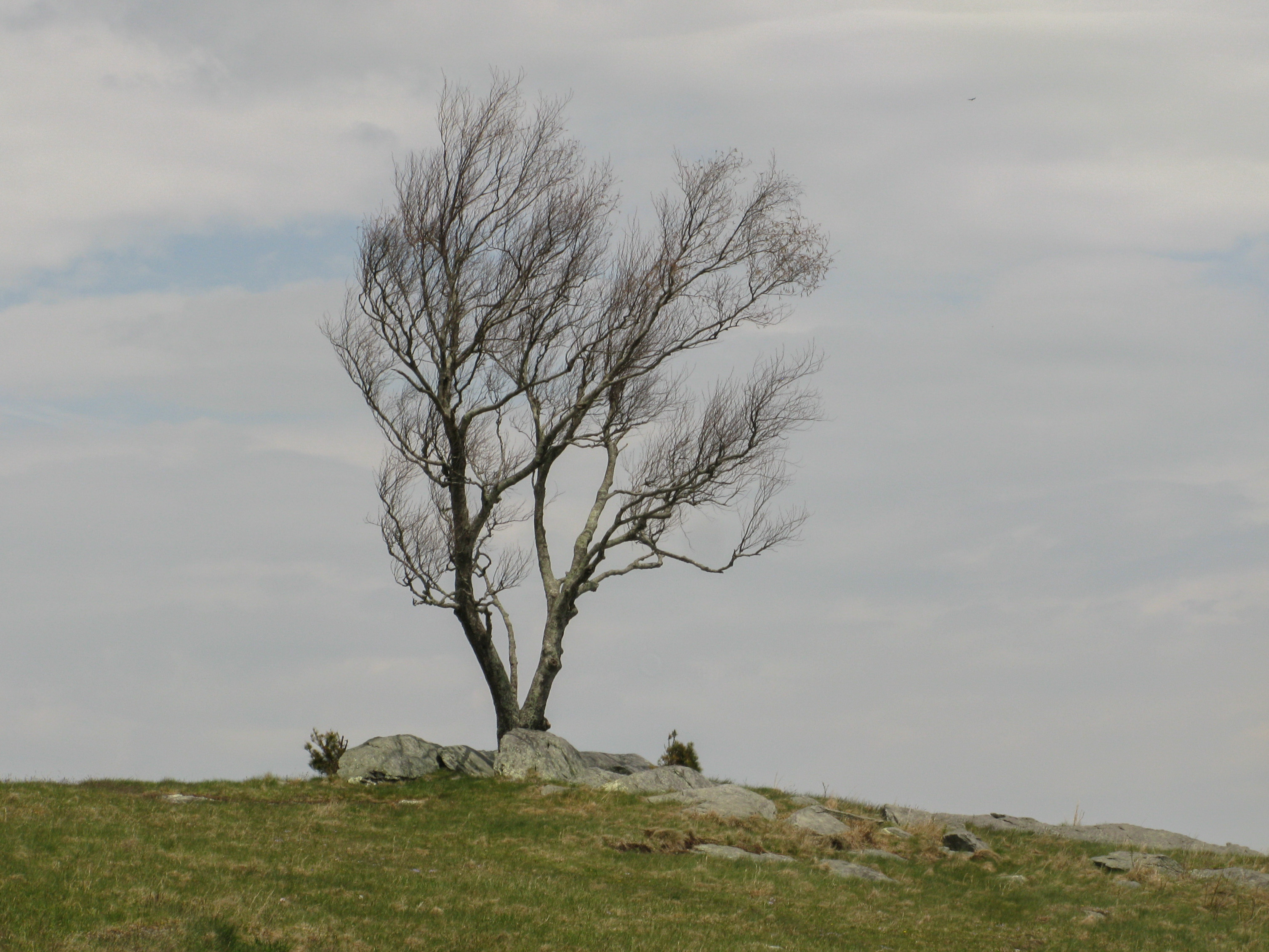
2020-06-11a Doughton Park Tree

Read Full Post »

[with 3 poems by Joseph Mills]

Nothing makes sense. Even so we tell stories hoping to make sense, to create a little sense.

My brother just called from the beach to tell me my mother has had some sort of spell this morning. Maybe a seizure. Wee, pellucid, bone china and silver lace, she is smiling now and saying, “I feel just fine.” The doctor in me asks questions. The son I am worries but then pauses to touch myself on the shoulder and remind: “Her family surrounds her. She is 94 and smiling. She is fine.”

How can we make sense of all this? What should we do?

The evening before they left I sat beside Mom while everyone else made supper and packed. She’d been standing in the middle of the living room for several minutes – feeling that she should be contributing to the activity in the kitchen? – when I convinced her to join me on the couch. For a week she hadn’t been feeling well but a fruitless ER stay, a visit with her beloved family doctor, lab tests, an ECG, none had put a finger on the malady.

I asked Mom if she really felt well enough to ride five hours in the car. I didn’t have to guess how much she wanted to spend two weeks with my brother’s family, their once a year trip east from Montana. She smiled, said she was fine, then started to list all the spots they’d go out to eat during their visit. At least one restaurant there is older than me and the host recalls my name from when I was four. She couldn’t remember the names of several of the places but she could tell me just how to find them and what she’d most likely order.

Mom watched my niece bring glasses to the table and pour the wine. She leaned against me, my arm around her shoulder, and said, “I’m fine. I can’t wait!”

Nothing makes sense and for a moment it doesn’t at all need to.

the answers may be
in the trees, but the questions
are not what you think
+++++++++++from Wind Dancing by Joseph Mills

Joseph Mills tells stories. Wonderful wide-ranging stories, in each of which one of the characters is dance. The poems of Bodies in Motion (Press 53, 2022) take me to cities I’ve never visited; to foreign countries; to high school gyms, wild parties, intimate moments. Even more so they take me into relationships and conflicts and epiphanies I’ve never experienced but which I recognize, instantly familiar. The poems, the stories – do they hold the answers, do they make sense of life? Perhaps, probably not, but they do invite me into communion with the family of all humans – in joy and celebration we shall share our questions.

❦ ❦ ❦

At the Arts Conservatory

Music comes from practice rooms
a piano sonata, a cello being bowed,
scales on a clarinet.

Dancers slide out of studios
bend at the drinking fountain,
go to the bathrooms, check phones.

The hall smells of sweat,
detergent, the latex paint
institutions use on cinder block.

I’m here to talk about poetry,
but for now, I fold against a wall
in a way that eases my back,
and thumb through messages.

In a hospice room in Brittany,
my father-in-law is dying of cancer.
The doctor says when the pain comes
that will be a signal. The signal.

Through a doorway
I can see bandaged ankles,
knee braces, thigh wraps.
Dancers balance and jump
on calloused, scarred feet.

They are young and beautiful
and already know a great deal
about pain. The musicians do too,
talking with familiarity
about repetitive stress injuries.

And they too may know
someone who is dying
at this very moment,
perhaps nearby,
perhaps far away.

I turn off my phone,
and step into a studio,
crossing the threshold
that clears away concerns
at least temporarily.
This is what art making is,

a momentary amnesia,
a pausing, and perhaps
that’s all it is because
the signal will come
for those we love,
and nothing we do,
will stop it or change it.

The students regard me,
curious as to why I am there
and what I will ask of them.
A moment ago, I thought I knew.
but suddenly I consider telling them
how I used to bring my daughter
to the school to watch dances
and afterwards she would play
choreographer, each time ending
stretched out on the floor
with her eyes closed, and I consider
telling them how my father-in-law
lives in Finisterre, which means
the end of the earth, a name
and phrase I’ve always loved.
From his window, he can see

the sea, the edge of everything.
And I consider telling them
in the hallway I remembered
when my grandfather built a seawall.
A man, more comfortable with tools
than children, he kept grumbling
for us to get out of the way, then,
once he had shaped the cement
he lined us up to write our names in it.

The students watch and wait,
and I find myself saying something
neither in my notes or my memory.
I’m going to start by reading some poems,
and I want you to see if you can tell
which ones are by people still alive
and which by those long since dead.

Some students look worried,
some lean forward.

Joseph Mills
+++ from Bodies in Motion, Press 53, Winston-Salem NC, © 2022; first appeared in Sky Island Journal

❦ ❦ ❦

Physics

We may not have understood the laws of motion,
but we exemplified them. Inertia kept us from moving
onto the dance floor, but once we started we wanted
to keep going and grumbled when the band stopped.
We spent each night colliding with and recoiling from
one another. Forget the falling apple. Isaac Newton
would have looked at our rumpled sweat-stained shirts,
wayward hair, our staggering orbits, and said, Eureka!
Or perhaps he simply would have shook his head
as he drank and jotted formulas and vectors on napkins,
notes he would crumple after closing time as we all stood
on the sidewalk in the dark, a cluster of wandering bodies.

Joseph Mills
+++ from Bodies in Motion, Press 53, Winston-Salem NC, © 2022; first appeared in Change Seven Magazine


❦ ❦ ❦

Gratitude

After a dance,
thank your partner

no matter how good
either of you are.

Thank them to acknowledge
how unnecessary it is
such dancing

and so how much more
a gift

Thank them
for giving you
a part of their life.

Thank them
for allowing you
to give a part of yours.

Joseph Mills
+++ from Bodies in Motion, Press 53, Winston-Salem NC, © 2022; first appeared in The Power of Goodness

❦ ❦ ❦

Doughton Park Tree 4/30/2022

Read Full Post »


[with poems by Joseph Bathanti]

In my post of May 20, I wrote this: Green is God’s best idea.

I wasn’t kidding. None of us would be here without green. Slugs, snow leopards, billionaires, and all the rest of us, we only have being by the beneficence of creatures that can turn sunlight into sugar.

I expected a rebuttal, however, to the best idea position. Wait, isn’t Homo sapiens God’s best idea? Humans, are we not the pinnacle? To have dominion over all (some would say dominance)? Do grey wolves and groundhogs even have souls? Not to mention old growth hemlocks?

Perhaps we humans, with our large and complex brains of which we are so proud, are the only creatures that have evolved an awareness of God’s presence. Perhaps, though, all other creatures live their every precognitive moment within that enfolding perfect presence. Perhaps we have yet to attain the harmony of oneness which must be every creature’s reason for being – perhaps grey wolves and ground hogs are born into it.

The LORD God took the man and put him in the Garden of Eden to work it and take care of it. Genesis 2:15 (New International Version)

Here’s a good idea: Perhaps each one us, almost nine billion now, might consider one way we can contribute to the loving care we take of this single known planet in the cosmos which harbors God-aware organisms.

The contemporary ecological crisis, in fact, lays bare precisely our incapacity to perceive the physical world as impregnated with divine presence. We have swapped the lofty vision of the physical world as God’s own abode, sanctified by the incarnation of the Son of God, with the one-dimensional mechanistic outlook of modernity. Father Joshtrom Isaac Kureethadam

The tree which moves some to tears of joy is in the eyes of others only a green thing that stands in the way. Some see nature all ridicule and deformity, and some scarce see nature at all. But to the eyes of the man of imagination, nature is imagination itself. William Blake

To me, to worship God means to recognize that mind and intelligence are woven into the fabric of our universe in a way that altogether surpasses our comprehension. Freeman Dyson

Look at the animals roaming the forest: God’s spirit dwells within them. Look at the birds flying across the sky: God’s spirit dwells within them. Look at the tiny insects crawling in the grass: God’s spirit dwells within them. Pelagius

Nature is trying very hard to make us succeed, but nature does not depend on us. We are not the only experiment. R. Buckminster Fuller

❦ ❦ ❦

April Snow

The grass whelps in biblical mien –
mowers spend themselves –

a writ of greenest green,
spangled in sunbursts,

as if Van Gogh decided on
the remnant petrified thistle,

the first violets at his feet,
and painted Billings’ meadow.

Robins pompously swagger.
Swifts (little crosses)

jet above them. Birdsong.
Frog-song. Early spring

by habit exaggerates itself,
the green a blinding recognition.

To the ridge mount pines and firs.
Ancient hardwoods swell

by the day with bringing forth.
Blackberry whip the swales,

its cane shrove-purple
from the long winter.

In Sugar Grove, daffodils worship
on the abandoned Ruritan diamond.

Bases bleach in the dirt.
Home plate is a pentagon.

It forgets nothing.
Life is more than fable,

but never stops stunning earth.
And so: hushed clouds, sheepish,

sheep-shaped, yet foretold,
slip over Snake Den Mountain.

Their shadows blanket the valley floor.
The snow they release is inevitable.

This is how we must think of it –
inevitable – how we must welcome it,

the white behest of silence,
the green beneath it jade, milky.

Joseph Bathanti

❦ ❦ ❦

April Snow and Floyd County, Kentucky are from Joseph Bathanti’s new book, Light at the Seam (LSU Press © 2022). The poems are about Appalachian coal country, its people, its deep spirit, its devastation by the mining practice of mountaintop removal. Many are inspired by photographer Carl Galie’s exhibition Lost on the Road to Oblivion: The Vanishing Beauty of Coal County and these lines are deeply visual and sensual. Joseph’s language is earthy and exalted; it synergizes with his intimate observations to make us reverent participants. Care for the earth as your beloved; enter as an acolyte into this tender presence; discover, deep within, light at the seam.

❦ ❦ ❦

Floyd County, Kentucky

No lintel to speak of,
but a chicken wire screen
door hinged on twelve-inch

block and lattice, jittering,
wind chimes knelling,
each time a charge grunts –

off-thunder rumbling the hollows.
The masonry had been sound;
shock split the seams: gashes

of mortar where it’s been repointed,
caulked sashes.
Number 2 pine gone ashy, fixing

to rot; the dooryard
held in a brazen of peonies,
rickety picket once-white

to corset them, pink-red
like the font in Luke
where Jesus says to John:

. . . the Son of Man hath not where to lay His Head.
Just inside hangs a woman’s shawl,
slick, see-through as onion skin;

maybe it’s parchment,
scrivened in bodement,
the letters gone to blood.

It can drive you to your knees:
how folks set out flowers
and look upon the earth.

Joseph Bathanti

❦ ❦ ❦

❦ ❦ ❦

Doughton Park Tree, 2022-05-17B

Read Full Post »

« Newer Posts - Older Posts »