Feeds:
Posts
Comments

Posts Tagged ‘nature’

 . 
[for my mother]
 . 
Liminal
crepuscular
 . 
You take my hand and lead
me from the porch, leavings
of sticky watermelon rind,
half-eaten hotdogs, out into
the yard where the older kids
whoop in the descent
of darkness almost too deep
to see through; at its edge
grownups in folding chairs,
the orange winks of their cigarettes
like lightning bugs.
 . 
Too dark. You feel me hanging back
but here around the corner
real fireflies guide us, cool green,
silent. You catch one
in your hands, Like this . . .
when I was a girl, laughing
in the twilight; you pinch off
its tiny ember and smear
the glowing on your eyelids
so that when you close your eyes
its faint gaze assures
that you still see me.
 . 
And the truly wondrous thing,
besides this moment together while
the luminescence fades
and I am able too to laugh,
is that once you were a girl.
 . 
❦❦❦
 . 
All stories are true. The story’s facts may get a bit smudged & skewed, a bit shuffled & stretched, a bit jiggled & juxtaposed & conflated, but the story’s truth is undiminished. Good stories know their truth. The best stories know your truth. You discover it in their pages. Perhaps it was always in you, smudged & skewed – now you are following its trail into the open.
 . 
A poem has its own particular way of telling its story. Planed down until you can see the grain. That burl is a metaphor for the winter storm when something cracked. The curly maple echoes laughter you can still hear tinkling faint from the past. Storms and laughing are metaphors for what you’re facing this morning when you roll out of bed. The poem rolls you out of bed. It won’t feed you lying down.
 . 
And in a poem the story lives on its own fine edge. It balances the limn between nothing and everything. Wait here, breathing slowly, at the transition between dusk and night. Or between darkness and dawn. The poem’s story may seem at ease but in the silence beside the swift river you can hear the rush, the flow, the movement. The poem taps the shoulder of awareness – look ahead, look back, live right now in all those moments that coalesce to make a life. Your story is unfolding, and don’t you know it’s true?
 . 
 . 
❦❦❦
 . 
Liminal
riparian
 . 
Let’s tube the Brandywine: you
are brilliant, my kids so fractious,
lucky to keep them for an hour
in the same room with Grandmommy
much less engaged.
All the lazy afternoon
watched over by staid sycamores
of summer, the splashing,
the dunking, and through smooth
passages you get them talking
about yesterday’s museum, Howard Pyle
and the Wyeths, art, its stories,
how if we can only imagine
something strongly enough
we may make it so.
 . 
Imagine: all things flow,
the benevolent stream, its clarity
every possibility of color
and everything it collects,
benediction of damp
on our bodies, water and salt,
half-adrift in the dailyness
of life and where
might this meandering take us?
 . 
At the takeout toweling off
you touch my shoulder, point:
a tree swallow’s looping masterwork
has knit together river, forest, sky,
metallic blue . . . brilliant.
 . 
❦❦❦
 . 
A story about Mom: when I was five we lived in a little house on Marion Road in Memphis. Mom had made a special cake for my birthday surprise, German chocolate with thick gooey coconut and pecan frosting. She hid it in the little closet pantry until after supper, but when she brought it out for five candles, she wept. It was covered with ants. Don’t you think my brother and I were able to pick off the little crawlies and eat it anyway? And every year at birthday time we piped up, “Mom, make us another Ant Cake!” It was years before she could laugh.
 . 
Another one: Mom and Dad moved away from the South before I was born, but her friends in Michigan or Ohio or Delaware could still detect the remnants of her North Carolina accent. I believe they always thought her a bit prim. When I was fifty I happened to visit Mom in Wilmington DE around Halloween. She said, “Let’s go trick-or-treating!” I figured we’d just walk down the block and say Hi to the neighbors, but she came out of the bedroom wearing a cape and hunchback, an old wig pulled all the way down over her face, and stark staring eyes painted on her cheeks. A wooly booger. None of the neighbors knew who the hell she was and they flinched visibly when she cackled.
 . 
Last story?: Mom was the czarina of crosswords, and she could finish the entire Jumble in the morning paper while I was still juggling the first word. The last few months of her life, at ninety-six, she would sit on the couch after breakfast and I would bring in the paper, sit down beside her, and hand her a pen. Sometimes, I admit, I had to offer her hints (assuming I myself could figure out the words). But at times she would put pen to paper, hesitate just a moment, and fill in the blocks with faint, spidery letters. Just right, Mom. Just right.
 . 
 . 
❦❦❦
 . 
Liminal
nonagenarian
 . 
Every Sunday after church I knock
at your kitchen door then forge on through
to the living room before you can struggle
from your favorite chair, milky tea
half-finished, The Times crossword
and a few spaces you’ve saved me,
78 down, wings, four letters, and today
I’ve brought my grand-daughter,
 . 
your great-. We’ve taken to calling her
Sister like your brother and all
the cousins called you,
and while she cuddles your old doll
almost ninety itself and explains
to it the universe of her three years
you settle your pad across your lap,
charcoal on your fingers, capture
the purity of her which is the closest
we will ever come to defining love,
the three of us a grand alignment
 . 
of planets in some untrammeled
system, and although the scratch scratch
on paper binds me to this moment
I see you luminescent, intangible,
the halo of fine white hair that limns
your face, your wings, alae,
strong enough to lift us all.
 . 
Bill Griffin
first appeared in Grey Sparrow Journal  –  Issue 32, Summer 2018
 . 
❦❦❦
 . 
 . 
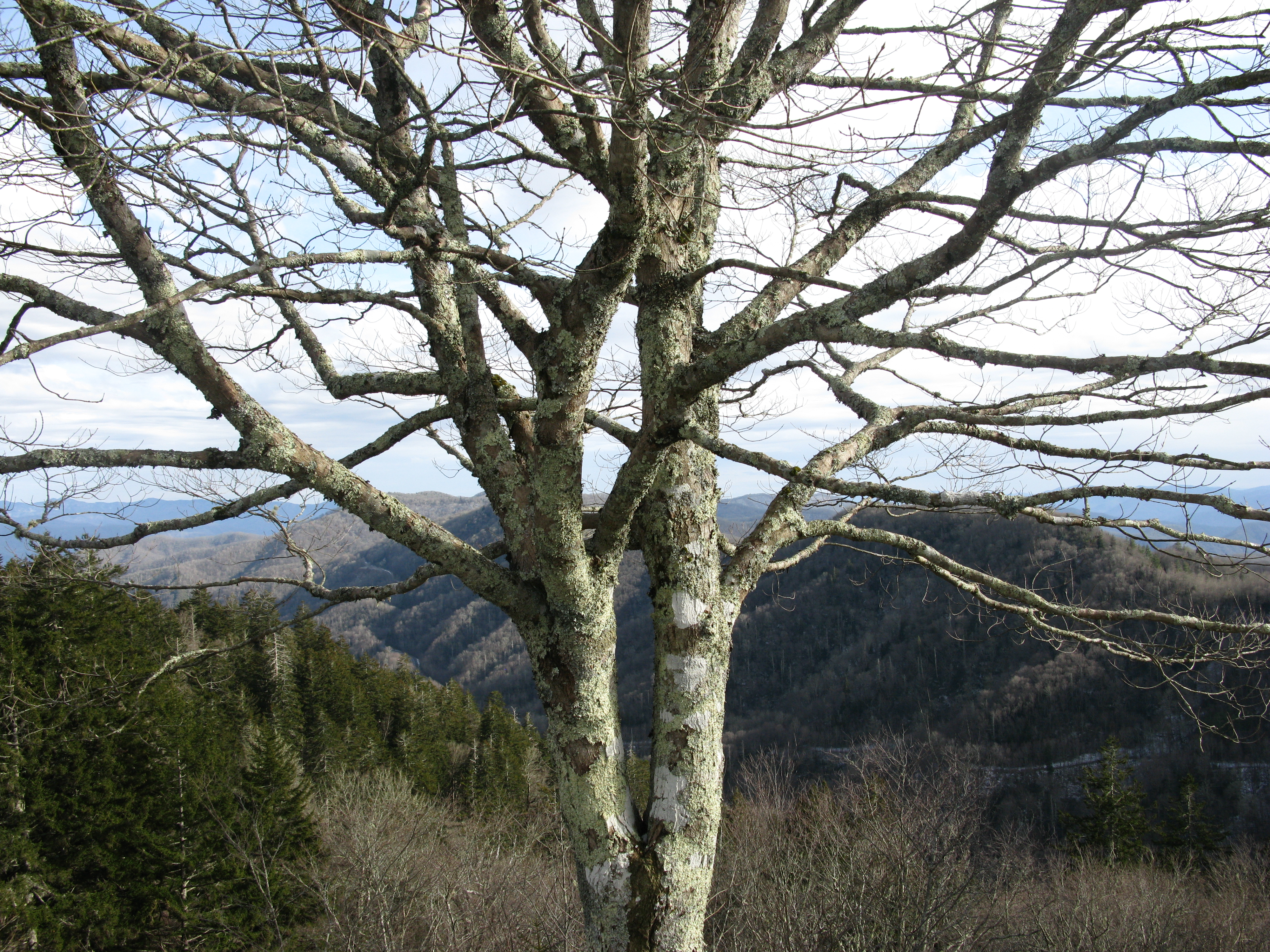
2020-06-11a Doughton Park Tree

Read Full Post »

 . 
[ with Breath by Phillip Levine]
 . 
 . 
God within
God around
in all creation
God is found
 . 
We joined our voices to sing this tiny hymn by Randall Pratt to conclude this morning’s worship. Sing it once and the song is no more than a breath or two. Sing it through a second time, repeat, again. The simple refrain begins to open the singers, unexpected possibilities emerge, and an idea arises in these hearts gathered here – perhaps God desires to be found. Mystery of mysteries, revealed in simplicity. Together we repeat this tiny hymn ten times and it swells to become huge within us.
 . 
 . 
God is stillness.
God is moving, moving, ever moving.
God is one beautiful truth discovered.
God is anxiety that so much yet remains unknown.
God cleaves together.
God cleaves apart.
God is always the same.
God is always changing.
There is nothing that is not God.
There is nowhere that is not God.
 . 
 . 
Yesterday I walked a short trail not much frequented. In a few weeks I will guide a naturalist hike along this section and yesterday I wanted to make sure I knew everything. “Same and Different,” I’m thinking to title the gathering. So many autumn flowers are the same yellow; so many different forms and lives. And although I expected I would already be familiar with everything I would see as I walked yesterday, the universe, like God of course, is always new. No coincidence there. After squishing through a damp patch, knocked out by the riot of cardinal flower and the seethe and potential of unfurling ironweed, I was suddenly halted by something different.
 . 
Yellow. Its four petals arranged at right angles were soft, curled, but when I smoothed them I found little banners on short pedicels, like the cardboard fans we hand out in Southern churches on summer Sundays. At the center of each was a powder puff cluster of pistil/stamens. One notices such details when leaning in close to make friends, but even from down the trail some meters removed this odd little plant still whispered its distinctiveness. Different and the same. Surely I’ve seen you before! How many minutes shall I pause and contemplate?
 . 
Then of course being me I looked it up. The joy is in the encounter but also in discovering all the connections. Seedbox or Rattlebox this delicate bloom is called by human beings, with an almost comical genus name, Ludwigia. But this is how I know you now – humble cousin of primrose prepared to stand up to the flash of iron and authority of cardinals.
 . 
 . 
Return to this Sunday morning. We’ve closed the service with song and hugged goodbye. As the others drive away from church, I walk down to the little pond at the back of the property. I’ve seen some yellow flowers there. Even before I reach them, clustering at water’s edge, I know they are the same and different. More like a shrub than a nature trail herb, leaves narrow little arrows, but here are four soft petals that want to curl under, here is the powder puff center. Ludwigia, every day you rise up to greet me and remind me there will always be more to discover. You certainly favor damp and muck. You certainly have yellow down pat. But before I delve into your taxonomy and dig up answers I’ve yet to even question, let me simply stand here a moment and appreciate. Stillness ever moving. The unchangeable that is always new. A certain melody that is still playing in my head belongs to you, too, little flower. Within, around, in all creation . . . found.
 . 
 . 
Ludwigia alternifolia   —  Seedbox
Ludwigia decurrens  —   Wingleaf Primrose-Willow
 . 

Ludwigia alternifolia

 . 

Ludwigia decurrens

 . 
❦ ❦ ❦
 . 
Breath
 . 
Who hears the humming
of rocks at great height,
the long steady drone
of granite holding together,
the strumming of obsidian
to itself? I go among
the stones stooping
and pecking like a
sparrow, imagining
the glacier’s final push
resounding still. In
a freezing mountain
stream, my hand opens
scratched and raw and
flutters strangely,
more like an animal
or wild blossom in wind
than any part of me. Great
fields of stone
stretching away under
a slate sky, their single
flower the flower
of my right hand.
Last night
the fire died into itself
black stick by stick
and the dark came out
of my eyes flooding
everything. I
slept alone and dreamed
of you in an old house
back home among
your country people,
among the dead, not
any living one besides
yourself. I woke
scared by the gasping
of a wild one, scared
by my own breath, and
slowly calmed
remembering your weight
beside me all these
years, and here and
there an eye of stone
gleamed with the warm light
of an absent star.
Today
in this high clear room
of the world, I squat
to the life of rocks
jewelled in the stream
or whispering
like shards. What fears
are still held locked
in the veins till the last
fire, and who will calm
us then under a gold sky
that will be all of earth?
Two miles below on the burning
summer plains, you go
about your life one
more day. I give you
almond blossoms
for your hair, your hair
that will be white, I give
the world my worn-out breath
on an old tune, I give
it all I have
and take it back again.
 . 
Philip Levine
from New and Selected Poems by Philip Levine. Doubleday Publishing Group, a division of Penguin Random House LLC. © 1991
online at The Academy of American Poets
 . 
 . 
Please explore my new page – FLORA – which meanders from spring into summer on the Elkin & Allegheny Nature Trail (a segment of the Mountains-to-Sea Trail).
 . 
 . 
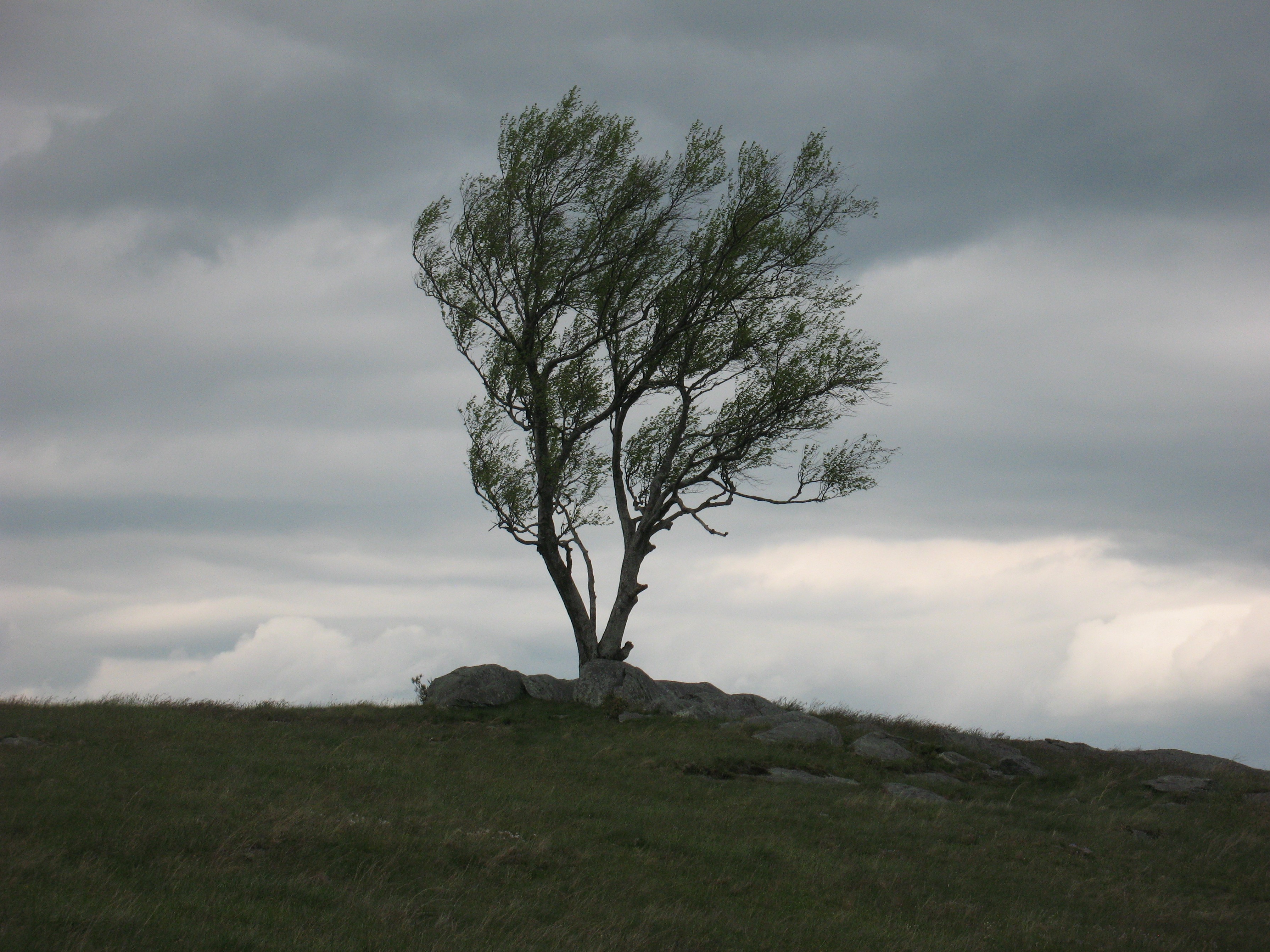
Doughton Park Tree 4/30/2022

Read Full Post »

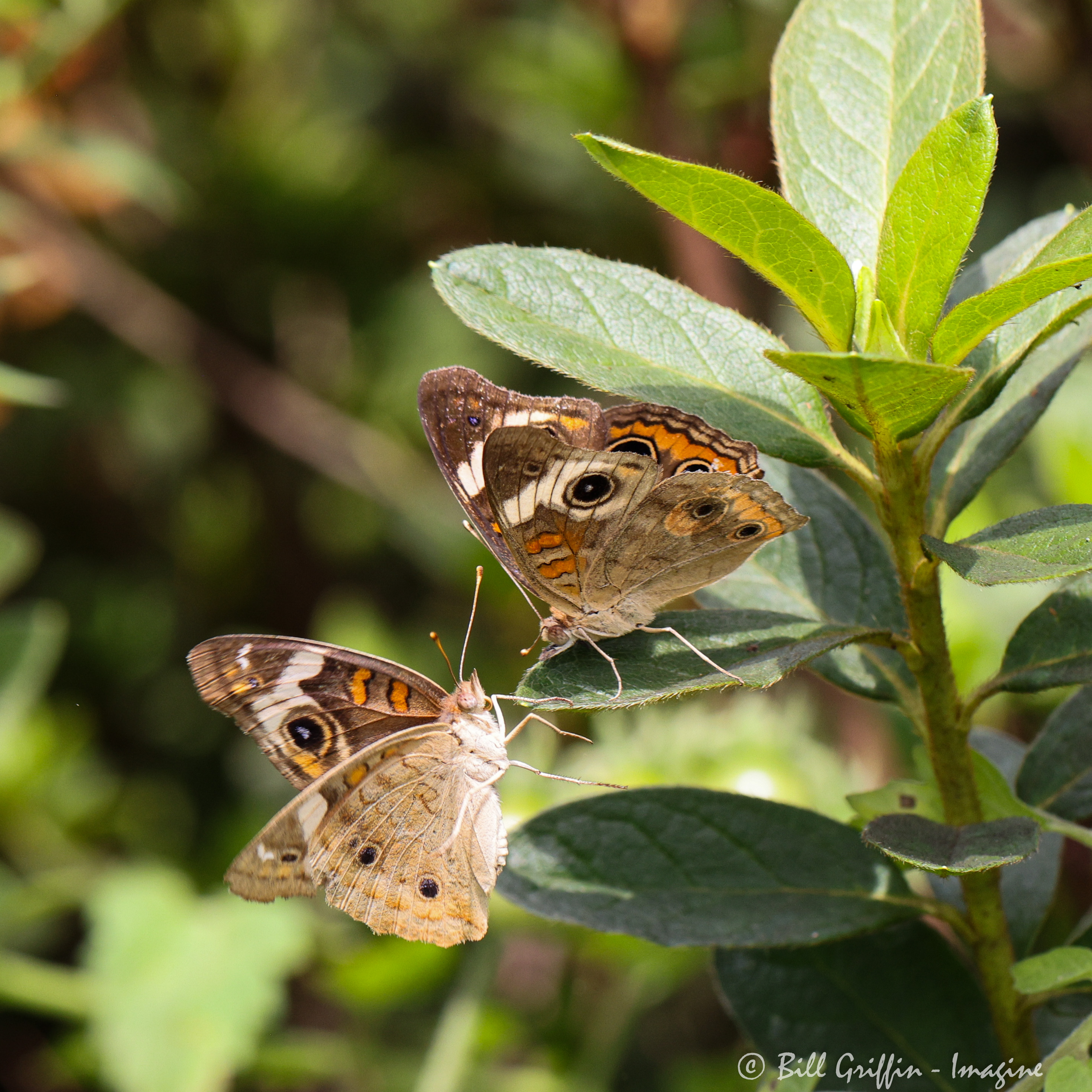
Great Spangled Fritillary on Common Milkweed

 . 
A human being is a part of the whole called by us universe, a part limited in time and space. He experiences himself, his thoughts and feelings as something separated from the rest, a kind of optical delusion of his consciousness. This delusion is a kind of prison for us, restricting us to our personal desires and to affection for a few persons nearest to us. Our task must be to free ourselves from this prison by widening our circle of compassion to embrace all living creatures  and the whole of nature in its beauty.
Albert Einstein.
 . 
 . 
All these years, how have I overlooked this humble herb growing up through the pavement? Tough narrow leaves, bottle brush of tiny flowers climbing its central spike, an entire array of bottle brushes – Virginia Pepperweed. It’s in the Mustard family, Brassicaceae, so I can already imagine its spicy taste as I pinch off a leaf and raise it to my . . . but wait! Now I’m recalling the Fourth Question you must ask yourself when you forage in the wild: “Do dogs poop here?”
 . 
In a few minutes I’ll explain Questions One, Two, and Three to my hikers that are now gathering in the field beside the nature trail. Thus we’ll begin our first ever Ethnobotany hike as part of NC Trail Days in Elkin. I’ve titled the event, “Some Feed Us, Some Heal Us, Some Kill Us.” Doesn’t our culture of plants teach us exactly that? Or have we become so far removed from nature that we’ve forgotten how everything around us affects us, and how we affect everything around us? Culture is the wisdom and traditions we pass along from generation to generation; Ethnobotany studies cultural relationships to plants. These hikers have signed up to satisfy their curiosity and learn something new, but I expect we will all learn from each other. I’m sure someone’s granny once picked creasy greens in the Spring or stirred up a mess of poke salet.
 . 

Southern Chervil, Carrot/Parsnip family

 . 
❦ ❦ ❦
 . 
I go to Nature to be soothed and healed, and to have my senses put in tune once more.
John Burroughs
 . 
Everyone needs beauty as well as bread, places to play in and pray in where Nature may heal and cheer and give strength to body and soul alike.
John Muir
 . 
 . 
The Elkin & Allegheny Nature Trail, a part of the Mountains-to-Sea Trail, just three miles or so if you include all its side loops and detours, has become my textbook. I’ve walked here several times a week, all seasons and all weathers, until I know where to find the single Fairy Wand and the four Adam-&-Eve orchids. When the first Hepatica blooms and when the last Trout Lily has dropped its petals and set seed. And yet this trail is always new. Last week a just-fledged Pileated Woodpecker poked its head out of the hole we’d been watching for a month. This week American Hornbeam displays its little chandeliers of seeds, glistening with afternoon rain. There is always something to discover, something to become part of.
 . 
This little three mile trail has also become my refuge. Maybe I start down the trail with a dark cloud around my head and my breathing sounds like thunder, maybe there is only cold encircling my heart. Maybe the dark and the cold have not fully dissipated by the time I return to my car, but nevertheless some small seed of hopefulness always finds a way to take root. I recently encountered this saying: “Each one of us carries a sack of rocks. You don’t know how heavy your neighbor’s sack is. You’ve just got to carry your own rocks.” There is always a way to put one foot in front of the other. Slow or fast, heavy or light, grunting or singing, there is a way to walk on down the trail.
 . 

Hairy Skullcap, Mint family

 . 
❦ ❦ ❦
 . 
How important is a constant intercourse with nature and the contemplation of natural phenomena to the preservation of moral and intellectual health!
Henry David Thoreau, from his Journal, May 6, 1851
 . 
The healing potential of flowering plants is an integral part of the deep bond that exists between humans and nature. That flowers have the ability to heal us, not only physically but also emotionally and spiritually, is something that has been recognized and utilized as far back as we know.
Anne McIntyre, from Flower Power
 . 
 . 
Last week granddaughter Amelia and I played Scavenger Hunt. We took turns drawing little pictures of things in the yard and having the other one find them. My Dandelion and Holly she spotted right off. The Pill Bug she recognized but took longer to find. Just a half hour outdoors on a muggy day, but it erased a good fraction of my load of dread and loathing. She and I connected with each other in those connections with nature. As Einstein suggested, our task is to somehow discover that we are not separate from the universe, to widen our circle of compassion. As people come together on my little nature hikes, fifteen or twenty crouching in fields and woods eight or ten times a year, do we accomplish that? Do we connect?
 . 
The First Question you must ask yourself before you pick a leaf or a flower is, “Am I 100% certain of my identification?” You wouldn’t want to brew up a tea of Pukeweed (Lobelia inflata). Wild Carrot is closely related and looks quite similar to the most toxic plant in North America, Poison Hemlock (Conium maculatum), both of them introduced from Europe and prevalent in our area. On the other hand, if I can recognize every member of the Rose family, Rosaceae, from apple to quince to almond, I can be pretty confident they are all edible.
 . 
The Second Question is, “If I pick this, how will that affect the local ecology?” I tell folks they wouldn’t want to eat the last wild huckleberry if a hungry bear was standing beside them, but the full complexity of the web of life is impossible to grasp. Pollinators and larval hosts, things that creep beneath the leaf litter and fly down from the Red Oak’s crown, how does each feed and heal the next? My friend April supplemented her meager nutrition while she through-hiked the Appalachian trail by chewing greenbrier, cooking up pots of stinging nettle, cracking hickory nuts. She had a personal rule – never dig up a Cucumber Root if it was busy making a flower or a berry. It’s hard to imagine now, but a hundred years ago Galax was almost extirpated from the southern mountains as people gathered it to ship north for Christmas decorations. May we widen our circle of compassion to discover we, too, are part of these woods, these fields.
 . 
And the Third Question is really just a subset of the Second: “If I pick this plant, how will it affect the experience of those who come after me?” Aren’t most major world philosophies and religions based on some paraphrase of this? The Golden Rule; the Second Commandment. It would seem obvious that in the shared space of a public park you wouldn’t dig up the flowers. Is it possible for us large-brained primates to widen our consciousness until we can image the entire earth as shared space?
 . 
So let’s take a walk in the woods. Let’s imagine how our grandparents would have experienced and related to the life here. Let’s learn from these plants about other cultures, the Cherokee, the European pioneers. Let’s discover our own connections, to the diversity around us and to each other. Let’s be fed, and let’s be healed. Let us be part of the universe.
 . 

Smooth Solomon’s Seal, Asparagus family

 . 
❦ ❦ ❦
 . 
The Christic
 . 
I am looking at a tree, but I see such astounding beauty and
graciousness, the tree must be You, O God,
I look at the wild weeds playing across the fields, and their
wild joyful freedom speaks to me of You, O God.
Yesterday, I saw a child crying alone on a busy corner, and
the tears were real, and I thought, you must be crying, O God.
God, you are the mystery within every leaf and grain of sand,
in every face, young and old, you are the light and beauty
of every person.
You are Love itself.
Will we ever learn our true meaning, our true identity?
Will we ever really know that we humans are created for
love?
For it is love alone that moves the sun and stars
and everything in between.
 . 
We are trying too hard to find You, but You are already here,
We are seeking life without You, but You are already within,
Our heads are in the sand, our eyes are blinded by darkness,
our minds are disoriented in our desperate search
for meaning.
Because you are not what we think You are:
You are mystery.
You are here and You are not,
You are me and You are not,
You are now and You are not,
You are what we will become.
You are the in-between mystery
The infinite potential of infinite love,
And it is not yet clear what You shall be,
For we shall become something new together.
 . 
Ilia Delio, OSF
from The Not-Yet God: Carl Jung, Teilhard de Chardin, and the Relational Whole. Orbis Books, Maryknoll, NY. © 2023
 . 

Black Cohosh, Buttercup family

 . 
❦ ❦ ❦
 . 
If you’re passing through Surry County, North Carolina, visit our trails! Elkin Valley Trails Association builds and maintains Section 6 of the Mountains-to-Sea Trail as well as many connecting trails in the area. The Over Mountain Victory Trail (Revolutionary War era) and Yadkin River Trail both pass through Elkin.
 . 
EVTA also plans many trail activities and work days throughout the year, plus we partner with Explore Elkin to present NC Trail Days for four days at the beginning of June every year.
 . 
And if you would like a copy of the handout I prepared for “Some Feed Us, Some Heal Us, Some Kill Us,” click HERE. This is a small subset of the 250+ plant species we’ve discovered on the E&A Nature Trail. Walk the trail and help us add more!
 . 
Finally, you may notice that the title of our ethnobotany hike bears a resemblance to the title of the wonderful book by Hal Herzog, Some We Love, Some We Hate, Some We Eat, which I suppose you might call Ethnozoology. Dr. Herzog is a psychology professor at Western Carolina University in Cullowhee, NC and a world leader in the field of anthrozoology. Thanks, Hal, for continuing inspiration!
 . 
And, for teaching me about sacks of rocks, warm thanks to Pat Riviere-Seel.
 . 

Woodland Hydrangea & Bumble Bee

 . 
❦ ❦ ❦
 . 

Black-snakeroot (Sanicle), Carrot/Parsnip Family

 
 . 
IMG_0877
 . 

Virginia Pepperweed, Mustard family

Read Full Post »

« Newer Posts - Older Posts »