[with two poems by Malaika King Albrecht]
The lesson you need is the one you weren’t looking for.
The lesson you keep is the one you didn’t want.
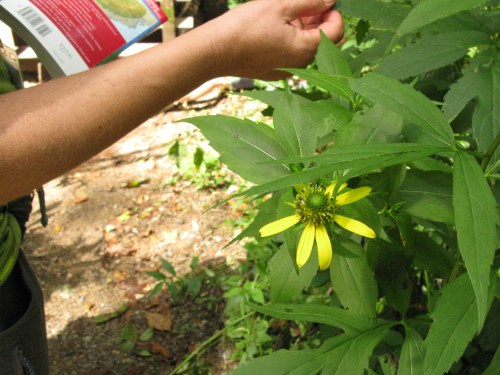
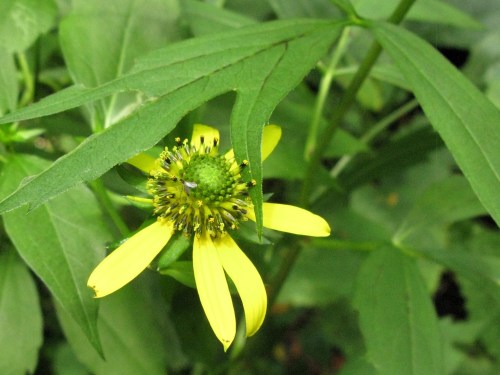
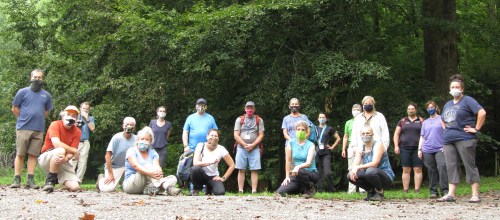
Our final exercise is to sit. Not in the open air pavilion where we’ve weathered hours of presentations and discussion. And not by any means moving along the trails we’ve hiked for hours encountering a new species every minute. Now at the close of our weekend naturalist course on plants of the Smokies we are instructed to stop, settle, sit. We are to find a green thing we don’t know or one we’ve have ignored and sit for half an hour. Pay attention. Become intimate.
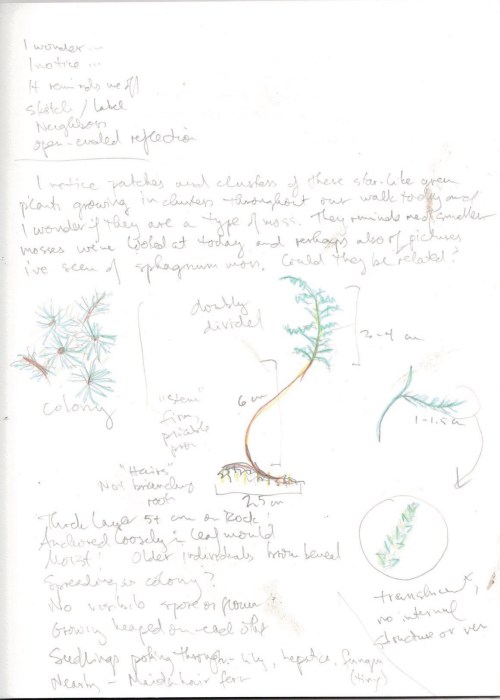
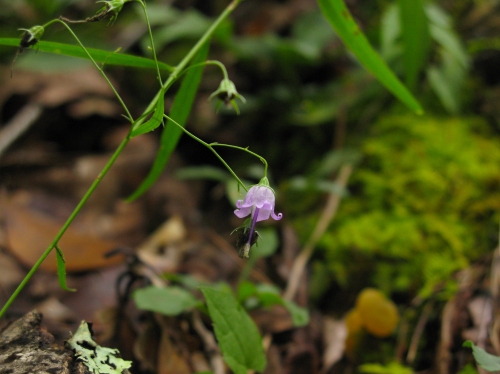
I choose to sketch a bryophyte not much bigger than my thumb. Perhaps I’ll never know its true name – starmoss? sphagnum? – but we could become friends. I won’t even give it a name. Be satisfied sometimes simply to explore, to know first with all my senses, that is what I’m learning. Where does it like to lie and spread? Whom does it choose for neighbors? How does it make its living? Naming can come later.

Look at us all, scattered like toadstools across this mountain glade quietly noticing. For now the birds and insects get to make all the noise. Eventually our quiet must end and we gather one last time for closing and summarizing and making sense. Now Tonya has a surprise. A worm snake, while she sat, has burrowed, well, wormed into her open sandals and curled around her toe. She untangles it and cradles it for us all to see while it tries to bite her with its mere slit of a mouth, better suited for eating slugs. If we were quiet, if we paid attention, if we sat long enough would we be reclaimed by moss and crawling things and become a haven for all that is small and necessary?
We eat our lunch along the trail, we travel back to Tremont, we pack our cars. At the parking lot I congratulate Tonya upon completing her final course and receiving her Naturalist Certification. I tell her, I’m still only half way through.
Tonya turns to me. She sets down her pack. She is solid, present, her eyes deep and full as a hardwood cove. Help the new ones, she pleads. Share what you know.
And during the five hour drive back to my foothills what image recurs? Not family characteristics that differentiate Brassicaceae, Lamiaceae, Asteraceae; not frond morphology and sorus distribution. No, the image I can’t escape is of the two first-timers in our course turning a leaf over and over in their hands, turning the leaves of a guidebook, excited, figuring things out. And of me a pace or two removed, watching them, adding nothing.
Sometimes I think I have the perfect temperament and skill set to be a moss-covered log slowly digested by fungal mycelia. Ah, the long and placid observations I would make. But that’s not the lesson I need or the lesson I will keep. Instead, this: don’t imagine you know so much. But know that what you do know has value when you share it. Know that its only value is in the sharing. You have joined the circle of seekers. Now open the circle wide.
. . . . . . .
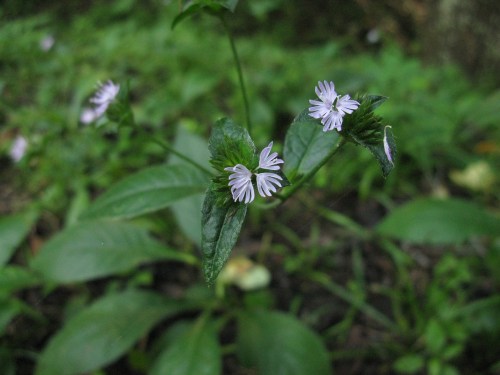
A week ago I shared here two poems by Malaika King Albrecht from her most recent book. I’m not finished with her. Something about this collection of poetry has become very necessary for me as I continue to pile and compile the lessons from my most recent course in the Southern Appalachian Naturalist Certification Program at Great Smoky Mountains Institute at Tremont. The quantity of information itself is just shy of infinite. I’m working through a book titled, Botany in a Day, which would more realistically be In a Couple of Years. Just the new vocabulary reminds me of starting Med school (that was 1974 – what am I doing here?!) or maybe of being smacked with a breaker at Fort Macon beach.
But being overwhelmed with information is the trees, it is not the forest. That is why I need poetry. I will study the taxonomy but poetry will teach me the connections. I will feel like I can never know enough but poetry will teach me to live with and love the mystery. I will work on what to know but poetry will teach me how to know.
Malaika’s collection is just the solace and challenge and promise needed. Her poems can be grounded in the senses but spiral into the imagined and unimagined. I would say her poems make connections but even more they open me to make connections. It can be the difference between burying myself in the Field Guides and opening myself to the field.
Thanks again, Malaika!
. . . . . . .
Following the Wind
Everything leaves a mark:
dull grass in the morning where the raccoon
ambled away full of cat food,
antler scratches along the willow oak,
and tracks and scat everywhere.
I know what stirs in this forest:
Deer nosing the horse path,
red fox slitting the tall switch grass,
rabbit bounding, freezing, and hopping again.
At the edge of Loftin Woods, I fall
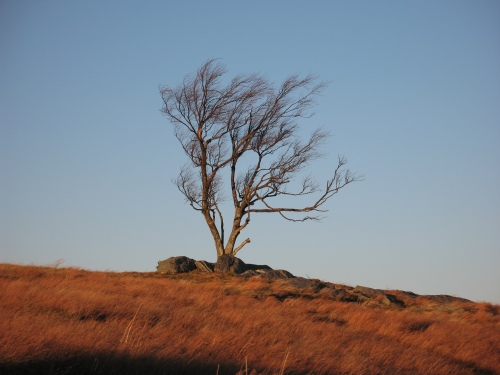
for the wind, the way it parts the grass,
makes branches speak
and vultures glide their shallow V’s.
If sky holds our dreams,
then earth, our memories,
and wind, only the now
of this moment calling,
calling from everywhere.
. . . . . . .
Praise Song for What Is
Praise the frozen rain, the icicles daggering
the trees, the gray snow sludge. Praise
the shiver, the wet wind cutting through clothes,
the frozen water troughs. Blessed be
the hard frost, the frozen pond,
the apple sapling snapped in half.
Praise autumn and spring, the hot then cold
then hot again. Praise the corn mazes,
the haystacks, the reaping what we’ve sown.
Blessed be the fig tree, the honeycomb, the hive.
Praise the kudzu, the poison ivy,
the forsythia shouting yellow at a fence.
Praise the mosquito, the itch,
the scratch. Praise the heat waves,
the asphalt, the stopped
highway traffic. Blessed be
the dusty, the wilted, the dry
husks of corn in summer drought.
Praise the possum lumbering
into the chicken coop,
the fox slinging the wood’s edge.
The owl, the hawk, blessed be
their swift descent to prey.
Praise the failures, the losses. Blessed be
the broken path that brought me here.
. . . . . . .
From The Stumble Fields, Malaika King Albrecht. Main Street Rag Publishing Company, Charlotte, North Carolina. © 2020.
Botany in a Day, The Patterns Method of Plan Identification; Thomas J. Elpel; HOPS Press, LLC; © 2018; An Herbal Field Guide to Plant Families of North America
Wildflowers of Tennessee the Ohio Valley and the Southern Appalachians; Dennis Horn and Tavia Hathcart; Partners Publishing © 2018; The Official Field Guide of the Tennessee Native Plant Society


. . . . . . .
Read Full Post »






 V E R S E and I M A G E
I appreciate your thoughts, Brad. All the best -- B.