Feeds:
Posts
Comments

Posts Tagged ‘family’

[poems from I Thought I Heard a Cardinal Sing]

Last week our sister Jill sent us photos from her recent camping trip in the Allegheny National Forest, a favorite spot called Kelly Pines. Big trees, moss & ferns, campfire, nylon tent – nothing lacking. There were also a few shots taken by our niece April – Jill hiking a trail between massive trunks, Hobbit Jill looking up into the giants. Jill’s comment – “Truly a magical seeming place . . .”

Gentle sun-dappled trail; open understory beneath a high canopy; mature second- (or third- or fourth- ) growth pines – a beautiful woodland setting . . . but magic? If I were to visit this spot for the first time would I discover more magic here than any other moderately impacted wood lot in the Appalachians, from Pennsylvania to northern Georgia? Ignore magic incantations and transmutations, ignore any lapses in the laws of physics, even so magic must create something around and within us that we don’t experience without magic.

But Kelly Pines (which, as a member of Linda’s family for over 50 years, I too refer to as Kelly’s Pines) does create magic. This little patch of forest, stream, rocky incline has been accruing magic since before these seven siblings were born. It’s the magic of shared stories – big Mama Bear crossing the trail just minutes after Linda had been walking there alone. It’s the magic of special visits – Linda and I camped at Kelly’s Pines for our honeymoon. Definitely the magic of roots – a bit of Linda’s Mom’s and Dad’s ashes are sprinkled there. And greatest of all is the magic of memories – those family camping expeditions have provided every sibling with their own recollections, carefully preserved treasures they dust off and pass around whenever any of the seven get together.

We make our magic. Our memories create magic. Sister Becky sums it up perfectly when she sees the photos: “It creates a great longing to be there with my loved ones.” Such magic!

❦

Linda and I regularly hike a number of local trails where, when we listen, we hear the fey whispers of magic. Some are old trails with deep roots – we’ve visited Doughton Park on the Blue Ridge Parkway since the kids could walk. Some are newer, their magic bright and sprite and still emerging – the Grassy Creek “forest bathing” spur of the Mountains-to-Sea Trail, where our grandson worked beside me to scrape a first pathway into the riparian gloom.

Every week, in every season and weather, we discover the healing magic these footpaths through forest desire to share with anyone who’ll visit. Some magic is tangible: today the tiny Adam and Eve orchids are just opening, and to appreciate them I have to kneel with my nose in the leaf mould. Some magic is inchoate: the breeze on our necks, how it stirs ferns in the glade, the color of light ferns hold and release when we pause from all motion and let the woods overtake us.

When we return from these walks it isn’t the sweat and tired old muscles we remember. The magic of memory creates connection, shared presence, becoming one. Yes, Jill, that is a magical place. Oh yes, the trees, the mountains, but what really brings each place’s magic into being is what we share there together.

Fern Glade above Grassy Creek, MST

❦ ❦ ❦

Girl in the Woods

Before the earth became her bed, she raked away
+++++ the rubble and rocks, scraped the soil smooth.

There are no candy men here, no dope peddlers,
+++++ no pill pushers, no one to hand out 40s and 80s –

those perfect stones with their false promise to cut her
+++++ pain with their fuzz and blur – the way they do

at her apartment in the projects, a home more makeshift
+++++ than her nylon tent with its walls stretched taut,

its strings staked between oak roots. In this quiet,
+++++ she sketches her children’s faces with charcoal,

applying skills she’s learning in community college
+++++ art classes. She outlines their curved cheeks,

their almond-shaped eyes, uses long, sweeping strokes
+++++ for her daughter’s hair, a softer mark for the scar

on her son’s chin. Dark comes early beneath the trees.
+++++ Without the luxury of electric light, she’s learning

how to smudge charcoal, how to block in the mid-tones,
+++++ by battery-powered lantern – a small sacrifice

for this shelter of trees when she most misses her kids,
+++++ when her brain won’t stop buzzing.

Denton Loving
from I Thought I Heard a Cardinal Sing: Ohio’s Appalachian Voices, edited by Kari Gunter-Seymour; Sheila-Na-Gig Editions, © 2022

❦ ❦ ❦

Southern Ohio, pronounced “Ohia” if you’re from there, is Appalachia. Forget Cleveland and Toledo and their Lake Erie, forget Columbus and its gateway to the great plains. Think Athens, Portsmouth, Logan, Hocking Hills. Nearly one fourth of the area of Ohio is hills, glacial carvings, forest, and streams flowing down to the Big River that borders West Virginia and Kentucky. These poems are from the new anthology, I Thought I Heard a Cardinal Sing: Ohio’s Appalachian Voices, poetry called forth and collected by current Ohio state poet laureate, Kari Gunter-Seymour.

These voices are remarkable. Inspiring. Dire. Funny as hell. Every day I pick up the book and just leaf to a new page at random, and every poem speaks to me. It’s not just because I have family in those hills and know the smells and sounds of those back roads and farms, the funkiness of those river towns, the long lightless days of winter, the disappointment of “Ohio false spring.” It’s because these poems are honest and human and speak to anyone who has ever looked to discover another person standing beside them. Join me, open the book, let’s see where it takes us! Let’s us be part of the community, bigger and bigger.

You’n’s, us’n’s, all of us together.

❦ ❦ ❦

Some Kind of Prayer

What can I tell you that you do not already know?
Listen to the grass, its long legs whistling as it swishes.
Touch the brush of cattails, the brittle wings of pine cones,
the dry skin of chokeberries – feel
their burst. Taste rain. Say you’re sorry

not for what you did but for how you doubted
yourself for so long. This life is filled
with a million cocoons and you can choose
how long, which one, or none.

Sleep is so close. Run now, run.

Shuly Xóchitl Cawood
from I Thought I Heard a Cardinal Sing: Ohio’s Appalachian Voices, edited by Kari Gunter-Seymour; Sheila-Na-Gig Editions, © 2022

❦ ❦ ❦

To No One in Particular

I am never happy to see summer go,
earth stripped of its finest voice.
I am sitting outside in my heavy coat,
porch light off. There is no moon,
no ambient distractions, the sky a Zion.

I take solace in considering the age
of this valley, the way water
left its mark on Appalachia,
long before Peabody sunk a shaft,
Chevron augured the shale or ODOT
dynamited roadways through steep rock.

I grew up in a house where canned
fruit cocktail was considered a treat.
My sister and I fought over who got
to eat the fake cherries, standouts in the can,
though tasting exactly like very other
tired piece of fruit floating in the heavy syrup.

But it was store-bought, like city folks
and we were too gullible to understand
the corruption in the concept, our mother’s
home-canned harvest superior in every way.
I cringe when I think of how we shamed her.

So much here depends upon
a green corn stalk, a patched barn roof,
weather, the Lord, community.
We’ve rarely been offered a hand
that didn’t destroy.

Inside the house the lightbulb comes on
when the refrigerator door is opened.
My husband rummages a snack,
plops beside me on the porch to wolf it down,

turns, plants a kiss, leans back in his chair,
says to no one in particular,
A person could spend a lifetime
under a sky such as this.

Kari Gunter-Seymour
from I Thought I Heard a Cardinal Sing: Ohio’s Appalachian Voices, edited by Kari Gunter-Seymour; Sheila-Na-Gig Editions, © 2022

❦ ❦ ❦

Linda and Bill at Kelly’s Pines, 1974

❦ ❦ ❦

Read Full Post »


[with 3 poems from PINESONG]

Do you see me . . . writing you back into the world?
+++++++++++++++++++ Maria Rouphail

What is reality? Perhaps it does require ten dimensions to explain quantum phenomena but we sentient creatures are stuck with four, all we are able to feel. That’s as real as we can get. And with entropy dictating the direction of time’s arrow, it’s a one-way street.

But what about dreams? What about memory? The one is all hallucinatory confabulation, jetsam from the brain’s real work of making sense. The other – random imprint of synapses in hippocampus, little tangles and sparks of wishfulness, wholly unreliable. Then why do dreams open doors into worlds we are absolutely compelled to explore? Why are memories so deeply, viscerally, demandingly real?

My Grandpop Cooke died when I was five. We lived states apart; I spent only a few weeks with him each year. Most of my memories are stories told about him later – his eclectic brilliance, his inventions and patents, his ferocious calling as physician and surgeon. In most of the photos from our few shared years he is behind the camera composing, the rest of us the subject, the scene. Mostly I sense him in the recalled scent of his workshop, oil & sawdust, or in the heft of the books he left. I never hear his voice.

But in these two memories Grandpop is real to me. We’re standing on the bluff above Bogue Sound while he tosses corn to his mallards, wordless memory, me the child allowed to reach his hand into the pan of grain. He is kneeling, my 4-year old hand in his while he outlines the little bones in those fingers and teaches me, “Phalanges, Metacarpals.”

I tell you these stories. I write them down. Time holds its breath, reverses its flow. I bring Grandpop back into the world.

❦ ❦ ❦

After “After Years” by Ted Kooser

At once when you walked by,
I noticed something on your face that I
hadn’t seen in a long time.
You, smiling into your phone,
stepping over a dead rat on the street vent,
were a revelation.
Around us, the collapsed a skyscraper into the ground
and, as you rushed past without realizing,
a breeze blew a lamppost into a hurricane.
For this instant of infinity,
God must have a heart to
let me see you among the mills of people
coming and going, back and forth
between the drone of city life and the thrill of living at all.

As I lose you to the background,
the weightlessness of your memory bombards me.
How quietly did you leave to ensure
I wouldn’t notice your absence?
Where did you possibly go if not
further into the pile of things I swore to forget?

We are all bound by finality.
To stop living in circles, you take flight
and I watch the world wear away my stubborn grief
until I forget why I ever had to grieve at all.

Claire Wang
PINESONG, Sherry Pruitt Award, Third Place
11th Grade, Marvin Ridge High School, Waxhaw, NC
Teacher: Bobbi Jo Wisocki

❦ ❦ ❦

Today’s three poems are from PINESONG, the annual anthology of the North Carolina Poetry Society. Ten adult contests, four for students; winners and honorable mentions. Judges from all over the country, diversity of poets as well – no two year’s collections are similar. Some of these names will go on to glean literary honors; many already have.

You can buy a copy (or if you are a NCPS member request a copy gratis) by contacting me and I will forward your request to the appropriate address: comments@griffinpoetry.com

❦ ❦ ❦

The Waters

A naiad swims to the bottom of the ocean
feels the great press of all that water,
the suffocating embrace of the dark.
At these depths, she wonders, does the giant squid
feel a need, like childbirth, to release her ink?
She lays her hand on the throat of beginnings;
and Earth takes a tremendous breath,
blows out bubbles, bubbles, bubbles –
multitudes that almost shine like light.

A woman sinks to the nadir of life,
where every single thing is hard.
Not just difficult – that’s brushing hair,
teeth; saying the right thing;
avoiding saying the wrong;
awakening before the sun sits atop a vast blue.
Truly hard:
the corners of counters, cement floor,
the slam of a door. Glass breaks
behind her eyes every single day,
glittering, blinding, refracting,
reflecting failure, filling her mind’s eye
with shard of adamantine static.

A girl swims the abyss of her nightmare.
Hears a voice – maybe her mother’s – but garbled,
muted the way a fetus hears in the womb.
It is hard to breathe.
Treading the water of sleep, fear and desire
swirl in the dark below her. Shy bumps the land,
the bed, the sheets twine her legs like kelp.
Consciousness slips around her, a gleaming eel
she finally lays hands on. Here is morning,
bright and smooth as a clam’s mantle.

Alison Toney
PINESONG, Thomas H. McDill Award, Honorable Mention

❦ ❦ ❦

Abuela

In the dream,
my dead father speaks the same words
as when he was in the flesh.
Leaning into my ear, he says
Imaginate, hija –
the nuns at the convent school
taught your grandmother to write –
My lips part again,
as when he told me the first time
about the black-eyed girl
with a birth and death date no one remembered,
who saw visions and wrote them down.
That was before she became the too-young mother
abandoned by her impatient man
who refused the burden of a tubercular wife
and their two baby boys – Poemas,
my orphaned father said.
I turn to face him,
as though he were
the door to a vast room.
But then I wake,
and breath streams out of my body like a tide – ¡Abuela, abuelita!
Do you know that I see you, the poet at her desk?
Do you see me at mine, writing you back into the world?

Maria Rouphail
PINESONG, Thomas H. McDill Award, Second Place

Maria also won the 2022 Poet Laureate Award from the NC Poetry Society for her poem, Two Variations on a Theme of a Tenement (as Viewed from the Window of a Moving Train) With a Song Interposed.


❦ ❦ ❦

❦ ❦ ❦

Read Full Post »

[with poetry by Alana Dagenhart]

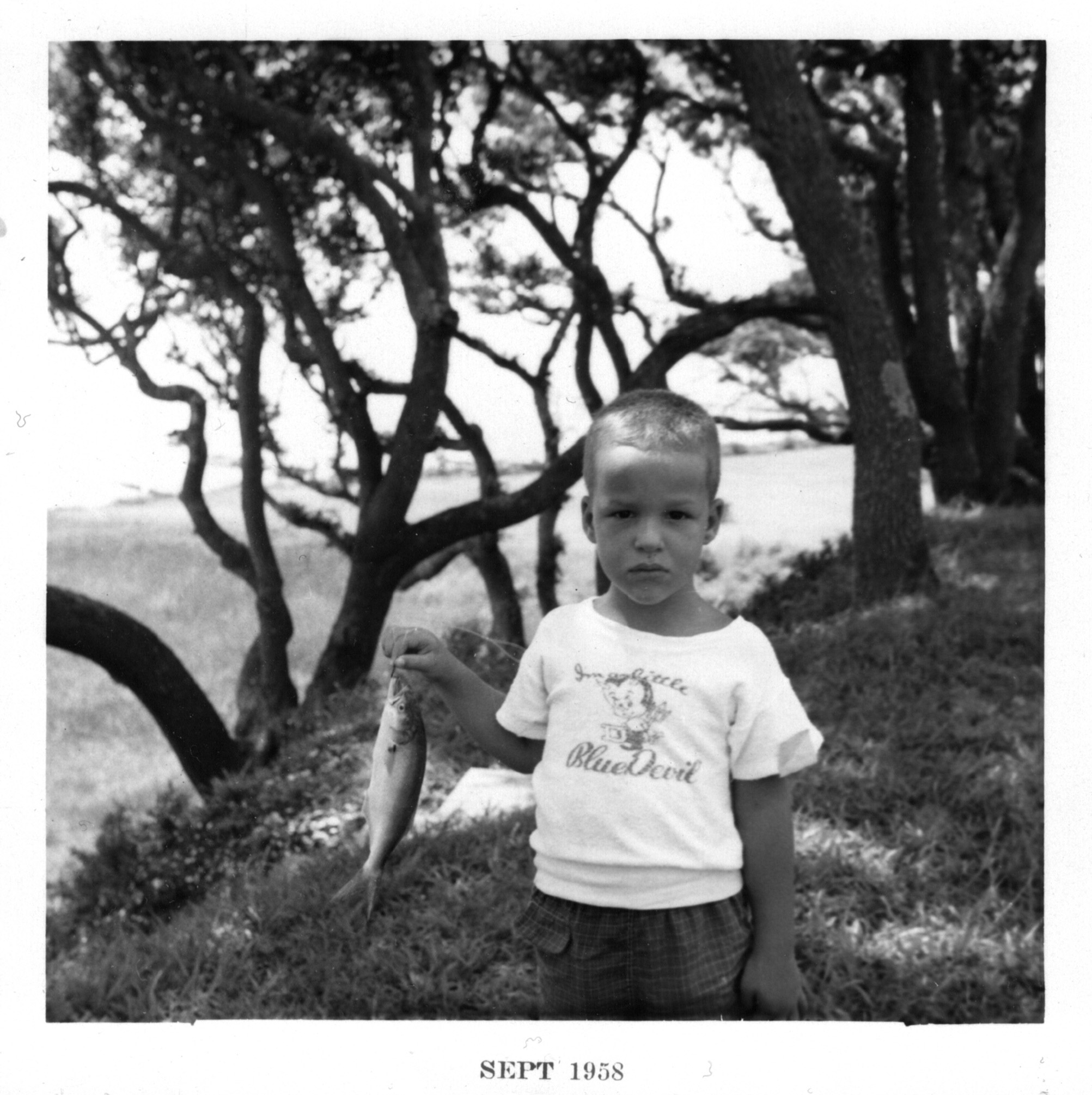
Here, take some with you. You’re not likely to leave my Dad’s presence without hearing these words. It could be a little plastic tub of leftovers from the meal I just brought him and Mom; maybe cookies or a chocolate; a couple of apples – he says he and Mom can’t eat them all. You’ll definitely be carrying the stack of New Yorkers and Sunday funnies he’s been saving. Just try leaving empty handed after visiting my Dad, just try.

Here, take some. How many years before I realized he always has and always will say this? How long have I been trying to analyze why he does? Does anyone ever really understand their father (or their son, for that matter)?

Here, take. It can be too easy to overlook Dad’s deep, even urgent, desire to give. He may seem stubborn and commandeering (just like me, although I prefer “assertive”). He takes charge of every conversation (probably because he literally can’t hear anyone talking but himself; maybe he thinks he’s just filling an awkward lull). Admit it, he acts like a Dad – so let me cut him some slack and open my eyes to the source of his generous essence.

Dad grew up during the Depression in the rural South – just imagine. World War II paid for him to go to Duke. He worked for the same huge company from the time I was four until he retired; he always seemed to be traveling and working at home nights & weekends. Because of Dad’s promotions we moved three times in two years while I was in Junior High (origin of my many quirks, no doubt), but then he declined promotions so my little sister didn’t have to move midway through High School.

Dad saw to it that I graduated from university and med school with no more debt than I could manage. When Linda and I got married and our old boat of a car couldn’t bear the load, Dad towed a trailer from Ohio to North Carolina to meet us after our honeymoon. All these years I can’t recall him spending money on himself, except maybe golf clubs every few decades, but Dad will keep shelling out whatever it takes to maintain the old beach house so all his grandkids can go on enjoying it after he and Mom are gone.

Don’t you want some more? Oh yeah, that’s the other thing Dad says. I hope he can hear me when I reply, “Thanks, Dad, it’s been plenty.”


.     .     .     .     .     .     .

All the Silver Space

Fire pops and burns blue, Sunday morning
October in the Blue Ridge Mountains.
Hiss and hum, the constant roaring –
wood is changing,
solid to light,
before my eyes
like you, Dad
muscle to sacks of dry ice.
We both know.

I walk the mountain top trail
yearning for afternoon heat,
your sun in my bones

Sunset: the inside of a buttercup
empty at the horizon.
The sky fades like a tie-dyed tee-shirt,
from canary to lizard
gravel to irises to ocean.
The underbellies of clouds
are streaked in cotton candy.

Moon again, full and daring
around pine and rock.
Your blue eyes
not saying what we know
to be true. Back

cover first.
I knew to look,
bottom corner,
last page of the book,
your handwriting
small and faint.
You didn’t even want to leave a mark.

Alana Dagenhart

.     .     .     .     .     .     .

Alana Dagenhart’s Yellow Leaves is not a narrative time line, it is a lyrical collage of visions and visitations interwoven with the relentless thread of her father’s death. We enter her dreams, intrusive but illuminating; we get to know ancestors imagined and remembered; we are invited to share Alana’s days most mundane and most profound. The thread of family tangles and unspools, knots and releases, and what could be dark, somber, a burden too heavy, becomes another bright morning, all the colors of revelation, a yellow leaf whirled and unsettled finally discovering its place of rest.

All today’s poems are from Yellow Leaves, Alana Dagenhart, Redhawk Publications, Hickory, NC. © 2022

.     .     .     .     .     .     .

Yellow Then, Will Fly to Every Eave

The blackest bruise
of our human trauma may
not heal completely through.
Some lingering yellow stays.

But Nature’s first green is gold,
her hardest hue to hold,
and what was yellow once and bold
fades in time in form and folds.

Blue will tend the sky of day,
and black will stay the night,
but yellow always leaves again
when sun is out of sight.

Death’s second self, made up of all
the dark the Earth contains,
snuffs bright yellow out, till
none but veiled despair remains.

Then violence bangs
& cuts us to our knees,
blooded-violet searing pain,
rooted between burning trees,

Coral dies, and chestnuts’ blight,
and green is gone –
all gone to dust and yellow leaves.

Unless a poet writing through the night,
will pen an echo fluttering of light
and yellow the, will fly to every eave
and someone late will read from time-tinged leaves

a verse or tow that speaks to them alone
a shelter of thatched pages, like a home.

Alana Dagenhart

Nature’s first green . . . from Robert Frost’s Nothing Gold Can Stay; Death’s second self from Shakespeare Sonnet 73.

.     .     .     .     .     .     .

What Yellow Light

illuminates the fields of the dead?
What fevered hue burns hot
on the faces of our beloved?

What lime? What straw?

What platinum beam cast triangles
on the oak board floors
of the room they wait
beyond this spectrum?

The Yellow Submarine blaring loud
COMCRUDESLANT command
where sailor scrub-shine metal
and Navy top brass smile big teeth
behind sunglasses?

The neon yellow of the pick-up truck
where my brother and I rode
our backs against the cab
in October, Boone, the Blue Ridge
with our legs under a patchwork quilt?

Th old gold of historic hallways
restored in the color of statesmen?

The palest lemonade sides
of papa’s house, squash in the filed
a buckwheat horse?

The sure blonde of my towheaded little brother?

What frequency has that light?

Is it far from here?

Alana Dagenhart

.     .     .     .     .     .     .

.     .     .     .     .     .     .

POSTSCRIPT: Dad at age 95 says some scary stuff, too. The most anxiety provoking = I have complete confidence in my ability to drive. The ability part is scary enough but the confidence is terrifying.

.     .     .     .     .     .     .

2016-10-17a Doughton Park Tree


Read Full Post »

« Newer Posts - Older Posts »