[poems by James Dickey, William Carlos Williams, Robert Frost]
Last Friday I got to play a new game with my grandson Bert, one he made up with his Dad – This Animal. We had walked a mile or so on the Crabtree Creek Greenway in Raleigh and it was time to head home. Along the waterway there were plenty of enticements: red-headed woodpecker at the tip of a snag; big splashes chunking clinkers into the stream; Spring Beauties (why does Pappy kneel down and look at every flower?); tiny slug rescued from squishing.
Now we’ve turned into the neighborhoods to walk on home. Sidewalks. Lawns. Much less exciting. Soon I hear a little voice pipe up, “Let’s play This Animal!”
I get first crack. “I’m an animal that sleeps during the day . . .” “No, Pappy! You have to say This Animal!” Oh yeah, got it. Four-year olds are sticklers for protocol. “This animal sleeps during the day hanging upside down then flies around at night catching insects.”
“A bat!”
Bert knows his animals. In his presence you’d better not mistake a Blue Whale for a Sperm Whale. Or even a Crocodile for an Alligator. Now it’s his turn: “This Animal has ten legs, a stinger, AND claws!” (Hint: In his pocket Bert is clasping the plastic scorpion he’s been playing with all afternoon.)
What a kid! One of these days we’ll kick the game up a notch to This Bird. He can already name most of them that come to the feeder. And I can foresee the day when Bert has me totally stumped as we play This Lichen.
. . . . . . .

. . . . . . .
The Heaven of Animals
Here they are. The soft eyes open.
If they have lived in a wood
It is a wood.
If they have lived on plains
It is grass rolling
Under their feet forever.
Having no souls, they have come,
Anyway, beyond their knowing.
Their instincts wholly bloom
And they rise.
The soft eyes open.
To match them, the landscape flowers,
Outdoing, desperately
Outdoing what is required:
The richest wood,
The deepest field.
For some of these,
It could not be the place
It is, without blood.
These hunt, as they have done,
But with claws and teeth grown perfect,
More deadly than they can believe.
They stalk more silently,
And crouch on the limbs of trees,
And their descent
Upon the bright backs of their prey
May take years
In a sovereign floating of joy.
And those that are hunted
Know this as their life,
Their reward: to walk
Under such trees in full knowledge
Of what is in glory above them,
And to feel no fear,
But acceptance, compliance.
Fulfilling themselves without pain
At the cycle’s center,
They tremble, they walk
Under the tree,
They fall, they are torn,
They rise, they walk again.
James Dickey (1923-1997)
from The Whole Motion: Collected Poems 1945-1992. Copyright © 1992 by James Dickey.
. . . . . . .
All three of today’s poems are collected in The Ecopoetry Anthology; Edited by Ann Fisher-Wirth and Laura-Gray Street, © 2013, Trinity University Press, San Antonio, Texas.
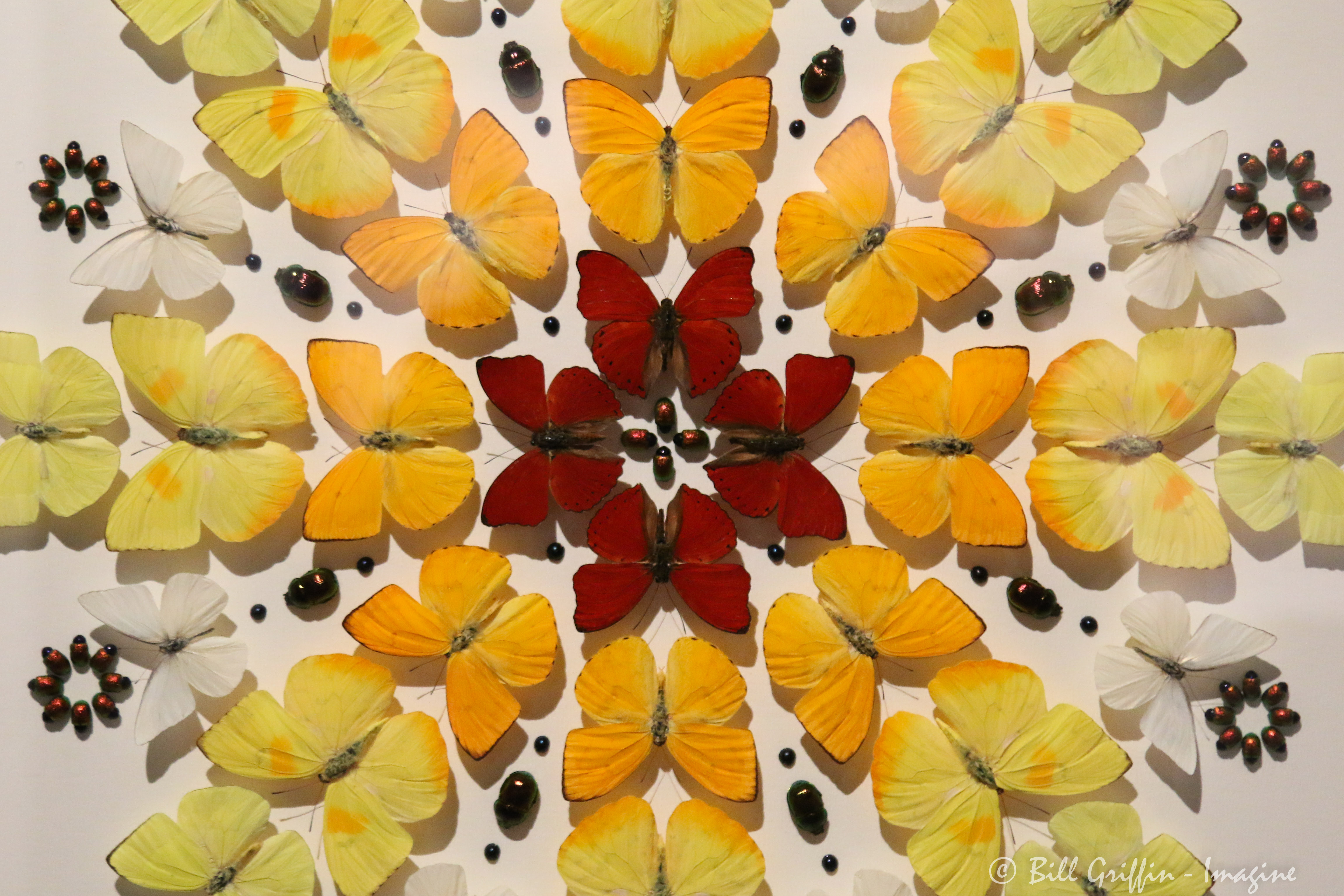
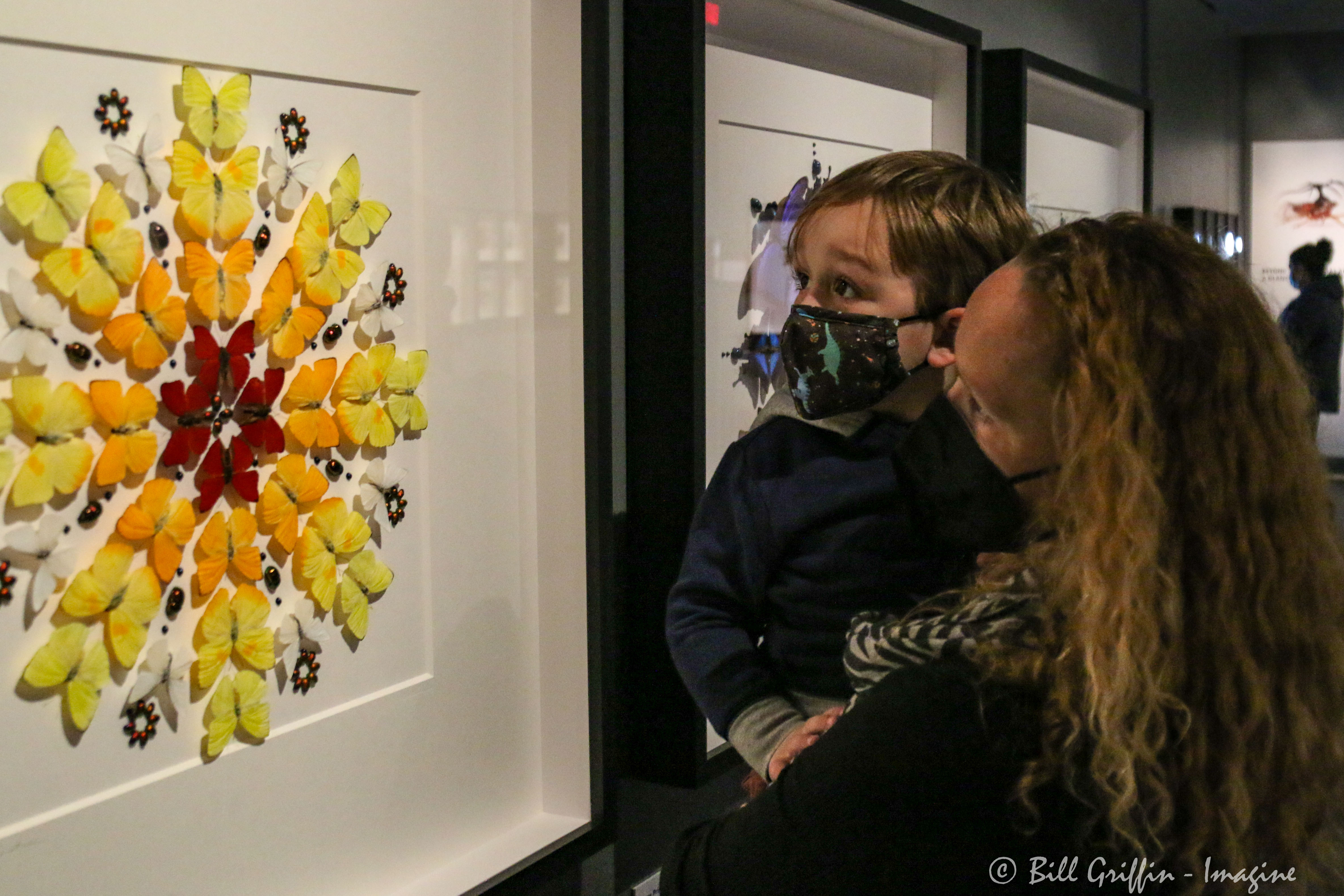
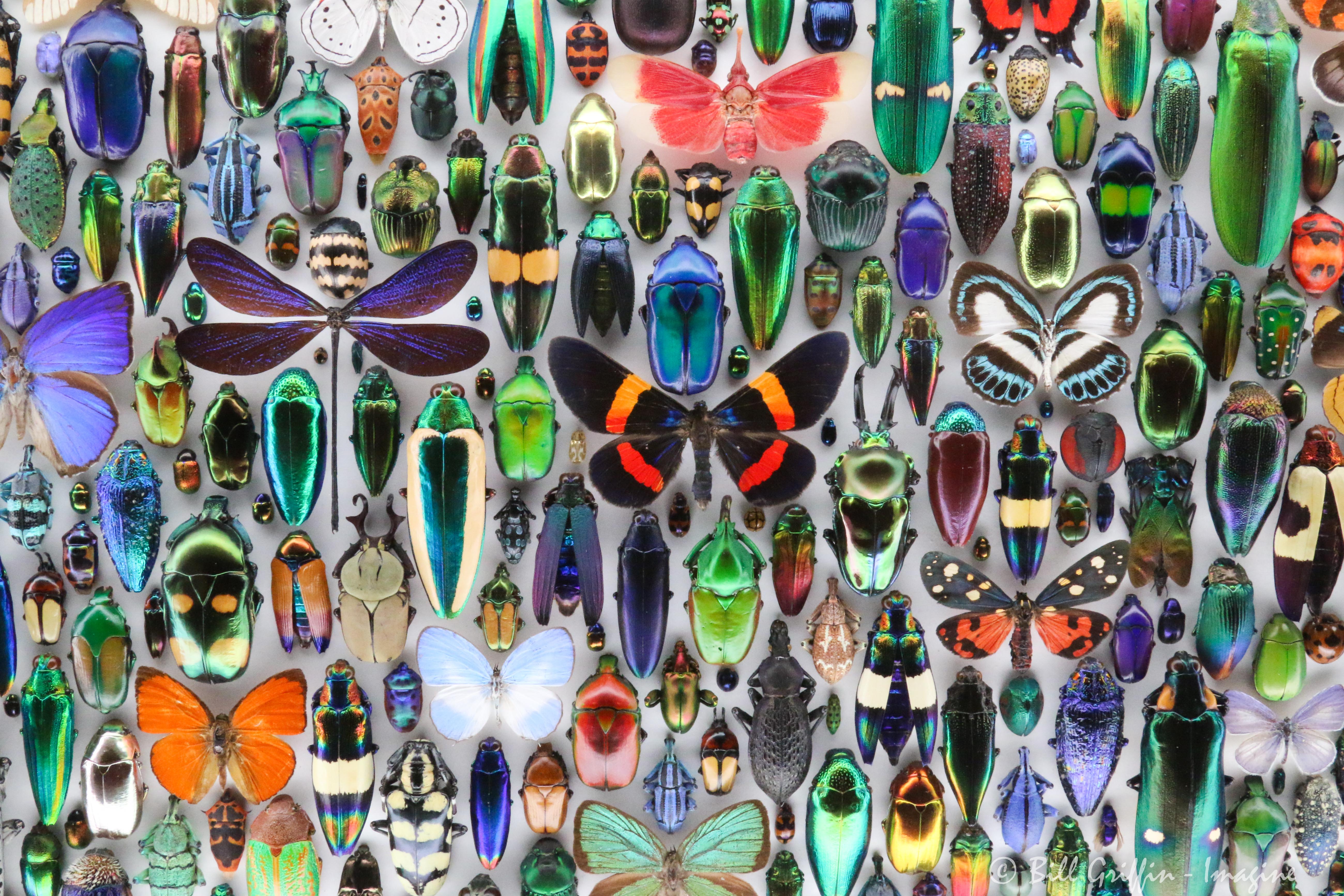
Today’s photographs are from the exhibit at the North Carolina Museum of Natural Sciences Exquisite Creatures by Christopher Marley. These amazing works are created by Marley from preserved specimens from around the world (and no vertebrates were killed in creating his art). The Museum describes this as a dialogue with art, nature and science, and Marley states his intention to allow each of us to tap into our innate biophilia, our love of life and living things.
Oh yes, and the little plastic insects came from the Museum gift shop. We all had to stop and play with them as soon as we left the building.
[The last day of the exhibit in North Carolina is March 20, 2022. It is appearing simultaneously in Idaho; check for future exhibits at Christopher Marley’s site.]
. . . . . . .
Spring and All
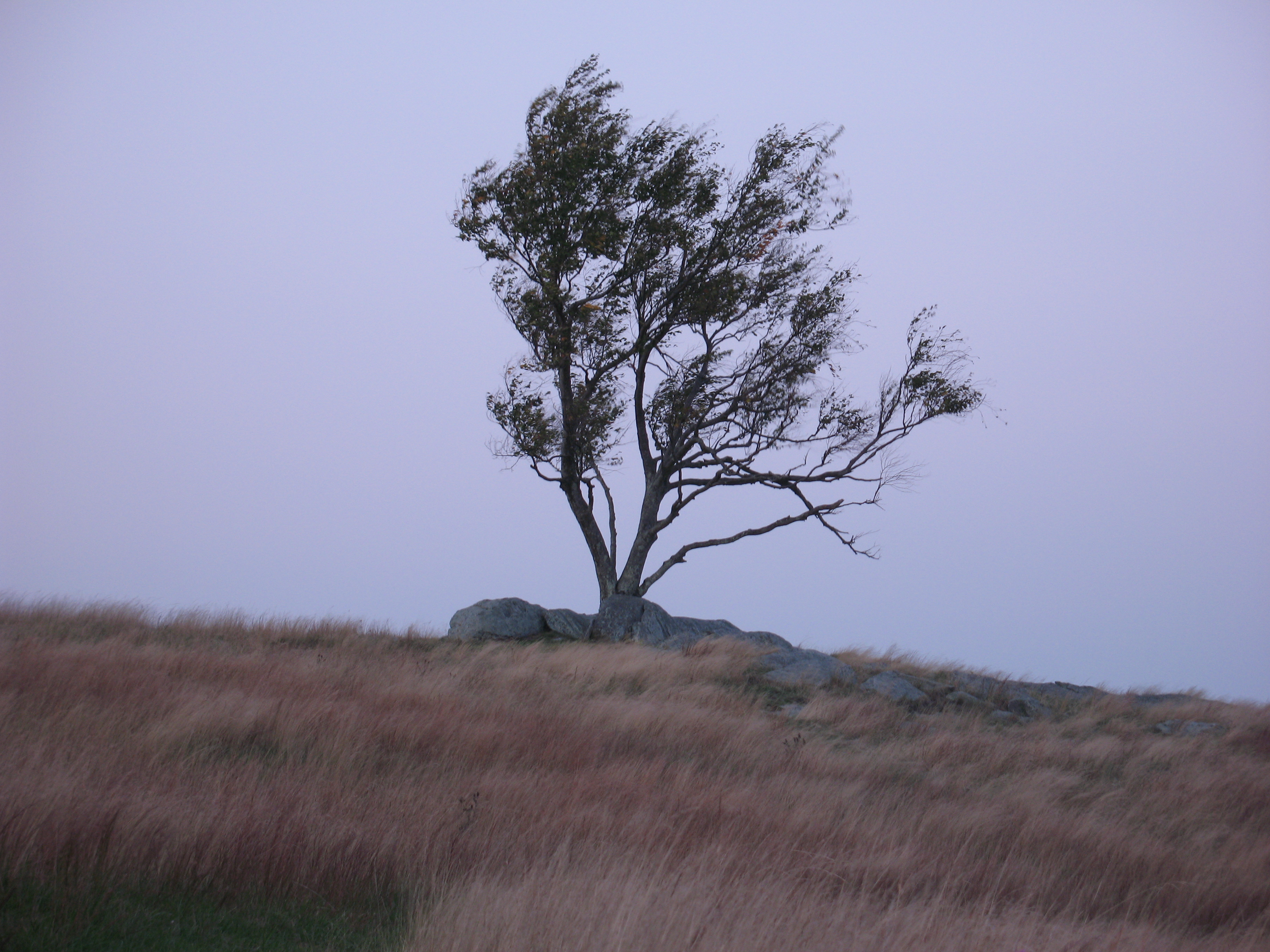
By the road to the contagious hospital
under the surge of the blue
mottled clouds driven from the
northeast-a cold wind. Beyond, the
waste of broad, muddy fields
brown with dried weeds, standing and fallen
patches of standing water
the scattering of tall trees
All along the road the reddish
purplish, forked, upstanding, twiggy
stuff of bushes and small trees
with dead, brown leaves under them
leafless vines—
Lifeless in appearance, sluggish
dazed spring approaches—
They enter the new world naked,
cold, uncertain of all
save that they enter. All about them
the cold, familiar wind—
Now the grass, tomorrow
the stiff curl of wildcarrot leaf
One by one objects are defined—
It quickens: clarity, outline of leaf
But now the stark dignity of
entrance—Still, the profound change
has come upon them: rooted, they
grip down and begin to awaken
William Carlos Williams (1883-1963)
from Spring and All, first published in 1923 by Robert McAlmon’s Contact Publishing Co.

. . . . . . .
The Need of Being Versed in Country Things
The house had gone to bring again
To the midnight sky a sunset glow.
Now the chimney was all of the house that stood,
Like a pistil after the petals go.
The barn opposed across the way,
That would have joined the house in flame
Had it been the will of the wind, was left
To bear forsaken the place’s name.
No more it opened with all one end
For teams that came by the stony road
To drum on the floor with scurrying hoofs
And brush the mow with the summer load.
The birds that came to it through the air
At broken windows flew out and in,
Their murmur more like the sigh we sigh
From too much dwelling on what has been.
Yet for them the lilac renewed its leaf,
And the aged elm, though touched with fire;
And the dry pump flung up an awkward arm;
And the fence post carried a strand of wire.
For them there was really nothing sad.
But though they rejoiced in the nest they kept,
One had to be versed in country things
Not to believe the phoebes wept.
Robert Frost (1874-1963)
first published in 1923 in Frost’s New Hampshire poetry collection; public domain.
. . . . . . .

. . . . . . .
. . . . . . .









Thanks, Richard. I found myself connecting with every poem in this book. Thank you for putting all of you into…