Feeds:
Posts
Comments

Posts Tagged ‘family’

[with 2 poems by Beth Copeland]

February 23, 2021

It’s all downhill from here. That’s what someone told me when I retired last September and it didn’t sound much like a benediction. Today though, sitting down to eat lunch half way through my long day’s hike and knowing that this is, indeed, the highest point on the Blue Ridge I’ll reach, all downhill sounds pretty inviting.

Today is my “birthday hike.” Every February I spend one day hiking the 17-mile perimeter trail at Doughton Park on the Blue Ridge Parkway. A few times I’ve had to break trail through fresh snow, once freezing sleet slicked my balaclava into a glass helmet, but today it’s supposed to reach the 40’s up here near 3,000 feet. I might get sunburned. I’m eating lunch at the 8.5 mile mark, a stone NPS shelter at the top of Alligator Back that looks down into Basin Cove, and across the holler I can trace this morning’s elevation profile.

Park at Basin Creek, climb the trail a quick 800 feet or so, then another more gradual 800, then continue following the ridgeline to encircle the cove – up / down \ up / down \ up / up / up, the final ice-encased switchbacks climbing Alligator Back especially gruesome. But here I am half way done and now it’s all downhill! Hmmm, after more than 20 years of hiking this trail I know better. For every moderate descent there’s another knob rising up ahead, down \ up /down until the final mile of narrow white-knuckle hairpins back to the creek.

It’s not how long the trail, it’s the elevation change. Mom turns 93 tomorrow and Dad at 94 is right there with her. She can hear better than he; he can remember better than she. They practice exercises the Therapist is teaching them so they can walk the mild uphills and downhills around their block every afternoon. So far this year they haven’t really had any net elevation change in independence, well, not enough to sweat; we’re all living day to day on pretty level ground. For her birthday Linda and I have given Mom a book of animal photography by Joel Sartore – her face shines as she turns each page. My sister Mary Ellen and her partner Wendy gave her a patio fire pit table and Mom and Dad look happy as Hobbits hunched around it.

From this vantage that we call today we can look across the blue mountains of time and retrace in memory what brought us here. The trail ahead is less clear, or maybe our vision is perfectly clear even if not clearly perfect. Rough paths, slick spots – inevitable. It can get steep. For today let’s share the view together.

.     .     .     .     .     .     .

I’m reading Beth Copeland’s Blue Honey for the second time and I know I will be reading it yet again. Most of the poems are set during the years her parents were entering their 90’s and declining as Alzheimer’s Disease progressed. She meets each waypoint of loss, theirs and hers, with tenderness and clarity. From vignettes of memories and intense moments she paints a portrait of their lives and reveals her own.

When we lose a parent to death the moment is etched on our hearts but also the calendar. We recall where we were, what was said; we commemorate the date. With Alzheimer’s we lose our parent in random bits like sparks that fly up from a campfire and extinguish in the night. Eventually the body sitting before us contains nothing of the person except an occasional glimpse as ephemeral as ash. Beth Copeland shows us that this sort of loss will make you cry, will make you pissing angry, and will also sometimes thank God make you laugh! Her poems are intensely personal but I also discover myself in so many of them. These lines are, from their first step along the trail and through all the sweaty climbs and bittersweet descents, perfectly human.

.     .     .     .     .     .     .

Sandhills Gold

. . . in the Sandhills of North Carolina,
a few lucky beekeepers strike blue gold.
– Chick Jacobs

The year Daddy died, beekeepers found blue
honey in their hives. How it turns

blue or why it only happens
here no one knows. Some

think bees feed on bruised huckleberries, scuppernongs
or kudzu blossoms. Too far inland, Daddy

never found it in the forty-five years
he kept hives. In the nursing home, I talked

blue honey into blue eyes that
stared back in a blur

of lost memory and sleep. What
was he thinking? I spoke

of his veiled hat and long gloves,
bellowing hives

with smoke so he could pull combs and
honey from inside, and pour sourwood

into old Mason jars in slow motion
like the lengthening summer day

when the sky was so delphinium
it could be music, or the blue

shadow that followed me through the doorway
into the buzzing of bees when I

was thirteen, crying behind the pear tree because
I wasn’t popular enough to be

May Queen. This is what I choose
to keep against forgetting:

You’ll always
be my queen,

he said, bending
to kiss my forehead. I carry

that moment like a bee
in amber on a gold chain

above my heart to ward off wintering
broods and dark swarms, a queen without

a country or hive, standing in slanted light
as bees droned

around my head, weaving a crown of wings
and buzzing with sweetness.

* * * * *

Grief like honey left too long in the jar,
like the pint we bought last year

from a beekeeper who used to sell pot,
in the pantry all winter flanked by bottles

of blackstrap and Hungry Jack
crystallizing in the dark,

too solid to spoon onto bread unless you melt it
in water on the stove. Impatient,

I spread the gold grains on my toast, remembering
when he was alive and it

poured in slow
measures onto my mother’s home-baked bread. One

summer he visited me in Chicago after robbing
his hive of a quart jar of sourwood, his

ankles so swollen
from stings he slept with his feet propped

on pillows. I want this
grief to dissolve like a lemon

lozenge on my tongue, I want
to taste the sweetness

of mornings
before sorrow, anger, remorse

soured my vision of being
young and oblivious to his

pain, I want my words to flow
like a vein

onto the blue-lined page as holy
honey flowed from his white

hives onto our bread, our tongues, our lives.

from Blue Honey, Beth Copeland, The Broadkill River Press, © 2017


.     .     .     .     .     .     .

Nothing Blue

When I leave she asks, Are you
going to that cabin with Phil? She can’t

recall our wedding. She wore
a periwinkle dress she bought at Belk’s

so she wouldn’t
embarrass me garbed in something

old as she sipped champagne and nibbled
cake. I live there. We’re

married, remember? She blinks. Oh,
that’s right. Not her fault, but I’m so

tired of wanting
her to hold onto that

one day. When I arrive to chauffeur
her to the doctor, she’s not

dressed but tells the nurse, I could live
on my own if I had a family. What

am I, chopped
liver? She tells her friends I never

visit because she forgets. On the drive
home, I pass a blur of chicory

growing wild around
a crinoline of Queen Anne’s

Lace – something
old, nothing

new, one thing borrowed,
almost blue

from Blue Honey, Beth Copeland, The Broadkill River Press, © 2017

.     .     .     .     .     .     .

Blue Honey won the 2017 Dogfish Head Poetry Prize from The Broadkill River Press. Not long after the book’s release Beth, Teresa Price, and I read together at Malaprop’s Bookstore in Asheville. A brilliant day! I still have the Poetrio Author! April 8, 2018 bookmark in my copy of Beth’s book. Zoom is a congenial gathering of sorts but reading beside another author you admire before a phalanx of expectant mostly strangers, well, that’s adrenaline.

.     .     .     .     .     .     .

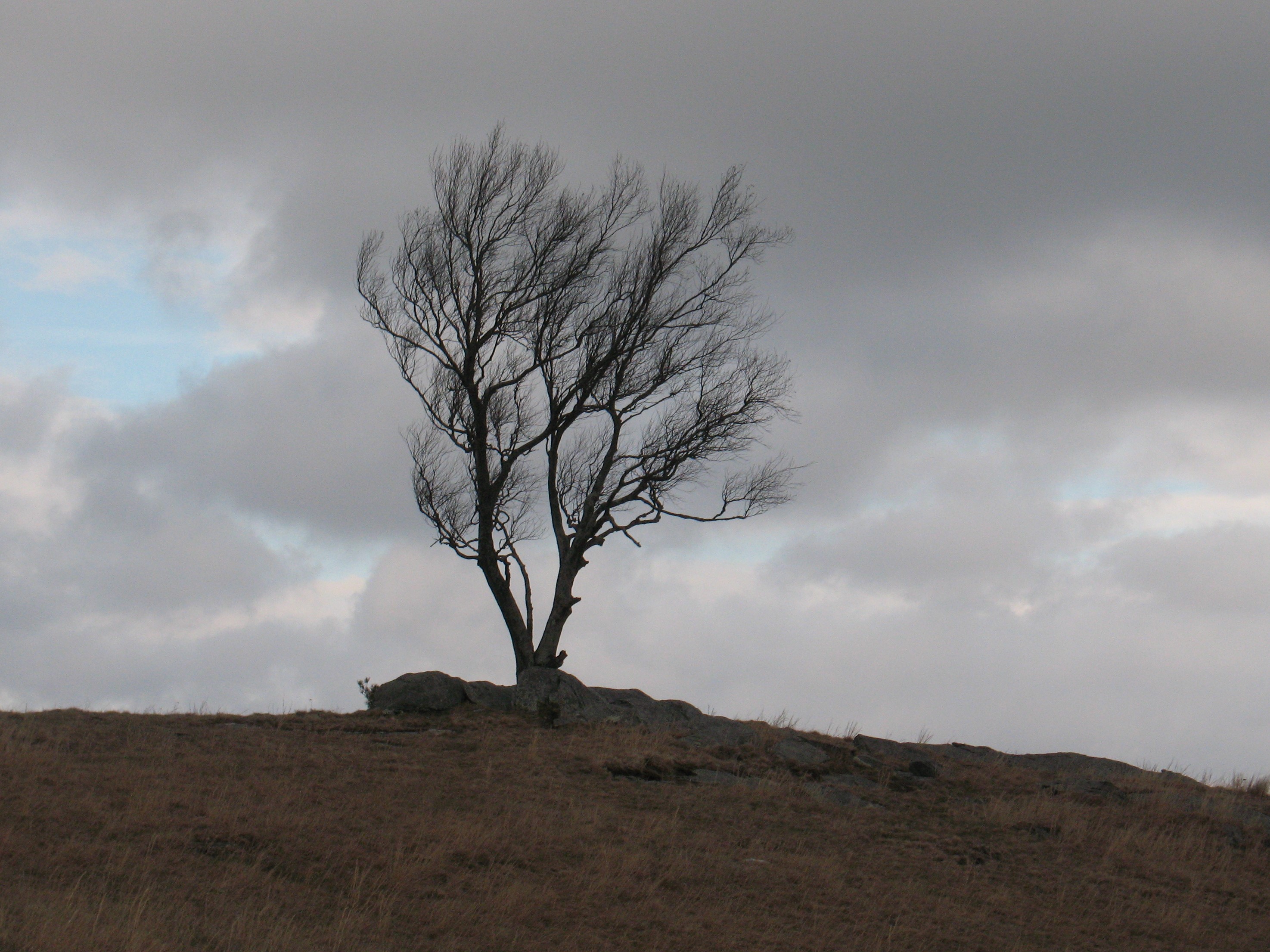
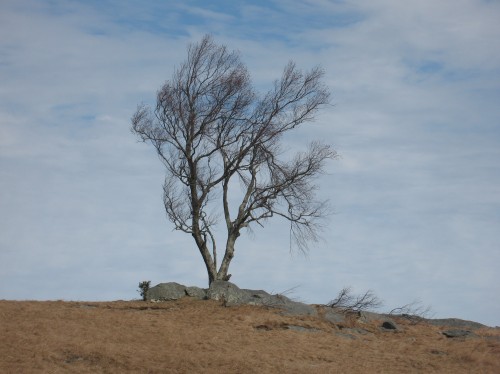
View across Basin Cove from Flat Rock Ridge — see the speck of a tree all by itself in the bald patch on the horizon? Watch for it . . . !

.     .     .     .     .     .     .

Read Full Post »

[with poems by Joan Barasovska and Kathy Ackerman]

Everything or nothing. The radio is off. The screen is frozen. The refrigerator snores. The clock won’t tick any faster, any slower. In an hour we leave for Raleigh to see our grandson (backyard, distanced, masked) but right now nothing is happening

I’m no good at nothing. If I wake in the dark my brain whirls venom trying to bite its tail. Where is dawn’s blessed peace? If I take deep breaths, watch the feeder, daily agendas begin to scroll down the back of my cornea. How many seconds after emptying myself before I fill back up with everything?

We are entering the season of nothing. The azalea may feint a few off-season blossoms but will we ever bloom again? We are in the season of waiting. Where is the so fragrant earth we lost so long ago? Where is the muscle and spunk of summer that convinced us we might carry through? The season of turning. What justice like waters, what righteousness like an ever-flowing stream? When? How do these shortened days stretch so long?

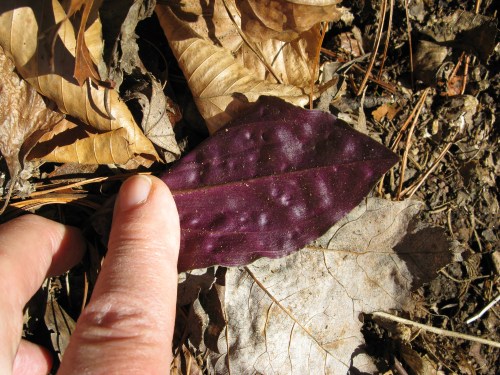
In the woods, something is happening. Orchids are making sugar. How have I missed that? One species will bloom in May, the second in August, but their leaves are now. Their delicate little tenacious tough-ass corms swell all winter waiting to rocket up a spike of summer flowers into a leafed-out overshaded world.

Something is always happening. Something is deeper than those scrolling agendas. Something in the world and something behind my optic chiasm in deep matter. Something that maybe wants me to be still and notice. Something to hope for, to wait for, to go forth and meet.

There is no nothing. It’s all everything.

.     .     .     .     .     .

These two poems are from Kakalak 2020, the annual anthology of Carolina poets. It is an eclectic volume – conversational, confessional, contemplative. Not as many COVID poems as I expected but wait until 2021.

The poems by Joan Barasovska and Kathy Ackerman speak to me of the winding thread that connects our past to our present. Knots and tangles, yes, but also a lashing to secure us in the lashing storm. The something that is happening every day is us becoming human.

.     .     .     .     .     .

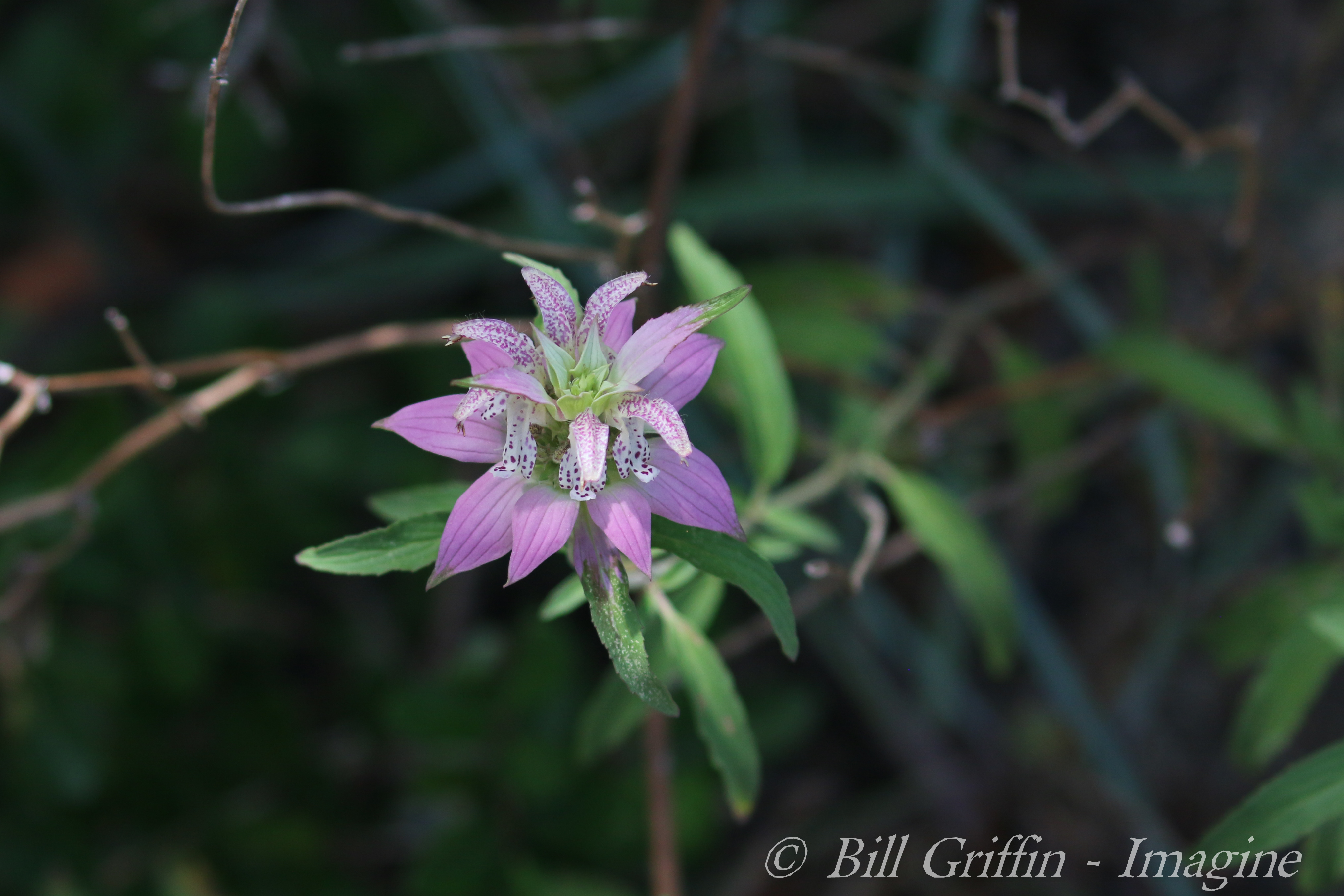
Cranefly Orchid, Tipularia discolor

.     .     .     .     .     .

Her Breath

Mike and I exchange a glance
over her cooling body.
Our eyes are dry.
Elsie wears a faded housedress
with a pattern of flowers.
Thirty minutes ago
an aide crossed
her swollen hands.

All morning we sat waiting
while Death rattled her.
She died in the afternoon
while we were out walking.
Our mother took a slow
rollercoaster ride to this day,
dragging us with her on
every shivery dip and climb.

Back from the dead,
Mike said when she woke
from a coma, angry to find herself
in a clean hospice room.
She raged until he put her back home.
Frail, sick, ninety-three, hanging on
ten hears after Dad’s death.
She scolded me yesterday.
I was late for lunch.
I had forgotten to pick up her mail.

Their old bed had been replaced
by a narrow hospital bed
rolled in the hospice workers
while she fumed in the living room
and I boiled water for tea.
Now her jaw is slack,
her last silent treatment.
Above her head hangs
a sad-eyed portrait of me at nine,
painted in blues and grays.

Mike and I are limp with relief.
the secret of Elsie’s anger died with her,
but it was probably sadness.
We are second-generation Americans,
inheritors of the sadness seed.

This mother
lying flat between us
birthed me sixty years ago.
With her last breath,
She’s in a better place
and so am I.

Joan Barasovsaka, Kakalak 2020, Main Street Rag Publishing Company

.     .     .     .     .     .

Adam-and-Eve Orchid, “Puttyroot,” Aplectrum hyemale

.     .     .     .     .     .

Misnomer
for Goliath, my father

i.
This story begins when I believed every word my daddy said.
Honeysuckle, he called them, tending the cuttings
that go all the way back to Rock Creek 50 years,
Aunt Gracie’s yard in the hills where I never lived.

Honeysuckle was all I had to root me to that ancient soil,
so every home I bought I planted some
from Daddy’s supply, rooted in plain clear water.
I wondered why it had no scent, was not a vine,
was pink, for crying out loud.

Now shopping for plants for house #5,
I see the truth in 5-gallon pots before me:
Weigela.

I imagine old Aunt Gracie shooing my father away
from her quilting or canning or sitting alone.
Go cut back that honeysuckle
before it swallows up the outhouse.

Later, seeing his mistake, she didn’t correct him –
a name is just a name –
Grace just glared at tiny Goliath
so proud of his mound of pink and green
already wilting

while the roof of the outhouse
still plushed with yellow sweetness
he’d confuse for 80 years
with a plant that belongs
to the same family, after all,
but so much harder to say.

ii.
Start me some honeysuckle, Daddy, I blurt out
in one of awkward lulls.
I want to imagine his hands on the branch,
the snip of sprigs of coal country
where Gracie’s old feist
barked me all the way to the outhouse and back
when I was too small to know
how hard it is
to keep what lives alive.

Kathy Ackerman, Kakalak 2020, Main Street Rag Publishing Company

.     .     .     .     .     .

.     .     .     .     .     .

Let justice roll down like waters, and righteousness like an ever flowing stream.
Amos 5:24

.     .     .     .     .     .

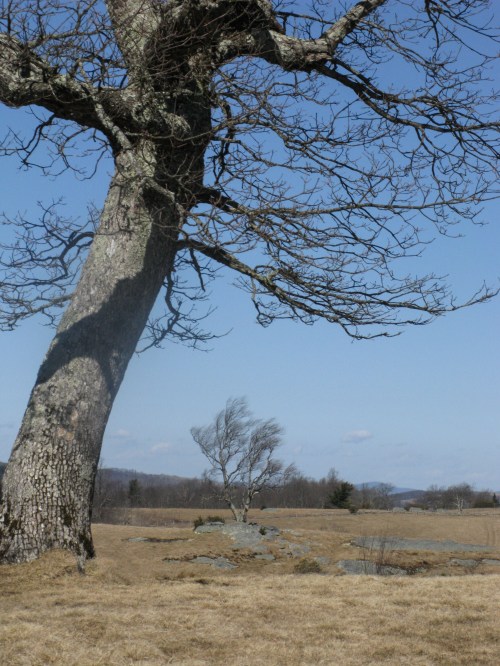
2019-02-09 Doughton Park Tree

Read Full Post »

This evening at suppertime she peers into the beef and carrots simmering on the right burner; I snip pea pods and spinach into the black bean broth on the left burner. Pretty soon both pots are smelling darn good. It’s usually something like this, the scene in our kitchen all the years since I decided to stop eating meat and she didn’t. Separate skillets, or sequential nuking, then sit down together.

But then every once in a while it’s all her show. She steams the broccoli while I sit near the lamp and read. I start on a little dry white wine (she’ll accept two ounces for herself later – Pastor Jan, pretend you didn’t read this) while she simmers the pasta. She serves two blue patterned Japanese bowls we’ve owned since year one. Then we sit down together.

When I die, sorry to say, I have no faith that there will be an angel in heaven who can make broccoli Alfredo this good.


.     .     .     .     .     .     .

Getting home from the office early these days, I’m revisiting the overflowing stacks beside my desk. Poetry, philosophy, poetry, nature, poetry — I’ve rediscovered that all of Terri Kirby Erickson’s poems are home.

Lots of poetry is about home – you get a peak through the curtains and maybe you can imagine life on the other side of the pane. Terri’s poems are home. Welcome in. Don’t mind the mess. Maybe you didn’t understand this is your home but for twenty or thirty lines you will be part of the family. So many families. So many homes longed for, left behind, returned to. Soft light, hard edges. Sweet and harsh and all shades between. Come on in. Let’s sit down together.


.     .     .     .     .     .     .

from In the Palms of Angels, Terri Kirby Erickson, Press 53 © 2011


Wayfarer

He seems like a man
you’d see walking down a long
stretch of road, the kind
with dust

rising

in a red haze beneath the wheels
of pickup trucks, cutting
through fields of golden

wheat. Scudding clouds cast
shadows
across the ground like whales

swimming through clear
water, and the air carries the scent
of grain and loam.

Every few miles, the glint of a silo
(startling against the lonesome

sky)

signals a farm house
where peach pies sit cooling
on window sills, and patterned
carpets are worn-out from parents

pacing to and fro with fretful babies
in their arms.

He’s traveling toward the horizon
with the steady gait of someone
with a place to go, whose tender

gaze

will soon find home, that place
more sacred than communion wafers
nestled in the palms
of angels.

.     .     .     .     .     .     .

Rosary

Down by the creek,
we sit on dry
stones,

our shoes and socks
jumbled in a pile.
The sun

warms our toes
and casts its
net of light

from bank to bank,
where willows
trail their

fingers in the water,
and snakes look
like branches

floating by
them. Mosquitoes
lay their eggs

in stagnant pools,
far from leaves
and grasses snagged

by rocks, twisting
in the current.
Tadpoles swim

in tight formation,
wiggling their tails
in tandem,

as salamanders
scuttle by, searching
for places to nap.

Dragonflies hover,
then hurry
away,

their wings
thrumming a one-note
song – while we,

silent as nuns in prayer,
count the beads
of summer.

.     .     .     .     .     .     .

[Rosary first appeared in Basilica Review; other collections by Terri Kirby Erickson from Press 53 include: Telling Tales of Dusk; A Lake of Light and Clouds; Becoming the Blue Heron.]

Author Page, Terri Kirby Erickson, Press 53, Winston-Salem, NC.

.     .     .     .     .     .     .

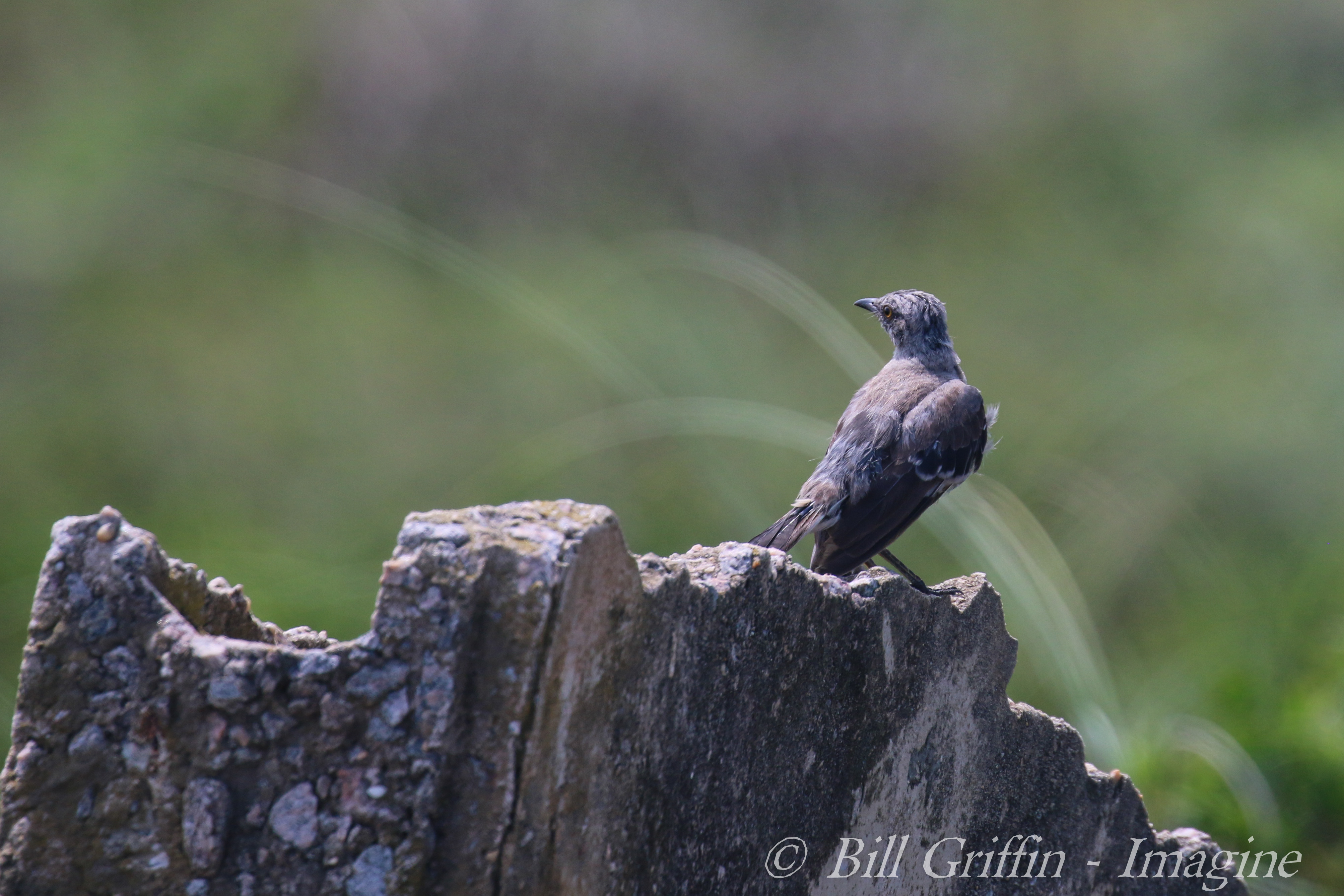
IMG_0880


Read Full Post »

« Newer Posts - Older Posts »