Feeds:
Posts
Comments

Posts Tagged ‘Debra Kaufman’

 . 
[with 3 poems by Debra Kaufman]
 . 
Walking Westerly, My Shadow Precedes Me
 . 
She does not hear a warning
in the wren’s song,
+++++++++ as I do,
or see the ghost moon as an omen.
 . 
She appears to have a jauntier step,
wilder hair, longer, slimmer limbs.
 . 
Perhaps she is the me
I once was –
waitress, dancer, diary keeper.
 . 
Nothing bad
has happened yet.
+++++++++ Soon
 . 
she will trail a dangerous
fragrance, be sniffed out,
tracked, pinned down.
 . 
Wind trembles the beech leaves.
The wren calls again.
 . 
I step toward the past,
she into the future
 . 
Debra Kaufman
from Outwalking the Shadow, Redhawk Press, Hickory, NC; © 2023.
 . 
❦ ❦ ❦
 . 
If you believe that everything is connected;
if you believe that matter and energy are conserved (not to mention angular momentum);
if you believe that the breath you’ve just taken into your body, its oxygen reddening your corpuscles, worked its way up the hill from the great red oak not tumbled in last spring’s tornado, and that when you release it a second from now it will begin to wisp its way back down to wait for the asters you’ve sowed on wind-scoured earth;
if you believe that your body is stardust, its phosphorus and calcium and that fleck of selenium, every element which is heavier than air;
if you believe that no distance is too far and no time too long a thread to tie everything together and extend the connection,
++++++++++ then believe this:
 . 
when that wisp of a woman sitting on the couch beside your father and his baby sister, white-haired tiny flit of a woman no more substance than moonbeam, when she smiles it will light up the string of a million smiles stretching back so far that every smile since must take its cue, all the way back to the very first smile twenty-five years (less thirteen days) before you were born.
 . 
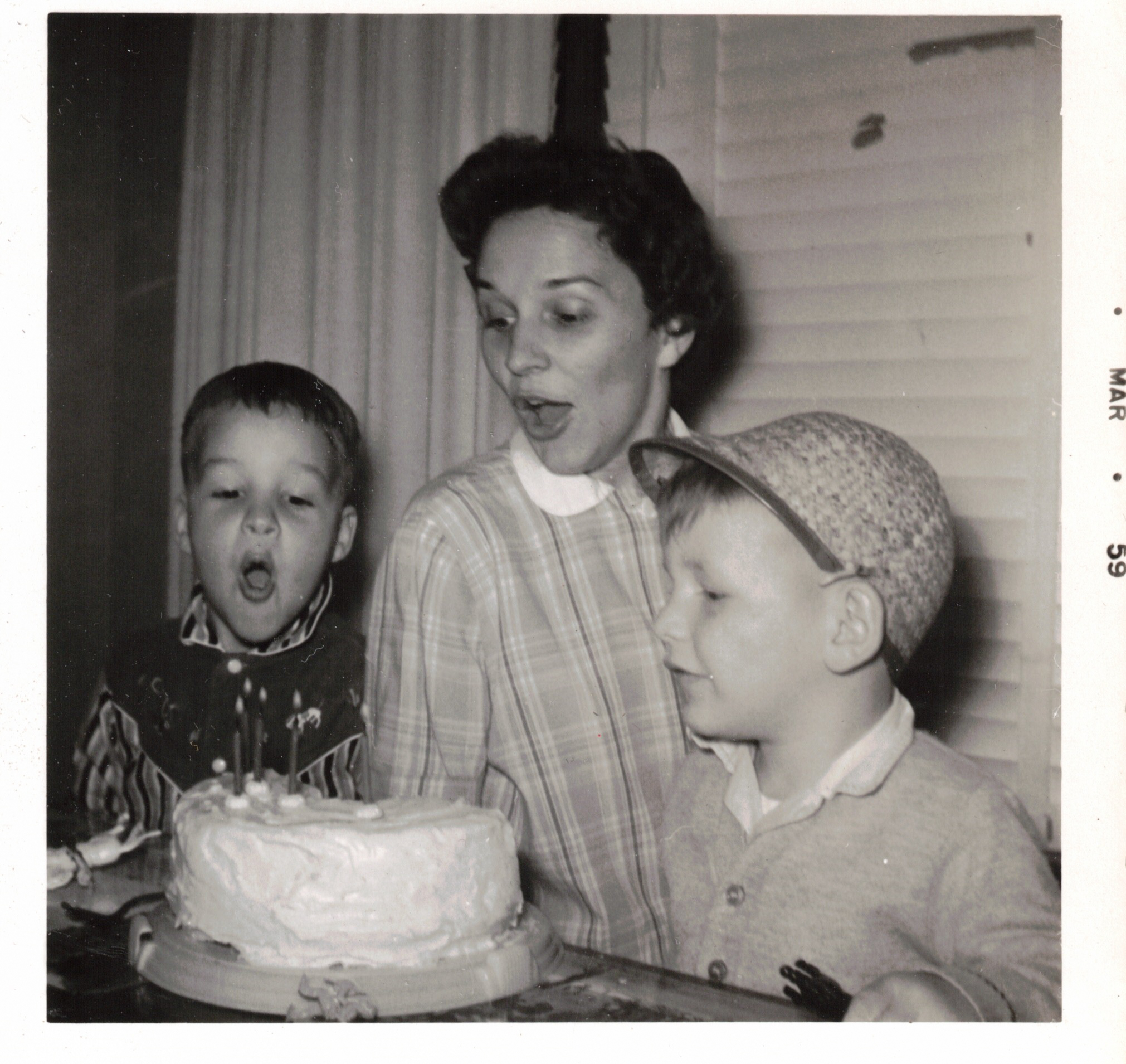
Recall those smiles you can and hold onto them — you dancing while she plays Mozart on the piano and laughs; she holding the cake while you take a deep breath to blow; beaches and playgrounds, jokes and canasta, weddings and first smiles of your own babies shared with her. Most smiles have flown to continue their cycle, petal of a flower she will notice, bug she’ll try to pick up from the carpet, a noise or a vision in some other creature’s thread of existence . . .
 . 
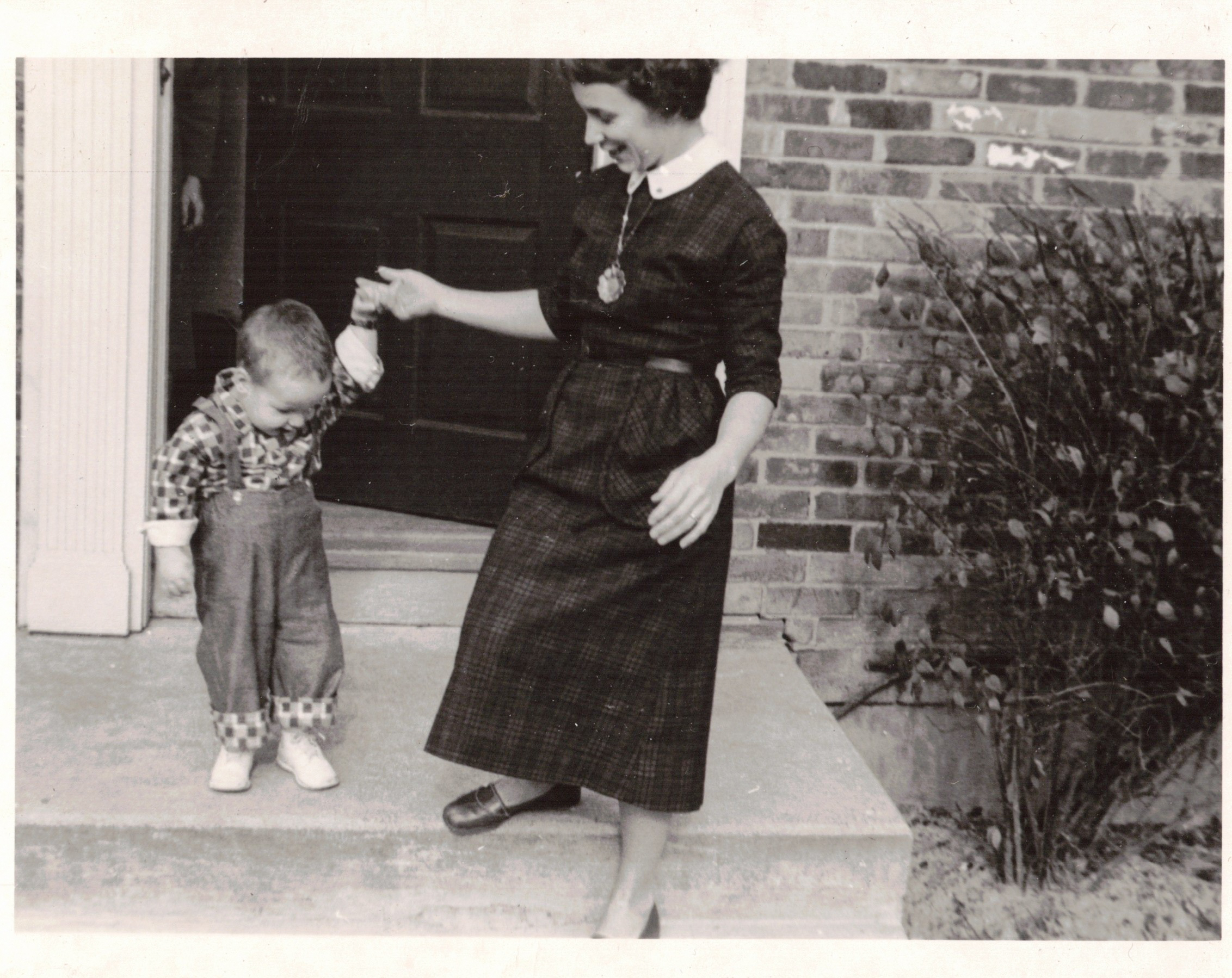
. . . but some precious few smiles are preserved in silver. Layers of atoms on glossy paper. Here’s one that her niece, your cousin, has just handed you, holding its connection to the others over seven decades in the bottom of a carton waiting for your gathering today. You hold it close for her to see and she smiles again.
 . 
Look! Today’s smile! When you see it, recognize its provenance, its taxonomy, its lineage and inheritance from all that have preceded it. Accept its assurance. So much lost, so much consigned to this or that flimsy drawer in the cupboard of memory (yours) and so many keys to so many drawers misplaced (hers), but still firmly by that long and winding thread as tenuous as breath connected. Every wisp connected.
 . 
 . 
❦ ❦ ❦
 . 
The last time my mother
 . 
spoke words I heard
I saw her see me in a flash:
You’re my daughter!
We walked the hall,
a circumference
around the single rooms.
Round and round.
Each time we passed
the common room
she’d point to the Christmas lights.
 . 
On her bed lay a book
of her wedding photos.
I named the names, some small comfort.
I sang “Jacob’s Ladder”
and she smiled in that puzzled way.
 . 
I meant to rub lotion on her legs –
her skin dry, tissue-paper thin –
but they were calling her
for supper. I kissed her cheek.
She kissed my hand,
did not want to let it go.
 . 
I hoped we’d see a few sparrows
out her window, but
dark coming early, I saw only
our ghostly selves reflected there.
 . 
Debra Kaufman
from Outwalking the Shadow, Redhawk Press, Hickory, NC; © 2023.
 . 
 . 
❦ ❦ ❦
 . 
Yet if we do not stare despair in its face
(I hear you say) how will we recognize
 . 
the silver sliver of moon
when it hangs suspended like a dream?
 . 
++++++++++ from Bearing / Witness
 . 
Moonrise this past Monday was 2:37 PM in Elkin, North Carolina, USA. Waxing gibbous, we spot her on the one clear afternoon without rain. We won’t have to worry about finding our way through the darkened house at bedtime. Light will precede us, follow us, attend us. We can’t summon the moon or assign her course; we can only watch and trust she will return. We can only recognize and be grateful.
 . 
I didn’t want to get out of bed that Monday morning. All the motivations and machinations of the preceding week – phone calls, site visits, family conferences – had cooled and dissipated. Who says energy is conserved? I sat at my desk, the to-do list accruing and scrolling in my head, not knowing how to begin. And then there was Debra Kaufman’s new book waiting patiently at the top of the pile. I opened to the first poem. The clamp on my innards released and breath returned.
 .  . 
Moon, and of course shadow, are recurring images in Outwalking the Shadow. It is no coincidence that metaphor and metamorph are nearly homologues. Images may shift their shapes and meanings, may stand in for any number of times and spaces, but moon and shadow link arms, weave a net, cast it out and draw us in. Debra does more than create contrasts. Her poems are not satisfied to simply cast light into the dark umbra of grief. Enter her lines and welcome the shadow, relive it, discover how and who it has made you. Recognize that light blinds when it glares but enlightens when it glimmers, slivers, almost ephemeral as dream.
 . 
Recognize that each of us lives with our shadow, and that even moonlight may cast one. Debra’s book is dedicated to her mother, Kathleen, and many of the poems explore her life, their life together, her final days, thereafter. Debra’s poems encompass much, much more than grieving, however. In many of her lines, I hear her speaking the very phrases I have needed to speak to my own heart. Perhaps you, too, have had mornings when you found it a burden to take even one step, when you felt empty and powerless and alone. These poems admit that. We are human and we carry our shadows. But these poems surprise themselves with sudden flashes and connections – a summoning of crows, a lesson learned, a visitation by spirits. Every time I turn another page, I discover more of what I need. Come, let us walk out together. There may still be joy if we open ourselves.
 . 
 . 
More about Debra Kaufman, Outwalking the Shadow from Redhawk Press, and how to purchase HERE
 . 
❦ ❦ ❦
 . 
Let my heart swing open
 . 
like French doors to a garden of blowsy flowers,
saloon doors where Kitty serves shots of rye,
a screen door with a farm wife waving you in,
 . 
or let my heart be a picture window
through which I see everyone I have ever loved,
my breath steaming the glass, come in,
 . 
we’ll turn up the party lights,
show all the passersby we’re dancing,
or better yet, let’s all spill out into the street,
 . 
my heart a village music festival –
welcome teachers, firefighters, cashiers, nurses,
shysters and spinsters, salsa dancers a skateboarders,
 . 
cat lovers, detasselers, twirlers and high-steppers,
come in you scuffed shoes, rhinestones, flannels,
I’ll be a mirror reflecting all y’all’s kindness,
 . 
your clumsy moves and broken bits,
your sad patience and patient wildness,
your generosity, crankiness, haunted dreams –
 . 
I’ll be the hostess sprinkling blessings like petals,
saying, The universe is here and so are we – 
champagne for everyone!
 . 
Debra Kaufman
from Outwalking the Shadow, Redhawk Press, Hickory, NC; © 2023.
 . 
 . 
❦ ❦ ❦
 . 
 . 
❦ ❦ ❦
 . 
2016-10-17a Doughton Park Tree

Read Full Post »

[with two poems by Debra Kaufman]

Deep shade, red spruce, heavy moss – the trail switches up, cuts back, winds steadily higher. We can smell the transition, conifer tang, slow decomposition. We can feel it on our faces, in our pores, sweat cooling, wraith of mist blown up the ridge to envelope us. And we feel it somewhere deeper.

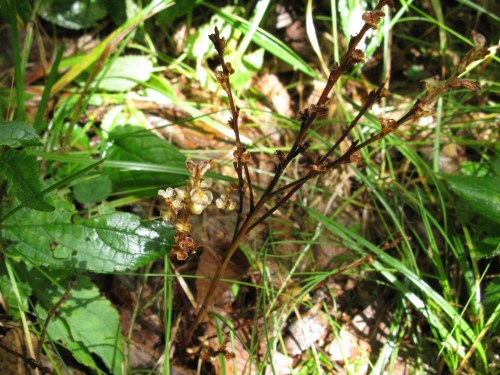
Something changes, so gradual we sense it before we know it. Daylight creeps through, one tree with toothed sun-colored leaves, then two; smell of spring and sweet flowering even at the end of autumn; witch hobble and pale mountain asters give way to dwarf goldenrod. Look, here are beech drops, flowers faded, seeds set, never green, their skinny bodies and appendages like effigies set among the trees they parasitize. We stop and breathe. Again, deeper. This is beech gap.

Leave a patch of ground alone long enough and it will grow into what it is meant to be. Its personality is in its community. Why does this beech gap persist? Its elders, Fagus grandifolia, stunted and twisted in communion with mountain maple, wood ferns, sedges – why not fir and spruce intruding? Elevation, precipitation, mountain aspect, soil pH? Centuries-old seed repository in the duff? Visitation by warblers, jays, and small mast-seeking mammals? Protection by allelopathic residues? Protection by mountain spirits?

All of these may define but don’t explain. It is the community that becomes itself: shallow spreading roots and pervasive mycelia, leaf and frond, sporangium and ovule, every one essential to the personality of place.

And you and I? We may choose how tall we stand. We choose which way we face, whether we learn from our elders, teach our children. We rest here for a few minutes and commune with this other. The silence of a ridge-crest glade: fragile or resilient? Retreat or restoration? Will we descend from the mountain and bring this peace, this purpose, into our own communities?

Beech drops, Epifagus virginiana, Orobanchaceae (Broomrape family)


.     .     .     .     .     .     .

These two poems by Debra Kaufman speak to me of reverence and restlessness, of longing for community and the fear of isolation. Are we welcome on this earth and will we welcome others? Will we create more than we destroy?

As described on the cover of her book, God Shattered, Kaufman discovers how personal disillusionment can be a guide to finding the godly within ourselves. These poems lead us to contemplate and understand our place in this fragile world.

.     .     .     .     .     .     .

Great White
An angel is nothing but a shark well-governed.
– Herman Melville, Moby Dick

Everyone carries a shadow.
The less it is embodied in the conscious self,
the blacker and denser it is.

Does a savage self always lurk
just below the surface,
on the hunt, no matter

our good intentions? Is our higher
nature ready to do battle against the dark,
harpoon at the ready?

If, as the Buddha says, there is no I,
does awareness reside
between empty spaces?

I understand so little.
But I can see Aleppo is rubble,
its people scattered;

anyone who listens can hear the cries
of girls being shuttled into brothels,
can imagine comforting someone suffering

here or half the world away.
How do we stop what is sacred
from being ravaged,

witness life out of balance yet not despair?
There must be ways
toward doing what is right.

Why else, as Job asked, would
light be given to a man
whose way is hidden?

The great white shark
is nearly extinct. It can sense
a beating heart over a mile a way.

.     .     .     .     .     .     .

Welcome

You, one of seven billion born
helpless, nearly hairless,

one more chimp-cousin
in our midst:

Will you be swaddled,
neglected, anointed,

will you breathe air
that smells like rain?

Which foods will sustain you,
upon what ground

will you walk? What storm,
fires, floods will sweep

over you, what languages
will you learn, what

dances, what prayers?
Here is my hope for you,

little stranger: may you feel
beholden to this wondrous planet,

may you take your hungry,
humble place in it,

may you dedicate your life
to making it a world worth

revering, holding, passing on.

poems by Debra Kaufman from God Shattered, Jacar Press, © 2019

.     .     .     .     .     .     .

Debra Kaufman grew up in the Midwest but has lived in North Carolina for thirty years. She has published three poetry chapbooks and four full length poetry collections: God Shattered, Delicate Thefts, The Next Moment, and A Certain Light.

.     .     .     .     .     .     .

The Beech Gap is a rare subtype of Northern Hardwood Forest, found scattered in small patches surrounded by Fraser Fir and Red Spruce in Great Smoky Mountains National Park and elsewhere at the highest elevations of the Southern Appalachians. The Beech, mixed with small numbers of Buckeye, Birch, and Maple species, are stunted by the cold climate and high winds, with an open understory but relatively rich herb layer. Some patches in the Smokies are fenced to prevent destruction by invasive non-native wild pigs. Why this seemingly stable climax plant community remains stable and is not overtaken by Spruce-Fir remains a mystery.


.     .     .     .     .     .     .

All photos by Bill Griffin from Southern Appalachian Naturalist Certification Program on Southern Appalachian Ecology, September 2020, Great Smokies Institute at Tremont; instructors Jeremy Lloyd and Elizabeth Davis.

.     .     .     .     .     .     .


IMG_7952


Read Full Post »

My middle name, just like my father and his father, is Wilson.  The county just east of Wake and just south of Nash is Wilson.  Its county seat and the home of Barton College is Wilson.  Is that why, when I drive past the magnolias and stately homes onto the pastoral campus and walk beneath the loblollies and grand willow oaks to the Sam and Marjorie Ragan Writing Center, is that why I feel so connected?

This second Saturday in April is the tenth annual (OK, Marty Silverthorne says it’s the ninth) celebration of National Poetry Month by Walking into April, a collaboration of the NC Poetry Society, Barton College, and the Gilbert-Chappell Distinguished Poet Series.

.     .     .     .     .

DSCN4950

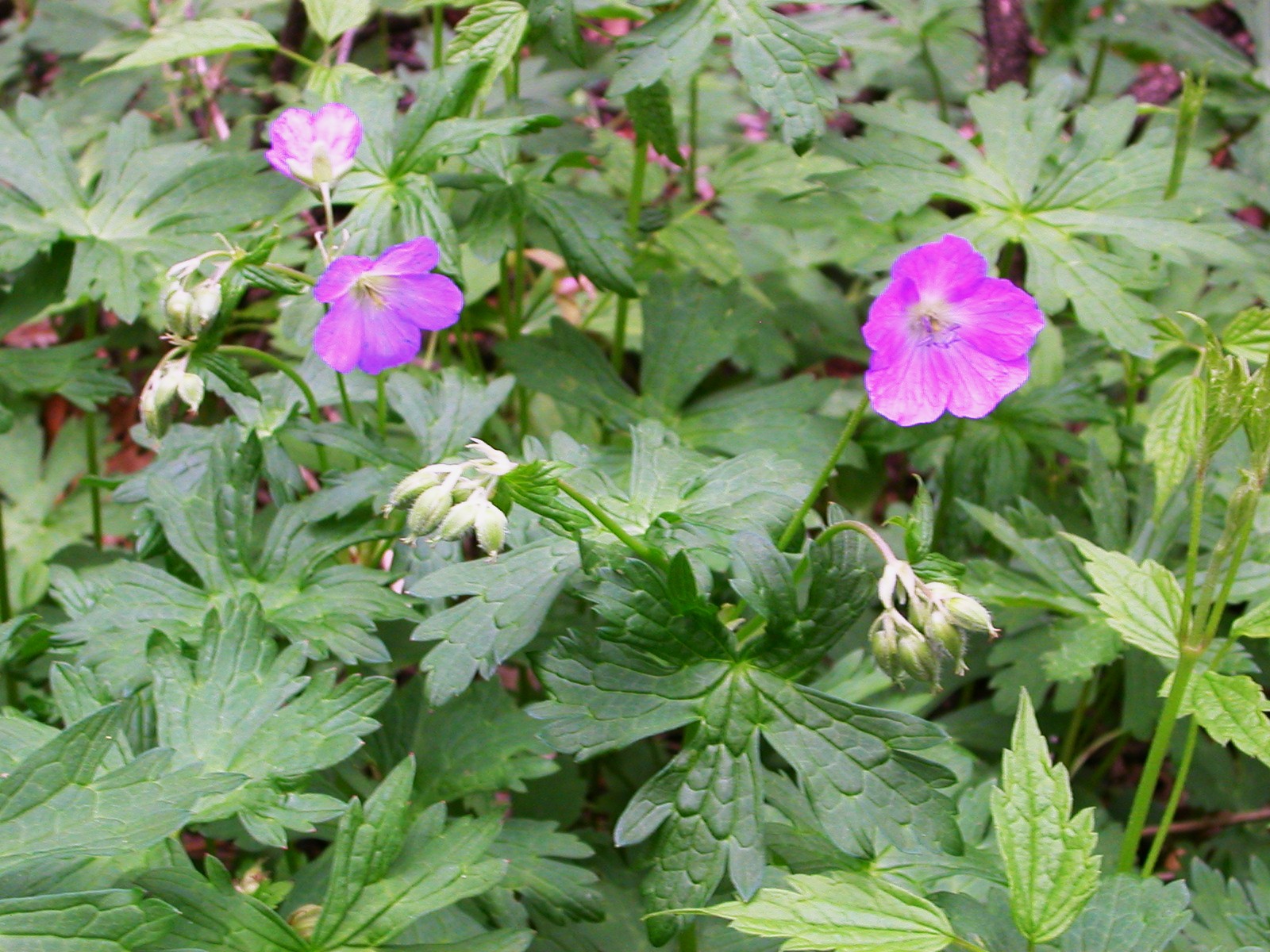
Wild Geranium

Let Us Walk Into April

It was a pear tree in bloom
That lit up your eyes.
You came at blossom time –
Dogwoods and lilacs,
The camellia and azalea,
And the glow of the redbud tree –
Thousands of wildflowers run before your feet,
And a faint green hovers in the woods.
Here we are just before the coming of April,
When the whole world is new
And each day is a beginning,
A time of sunlight and splendor –
Come, let us walk into April.

Sam Ragan, NC Poet Laureate 1982-1996

.     .     .     .     .

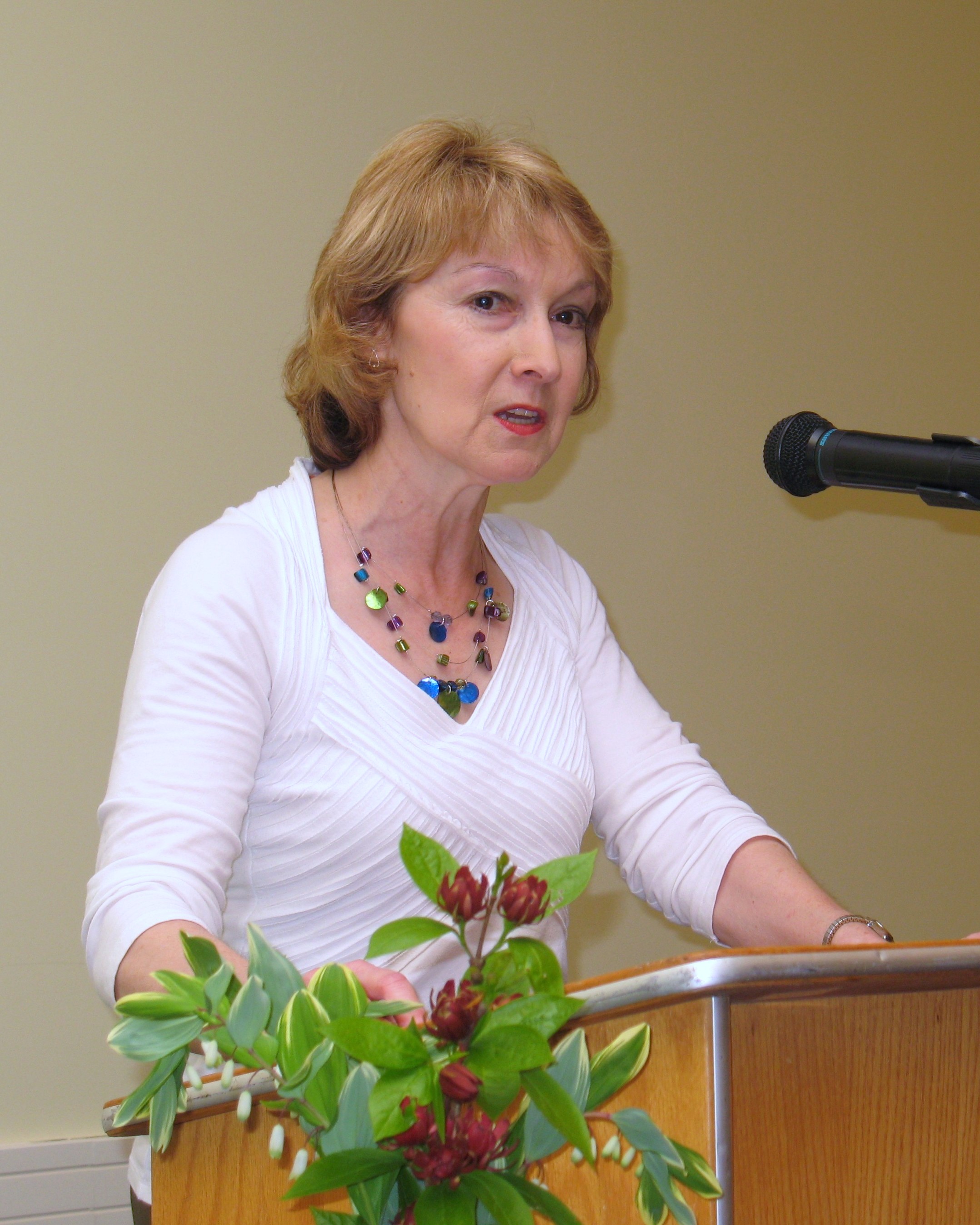
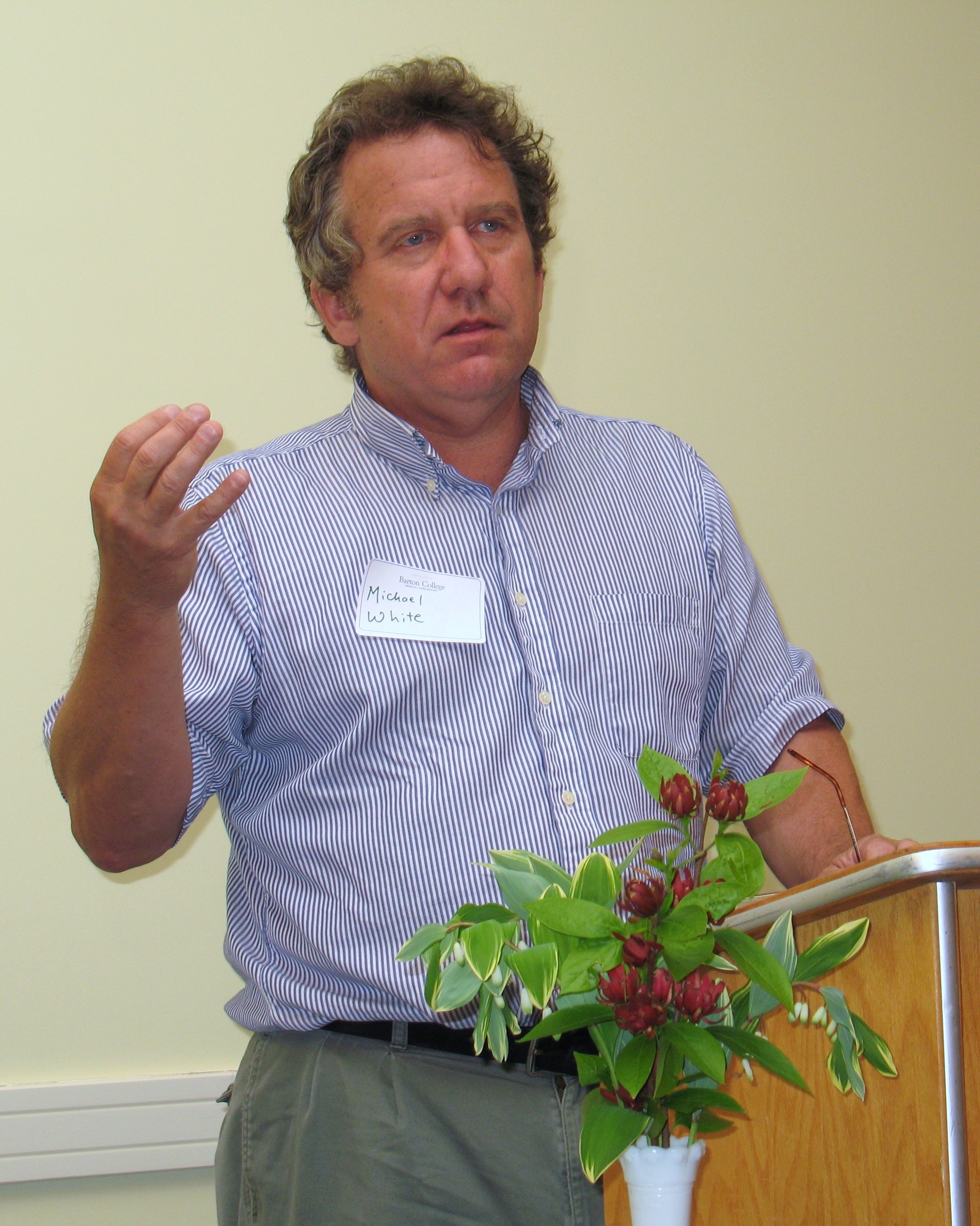
In the morning: readings by two featured poets (this year Debra Kaufman and me), a round-table discussion.  In the afternoon: readings by each of the Eastern region’s Gilbert-Chappell students, a reading by their Distinguished Poet mentor (this year Michael White from UNC Wilmington), and of course open mic.

My impression, after attending Walking last year and again this year, is that this is a time and a place to become connected.  The young Gilbert-Chappell poets (Elizabeth is still in Middle School) connect to their mentor for months via prompts, suggestions, critiques — literary bonding.  This day of reading is the culmination, the pinnacle of all the poetry they’ve worked on together.  A few faces are present at the meeting year after year: Becky Godwin, our Barton College sponsor; Marty Silverthorne, without whom no open mic could be complete; Bill Blackley, to remind us of the legacy of Marie Gilbert and Fred Chappell in creating this program. And of course Sam Ragan is ever present.  His vision and creative spirit, keeping bright the connections between the literature of our past and the hottest verse of today, are a major reason North Carolina has become such a state of poetry.

Well, I just had a wonderful day and once again I feel connected to a big encouraging family, all of us blood kin because of the poetry in our genes.

.     .     .     .     .

Elizabeth: Spring “. . . eventually something will grow from the ashes of a fire!”

Rachel: I Am Spring “I am the recovered youth in all life.”

Nancy: Spring Poem “I felt perfect . . . like the butterfly poised on the coral azaleas.”

Lauren: To Be Celebrated “speechless . . . grasping for verbs of uninvented languages.”

.     .     .     .     .

During the morning reading, Debra Kaufman shared poems from several of her earlier book and then focused on her new collection, The Next Moment (2010 Jacar Press).  The poems cover an entire life’s span with sensitive maturity and a light touch that brings me, the reader, into the poem’s very moment.  The petals of star magnolia and tulip are falling; the breeze already hints of July; I will re-read these poems and traverse the seasons and the years.

.     .     .     .     .

Shimmer

After the rain, heat
rises in mirage-like waves
on their hike to the river –
father, son, pregnant mom.
They sit midstream on boulders
and dip their feet in.

Above the river’s burble,
a high-pitched, ear-tickling thrill –
language of the infinitesimal –
and a horde of tiny angels
fills the hazy sky,
translucent wings glinting.

They’re going on into infinity,
the boy says, proud
to use the new word he learned,
along with optical illusion,
from a traveling magic show.
They watch, not talking,

until the cloud thins, disappears.
The woman wants
to say miraculous, but know
her husband would scoff.
the boy spies the first
split husk on a twig.

They find hundreds of shells
of the creatures
that ascended in a holy cloud,
then dispersed to light in trees,
beings that will sing lullabyes –
a choir of breathing – all summer long.

© Debra Kaufman, 2010

IMG_2055

IMG_2049

IMG_2052

IMG_2073 .     .     .     .     .

Read Full Post »

Older Posts »