Feeds:
Posts
Comments

Archive for the ‘Imagery’ Category

 . 
April 24, 2024
 . 
Our true home lies outside, deep in the wilderness of forest and mountain, river and desert and sea, the source of our being and the destiny of our great meandering blundering dreaming journey through time. Like Odysseus in his wanderings, we are homeward bound whether we know it or not.
++++++ Edward Abbey
 . 
Wilderness has drawn humans closer to God throughout history. Why should we, in the twentieth century, believe this is suddenly no longer true? Long after the Exodus, in a time of recurring apostasy, Hosea spoke of God wishing to ‘allure’ the people back into the wilderness yet again — this time to the parched hills beyond Jericho. There, wrote the prophet, God would ‘speak tenderly’ to them.
++++++ David Douglas
 . 
The clearest way into the Universe is through a forest wilderness.
++++++ John Muir
 . 
❦ ❦ ❦
 . 
[Come wilderness into our homes]
 . 
Come wilderness into our homes
break the windows come
with your roots and your worms
spread yourself over our wishes
our waste-sorting systems our prostheses
and outstanding payments
cover us with your rustling greenery
and your spores cover us that we may
become green: green and reverent
green and manifest green and replaceable
come weather with your storms
and sweep the slates off the roofs come
with snow and hail smash
through the collective sleep
we are all enjoying in our beds
our worn rationalizations come ice
and form glaciers over the shadow banks
and our drive for liquidity
come through the cracks under the doors
you desert with your sands fill
our desolation up until it forms into a solid mass
rise up over the search-and-rescue teams
and our growth compulsion trickle into
the control panels of the missiles
and the missile defense systems into
the think tanks and the hearts of internet trolls
just leave the hedgehogs with their
snuffling so that it may calm us
come rising sea levels
up over our shorelines both the developed
and the undeveloped the homey
lowland areas wash
jellyfish into our soup bowls
and ramshorn snails into our hair
as we swim in each other’s direction panicked
with our yearning for one another
because almost nothing is left because it’s all gone
and thoroughly soaked through with regrets
finger-pointing and tranquilizers
come earthquakes shatter the apartments
which we built on the foundations
of how we always did everything
come tremors fill the mine shafts
the end of work and
the literature of redemption bury anger
and affection and all manner of added values
swallow up the memories come tremors
hurry so that the bedrock covers us
so we are covered with water desert weather
and over everything that which covers all the wilderness
 . 
Daniela Danz
Translated from the German by Monika Cassel
[Komm Wildnis in unsere Häuser] from the journal POETRY,December 2023
 . 
Shared by Bill Griffin, Elkin NC, who writes:
 . 
To the ancient mind, wilderness was dangerous, something to be feared and held at bay even while mysterious and fascinating. In recent times, as we’ve come to consider ourselves ‘modern’, wilderness has been conquered – we control it, we rule it, we exploit and use wilderness. Indigenous voices tell us we are one with the wild and can only be fully ourselves when we know and respect wildness. Romantic voices long to return to Eden and live in harmony with wilderness. The voices of mystics and spiritual seekers remind us that wildness is in us and part of us, that all things are one and that we have cut off a vital part of ourselves when we separate ourselves from the wild.
 . 
This poem by Daniela Danz brings us full circle to our 21st century shuddering realization – wild nature is back and beyond our control. For a few centuries we’ve kept wilderness at arm’s length, just outside the widening circle of our campfires, but now the seas rise and the storms mount. All of our consumption economies and gods of growth and development will not keep us safe. In the literal sense, wilderness comes into our homes, welcome or not. In the metaphorical sense, perhaps it is not too late indeed to invite it in, ‘come’. Perhaps we are on the threshold of a new age in which we admit our part in wild nature and its part in us. Or perhaps we shall be covered.
 . 
++++++ Bill
 . 
 . 
 . 
My own poem, Spent, begins with fatalism and regret but discovers, I hope, some communion with wild nature to end on a note of connection. – Bill
 . 
Spent
 . 
Coreopsis spent, limp rays curling,
curdled disk and one lone fly like aster’s
dry winged seed perched on delusion
that the head still holds some promise:
I turn away from everything sere
and brown – where else would I turn
this sullen afternoon? until
 . 
she calls me to join her, leaf strewn trail
beside Grassy Creek where it sings
to itself oblivious, two soft pairs
of footfalls among fern and shadow,
partridge berry makes its own warm light
and ground cedar runs rings around us:
 . 
I crouch before a cranefly orchid, determined
buds dainty as dewclaws still unopened
mid-July (and absent basal winter leaves
pocked olive but upturn them for satin
underleaf maroon), yet while she reminds me
 . 
about co-evolution, blossoms that couple
with their pollinators, I can’t stop seeing
that useless fly, bulging maroon ommatidia,
wings’ blush iridescence, proboscis needle
dripping one sour jewel spent, until
 . 
for just this moment the world opens itself
around us and I open to its secrets, kingfisher
rattle from another planet, fecund dank
of moss and fungus, every vireo our familiar,
swelling benediction breeze that gossips
among beech and laurel and promises
 . 
always, always something new.
 . 
Bill Griffin
finalist for the James Applewhite Poetry Prize of North Carolina Literary Review, 2023
 . 
❦ ❦ ❦
 . 
Nature is trying very hard to make us succeed, but nature does not depend on us.  We are not the only experiment.
++++++ R. Buckminster Fuller
 . 
We cannot be truly ourselves in any adequate manner without all our companion beings throughout the earth.
++++++ Thomas Berry
 . 
 . 
❦ ❦ ❦
 . 
The Tyger
 . 
Tyger! Tyger! burning bright
In the forests of the night,
What immortal hand or eye
Could frame thy fearful symmetry?
 . 
In what distant deeps or skies
Burnt the fire of thine eyes?
On what wings dare he aspire?
What the hand, dare sieze the fire?
 . 
And what shoulder, & what art,
Could twist the sinews of thy heart?
And when thy heart began to beat,
What dread hand? & what dread feet?
 . 
What the hammer? what the chain?
In what furnace was thy brain?
What the anvil? what dread grasp
Dare its deadly terrors clasp?
 . 
When the stars threw down their spears,
And water’d heaven with their tears,
Did he smile his work to see?
Did he who made the Lamb make thee?
 . 
Tyger! Tyger! burning bright
In the forests of the night,
What immortal hand or eye
Dare frame thy fearful symmetry?
 . 
William Blake (1757-1827)
https://poets.org/poem/tyger ; this poem is in the public domain
 . 
Shared by Les Brown, Troutman NC, who writes:
 . 
I love Blake’s Tyger not only because of its incredible poetic craft and rhythm, but for its recognition of the beauty and duality of the tiger as a creature of strength and beauty but also an instrument involved in the balance of nature.
 . 
++++++ Les
 . 
 .
❦ ❦ ❦
 . 
The brawling of a sparrow in the eaves,
The brilliant moon and all the milky sky,
And all that famous harmony of leaves,
Has blotted out man’s image and his cry.
++++++ William Butler Yeats
 . 
It seems clear, as I’ve argued, that the humanities can be broadened enough to make the connection [with science] in three ways. First, escape the bubble in which the unaided human sensory world remains unnecessarily trapped. Second, sink roots by connecting the deep history of genetic evolution to the history of cultural evolution. And third, diminish the extreme anthropocentrism that hobbles the bulk of humanistic endeavors.
++++++ Edward O. Wilson, The Origins of Creativity (2017)
 . 
❦ ❦ ❦
 . 
Bread and Roses
 . 
When the big sea has stopped rising
and the maps we’re through revising
and I can think of storms as friends,
I’ll go down to the beach again.
 . 
I’ll stand still there in that bright surf
and sing a song to this dear Earth.
I’ll sing for climate change to end.
I’ll sing tears for where we have been.
 . 
I’ll sing to things that we have learned –
the fossils we should not have burned
releasing the power of former suns,
bringing losses that cannot be undone.
 . 
Sad losses the children will inherit.
Species gone without much credit,
thanks to the piles of money earned
and all the corners left unturned.
 . 
I’ll sing to anger rising still.
Our leaders let firms do their will.
The people did assert control
but not before the barons stole.
 . 
Our job is now to make the best,
finding purpose in what is left.
It is a joy to live to fight
and on that beach to fly two kites.
 . 
Gus Speth
from Let Your Tears Water the Earth, Watershed Publications © 2023
 . 
Shared by Sam Love, New Bern NC, who writes:
 . 
I love the lyrical nature of this poem using the “songs” as a way to tie assaults on our planet’s web together. Also the transition from songs for the abuses to singing “to anger rising still”. A call to action. And here is one of my poems that is more literal with the theme of Earth Day and all things being connected.
 . 
++++++ Sam
 . 
 . 
 . 
The Web
 . 
No one is alone
We are all part
of life’s web
 . 
In each breath we inhale
remnants of star dust
and exhale nourishment
for the Earth’s plants
 . 
Each action we take
to support our bloated
lifestyle tugs on a strand
of the planet’s web
 . 
To understand our impact
visualize a spider’s web where
pulling on one strand
alters the whole
 . 
Sam Love
from Earth Resonance, The Poetry Box ©  2022
 .
Shared by Gus Speth, South Carolina, who writes:
 . 
The following poem by Sam Love is lovely but cautionary. It reminds us that we humans are part of an interconnected web of life here on Earth and part also of the journey of the universe. And gently it says we should act like it.
 . 
++++++ Gus
 . 
 . 
❦ ❦ ❦
 . 
We need the tonic of wilderness… the silence, the cold and solitude… to be refreshed by the sight of inexhaustible vigor… pasturing freely where we never wander.
++++++ Henry David Thoreau
 . 
Wildness made man but man cannot make wildness. He can only spare it.
++++++ David Brower
 . 
Wilderness is two things — fact and feeling. It is a fund of knowledge and a spring of influence. It is the ultimate source of health — terrestrial and human.
++++++ Benton MacKaye, the man who planned and conceived the Appalachian Trail
 . 
Any creative deed at the human level is a continuation of the creativity of the universe.
++++++ Thomas Berry
 . 
Life is a chemical system able to replicate itself through autocatalysis and to make mistakes that gradually increase the efficiency of autocatalysis.
++++++ National Geographic, Jan. ‘03
 . 
❦ ❦ ❦
 . 
 . 
Special thanks throughout these Earth Day celebrations to my hiking buddy and nature guide Mike Barnett, who has let me into the wilderness and won’t let me leave. Most of the quotations included in these sections are compiled in Mike’s Medicine Bag, which he carries with him into every new adventure
 . 
And EXTRA SPECIAL THANKS to my companion in the universe, Linda French Griffin, who allows the cosmos to flow through her pen onto paper. She has given permission for me to use a few of her drawings throughout these Earth Day celebrations.
 .  
++++++  Bill . 
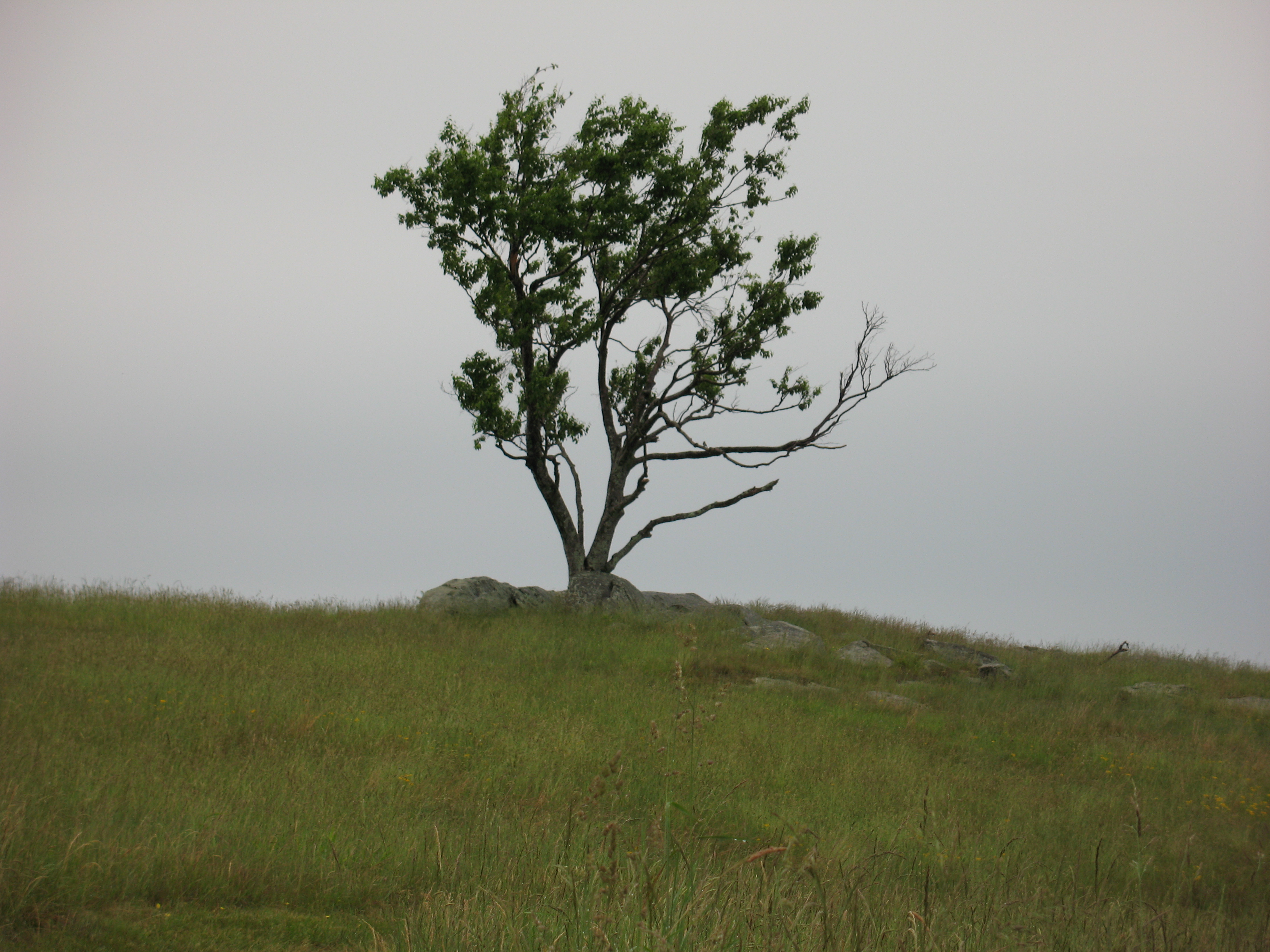
Doughton Park Tree -- 5/1/2021
 . 

Read Full Post »

 . 
April 22, 2024
 . 
Whatever attributes we claim as unique to the human species, such as our propensity for art and science and spirituality – these are gifts of the ground. Curiosity and exploration and awe require a world – a ground – to grow up from and in conversation with.
++++++ Eileen Crist, ecologist, 4/22/24, in The Sun, December 2020
 . 
❦ ❦ ❦
 . 
In Memoriam Mae Noblitt
 . 
This is just a place:
we go around, distanced,
yearly in a star’s
 . 
atmosphere, turning
daily into and out of
direct light and
 . 
slanting through the
quadrant seasons: deep
space begins at our
 . 
heels, nearly rousing
us loose: we look up
or out so high, sight’s
 . 
silk almost draws us away:
this is just a place:
currents worry themselves
 . 
coiled and free in airs
and oceans: water picks
up mineral shadow and
 . 
plasm into billions of
designs, frames: trees,
grains, bacteria: but
 . 
is love a reality we
made here ourselves—
and grief—did we design
 . 
that—or do these,
like currents, whine
in and out among us merely
 . 
as we arrive and go:
this is just a place:
the reality we agree with,
 . 
that agrees with us,
outbounding this, arrives
to touch, joining with
 . 
us from far away:
our home which defines
us is elsewhere but not
 . 
so far away we have
forgotten it:
this is just a place.
 . 
A. R. Ammons (1926 – 2001)
from A Coast of Trees by A.R. Ammons. Copyright © 1981 by A.R. Ammons.
 . 
Shared by Jane Hazelman, Elkin, NC, who writes:
 . 
My only comments would be… and it’s interesting, now that I think carefully about it…
This poem caught me at time when I was grieving the loss of my father who died the same week my family moved to NC…. I felt the ground beneath my feet dropping away… I needed an anchor and somehow the poem nudged me to connect my spirit to the natural world of spider silk, streams and trees, breezes – that comfort was all around me, holding me to its self.
 . 
++++++ Jane
 . 
❦ ❦ ❦
 . 
Erase the lines: I pray you not to love classifications.
The thing is like a river, from source to sea-mouth
One flowing life.
++++++ Robinson Jeffers
 . 

Klondike Lake Dam, mural by Eva Crawford

 . 
❦ ❦ ❦
 . 
The Beauty of Things
 . 
To feel and speak the astonishing beauty of things—earth, stone and water,
Beast, man and woman, sun, moon and stars—
The blood-shot beauty of human nature, its thoughts, frenzies and passions,
And unhuman nature its towering reality—
For man’s half dream; man, you might say, is nature dreaming, but rock
And water and sky are constant—to feel
Greatly, and understand greatly, and express greatly, the natural
Beauty, is the sole business of poetry.
The rest’s diversion: those holy or noble sentiments, the intricate ideas,
The love, lust, longing: reasons, but not the reason.
 . 
Robinson Jeffers (1887 – 1962)
from Poetry, Vol. 77, No. 4, Jan., 1951
 . 
Shared by Catherine Carter, Cullowhee NC, who writes:
 . 
I’ve selected this one because lately I’ve been thinking a lot about paying attention as a holy act, maybe THE holy act, and, if not “the sole business” of poetry, at least a large part of it.  So much of what we lose and destroy is because we won’t or can’t give attention; we think of the tree we cut as “ordinary”, as “just” a tree, of the insects we poison as just flaws in our experience of the world, as if our experiences of the world were all that mattered. 
 . 
Along those lines, I’m also including the final poem from my book, Larvae of the Nearest Stars, “The Promise”.  That poem first appeared in Still: The Journal, October 2017, and was then reprinted in the collection.  Its tone is very different, and I certainly wasn’t thinking about “The Beauty of Things” when I wrote it…but it’s basically promising to do what Jeffers is talking about—paying attention to what’s all around us, what we sweep away or walk right over or destroy without ever knowing it because we think it’s “ordinary.”  And I thought of this one, Bill, because of your wonderful post about the tiny, tiny flowers.
 . 
+++++++ Catherine
 . 
 . 
The Promise
 . 
Life-root, blazing out in your golden rags.
Killdeer, skimming the soccer field,
pealing the glad word of May.  Soft lamb’s
quarter, powdered with pewter dust
that might’ve come from the Horsehead
Nebula, putting spinach to shame
with your mineral riches.  Wood
thrush trilling your deep flute-
notes from the high canopy, almost never
seen.  Tiny henbit, more glamorous
and sexy in your freckled orchid pink
than Marilyn Monroe’s…et cetera.
Et cetera.  The list goes on longer
and deeper than any human voice,
and how many hear any of you
over the clamor of ego and ad,
how many know you were ever
here? Nor can I save you
when they come with the mowers,
the poisons, nor make the world
plant milkweed for its true-born monarchs.
What I can do is what I am
doing:  look for you. Listen
as you proclaim your many
names in all the tongues
of earth.  Speak those names back:
as long as lichens
star this mountain’s boulder-bones
in flat seaglass rosettes, so that even the rock
blooms some wordless joy
into the day’s high air,  I will
not cease.  I will go on
doing my work in this world.
 . 
Catherine Carter
from Larvae of the Nearest Stars, LSU Press.© 2019
 . 
❦ ❦ ❦
 . 
Both from an ecological perspective and from Genesis’ point of view, goodness resides in the community, the web of life, in the relations of the whole biosphere.
++++++ Rabbi Ellen Bernstein
 . 
Look at the animals roaming the forest: God’s spirit dwells within them. Look at the birds flying across the sky: God’s spirit dwells within them. Look at the tiny insects crawling in the grass: God’s spirit dwells within them.
++++++ Pelagius (4th century Celtic theologian)
 . 
 . 
❦ ❦ ❦
 . 
Miracles
 . 
Why, who makes much of a miracle?
As to me I know of nothing else but miracles,
Whether I walk the streets of Manhattan,
Or dart my sight over the roofs of houses toward the sky,
Or wade with naked feet along the beach just in the edge of the water,
Or stand under trees in the woods,
Or talk by day with any one I love, or sleep in the bed at night with any one I love,
Or sit at table at dinner with the rest,
Or look at strangers opposite me riding in the car,
Or watch honey-bees busy around the hive of a summer forenoon,
Or animals feeding in the fields,
Or birds, or the wonderfulness of insects in the air,
Or the wonderfulness of the sundown, or of stars shining so quiet and bright,
Or the exquisite delicate thin curve of the new moon in spring;
These with the rest, one and all, are to me miracles,
The whole referring, yet each distinct and in its place.
 . 
To me every hour of the light and dark is a miracle,
Every cubic inch of space is a miracle,
Every square yard of the surface of the earth is spread with the same,
Every foot of the interior swarms with the same.
 . 
To me the sea is a continual miracle,
The fishes that swim—the rocks—the motion of the waves—the
        ships with men in them,
What stranger miracles are there?
 . 
Walt Whitman (1819 – 1892)
Collected in The Golden Treasury of Poetry ; in the public domain.
 . 
Shared by Nancy Barnett, Eustis FL, who writes:
 . 
My brother Tom was a wonderful gift giver. We had lost our brother Frank in June 1962 when I was 11 years old. Tom gave me a book during that time by Louis Untermeyer, The Golden Treasury of Poetry (1959). 
 . 
When I went back to school in the fall our 6th grade teacher Mrs. Heinlein asked the class to bring something to read aloud and I chose Miracles from Untermeyer’s collection. I loved the image of nature and the hopefulness of life being seen as a miracle. I knew nothing about Walt Whitman then. (The version in The Golden Treasury of Poetry was somewhat sanitized for the young reader.)
 . 
The Poet Laureate Joy Harjo noted that her love of poetry was fostered by the very same book.
 . 
++++++ Nancy
 . 
 . 
❦ ❦ ❦
 . 
Indeed, one outcome of my watch at the mandala has been to realize that we create wonderful places by giving them our attention, not by finding ‘pristine’ places that will bring wonder to us.
++++++ David George Haskell
 . 
from The Forest Unseen: A Year’s Watch in Nature, in which Dr. Haskell spent a year visiting almost every day a small circle of ground in the southern Appalachian forest, his mandala, and simply opened himself to its presence.
 . 
❦ ❦ ❦
 . 
Crane Migration, Platte River
 . 
I am in danger of forgetting the cranes,
their black wavering lines in the sky,
how they came as if from the past,
how they came of one mind,
wheeling, swirling over the river.
I am in danger of losing
the purling sound they make,
and the motion of their long wings.
We had stopped the car on the river road
and got out, you and I,
the wind intermittent in our faces
as if it too came from a distant place
and wavered and began again, gusting.
Line after line of cranes
came out of the horizon,
sliding overhead.
The voices of cranes
harsh and exciting.
Something old in me answered.
What did it say? Maybe it said Kneel.
I almost forgot the ancient sound,
back in time, back, and back.
The road, the two of us at the guardrail,
low scraggle of weeds flattening and rising
in wind. This is what I must retain:
my knees hit the damp sand of the roadside.
This is what I remember:
you knelt too. We were wordless together
before the birds as they landed on the sandbars
and night came on.
 . 
Marjorie Saiser
from The Woman in the Moon, University of Nebraska Press, Backwaters Series, © 2018
 . 
Shared by Michael Beadle, Raleigh NC, who writes:
The opening line to this poem from the anthology The Wonder of Small Things: Poems of Peace and Renewal is a call to us all:  against forgetting. Against ignoring the beauty that startles us. It dares us to step deeper into the mystery, turns us into wide-eyed children again as we look up at the heavens, peer into a clear lake, gaze across a field or behold a magnificent tree or bird. This poem reminds us that nature is within range, that it has not disappeared (yet), though we humans are doing our damnedest to foul up the sky, poison the waters, plunder the earth for profit. This poem is about holding ourselves still in that moment of awe, stopping our busy lives to listen to the wind, to the flap of wings, to the crunch of gravel, the swish of tall grass. In such moments of grace and wonder, we are, quite literally, brought to our knees as we show respect for the world around us, the world that breathes into us, the world we have to be reminded of from time to time that was here long before we were and will be here long after we are gone. 
 . 
++++++ Michael
 . 
 . 
❦ ❦ ❦
 . 
I go to Nature to be soothed and healed, and to have my senses put in tune once more.
++++++ John Burroughs, naturalist
 . 
I believe that there is a subtle magnetism in Nature, which, if we unconsciously yield to it, will direct us aright.
++++++ Henry David Thoreau, fromWalking
 . 
Teach the children. We don’t matter so much, but the children do. Show them daisies and the pale hepatica. Teach them the taste of sassafras and wintergreen. The lives of the blue sailors, mallow, sunbursts, the moccasin-flowers. And the frisky ones – inkberry, lamb’s-quarters, blueberries. And the aromatic ones – rosemary, oregano. Give them peppermint to put in their pockets as they go to school. Give them the fields and the woods and the possibility of the world salvaged from the lords of profit. Stand them in the stream, head them upstream, rejoice as they learn to love this green space they live in, its sticks and leaves and then the silent, beautiful blossoms. Attention is the beginning of devotion.
++++++ Mary Oliver
 . 
❦ ❦ ❦
 . 
To celebrate EARTH DAY 2024 we are featuring seven posts of poems submitted by readers – poems by William Blake to Walt Whitman, Robinson Jeffers to A.R.Ammons to Linda Pastan, and by a number of contemporary poets. Check in every day or two – connect to the earth and to each other!
 . 
❦ ❦ ❦
 . 
 .
 . 
IMG_0880, tree

Read Full Post »

 . 
April 17, 2024
 . 
While calling ourselves intelligent, we’ve lost touch with the natural world. As a result, we’ve lost touch with our own souls. I believe we can’t access our full intelligence and wisdom without some real connection to nature.
I think of soul as anything’s ultimate meaning which is held within. Soul is the blueprint inside of every created thing telling it what it is and what it can become. When we meet anything at that level, we will respect, protect, and love it.
++++++ Richard Rohr
 . 
❦ ❦ ❦
 . 
This Hill
 . 
this hill
crossed with broken pines and maples
lumpy with the burial mounds
of uprooted hemlocks (hurricane
of ‘thirty-eight) ++ out of their rotting hearts
generations rise trying once more
to become the forest
 . 
just beyond them
tall enough to be called trees
in their youth like aspen++ a bouquet
of young beech is gathered
 . 
they still wear last summer’s leaves
the lightest brown almost translucent
how their stubbornness decorates
the winter woods
 . 
on this narrow path
ice holds the black undecaying
oak leaves in its crackling grip
oh ++ it’s become too hard to walk
++ ++ ++ a sunny patch ++ I’m suddenly
in water to my ankles ++ April
 . 
Grace Paley (1922-2007)
from Fidelity, Farrar, Straus, and Giroux © 2008
 . 
Shared by Joan Barasovska, Chapel Hill NC, who writes:
 . 
I’m precisely connected to this poem in several ways. Grace Paley grew up in New York City — I grew up in nearby Philadelphia — but writes occasionally about her connection to the natural world, as I do. I live in a wooded area, and although the trees surrounding me aren’t birches or aspens, in mid-March they are bare and some “still wear last summer’s leaves.” When Paley wrote “This Hill” she was an older woman, and walking in the woods was becoming difficult, though the desire was there, all true for me.
 . 
++++++ Joan
 . 
 . 
The Day I Walked on Fire
 . 
it wasn’t fire
it was ginkgo leaves
the sun lit them yellow
they were juicy with heat
 . 
the day I walked on ginkgo leaves
I imagined they were fire
that my shoes were melting
that my feet were burning
 . 
and I felt no pain
on that autumn day
when I burned to be
a holy woman
 . 
Joan Barasovska
from Orange Tulips, Redhawk Publishing, © 2022
 . 
IMG_1677.jpg
 . 
❦ ❦ ❦
 . 
When power leads man toward arrogance, poetry reminds him of his limitations. When power narrows the areas of man’s concern, poetry reminds him of the richness and diversity of his existence. When power corrupts, poetry cleanses.
++++++ John Fitzgerald Kennedy
 . 
❦ ❦ ❦
 . 
Trees
 . 
I think that I shall never see
A poem lovely as a tree.
 . 
A tree whose hungry mouth is prest
Against the earth’s sweet flowing breast;
 . 
A tree that looks at God all day,
And lifts her leafy arms to pray;
 . 
A tree that may in summer wear
A nest of robins in her hair;
 . 
Upon whose bosom snow has lain;
Who intimately lives with rain.
 . 
Poems are made by fools like me,
But only God can make a tree.
 . 
Joyce Kilmer (1886 – 1918)
https://poets.org/poem/trees; this poem is in the public domain
 . 
Shared by Dee Neil, Elkin NC, who writes:
 . 
We recited this poem every day in Mrs. Black’s first grade class and I have always loved it. I was supposed to go camping there [Joyce Kilmer Memorial Forest in western North Carolina] with my son’s family last summer, but I fell and broke my arm the week before we were scheduled to go. Still on my bucket list for this year. This is on the back of a hiking journal my daughter-in-law made for me for the trip.
 . 
++++++ Dee
 . 
❦ ❦ ❦
 . 
Paying attention is a form of reciprocity with the living world, receiving the gifts with open eyes and open heart. 
++++++ Robin Wall Kimmerer
 . 
Margaret&Birds
 . 
❦ ❦ ❦
 . 
Banding Hummingbirds 
 . 
+++ San Pedro River, Arizona
 . 
+++ +++ I, who know nothing of ornithology,
wear sticker number nineteen. This release,
the last of the day, is mine. Under the awning
the ornithologist at the table puts a straw to her lips
and blows, parting the feathers to check for mites.
There are mites.
 . 
+++ +++ She cradles the bird in one hand,
sexes it, names the species (Anna’s), and figures
the approximate age. Places it in a miniature sling
and weighs it, wraps the metal band around one leg.
I walk over to the designated grassy area,
both hands in my pockets.
 . 
+++ +++ +++ The day is raw.
When it’s time, I hold out a palm, now warm.
The assistant fits the tubes of a stethoscope
to my ears, pressing the disc against my bird.
I hear a low whir, a tiny motor running in my hand.
Up to twelve hundred beats a minute, she says.
 . 
+++ I, who know so little,
barely take a breath. My bird’s head is a knob
of red iridescence on the fleshy pad of my hand.
I am nothing but a convenient warming bench,
yet for now I am that bench. Warm.
His breast is thin-bone hollow, she says,
 . 
+++ +++ where he should be round.
His eyes dark and still, his feet tucked
behind his body. He lies there, that tiny motor.
I don’t think of years ago, my mother, my father-
those I loved who, having lain down, never rose up.
For once, I know the worth,
 . 
++++++ at least to me.  What I don’t know
is whether this bird in hand will rouse
the way he did earlier, pinched between thumb
and index finger and tipped toward a feeder,
when he drank with conspicuous hunger.
You could see the tongue.
 . 
Susan Laughter Meyers
from My Dear, Dear Stagger Grass, Winner of the 2012 Cider Press Review Editor’s Prize
 . 
Shared by Richard Allen Taylor, Myrtle Beach SC, who writes:
 . 
I was wracking my brain and finally it occurred to me to look on my bookshelf for Susan Laughter Meyers’s My Dear, Dear Stagger Grass. There are actually several poems in the book that might be candidates for Earth Day, but I was especially attracted to this one for several reasons. It reminds me that sometimes you can tell the story through the images (even if literal) rather than trying to “explain.” (I need to be reminded of that every day, it seems.) The poem has a little mystery. (Why are they banding the hummingbirds? Do the mites present a danger to their health? Are the bones in the chest supposed to be hollow or has the bird been sick? I’ll have to look this stuff up or else I won’t sleep tonight.) 
++++++ Richard
 . 
❦ ❦ ❦
 . 
. . . when man and nature
got married they agreed never to divorce although
they knew they could never be happy & would have only
the one child Art who would bring mostly grief
to them both . . .
++++++ Firewood, Midquest, Fred Chappell
 . 
 . 
❦ ❦ ❦
 . 
To celebrate EARTH DAY 2024 we are featuring seven posts of poems submitted by readers – poems by William Blake to Walt Whitman, Robinson Jeffers to A.R.Ammons to Linda Pastan, and by a number of contemporary poets. Check in every day or two – connect to the earth and to each other!
 . 
❦ ❦ ❦
 . 
Doughton Park Tree 2021-10-23
 . 
 . 

Read Full Post »

« Newer Posts - Older Posts »