Feeds:
Posts
Comments

Archive for the ‘poetry’ Category

 . 
[with 3 poems by Jack Kristofco]
 . 
The Walkways at the Marsh
 . 
counterfeit geometry,
as if our straight lines matter,
railing, spindles, planks,
pressure-treated pathways
over bluegill, newt,
below the heron’s pterodactyl flap to
shifting clouds,
across an azure sky;
 . 
sun pays close attention to the boards,
like children lined at school,
the impudence of rooflines
in their misbegotten hope
of order out of chaos,
believing in a dreaming land of precept
in a teeming world
that seethes alive, primeval,
crawling in its mess
beneath our feet
 . 
Jack Kristofco
from After the Harvest, The Orchard Street Press, Gates Mills OH; © 2025
 . 
❦ ❦ ❦
 . 
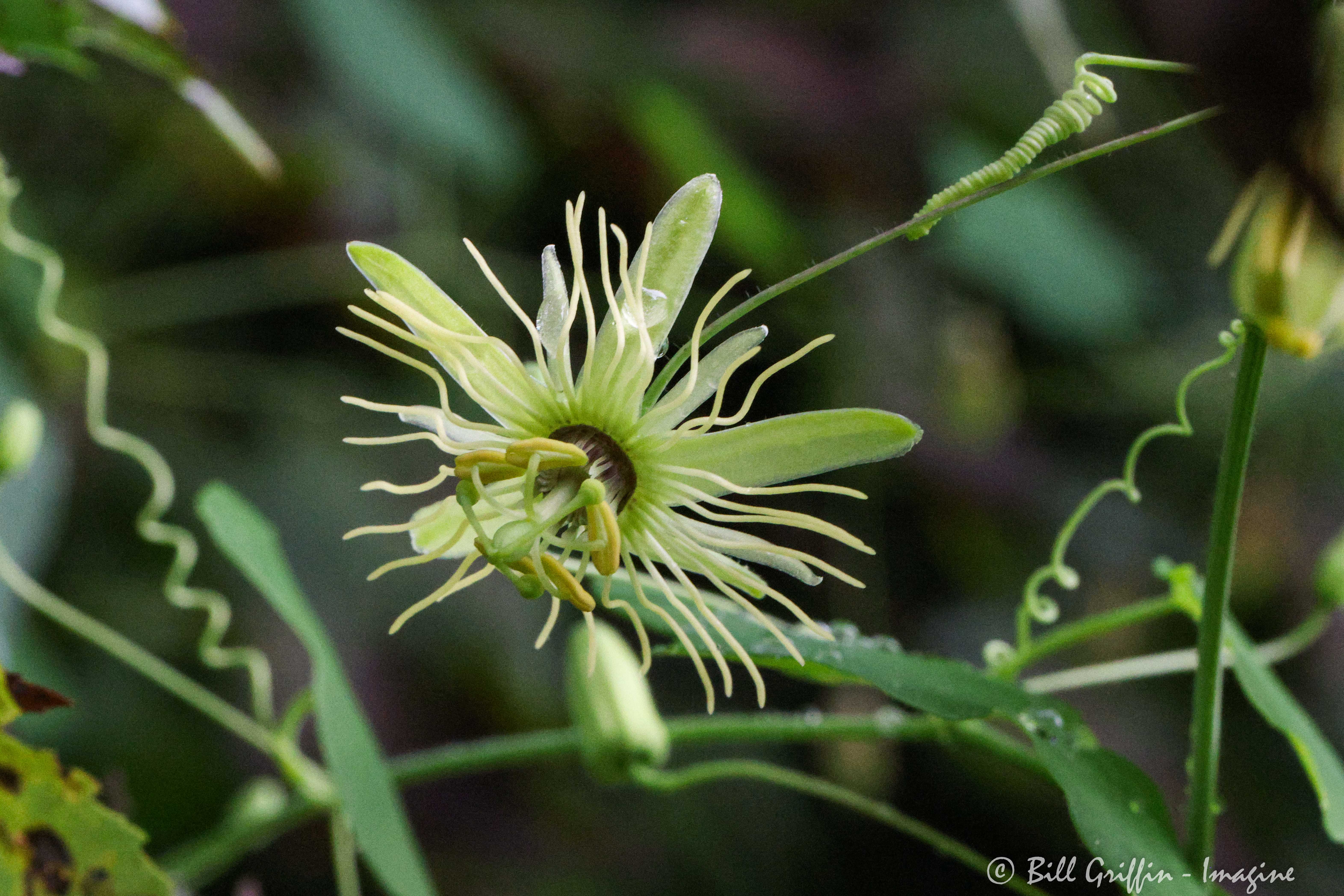
When I wasn’t looking it crept up out of the jungle (below my driveway). Never seen before, unnamed, it has climbed into the reluctant arms of the hemlock and draped itself like a boa for the cotillion. What the ? What stealthy hand sowed these seeds? From what alien universe has it landed here? But when I look closer at the pale frill and awkward angles around each blossom, I realize I know its sister well.
 . 
After the tornado introduced light to our wooded lot, I gathered seeds from autumn pastures and broadcast them on the new bare clay. My friend Joe brought me labeled paper bags from his own Mitchell River meadows. Boneset, ironweed, asters, goldenrod, wild senna – I thought I knew what would sprout to fill my little parcel, but seeds have their own agenda. Two years after the bulldozer finished clearing away downed trunks, I am discovering the unexpected. I (try to) ignore the invasive Japanese stiltgrass, and I’m not at all surprised by Fireweed which rises everywhere at the least sunny opportunity, but how did this spleenwort get here? Which Symphiotrichum aster is this? I don’t recall pulling seeds from boneset six feet tall. And these giant leaves now lifting above my head can only be from the pumpkin I tossed down here after Halloween three years ago.
 . 
Soil seed bank / bud bank – some annuals and perennials will survive, buried in earth, longer than human generations. Can that be possible? Still viable five years from now? Piece of cake. Charles Darwin was the first to systematically consider the soil seed bank in 1859 when he noticed sproutings from muck dug out of the bottom of a lake. University Ag departments publish studies of weed seed persistence; Lambsquarters will still germinate after 40 years and possibly 1600 years. And some seeds are just waiting for a good scorching to spring forth.
 . 
So what about this delicate vine I have never seen in 40 years of living here? Has it been waiting for this unusually wet summer? Or did a blue jay drop its seeds here last fall? Gently lobed leaves, truly unworldly blossom with narrow angled corolla and robot-finger pistil and stamens, it has to be a smaller, paler relative of gaudy Maypops – Passionflower. I will loop its tendrils away from the hemlock and into the sunlight maple and simply say, “Welcome to the Jungle.”
 . 
 . 
❦ ❦ ❦
 . 
Creed
 . 
we watch the comet rifle by,
light our milky pebble in a sky
so vast we only hold it with
some primal clutch of faith:
fidelity of those who know that god has died
or never was
because they’ve never seen the corpse,
aren’t impressed with winding sheets and veils,
though they seek the certitude
embraced by hearts they don’t respect,
+++ bowed heads and cathedrals
+++ where with confidence they pray for resurrection
+++ from this maze;
 . 
even the agnostics all believe,
+++ if only in their unbelief,
the truth of their uncertainty,
lighthouse on the journey
through the saints and sinners sea,
faithful travelers all,
milky-eyed sojourners
every one
 . 
Jack Kristofco
from After the Harvest, The Orchard Street Press, Gates Mills OH; © 2025
 . 
❦ ❦ ❦
 . 
After the harvest the trucks rumble heavy to the silos and disgorge their corn to be elevated, a plenty, certitude for the seasons. The man stands in the middle of the bare field. Perhaps he imagines the tall stalks still reaching above his head, elbow to elbow, their humid breath and the creak of their joints. Perhaps he notices lesser things that have thrived in the corn’s shade, a twisted morning glory, a puffball, moss. The field has opened – he can see to the treeline and hear the buntings singing their territories, he can feel hot September on his back. All the giving in and the taking away, the uncertainty of sowing and bearing fruit, the golden wealth has been removed and is distant. The man feels his feet on earth; here some wealth remains.
 . 
Jack Kristofco’s new collection, After the Harvest, cultivates contradiction and ambiguity. Life, as he demonstrates, is convoluted. He discovers even in the innocent paths of his childhood the latent struggles to come – a quiet ride with his father reminds him that some day he will take the wheel. The world of school kids playing baseball and dreaming of the girl across the street held us but a moment / then rose up all at once / and threw us to the fancy of the wind. We might strive to impose some order on existence, strive all our lives in fact for straight walkways and neat flower beds, but in a moment the stooping hawk of uncertainty will slice it all to bits.
 . 
Maybe I should embrace uncertainty. Maybe there are times when not being able to decide is exactly the right decision. Maybe it’s worth reflecting from time to time that there might be other right paths besides the one I seek so desperately to dig and smooth for myself. Jack describes meditating on his reflection in a pond – when he finally stands he sees himself both rise and sink. Our daily reality can never be quantized, regimented, predictable, no matter how we might desire it. Uncertainty itself is the lighthouse on our journey, and we are milky-eyed sojourners every one.
 . 
 . 
Jack Kristofco is founder of The Orchard Street Press in Ohio and editor of its annual poetry journal, Quiet Diamonds. Explore back issues as well as the Press’s many published poetry collections HERE.
 . 
Check out a list of plants whose seeds can persist in the soil seed bank for ten, twenty, thirty years and even longer HERE.
 . 
 . 
❦ ❦ ❦
 . 
The Hawk and the Man Watch the Yard
 . 
he looks across the slices
of a setting sun
splintering through trees
at peace with all his trim and sweeping,
lines of roses,
green of bright hydrangea leaves,
newly painted house for birds,
spray to keep the deer away
 . 
while on a silver maple in the neighbor’s yard,
its nest behind a school
where children study science and the paradigms
that lead to roses in a flower bed,
a red-tail pivots its sleek head,
jet-black eyes
to scan the sea of green and brown,
the arrogance of rooflines and concrete,
seeking any movement, any twitch,
a shadow, a fateful turn to light,
 . 
and then it falls
with such a sudden strike
it startles every leaf and branch,
the blossoms and the man
 . 
slicing their contentment
like a knife
 . 
Jack Kristofco
from After the Harvest, The Orchard Street Press, Gates Mills OH; © 2025
 . 
❦ ❦ ❦
 . 
 . 
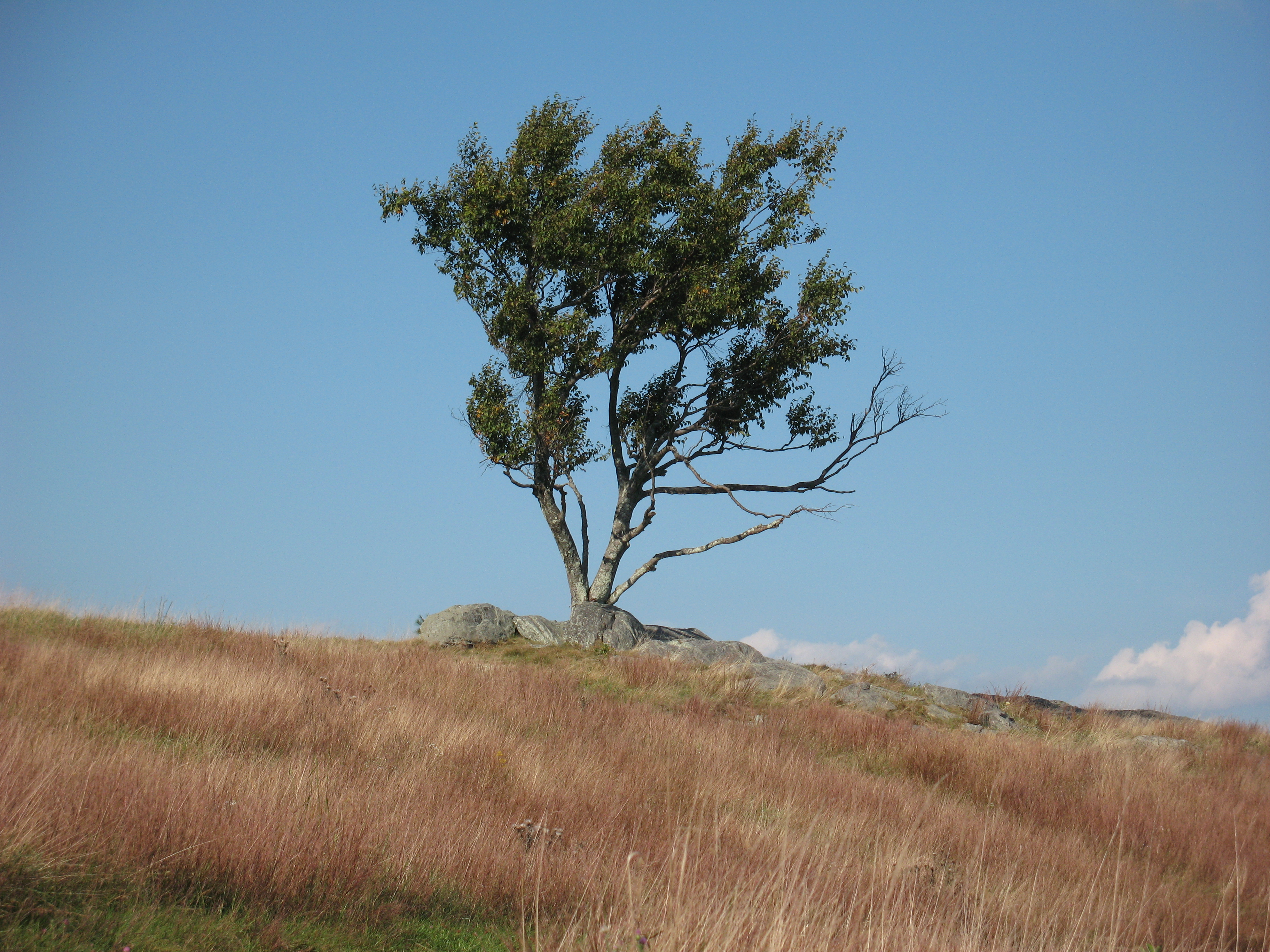
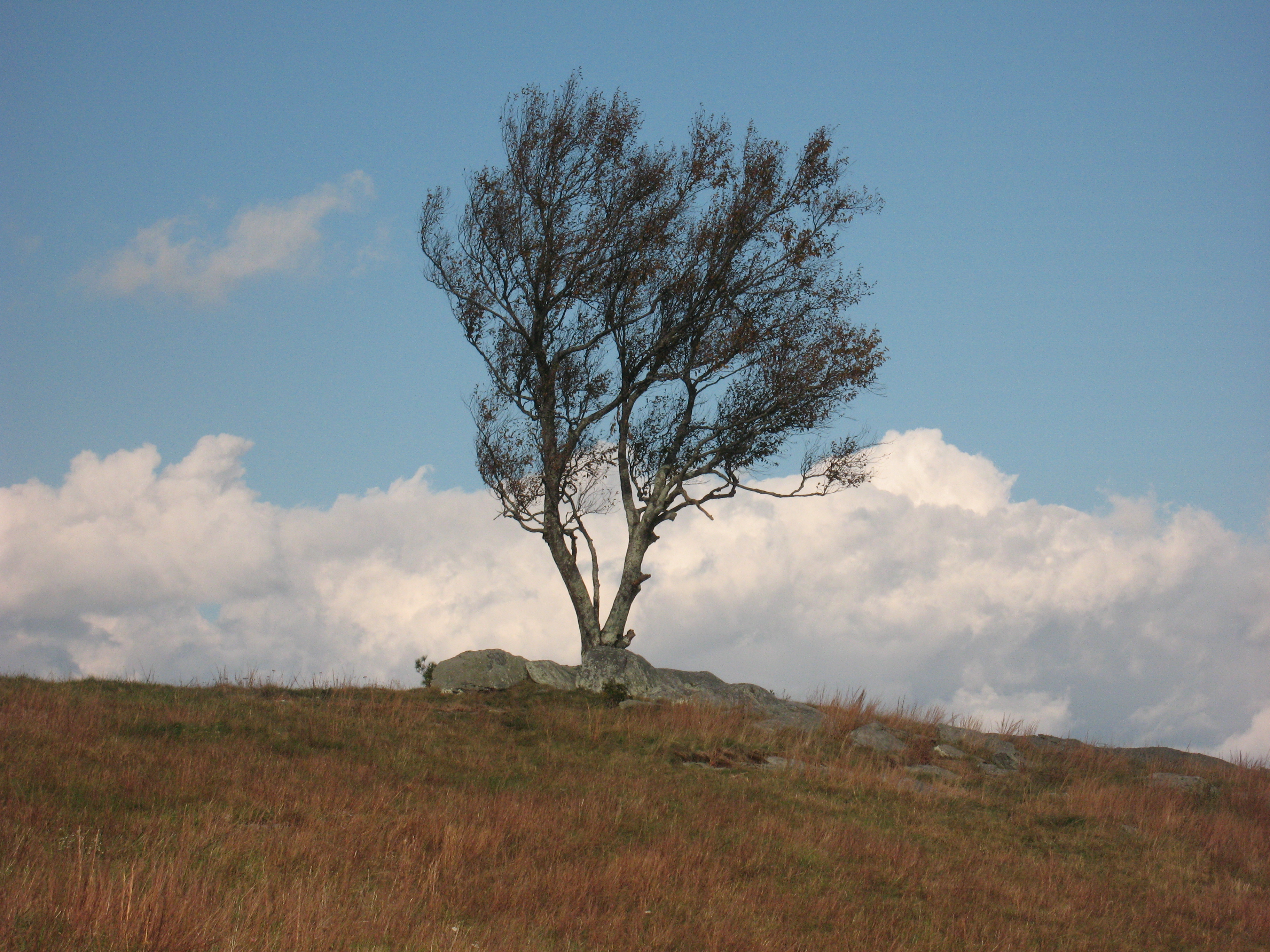
2016-10-17b Doughton Park Tree
 . 

Read Full Post »

 . 
[with 3 poems by Beth Copeland]
 . 
Fog
 . 
Morning fog erases the mountain and trees.
No, not an erasure but unseen.
 . 
Not an erasure but unseen.
The mountain, the laurel still green.
 . 
Unlike the mountain and laurel still green,
the dearly departed lie beneath white sheets.
 . 
The deer depart beneath white sheets
of fog, stepping into a forgotten dream
 . 
of fog slipping into a forgotten dream
the ghost mountain dreams.
 . 
The ghost mountain dreams.
Crows fly to pines on mascara wings.
 . 
Crows fly to pines on mascara wings,
mourning. Fog erases the mountain, the trees.
 . 
Beth Copeland
from I Ask the Mountain to Heal My Heart, Redhawk Publications, The Catawba Valley Community College Press, Hickory NC; © 2025
 . 
❦ ❦ ❦
 . 
It’s a big web, here in the corner of our screened porch, but I’m not ready yet to broom it down. The spider is a jointed dried kernel in its center; when I blow, she doesn’t twitch. I don’t see an egg pouch or spiderlings. The strands are not an orb but a diffuse tangle, a chaos of delicate angles and tensions — a miniature of filaments revealed by the background microwave radiation that weave the structure of our entire universe. And what are they made of, those filaments? These I can see before me are nanometer reworkings of hemolymph from mosquitoes denied the opportunity to bite me. Most visible when dusted with pollen. A mess. But I and my broom are not ready yet to offend, to say farewell to the tribe of spiders.
 . 
Last week we visited Blue Whales with our grandson, turning eight. The North Carolina Museum of Natural Sciences in Raleigh is hosting this exhibit of the largest creatures that have ever lived on our planet – the mystery of their migrations, language, culture; the vital interconnections between their diet of krill, their massive enriching orange poop, and the entire deep ocean ecology. Linda and I stood in silence before the model of a blue whale brain and a model of our own. The whale’s is twice as large and twice as complex, convoluted with its twisting gyri and deep sulci. Surely such an abundance of neurons and synapses must create thoughts as complex as our own. Or more so. And yet blue whales struggle to survive as a species in a world degraded by human beings. I am thinking of that brain and I am not ready yet to say farewell to the tribe of whales.
 . 
Chapel Hill cartoonist Keith Knight draws a weekly panel titled (th)ink. Today’s is a portrait of and quotation by James Baldwin (1924-1987): “To be a Negro in this country & to be relatively conscious is to be in a rage almost all the time.” Human being who is relatively conscious, choose your own rage focal point du jour – human beings caged like animals in a Florida concentration camp; children intentionally starved to advance a particular political agenda; boosting fossil fuels burned to appease a few billionaires; an ocean filled with plastic nanoparticles and deafening human vibrations where blue whales may soon be extinct? Some days I feel like I am not ready to go on living. Some days I am more than ready to say goodbye to the tribe of humans. In a few years I will depart as an inhabitant of planet Earth. Some years after that the last memory of my having been an inhabitant will finally depart as well. On that day, will any whales still remain to swim the depths? Will any love between humans remain, or any love for other creatures? I am not ready yet to answer.
 . 
 . 
❦ ❦ ❦
 . 
October Valentine
 . 
A heart-shaped leaf spied in the weeds on my walk
down the hill to the mailbox. I didn’t see a redbud tree
 . 
on the roadside, so it must have lifted on the wind
and dropped – a gift! – near my feet. Is it a message
 . 
from someone I love – my sweet mother in a halo of light,
my father singing the names of trees in his strong baritone?
 . 
Or is it from someone I’ve never seen and may never meet?
 . 
As I hike up the hill, I tuck the leaf in my pocket, rubbing it
with my thumb – as if I could read it – skin to skin – by osmosis.
 . 
Halfway home, I stop to study it. Cerise with splotches of green,
dark spots, a wormhole bored like a bullet wound, a battered
 . 
heart, like yours, like mine, but maybe its scars make it more
beautiful than before. My friends, there’s still so much
 . 
love in this world even when you’re alone.
 . 
Beth Copeland
from I Ask the Mountain to Heal My Heart, Redhawk Publications, The Catawba Valley Community College Press, Hickory NC; © 2025
 . 
❦ ❦ ❦
 . 
Is it strange for me to be toying with despair while reading a book of healing and love like Beth Copeland’s I Ask the Mountain to Heal My Heart? Actually, if you’re not toying with despair you are the strange one. Give grudging thanks, though. Thank the stars and the mysterious hemlocks and the dark fecund earth that in a world full of rage and despair there are poems like Beth Copeland’s. These poems know the feeling of being lost in endless night. These poems have been battered, they have fallen, they have doubted plenty of times whether there is any wholeness or healing available to them, but these poems stand up to testify, My friends, there’s still so much love in this world even when you’re alone.
 . 
Often I tell myself it is ridiculous to imagine that any sort of inner peace is possible. I have my share of personal regrets and ongoing grief, and even though I’m tempted to look around and envy those people who don’t, when I’m really honest I admit that no one escapes whipping. But peace can’t be a wall built around my sadness – walls keep more things in than out. Despair is inevitable. How foolish is it, then, and how strange, to spend a few hours with a book of words arranged in lines on paper and discover the tightness in my throat is easing? The mountain has rested in one place for 480 million; today its peak is less than a third of its height when it was first thrust up in the big crunch. Does it reflect on loss and diminishment, or does it find peace in the weight of its daily being? Am I inflamed and scarred by the revelations of Beth Copeland’s battles and pain, or am I grateful for her gratitude and strengthened by her strength?
 . 
The tribe of human beings seems determined to destroy itself. The tribe of human beings seems determined to link arms and hearts in love. Perhaps discovering a moment of beauty is not a cowardly attempt to escape dire reality – perhaps it is the only thing capable of healing us.
 . 
 . 
Explore REDHAWK Publications, including Beth Copeland’s I Ask the Mountain to Heal My Heart and Shibori Blue: Thirty-Six Views of the Peak HERE.
 . 
Sample poems from Shibori Blue at Verse & Image HERE.
 . 
More information about the North Carolina Museum of Nature Sciences HERE.
Dive into the K Chronicles with Keith Knight HERE.
 . 
 . 
❦ ❦ ❦
 . 
My Daughter Paints a Mountain
 . 
She wasn’t thinking as her brush swept
across canvas in wave-length strokes,
 . 
channeling a crest she’d never seen,
while I was still in the Sandhills
 . 
where there aren’t any hills, just fields
of cotton, soybeans, and cedar stumps
 . 
in swamp water, sleeping on an air mattress
in a small apartment with prints and paintings
propped against walls instead of hung,
newly separated, newly sober, living
 . 
between the husband and home I’d left
and a haven I hadn’t found yet.
 . 
*****
 . 
As I drove up a steep road to see a house
in the Blue Ridge, a large buck leapt
 . 
in front of the car to welcome me,
and I knew I’d found my new home.
 . 
I didn’t know the mountain seen at the top
of the hill was the mountain she’d painted
 . 
months before, and she didn’t know I’d move
to that house with a view of the mountain
 . 
she’d painted as if in a dream or fugue.
How could her mountain – purple, lavender,
 . 
pink, and forest green swirled to a peak
with white streak of snow against a blue sky –
 . 
mirror the one framed in my window?
Was it coincidence or synchronicity
 . 
that the mountain in her mind’s
eye was more map than metaphor?
 . 
It was a message from the universe:
You’re home. Open the door.
 . 
Beth Copeland
from I Ask the Mountain to Heal My Heart, Redhawk Publications, The Catawba Valley Community College Press, Hickory NC; © 2025
 . 
 . 
❦ ❦ ❦
 . 
Doughton Park Tree 2020-11-22
 . 
❦ ❦ ❦
 . 

Read Full Post »

IMG_4192_crop

Albert Mountain Sunrise

 . 
[with 3 poems by Kathy Ackerman]
 . 
Heritage Lost
 . 
Hills are keening,
yellowed voices of serious photos
call me home to “precious memories,
how they linger,
how they ever flood my soul.”
 . 
How in a displaced caravan
we went to lay her down
in shining soil,
flecks of coal on shovels
in the hills of familiar gravestones.
It had to be that church,
that pastor’s family name,
Rock of Ages, Beulah Land.
 . 
How odd to call it home and feel it so
without a waiting bed of down
to follow the wake,
all of us gone north for good,
except for this.
 . 
How we walked between
the railroad and the shallow ditch
collecting tadpoles in a pail
we’d flush in the motel’s aqua bathroom
because I would not understand.
Death, a newborn slippery thing.
 . 
How the stone had to be a heart
to bear the name of Mother,
how the heart had to be a stone
to be left behind
in its rightful place
in the hills near the church
near the home place bought by strangers.
 . 
We packed the memories once again
in bursting overnight bags,
left the motel beds unmade,
because we could
and settled into our procession.
CB radios, Thermoses, Styrofoam,
we headed back up north
to our factories, unions, high schools,
without looking backward.
 . 
Kathy Ackerman
from Coal River Road, Livingston Press, The university of West Alabama; © 2013
 . 
❦ ❦ ❦
 . 
Where is home? Is it a house number, 1074 Marcia Road, a side yard, fence, and oak tree I can still see as clearly as when I was 10? I could walk right through the carport sixty years later and show you exactly where we buried my hamster. Or is home a garage full of cardboard boxes and bric-a-brac from four other homes of parents and grandparents, houses you only spent a few dozens of nights in altogether? Is home the towns those houses occupied? The states?  Whose home is your home? Whose place is yours?
 . 
I was barely four when we moved from Niagara Falls to Memphis. Not until years later was I able to piece together the stories of my parents’ migration, how they drifted together across those red clay counties of piedmont North Carolina, then pinballed via Atlanta to New York before birthing me. All my solid early childhood memories abide in those eight years in Shelby County, Tennessee, that little four-square subdivision on the outskirts of Memphis.
 . 
Then we moved. And moved again. The sixth graders in Delaware mimicked my accent and immediately nicknamed me “Memphis.” It doesn’t take long for a 12-year old to figure out how important it is to fit in. For the next couple decades I can now see that I lived as if the place I was staying would never be the place I stayed.
 . 
Here in the rural South, when you meet someone new question number one is not, “What do you do?” but, “Where are you from?” One longs to fit in; one doesn’t want to whack the conversation with an axe by replying, “New York.” I invented my stock answer right quick: “Both of my parents are from North Carolina.” Subtext: “I want to be from North Carolina. I want you to let me be.”
 . 
I have now lived exactly 70% of my entire lifespan in North Carolina. NC driver’s license, NC property taxes, kids born in NC, grandkids too. Maybe being almost from here is an advantage. Every new state park we visit, every historical factoid, every endemic flower species I learn, every third generation progeny of a friend I greet while out walking – I tally them all securely in my calculus of belonging. Way back when Linda and I arrived in Durham a week after we’d married, a month before I started med school at Duke, we just assumed that in four years we’d be moving back to Ohio to be closer to her huge family. Now it’s been fifty-one years in The Old North State, forty-four of those in rural Elkin in rural Surry County. Lately we’ve started talking about downsizing, moving somewhere we can age in place through to the end of our allotted spans. Linda says, “You know where I’d really like to live?” Oh my God, is Ohio still calling her? Is the place we’ve been staying never to be the place we stay? She looks at me level, no joking here. “Winston-Salem.”
 . 
Well, I guess we are from North Carolina. It’s nice to be home.
 . 
 . 
❦ ❦ ❦
 . 
Cul-de-sac
 . 
From Coal River Road to White Mist Lane
is more than forty years,
several hundred miles
as the crow truly flies, one point to another,
and sometimes back,
no straighter than a crooked river
wrecked by mines.
 . 
Here the landscapers claw in stony earth
to sow some seed
while wings of straw fly it away.
My lawn’s a futile thing
where rocks and trees should be.
 . 
I stoop to gather stubborn stones,
pretend I do it for the grass,
but in their quartz and granite peaks
admittedly ground to bits by time
I find the mountain of my blood
and hear the ancient syllables spilled,
silenced now by cul-de-sac
and swaying Mylar storks,
a neighborhood of strangers
increasing overnight.
 . 
Kathy Ackerman
from Coal River Road, Livingston Press, The university of West Alabama; © 2013
 . 
❦ ❦ ❦
 . 
Linda spots the book on top of my pile, next in queue for reading, and its title speaks right up and makes its demands known. “We need to save this one for Jodi.” Who was born in Ohio but lives in coal country, and whose career has been to tell its stories as naturalist and interpreter in the New River Gorge near Beckley, WV. Indeed, I’ll share it with Jodi, this book I bought from a friend whose poetry I’ve admired for many years, whom I’ve come to know better through the North Carolina Poetry Society Board, and whose more recent book I featured here three years ago. Now I open the book, though, and out spill the connections and intersections. Kathy, just up the road there at Isothermal Community College, I never realized we’ve come from the same place!
 . 
Kathy Ackerman grew up in Ohio (like me, at least from 8th grade on) far from her birthplace and her family’s heritage. In later years she has mainly visited the old home state for funerals, but the landscapes, place names, family memories, and fortunes (or lack thereof) of West Virginia are the palette from which she paints these poems of Coal River Road. This collection is yearning for home, but home is something slippery and out of reach. A bright fleck in a stone might remind her of the mountain in her blood, but returning to stand on the that mountain she discovers a hint of strangeness and regret. Perhaps the yearning itself is home, the uprooted and cast adrift feeling that keeps a person looking for something solid, for something that means.
 . 
I identify with these poems. Kathy uses imagery and memory not just to disclose the past but to define the present. She can only be the person she is because she’s traveled the twisting roadways through old hollers and coves as well as the West Virginia Turnpike straight up to Ohio’s new sown lawns. And finally I-77 South. Although Kathy Ackerman didn’t settle in this state until a full ten years after I did, I can assure you that she is from North Carolina.
 . 
 . 
Coal River Road by Kathy Ackerman is available from Livingston Press. Her more recent book is Repeat After Me from Redhawk Publications (2022).
 . 
 . 
❦ ❦ ❦
 . 
Whitesville, WV
 . 
Because we never had the conversation
I am following a hearse that winds
down Coal River Road toward Whitesville.
 . 
How to say irrational to bury you here
in the only land we own outright,
owned for generations
though none of us can visit your grave
in less than a day.
 . 
These plots foreshadow the ending
no matter the story you wanted to tel.
you never wanted to return, like this or not.
 . 
You’d cringe to see this dingy place,
smelling of rot as if what remains
of the Big Coal River
seeps in each night while the corpses await
their faraway bereaved.
 . 
For once, I’m relieved to by unromantic.
That body is merely a souvenir
a keepsake – you wore it every day.
Symbol. Skin. Form.
 . 
I am relieved to know you’re not really here
though there’s nowhere else for us to go
to pay our respects. It is not respect
that brought you here, but silence,
the failure to make a better plan
because you never learned to say goodbye.
 . 
Kathy Ackerman
from Coal River Road, Livingston Press, The university of West Alabama; © 2013
 . 
❦ ❦ ❦
Doughton Park Tree 2020-09-08b

Read Full Post »

« Newer Posts - Older Posts »