Feeds:
Posts
Comments

Archive for the ‘Photography’ Category

[with 3 poems by Joan Barasovska]

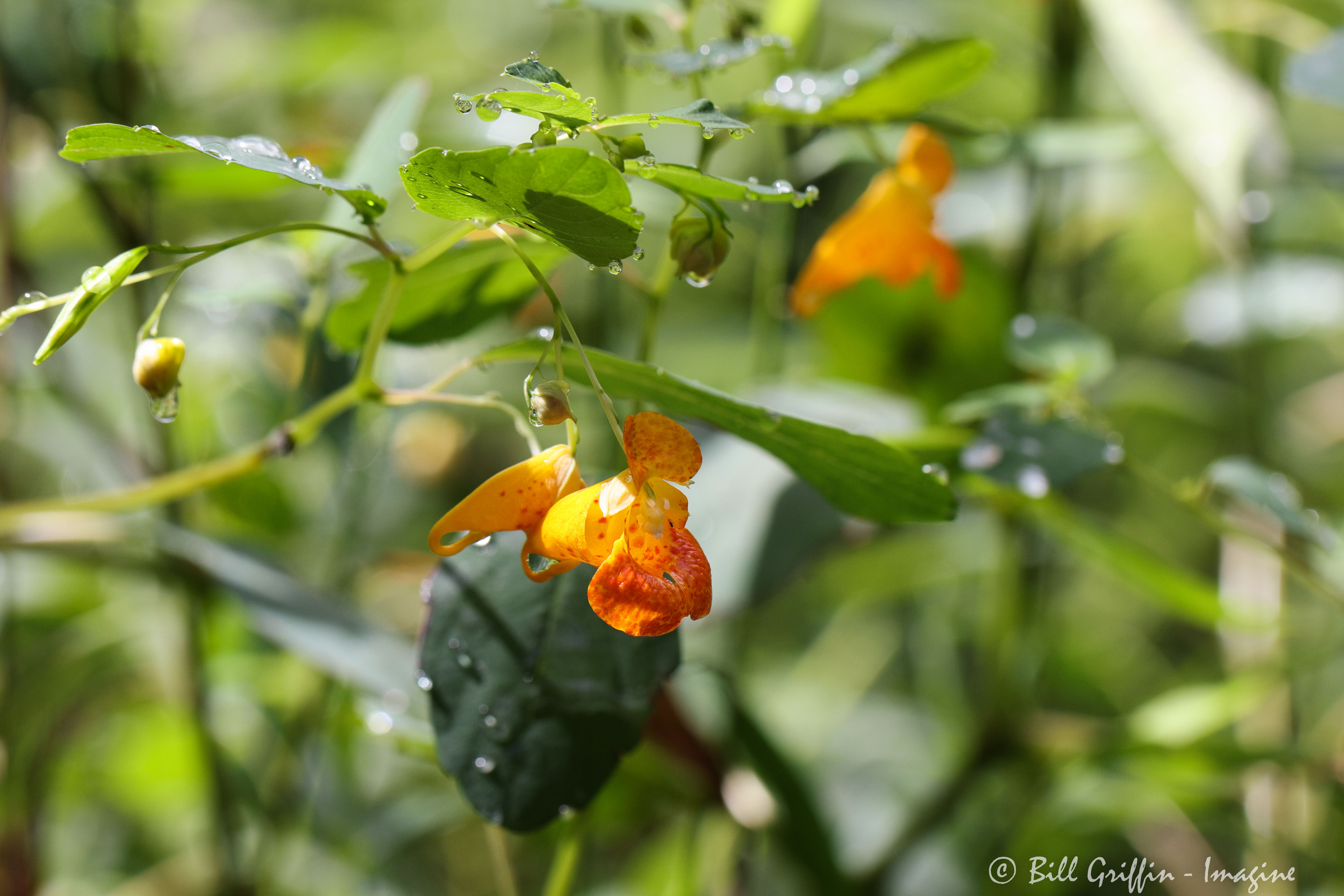
What is the perfect ripeness of Touch-Me-Not to pop its pods into my hand? How will the little brown kernels taste? How far would they fly if I didn’t catch them?

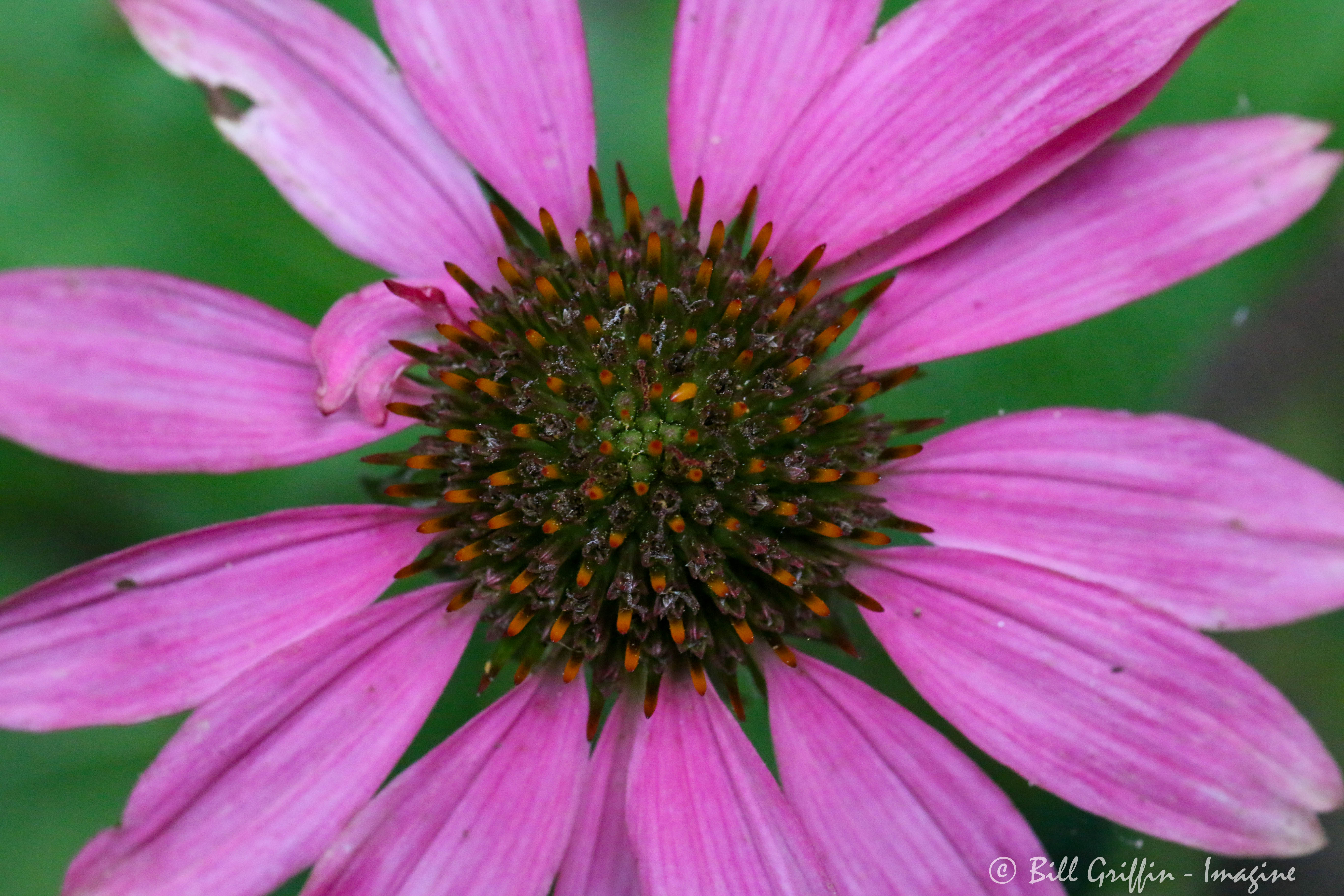
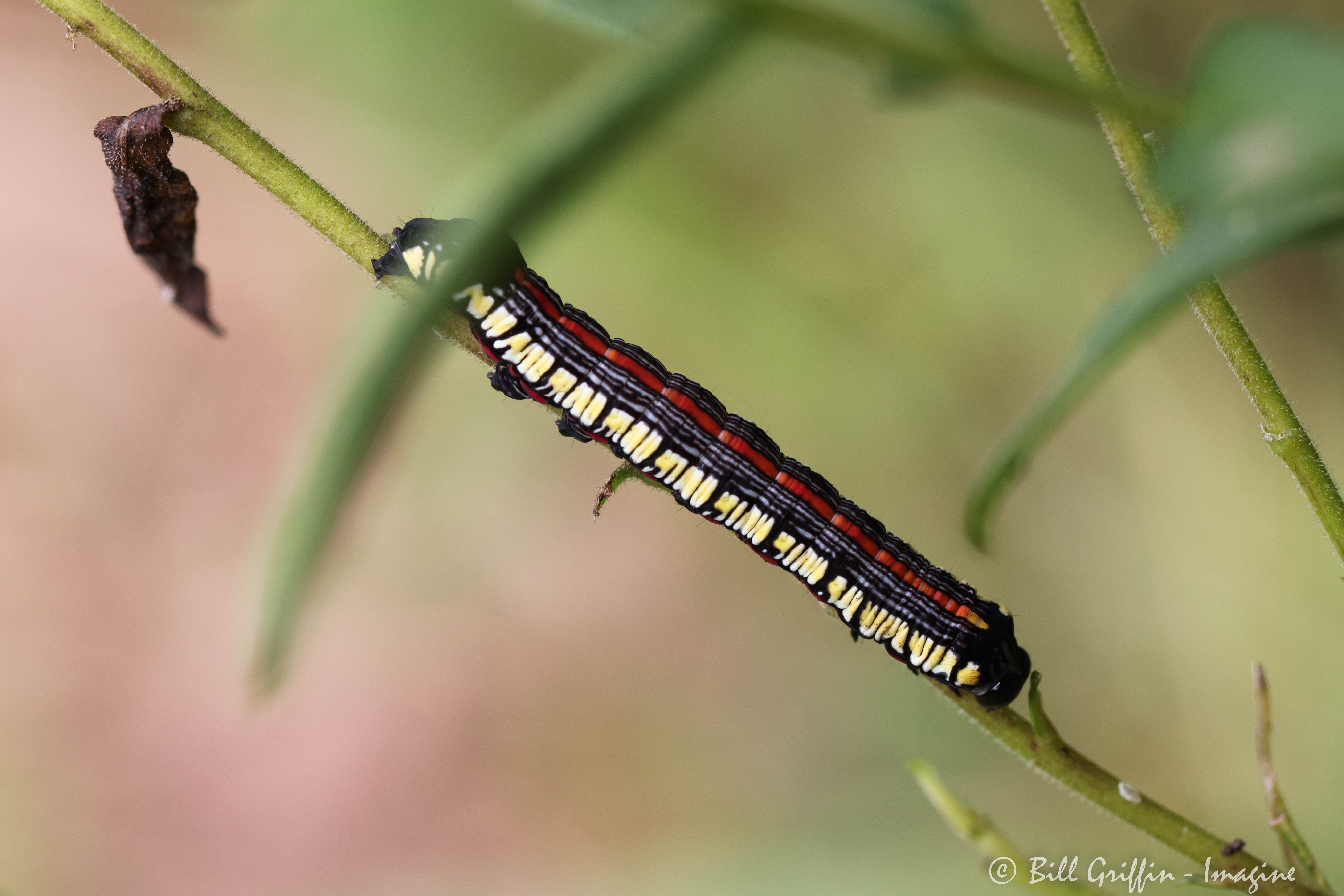
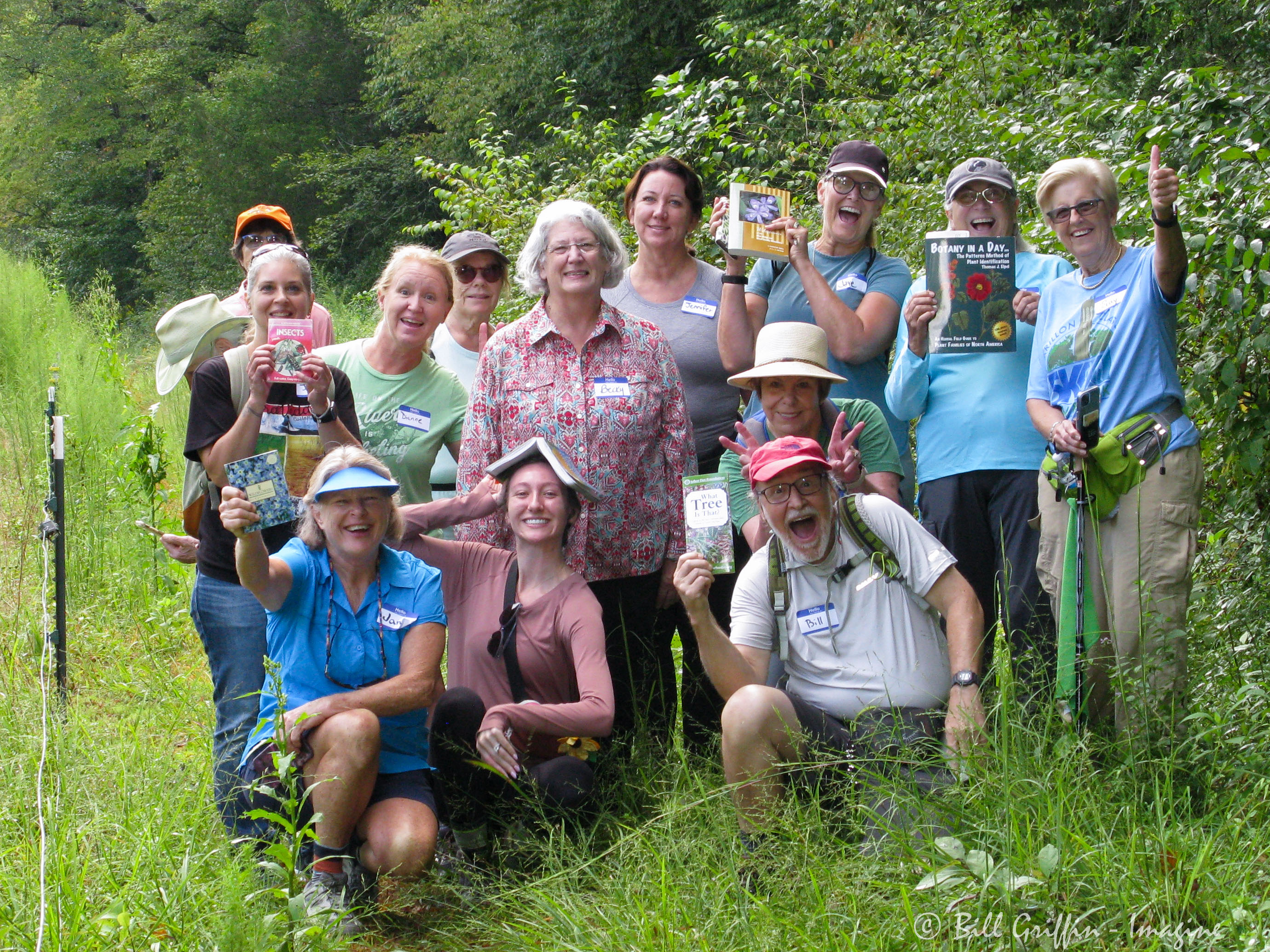
These questions I ask of myself, but I also ask them for the thirteen curious women who have enlisted me as their nature guide. Together we chew the little seeds – like untoasted sunflower. Together we are curious about everything. This tiny pale bloom with the three-lobed lip, how is it related to bright scarlet three-lobed Cardinal flower, gigantic by comparison? The white-striped red-lined caterpillar, what will its moth look like? Every one of these ferns, vines, sedges, mints, asters along the trail we’re walking, what is their family, who are their cousins, how did they get these odd names?

Maybe I’m too curious. Most of the other hikers have left me behind as we near trail’s end. It’s hard to pass even one speck of lilac among the Meadow Beauties and Dog Fennel. Hello, what’s this? A year ago near here I discovered a first (for me), a single plant, blue flowers with improbable arching stamens and pistil like dainty tusks. I thought it was extirpated when the farmer sprayed herbicide along his electric fence line last Spring. I have to kneel to examine this one small survivor. A single flower. Lamiaceae, Mint family – well, mints do make lots of seeds.

❦ ❦ ❦

Carrying Clare

Mystery conceived in passion
spreads a tent inside my body,
scoops out space
I’d blithely claimed as mine.

I grow heavy with her campsite
and the gear we’ve taken on.
After work each day I buy
a secret chocolate éclair
and eat it at Nelson’s Bakery,
where I’ll soon show off my baby.

Her father grants me
naming rights if it’s a girl.
On a cold day at the beach,
jacket straining to span my belly,
with one booted foot I trace
her name in giant letters
in wet sand: CLARE.

I pray this hidden daughter,
now assembling all she’ll require,
will live to be my better self,
take chances I could never take.
I pray for a safe birth.
I pray to be the mother she will need.

Her father and I wait for March.
He says she could easily be a boy,
but our daughter’s eyes, not yet open,
greedily seek mine.

Joan Barasovska
from Carrying Clare, Main Street Rag Publishing, Charlotte NC, © 2022

❦ ❦ ❦

Joan Barasovska’s Carrying Clare is a memoir in verse about the life of a family with a child who is critically and chronically ill. Will the baby live? Will the little girl’s illness rob her of childhood’s joy? How will a new baby brother shoulder his way into this picture? And most of all where does it arise, this deep well of strength in the mother who must watch her child fade and perhaps fail? Strength for the hours waiting outside surgical operating rooms, for the administering of medications and IV’s at home, for the nights bereft of hope? Where does it come from, the strength of such unrelenting love?

I ask myself one more question. What strength must it have taken to gather these poems across the decades of struggle they convey, to look them squarely in the eye and relive each moment once more, and then to share them?

❦ ❦ ❦

Strength

Ten-day-old Clare wails on an X-ray table,
her tiny ovaries protected, but she’s naked
on metal, flailing under strange light.
I sit rigid against the wall.

No one ever called me strong.
Fragile, even frail, a waif
without endurance. Not strong.
People have had to rescue me.

My baby’s body is red from screaming,
her back arched, skull uncradled.
I croon to her, my breasts leak for her,
but in her agony I can’t yet save her.

The technician finishes at last.
I dress and swaddle Clare,
give her my breast,
sate her with my power.

Joan Barasovska
from Carrying Clare, Main Street Rag Publishing, Charlotte NC, © 2022
❦ ❦ ❦

January Walk

Winter claims the day.
It hikes the road,
roams the fallow fields.
It lifts and stirs the air.

The horses I pass eat hay
and miss sweet grass.
Under a heavy coat
my heart beats hot.

I think of the baby tossing
in my daughter’s womb.
He floats in a weatherless world
while I lean into cold wind.

The horses stand side-by-side,
breath streaming hot in one fog.
The baby stirs in tight orbit,
waiting for March.

Joan Barasovska
from Carrying Clare, Main Street Rag Publishing, Charlotte NC, © 2022

❦ ❦ ❦

Thank You to Dee Neil and the Ladies Elkin Valley Trail Association for inviting me to be your naturalist for a morning. Walking out from Isaacs’ Trail Head on the Mountains-to-Sea trail for a couple of hours, we lost count of the number of wild flowers, ferns, vines, sedges, mosses, and other plants we discovered. And one boldly decorated caterpillar capped the day.
❦ ❦ ❦

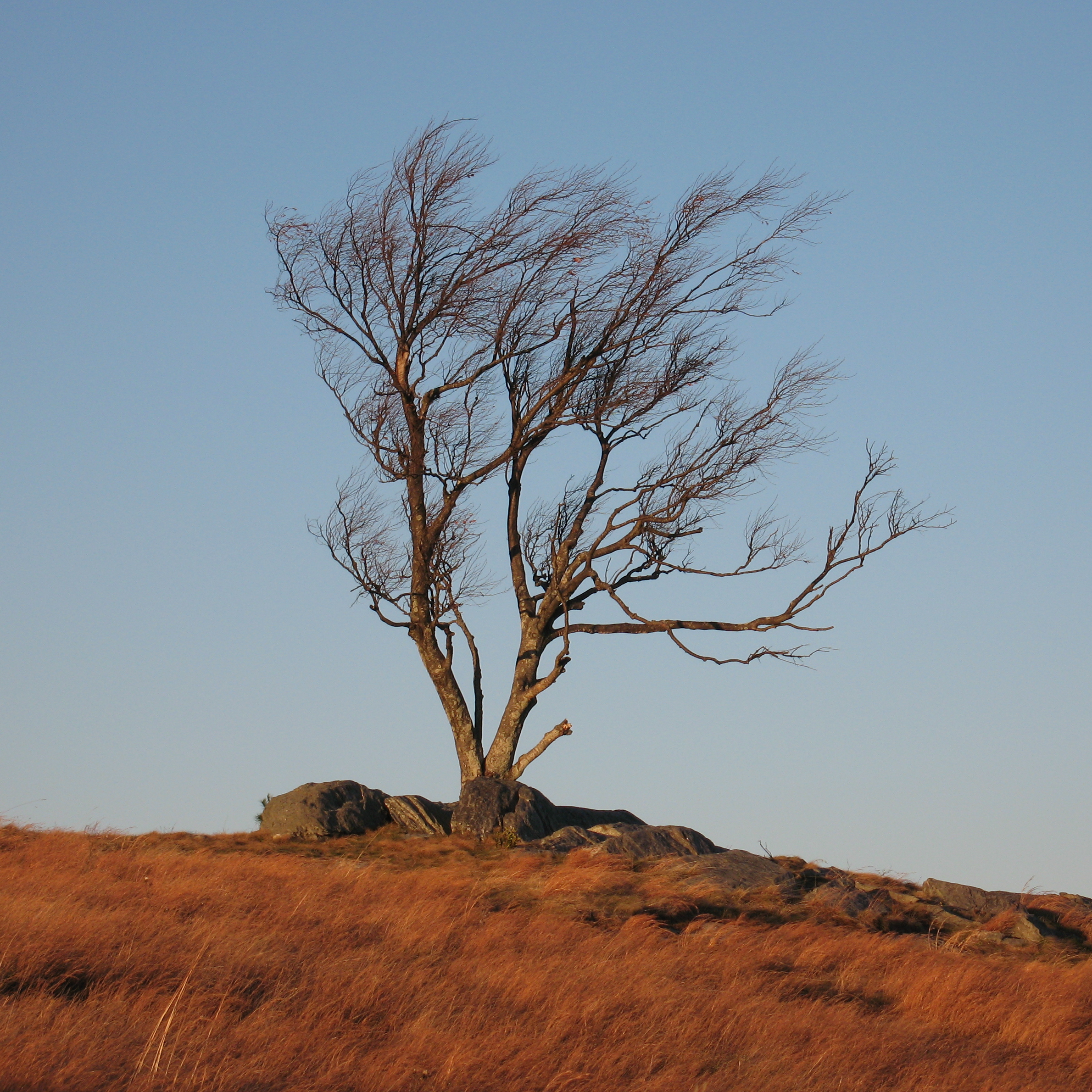
2016-05-08a Doughton Park Tree

Read Full Post »

[with 3 poems by J. S. Absher]

Building bridges. Maybe as a metaphor the phrase is not quite as worn down, rusty, and liable to drop chunks of concrete as the old Elkin bridge that carried US 21 high above the Yadkin River and railroad tracks. Built in 1931, stretching 1509 feet, named for Hugh G. Chatham, even after it was condemned by DOT in 2008 we still couldn’t bring ourselves to call in the demolition crews for that old bridge until 2010. Spanning a treacherous gulf. Lowering barriers between two rival communities. Safe passage, a more elevated view of life, making connections. Grand old metaphor.

The bridge we built today, though, is not a metaphor. It’s a 50-foot aluminum frame that will span a creek near the Mitchell River to extend the Mountains-to-Sea trail a few more miles. Mike, the engineer, showed us how to lay out the dozens of struts and braces and then we were on them like chicks on a Junebug. We put it together in three sections inside the big Surry County maintenance building at Fisher River Park; later we’ll move it into place, bolt the last connectors, and add planking. Amazing to see pallets of unrecognizable metal pieces becoming a structure.

Some of these volunteers today were born with a torque wrench in their fist but some are like me, tinkering all day with my Erector Set when I was 10. Sweating even with the giant fan blowing, pinching our fingers, joking. I still can’t get the smell of Anti-Seize out from under my fingernails. Someday soon will I hike across that bridge with my grandkids and say, “Hey, that’s one of my bolts!?” Moving out into a new world. Grand old metaphor.

September, 2022, all that’s left of the old Chatham Bridge on the Surry County side is a pleasant pedestrian garden with a long stairway from Gwyn Avenue down to Main Street. And, near the former base of one of those mighty pylons, the Angry Troll Brewery.

❦ ❦ ❦

The Day

The little room’s only window looked out
towards the ridgetop, the Dunkard church in the curve
of the two-lane, and, just beyond, the graveyard.

The morning sun sidled in past the partly
closed slats and resolved into rays and flecks
burning in the light – dust motes, I know,

and likely knew then, too, but still I watched
entranced one morning after our breakfast.
On this day I’d have otherwise forgotten,

probably my grannies were in the kitchen –
Emma with arms stretched out to read who’d died
(she’d be in the Dunkard cemetery soon),

half-crippled Sallie stringing the green beans
(years of suffering and strokes lay just ahead) —
while I stood quietly in the little room

watching the random sparkles in the sunbeam,
worlds I could move with a single breath
of poem or prayer, but could not control.

J. S. Absher
from Skating Rough Ground, © 2022 J. S. Absher, Kelsay Books, American Fork, UT

❦ ❦ ❦

worlds I could move with a single breath / of poem or prayer, but could not control

I have often been moved by Stan Absher’s poetry. Not moved as by a shiver of emotion or a momentary ah ha at his thesis or his craft. Rather I’ve felt myeself shifted into a different awareness, a new plane of being. Translocated. Enlightened. Despite the deep bedrock of conviction in all his work, despite the scholarship and the epiphany, he writes as if he is still searching, searching for truth. A spiritual seeker. So he may claim, but I consider Stan Absher a spiritual finder. I can’t help believing as I read these poems that he has encountered and grasped the numinous, wrestled with God as did Jacob.

Worlds he can move but not control? Perhaps that is the secret Stan conveys and which I would do well to take into my own heart. The seeking itself is intrinsic to the desideratum. The bridge. The poems in Skating Rough Ground cover such a lot of ground. Family history, Christian history, art history, and every topic and observation is put to diligent good work unfolding the petals of the human flower. Stan is in perfect control of his art, which makes even more believable his message that our condition enfolds a great mystery.

One other remark: even though Stan mentions Wittgenstein and his book includes sixteen erudite endnotes, his poems are never high-flown or inaccessible. He is not looking down on us mortals from the heights; he is right here among us. And he is not above a little poke in the ribs or the murmur of a wry joke. These poems are companionable companions – pick up the book and come along on the journey.

[additional information on works by J. S. Absher . . . ]

❦ ❦ ❦

The Conversation of Matter

I could hear things talk. When something was lost,
I stood in the room, asked it to show itself.
Sometimes it spoke an image in the mind – a drawer
++++ to search, a cherry
++++ bureau to look under.

Those who have spent their lives mastering tools
and techniques can hear their material speak,
David crying naked out of Carrara marble
++++ to be rescued from
++++ Agostino’s botched start.

But things usually speak by resisting –
weight too heavy to lift, edge too sharp to hold,
a moving part that grinds and heats and breaks, a poem’s
++++ application of
++++ friction to language –

slow it! stoke it hotter than Gehenna!
salt its path with grit!
keep it from slip-sliding
away on its own melt! flick sawdust into the eye
++++ to make it dilate!
++++ Without friction – so said

Wittgenstein, older and word-worn – language
does not work. If it wears skates on rough ground, it
takes a tumble. Even prayer needs resistance – a stick
++++ crosswise in the throat
++++ garbling words like a sob.

How hard to admit we love the world – how
hard it ought to be – yet its unrequiting
beauty resists abandonment: Show yourself, come out
++++ of hiding, come out
++++ of quarantine, and live.

J. S. Absher
from Skating Rough Ground, © 2022 J. S. Absher, Kelsay Books, American Fork, UT

❦ ❦ ❦

The Creator Praises Birds

Vent and crissum,
lores and crest and comb: I
made them all – the

nares, nape, those
horny bill plates – I in
feathered trochees

made them: peacock,
sparrow, tufted titmouse,
flitting jenny

filled with joy of
beaking worm, of strut and
glide, of piping

double on their
syrinx. Praise how flock and
murmuration

call out warning,
call to fly or roost or
call for pleasure:

See me! Hear me!
Pur-ty! Pur-ty! Pur-ty!
Cheer up! Pibbity!

Praise the brave-heart
tender fledgling, wobbly
winging over

houses, over
pavement, risking all to
climb the air by

beating wind I
too created, rising
heavenward in joy.

J. S. Absher
from Skating Rough Ground, © 2022 J. S. Absher, Kelsay Books, American Fork, UT

❦ ❦ ❦

Read Full Post »

[with 4 poems from I Thought I Heard a Cardinal Sing]

Eyes closed I listen as if casting a great spiral net into the forest. Behind, around me, above, although my two ears fixed in the horizontal plane are not excellent at discerning degrees of vertical, the vibrations arrive. Rarefaction and compression, faint means far, high amplitude is close beside me. A great disk of song and squeak and rustle, a half globe. What is the definition of a sphere? A surface whose every point is equidistant from the center.

How difficult, then, not to imagine the center is me. Plant my feet in sand and watch the sun descend below the western horizon; lie on my back at night for an hour and notice how Taurus and the Sisters wheel around me, I the fixed tether of all movement, I the pivot of their dance. My mind will argue against such silliness but my senses know its truth. As kids we never question the solar system we learn in school, later we even snicker at Ptolemy, his deferents, epicycles, and yet centrality is burned into us, ten thousand years of human psyche.

But imagine. What if? Hardwood creaks upstairs, Linda out of bed, but instead of imaging her descending soon to join me I am with her now, stretching, brushing teeth, gathering her hair and braiding. The first step is to step away from the imaginary center. The second is to not look back at self. Look out, look into the space between the hickory leaves and ferns, fly up with feathers and lace-veined wings. Claw the earth, creep between the rootlets. Not just imagine – be the other lives that pass in cars, that tend a child, that worry. Be the angry ones, the broken, the sad & silent. Behind, around, above. First step is to give up the center.

❦ ❦ ❦

Common Ground

What’s incomplete in me seeks refuge
in blackberry bramble and beech trees,
where creatures live without dogma
and water moves in patterns
more ancient than philosophy.
I stand still, child eavesdropping on her elders.
I don’t speak the language
but my body translates best it can,
wakening skin and gut, summoning
the long kinship we share with everything.

Laura Grace Weldon
from I Thought I Heard a Cardinal Sing: Ohio’s Appalachian Voices, edited by Kari Gunter-Seymour; Sheila-Na-Gig Editions, © 2022

❦ ❦ ❦

Cardinal

I know my mother’s weeping is real by the way
she exhales, fragmented and flailing,

like someone newly mourning. My head only hip-high,
I stare up to her saddened face, too young to understand

any of this, but old enough to know something
is broken, and that with breaking, anguish follows,

old enough to know she would want to watch
the male cardinal she feeds every morning

newly perched in the bare Maple outside
the kitchen window. I nearly tell her to look,

to witness its bright red flame up against all
that white winter. But I wait, keep quiet

and listen, trying to hear in place of her grief,
the cardinal’s song just beyond the glass.

William Scott Hanna
from I Thought I Heard a Cardinal Sing: Ohio’s Appalachian Voices, edited by Kari Gunter-Seymour; Sheila-Na-Gig Editions, © 2022

❦ ❦ ❦

As I read deeper into I Thought I Heard a Cardinal Sing, I feel my center shifting. In good poetry I discover how the poet feels; in excellent poetry I discover how I feel. These pages enfold an entire world – gardens and farms, back roads and highways, mining towns and river towns; people who struggle, joyful people, yearning, grieving, loving. Line by line, image by image these voices create a powerful place. I am drawn in, I am invited and indeed welcomed in. Hearing with their ears, seeing with their eyes, feeling their hearts I discover what has made meaning in my own life.

Thank you, Ohio’s Appalachian Voices. I am humbled to become part of the family.

Oh, and don’t forget the cardinals. I’ve lost count of the poems with the singing of cardinals. Spirits of the dead and still desired; messengers of color in a countryside too often locked in grey and white; outstanding singers of endless variation – and shared by OH and NC as state bird (along with WV, VA, IL, IN, KY)! Visitors from the West Coast see their first Cardinalis cardinalis and say, “I didn’t believe they were real!” Yes indeed, as real as these poets and as real as their poems.

❦ ❦ ❦

Chink

Backyard,
this is as small
as the cardinal’s good cheer gets,
sharp shard of sound
chipped from as-if-frozen air.
Still, if it were to have color
it would be pointed scarlet,
like a splint of fire,
or blue-white
like the flame of acetylene.
If it were music
it would be one high C,
some maestro’s hot-headed urge
of his horns.

In the woods,
chink is enough.
Under pine signs,
near the stony mumble
of the creek,
it speaks everything needed
to cardinal:
Here.
I know you’re there.
Listen.

Richard Hague
from I Thought I Heard a Cardinal Sing: Ohio’s Appalachian Voices, edited by Kari Gunter-Seymour; Sheila-Na-Gig Editions, © 2022

❦ ❦ ❦

This Place Does Not Care If I Am Happy

This ruby-throated world is not for me.
Not mine, this jack pine tar, this chunky sunlight.
Not mine, the eggs or weeds or garter snakes.
This limping yellow willow is not for me,
Nor is the wrinkled willow that the lake makes.

These thrushes will still be here when I go.
Maybe not this robin and maybe not these reeds
But some robin in some reeds will be here when I go.
Some or another maple, some lightning-bent bough,
Some summer-sick magnolia will be here when I go.

This place has never cared if I am happy.
The fungus does not care, the fox does not care,
The deer looks as though – for just a moment –
But no. This place does not care if I am happy.

And I am thank you, thank you, I am.

Erica Reid
from I Thought I Heard a Cardinal Sing: Ohio’s Appalachian Voices, edited by Kari Gunter-Seymour; Sheila-Na-Gig Editions, © 2022

❦ ❦ ❦

❦ ❦ ❦

IMG_0880, tree


Read Full Post »

« Newer Posts - Older Posts »