Feeds:
Posts
Comments

Archive for the ‘Ecopoetry’ Category

[with poems by Ursula K. LeGuin, Sandra Dreis,
Jenny Bates, Galway Kinnell]

After a recent post which featured poems from the journal ecotone, Bradley Strahan commented, “Thanks. We need constantly to be reminded of how much we are dependent and damaging.” It made me think: it must be no coincidence that Poetry Month and Earth Day are both in April. This is the month of convergences, when we are truly grateful that the last frost is past and beastly summer has not yet smothered us. We watch new shoots erupt and bloom, but we worry that some will arrive too early and get nipped, and that blossoms and pollinators may emerge out of sync. We’re grateful for the songs of neotropical migrants, but we notice their diminished numbers and worry about desecrated wintering grounds and fragmented breeding grounds. We head out for a hike or a bird count and find the woodlots leveled, the streams silted up, and new homes and trailers in every cornfield.

We are surrounded by the reality of relentless human impact on the planet. We are living smack dab in the middle of the Anthropocene epoch.

It is difficult
to get the news from poems
yet men die miserably every day
for lack
of what is found there.
+++++++ William Carlos Williams, from Asphodel, That Greeny Flower

Poetry is able to speak the news we need to hear for Earth Day. Poetry may crystallize a truth we can grab and hold on to when bad news threatens to overwhelm us. Poetry may grab us by the lapels and jerk us to our feet when our motivation has drained away. Poetry may shed light on despair and offer some path into hope.

Thank you to the readers of these pages
who have responded to my call for poems this Earth Day.
Watch for new posts on April 21, April 22, and April 23.

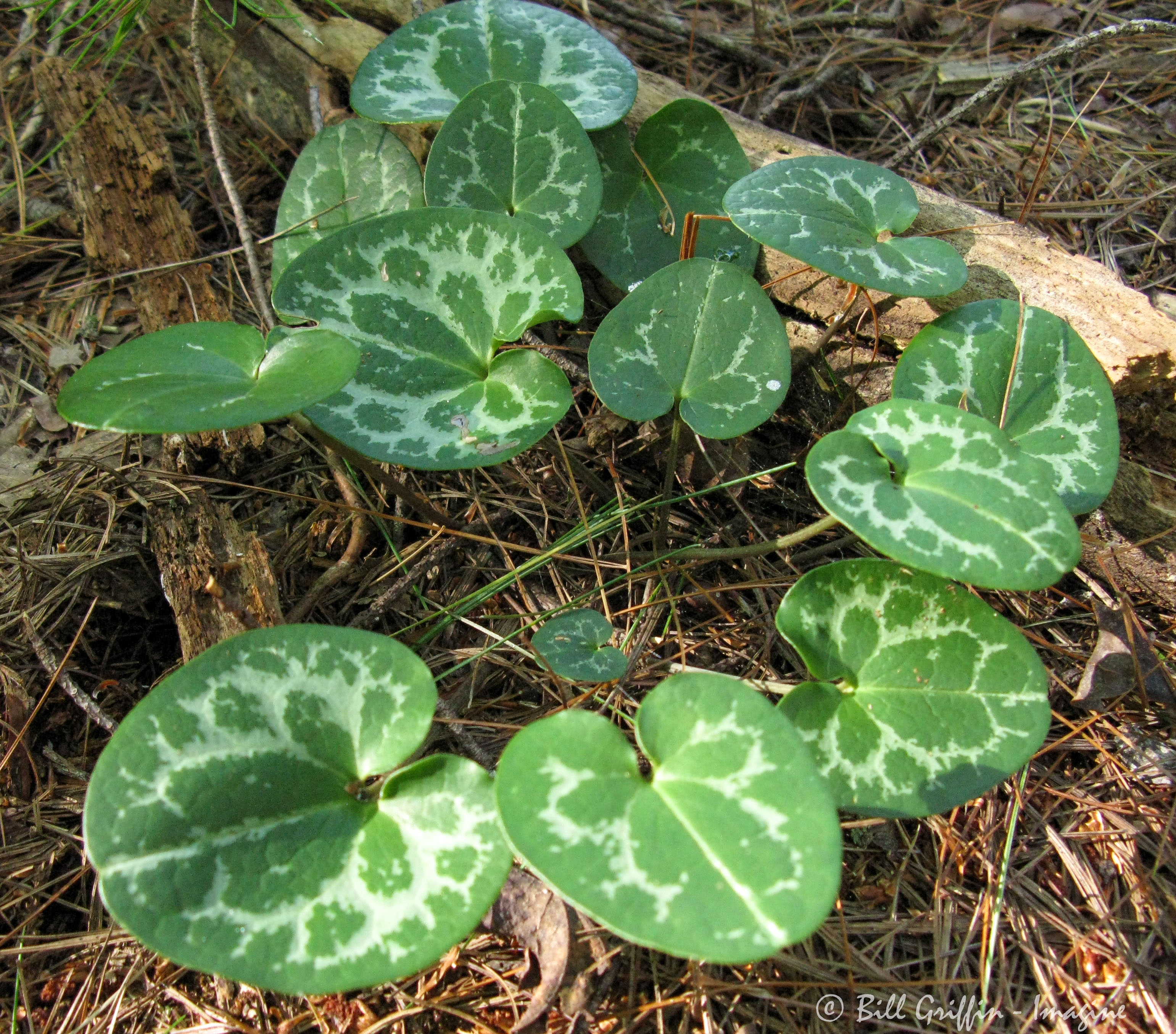
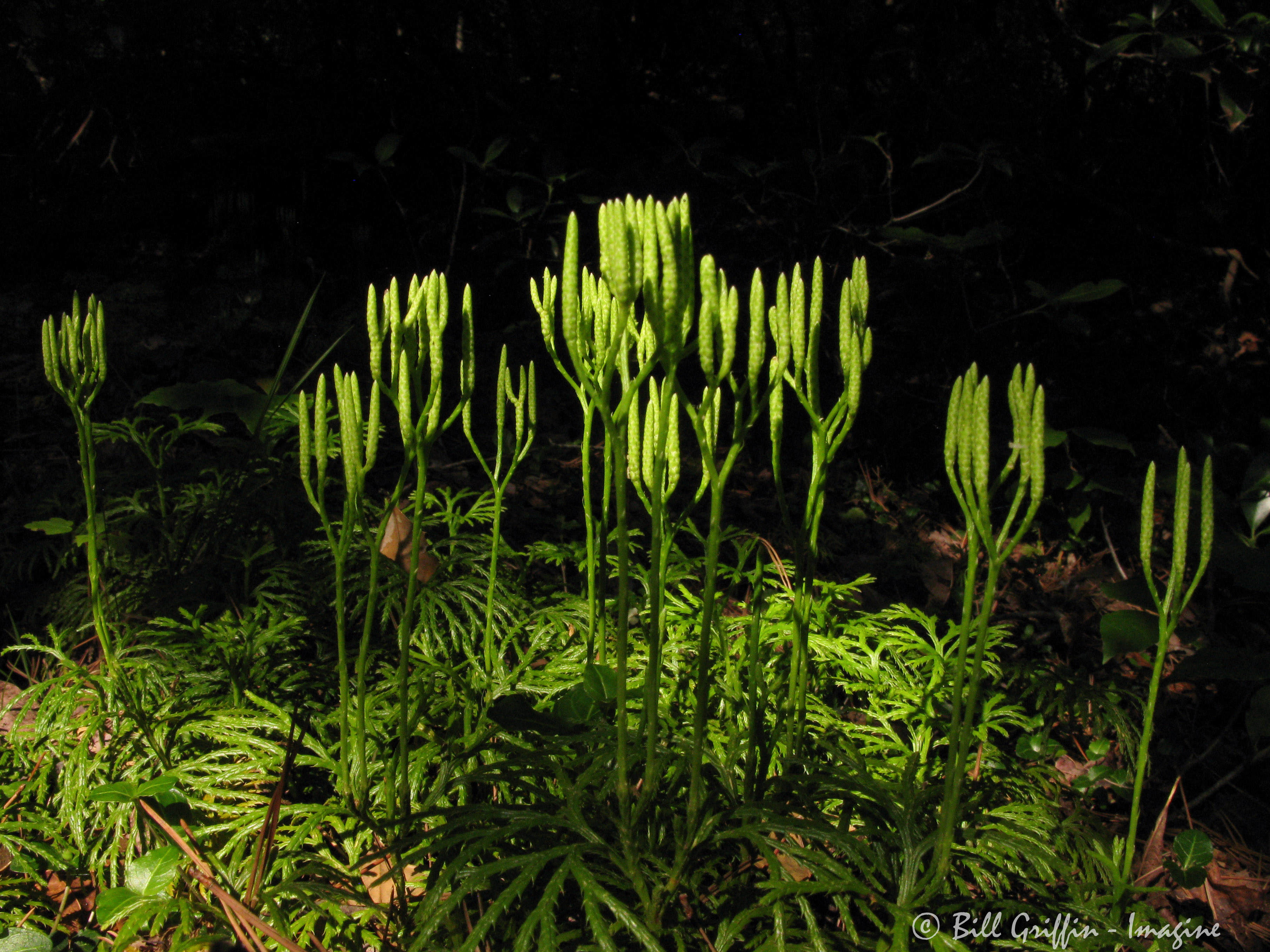
All photographs were taken April 11-17, 2023,
along the Elkin & Allegheny Nature Trail,
part of the Mountains-to-Sea Trail in North Carolina, USA.

Earth Day 2023 art by Linda French Griffin.

❦ ❦ ❦

Kinship

Rootless and restless and
warmblooded, we
blaze in the flare that
blinds us to that slow,
tall, fraternal fire of life
as strong
now as in the seedling
two centuries ago.

Ursula K LeGuin
Selected by Bill Griffin; appeared online in The Dewdrop, March 26, 2022

What truth is more profound, more amazing, more assuring, more urgent than our kinship? That Ur-puddle’s restless swirl of nucleotides and amino acids, way back in time before there was ever a cell, is still reflected in the minutest truth of our bodies, every glint and dark crevice of them. All of us are neighbors.

– Bill Griffin / Elkin, North Carolina

❦ ❦ ❦

Raven’s Beak

But you’d have to understand
Raven’s beak,
drive that comes before
all else,
plunges for praying mantis,
plucks, disbands dirt,
stabs a wrangled tuft of weed.

And you’d have to
be
the bird, inhabit
black eyes that beam location,
yes, stealing sweetness
even
from the cocky cat,

feasting on envy.
This hunger lives beyond prey
I tell you, a wild want
not to be tamed
by blood, sinew or travail.
In dreams I gather others.
I grow feathers and wait.

Sandra Dreis
originally published in CREOSOTE, Spring 2021. (East Arizona)

This, my first published poem, was inspired by a walk with my two small dogs, stopping by a grassy ultra-green, pampered lawn. There, under a pin oak, was a sizable raven, beak inserted into the earth. In that moment, while I held my leashed dogs, a cat on a nearby stoop kept the raven in her sights. My dogs begged after the cat. I felt the perfect continuum. The balance. The tame. The wild.

– Sandra Dreis / Winston-Salem, North Carolina

❦ ❦ ❦

Otherworldly

Odd trick of the wind in leaves,
water flowing over stones.

You don’t have a mouth, said Fox.

Moth never blinked, rippling its crescent
tail wings.

You only live for a week, said Fox.

Moth lifted its wings, flew the moon up
to meet the night.

You and I are daydreams, soughed Fawn.

It’s been a long time. Think back and listen.
Voices in the woods. Angelic, untarnished.

Articulate, I can hear words rising

then falling,

a benediction.

Jenny Bates
originally published in Dark Forest, Planisphere Q, 2021

I want to bring the kindness and wonder I have found in wild creatures as well as their courage and pragmatic truth. I want my voice to be their voice as I believe they will teach us appropriate ways to heal the wild land. The wild is mysterious but also thrilling, nostalgic, liquid, musical when we listen.

– Jenny Bates / Germanton, North Carolina

❦ ❦ ❦

The Bear

+++++ 1
In late winter
I sometimes glimpse bits of steam
coming up from
some fault in the old snow
and bend close and see it is lung-colored
and put down my nose
and know
the chilly, enduring odor of bear.

+++++ 2
I take a wolf’s rib and whittle
it sharp at both ends
and coil it up
and freeze it in blubber and place it out
on the fairway of the bears.

And when it has vanished
I move out on the bear tracks,
roaming in circles
until I come to the first, tentative, dark
splash on the earth.

And I set out
running, following the splashes
of blood wandering over the world.
At the cut, gashed resting places
I stop and rest,
at the crawl-marks
where he lay out on his belly
to overpass some stretch of bauchy ice
I lie out
dragging myself forward with bear-knives in my fists.

+++++ 3
On the third day I begin to starve,
at nightfall I bend down as I knew I would
at a turd sopped in blood,
and hesitate, and pick it up,
and thrust it in my mouth, and gnash it down,
and rise
and go on running.

+++++ 4
On the seventh day,
living by now on bear blood alone,
I can see his upturned carcass far out ahead, a scraggled,
steamy hulk,
the heavy fur riffling in the wind.

I come up to him
and stare at the narrow-spaced, petty eyes,
the dismayed
face laid back on the shoulder, the nostrils
flared, catching
perhaps the first taint of me as he
died.

I hack
a ravine in his thigh, and eat and drink,
and tear him down his whole length
and open him and climb in
and close him up after me, against the wind,
and sleep.

+++++ 5
And dream
of lumbering flatfooted
over the tundra,
stabbed twice from within,
splattering a trail behind me,
splattering it out no matter which way I lurch,
no matter which parabola of bear-transcendence,
which dance of solitude I attempt,
which gravity-clutched leap,
which trudge, which groan.

+++++ 6
Until one day I totter and fall-
fall on this
stomach that has tried so hard to keep up,
to digest the blood as it leaked in,
to break up
and digest the bone itself: and now the breeze
blows over me, blows off
the hideous belches of ill-digested bear blood
and rotted stomach
and the ordinary, wretched odor of bear,

blows across
my sore, lolled tongue a song
or screech, until I think I must rise up
and dance. And I lie still.

+++++ 7
I awaken I think. Marshlights
reappear, geese
come trailing again up the flyway.
In her ravine under old snow the dam-bear
lies, licking
lumps of smeared fur
and drizzly eyes into shapes
with her tongue. And one
hairy-soled trudge stuck out before me,
the next groaned out,
the next,
the next,
the rest of my days I spend
wandering: wondering
what, anyway,
was that sticky infusion, that rank flavor of blood, that poetry, by which I lived?

Galway Kinnell
Selected by Paul Jones; appears in Three Books (Houghton-Mifflin, 2002)

Galway Kinnell speaking for himself about himself: “I don’t recognize the distinction between nature poetry and, what would be the other thing? Human civilization poetry? We are creatures of the earth who build our elaborate cities and beavers are creatures of the earth who build their elaborate lodges and canal operations and dams, just as we do … Poems about other creatures may have political and social implications for us.”

I first heard Kinnell read this poem in maybe 1977 at the UNC English Department. I was thinking of taking a job at UNC. I did and The Bear has been with me ever since.

– Paul Jones / Chapel Hill, NC


❦ ❦ ❦


Read Full Post »

[with poems from The Ecopoetry Anthology]

Ethnobotanists recognize that the difference between a poison, a medicine, and a narcotic is often just a matter of dosage. This pungent observation is found in my favorite wildflower guide under the entry for Golden Alexanders (Zizia aurea), which is in the wild carrot or parsley family, Apiaceae. Members of the family include vegetables – carrot, celery, parsnip – and ubiquitous seasonings – cumin, coriander, fennel, dill, and many more. They also include the most toxic plant in North America, Water Hemlock; a small nibble of the root will be fatal. Deliciousness and poison, nurture and death, they surround us.

My father was recently released from inpatient rehab after suffering a series of strokes at age 96. My sister and I took turns living at their home for two weeks, first to watch over Mom and drive her to visit Dad, then to get him resettled. Now it’s down to me to carry him to his various appointments, field questions from home health, pay the bills. All that stuff. Meanwhile, Dad’s neighbors call him the bionic man. His speech has fully returned, his appetite’s robust, he can creep around the block upheld by his Lexus of all walkers. He is surrounded by a glow of resilience.

Dad’s glow is enhanced by one apparent deficit left by the stroke – any awareness of his mortality. Perhaps it’s simply the great good fortune of being upright and breathing, but he seems to have discarded many of his former worries, including not even seeming to worry that he’ll have another stroke. Be happy, Dad – I’ll take over the worrying. It’s my job to worry, and to remind you that it’s not safe to stand up without your walker. I’ll be the one who checks your pill cartons and makes sure you’re taking everything correctly. I’m keeping the refrigerator full; you just decide what to tell the caregiver to fix for your supper. Simply let this moment surround you and Mom. Enjoy.

Last year I gave my backpacking buddy Mike a t-shirt I see him wearing often: What Doesn’t Kill You Makes You Stronger . . . Except Bears, Bears Will Kill You. What really cracks us up is that on all those hikes we took, we wanted to see a bear! From a responsible distance, of course, not licking our face in the middle of the night. I can honestly say that this stroke which didn’t kill Dad has not made him physically stronger (until you compare him to the median 96-year old). Or mentally stronger – he’s pretty fuzzy some days and wouldn’t be able to put into words this transformation. He can’t express verbally just where he resides on the plane of mindful acceptance, but he is looking forward to the next good dinner.

May there yet be dinners aplenty. Within the flickering shadows of destruction, my Father, may you be surrounded by joy.

❦ ❦ ❦

Eagle Poem

To pray you open your whole self
To sky, to earth, to sun, to moon
To one whole voice that is you.
And know there is more
That you can’t see, can’t hear;
Can’t know except in moments
Steadily growing, and in languages
That aren’t always sound but other
Circles of motion.
Like eagle that Sunday morning
Over Salt River. Circled in blue sky
In wind, swept our hearts clean
With sacred wings.
We see you, see ourselves and know
That we must take the utmost care
And kindness in all things.
Breathe in, knowing we are made of
All this, and Breathe, knowing
We are truly blessed because we
Were born, and die soon within a
True circle of motion,
Like eagle rounding out the morning
Inside us.
We pray that it will be done
In beauty.
In beauty.

Joy Harjo
from The Ecopoetry Anthology (Trinity University Press, San Antonio, Texas, © 2020)

❦ ❦ ❦

Leading us into Earth Day on April 22, these poems are from The Ecopoetry Anthology, edited by Ann Fisher-Wirth and Laura-Gray Street, with an excellent introduction by Robert Hass (Trinity University Press, San Antonio, Texas, © 2020).
Joy Harjo is an internationally renowned performer and writer of the Muscogee (Creek) Nation. She served three terms as the 23rd Poet Laureate of the United States from 2019-2022 and is winner of Yale’s 2023 Bollingen Prize for American Poetry.
Donald Hall has served as Poet Laureate of the United States and Poet Laureate of New Hampshire. His many honors include the Robert Frost Silver medal and the Ruth Lilly Poetry Prize.
Lola Haskins serves on the Board of Florida Defenders of the Environment and has won the Florida Book Awards Silver Medal for Poetry.

❦ ❦ ❦

Digging

One midnight, after a day when lilies
lift themselves out of the ground while you watch them,
and you come into the house at dark
your fingers grubby with digging, your eyes
vague with the pleasure of digging,

let a wind raised from the South
climb through your bedroom window, lift you in its arms
– you have become as small as a seed –
and carry you out of the house, over the black garden,
spinning and fluttering,

and drop you in cracked ground.
The dirt will be cool, rough to your clasped skin
like a man you have never known.
You will die into the ground
in a dead sleep, surrendered to water.

You will wake suffering
a widening pain in your side, a breach
gapped in your tight ribs
where a green shoot struggles to lift itself upwards
through the tomb of your dead flesh

to the sun, to the air of your garden
where you will blossom
in the shape of your own self, thoughtless
with flowers, speaking
to bees, in the language of green and yellow, white and red.

Donald Hall
from The Ecopoetry Anthology (Trinity University Press, San Antonio, Texas, © 2020)

❦ ❦ ❦

Prayer for the Everglades

A gumbo-limbo swoons in the arms of an oak.
A royal palm, smooth as sunless skin, rises
against blue. In this whole untouched world
there seems only wind, the grass, and us.
Now silent lines of wood storks appear,
their white wings edged black. Here is
a mathematical question for your evening.
How many moments like this make a life?

But if it were not true? What if the glades
were a dream, ancient, written on the walls
of caves, so anthropologists peering into
the darkness could say only, it must have
been lovely then, when grass flowed under
the sun like a young woman’s falling hair.
What if none of it were true? What if
you and I walked all our afternoons under
smoke, and never saw beyond? What if
the tiny lichens that velvet the water, the
gators that pile like lizard on the banks,
the ibis with her sweet curved bill? What
if the turtles that plop off their logs like little
jokes? What if the sheltering mangroves?
O what if? Look up, friend, and take my
hand. What if the wood storks were gone?

Lola Haskins
from The Ecopoetry Anthology (Trinity University Press, San Antonio, Texas, © 2020)

❦ ❦ ❦

Wildflowers of Tennessee, the Ohio Valley and the Southern Appalachians – August 1, 2018; by Dennis Horn, Tavia Cathcart. Sponsored by the Tennessee Native Plant Society

This book focuses on Tennessee, but the Ohio Valley and Southern Appalachians are covered, encompassing all or parts of Alabama, Arkansas, Georgia, Illinois, Indiana, Kentucky, Maryland, Mississippi, Missouri, North and South Carolina, Ohio, Pennsylvania, Virginia, and West Virginia. Within these pages I’ve discovered just about every wild flower I encounter here in the North Carolina foothills, or at least a close relative. The book overall is arranged by plant family with taxonomic commentary; it includes a quick thumbnail guide by color in the front; every entry has rich commentary about history and ethnobotany; my favorite section is the excellent illustrated glossary – everything the wild plant nerd could possibly want!

❦ ❦ ❦

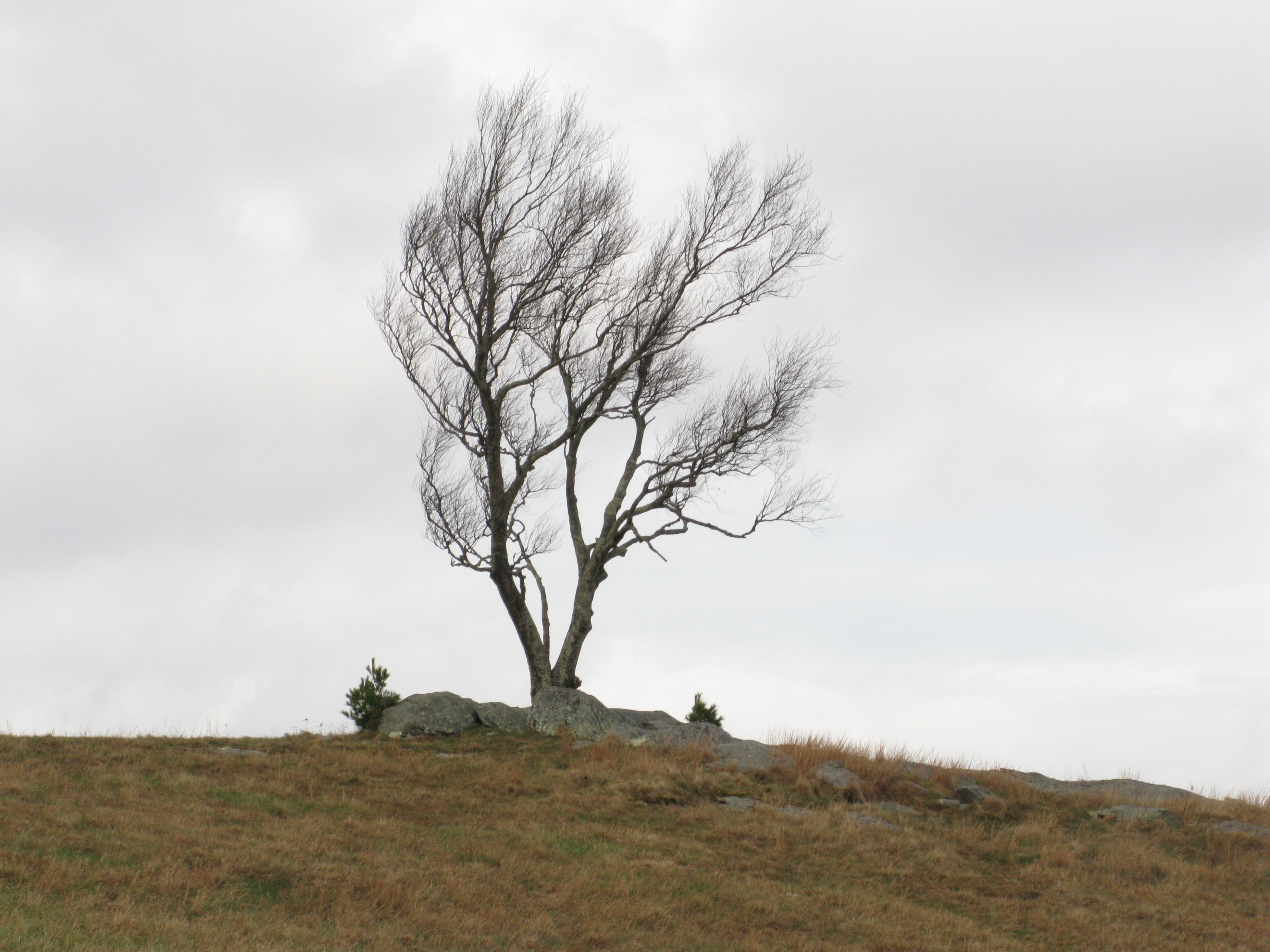
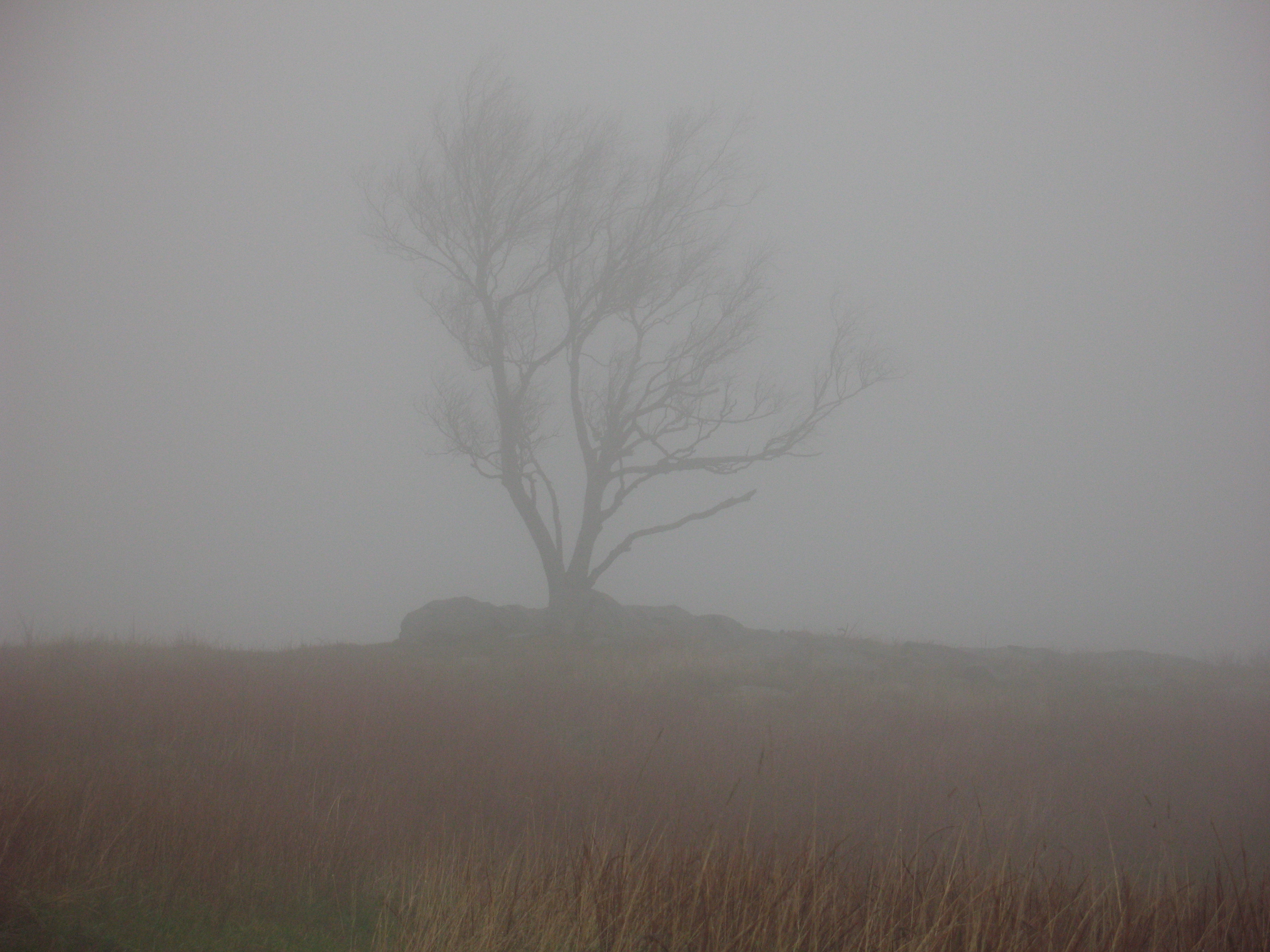
Doughton Park Tree -- 5/1/2021

Read Full Post »

[with poems from ecotone]

“Oh, look at the Redbuds, how pretty!” Riding in the back seat, I couldn’t figure out what my parents were gushing about. Where was this tree with red (not lilac or magenta or purple) buds (not jillions of little peaflowers jutting from every twig)? Maybe, I thought, they meant “maple.”

I did know what they meant when they said, “Oh, Dogwoods!” In a cross, four white petals (actually bracts, modified leaves), small trees lining the roadway and scattering themselves down into the woods – I certainly understood that white flowers in spring equals Dogwood.

Except when it doesn’t. One April after we had moved to Elkin and bought a house perched on a steep incline above Dutchman Creek, I decided to pick my way down amongst the briars and poison ivy and explore. I just assumed those flowering trees punctuating the woods were Dogwood, such a firm assumption that I didn’t even give them a look. Then I noticed, watching ever so carefully where I was placing my feet, dozens of little white cup-shaped blooms that had fallen from overhead. I looked up and learned.

Carolina Silverbell is a small tree native to the Eastern US, in the Snowbell or “Storax” family, Styracaceae. Genus Halesia is named for Stephen Hales, an early 18th century Englishman who made a number of contributions to plant and animal science (he’s credited as the first person to measure blood pressure!). Around the time Dogwoods are blooming, and before leaves appear, Silverbell opens its small four-lobed flowers that hang from their stems indeed like little bells. It thrives in shade and partial sun; many of those white-flowered trees I’d been seeing in the woods through the years were probably Silverbell rather than Dogwood.

In the fall, Carolina Silverbell reveals the source of its species name. I remember the first time I plucked a few of its brown seed pods (a dry drupe), which it retains all winter. Each has four longitudinal wings – Tetraptera.

❦ ❦ ❦

The River in Pieces

The river in pieces – pool, riffle, run –
holds thousands inside itself, still undone,
motion captured. Strange critters swirl within
The churn-water breaks, a misted engine.

A bitten hot wish, remade, swallowed deep,
flows into shadowed shape coherent, weeps
into a waterfall, crashes sideways,
surfaces spinning, darts into bright day.

Lines mend: boundaries cut to maps and saws,
and gravity, a dark fish, dives and draws
swift-cold streams into rolling channeled force
inevitable. Widening, the course

opens warmer, swells in yellow ambling.
Lakes interrupt – boats buzz – but the bending
resumes eventually; hairy swamps emerge,
remoteness expands to eternal surge

where brackish waters wander, sweep full wide,
fan estuarine, pull life along the tide
more gently. Sharpness turns to silence
meandering, builds, and then relents

into mouth: sound fixed fast to a squall.
Seagulls soar; the wet wind drives, enthralls
the highest sky – at last the river sails,
presses vastness: a watershed exhales.

Shana Campbell Jones
from ecotone #33, fall/winter 2022

❦ ❦ ❦

ecotone: a transition zone between two communities, containing the characteristic species of each; a place of danger or opportunity; a testing ground

ecotone is published twice yearly by the Department of Creative Writing and The Publishing Laboratory at the University of North Carolina Wilmington, editor Anna Lena Phillips Bell, editor-in-chief David Gessner. #33 is “The Ocean Issue.” Shana Campbell Jones is an environmental lawyer at the University of Georgia. Sophie Klahr is the author of Two Open Doors in a Field from Backwaters Press, March 2023. Gretchen Steele Pratt is the author of One Island, Anhinga Press, and teaches at UNC Charlotte.

❦ ❦ ❦

Downstream
after Enric Sala

Water is a symbol of God’s MERCY on the earth. My lecture notes are full of capitalized words: Acidification is melting the BONES of the ocean; GRAIN is the currency by which we trade water; conservation is not a LUXURY; we once THOUGHT the ocean was too BIG to FAIL. The marine ecologist at the lectern holds himself like a tired Janus – “We have killed and/or eaten ninety percent of the large animals in the ocean,” he says; he says, “This is a population that will not recover.” murmur murmur goes the listening choir. A massive screen hovering onstage shows a shot of some large school. The ecologist tells another of his dozen jokes about fish – he has learned to weave these into the truth. EVERYTHING GOES DOWNSTREAM AT SOME POINT, say my notes. THE OCEAN IS DOWNSTREAM OF EVERYTHING.

Sophie Klahr
from ecotone #33, fall/winter 2022

❦ ❦ ❦

Silence in the Garden, Silence in the Halls

At the lowest of tides
++ we go walking
through the low tide
++ mansions, surfaced,
stairways roughed with
++ salt, barnacles,

the banisters salt-cured
++ white. We roam
barefoot in muslin dresses
++ and do not
speak, relieved a few hours
++ from our names,

from children waking, from
++ closets bowed
with color, from the drone
++ of machines
that do our bidding. Our eyes
++ close beneath

the sun-drenched pergola,
++ twisted thick
with petrified vines of wisteria.
++ We turn in slow
circles through the grand ballroom,
++ baked clean

of gold and varnish, a wreck
++ of rusted
cello stands washed in
++ the corner.
Crystal chandeliers, clouded
++ to sea glass

become stone. Wallpaper dissolved,
++ walls encrusted
with the raw white lace
++ of the sea.
Dry opal fish scales eddy
++ in our wake.

We always reconvene
++ on the widow’s walk,
littered with lost anchors.
++ From there,
we witness the low tide
++ deepening,

another mansion appearing,
++ alive, like
white coral, farther down
++ the long drift
of strand. We will make
++ our way there,

across the burning noon sand,
++ to each mansion,
where we own nothing, and
++ love no one,
cloistered by the tides
++ in these convents

of the desert
++ and of the deep.

Gretchen Steele Pratt
from ecotone #33, fall/winter 2022

❦ ❦ ❦

❦ ❦ ❦

Carolina Silverbell may be a multi-stem shrub or smallish tree in the NC Piedmont, up to 10 meters tall, but in the Great Smoky Mountains there are individuals over a hundred years old reaching heights of 39 meters or greater. Some taxonomists consider these to represent two distinct species, Halesia carolina and Halesia monticola (Mountain Silverbell). Even more confusing, the Asian Halesia species may not be monophyletic (not all from a common ancestor, not in the same clade). Some taxonomists propose a separate genus, Perkinsiodendron.


2016-05-08a Doughton Park Tree

Read Full Post »

« Newer Posts - Older Posts »