Feeds:
Posts
Comments

Archive for the ‘Christian themes’ Category

MERRY CHRISTMAS!


❧ ❧ ❧

Let the Stable Still Astonish

Let the stable still astonish:
Straw-dirt floor, dull eyes,
Dusty flanks of donkeys, oxen;
Crumbling, crooked walls;
No bed to carry that pain,
And then, the child,
Rag-wrapped, laid to cry
In a trough.

Who would have chosen this?
Who would have said: “Yes,
Let the God of all the heavens and earth
be born here, in this place.” ?

Who but the same God
Who stands in the darker, fouler rooms of our hearts
and says, “Yes, let the God
of Heaven and Earth
be born here —-

in this place.”

Leslie Leyland Fields

❧ ❧ ❧

from
The 2022 Elkin Community Chorus
60th Anniversary Christmas Concert
Tonya Smith Directing
Lillie Sawyers – Alto Solo
Amy Johnson – Piano
Sylvia Grace Smith – Cello


Let the Stable Still Astonish
composed by Dan Forrest, lyrics Leslie Leyland Fields

[Digitally recorded on December 4, 2022,
First Baptist Church of Elkin, North Carolina
by John Rees, GodsChild Records, Mt. Airy, NC
Digitally mastered and distributed by John Williams,
Engineer, Douglasville, GA]


❧ ❧ ❧

MERRY CHRISTMAS!

❧ ❧ ❧


❧ ❧ ❧

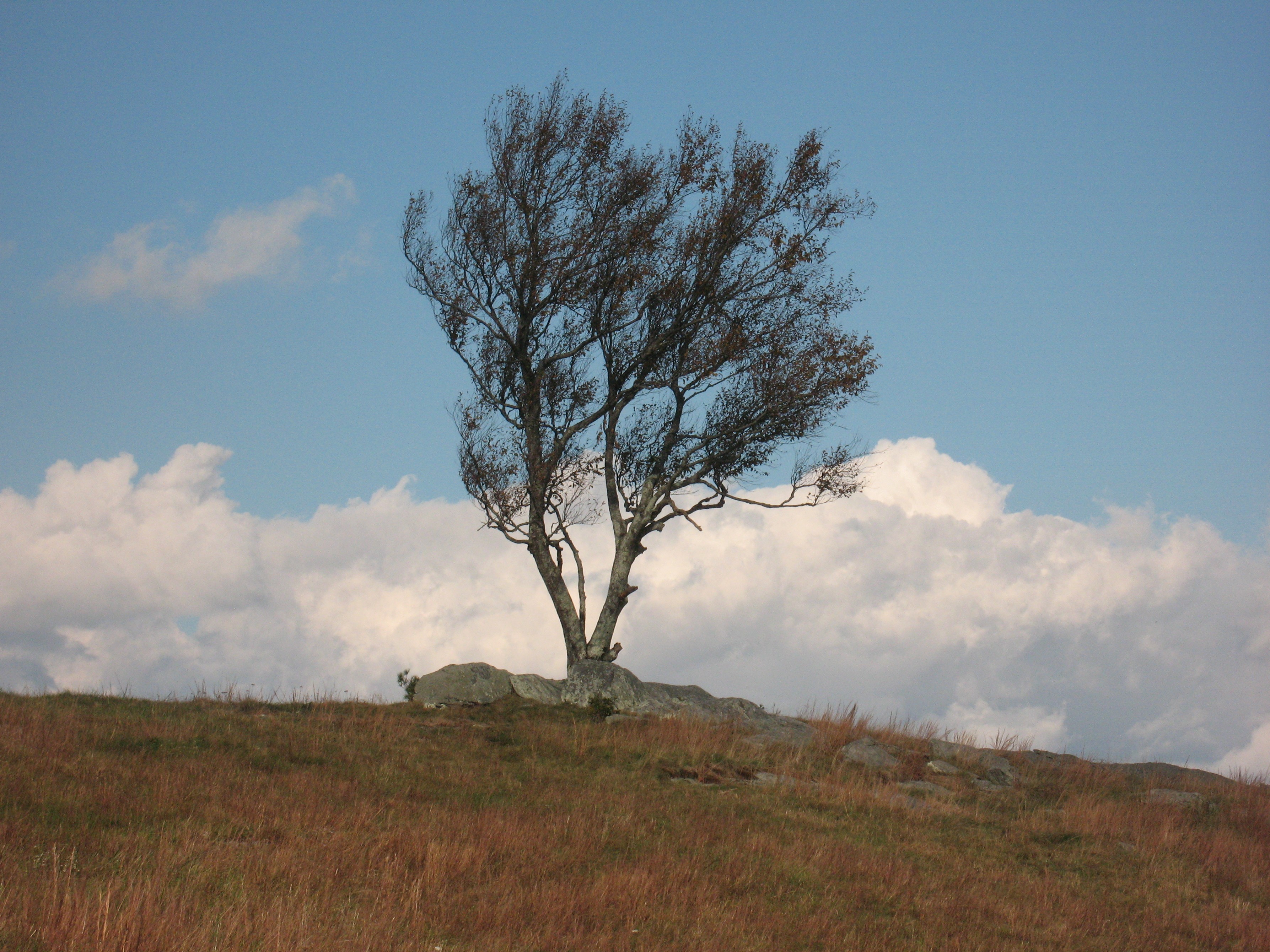
2016-10-17b Doughton Park Tree

Read Full Post »

Lessons & Carols

Linda and I opened our favorite Christmas present early. In November, our friend and fellow vocalist, Rebecca, had invited us to sing with her choir for their Festival of Lessons and Carols this fourth Sunday of Advent; their small group was dwindling in size and they had no tenor. Becky is a director of deep sensibility and infectious joy, and her husband Eric is a virtuoso organist and musicologist. If a naturalist is someone overcome with wonder at the organization and life history of tiny wildflowers and beetles, then a musicologist is one who discovers wonder and creates joy in the ecology of music.

The Lessons are a series of readings from Old and New Testament that reveal God’s presence in the world: creation; prophecy of the Messiah and the promised kingdom of peace; the arrival of Immanuel, God With Us. Each lesson is punctuated with music, the Carols. For this year’s service, Eric compiled a sequence of early American hymns and folk tunes, melodies that were once on every tongue but through the decades have largely fallen from familiarity and favor: Shape Note, Shaker, Appalachian, Moravian. We practiced, we rehearsed, and on Sunday morning with the Corda String Quartet and thundering pipe organ, we sang.


❦ ❦ ❦

THIRD LESSON: The king is coming and will usher in a reign of justice for the poor and peace for all of God’s creation. There shall come forth a shoot from the stump of Jesse, and a branch from his roots shall bear fruit. (Isaiah 1:1)

Behold a Lovely Vine
. . .
Shall feeble nature sing
and man not join the lays,
O may their throats be swell’d with notes
and fill’d with songs of praise.
. . .
++++++ Jeremiah Ingalls (1764-1838)

If nature itself sings the praises of earth and all it holds, how can we help but join in? Lays are medieval ballads, songs sung by minstrels. This hymn from 1805 retells Old Testament prophecies using metaphor and symbolic imagery. Interwoven is the theme that Nature fulfills its purposes and exists in harmony with the flow of creation. May we humans hope to be restored to that same harmony and oneness? Nature may become our “spiritual training ground.” Poetry and song throughout the 19th century reflect this vision of the perfection of nature as an example for humankind, as in the book length poem Wilderness and Mount by Ellen T. H. Harvey:

Here is the field: the insects in the grass
Sing praise as by their little tents we pass.
They are in harmony with all God’s move:
Ah, why can man do any less than love?

++++++ Ellen T. H. Harvey, 1872

Observation, identification, contemplation: is it possible that these insignificant grasses and insects reveal wisdom? Is it possible that I might see past the fractures and trials of my daily preoccupations to discover a truer purpose? To love?

❦ ❦ ❦

NINTH LESSON: John unfolds the great mystery of the incarnation. In the beginning was the Word, and the Word was with God, and the Word was God. (Gospel of John 1:1)

Surely at my age, threescore and ten, I have discovered my life’s purpose. I have degrees in biochemistry and medicine; I’m a trained and certified naturalist. Where is God in all of this? Where is the natural theology that integrates quantum reality and molecular genetics and the transcendent experience of oneness with the universe?

Word – Logos – is intrinsic and essential to every atom and its component quarks, to nucleic acids infinitely recombining, to each minute dust-like spore of the luxuriant fern, to tangles of neurons from whose organized chaos arises thought. Word is that which calls us; that which explains and enlightens; that challenges and assures; that speaks the inchoate and expresses the ineffable, uncreated and continuously creative.

Word is the beak of the finch and the long tapered nectary of the orchid. Word is Hawking radiation and Planck’s constant. Word is the affinity of carbon to bond with nitrogen, oxygen, hydrogen, and most wonderfully of all with itself. Word is the specific heat of water which permits a planet the proper distance from its star to moderate its climate.

Where is God? In all of this. There is nothing that is not God.

We have words, paltry words, but we use them the best we can to express Word. Sometimes we call it poetry – non-linear, condensed and rarified, transcendent. Ponder the individual words and they scatter like grains of sand running through your fingers. Cup them and hold them whole, lift them on the wings of music, organ and strings, melody and harmonies. In this fullness and flow of words we might hope to experience Word.

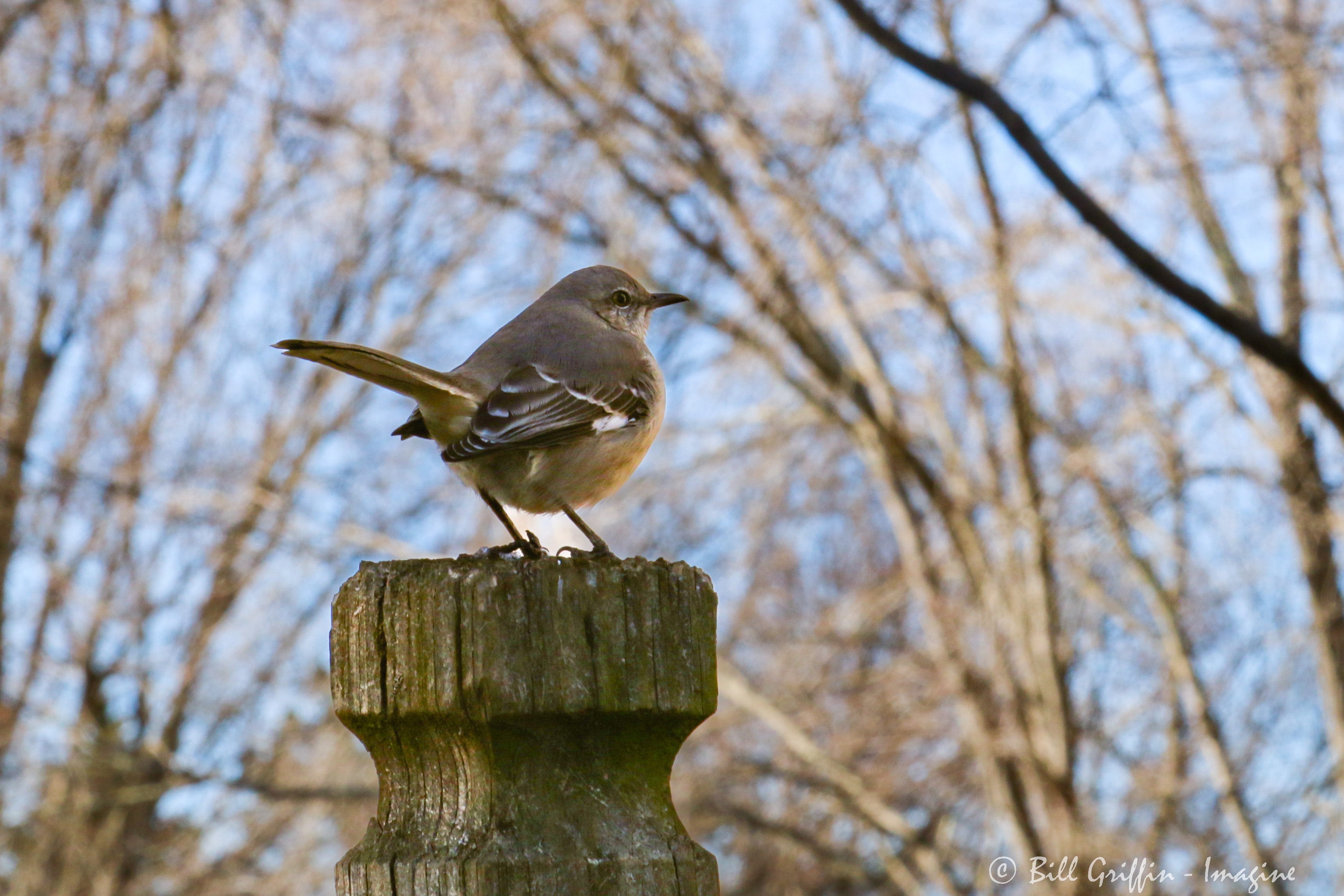
A crescendo sung by a choir – a goldfinch plucking down from a thistle – a speck of grey-green lichen on a metal post: O may our throats be swell’d with notes!

Behold a Lovely Vine

Behold a lovely vine
her in this desert ground;
the blossoms shoot and promised fruit
and tender grapes are found.

It’s circling branches rise
and shade the neighb’ring lands;
with lovely arms she spreads her arms,
with clusters in her hands.

This city can’t be hid,
it’s built upon a hill;
the dazzling light it shines so bright
it doth the vallies fill.

Ye trees which lofty stans
and stars with sparkling light;
Ye Christians hear both far and near,
Tis joy to see the sight.

Shall feeble nature sing
and man not join the lays,
O may their throats be swell’d with notes
and fill’d with songs of praise.

Glory to God on high,
for His redeeming grace,
the blessed Dove come from above
to save our ruined race.

++++++ Jeremiah Ingalls (1764-1838)

❦ ❦ ❦

And of course the most important and utilitarian facet of the word Lays is that it rhymes with Praise.

Thank you to Central United Methodist Church, Mt. Airy, NC.
Thank you to Rebecca Cook – she lifts her arms and we raise our voices.
Thank you to Eric Cook, master of multiple manuals, for devising this inspiring program and equal thanks for his copious and enlightening notes.

Ellen H. T. Harvey, Wilderness and Mount: A Poem of Tabernacles. John Bent, Publisher; Boston, 1872.

Brett Malcolm Grainger, The Vital Landscape: Evangelical Religious Practice and the
Culture of Nature in America, 1790-1870. Doctoral dissertation, Harvard Divinity School (2014).

❦ ❦ ❦

IMG_7952


Read Full Post »

[with 3 poems by J. S. Absher]

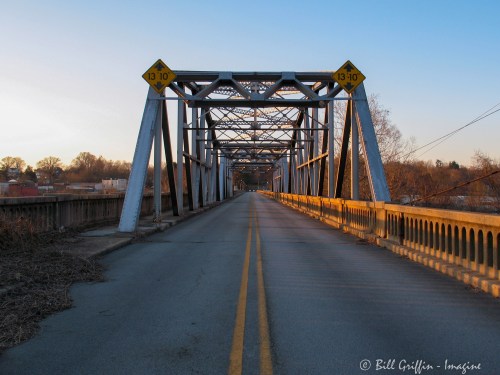
Building bridges. Maybe as a metaphor the phrase is not quite as worn down, rusty, and liable to drop chunks of concrete as the old Elkin bridge that carried US 21 high above the Yadkin River and railroad tracks. Built in 1931, stretching 1509 feet, named for Hugh G. Chatham, even after it was condemned by DOT in 2008 we still couldn’t bring ourselves to call in the demolition crews for that old bridge until 2010. Spanning a treacherous gulf. Lowering barriers between two rival communities. Safe passage, a more elevated view of life, making connections. Grand old metaphor.

The bridge we built today, though, is not a metaphor. It’s a 50-foot aluminum frame that will span a creek near the Mitchell River to extend the Mountains-to-Sea trail a few more miles. Mike, the engineer, showed us how to lay out the dozens of struts and braces and then we were on them like chicks on a Junebug. We put it together in three sections inside the big Surry County maintenance building at Fisher River Park; later we’ll move it into place, bolt the last connectors, and add planking. Amazing to see pallets of unrecognizable metal pieces becoming a structure.

Some of these volunteers today were born with a torque wrench in their fist but some are like me, tinkering all day with my Erector Set when I was 10. Sweating even with the giant fan blowing, pinching our fingers, joking. I still can’t get the smell of Anti-Seize out from under my fingernails. Someday soon will I hike across that bridge with my grandkids and say, “Hey, that’s one of my bolts!?” Moving out into a new world. Grand old metaphor.

September, 2022, all that’s left of the old Chatham Bridge on the Surry County side is a pleasant pedestrian garden with a long stairway from Gwyn Avenue down to Main Street. And, near the former base of one of those mighty pylons, the Angry Troll Brewery.

❦ ❦ ❦

The Day

The little room’s only window looked out
towards the ridgetop, the Dunkard church in the curve
of the two-lane, and, just beyond, the graveyard.

The morning sun sidled in past the partly
closed slats and resolved into rays and flecks
burning in the light – dust motes, I know,

and likely knew then, too, but still I watched
entranced one morning after our breakfast.
On this day I’d have otherwise forgotten,

probably my grannies were in the kitchen –
Emma with arms stretched out to read who’d died
(she’d be in the Dunkard cemetery soon),

half-crippled Sallie stringing the green beans
(years of suffering and strokes lay just ahead) —
while I stood quietly in the little room

watching the random sparkles in the sunbeam,
worlds I could move with a single breath
of poem or prayer, but could not control.

J. S. Absher
from Skating Rough Ground, © 2022 J. S. Absher, Kelsay Books, American Fork, UT

❦ ❦ ❦

worlds I could move with a single breath / of poem or prayer, but could not control

I have often been moved by Stan Absher’s poetry. Not moved as by a shiver of emotion or a momentary ah ha at his thesis or his craft. Rather I’ve felt myeself shifted into a different awareness, a new plane of being. Translocated. Enlightened. Despite the deep bedrock of conviction in all his work, despite the scholarship and the epiphany, he writes as if he is still searching, searching for truth. A spiritual seeker. So he may claim, but I consider Stan Absher a spiritual finder. I can’t help believing as I read these poems that he has encountered and grasped the numinous, wrestled with God as did Jacob.

Worlds he can move but not control? Perhaps that is the secret Stan conveys and which I would do well to take into my own heart. The seeking itself is intrinsic to the desideratum. The bridge. The poems in Skating Rough Ground cover such a lot of ground. Family history, Christian history, art history, and every topic and observation is put to diligent good work unfolding the petals of the human flower. Stan is in perfect control of his art, which makes even more believable his message that our condition enfolds a great mystery.

One other remark: even though Stan mentions Wittgenstein and his book includes sixteen erudite endnotes, his poems are never high-flown or inaccessible. He is not looking down on us mortals from the heights; he is right here among us. And he is not above a little poke in the ribs or the murmur of a wry joke. These poems are companionable companions – pick up the book and come along on the journey.

[additional information on works by J. S. Absher . . . ]

❦ ❦ ❦

The Conversation of Matter

I could hear things talk. When something was lost,
I stood in the room, asked it to show itself.
Sometimes it spoke an image in the mind – a drawer
++++ to search, a cherry
++++ bureau to look under.

Those who have spent their lives mastering tools
and techniques can hear their material speak,
David crying naked out of Carrara marble
++++ to be rescued from
++++ Agostino’s botched start.

But things usually speak by resisting –
weight too heavy to lift, edge too sharp to hold,
a moving part that grinds and heats and breaks, a poem’s
++++ application of
++++ friction to language –

slow it! stoke it hotter than Gehenna!
salt its path with grit!
keep it from slip-sliding
away on its own melt! flick sawdust into the eye
++++ to make it dilate!
++++ Without friction – so said

Wittgenstein, older and word-worn – language
does not work. If it wears skates on rough ground, it
takes a tumble. Even prayer needs resistance – a stick
++++ crosswise in the throat
++++ garbling words like a sob.

How hard to admit we love the world – how
hard it ought to be – yet its unrequiting
beauty resists abandonment: Show yourself, come out
++++ of hiding, come out
++++ of quarantine, and live.

J. S. Absher
from Skating Rough Ground, © 2022 J. S. Absher, Kelsay Books, American Fork, UT

❦ ❦ ❦
The Creator Praises Birds

Vent and crissum,
lores and crest and comb: I
made them all – the

nares, nape, those
horny bill plates – I in
feathered trochees

made them: peacock,
sparrow, tufted titmouse,
flitting jenny

filled with joy of
beaking worm, of strut and
glide, of piping

double on their
syrinx. Praise how flock and
murmuration

call out warning,
call to fly or roost or
call for pleasure:

See me! Hear me!
Pur-ty! Pur-ty! Pur-ty!
Cheer up! Pibbity!

Praise the brave-heart
tender fledgling, wobbly
winging over

houses, over
pavement, risking all to
climb the air by

beating wind I
too created, rising
heavenward in joy.

J. S. Absher
from Skating Rough Ground, © 2022 J. S. Absher, Kelsay Books, American Fork, UT

❦ ❦ ❦

Read Full Post »

« Newer Posts - Older Posts »