Feeds:
Posts
Comments

Posts Tagged ‘seasonal imagery’

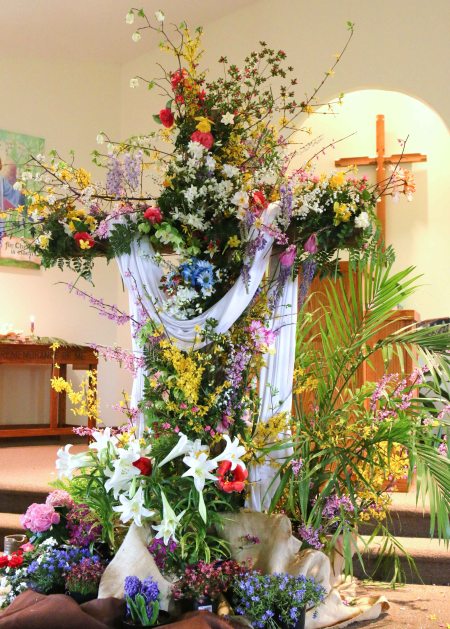
For Easter, remembering Easters past and those we shared them with . . .

Homeless Jesus

He lies there, on a metal bench, feet bare,
the nail holes boring into the very marrow
of our souls. This is not the angry prophet
who threw the money changers from the icy
temple. Oh no, this is Jesus, after what we
did to him. Yes, not they, but we. He is not
sleeping there because some sculptor thought
it smart for his art. God no! He is sleeping there
because we put him there, every day, every
hour, every second.

Look at the size of the holes. A child
was frightened by those holes, someone tells me.
Good. Let the child go home. Let the parents
tell the child what we did to him, what
we still do to him.
++++++++++++++++ And you, who read
these words, stop your cars, get out, go sit
with him and talk. Bend down and look
into that sleeping face beneath the hood.
Pour water through his parched lips, bandage
his naked feet. Cover the holes we have made.
Do it now, do it now, do it now, and perhaps
on Easter morning early you’ll drive by and see
the bench is bare, the empty cloak crumpled
on the ground.

Meanwhile, in a different town on a back street
in a cardboard box, another homeless Jesus waits.


Anthony S. Abbott
from Dark Side of North, Press 53, Winston-Salem, NC © 2021 the Estate of Anthony S. Abbott

.     .     .     .     .     .     .


“A new command I give you: Love one another. As I have loved you, so you must love one another.”

John 13:34 (NIV)


Remembering . . .

Rick Flanery    (1945-2019)
Edwin “Skip” Ball    (1944-2020
Cora Burley    (1923-2020)
Charles McKenzie    (1931-2020)
Charlotte Case    (1923-2020)
Charles Hair    (1934-2021)

.     .     .     .     .     .     .


.     .     .     .     .     .     .

Read Full Post »


[poems: Charles Causley, A. R. Ammons, Psalm 118
Su Tung-P’o, Jack Gilbert, R. S. Thomas]

In Celebration:

Day and night meet as equals, vow their green promise, the brown and blasted fields blossom.

Evil thoughts, evil words, evil actions, from all these we refrain and the earth is blessed.

Colors of my hand, your face, are only the colors of our friendships renewed and restored.

Release from bondage, a night like no others, let me tell you what it means to be set free.

The single step that begins the journey of awareness is behind you and before you.

The upper room, the garden, the cross, down this path the stone has been rolled away.

.     .     .     .     .     .     .

In 2021:

Vernal Equinox and the beginning of Spring is March 20 at 09:37 GMT.

Ramadan is April 12 through May 11, Eid al-Fitr May 12.

Holi (Festival of Colors) is March 28 through 29.

Passover is the evening of March 27 to evening of April 4, first Seder March 27.

Vestak (Buddha Day) is May 26.

Lent is February 17 through April 1, Easter April 4.

.     .     .     .     .     .     .

In Joy:

Charles Causley – At Kfar Kana
A. R. Ammons – The City Limits
Psalm 118 – selected verses
Su Tung-P’o – With Mao and Fang, Visiting Bright Insight Monastery
Jack Gilbert – Horses at Midnight without a Moon
R. S. Thomas – In a Country Church

.     .     .     .     .     .     .

At Kfar Kana

The bus halts its long brawl
with rock and tar and sun.
The pilgrims trudge to where
the miracle was done:
each altar the exact
authenticated site
of a far, famous act
which if performed at all
may well have been not here.

I turn away and walk
and watch the pale sun slide,
the furry shadows bloom
along the hills rough hide.
Beneath a leafy span
in fast and falling light
Arabs take coffee, scan
the traveller, smoke, talk
as in a dim, blue room.

The distant lake is flame.
Beside the fig’s green bell
I lean on a parched bay
where steps lead to a well.
Two children smile, come up
with water, sharp and bright,
drawn in a paper cup.
‘This place, what is its name?’
‘Kfar Kana,’ they say,

Gravely resuming free
pure rituals of play
as pilgrims from each shrine
come down the dusty way
with ocean-coloured glass,
embroidered cloths, nun-white,
and sunless bits of brass –
where children changed for me
well-water into wine.

Charles Causley (1917-2003)

.     .     .     .     .     .     .


The City Limits

When you consider the radiance, that it does not
+++ withhold itself
but pours its abundance without selection into
+++ every nook
and cranny not overhung or hidden;
+++ when you consider

that birds’ bones make no awful noise
+++ against the light
but lie low in the light as in a high testimony;
+++ when you consider
the radiance, that it will look into the guiltiest

swervings of the weaving heart and bear
+++ itself upon them,
not flinching into disguise or darkening;
+++ when you consider
the abundance of such resource as illuminates
+++ the glow-blue

bodies and gold-skeined wings of flies
+++ swarming the dumped
guts of a natural slaughter or the coil of shit
+++ and in no way
winces from its storms of generosity;
+++ when you consider

that air or vacuum, snow or shale, squid or wolf,
+++ rose or lichen,
each is accepted into as much light as it will take,
+++ then the heart
moves roomier, the man stand and looks
+++ about, the

leaf does not increase itself above the grass,
+++ and the dark
work of the deepest cells is of a tune
+++ with May bushes
and fear lit by the breadth of such calmly
+++ turns to praise.

A. R. Ammons (1926-2001)

.     .     .     .     .     .     .

Psalm 118

You pressed me hard,
++ I nearly fell;
++ but the Lord helped me.
The Lord is my strength and song;
++ He has become my deliverance.
The tents of the righteous resound with joyous shouts
++ of deliverance,
++ “The right hand of the Lord is triumphant!
The right hand of the Lord is exalted!
The right hand of the Lord is triumphant!”

I shall not die but live
++ and proclaim the works of the Lord.
The Lord punished me severely,
++ but did not hand me over to death.

Open the gates of righteousness for me
++ that I may enter them and praise the Lord.
This is the gateway to the Lord –
++ the righteous shall enter through it.

I praise You, for You have answered me,
++ and have become my deliverance.
The stone that the builders rejected
++ has become the chief cornerstone.

This is the Lord’s doing;
++ it is marvelous in our sight.
This is the day that the Lord has made –
++ let us exult and rejoice in it.

from the Egyptian Hallel —  Psalm 118:13-24

.     .     .     .     .     .     .

With Mao and Fang, Visiting Bright Insight Monastery

It’s enough on this twisting mountain road
++ to simply stop.
Clear water cascades thin down rock, startling
++ admiration,

white cloud swells of itself across ridgelines
++ east and west,
and who knows if the lake’s bright moon is above
++ or below?

It’s the season black and yellow millet both begin
++ to ripen,
oranges red and green, halfway into such lovely
++ sweetness.

All this joy in our lives – what is it but heaven’s
++ great gift?
Why confuse the children with all our fine
++ explanations?

Su Tung-P’o (1037-1101), translated from the Chinese by David Hinton

.     .     .     .     .     .     .

Horses at Midnight without a Moon

Our heart wanders lost in the dark woods.
Our dream wrestles in the castle of doubt.
But there’s music in us. Hope is pushed down
but the angel flies up again taking us with her.
The summer mornings begin inch by inch
while we sleep, and walk with us later
as long-legged beauty through
the dirty streets. It is no surprise
that danger and suffering surround us.
What astonishes is the singing.
We know the horses are there in the dark
meadow because we can smell them,
can hear them breathing.
Our spirit persists like a man struggling
through the frozen valley
who suddenly smells flowers
and realizes the snow is melting
out of sight on top of the mountain,
knows that spring has begun.

Jack Gilbert (1925-2012)

.     .     .     .     .     .     .

In a Country Church

To one kneeling down no word came,
Only the wind’s song, saddening to the lips
Of the grave saints, rigid in glass;
Or the dry whisper of unseen wings,
Bats not angels, in the high roof.

Was he balked by the silence? He kneeled long,
And saw love in a dark crown
Of thorns blazing, and a winter tree
Golden with fruit of a man’s body.

R. S. Thomas (1913-2000)

.     .     .     .     .     .     .

At Kfar Kana; In a Country Church: collected in Tongues of Fire, An Anthology of Religious and Poetic Experience, Introduced and edited by Karen Armstrong, Viking Penguin Books, © 1985

The City Limits; With Mao and Fang, Visiting Bright Insight Monastery; Horses at Midnight without a Moon: collected in The Poetry of Impermanence, Mindfulness, and Joy edited by John Brehm, Wisdom Publications, © 2017

Psalm 118: The Jewish Study Bible, Jewish Publication Society, Oxford University Press, Second Edition © 2014; TANAKH translation © 1985,1999

.     .     .     .     .     .     .

.     .     .     .     .     .     .


2020-11-03b Doughton Park Tree

Read Full Post »

[with 3 poems by Patricia Hooper]

Great Smoky Mountains Institute at Tremont, February 05-07, 2021

the assurance of things hoped for, the evidence of things not seen . . .

Faint tracks – but when has life ever laid it out plain, an open book, page upon page with footnotes? Aren’t I still searching between the lines, faint traces, no clear prints? Lately I dream every night of making diagnoses, explaining treatments, buffing up my charts. Is Jung telling me that this was my only purpose in life and now it’s over?

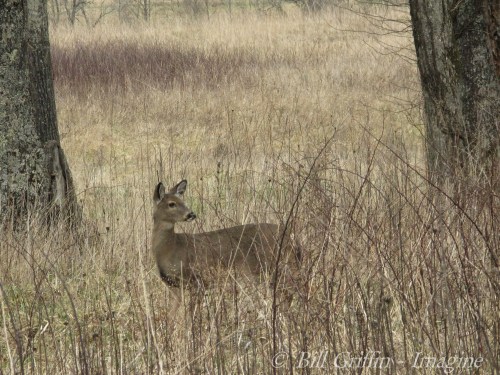
Deer walk a diagonal gait – each hoof print is really two impressions, the forefoot overlaid with the rear. If the rear hoof strikes a little lateral within each fore print it means the pelvis is wider = you are following a female.

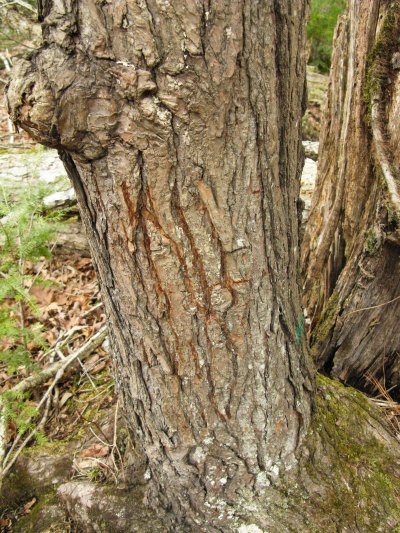
Don’t plan on seeing a bear in the Smokies in February. Mom is asleep in a hollow tree with her cubs and Dad is dozing under a bush somewhere (he snores), though he might rouse up to forage on a warm afternoon. So why are we studying mammals at Tremont in February? In the sere meadows, the leaf-littered groves, under the pale unforgiving sky the book of all their signs is open for us to read. Let’s hike up to that oak tree and see who’s been scratching for acorns, see who has left us some scat. Let’s follow that faint trail through dry brown stalks to check out predator and prey. Who clawed up this white pine? Who stepped in the mud?

Canids: dog paw prints show deep claw marks with claws of outer toes angled outward; coyote claw marks are less distinct but all aligned strait ahead; gray fox claw marks are the least distinct since they save the claws for climbing trees, and the rear pad looks scalloped like a chevron.

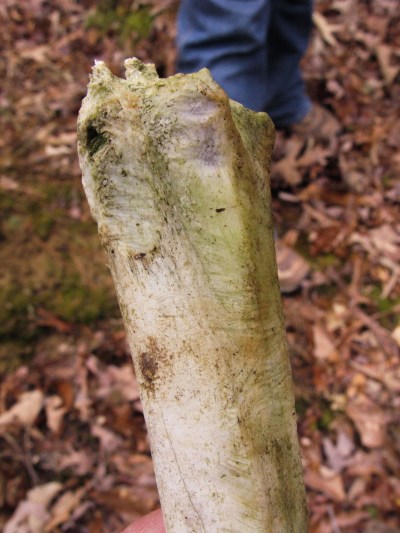
But clear prints are maybe 1% of tracking. We’re learning a new vocabulary of chewed nut and compressed grass. Tracking is patterns and connections, habitats and behaviors. Measure the size of the incisors that gnawed this antler. Measure the bits of skull and femur in this dropping.

And can I learn a new language? Maybe all these dreams are about knitting up the years, tying the last knot, laying it away to pull out when I need to reminisce. Or maybe I need to discover something missed. Life is not disjunctive – the end of every moment flows into the beginning of the next. The assurance of past creates future. Tracking in Cades Cove – a metaphor for opening oneself to an unseen message within, to the evidence of human purpose. Connections, convictions. We track a personal ecology that leaves signs for us to discover, to question, to wonder.

To follow.

Tracks have lead us to this place, maybe with a lesson or two that sunk in along the way. Some wisdom. And the tracks that still lead forward?
.     .     .     .     .     .     .

Patricia Hooper’s bright clear poetry touches earth with a feather – to bring color and flight. Garden, feeder, wild crag, starry night, in all seasons she observes the particular and discovers its connection to the universal. Nature is her palette but human nature is the canvas she illuminates. The poems of her latest book, Wild Persistence, taken singly seem to open our eyes to brief moments or localities, but as a whole these poems weave a complex narrative of family, longing, grief, redemption. I find joy in her art.

Patricia moved to North Carolina in 2006 and lives in Gastonia. In 2020 she was awarded the Brockman-Campbell Award of the North Carolina Poetry Society for Wild Persistence, awarded for the year’s best book of poetry by a North Carolina author.

.     .     .     .     .     .     .

Elegy for a Son-in-Law

1.

A distant figure on the mountainside
seems to be coming closer, then it turns,
a blue, retreating cap, a scarlet jacket.
Without another sign, I know you’re there,
climbing again the way you used to climb
before you were a ghost. I want to call
Don’t go! Come back! I have your two small sons
sleeping behind me in the car, their mother
watching the sky for falcons. But you move
farther away. Or we do. Now you’re gone,
back toward Mount Sterling where she took your ashes.
I hope it’s peaceful there. I hope you know
they’re doing well. I hope you didn’t see us.

2.
These are the mountains where you were a boy,
broad waves of mountains rolling like an ocean
into the distance, no horizon, only
these smoky contours where you knew each rise
and hemlock forest, plunging stream. Your friends
tell how you often left them for a while
after you’d reached the top, to be alone,
then met them at the camp, all tales and laughter.
Today, a red-tailed hawk riding the breeze,
gold leaves, cascading creeks, – your kind of joy:
cold rushing currents, then the ecstatic slide.

3.
This is the world you wanted: brisk fall air,
the valleys hung with haze, that long blue range
half-hidden by the clouds. It’s coming clear.
How far you must have seen from there! And here?
It’s hard to see around so many hills,
so many peaks and gorges, and the curves
are slippery on the parkway, miles of turns.
We’re heading home. The boys are waking now,
their mother’s passing crackers, pointing out
the overlook ahead: blue waterfall,
deep river valley, autumn leaves, the pines
along the ridge, the rising trail – and there,
the summit you’d have shown them. Mist and shine.

from Wild Persistence, Patricia Hooper, University of Tampa Press, 2019
.     .     .     .     .     .     .

In Tennessee

The Blue Ridge at sunset – hardly a missed note
in the hemlocks where a mockingbird is singing
while to the west a falcon dips, then glides
over the valley, indistinct from here
except that the bird falls lower than the chair
I’m sitting in, and disappears. The sky
is the color of pomegranate, and the balcony
slips into shadow like the distant hills.
No wonder that the mockingbird is singing
a medley of every song he knows,
no matter whose. No wonder that he sits
in the glow of a single flood lamp high above
the roof, a pool he must mistake for sunlight,
enough to urge him on and on and through
his repertoire that bird by bird is ringing
over the day’s end, over the night’s coming.
Maybe he has to sing to know himself
as part of things – finch, cardinal, wren, and now
that long coarse call that sounded like the crow
or Steller’s jay – whatever voice he’s pulling
out of himself, some sound against the silence,
against the signs of brightness vanishing.
The railing of the porch dissolves in mist,
the sun has set, and now we’re weightless, drifting
as if suspended in the blackening air.
His sphere of light no longer seems as clear.
Maybe he knows the lamplight isn’t sunlight.
Maybe he feels he too is disappearing
into the darkness like this porch and chair.
he has to sing, he has to keep on singing,
to know he’s really there.

from Wild Persistence, Patricia Hooper, University of Tampa Press, 2019

.     .     .     .     .     .     .
 

.     .     .     .     .     .     .

At the Rifle River

When the eagle unfurled, clearing
the green dome of the forest,
I almost missed it

till somebody cried, “Look up!”

and there it was
in the sky over the river

which I saw it must have owned
the way it spanned the rapids
with a single stroke,

and the sky parted.

I can’t say I believe
in messengers from the clouds,

but I didn’t believe
this was an accident either,

the way its light
tore through the drab morning
I barely lived in, and then

it rose over the steaming
forest, it disappeared.

*
At the time I was only watching
my own path by the river,

but afterward
I knew it must still be there
over the rim of maples

its white helmet, its fire,
and its gold eye turned toward me,

or something enough like it,
something powerful and amazing
which someone else sees.

Imagine my certainty
the moment before it rose
through the world, crossing the water,
that there was nothing anymore to surprise me.

Imagine my emptiness.

Imagine my surprise.

from Separate Flights, Patricia Hooper, University of Tampa Press, 2016

.     .     .     .     .     .     .


GSMIT // SANCP

Special thanks to Jeremy Lloyd and John DiDiego directors and instructors at Great Smoky Mountains Institute at Tremont, for the weekend Mammals course, which is part of the Southern Appalachian Naturalist Certification Program, and to Wanda DeWaard, guest instructor for the day and master tracker and naturalist.

The Southern Appalachian Naturalist Certification Program at GSMIT comprises eight weekend courses designed to provide fundamental and specialty skills in Southern Appalachian ecology and interpretive techniques. Each weekend includes 15 hours and more of lecture and hands-on field study. Upon completion the student receives the non-credit Southern Appalachian Naturalist Certificate from the University of Tennessee.

.     .     .     .     .     .     .

IMG_1827

Read Full Post »
Older Posts »