Posts Tagged ‘Redhawk Publications’
Why Sing – Scott Owens
Posted in poetry, tagged imagery, nature photography, NC Poets, poetry, Redhawk Publications, Scott Owens, Southern writing, The Song Is Why We Sing on March 27, 2026| Leave a Comment »
.
[ with 3 poems by Scott Owens ]
.
Now and Then
.
The mountains came down to Hickory today.
It happens now and then.
Clouds low, mist hanging between the trees,
a coolness that makes everything feel
less urgent, more contemplative.
I saw a boy on a hillside, sitting,
back leaning against a tree,
not minding the fine mist
against his skin at all.
I imagine he was writing.
I imagine it was a poem
about the mountains coming down to Hickory.
I imagine he was me.
It happens now and then.
.
Scott Owens
from The Song Is Why We Sing, Redhawk Publications, The Catawba Valley Community College Press; Hickory NC © 2026
.
❀ ❀ ❀
.
Existential Knot
.
I picked up a knot from the ground today,
not an important knot,
not of significant size,
not of any significance really,
at least not initially,
but then I realized if not for the knot
I likely would not have noticed it at all.
In fact, the knot would have just been
.
a string, not of any special size,
not of any noticeable color,
not anything special about it at all,
but the fact that it was tied into a knot
made it not exactly like every other
unknotted expanse I’d seen.
Of course, I thought about unknotting the knot
but ultimately decided not to,
as the knottiness was exactly what made it
exactly what it was and continues to be,
.
a knot not like any other,
insured by its knottiness
not be left unnoticed.
.
Scott Owens
from The Song Is Why We Sing, Redhawk Publications, The Catawba Valley Community College Press; Hickory NC © 2026
.
.
❀ ❀ ❀ ❀ ❀
.
Ten. You, after all,
are half the poet, and in all
likelihood, the better half.
from 13 Ways of Reading a Poem
.
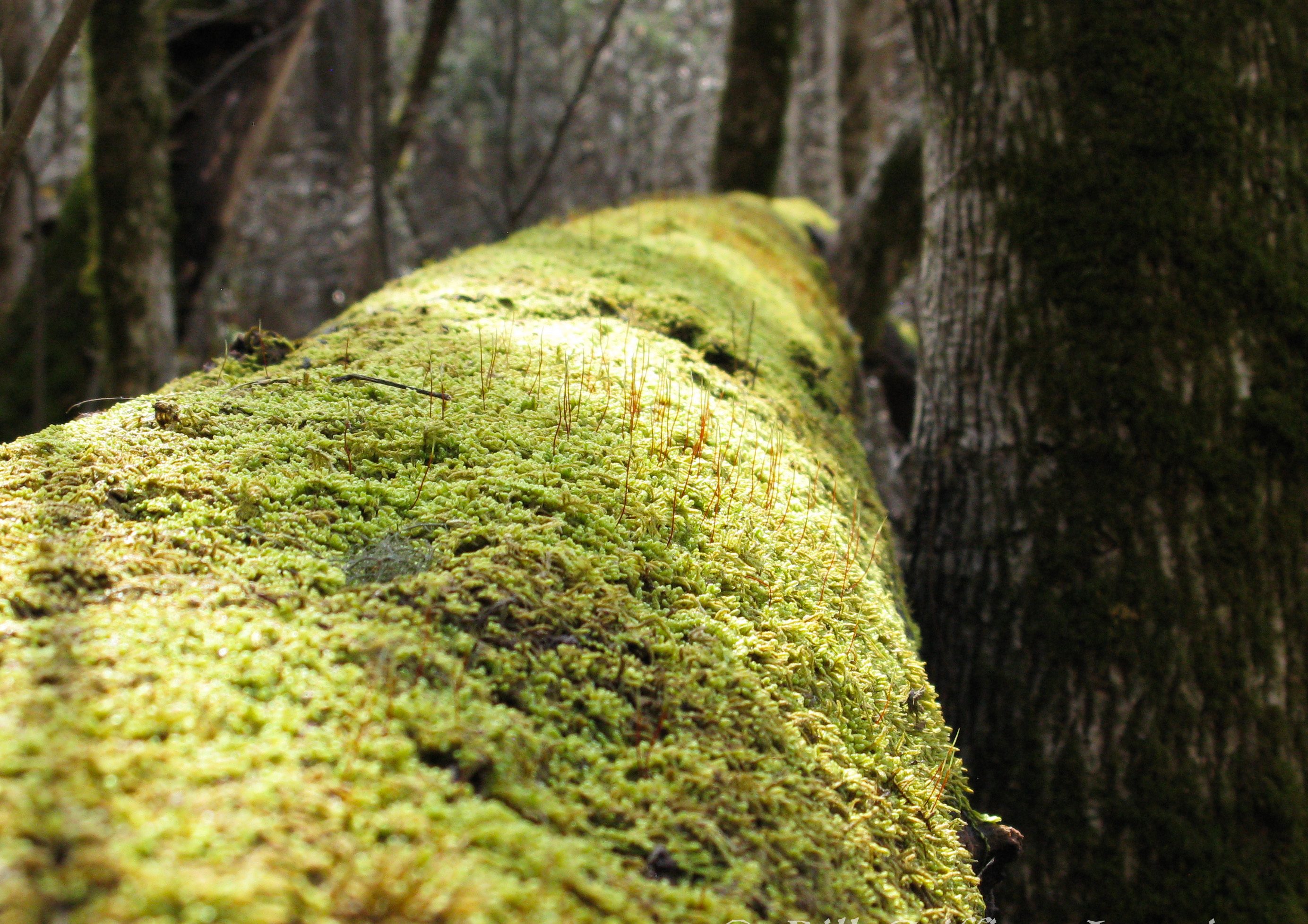
Reading a poem is like turning over a mossy log. As you approach, you appreciate the appealing form of the log without even thinking about it. Its green cushion, so inviting, perhaps a scent of fresh pungent life. But when you turn the log over, who knows? I am personally a fan of grubs and larvae, flabbergasted ants grabbing their white nits and sprinting in all directions, an oozy slug or two. Double bonus if there’s a salamander.
.
But beneath some logs there’s just not much. A few bark fibers lingering in their immediate pre-humus status. A tired worm casting. Dirt. If that’s all there is beneath the mossy log of the poem, I’m done. Maybe I’ll go turn over that rock over yonder instead. I, the reader, need something to discover when I get down on hands and knees and shift the poem. I have to do the work of coming closer, of noticing, and the poem has to do its work of sharing.
.
Scott Owens’s newest collection of poems, The Song Is Why We Sing, is about poetry. Writing poetry, to be certain, but even more this book is about reading poetry. And maybe most of all so many of these poems are about the partnership, let’s even call it companionship, between writer and reader. The lines and stanzas break down the fourth wall. I as reader become part of the process, part of the poem. Perhaps in reading no other book of verse have I been so intimately invited into the mind and life of the writer. Scott’s offer is sincere – here I can be half the poet.
.
Scott’s poems are existential knots that freely allow themselves to be untied. They offer up their essence like a flower offers nectar, hidden but discernable, just follow your nose, and always keeping the promise of a sweet droplet on the tongue. I first encountered the term “quiddity” in a philosophy book but I know I first read the word “dailyness” in a poem, and so are these poems, filled with essence and substance. Here is the world with its warts and its wonderfulness. Scott takes seriously his poet’s calling of showing you what you already know in a way you’ve never seen. That mossy log, what lies beneath? I am dying to turn it over. And throughout these pages I know I will find what this poet is determined to show me, because as he says, You have to care / enough about the world / and all who live in it / to take the time / to not just find the words / but also get them right.
.
.
❀ ❀ ❀ ❀ ❀
.
Chores
.
fr. Latin, chorus, those who do the work, who carry the play forward
(titles from Poetry in Plain Sight selections July 2025)
.
I rise from my knees, not from prayer,
not from planting autumn blooming crocuses,
but from fixing a table bending beneath
the weight of too many ovens. Still,
any rising is a good thing.
In the heat of early July in the South
I head out to make my monthly delivery
of poems. One called “Tomato Sandwich,”
transforming the taste of summer to art,
for the front window of my coffee shop.
One called “Hum,” for the community theater,
about a boy remembering the sound
of his father blowing on his face to cool him
off in a Louisiana Church on Sundays.
Another called “Wild Women,” for the wine shop,
about girls who were told they couldn’t be cowboys,
who hitched up their chaps and spat on the ground.
And one for the library, called “Song
to a Little Tree under the Eve of Terminal 2
at Raleigh Durham International Airport,”
just about a tree in an unlikely place
refusing not to grow.
.
Scott Owens
from The Song Is Why We Sing, Redhawk Publications, The Catawba Valley Community College Press; Hickory NC © 2026
.
❀ ❀ ❀
.
Scott Owens teaches at Lenoir Rhyne University, coordinates the Poetry Hickory program, and promotes poets and poetry year round at his coffee shop and gallery, Taste Full Beans. The Song Is Why We Sing is Scott’s twenty-sixth volume of poetry. Among his many honors and awards are two nominations for the National Book Critics Circle Award and appointment as Hickory, NC, Poet Laureate. Scott’s most recent books are available from Redhawk Publications.
.
Sample additional poetry by Scott Owens at Verse and Image:
.
.
❀ ❀ ❀ ❀ ❀
.
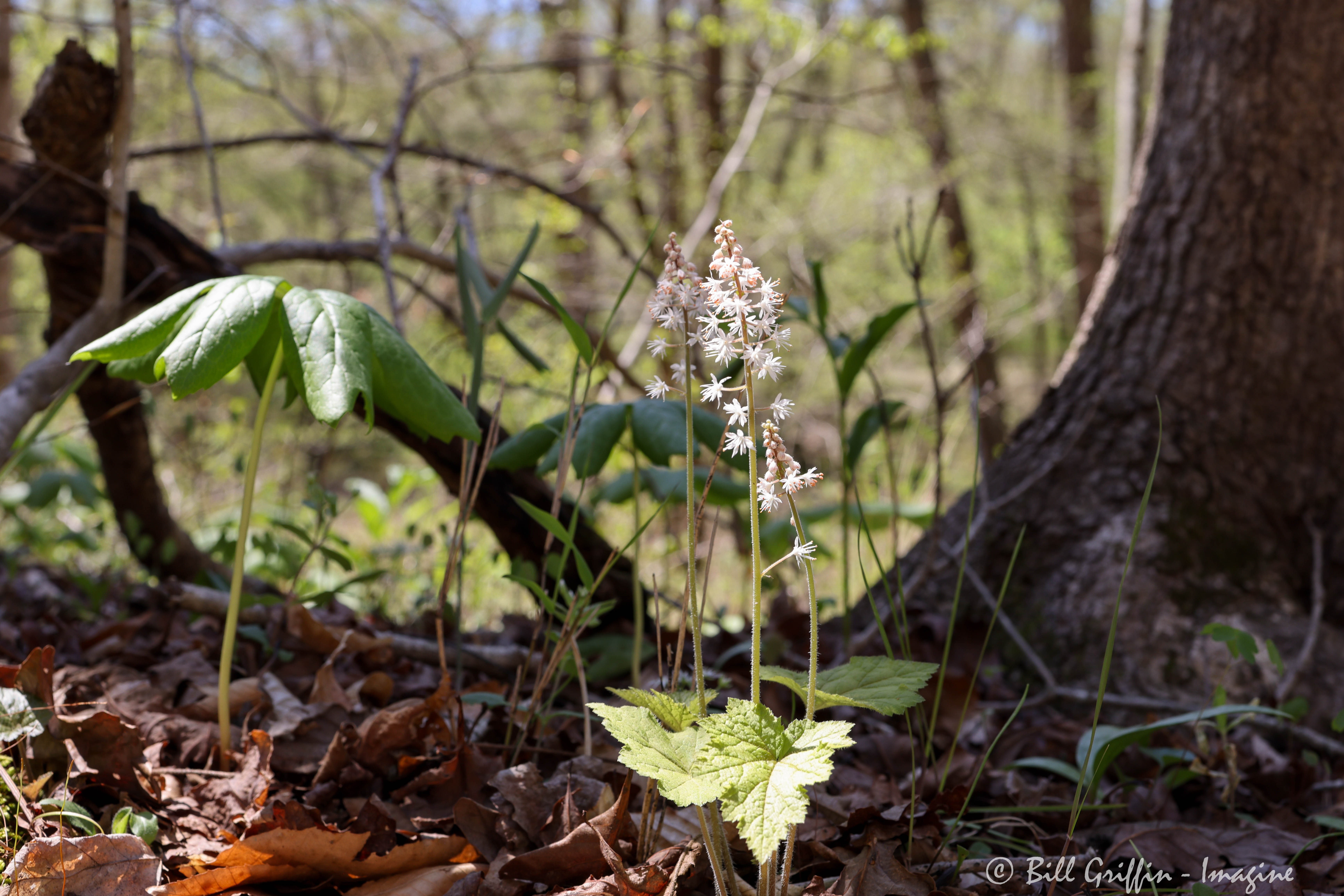
Perhaps you’d like to turn over a mossy log (metaphorically speaking)? Walk along Elkin Creek and discover Foamflower in bloom (for real beginning early April)? Watch a Blue Head Chub build its spawning nest in the creek? Breathe deep? Join me and other curious comrades on one of this spring’s naturalist walks, a program of Elkin Valley Trails Association. Upcoming dates are March 28, April 11, April 25. Details and registration (free!) here:
.
.
❀ ❀ ❀ ❀ ❀
.
Thank you for visiting Verse and Image:
. . . . . every Friday I present one or two poems I’ve read this week that particularly speak to me;
. . . . . every Saturday I present one or two poems submitted by YOU, my readers.
.
If you would like to offer a poem for consideration, either by a favorite author or your own work, please view these GUIDELINES for Saturday Readers Share:
.
. .
If you would like to receive an email each time a post appears, please SUBSCRIBE to Verse and Image using the button on the Home Page.
.
If you have a hard time finding the SUBSCRIBE button on this WordPress site, you can send me your email address and I will add you to the subscriber list. Send your request to
.
COMMENTS@GRIFFINPOETRY.COM
.
Thanks again for joining the conversation.
.
– Bill
.
.
Convolutions
Posted in ecology, family, poetry, tagged Beth Copeland, Bill Griffin, ecology, I Ask the Mountain to Heal My Heart, imagery, nature photography, nature poetry, NC Poets, poetry, Redhawk Publications, Southern writing on August 8, 2025| 6 Comments »
.
[with 3 poems by Beth Copeland]
.
Fog
.
Morning fog erases the mountain and trees.
No, not an erasure but unseen.
.
Not an erasure but unseen.
The mountain, the laurel still green.
.
Unlike the mountain and laurel still green,
the dearly departed lie beneath white sheets.
.
The deer depart beneath white sheets
of fog, stepping into a forgotten dream
.
of fog slipping into a forgotten dream
the ghost mountain dreams.
.
The ghost mountain dreams.
Crows fly to pines on mascara wings.
.
Crows fly to pines on mascara wings,
mourning. Fog erases the mountain, the trees.
.
Beth Copeland
from I Ask the Mountain to Heal My Heart, Redhawk Publications, The Catawba Valley Community College Press, Hickory NC; © 2025
.
❦ ❦ ❦
.
It’s a big web, here in the corner of our screened porch, but I’m not ready yet to broom it down. The spider is a jointed dried kernel in its center; when I blow, she doesn’t twitch. I don’t see an egg pouch or spiderlings. The strands are not an orb but a diffuse tangle, a chaos of delicate angles and tensions — a miniature of filaments revealed by the background microwave radiation that weave the structure of our entire universe. And what are they made of, those filaments? These I can see before me are nanometer reworkings of hemolymph from mosquitoes denied the opportunity to bite me. Most visible when dusted with pollen. A mess. But I and my broom are not ready yet to offend, to say farewell to the tribe of spiders.
.
Last week we visited Blue Whales with our grandson, turning eight. The North Carolina Museum of Natural Sciences in Raleigh is hosting this exhibit of the largest creatures that have ever lived on our planet – the mystery of their migrations, language, culture; the vital interconnections between their diet of krill, their massive enriching orange poop, and the entire deep ocean ecology. Linda and I stood in silence before the model of a blue whale brain and a model of our own. The whale’s is twice as large and twice as complex, convoluted with its twisting gyri and deep sulci. Surely such an abundance of neurons and synapses must create thoughts as complex as our own. Or more so. And yet blue whales struggle to survive as a species in a world degraded by human beings. I am thinking of that brain and I am not ready yet to say farewell to the tribe of whales.
.
Chapel Hill cartoonist Keith Knight draws a weekly panel titled (th)ink. Today’s is a portrait of and quotation by James Baldwin (1924-1987): “To be a Negro in this country & to be relatively conscious is to be in a rage almost all the time.” Human being who is relatively conscious, choose your own rage focal point du jour – human beings caged like animals in a Florida concentration camp; children intentionally starved to advance a particular political agenda; boosting fossil fuels burned to appease a few billionaires; an ocean filled with plastic nanoparticles and deafening human vibrations where blue whales may soon be extinct? Some days I feel like I am not ready to go on living. Some days I am more than ready to say goodbye to the tribe of humans. In a few years I will depart as an inhabitant of planet Earth. Some years after that the last memory of my having been an inhabitant will finally depart as well. On that day, will any whales still remain to swim the depths? Will any love between humans remain, or any love for other creatures? I am not ready yet to answer.
.
.
❦ ❦ ❦
.
October Valentine
.
A heart-shaped leaf spied in the weeds on my walk
down the hill to the mailbox. I didn’t see a redbud tree
.
on the roadside, so it must have lifted on the wind
and dropped – a gift! – near my feet. Is it a message
.
from someone I love – my sweet mother in a halo of light,
my father singing the names of trees in his strong baritone?
.
Or is it from someone I’ve never seen and may never meet?
.
As I hike up the hill, I tuck the leaf in my pocket, rubbing it
with my thumb – as if I could read it – skin to skin – by osmosis.
.
Halfway home, I stop to study it. Cerise with splotches of green,
dark spots, a wormhole bored like a bullet wound, a battered
.
heart, like yours, like mine, but maybe its scars make it more
beautiful than before. My friends, there’s still so much
.
love in this world even when you’re alone.
.
Beth Copeland
from I Ask the Mountain to Heal My Heart, Redhawk Publications, The Catawba Valley Community College Press, Hickory NC; © 2025
.
❦ ❦ ❦
.
Is it strange for me to be toying with despair while reading a book of healing and love like Beth Copeland’s I Ask the Mountain to Heal My Heart? Actually, if you’re not toying with despair you are the strange one. Give grudging thanks, though. Thank the stars and the mysterious hemlocks and the dark fecund earth that in a world full of rage and despair there are poems like Beth Copeland’s. These poems know the feeling of being lost in endless night. These poems have been battered, they have fallen, they have doubted plenty of times whether there is any wholeness or healing available to them, but these poems stand up to testify, My friends, there’s still so much love in this world even when you’re alone.
.
Often I tell myself it is ridiculous to imagine that any sort of inner peace is possible. I have my share of personal regrets and ongoing grief, and even though I’m tempted to look around and envy those people who don’t, when I’m really honest I admit that no one escapes whipping. But peace can’t be a wall built around my sadness – walls keep more things in than out. Despair is inevitable. How foolish is it, then, and how strange, to spend a few hours with a book of words arranged in lines on paper and discover the tightness in my throat is easing? The mountain has rested in one place for 480 million; today its peak is less than a third of its height when it was first thrust up in the big crunch. Does it reflect on loss and diminishment, or does it find peace in the weight of its daily being? Am I inflamed and scarred by the revelations of Beth Copeland’s battles and pain, or am I grateful for her gratitude and strengthened by her strength?
.
The tribe of human beings seems determined to destroy itself. The tribe of human beings seems determined to link arms and hearts in love. Perhaps discovering a moment of beauty is not a cowardly attempt to escape dire reality – perhaps it is the only thing capable of healing us.
.
❦
.
Explore REDHAWK Publications, including Beth Copeland’s I Ask the Mountain to Heal My Heart and Shibori Blue: Thirty-Six Views of the Peak HERE.
.
Sample poems from Shibori Blue at Verse & Image HERE.
.
More information about the North Carolina Museum of Nature Sciences HERE.
Dive into the K Chronicles with Keith Knight HERE.
.
.
❦ ❦ ❦
.
My Daughter Paints a Mountain
.
She wasn’t thinking as her brush swept
across canvas in wave-length strokes,
.
channeling a crest she’d never seen,
while I was still in the Sandhills
.
where there aren’t any hills, just fields
of cotton, soybeans, and cedar stumps
.
in swamp water, sleeping on an air mattress
in a small apartment with prints and paintings
propped against walls instead of hung,
newly separated, newly sober, living
.
between the husband and home I’d left
and a haven I hadn’t found yet.
.
*****
.
As I drove up a steep road to see a house
in the Blue Ridge, a large buck leapt
.
in front of the car to welcome me,
and I knew I’d found my new home.
.
I didn’t know the mountain seen at the top
of the hill was the mountain she’d painted
.
months before, and she didn’t know I’d move
to that house with a view of the mountain
.
she’d painted as if in a dream or fugue.
How could her mountain – purple, lavender,
.
pink, and forest green swirled to a peak
with white streak of snow against a blue sky –
.
mirror the one framed in my window?
Was it coincidence or synchronicity
.
that the mountain in her mind’s
eye was more map than metaphor?
.
It was a message from the universe:
You’re home. Open the door.
.
Beth Copeland
from I Ask the Mountain to Heal My Heart, Redhawk Publications, The Catawba Valley Community College Press, Hickory NC; © 2025
.
.
❦ ❦ ❦
.
.
❦ ❦ ❦
.
Elemental – Scott Owens
Posted in Imagery, tagged Bill Griffin, Elemental, imagery, nature, nature photography, nature poetry, NC Poets, poetry, Redhawk Publications, Scott Owens, Southern writing on March 28, 2025| 5 Comments »
.
after rain the hills
fill up with mist, everything
else just memory
.
[poetry by Scott Owens]
.
Elemental
.
Having been raised in shadow of pecan trees
he learned to keep his insecurities
concealed in shells the color of earth, almost
inextricable and gathered in brown paper bags.
.
Having been shaped by twisted logic of weather
in South Carolina’s Tornado Alley,
he learned when to move with wind and when
to stand fast and howl against the blow.
.
Having been dipped in yellow water
without being held by anything but current
he learned to sink to the bottom, plant his feet
in mud below and walk back to shore.
.
Having been burned in fires of passion and forgiveness,
faith and disbelief, he learned to trust little
but what he could see: bird flight, dirt
beneath the nails, quiet eternity of mountain.
.
Scott Owens
from Elemental, forthcoming in 2025 from Redhawk Press, Hickory NC; © Scott Owens.
.
❦ ❦ ❦
.
Where is the transition point between cluttered and ungodly mess? I gave up long ago any hope of keeping my desktop tidy or my bookshelves neatly organized. For the past year, however, the normal books and papers and camera gear have been invaded and overcome by bins, boxes, and bags. Here’s a sampling:
file boxes of my parents’ financial and tax records, 2023 to present;
banker’s boxes of photos I’m bound and determined to sort, 1920’s and even earlier;
crumbling carton of 35 mm home movies shot by Grandpop, who died in 1958;
and before I totally blame Mom and Dad, one chair is completely full of books and magazines I’ve read or intend to, and the other chair is completely loaded with gear, field guides, and two dozen clip boards with botanical checklists I’ll hand out at my next naturalist walk in a week.
.
And one other thing among so many others that have not yet discovered or been granted their ultimate place of repose: a heavy oak urn containing my mother’s ashes.
.
The urn I will keep close and heft from time to time. Is any of this other stuff really essential? I don’t believe I will ever lose the picture in my head of Mom on her bicycle, luminous smile, age 11 – perhaps these boxes don’t hold anything that can surpass that memory. I can’t conceive of a meaningful life that doesn’t include a camera in my hand, but after all I can only hold one at a time. And the books! I’m planning to surprise thirty or so friends with a (comfortably read) book for Poetry Month, but the groaning weight of the remainder will scarcely feel the loss.
.
Whelm: To cover, submerge, engulf or bury; to overcome. Why have I made myself responsible for these accumulations? Am I their curator, conservator, salvager? Or do I expect this stuff to somehow save me? Buried by the non-essential all around me, perhaps I can thrash and claw my way through while I ignore my own ultimate burial.
.
In a minute perhaps I’ll withdraw my hands from typing, swivel away from the screen, actually open one of these bins and boxes. Maybe I’ll chuck a dusty double handful in the trash. But maybe I’ll pull out a talisman that opens my soul to more luminous memories. I will smile and share what I’ve found. It will be a treasure not of precious metal or envious resale value but because of the door it opens. A sliver of light finds its way through and reveals one moment that has made meaning in this life. A moment that still has meaning. Not the old material stuff but the memories it carries on its back: from something here I might discover something new about myself, the ones I love, this overwhelming life. I might find something essential.
.
.
❦ ❦ ❦
.
Of Mint and Memory
.
The smell of mint makes everything feel clean,
clears the senses like bells ringing,
or wind chimes, maybe, on a summer day
in 1973, after the war but before
the bomb became too real a thing to ignore.
.
They say that smell is our most powerful sense,
not the strongest, not the one
we use the most, but the one we find
closest to memory and feeling, the one
most difficult to ignore, resist, overcome.
.
I’ve given up patches of my yard to mint
so I’ll always have it for tea,
for homemade chocolate chip ice cream,
for the times I need to go back to days
when I didn’t know enough to be afraid.
.
Scott Owens
from Elemental, forthcoming in 2025 from Redhawk Press, Hickory NC; © Scott Owens.
.
❦ ❦ ❦
.
Linda listening to Fauré while she reads. A brown thrasher sneaking into the holly just outside my window. Lacing up for another afternoon walk in the woods. I could list a dozen necessary things that have intruded on this morning, but if I take a deep breath and reflect on what is essential those first three seem like a good start. Last night we drove by a church signboard with this suggestion: “Do one thing today that makes the world a better place.” Essential. I would add, “one thing that makes you a better person.” Paying attention. Gratitude. Joy. If even for a moment, make space in the necessary for the essential.
.
Scott Owens is always on the lookout for the essential. His new manuscript, Elemental, expands and reinforces the search. Expect to encounter the essential and you will! Scott has written thousands of poems to ground himself in the seeking and yet he still finds joyful surprise in the daily happenings and encounters that make real meaning in life, if you allow them to. Perhaps it is because he is intentional and systematic in his noticing that he discovers joy all around him. This book includes a section on the seasons, a travelogue section especially exploring North Carolina, a final section of life’s lessons. I will use it as a field guide for the truly essential.
.
Oh, and trees. Scott really, really loves trees, both in their grand collective leafiness and in their individual personalities. He mentions that he grew up around pecan trees and learned something about hiding vulnerability from the way their shells hide the sweet kernel. I’d like to sit down with Scott and swap yarns about the pecans in Granddaddy’s back yard. Or my beloved beech I will not forsake even though it dropped a branch through my windshield. Or the hundred colors of lichen on the holly’s bark. Then we will move on to birds, and mountains, and the sound of moving water. We will discover how much we have in common. We will nod and share a slice of joy in the discovery that every single creature on earth holds that much in common and more. That joy, that knowledge, is truly essential.
.
❦
.
Keep your eyes peeled at Redhawk Publications for Scott Owens’s new book, Elemental, due out by this August, 2025.
.
.
❦ ❦ ❦
.
All That Is
.
It’s winter,
a hard time of year
for noticing things,
except the wide sky
through limbs of trees,
and the shapes of trees
stripped of leaves,
and a white-breasted nuthatch
hopping sideways
down the trunk
of a peeling paper birch,
and the omnipresent cold,
and the quiet
of everyone staying inside
as long as they possibly can,
but all that is not there,
in the haunted austerity
of a winter landscape,
is what makes it possible
to see all that is
.
Scott Owens
from Elemental, forthcoming in 2025 from Redhawk Press, Hickory NC; © Scott Owens.
.
❦ ❦ ❦
.


[…] About/Submit […]