Feeds:
Posts
Comments

Posts Tagged ‘poetry’

 . 
[with 2 poems by Catherine Carter]
 . 
Crow cosmogony
 . 
The day we made the world, scattered
shattered sand across the deep
steeps and hollows of the sea,
we were playing with chance,
a stance few other gods admired.
We retired then from creation and let things
sing as they would, go
to whatever end luck called good.
We could, and did, breath in a platypus here,
a shearwater there – evolution
our solution to dogma and fate,
the weight of always being in charge
of stars, shoals, plague, all that –
but by and large, we let go, let
sweat and thought fall away,
stray like questing possums
or blossoms of blown snow.
So it was. We didn’t worry how
our sowing would grow. We went back
to hacking with our thick
black bills at death and waste, harrying
carrion, even as the dead
bled ever more numerous over the new
true-straight roads, here
where we shaped the bright turns
and returns of the world, invited
night in: do that, and you get
what you get. Despised
as flies, we pick through pale grass
for carcasses gone flat and dry;
we rise under your very wheels
from meals scant and cold, bring
strings of gut back to our young. But so
goes the world, when you let it go,
throw yourself in its rolling motion, chance
chance: we live on broken squirrels
in the world we made this way.
 . 
Catherine Carter
from By Stone and Needle, Louisiana State University Press, Baton Rouge LA; © 2025; winner of the L. E. Phillabaum Poetry Award for 2025
 . 
 . 
❦ ❦ ❦
 . 
The postmark is 03-09-97. Linda found the torn envelope, letter inside, at the bottom of a box of mementos she’s still sorting from her parents’ home after their deaths over a decade ago. Dear Dad . . . It’s me writing to my father-in-law, the nuclear physicist. I’ve got an idea for a new story and I need your help. Dad French and I would sometimes share first drafts with each other, his hard science fiction that could use a cool breath or two of metaphor, my airy prose in desperate need of some fact checking. So here’s my pitch:
 . 
Imagine a craft traveling to Proxima Centauri, 4.25 light-years away. It’s under a constant acceleration of 2G for the first half of the voyage, then 2G deceleration for the second half. What would be its peak velocity at the mid-point? And how much time will pass for the voyagers relative to earth time? 
 . 
Relative is the operative word. Dad French was an Einsteinian guru. His favorite Saturday afternoon pastime was to lean back on the couch with a big yellow legal pad and work through the equations of Special Relativity. He felt that he had identified a flaw and was determined to elucidate (from the Latin, “bring it into the light”). The most I could understand from his explanations of time dilation is that any object, whether charged particle or self-aware being, as it approaches the speed of light experiences a slowdown in the passage of time. To me on that spaceship there’s no difference in the ticking of my clock, but if my buddy back on earth could listen in he’d hear an expanding silence between each tick and the next.
 . 
But big deal. Who hasn’t felt time speed up or slow down in certain situations? Man, last week was so busy it just flew by.  – or – I feel like I’ve been sitting in this waiting room for a week. We human beings are just rubbish at time. If you asked that charged particle, it would know to the femtosecond how long since it got spat out of the cyclotron. My perception of time, though, is all tangled with context and saturated with subconscious. Don’t even ask me how long I’ve been sitting here at this keyboard, much less whether a certain something happened five years ago or ten.
 . 
Which is why, when I wake up in the dark, I avoid looking at the clock. If I should still happen to be lying there with my brain in fifth gear when light begins to seep around the shades, when any hope of re-entry into the land of Nod is laughable, then I don’t want to know how long it’s been. I don’t want to know that I’ve just spent two hours on this inventory of all my faults and failings. Surely no more than a handful of ticks. Grant me the bliss of imagining I’m half way to Proxima Centauri at nine-tenths the speed of light and I have all the time in the universe.
 . 
 . 
Oh, and here is what else I found in that old envelope along with the letter: a Post It stuck to the page with these lines in Dad French’s handwriting.
 . 

Park French

 . 
❦ ❦ ❦
 . 
Choptank bluegills take part
in the creation of the world
 . 
You couldn’t say bluegills create the stream.
Torn from the stream, they choke
on blazing air. And yet. Those nests,
those few dozen shallow divots together
pocking the creek bottom in dimples
rich with sunfish generations: changing
creekbed, reshaping foundation.
That steady fan-flow of air-
bearing water over eggs settled among
the pebbles, ever so slightly changing
the river’s braiding and unbraiding. That labor
of life: the work to work
with the current as it is and yet
to change it just enough, to manifest
a place a little better for bluegills, co-creating
the world in concert with oxygen exchange,
tectonic motion, that smashed and gash-
edged hubcap pinning down an immortal
plastic bag, the gravity of the moon, whirligig
beetles inscribing creek-skin with runes
written in water, whatever God you say. Flood
of protestors in the street’s torrent, choking
on blazing air. A woman stirring cut
onions over heat, changing them just enough
to turn their burning tears to something
a little more sweet. Fingers moving the pen, the keys,
the lever, and the air and ground
of our lives ever so slightly shifting
in response, recreated (ever so slightly) anew.
The fearful fact: it matters what you do.
 . 
Catherine Carter
from By Stone and Needle, Louisiana State University Press, Baton Rouge LA; © 2025; winner of the L. E. Phillabaum Poetry Award for 2025
 . 
 . 
❦ ❦ ❦
 . 
What is left for us to believe in? What even matters? When hate is the day’s currency, those who can’t bring themselves to live on hate are emptied and cast aside. As if! Whatever. It’s all just relative, anyway. But stone is still stone, underfoot, under earth, under all, and if you rub the lodestone along the needle and suspend it by a thread, it will still swing north.
 . 
And so these poems. Crows and bluegills continue to create the universe and stirring onions in a skillet continues to make the world just that much sweeter. There is still truth you can pin down, categorize, calculate, and right alongside that truth is the truth of breath, discovery, awe. I am not afraid to say it, Catherine: you make me believe that even I matter. How could any of us walk through a world that smells a little of skunk; feel sun on our face while the grass turns that sun into sugar; tremble one moment at the closeness of death and the next moment laugh as life surprises us; travel these lines of verse into strange realms and incantations that transform into our own familiar muscle and blood and mind; how could we do all this and not discover that we matter and that this planet we love matters?
 . 
I believe. That there is still hope for us all. And for all that surrounds us.
 . 
 . 
Catherine Carter’s By Stone and Needle is available from LSU PRESS.
If you read one book of poetry this year, make it By Stone and Needle. These poems are comforting and harrowing, enlivening and enlightening. They are true.
I featured two additional poems from the collection at last weeks posting (October 10, 2025).
 . 
 . 
❦ ❦ ❦
 . 
 . 

Read Full Post »

 , 
[with 2 poems by Catherine Carter]
 , 
Earth says
 , 
I am your mother as the horse
is mother to the louse, endlessly
intricate interlocking systems
which the blissfully sucking louse
cannot imagine and never must,
which it sums up
in some louse-sign for God
a quiver of hairs of the thorax,
a shimmer of inarticulate
gratitude for satiation and for
preservation of self, self, self.
I am sick of it, mother
with eight billion toddlers
not counting my beautiful beetles,
a horse plagued with lice, and yet.
I am your mother as you are mother
to the mosquito which hovers
over your arm as you write,
mote of thirsty gold quivering
with desperation to the boom
of great rivers in blue tunnels
and pipes just below the soft leather
scrim of skin, endless life
you’ll never miss and won’t let her have,
enough for a thousand generations.
If she tries to drink you will want
to swat her flat, and she must try,
for her unborn young, for her life. And maybe
eventually, weary of swatting,
worn down by importunity,
unwilling compassion, fear
of the insect apocalypse blossoming
all around you like the mushroom
cloud, you will incline your head. Fall
still. Let her drink her fill
and float away, a dandelion spore
on the summer air, in the hot flash
of May morning light.
 , 
Catherine W. Carter
from By Stone and Needle, Louisiana State University Press, Baton Rouge LA; © 2025; winner of the L. E. Phillabaum Poetry Award for 2025
 , 
 , 
❦ ❦ ❦
 , 
Imagine a straight line. It’s Geometry’s simplest one-dimensional structure. It’s the shortest distance from here to there. It’s a diagram of my life on earth. Maybe my life seems bumpy and ridden with twists but no, it starts at my beginning, forges straight through, and ends at my ending. My timeline. Beyond that it becomes someone else’s line, “me” in their memories.
 , 
It’s no accident that we all use the word timeline. (Instead of timepolygon or timecube?) Time’s line, even though it wields only one dimension, is all the vessel I have to contain my life. In fact, there is one single point on that line that holds the entirety of my awareness. I’ll label that point now. Every part of the line to the left is the extent of what has already been now and is now no more. Label it past. Everything to the right consists of nows yet to come. As I write this, several nows have just slipped by me.
 , 
How many? How many nows have I filled up (wasted?) with staring across the room wondering what to write next? Do next? Think next? Be? I shudder to even attempt an answer to that, because in exactly the same way Geometry tells us that the line is continuous, no gaps, an infinity between each point, time is also a continuum. No missing pieces. No quanta. I could fit an infinity of nows between any two nows I choose.
 , 
That adds up to a helluva lot of timeline spent worrying about my son. An infinity imagining the conversations we could have had that would have set us right, the conversations we could have tomorrow that would correct our course, revising those conversations, projecting out to the right the results of our conversations or absences thereof. Not to mention replaying out to the left the segments of line I’ll label regret.
 , 
Until now. I return home late and my son is waiting up. He tells me he’s come to a turning point. We hug. How many nows does that fill? How many is infinity? Hey Time, just for a moment, please stop now.
 , 
 , 
❦ ❦ ❦
 , 
When you know a witch’s true name
 , 
she has to do what you ask. If she tries
to refuse, her name lets you tighten the wire
on marrow-fears she’s spent forever
trying to hide, secret shames which sicken
her so she’d almost rather strangle than share:
the reason she wraps herself in that caul
of hexes, chainsaws, shielding spells.
This makes witches cautious.
Except something in them, in us
all, wants to hear someone say
our names with recognition, no matter
what comes after. Curled round
our glint of treasure, our shimmer
of power, we’re gongs hung
to tremble to our one true name
or one true question, the one we’ve awaited
forever, whose answer is our whole lives,
the one almost no one is interested
enough to ask. It’s why I’d come
if you summoned me up, despite.
If you knew the right question,
I would tell you anything.
 , 
Catherine W. Carter
from By Stone and Needle, Louisiana State University Press, Baton Rouge LA; © 2025; winner of the L. E. Phillabaum Poetry Award for 2025
 , 
 , 
❦ ❦ ❦
 , 
I’m just / what comes next when everything touches everything.
 , 
Is By Stone and Needle a book of charms and spells? Are its lines sigils and hexes that, in the hands of the seeker, reveal arcane wisdom? Is it the words of Myth and Magic, Nature and Earth that we have feared to hear and at the same time longed for?
 , 
Catherine Carter’s language is afraid of nothing. It breaks down every door. It wrenches meaning from syllables that never before dared to be said so close together. Earth, though I tremble to admit it, I guess I’ve suspected you may well be tempted to swat us like a mosquito (although I’ve always known you love your beetles). And Love, I do believe you are out there hoping to strike the gong of our true names. I am still traveling the journey of these pages. By stone and needle I trust I will find my way. And at the end find myself.
 , 
 , 
Catherine Carter’s By Stone and Needle is available from LSU PRESS. 
These poems are dense, delicious, scary, enlightening. I will feature two more poems from the collection at next weeks posting (October 17, 2025).
 , 
 , 
❦ ❦ ❦
 , 
The concepts of the line as unbroken continuum, the inseparable connection we make between that line and the set of all real numbers it compasses, and our human perception of time as an unbroken line are developed in a small book my wife Linda studied in college fifty years ago and which we discovered cleaning out bookcases this month:
Number – The Language of Science, Tobias Dantzig, Fourth Edition, Revised and Augmented. Doubleday Anchor Edition © 1956.
One cover blurb states, “This is beyond doubt the most interesting book on the evolution of mathematics which has ever fallen into my hands.” Albert Einstein
 , 
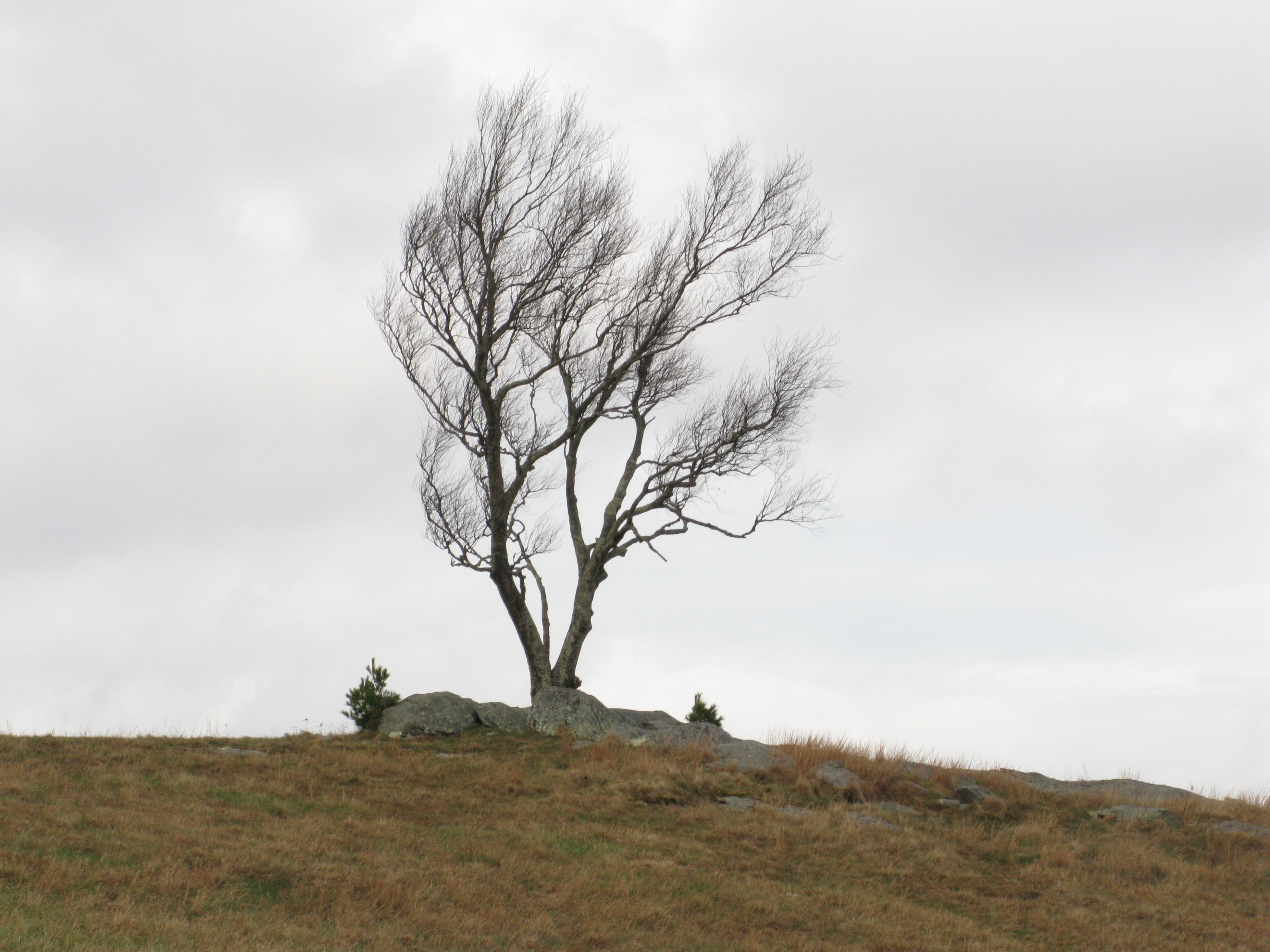
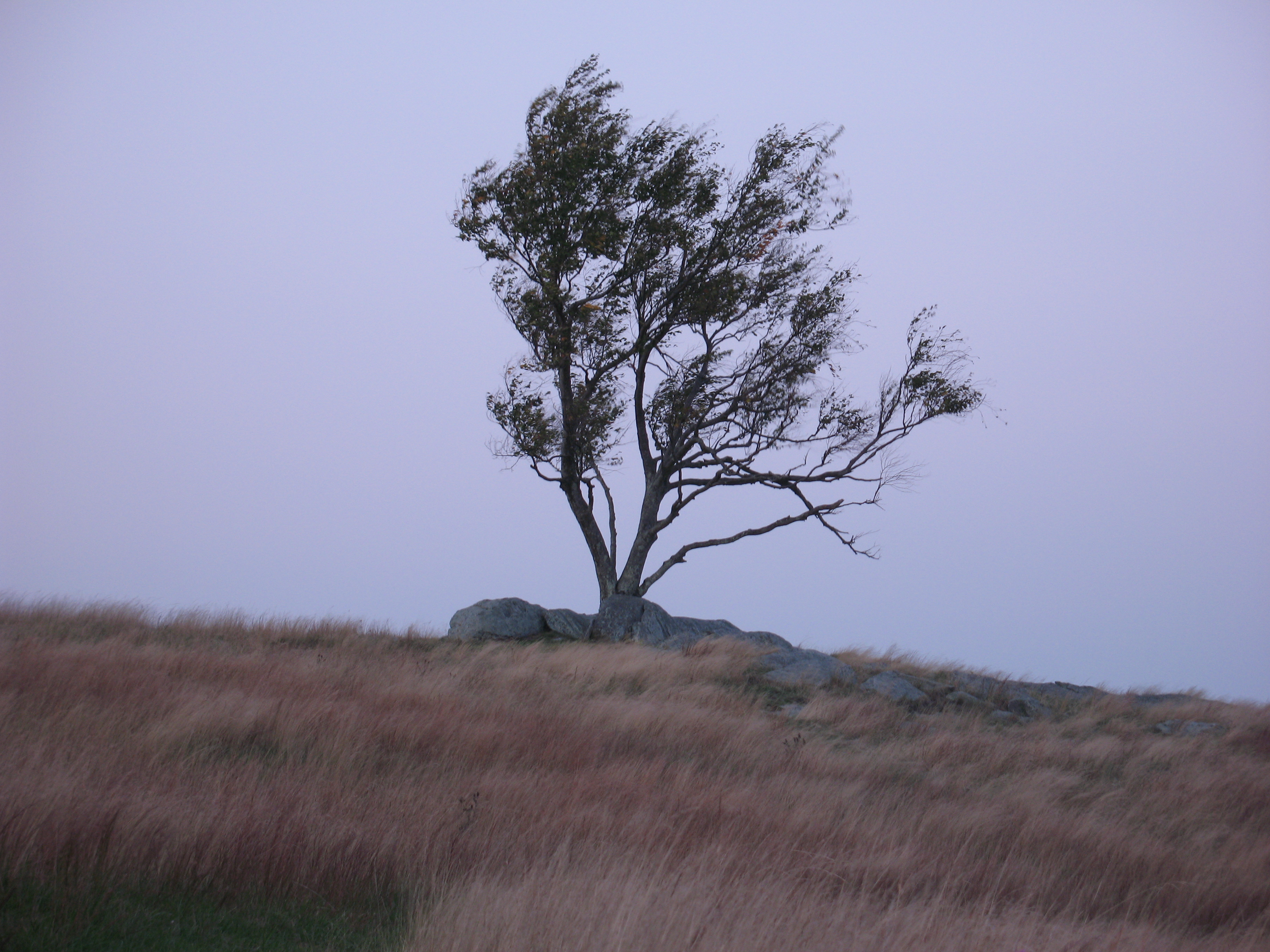
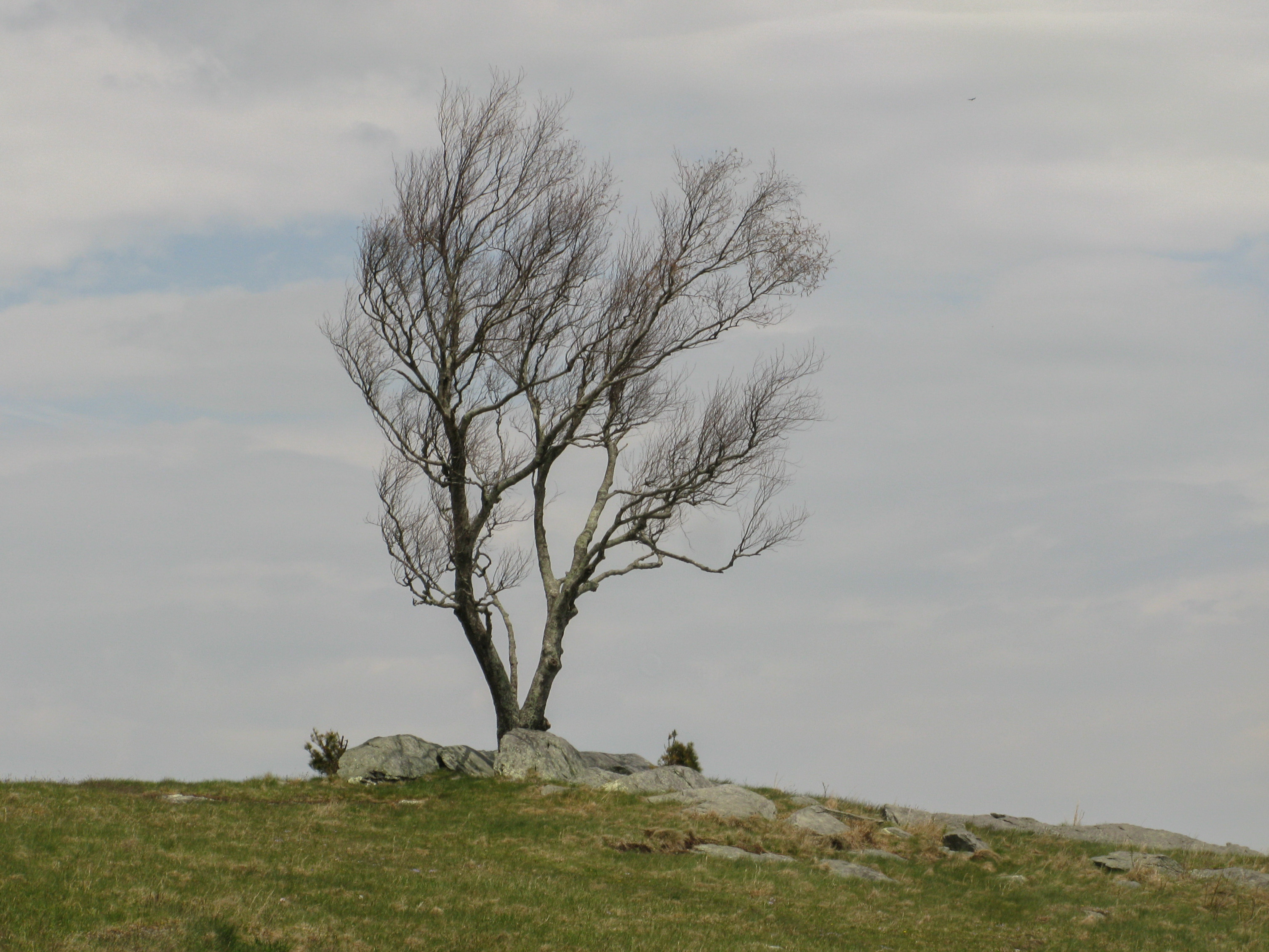
2016-10-17a Doughton Park Tree
 , 

Read Full Post »

NCPS Program VP Chad Knuth

 . 
NC Poetry Society at the Cary Arts Center
[poetry by award winners Mark Cox, Michael Hettich, and more]
 . 
All Right
 . 
The boy doesn’t know what to do. He’s only twelve. And he’s never seen adults weep, not like this at least, so distraught, disconsolate. He can see his grandmother from the kitchen, through her bedroom doorway. Prisoner of her dementia, the old woman lies fully clothed atop the chenille bedspread, her floral house dress faded, her shoes scuffed and worn, light from one window cutting her in two. Her good dishes have disappeared, the piano is still in the old farmhouse, the cows need to be milked, her young sons are still in France at war. The boy sits at the breakfast table, adrift in a sunlit swirl of dust motes. He understands none of this is true, but how is he to help? What can anyone say? To live is to leave, the boy thinks; we make our way, but lose something always and wherever we go. Our shoe soles wear down, our hair thins, our bodies diminish and so we travel always through galaxies of our own shed lint and skin, the leavings of once known things. Finally, at a loss, he just lies down next to her, his sneakers alongside her purpled ankles. He knows nothing ever is going to be all right, but he says it anyway.
 . 
Mark Cox
from Knowing, winner of the 2025 Brockman-Campbell Book Award of the North Carolina Poetry Society
 . 
 . 
Mark Cox is chair of the Department of Creative Writing at University of North Carolina, Wilmington. He also teaches in the Vermont College of Fine Arts MFA Program. His six previous books include Sorrow Bread: Poems 1984-2015 (2017) and Readiness (2018). Read more about Knowing and purchase your copy at Press 53 HERE.
 . 
Claudine Moreau is second place finalist for the 2025 Brockman-Campbell Award, for her book Demise of Pangaea. Visit this site on October 3 for more about her book and a sample poem.
 . 

Mark Cox

 . 
❦ ❦ ❦
 . 
Each September at its fall meeting the North Carolina Poetry Society features readings by the winners of the following contests:
 . 
Brockman-Campbell Book Award (NCPS): best book of poetry published by a North Carolina author in the preceding year
Lena Shull Manuscript Award (NCPS): for a manuscript by a North Carolina author; the winning book is published by NCPS
Susan Laughter Meyers Fellowship (NCPS): a one week residential fellowship at Weymouth Center for the Arts and Humanities for one North or South Carolina poet
Randall Jarrell Poetry Prize (sponsored by North Carolina Writers’ Network): for an individual poem by a North Carolina author
Jaki Shelton Green Performance Poetry Award (co-sponsored by North Carolina Literary Review at East Carolina University and NCPS): for an individual poem recited / performed
 . 
For information about North Carolina Poetry Society contests VISIT HERE:
 . 
In 2023 the September NCPS meeting was held at the NC Museum of Art in Raleigh, in 2024 at the NC Arboretum in Asheville, and this year’s meeting on September 13 celebrated the Cary Arts Center, formerly the Cary High School (1939), listed on the national registry of historic places. Today’s and next Friday’s posts feature some of the poetry shared at the meeting by the 2025 contest winners; return to this site on October 3 for more offerings!
 . 
 . 
❦ ❦ ❦
 . 
The Meadow
 . 
++++ I woke in a tall-grass field at first light,
and listened to the birds, and hummed with a dream
 . 
++++ ++++ I made up from wisps
++++ that ran through my body
++++ ++++ shivering marrow, making me notice
 . 
++++ the dew that dampened
my face and the spider webs
++++ starting to shimmer the trees.
 . 
Everything was breathing; the long night echoed
++++ in the dawn-light: stars
++++ ++++ and vast migrations
 . 
++++ as the breeze stuttered a moment, then stilled.
++++ Across the field, my companion was singing
++++ ++++ her own perfect song, which was silence. Still
++++ ++++ ++++ I could hear her somehow, so I got up and set off
 . 
++++ ++++ ++++ ++++ to thank her for sharing this beautiful place
++++ ++++ ++++ she’d known all her life, this place where she’d always
++++ ++++ ++++ ++++ felt happy, the place she yearned to stay
 . 
++++ ++++ as long as she breathed. And then, she’d told me,
++++ she’d turn into something more perfect: the vast
sky, so blue it hurt the eyes,
++++ or a meadow like this one, that stretched to the horizon.
 . 
Michael Hettich
from Waking Up Alone, winner of the 2025 Lena Shull Manuscript Award of the North Carolina Poetry Society, to be published later this year by Redhawk Publications.
 . 

Michael Hettich

 . 
 . 
After years in New York, Colorado, Florida, and Vermont, Michael Hettich now lives in Black Mountain, North Carolina. He holds a Ph.D. from the University of Miami and taught for many years at Miami Dade College where he was awarded an Endowed Teaching Chair. Over five decades he has published more than two dozen books of poetry and received numerous honors, including several Individual Artist Fellowships from the Florida Division of Cultural Affairs, The Tampa Review Prize in Poetry, the David Martinson/Meadowhawk Prize, and a Florida Book Award.
 . 
Additional Finalists for this year’s Lena Shull Award are Becky Nicole James and Charles Wheeler.
 . 

Michael Hettich

 . 
❦ ❦ ❦
 . 
Feathers
 . 
When September slips in the window like a forgotten lover,
Reaching for me from my burrow
+++++++++++++++++++++ With its hands of feathers
 . 
In the early morning croak of crows, and I can smell
That someone has lit a fire,
+++++++++++++++++++++ An utterance of feathers,
 . 
Such that I can’t remember if I’m seven, in a log house my father built,
And he’s kindled the first autumn fire,
+++++++++++++++++++++ Fanned the feathers,
 . 
Or I’m twenty-five in the wooded hollow alone
But for the cats, dogs, and calls of coyotes, having lit the fire myself
+++++++++++++++++++++ That spanned feathers,
 . 
But no, when you roll over
In a twist of sheets,
+++++++++++++++++++++ In a band of feathers,
 . 
And I hear a young tail thump softly on the floor, a brief whine-
When someone else’s woodsmoke slips through the window
+++++++++++++++++++++ Like sanded feathers,
 . 
And I am here with you, and we’ve struck our own match-
When you reach across and slip your arm around my waist,
+++++++++++++++++++++ With the sustenance of feathers-
 . 
Narya Rose Deckard
from her debut poetry collection Wolfcraft (Broken Tribe, © 2025), available from Bookshop.org
 . 

Narya Rose Deckard

 . 
 . 
Narya Rose Deckard teaches writing at Lenoir-Rhyne University, where she earned her MFA in poetry at the Thomas Wolfe Center for Narrative. Originally from the mountains of Maryland, she currently lives in Valdese, NC with her husband, dog, five cats, and a few chickens, but she also spent ten years in Asheville studying literature and philosophy at UNCA. As winner of the 2025 Susan Laugher Meyers Fellowship, she receives an honorarium and one week writing residency in Southern Pines at Weymouth Center for the Arts and Humanities.
 . 
Susan Laughter Meyers was a widely published Carolina poet who mentored many rising poets and promoted literature across the South for decades. She served at different times as president of both the South Carolina and North Carolina Poetry Societies. Her family, friends, students, and other admirers of her life’s work have endowed this Fellowship in her name for the North Carolina Poetry Society. Many thanks to Weymouth Center, as well, for donating space and support for the poet residency.
 . 
 . 
❦ ❦ ❦
 . 
Begin With Me
 . 
I got up
off the ground
near some graves—I share
the last name with.
 . 
I begin,
with what I was handed,
a mama, a daddy I saw a few times,
because he hid
in the hues he knew.
 . 
My little brother full of love
like the corner store in heaven. I knew
his lying like I knew our daddy’s lying,
same song, but a higher key.
My mama taught me to
 . 
ask my dead plenty of questions—
to let the moon touch me on the mouth,
to ring my black bell.
 . 
Tyree Daye
from a little bump in the earth, Copper Canyon Press, © 2025
 . 

Tyree Daye

 . 
 . 
Tyree Daye led the writing workshop for the afternoon session of this NCPS meeting, He focused on breath: within and around a poem; what it might reveal and what it might hide. The writer can strive to become more conscious of their own breath as they splice syllables and thump out the poem’s rhythm. The reader can strive to slow down and feel their own breath as they silently speak the words. Breath can hold the meaning and feeling that the poem wants to birth into the world. Hold it, and let it out.
 . 
Tyree Daye grew up in Youngsville, North Carolina. He is the author of three poetry collections, including River Hymns (winner of the APR/Honickman First Book Prize), Cardinal, and most recently a little bump in the earth. He has been a 2017 Ruth Lilly Finalist and Cave Canem fellow. He serves as Assistant Professor at the University of North Carolina, Chapel Hill. Tyree Daye teaches. Not just reading and writing, not just poetry – he teaches what it means to be human, a human with a past and with a future. One reaction to his new book: Poem by poem, Daye is honoring the people of Youngsville and “bringing back the dead.”
 . 
❦ ❦ ❦
 . 
Tune in next week, folks . . . in our October 3 post we will continue to celebrate the riches of this September 13 meeting in Cary with poetry by Claudine Moreau, Becky Nicole James, Charles Wheeler, and more.
 . 

Tyree Daye

 . 
❦ ❦ ❦
 . 
 . 

Joan Barasovska and Kathy Ackerman, Membership VP and NCPS Secretary

 . 
 . 
 . 
 . 
 . 

Read Full Post »

« Newer Posts - Older Posts »