Feeds:
Posts
Comments

Posts Tagged ‘NC Poets’

 . 
[with 3 poems by Pat Riviere-Seel]
 . 
Wander Until You Find the Trail Back
 . 
How insistent the world wakes you,
Daylight pushes through dense blinds.
A one-note bird insists on an answer.
Always the same pulsing – waking – wanting
to know what next? How to parse a life
caught in mid-flight, the light a web woven
in the night. All the things we never talk about.
We let the stories we tell ourselves define us.
What would we be without the myths?
Desire contains ire. De- as in deconstruct,
dismantle the dire. Desire nothing. Construct
your own lifeline. Getting lost may be the last
best thing that ever happens.
 . 
Pat Riviere-Seel
from Because I Did Not Drown, Main Street Rag Enterprises, Edinboro, PA; © 2025
 . 
❦ ❦ ❦
 . 
I think I know where I’ve been and I imagine I know where I’m going. But do I really know anything? I certainly don’t know where this narrative is going. Josh and I are sitting beside a rutted gravel track eating lunch. It’s the last meal of our last day on the trail. Sometime this afternoon a banged up old van will arrive to carry us all back to base camp. While the boys joke around and my co-leaders snooze, I gather some of the trash left by previous loungers and eaters. I lift a sandwich wrapper and discover a pocket knife.
 . 
The summer of 1969 Linda and I started going together. About a week after we held hands for the first ime – had we even kissed yet? – I got on a bus in Akron at 5 AM with three fellow Boy Scouts to spend two weeks at Philmont Scout Ranch in Cimarron, New Mexico. Now it’s the summer of 1983 and our own two kids are teenagers. Josh, our eldest, and I have just finished ten days of hiking Philmont together with his troop – desert plateau and Ponderosa pine forests, rushing gorges and a 12,000 foot peak. Our big adventure is ending. I stuff refuse into my sandwich bag and discover that pocket knife.
 . 
In the summer of 2025 I rummage my desk to return that knife to my pocket. I can’t find it. Turn out the pockets of all my pants, upend my day pack, creep beneath the desk and out to the car under all the seats – not there. I have often pictured the Boy Scout who lost that fine, top-of-the-line Swiss Army Scout’s knife. He had sat there on the ground eating lunch the day before I did. The knife stealthily squeezed its way out of his pocket. He littered his garbage on the knife and never missed it until that night. Too late. Karma. He violated the ethic of Leave No Trace and relinquished his knife to me, diligent trash picker. And such a knife – lock-blade, screw driver & awl, little tweezers and trademark Victorinox toothpick. I will carry it for over forty years, sharpen it and oil it, admire it every time I pull it out and wonder at my worthiness.
 . 
Now I’m imagining someone else finding my knife, excuse me, our knife. Beside a hiking trail where I had squatted to identify a flower? In a parking lot stuck to tar? Appreciate it. Or don’t. I held it for a good long time. This is letting go.
 . 
 . 
❦ ❦ ❦
 . 
How to Rebuild Community
 . 
Coming out of the pandemic
+++ I’m having trouble
knowing how to act.
+++ This new landscape
more hardscrabble than highway,
+++ a tightrope walk
not a garden promenade.
 . 
When I offer my outstretched hand
+++ to a woman
I’ve just met, she fixes me
+++ with a chilly stare, says,
I don’t shake hands anymore.
+++ And suddenly I’m ashamed
of my bacteria-filled palm, its brazen
+++ need for connection.
Is it also infected with The Virus? I’m tempted
+++ to rush away, down the hall
and lather that offending hand
+++ with hot sudsy water, the way
we scrubbed our vegetables not so long ago.
 . 
How do I move from cautious
+++ to community?
The knitters know. When they notice
+++ the chaos in the coffee shop,
the customers shouting out orders,
+++ the din around them rising like bread,
impossible to ignore,
+++ Jane stitches herself
to the cash register,
+++ Linda begins bagging cookies
Cathy slices strawberry cake. Their hands
+++ smooth the angry air
grown thick with impatience
+++ and want.
The knitters’ hands fly like needles –
+++ knit one, purl two,
opening, closing, shaping. Each palm
+++ holds a single need to serve.
 . 
Pat Riviere-Seel
from Because I Did Not Drown, Main Street Rag Enterprises, Edinboro, PA; © 2025
 . 
❦ ❦ ❦
 . 
Pat Riviere-Seel writes and writes and writes. Has written, is writing, will write. A solid lifetime of essays, poetry, technical pieces, editing, teaching – her life has been creating with words. Because I Did Not Drown is a portmanteau of Pat’s life, her writing life, her life in writing. A memoir fits pieces into a whole – dates and sequences, family and relationships, loves and desires. A good memoir colors them all with the deeper hues of the soul – fear and disappointment, aspirations and joy. This memoir achieves all that plus one more thing: the crystalline beauty awakened by poetry. Each memory in prose is accompanied by one or two poems. Poems touch and reveal the soul of these moments in Pat’s life.
 . 
I discover myself in these poems, not as outward subject but inward seeker. I often find that I more fully inhabit and participate in the lines of a poem that in a paragraph of prose. The distilled essence of poetry is like volatile spirit that shoots straight from tongue to consciousness. Wonderfully intoxicating. A draught that frees and connects. Next time we meet, Pat and I, we shall surely dance.
 . 
 . 
I can still see that knife. I thought to replace it but the model is no longer manufactured and someone wants eighty bucks on Ebay for one like it. Plus it wouldn’t be the object found, the discovery, the reward. Nevertheless, I can still see that knife because this week I found it shoved in the back of a drawer. Where is this narrative going? Is nothing ever truly lost that once occupied a space in one’s heart? Bosh! Or perhaps the finding is the thing rather than the thing that’s found. Tomorrow I will sit to eat a sandwich with my son and I won’t be able to keep myself from peaking beneath the napkin.
 . 
 . 
Because I Did Not Drown by Pat Riviere-Seel, a memoir in prose and verse, is available from Main Street Rag Enterprises.
 . 
Selected poems from previous books by Pat Riviere-Seel:
 . 
 . 
❦ ❦ ❦
 . 
Astonished
+++ for SLM
 . 
how since your death
the natural world keeps itself,
kaleidoscopic, the brilliant shimmer,
sunlight silvering bay leaves, the veins
of water oak, the dogwood’s sad commentary –
now a winsome glow,
as if every molecule of you
infuses this Earth you loved.
 . 
I expected otherwise – had your death been
anything I considered – that the birds and trees,
the swamps and all that still lives would mourn
as we do. The landscape would lose itself,
fade into shades of gray. The rain that all summer
refused to fall would flood the highest ground.
But now you’ve turned to glimmer. Each glance
into the world I thought I knew brings
a new configuration. You remain everywhere.
 . 
Pat Riviere-Seel
from Because I Did Not Drown, Main Street Rag Enterprises, Edinboro, PA; © 2025
 . 
❦ ❦ ❦
 . 
 . 
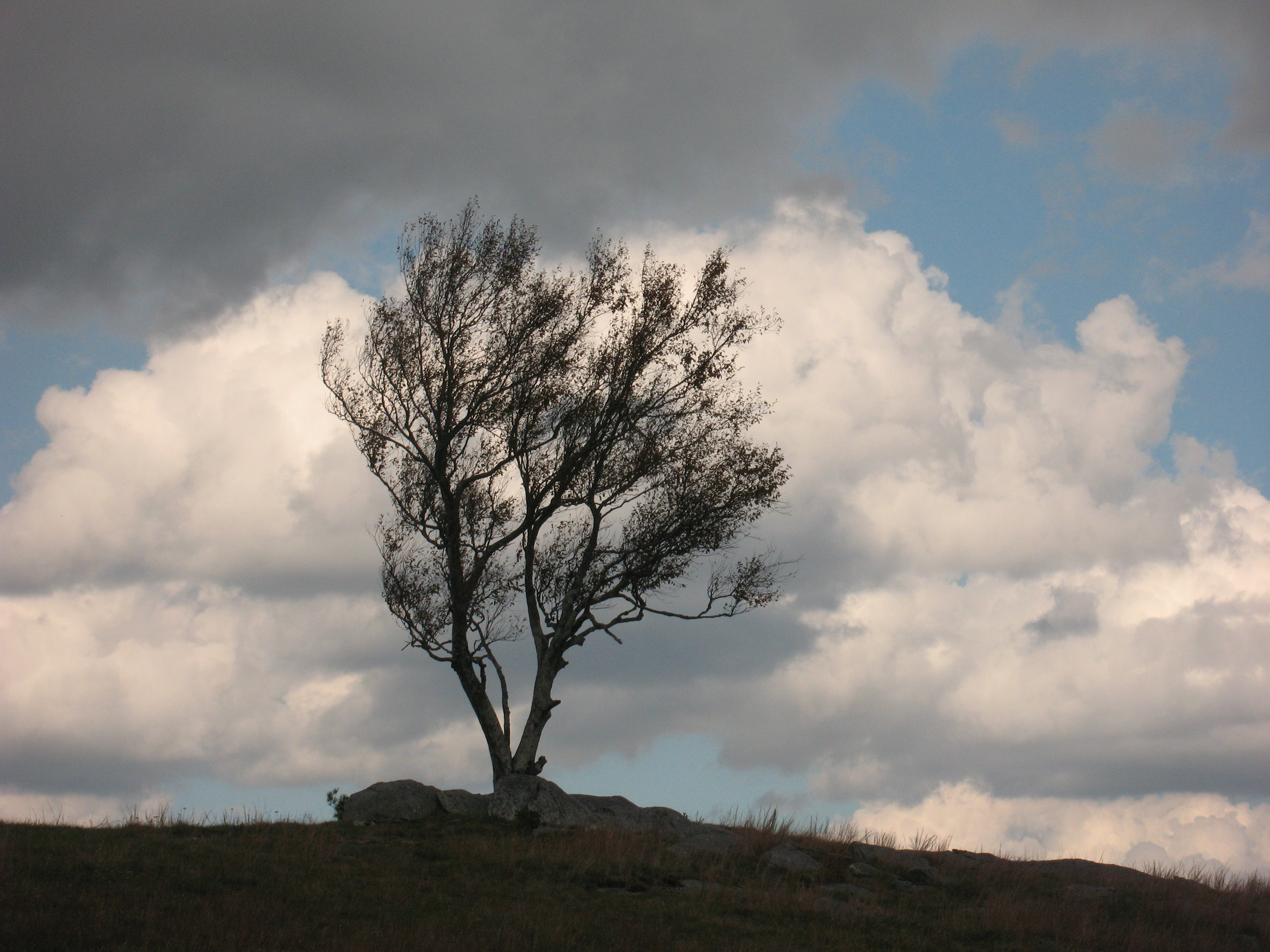
Doughton Park Tree 2015-06-15

Read Full Post »

 . 
[with poetry by Dasan Ahanu]
 . 
. . .
I see potential where others feel desolation
Show me a danger zone
I see an area under construction
An optimistic land developer
who’s been an indecisive bulldozer for too long
Never knowing whether to dig or bury
I’ve got a hard hat and a lunch box
because it’s a long day’s work
to rebuild a heart so beautifully broken
Fenced into construction sites
with lovers who have a lust for demolition
wearing orange vests
and steel-toe boots
Then wondering why all I have are stories
of things falling apart
. . .
from Suspense
Dasan Ahanu
Concrete Jungle Allegories, Sable Books, sablebooks.org; © 2025
 . 
❦ ❦ ❦
 . 
Love is a homeless wanderer. Might show up on your doorstep and make you decide whether to open /dig or slam / bury. Love is bread. You going to throw it out when it’s stale, then die of hunger? Love is not the punchline, it’s the plot; love is not the punctuation, it’s the enjambement; love is not the letters you learn to write or the words you learn to read, it’s the unlearned mother-tongue. Speak it.
 . 
Love isn’t easy. Are all its stories about things falling apart? In Concrete Jungle Allegories, Dasan Ahanu experiences hot love and cold love, empty love and full love, mother love and father love, and always on the edge of being sliced open by love. But always, always there are second chances. I guess this is what it means / when a poet has an epiphany.
 . 
The mystic discovers that love is the fabric of the universe, matter/energy/spirit within us and around us and every moment available for us if we will share in the discovery. The poet discovers love in every particular, a shout or a cry, a down-and-out or an up-and-over, and every moment discovers love is the only thing that can propel us forward. Years ago I argued with another poet that all poems are about Death. The immortal gods do not write poetry but only send us mortals such cutting awareness of our finitude that we are compelled to write the lines the gods hunger for. But the other poet challenged me that all poems are about Love. Love’s immanence or its distant faint glimmer are equal inspirations. Dasan Ahanu argues on the side of Love, and every poem must end with tears, or with AMEN. Hear it, and know.
 . 
 . 
Dasan Ahanu is a community leader and cultural activist. He has taught courses on hip-hop and Black culture at UNC-Chapel Hill, coached the Bull City Slam Team, and served as Cultural Organizing Director for the NC Climate Justice Collective, as just a few of his influences for good. More about Dasan HERE; his newest poetry collection Concrete Jungle Allegories is available from SABLE BOOKS.
 . 
 . 
❦ ❦ ❦
 . 
Baggage Claim
 . 
To the homeless kid
who knew about horoscopes,
spoke about success in life,
and asked me what to do
about a girl
who feels for you
but is in a relationship.
I wish I had more to offer you.
I pray my hesitation
wasn’t seen as disrespect.
It’s just that the look
in your eyes was so familiar.
The one that lets people know
we both prefer to play with
broken things.
 . 
I sat there in that airport
listening to you conjure a roommate
and a job.
Watched you cast the illusion
of a roof over your head.
Became mesmerized
as you told me the story of
how you met her.
Conversations that left you hurt
and confused.
The man that doesn’t deserve her.
I don’t deserve to watch your magic.
To be front row
as you make the best of ghosts,
demons, and puppets.
 .  . 
You say you know this girl
better than she knows herself.
Say that she pushes you away
because she’s fighting her heart.
I know that you are wrong.
You know an illusion that looks like her
better than you know her.
She pushes you away because
you call her the wrong tomorrow.
She only talks to you because she is curious
about this her you love so much.
I know how you got here.
Loving someone who doesn’t love
you back is a familiar model
established by your relationship
with your Gemini of a father.
 . 
It taught you to learn to see
apparition and temptation
as two sides of the same thing.
 . 
Isn’t it funny we met in the
baggage claim of the airport?
I was looking for an outlet.
I guess you were too.
Three in the morning.
I’m stuck there overnight.
Better than the cost of a hotel.
You are stuck with Cupid’s arrow in your heart,
talking to me.
Better than the cost of therapy.
You here telling me you want to claim
someone’s baggage got me all
teary-eyed at the selflessness.
 . 
I want you to have a home and a meal.
You want a conversation
and a happy ending
that says she will recognize
the wizard in your eyes.
In that moment
I am so torn, yet
so awestruck.
 . 
I force these working-class
pieces of advice out of my mouth.
They come in low and hushed.
This is an eloquent urban renewal.
Where I give you all the hope I have,
then rebuild my heart
high-maintenance.
Leave with an uppity faith I’m worth more.
It’s still just gentrification.
The kind I try to balance
with assistance for new residence
in your heart by vouching
for the value of optimism.
Justify it by saying it’s for your welfare.
That it is the only way that
I can be sure your dreams will survive.
 . 
When the police officers arrived
and asked you to leave,
they said they had seen you here
++++ before.
Said they had talked to you
++++ before.
I now they still couldn’t see,
couldn’t imagine
the power you possess.
Here I was in a city I didn’t live
talking to a sorcerer and
wishing I was one too.
Wished I could think quick enough
to cast a spell to keep you here.
But like you,
I’m so used to things ending.
used to people being led away.
 . 
I couldn’t even muster up a goodbye.
I had nothing to offer that would
stop your pain. For once in my life
I saw through my father’s eyes.
I could feel his mute silence.
 . 
The officers told me to be careful.
Told me that the living dead walk and
search for warmth here.
Advised me to go back upstairs.
I just wanted to sit there and cry.
Didn’t know how to wield such magic.
How to hold to a wish
when you have no world around you.
How to craft such a work of art
with scraps and trash.
To want to love.
To care less about a home
if you could know the glimmer in her eyes
was yours.
To be able to contextualize your
father’s mistakes as library,
lessons shelved until you need them.
 . 
Dammit, why couldn’t they have
left you be long enough for you
to teach me how to
want,
believe in,
and chase
a happy ending.
 . 
Dasan Ahanu
Concrete Jungle Allegories, Sable Books, sablebooks.org; © 2025
 . 
 . 
❦ ❦ ❦
 . 
Doughton Park Tree 2020-03-07
 . 

Read Full Post »

 . 
[with 3 poems by Michael Dechane]
 . 
Something So Obvious
 . 
In the hardest days
with their outstretched nights,
whatever is beautiful
in the world recedes.
Light leaches from everything
we see, then. We can’t touch
ordinary goodnesses we might have
let buoy us. All of it fails. Sometimes,
we have to begin again
with something so obvious
and tired as the sunrise.
The wind in long grass.
The light holding back
our eyes from what is under
the surface of the water.
Then, the same light giving
a wrinkled glimpse of stones,
silt, and dark fronds waving
when we shift our stance
half a pace, or even turn
the angle of our face.
Some belief that goodness keeps,
that it might come back one day –
what could that mean today
when there is only the sun
returning in a flat peach wash,
the burning usher of another
Tuesday, coming in with the clanks
and grinding sounds of the city
shaking itself off, reanimating?
A waking we might observe
in colors we may discern
as all the life we lost burns out
of sight, beyond us now, as memory.
 . 
Michael Dechane
from The Long Invisible, Wildhouse Poetry, an imprint of Wildhouse Publishing. © 2024
 . 
❦ ❦ ❦
 . 
If nothing else will happen
to witness so much alive
may be enough. . . .
from New Year’s Day
 . 
How much joy would it take to counterbalance the suffering of your normal lifespan? How would you quantify it, inchoate summation of glad moments over time divided by accrued heartache, grief, shame? What calculus might determine that life is worth living?
 . 
Last week in California a 26-year old man blew up a fertility clinic and himself. In an online manifest he described himself as “pro-mortalist.” Life is not worth living – bringing new life into the world is a crime. He is an extreme example of adherents of radical utilitarian philosophy. To achieve “the greatest good for the greatest number,” when society burns in chaos and personal joy is not to be found, when “good” is a rare and even unattainable commodity, the calculus of this logic dictates that numbers must be slashed. Decimated.
 . 
How much joy would it take? This morning I lean against the kitchen counter while my son stirs a pot on the stove. He is making his special stone-ground grits, with butter and cream, to take to Granddaddy in the nursing home. We talk about Granddaddy and my son’s reluctance to visit him, to open up to him. We talk about food and the kids and what remarkables we’ve each seen in the woods lately. For half an hour we are simply present for each other.
 . 
How much joy? My son is cooking in my kitchen because he now lives here with me. His marriage of twenty-three years has dissolved. Who can fathom the grief and shame he feels? My grief is bottomless. What can balance such an emptiness? Tonight my son’s daughter will visit to flip cartwheels in our front yard and help my son at the grill. She will pretend to be the maitre d’hotel while she sets the table on the porch and takes our orders. We will eat together. Soon he will drive her home and read Harry Potter before she falls asleep.
 . 
Why must there be any calculus at all? Throw it out. This moment is enough.
 . 
 . 
❦ ❦ ❦
 . 
Meditation on the Heart
 . 
And then, one day, you see
the copper teakettle on the stove
settled on its iron throne, precisely
in its place in the kitchen landscape.
Where, all these years, it has been
let’s not say faithfully. Not exactly.
But in its home, hallowed within
a scene so familiar it seems known.
The faint blue streaks of verdigris,
even the dullness of the handle,
become beautiful in this long-arriving
moment of recognition. Beneath
its dinge in the pockets of its dents glows
an undiminished gleam. Every morning
it has been lifted, filled, and carried.
Each day, it pours,. But you so rarely
touch it between its burning hours. Now
it is you that is filled as you long
for what you cannot see or say but sing.
 . 
Michael Dechane
from The Long Invisible, Wildhouse Poetry, an imprint of Wildhouse Publishing. © 2024
 . 
❦ ❦ ❦
 . 
At first the poems of The Long Invisible overpower me with sadness. I have to stop after each page and inventory my own life. I grieve for the inhabitants of these lines. I recall a poem by David Manning – Where does the fire go / when it goes out? Do our mistakes extinguish all the good we’ve ever done? Or that we’ve experienced?
 . 
I am rubbish at meditation. As soon as I try to sit in the moment all my failures and painful moments of the past jostle in beside me. Better to read a book of poems like Michael’s. Every moment is true. Pain and epiphany commingle. Here comes a bear, and wild flora, pelicans, all the things we love together. And love itself proves it is no stranger. Here it flares, even when we thought it had gone out.
 . 
We may be rubbish at love, but love is good at us. It doesn’t weigh the balance or work the calculus to some final solution. We only have to give love such a small piece of ourselves. Like poets do. Like this poet does, whose book in what it reveals and what it shares gives us not just a bit of himself but a bit of each one of us as well. Which must certainly be the greatest gift of all.
 . 
 . 
The Long Invisible by Michael Dechane is available from Wildhouse Poetry.
 . 
 . 
❦ ❦ ❦
 . 
What I’ve Come to Love
 . 
The texture of finely grated ginger.
 . 
Fernet’s herbal alchemy,
its tincture when I close the day.
 . 
All the surprising variegations in a cloud.
 . 
And seven black cows my neighbor keeps.
 . 
Some modest disappointments –
the kind that help me
know I’ve asked too much
and not enough.
 . 
Those parts of myself I kept
locked up on a kind of death row.
 . 
A list that needs
to interrupt me into attentiveness.
 . 
How this, a poem,
can move me beyond
what I knew, then further,
past what I can imagine.
 . 
I’ve come to love portals
into universes that do not exist
until we say they do.
 . 
Whoever you are, I love
your power. I hope it gives life
and sustains goodness for you, and everyone
connected to you: every one of us.
 . 
I know that I’ve come to love
may not love me back
yet. May I keep on loving
then. Keep practicing on stones,
long grass in the grips of a wind,
water, every way that it might be.
 . 
What a help that will be to me
as I turn, at last, to you.
The one I could not know
I was meant and made to love.
I am a stranger, a faceless other,
but you have invited me in.
You give me this time with you.
Forgive me for not believing sooner
in the gift of generosity,
in the hospitable spirit you have
harbored within, all these years, for us.
 . 
Michael Dechane
from The Long Invisible, Wildhouse Poetry, an imprint of Wildhouse Publishing. © 2024
 . 
❦ ❦ ❦
 . 
Doughton Park Tree 2014-07-13
 . 

Read Full Post »

« Newer Posts - Older Posts »