Feeds:
Posts
Comments

Posts Tagged ‘NC Poets’

Poem in the Key of E

Some trees keep their color and shape
even beyond the time that we have ceased
to dream. They tease us into faith.

This one I approach from a distance.
Its leaves, like tiny flags of grace,
beckon to me. It is November, and the rain

has pelted us, sweeping masses
of yellow to the sodden earth.
But these leaves stay, and the tree,

bright orange against the now blue
sky, stands against the growing dark.
Some days I am afraid to come,

fearing that a mean and fickle God
will flip the table, leaving me nothing
but a tangle of dark and dirty branches.

The neighbors think I’m weird.
“For Christ sake,” the plumber says.
“It’s just a fucking tree.” Maybe.

I thought that once myself. But now
if I close my eyes hard in the night,
the color comes and the room

slides away. I float upward in this
orange, this strange treeness.
My body is inside, looking out.


Anthony S. Abbott, from The Angel Dialogues, Lorimer Press, 2014

.     .     .     .     .     .     .

Poetry, on some level, is about saving things. . . . Things die; poetry retrieves them.

Tony Abbott graced my life during the few years I knew and worked with him. He was president of the NC Poetry Society while I served on the Board, he was mentor in the Gilbert-Chappell program for students, and he was an inspiring colleague and friend. I sat in awe: Davidson professor, poet and novelist, literary leader. But Tony didn’t want our awe. He was a seeker for meaning in this tangled, sometimes messy human journey and he simply invited fellow travelers.

Perhaps empathy and humility spring from the same root. If one has suffered deeply, one cares for and feels deeply the suffering of others; if one has experienced the frailties and missteps to which none of us are immune, one sets aside pride and judgement and stoops to lift the burden of one’s fellows. If one member suffers, all suffer together with it; if one member is honored, all rejoice together with it.

Tony, with his vast gifts and achievements, embodied empathy and humility. My life is richer for having shared it with him. Now his voice we carry within ourselves.

.     .     .     .     .     .     .

Going Home:
a poem in memory of those North Carolina writers who have gone before us

– Weymouth Center, July, 2009

Late afternoon. I lie in the long grass and wait
for words. The still white clouds mock me. Then,
unexpectedly, the sound of music. I sit up. From
an open window upstairs, the clear sounds
of Dvorak. I know these notes like I
know the timbers of my own soul. Yes.

The English horn sings the theme, and sings it
yet again, with the bass clarinet. And then
the strings enter, like a prayer. Take me home,
Lord, take me home. Now the clarinets,
and the horns like faith answer. Then the strings
whisper softly, yes, and again, yes.

I see Graham Jackson, tears running down his black
cheeks, Graham Jackson, in full dress uniform, playing
“Goin’ Home” for his beloved Franklin Roosevelt, and then
the farmers, young and old, black and white, all
of them poor, who loved the only man they had
ever known as President of the United States, hundreds
standing on the hills of Georgia and the Carolinas
watching the train go by with the body of their lost
leader, watching the train take him home. “Goin’ home”
say the English horns again, and then the clarinet returns.

Here I am, listening, images surfacing – the trim brick walks
of my beloved town, the green hills to the west, rising
and falling like the strings, the waves on the outer
banks crashing like the cymbals, then sliding back
like the clarinets. I see the faces of my friends, I hear
the voices of the poets who have gone before, their words
rising again. Dark skinned and light, old and young, male
and female, children of the valleys and the mountains,
children of the coast and the Piedmont. I am here, they say,
I have made the path for you, and I am still here, my words
as true as the rock face of Cold Mountain.

The music soars and for a moment there is light. The whole
orchestra together in hope. then the English horn alone,
mournful, and the strings so soft, almost a whisper.
The strings carry our love over the hills to the sea,
the horns offer it to the sky, and the strings set it aloft.
It is done. They have gone home, and who and what
they are we carry within ourselves. The evening comes.
I rise from the grass and walk toward the open window.


Anthony S. Abbott, from If Words Could Save Us, Lorimer Press, 2011

.     .     .     .     .     .     .

Poetry, on some level, is about saving things. Even a poem so simple as “Growing Up” in A Small Thing is about saving the wonder of the child in an adult world that conspires to destroy it. Maxine Kumin uses the term ‘Retrieval System’ in one of her great poems. Poetry is a retrieval system. Things die; poetry retrieves them.
from Anthony S. Abbott – In His Own Words

Tony Abbott’s publications at Lorimer Press

Biography and induction into the North Carolina Literary Hall of Fame

The scriptural quotation above is I Corinthians 12:26, New Revised Standard Version

Sam Ragan Poetry Festival of the North Carolina Poetry Society — March 22, 2015

.     .     .     .     .     .     .


IMG_1783

Read Full Post »

This evening at suppertime she peers into the beef and carrots simmering on the right burner; I snip pea pods and spinach into the black bean broth on the left burner. Pretty soon both pots are smelling darn good. It’s usually something like this, the scene in our kitchen all the years since I decided to stop eating meat and she didn’t. Separate skillets, or sequential nuking, then sit down together.

But then every once in a while it’s all her show. She steams the broccoli while I sit near the lamp and read. I start on a little dry white wine (she’ll accept two ounces for herself later – Pastor Jan, pretend you didn’t read this) while she simmers the pasta. She serves two blue patterned Japanese bowls we’ve owned since year one. Then we sit down together.

When I die, sorry to say, I have no faith that there will be an angel in heaven who can make broccoli Alfredo this good.


.     .     .     .     .     .     .

Getting home from the office early these days, I’m revisiting the overflowing stacks beside my desk. Poetry, philosophy, poetry, nature, poetry — I’ve rediscovered that all of Terri Kirby Erickson’s poems are home.

Lots of poetry is about home – you get a peak through the curtains and maybe you can imagine life on the other side of the pane. Terri’s poems are home. Welcome in. Don’t mind the mess. Maybe you didn’t understand this is your home but for twenty or thirty lines you will be part of the family. So many families. So many homes longed for, left behind, returned to. Soft light, hard edges. Sweet and harsh and all shades between. Come on in. Let’s sit down together.


.     .     .     .     .     .     .

from In the Palms of Angels, Terri Kirby Erickson, Press 53 © 2011


Wayfarer

He seems like a man
you’d see walking down a long
stretch of road, the kind
with dust

rising

in a red haze beneath the wheels
of pickup trucks, cutting
through fields of golden

wheat. Scudding clouds cast
shadows
across the ground like whales

swimming through clear
water, and the air carries the scent
of grain and loam.

Every few miles, the glint of a silo
(startling against the lonesome

sky)

signals a farm house
where peach pies sit cooling
on window sills, and patterned
carpets are worn-out from parents

pacing to and fro with fretful babies
in their arms.

He’s traveling toward the horizon
with the steady gait of someone
with a place to go, whose tender

gaze

will soon find home, that place
more sacred than communion wafers
nestled in the palms
of angels.

.     .     .     .     .     .     .

Rosary

Down by the creek,
we sit on dry
stones,

our shoes and socks
jumbled in a pile.
The sun

warms our toes
and casts its
net of light

from bank to bank,
where willows
trail their

fingers in the water,
and snakes look
like branches

floating by
them. Mosquitoes
lay their eggs

in stagnant pools,
far from leaves
and grasses snagged

by rocks, twisting
in the current.
Tadpoles swim

in tight formation,
wiggling their tails
in tandem,

as salamanders
scuttle by, searching
for places to nap.

Dragonflies hover,
then hurry
away,

their wings
thrumming a one-note
song – while we,

silent as nuns in prayer,
count the beads
of summer.

.     .     .     .     .     .     .

[Rosary first appeared in Basilica Review; other collections by Terri Kirby Erickson from Press 53 include: Telling Tales of Dusk; A Lake of Light and Clouds; Becoming the Blue Heron.]

Author Page, Terri Kirby Erickson, Press 53, Winston-Salem, NC.

.     .     .     .     .     .     .

IMG_0880


Read Full Post »

Let’s meet at Grandview above the New River Gorge while the sun is still working its way through the pine and bare hickory. The hardcore birders left from Shelter #4 hours ago but we will follow the same course down the abandoned mining road to the River. We will follow the wild flowers. We will walk into Spring.

We don’t see a lot blooming up here at the end of April, elevation 2,500 feet in the West Virginia Appalachians. Beneath the trees and in the sunny patches the landscape is still mostly brown, but that doesn’t hold for long. Trailing arbutus and trout lily greet us in the first quarter mile, wake robin and four more species of trillium pop up along the course of the trail, wild iris and asters appear by the time we’ve descended 1,000 feet to river’s edge – all of Spring blooming in one morning.

And just in case we miss something we have a guide: my wife’s sister Jodi French-Burr, National Park Service ranger, naturalist, and interpreter. She’ll be kneeling in the duff gently parting the leaves so we can see the wild ginger blossoms. She’ll have at the tip of her tongue the name of every growing thing we discover. She’ll tell us the history of this winding trail and point out relics and landmarks along the way. And she will usually laugh at my jokes.

Come and convince yourself that the earth is filled with beauty.

Bring water and a snack. RESERVATIONS requested by April 21, 2020: 304-465-2632 or jodi_french-burr@nps.gov.

[UPDATE 3/23/2020 — due to the COVID-19 Pandemic many NPS and New River Gorge activities may have to be canceled or rescheduled. Be sure the check this site for the latest info:

https://www.nps.gov/neri/planyourvisit/wildflower-weekend.htm

BUT . . . outdoor activities with family and small groups (maintaining your social distancing) are just what THIS doctor orders! Get out into nature! Viruses hate sunlight! . . . . . . . . Bill G  ]


Erythronium americana — Trout Lily (Dog-tooth Violet, yellow adder’s tongue, fawn lily)

.     .     .     .     .     .     .

Deborah H. Doolittle has created a unique botanical and poetic experience with her collection Floribunda, a true garden of verse. The focal point of each poem is a particular flower, from Cowslip to Gardenia, but the speaker or the style of each poem is a giant of literature, from William Blake and Lewis Carroll to Sylvia Plath and Wallace Stevens. To wander the garden path of Deborah’s poetry is to smell the fragrance and delight in the colors but also to abide in the company of great writers, Deborah H. Doolittle not the least of them. Open to any page and converse.

[all selections are from Floribunda, © Deborah H. Doolittle, Main Street Rag Publishing Company, 2017]

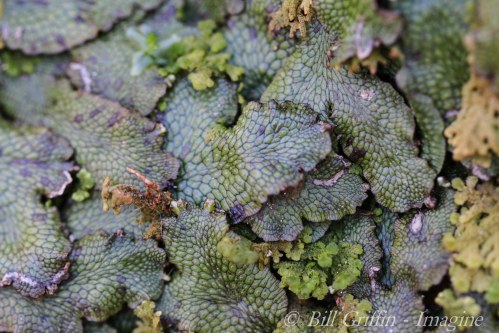
Hepatica americana — Round-lobed Hepatica

.     .     .     .     .     .     .

Emily Dickinson’s Wild Flowers

The way she dressed a flower was
just that extravagant.
The haute couture of wild flowers!
wild flowers! her element.

To that pale cheek she called petal,
she pressed both stem and leaf –
the lupine, like crinoline; sweet
clover, tight Damascus weave.

She had played the part of Botanist,
a child’s specialty.
Swamp candles shed no brighter light
in Latin for the bee.

Grasses of Parnassus, skullcap
of the tiny laces,
she pressed herself soft as a moth
treading through her pages.

Antennaria solitaria — Solitary Pussytoes

.     .     .     .     .     .     .

Henry David Thoreau and the Sunflower

Who among us has not followed the sun
and hated the clouds that hid its shining face?
Who else but us can claim that we have traced
across the sky the very path it runs?

We’ve traveled much through Concord, you and I.
The widest fields are fenced and most contain
cattle or corn or the stock of kitchen
gardens. The farmers never wonder why

your seeds proliferate upon their grounds.
I know how the wind blows the smallest crumb
and how the bees and birds know where to come.
The two of us, like them, know no such bounds.

The hedgerows and stonewalls can’t grow taller.
The sun is but a star and you’re its flower.

Sanguinaria canadensis — Bloodroot

.     .     .     .     .     .     .

Sylvia Plath and the Impatiens

Unlike my empty hands,
it does not just lie there
with its flowers opening

upon white bed linen.
All its seeds jettisoned,
its future guaranteed

for at least another
season, this jewel-weed,
asks for nothing that I

cannot give it. It basks
in my sunlight, breathes in
my exhalations as fast

as I can breathe them out,
again. Still, we are both
waiting for the nurses

to make their rounds, the sun
to rise up, then subside,
for the moon and the stars

to appear and disappear,
for winter’s frost to turn
us into limp black rags.

Asarum virginicum – Heart-leaf Ginger (Little Brown Jugs)

.     .     .     .     .     .     .

The other way to walk into Spring, although it takes a month or two, is to stroll along the same trail every day. Linda and I walk the Elkin Valley Trail Association Nature Trail along Big Elkin Creek at least three days a week. First appears trout lily, hepatica close behind, then every day or two there’s a new species in sequence: pussy-toes, wild ginger, bloodroot, rue anemone, star chickweed. In a month there will be foamflower, bellwort, jewel-weed, jack-in-the-pulpit. The photos in this post were all blooming on the same day, March 16, 2020.

Anemonella thalictroides — Rue Anemone

.     .     .     .     .     .     .

Deborah H. Doolittle moved from her birthplace in Hartford, Connecticutt through many different landscapes and gardens before settling in Jacksonville, North Carolina. She has an MA in Women’s Studies and and MFA in Creative Writing and teaches at Coastal Carolina Community College. She serves on the Board of the North Carolina Poetry Society and she loves flowers.

Stellaria pubera – Star Chickweed

.     .     .     .     .     .     .

IMG_0880

Read Full Post »

« Newer Posts - Older Posts »