Feeds:
Posts
Comments

Posts Tagged ‘nature’

 . 
[with 3 poems by Jenny Bates]
 . 
Essential
 . 
Trees are a gathering of circles.
 . 
If I touch this tree
say your name,
 . 
Light from the moon, the stars
will burn inside it.
 . 
Frost kindles its leaves to flame,
Spills them on to yellowing grass.
 . 
Unchanged.
 . 
From prehistoric times the ages
are inconsolable, so they turn.
Mantle shadows by truly seeing them.
I tell you this as I touch the tree,
circle this tree, say your name.
 . 
The tree and its golden mean listen
without an ear to hear.
 . 
As you wear yourself out
with a single essential thought.
 . 
Give.
 . 
Jenny Bates
from Essential, Redhawk Publications, Hickory, NC; © 2023
 . 
❦ ❦ ❦
 . 
Ah, February – enter the season of Romance! Naturalists will mark its approach with sightings of large red heart-shaped boxes lining the entrance to Food Lion. Outdoors we notice that, yes indeed, that gray squirrel robbing the feeder looks nicely plump: she will deliver her puplets in a high leafy nest on Saint V’s Day. Wood frogs and peepers, surprise!, have already begun to sing their amorous invitations to amplexus. Owls have a jump on the festivities, already nesting, while there is a general restiveness and revving among the yard birds.
 . 
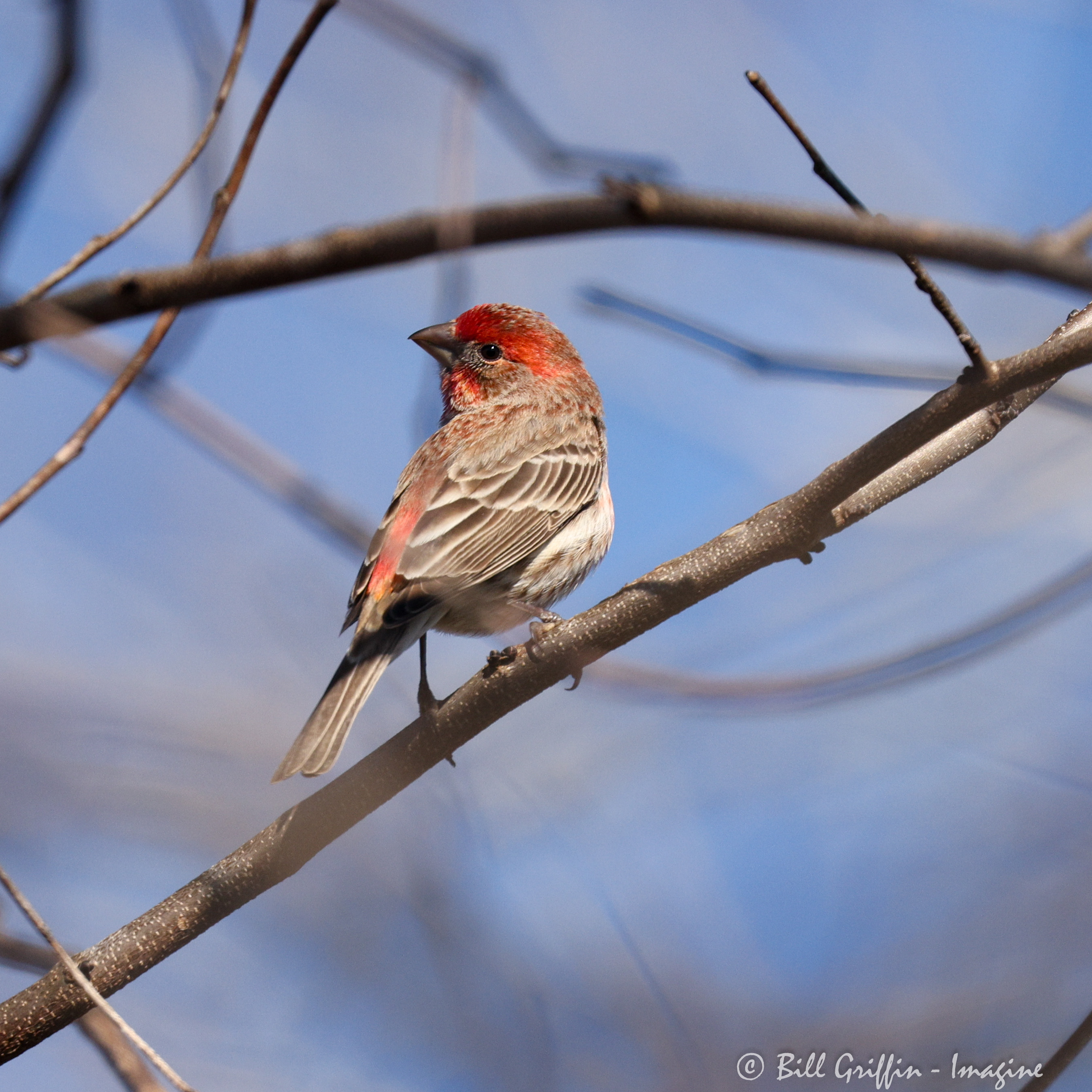
For Linda and me, the end of winter and first blood flow of Spring are marked by a plaintive two note whistle issuing from the rhododendron. There it is again! A rising minor third, clear and bright, the introduction to a joyful motet, the Oh My! of Oh my Canada, Canada, Canada. The White-Throated Sparrow is tuning up.
 . 
Why do birds sing? All winter the white-throat has minded his own business, hopping in the litter beneath the feeders or posing quite sage in the azalea. Now he sings his first couple of notes, but within a few weeks he will have flown far from here to breed in Maine or Michigan or the infinite boreal forests of Canada. Why sing now? Obviously his whistling can’t be to establish a territory in our back yard. And it defies imagination to think he’d hope to attract a mate here in North Carolina and keep her by his side all the way to Quebec. Today’s song, to judge from the snippets and fragments he’s practicing, sounds like he’s just warming up tor the big date.
 . 
Here’s how I see him – my little White-Throated Sparrow is Jeremy Brett in My Fair Lady, walking down the street where she lives. He’s passed this way before, but today the pavement simply refuses to stay beneath his feet. Days lengthen and love fills his breast until it is impossible any longer to resist – it must overflow in song. And so although the street where she really lives is 1,000 miles from here, White Throat graces Linda and me here in the NC foothills with his opening aria of Romance. Ah, February!
 . 
 . 
* The song of the White-Throated Sparrow (Zonotrichia albicollia) comprises a couplet of long clear ascending whistles followed by three more rapid triplets, and can also be recalled by the mnemonic, Old Sam Peabody, Peabody, Peabody.
 . 
** On the Street Where You Live, 1956, Lerner & Lowe, from the musical My Fair Lady starring Audrey Hepburn & Rex Harrison, with Jeremy Brett as Freddy singing: “I have often walked down this street before / but the pavement always stayed beneath my feet before. / All at once am I several stories high, / knowing I’m on the street where you live . . . .”
 . 
 . 
❦ ❦ ❦
 . 
Red and Green
 . 
where the surface of one thing meets the surface of another . . .
— William Bridges
 . 
You were twisting and turning
leaping and swerving a flame
 . 
on each foot, on a field so green
so green – so gorgeously
 . 
green, the earth’s addiction.
 . 
And you, warrior Fox as you fought
you fought off the mysterious foe, rattled like
 . 
a shaman losing part of his soul.
 . 
You danced between spirit and spirit and matter
danced all parts of your body a spontaneous me!
 . 
When you finally stopped puffing
from chaos, from chaos and glee you flowed
 . 
a rhythm of stillness – so still
 . 
you stood as if in meditation
and mantra on what you created.
 . 
Jenny Bates
from Essential, Redhawk Publications, Hickory, NC; © 2023
 . 
❦ ❦ ❦
 . 
I have never met Jenny Bates but I imagine a visit to her home in the woods. Afternoon sun through west-facing panes is captured by glass in the colors of earth, sky, pasture, summer asters. We don’t remain indoors but take our mugs of oswego tea with local honey out beneath the pines. Dusk creeps in and we allow it to fill us with its silence. Creatures creep closer as well, wild but curious. If we were to threaten them, they would flee or turn and slash, but we and they simply remark each other’s presence and respect our distance. They go about their crepuscular business and grant us leave to be part of their universe. Being part of. Communion. Creating wholeness. The highest call and at once the most confounding task of the rational being.
 . 
This is also a visit to Jenny’s poetry in the woods. The universe Jenny Bates creates through words is one of deep acceptance and communion. Essential, from Redhawk Publications, continues her series of books which create a sort of natural theology. The You whom Jenny addresses in so many of her poems – is it God? A spirit familiar? A ghostly memory? Or is it the fox who stares cautiously from the edge of night? You might be a source of answers but more often is simply one with whom to share the questions. In this universe, there is no supernatural, only the fundamental reality that we are all one. One, that is, if we are able to open ourselves that much.
 . 
 . 
Visit Redhawk Publications and purchase Essentials HERE
 . 
❦ ❦ ❦
 . 
 . 
 . 
Be Bold
 . 
I said to the Woodpecker
as I lifted it off the ground
cradled it for a half an hour, this
second Woodpecker to break its neck.
 . 
I’m no angel I said to him, though I’ve
been called it many times
a few drops of Be Bold I tell myself
when there is a need, but sometimes
those drops don’t soak in and I’m left
buckling to my knees.
 . 
The body will be gone by morning
and sure enough it was, yet still I
struggle How can one keep up with
death stare it in the face? Or program our
unconscious to react in certain ways?
 . 
Sweet smelling or dour unpleasant odors
are all we instinctively know, and here,
I’m not too Bold.
I placed the bird on one big leaf, hearing
another drum away
laid his head on dry curled grass
a pine bough for a wreath
both of us changed and changing
the pattern of our resonance.
 . 
Jenny Bates
from Essential, Redhawk Publications, Hickory, NC; © 2023
 . 
❦ ❦ ❦
 . 
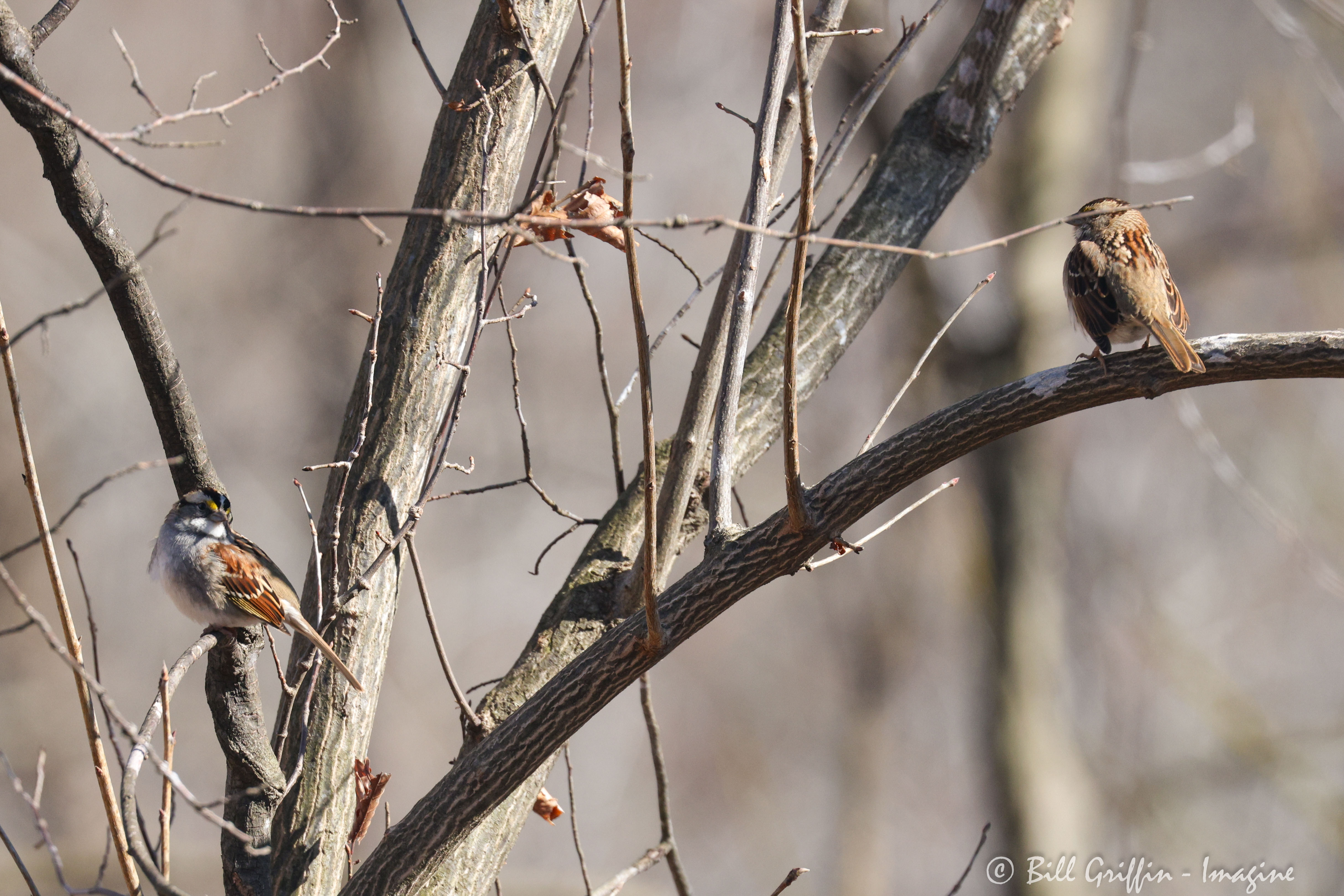
But soft! What light through yonder window breaks? This morning I discover Romeo Sparrow perched in the Silverbell. He turns to gaze fondly at Juliet, perched one branch higher. Perhaps they have booked adjoining seats for the flight to their Canada!!
 . 
 . 
❦ ❦ ❦
 .
Read Full Post »

 . 
[ with 3 poems by Rae Spencer]
 . 
Adaptation
 . 
Some days I hardly remember
what it is to fly
 . 
what loss is
When morning feels like betrayal
and shoulders ache
with the sudden load of gravity
pressed into cruel bones
too human for wings
 . 
As if I never once awoke
hair smelling of clouds
wound in wild knots
and damp with tears
 . 
or slept
curled in a crevice of wind
 . 
Other days I recall myself
grace confined to memory
in which I have never flown
and it was only ever a tale
from childhood
I was never meant to believe
 . 
Rae Spencer
from Watershed, Kelsay Books, American Fork, Utah; © 2023
 . 
❦ ❦ ❦
 . 
A shift in warmth of Pacific seas, a wet winter in the South: throughout January a storm a week, sometimes two, but this afternoon we are braving mud to hike our favorite trail from Carter Falls to Grassy Creek. The little farm pond is full and we see the channel where it overflows to carve a deeper path through last summer’s grasses and sedges. Both white pine groves have evidence of freshets, scoured hardpan courses with needles layered thick along each side. We cross Martin Byrd Road to enter the woods that curve alongside the big cornfield and wonder what we’ll find. Even though the acres are planted in winter rye, how much soil has rushed off those slopes and furrows into Grassy Creek?
 . 
The trail quickly turns downhill and we see the storms’ impact. Red field clay has silted full the first drainage swale and overtopped it to rush down the trail bed in a boiling soupy froth. Exposed roots and deep mud. Our trail crews clean out these erosion control features twice a year but one wet January has damaged the trail more than ten years of hikers’ boots. Too much water, too much incline, too much gravity.
 . 
Neither will nor wisdom inform its seep, writes Rae Spencer of water. It must seek its level, it must flow, it must rush. Water and time alike, each of them relentless and not to be held back. Have I spent too much of my life rushing? Have I abandoned will and wisdom to be always doing, doing? Even now my dreams are filled with urgency, long hallways, behind each door a patient fretting to be seen, and I with no hope of catching up. Waking from such, who would want to get out of bed and get started?
 . 
Better trail design can’t completely compensate for poor tillage and agricultural neglect, but the rest of today’s trail is actually in quite good shape. The outer berm has been mostly raked clear and there are several grade dips and rises that keep water from following the treadway. When we reach the more rustic forest bathing trail, it’s even better – consistent outsloping camber, plenty of runoff. Water’s gonna rush. Life too, I guess. How to prepare? How to respond? How to slow things down for a bit? A walk through quiet woods, a quiet hour with a book of poetry – maybe tonight my dreams will proceed more leisurely.
 . 
❦ ❦ ❦
 . 
Of Warbler and Quail
 . 
Drab little she in the brush
Muttering her song to lure
Someone else
 . 
But only I respond
Drawn across the dune
To listen closer
 . 
As a child I spoke to quail
I whistled out their bobwhite name
To hear them shriek it back
 . 
But this little warbler
outside my beachfront door
Her accent slips my ear
 . 
Measures of water wisdom
Refrains of woven nest
Codas that fall silent
 . 
Because I have come too near
To understanding
What is lovely on this shore
 . 
Of daily tide
Of sandy soil and storms
Of quickening flocks
 . 
That speak their sea-swept names
In secret tangled tongues
Of salty sail and oar
 . 
And then they fly away
While I struggle, yearn to say
What I remember of briars
 . 
Of dry summer streams
And winter dreams
Of silent quail
 . 
Hungry among the thistle
Of home, my distant valley home
So many years from here
 . 
Rae Spencer
from Watershed, Kelsay Books, American Fork, Utah; © 2023
 . 
❦ ❦ ❦
 . 
Memory – home – loss – the path forward: Rae Spencer’s poetry has a distinctly formal feel as she settles deeply into these themes. Formal in the sense of meticulous language, lush natural imagery and description, architectural lines, internal rhyme. These poems need to be read slowly as they linger in the moment before releasing one to ponder and discover the writer’s metaphors, and discovering one’s own.
 . 
Watershed from Kelsay Books is an antidote to compulsion, to insistence, to the headlong rush into the next thing and the next. I am perfectly happy to pause and listen with warbler and bobwhite as the poet weaves from their stories one of longing for home (Of Warbler and Quail). I think I’m ready now for racoon to teach me how to live (Adaptable). At the close of Doppler Effect, I sit and listen long to the change in pitch of life I know I must expect, and prepare for, as my own parents age and travel their final days.
 . 
Poetry, in its phrasing, its junctures, its juxtaposition, often moves at the pace of breath. Speak it aloud, pause when it needs you to. Stop and linger in the midst of these lines so that they may breathe into you.
 . 
 . 
[hint: I re-type the poems for these posts (thank you to my freshman touch typing teacher), fingers slower than scanning eyes, speaking the words individually in my head, each syllable and carriage return (aka line break) – so often in the adagio the lines reveal secrets of how they mean.]
 . 
Rae Spencer lives in Virginia, USA. As well as writing, she is a practicing veterinarian. Of Warbler and Quail first appeared in Bolts of Silk. Gravity first appeared in vox poetica.
 . 
Watershed is available from Kelsay Books HERE. Learn more about Rae HERE.
 . 
❦ ❦ ❦
 . 
Gravity
 . 
Water doesn’t want
It only weighs
 . 
Neither will nor wisdom inform its seep
Downhill, settling to the lowest pool
 . 
Rivers cascade and marshes ooze
Toward inlet and gulf
Where tides surge
 . 
With the arid moon
Sere face lowered
In serene reflection
Over oblivious blue
 . 
Depths that teem with tin and polyp
Oyster clades awash in brine
That neither murmurs nor sighs
Through a shell
 . 
Held to the ear we hear
Blood’s heave
An eternal chorus
Singing sailors to sea
Dreamers to sleep
 . 
Daughters to voice
Their bare feet anchored
In restless churn
On heavy, ancient shores
 . 
Rae Spencer
from Watershed, Kelsay Books, American Fork, Utah; © 2023
 . 
❦ ❦ ❦
 . 
IMG_1948
 . 

Read Full Post »

 . 
[with poems from The Ecopoetry Anthology by
Gary Snyder, Evie Shockley, Adrienne Rich]
 . 
For the Children
 . 
The rising hills, the slopes,
of statistics
lie before us.
the steep climb
of everything, going up,
up as we all
go down.
 . 
In the next century
or the one beyond that,
they say,
are valleys, pastures,
we can meet there in peace
if we make it.
 . 
To climb these coming crests
one word to you, to
you and your children:
 . 
stay together
learn the flowers
go light
 . 
Gary Snyder
from The Ecopoetry Anthology, edited by Ann Fisher-Wirth and Laura-Gray Street; Trinity University Press, San Antonio, TX; © 2013
 . 
❦ ❦ ❦
 . 
In the cook tent behind the Big Top, the carnies are eating breakfast together. One rowdy slurps coffee with the spoon handle jutting up from his cup. His buddy hollers, “You’ll put your eye out!” but he just ignores the danger and goes right on drinking.
 . 
Young Toby Tyler and I just gape, he at the jostling men and me, age eight, at the black & white TV. Both of us are convinced it’s going to happen any minute, spoon into eyeball. No matter what happens during the rest of that movie, we keep watching the guy with the doomed eye.
 . 
Sixty years of foreboding later and I still can’t tell you much else about the film (wasn’t there a chimp?), but it doesn’t take much for me to still feel that gut tug of imminent blinding: the teaspoon of Damocles. “Putting your eye out” was one of the more graphic horrifics that dogged my childhood. When it became the tagline for “A Christmas Story,” I couldn’t laugh with quite the same gusto as my wife. As readers we’re admonished to be vigilant for foreshadowing; as writers we’re taught to incorporate it; as kids we’re just scared into behaving ourselves.
 . 
Turns out the rowdy never even poked his eye. It wasn’t foreshadowing at all, just a one off Disney gag. Can you even call something foreshadowing if it never connects to the unwritten future, if there isn’t some aftshadowing of destiny that confirms the prophesy? Am I trying to tell myself to quit worrying so much about a future that may never arrive? Standing in the TSA line at the airport – oh no, do I have a weapon in my pocket, nail file of Damocles? Dad speeding toward his 95th birthday with driver’s license in his pocket, gleam in his eye, and in his ignition the key of Damocles. What could possibly go wrong?
 . 
Alas, I’m afraid that eight-year old kid already had thinking about, planning for, and worrying about the future inscribed deep in his psyche. In the fable about ants and grasshoppers it never even occurred to him to identify with anyone but the ant. Here I am now, all grown up, carefully rinsing the teaspoon and putting it in the washer. But what the hell: gimme another cuppa coffee!
 . 
❦ ❦ ❦
 . 
notes for the early journey
+++ for j.v.k.
 . 
somewhere along the way you will need to lean
over a bluff’s edge   drop you shoes and keep moving   use
the feel of greening grass under your feet as a guide   if a
rainbow confuses you   which end   go the third
way   on the mountain you’ll remember   climb on
up to where the aspens tremble   you will be alone   these
high winds can knife some lungs to gasping rags   but for you
 . 
there’s nothing to worry about   breathe   sniff the air like
a bloodhound and head the opposite way   find the
place where the land dissolves into sand   keep walking   when
that sand becomes sea   speak a bridge into being
I know you can do it   your father’s son ain’t
heard of can’t   follow the song   don’t stop until you’re south
of sorrow and all yo can smell is jasmine   I never
once stumbled on such a place   hard to say if a brown child
is the last four hundred years has had such
a luscious dream   day or night   but this is your mother’s
lullaby   I know she meant you to sleep sweet
 . 
Evie Shockley
from The Ecopoetry Anthology, edited by Ann Fisher-Wirth and Laura-Gray Street; Trinity University Press, San Antonio, TX; © 2013
 . 
❦ ❦ ❦
 . 
At Christmas we celebrate the past and resolve to be worthy of the present – to give life to the divine presence within our own hearts. At New Year’s we look to the future. In recent years that gaze forward has generally been accompanied by a soto voce “Oh, shit.” Yeah, pretty bleak outlook for 2024: politics, race, climate, war. Party’s over.
 . 
This is the best time to open a book of poetry. Not to escape to some idealized past but to connect to another human being who is also muttering, but who hasn’t yet given up hope. And this is especially the time I open my Ecopoetry Anthology, all hefty 0.9 kg of it. I’ve read many definitions of ecopoetry (as differentiated from nature poetry), some of them requiring thousands of words,  but here’s my personal take: poems that observe the world as it is, life and geology and physics without rose-colored glasses; poems that put is in our place in the world, in the literal and figurative connotation of that phrase, no holds barred, no punches pulled; poems that, even in the face of reality, still hold onto hope that we creatures might understand, appreciate, and love every particle of it.
 . 
And each other. Love each other. This is the best time to read a poem, connect with the poet, and connect with every other reader of that poem. Past, present, and future. What the hell: gimme some love and hope!
 . 
 . 
More information on The Ecopoetry Anthology, and where to order,  HERE
 . 
. .
❦ ❦ ❦
 . 
What Kind of Times Are These
 . 
There’s a place between two stands of trees where the grass grows uphill
and the old revolutionary road breaks off into shadows
near a meeting-house abandoned by the persecuted
who disappeared into those shadows.
 . 
I’ve walked there picking mushrooms at the edge of dread, but don’t
+++ be fooled,
this isn’t a Russian poem, this is not somewhere else but here,
our country moving closer to its own truth and dread,
its own ways of making people disappear.
 . 
I won’t tell yo where the place is, the dark mesh of the woods
meeting the unmarked strip of light –
ghost-ridden crossroads, leafmold paradise:
I know already who wants to buy it, sell it, make it disappear.
 . 
And I won’t tell you where it is, so why do I tell you
anything? Because you still listen, because in times like these
to have you listen at all, it’s necessary
to talk about trees.
 . 
Adrienne Rich
from The Ecopoetry Anthology, edited by Ann Fisher-Wirth and Laura-Gray Street; Trinity University Press, San Antonio, TX; © 2013
 . 
 . 
❦ ❦ ❦
 . 
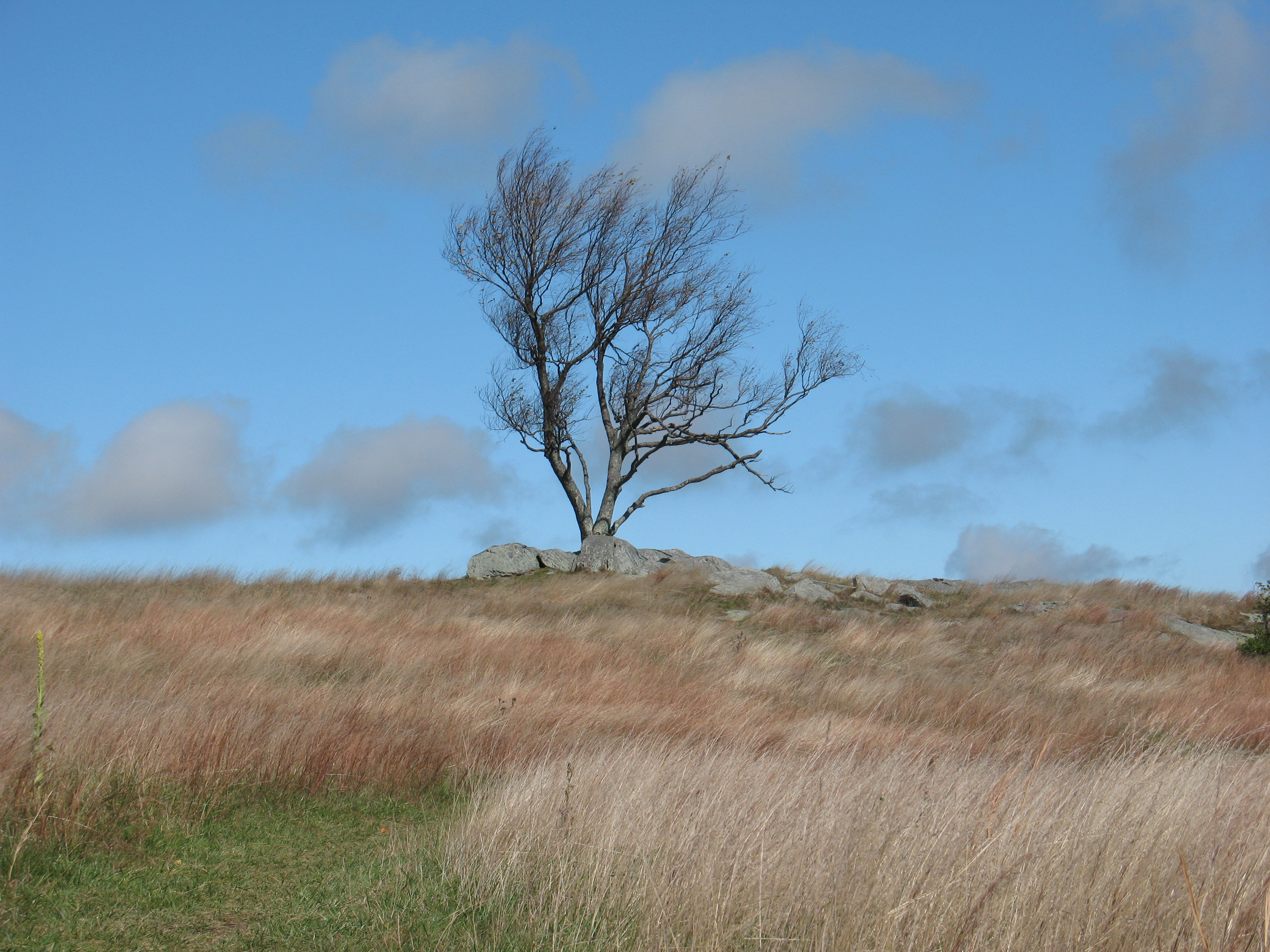
IMG_0768, tree
 . 

Read Full Post »

« Newer Posts - Older Posts »