
.
[ poems by Gary Snyder, Diana Dinverno, Terry Bornhorst Blackhawk,
Gina M. Streaty, Elizabeth H. Lara, Fred Chappell ]
.
Prayer For The Great Family
.
Gratitude to Mother Earth, sailing through night and day—
and to her soil: rich, rare, and sweet
in our minds so be it
.
Gratitude to Plants, the sun-facing light-changing leaf
and fine root-hairs; standing still through wind
and rain; their dance is in the flowing spiral grain
in our minds so be it
.
Gratitude to Air, bearing the soaring Swift and the silent
Owl at dawn. Breath of our song
clear spirit breeze
in our minds so be it
.
Gratitude to Wild Beings, our brothers, teaching secrets,
freedoms, and ways, who share with us their milk;
self-complete, brave, and aware
in our minds so be it
.
Gratitude to Water: clouds, lakes, rivers, glaciers;
holding or releasing; streaming through all
our bodies salty seas
in our minds so be it
.
Gratitude to the Sun: blinding pulsing light through
trunks of trees, through mists, warming caves where
bears and snakes sleep—he who wakes us—
in our minds so be it
.
Gratitude to the Great Sky
who holds billions of stars—and goes yet beyond that—
beyond all powers, and thoughts
and yet is within us—
Grandfather Space.
The Mind is his Wife.
.
so be it.
.
Gary Snyder (after a Mohawk prayer)
from EARTH PRAYERS, edited by Elizabeth Roberts and Elias Amidon
selected by Bill Griffin
.
✾
.
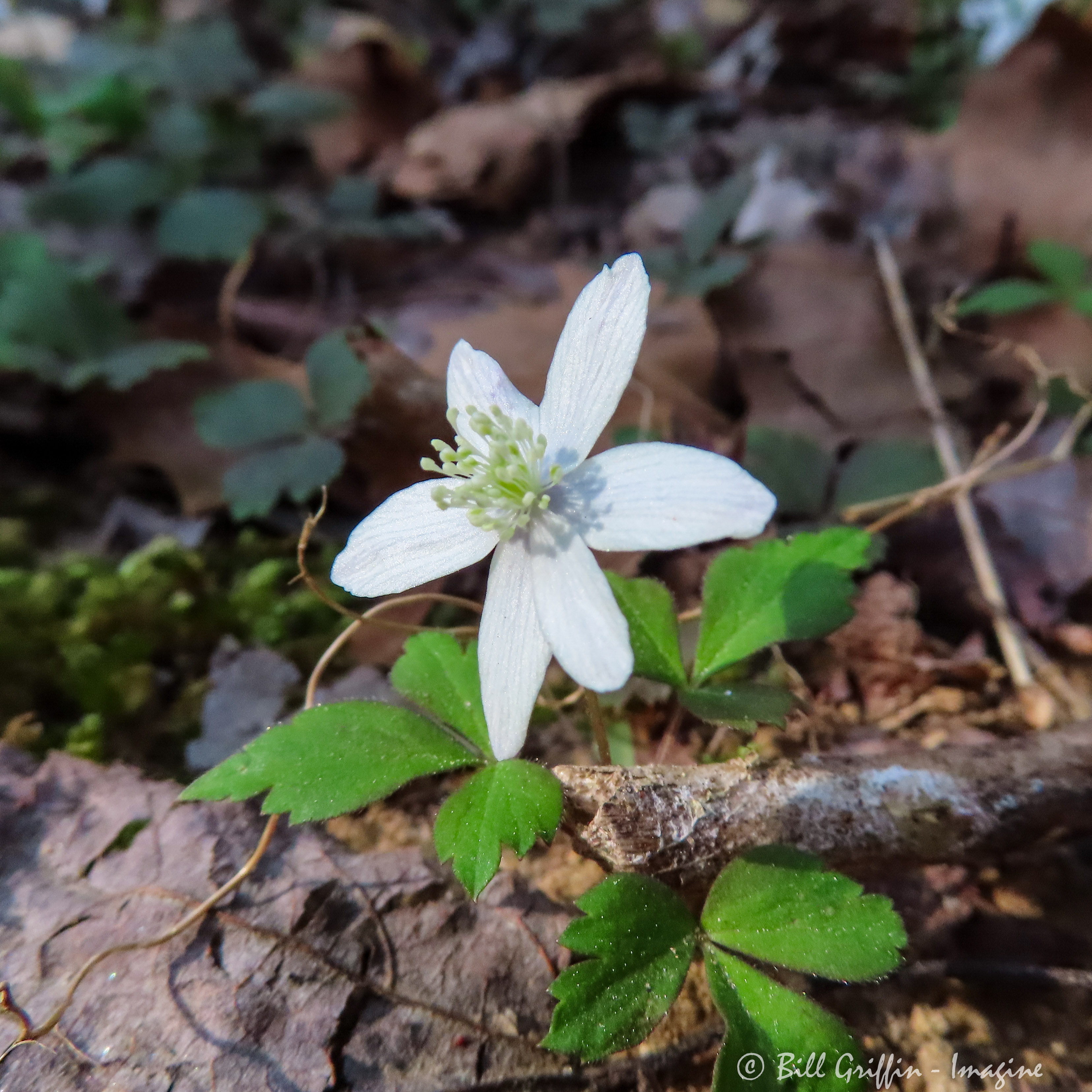
I am excited to see so many wood anemone blooming this April. A galaxy where I noticed only a few lonely stars last year. Joyful in the discovery, excited to share – let those feelings speak their name, Gratitude. And let gratitude grow into the love that inspires to me to hold all living things safe and sacred, this great family of life with which I share our planet.
— Bill
.
.
❀ ✿ ✾ ❁ ❀
.
We Visit the Tomales Point Trailhead
as Congress Continues to Threaten the Sale of Federal Land
.
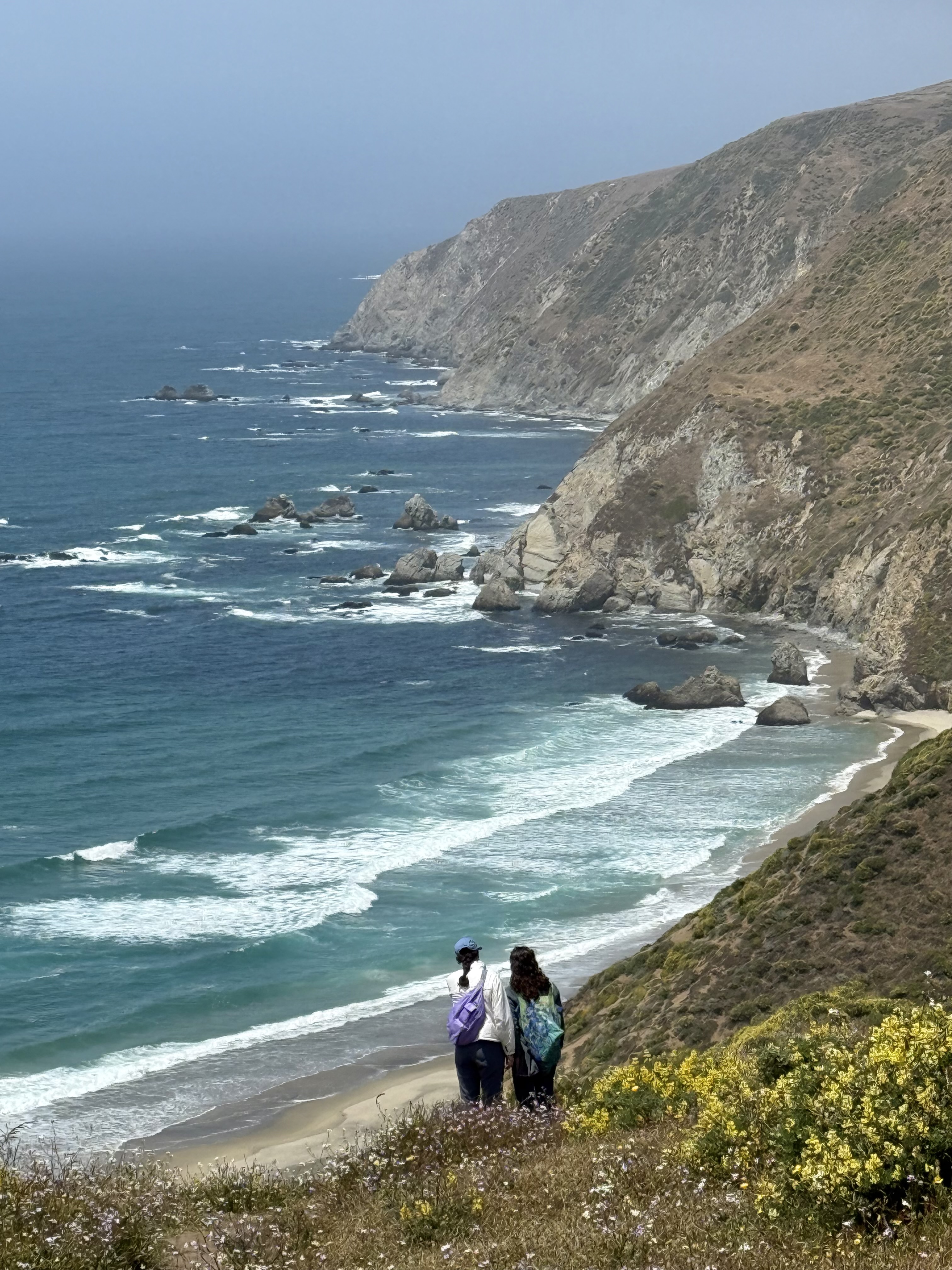
My daughters and I park beneath a canopy of old trees,
a windbreak when this land was a working dairy ranch.
Beyond the once-whitewashed barn, bunkhouses,
and sheds, the trail leads us onto sand
winding through lemon-hued lupines
so tall they sway above our heads.
.
We ooh and aah at the vast exuberance—
California poppies, thistles with lush purple fringe,
and, after a gentle climb, we look west,
catch sight
of the Pacific’s immense blue, its rippled light,
a spectacular cinematic sky. To the east,
gold and green meadows rise.
.
We walk across the peninsula’s clavicle,
its tender ridge dips into hollows,
monarchs flutter, tend to blooms.
.
I follow the lift of my girl’s arm
pointing to the summer-saturated hills.
Grazing tule elk, once thought extinct,
somehow still here, keep their distance,
raise their massive heads.
.
A Cooper’s Hawk circles the grassland.
Far below, birds we can’t identify glide
in formation just beyond the ocean’s reach.
Trills and whistles fill the scented air—
faintly honeysuckle, intoxicating, wild.
.
My younger daughter notices tiny orange petals—
scarlet pimpernel clings to the path’s edge, firmly rooted,
part of the shoreline’s crown.
.
As the land bends, we pause
high above a cove, a stretch of surf-ruffled beach
dotted with rock—scan for sea-lions, listen
for their barks before we move on—
the bluff too fragile to descend.
.
Diana Dinverno
.
[photo by Diana Dinverno]
.
✿
.
In the Spring of 2025, my daughters and I visited the Point Reyes National Shoreline and walked the Tomales Point Trail, owned and managed on our behalf by the U.S. government. It is one of the most wondrous and beauty-filled places I’ve seen. Leading up to the visit, we’d heard reports of proposals in the “One Big Beautiful Bill Act” to sell 2-3 million acres of public lands—and authorize the sale of many more. It was heartbreaking to think this public place, available to anyone to explore, could be sold to the highest private bidder for its stunning ocean views. Due to immense public opposition, the provisions were removed from the bill, but in the face of continued pressure by some members of Congress and our current Administration’s quiet dismantling of the U.S. Forest Service, our National Parks, with their still-wild places, remain at risk.
.
Although I’ve spent most of my life in the Midwest, I currently live in Texas, trying to learn the names of trees, flowers, and birds.
— Diana
.
❀ ✿ ✾ ❁ ❀
.
Calling the Owl
Audubon Christmas Bird Count,
Oakland County, MI, 1995
.
This time the owl eludes us
where we stand, trying to call him in
with his own voice
.
which we’ve captured on tape
to release to the predawn woods.
Press a button. The air flutters,
rushing from our black box
.
what is hidden from us—
.
wing-like quaverings—
.
soft bursts of song.
If light mutes him, shadows offer hope,
and we listen so intently into them
the snowy meadow
suddenly seems wider, brighter
with news from beyond its perimeter.
Don’t lift, I almost pray,
.
don’t disappear.
Day will break soon enough.
Let us hear your faint vibrato and absorb
what is invisible, wild and nearly gone.
Mist thickens the silence, promises
patience, echo, sound not sight.
I will let that fluty tremolo find,
fill me, give voice
to emptiness. I hold my breath to sustain
the long vowel of night.
.
Terry Bohnhorst Blackhawk
first appeared in Yankee (Jean Burden, editor); collected in body & field (Michigan State U. Press, 1999) and the chapbook of bird poems, The Whisk & Whir of Wings (Ridegway Press, 2015). Margaret Gibson included it in Waking Up to the Earth: Connecticut Poets in a Time of Global Climate Crisis (Grayson Books, 2021), an anthology she produced as CT Poet Laureate.
.
✿
.
This is one of my earlier poems, written from my love of birds and birding — a love that Jan Booth introduced to me early in our friendship which goes back over 55 years (!) to our days as first-year teachers in Detroit.
— Terry
.
❀ ✿ ✾ ❁ ❀
.
M. Wright Fishing at Lake Jordan
(3/27/05)
.
I sit, wait,
watch him
cast his long line—
orange cork breaks water,
shatters oak trees. Mirror images
shift, shimmy, merge in symmetrical circles
in water, murky gray
like the slate-blue sky that slumps to meet it.
.
A red-tailed hawk sprawls on evening air,
hovers overhead, its wings slice
fast-approaching night.
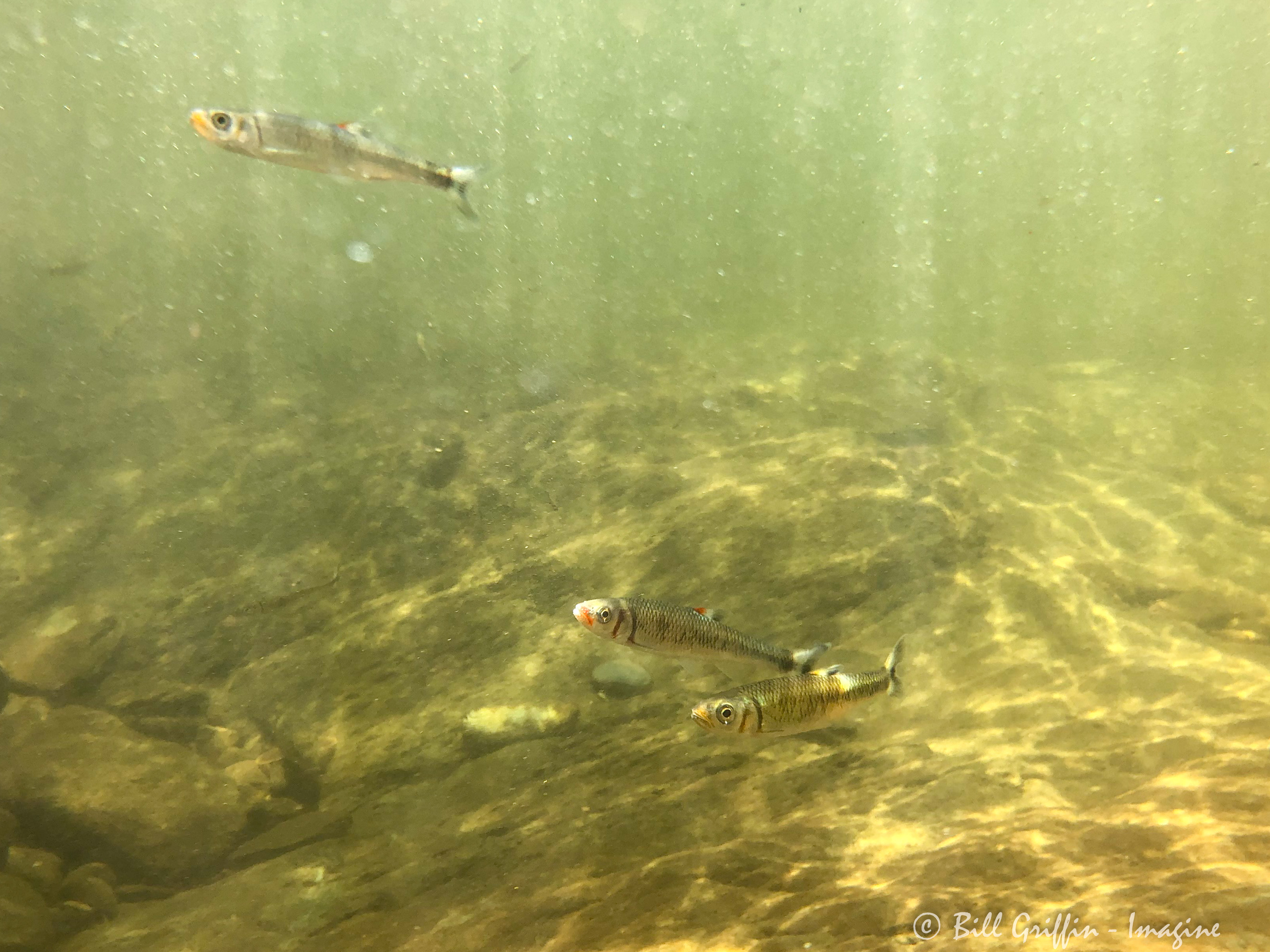
A crappie, jerked to the surface,
fights against the line,
treads gelatinous green moss
with its silver head
before breaking free
I pray like Jonah.
Pray for two fish to feed the multitude.
.
To the evensong of crickets,
twilight weeps a misty rain
for me embraced by cold
as the man in gray dungarees
becomes his own shadow,
a tree like willow oaks coddling him,
head lowered, shoulders
descending with darkness.
.
As the pale green bucket
rings out emptiness,
minnows are turned loose.
A spring moon clings to sky,
reels me into myself…
.
Gina M. Streaty
.
✾
.
I drafted this poem several years ago during a fishing outing with a friend. He tried to catch fish; I sat at a picnic table penning poems for hours. Nature always quickens my spirit. I am more connected to the natural world than I am people. Truth. Nature with its vibrant colors, textures, scents, sounds/music, secrets, mysteries, motion, moods, and magic is spectacular. It captivates me. My bucket list lengthens with each new nature screensaver on my computer. We are blessed to have earth’s infinite exquisiteness and the innumerable ways nature inspires, consoles, protects, heals, sustains, and forgives us. How can God not be the creator? Earth is our Eden, a spectacular, invaluable gift to us. We certainly don’t deserve it, but earth deserves our protection, our love, and bare minimum, our respect.
.
My poet friend Lenard D. Moore told me about your call for Earth Day themed poems. He and I share an intense love for the natural world and poetry.
— Gina
.
,
❀ ✿ ✾ ❁ ❀
.
Part-Way Down the Mountain Path
.
Late morning, the air clings
despite the sheltering trees.
High-stepping over weeds
and scattered gravel, we come to
a hollow rotting log, so long fallen
the soil has packed itself
against one side, a sort of ledge,
and there, a hen with three chicks.
Mama hen hops onto the ledge,
pirouettes slowly on scaly yellow
legs to watch her chicks scramble
and bumble and hop and
slide back and get up again.
She clucks and struts, goes
back around to the low side
of the log, hops over once more,
waits while her chicks
try out the game. We watch
for a long time – over and over
she jumps / waits / circles back –
until chickafterchickafterchick
they follow her over that log.
.
Elizabeth H. Lara
Silver Springs, Maryland
.
✿
.
I wrote this very plain and simple poem while at our farm in the mountains of San Cristobal, Dominican Republic.
— Liz
.
❀ ✿ ✾ ❁ ❀
.
A Prayer for the Mountains
.
Let these peaks have happened
.
The hawk-haunted knobs and hollers,
The blind coves dense as meditation,
The white rock-face, the laurel hells,
The terraced pasture ridge
With its broom sedge combed back by wind:
Let these have taken place, let them be place.
.
And where Harmon Fork piles unrushing
Against its tabled stones, let the gray trout
Idle below, its dim plectrum a shadow
That marks the stone’s clear shadow.
.
In the slow glade where sunlight comes through
In circlets and moves from leaf to fallen leaf
Like a tribe of shining bees,
Let the milk-flecked fawn lie unseen, unseing.
.
Let me lie there too
And share the sleep
Of the cool ground’s mildest children.
.
Fred Chappell
from Spring Garden, © 1995 by Fred Chappell, Lousiana State University Press.
selected by Bill Griffin
.

.
❀ ✿ ✾ ❁ ❀
.
The more clearly we can focus our attention on the wonders and realities of the universe about us, the less taste we shall have for destruction.
– Rachel Carson (1907-1964)
.
Thank you for celebrating the month of April with International Earth Day (April 22) and National Poetry Month. Readers have selected poems that connect us to our planet and each other. If you have a poem that has rooted you to the earth and spread your branches into bright sky, please share! It can be a poem by your favorite writer, living or dead, a poem of your own, or both. We will continue sharing Earth poems as long as you send them.
.
Send a your poem(s) in the body of the email or as .DOC or .RTF to:
ecopoetry@griffinpoetry.com
.
Please include your comments or reaction to the poem. And publication acknowledgments if previously published.
.
Feel free to invite others to send their favorite Earth Day poems. Please refer them to this link for instructions: EARTH DAY EVERY DAY. Perhaps some day we will be able to say we live in the Age of Connection.
.
❁
.
Thank you for visiting Verse and Image: If you would like to receive an email each time a post appears, please SUBSCRIBE to Verse and Image using the button on the Home Page.
.
If you have a hard time finding the SUBSCRIBE button on this WordPress site, you can send me your email address and I will add you to the subscriber list. Send your request to
.
COMMENTS@GRIFFINPOETRY.COM
.
Thanks again for joining the conversation.
.
— Bill
.
❀ ✿ ✾ ❁ ❀
.

.








Always glad to hear from you, Brad. ---B