Feeds:
Posts
Comments

Posts Tagged ‘nature’

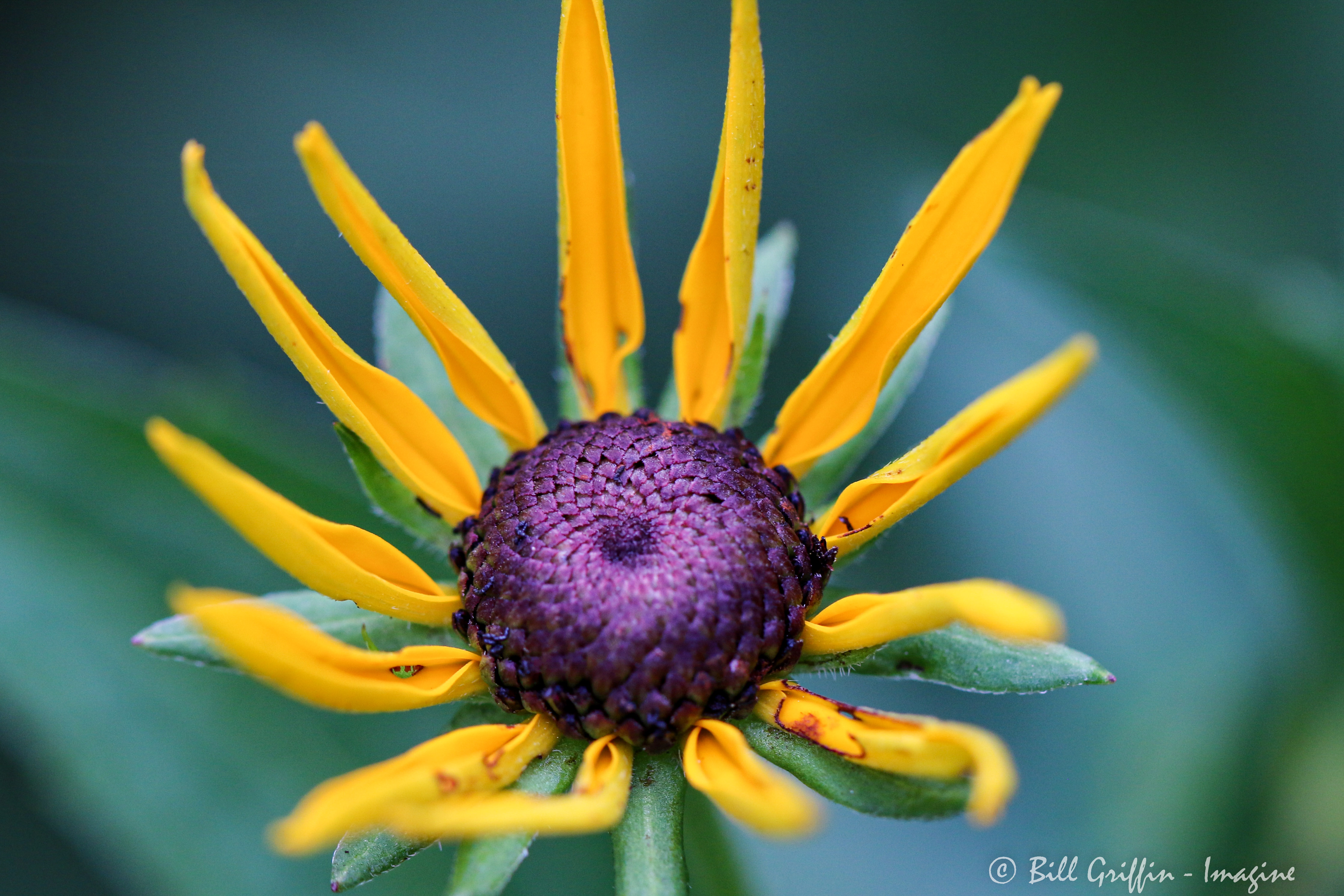
IMG_9629, flower
. .
[with two prose poems by Mark Cox]
. .
Poem at Forty I Could Not Finish Until I Turned Sixty
. .
The seas below our house pitch deep and soundless. Like sweat engrained in handrails, or the oil darkened edges of our dining room table, every shadow implies more shadow.
. .
Late summer has quieted the cicadas, damped their dwindling number with the lastness of their deaths. There is a chill to the air, no wind at all. My youngest son is twenty days old, feeble, burrowing in and out of awareness, still unsure his body isn’t trying to kill him. He cries to eat, he cries to sleep, he cries as his tiny gut rejects what all must go to waste.
. .
Last week, scientists discovered the bones of a humanoid who fell into a well shaft three million years ago. His wife said he’d turn up! That the world has no pity for the individual life, this is no secret to anyone, yet we just can’t get over it. I am here in the middle of a bed, in the middle of the night, in the middle of my life, my son nestled as if he were my own bones, as if we’ve both toppled forty years down into positions we’ll retain forever. There is no chiropractor for the soul.
. .
The museum of loss has at last opened its doors to me. Scholars cannot agree, the docents say, but almost certainly arms encircling the body was an omen of intimacy. Little is known of the fabled kiss; what remains of crude glyphs and mosaic shards indicate our elders once believed that souls were exchanged. One cannot, of course, touch anything in the museum of oss. One can only view what was once there. Nothing can be imagined and remain the same.
. .
Just what does this portend? There will always be a thermos next to the detonator, a pair of reading glasses weighting the sentence handed down without mercy. An airman in WWII, John Ciardi recounted how once from the blister all gunners sat in, he watched the bomber beside him burning. His counterpart waved up as that other plane went down.
. .
Each age has its designated bandwidth. Without warning, my son is twenty and in love. We are belted in. Splitting space. In his lap, he holds one hand with another, as if to keep its fingers from detaching, as if I’d helped him hurry to the car, and was driving to a hospital. I want my tree back the way it was, he whined, one autumn morning. He was four or so and knew even then what he’s now not able to share.
. .
Much is felt that resists being known. If there are seven billion human beings on earth, then every day is 19 million years of experience, just all at once. Somehow, I find this comforting, though by now you’d think we’d know what we are doing.
. .
Mark Cox
from Knowing, Press 53, Winston-Salem NC; © 2024
. .
. .
❦ ❦ ❦
. .
Better to resist the flux and believe that something stays. At last, he thinks, that is his answer. How still it all is, so utterly clear. Then one bright leaf lets go and changes everything.
++++++Knowing, Mark Cox
. .
It all begins with a question. No, that comes second, first there’s noticing, and noticing that something is different. Wait, even before the noticing there has to be paying attention. No, no, it all begins with this: just being there, moving through the world, part of all the changes.
. .
Joe just texted Cynthia and me a remarkable photo taken along a path we’ve walked together more than a few times. Looks like Bloodroot – nothing else has those freaky leaves emerging from the earth like fingers of the undead – but the petals are different. Instead of a circle of daisy-like petals (radial symmetry) they are bunched and doubled. And the center is almost naked as a belly button.
. .
A hybrid, we ask ourselves? But there are no other species in genus Sanguinaria with which to hybridize. A mutant, then. Sure enough, we discover online images of Bloodroot Multiplex with these peony-like blossoms, all of them propagated from a spontaneous mutation first discovered in Ohio years ago. Sterile flowers in which the stamens have reverted to petals. Evolution amok. Now we have the same mutation here in our backyard.
. .
. .
Plants that make flowers first appear in the fossil record 360 million years ago. Their flowers left the seeds exposed – they were naked (gymnosperms = conifers and gingko). Gymnosperms ruled for over 200 million years until the first flowering plants evolved forms that keep their seeds enclosed. But the outcome of the mutations that eventually resulted in plants with such protected seeds, angiosperms, was so successful that they have filled the earth with their variety and diversity. Every plant you see with flowers blooming this spring is an angiosperm (and even a lot whose flowers you don’t see, like grass for goodness sake).
. .
The enclosing ovary which cradles the ovule which will become the seed – what an excellent evolutionary idea! It most likely developed from mutations in fertile leaves which caused progressive curling and enfolding. All the parts of the flower – sepal, petal, stamen – are specialized modified leaves. But whenever we discover a Bloodroot flower with more than eight petals, we can assume that some of the extra petals are stamens which have turned back the evolutionary clock to become petals again.
. .
Is there anything we can hold on to that stays, fixed and static? Is it even possible to imagine something that never changes? Do I even really know what I think I know?
. .
. .
There is only one thing that each and every one of us knows. Mark Cox reminds us what it is in Knowing – it’s something no one likes to talk about, but something Mark’s poetry is able to face and say in a hundred ways until we readers become more than willing to join the conversation. We’ve known it all along, maybe at times we’ve even braced for the brief plunge toward otherness, but in these prose poems we have a guide and a friend who is just as afraid as we are but braver about sharing his fear.
. .
Does a prose poem occupy some evolutionary niche between verse and narrative? Forget its phenotype: brevity, blockiness, absent linebreaks. What’s down deeper in its DNA? It seems to carry all the genes of its poetry forebears – language and imagery, rhythm and music, even internal rhyme – but it is its own genus. Unlike a story, it has no beginning, middle, and end – it is all middle. Crisis and denouement might embrace each other in the same line. (And can we even call them lines when they are all one? Sort of like the question how many grooves there are  on a 33 ⅓ rpm LP.) In the poem, everything is happening, but how is it happening? Oh wait, as I read the poem everything is happening in me.
. .
And what happens in me over and over as I read these poems, as it dawns on me that the one thing we all know, each and every one of us, is that we will die, is this: I look up from the page and talk to myself. I query, I wonder, I argue, I confess. I pick up the threads of so many internal conversations left dangling because they were difficult, or scary, or just pushed out of the present by quotidian distractions. I’m not saying that by reading a book by Mark Cox titled Knowing I have gained or been granted my own cosmic knowing. But I have been reminded that I want to.
 . 
. .
❦ ❦ ❦
. .
Music Box
++ For Ralph Angel
. .
Everything’s just peachy, comes the world report: all clear. We are not pirouetting on the tip of time’s scalpel; we are not screwing deeper into the ground’s veneer. It is just the fleeting dance we do until the delicate box closes, having learned now to bow before hurting ourselves.
. .
Today is Thursday once again and the man next door is off to get his mail. He will wander back reading, as is his wont to do, his wizened leashed dachshund dog sniffing the leaves. The breeze passes over our shrubs and still they stand. A wary sparrow peers from them be we shouldn’t call it hiding.
. .
Yes, we have learned how to brace for the brief plunge toward otherness. We have learned to keep our eyes open to the dark, even if it doesn’t matter. We see most vividly what cannot be seen, and this is always the case.
. .
In the caves of our past, flames flickered on the rough walls. Fear grew there beyond reason and all sense of proportion. Our shadows have always been bigger than we are, the house lights shining up as they do, not down.
. .
It would make sense to be offered a tune now. Something simple and genuine, a tale of longing fulfilled. Something to do with a childhood nightlight, a mother’s cool palm. Whatever it is, it will have to be a memory wound long ago.
. .
Such a blessing might be broadcast from just about anywhere. We receive it on this bureau with no clue wherefrom it issues, which ancient satellite or lofty transmission tower. On and off like a warning beacon, the message beams. Once all is said, one has no choice but to choose. Call it grace, call it wonder, just, as they say, keep it calling.
. .
Mark Cox
from Knowing, Press 53, Winston-Salem NC; © 2024
Music Box first appeared in The Connecticut River Review
. .
❦ ❦ ❦
. .
Mark Cox is chair of the Department of Creative Writing at University of North Carolina, Wilmington. He also teaches in the Vermont College of Fine Arts MFA Program. His six previous books include Sorrow Bread: Poems 1984-2015 (2017) and Readiness (2018). Read more about and purchase Knowing at Press 53 HERE
. .. .
 . 
❦ ❦ ❦
. .
IMG_0768, tree

Read Full Post »

 . 
[ with 4 poems by Lori Powell]
 . 
Wings
 . 
Not one bird but two,
black bead eyes staring,
feet curled into question marks.
No one but two
as if they’d made the trip together,
flying deluded to batter the glass
they believed was air, trees, clouds –
a whole landscape of death.
 . 
“There is the trash can,” I say
rolling the bodies
onto the white paper sack.
But my son insists on burial
there, in the parking lot
we push the red clay over them,
under a scrawny tree, itself barely alive.
 . 
Are you disillusioned now
small birds, wiser
in red clay than thin air?
 . 
I have my own
pact with illusion
a daily flight into the glass
my own small birds
stunned, not yet dead,
battering the spot
that might yield.
 . 
I will not bury you small birds,
my one chance at wings.
 . 
Lori Powell
from Truth and Lies, Black Buzzard Press, © 2000
 . 
❦ ❦ ❦
 . 
February 24, first naturalist hike of the season. I begin by telling everyone to look close, real, real close – any flowers we find blooming are likely to be tiny. (Although before we embark on the trail we stand for a minute beneath the huge Acer rubrum near the recreation center, a jillion brilliant flowers over our heads.) The pussytoes and star chickweed won’t be visible for another week or two, but we do discover one Virginia heartleaf with little purple buds just opening their mouths. And then there’s hepatica and trout lily.
 . 
Depending on which woods you walk in, one of these two is likely to be the first native flower to bloom. How do they know when it’s time? Those trees towering over them, bathed in lengthening daylight, can use the calendar to decide when to leaf out (although North American trees are surprisingly sensitive to soil temperature as well). What triggers the tiny plants of the understory to flower?
 . 
It’s a critical question because of one critical concept: spring light window. Wildflowers of temperate forests need to do most or even all of their growing before tree leafbuds burst and the canopy closes. We can see this on our walk today in the local orchid species – they make new leaves in late fall, dark green to absorb weak winter sunlight beneath bare trees, and by the time they bloom in summer their leaves will be gone. Hepatica keeps its old purpled leaves all winter, perhaps for the same reason, and will make new green after flowers fade. But fresh trout lily leaves appear only days before the yellow blossoms spring up.
 . 
Here are my observations: a little clump of hepatica may bloom here and there beginning in December if we have a string of warm days. Trout lily,though, is synchronized – see one leaf and you know within days you will see it everywhere, all blooming at once. Hepatica must be more sensitive to soil temperature and trout lily less so, needing a full spring warming to trigger. Or could trout lily even somehow sense daylight beneath those layers of brown leaves?
 . 
Phenology is the term for this study of cyclical biological phenomena: flowering, leaves, migration, nesting, insect hatching . . . . As the climate changes, “phenological mismatch” is dire – flowers may open when no pollinators are available. And if spring warming causes trees to leaf out earlier but trout lily can’t adapt, that critical spring light window may dim too soon for the little mottled fish-scale leaves to store enough root energy for next spring.
 . 
See this article in NATURE for a deeper discussion of forest and wildflower phenology; comparison of North America, Europe, and Asia; and exploration of terms like FFD (first flower date), LOD (leaf out date), Spring Light Window, and Phenological Escape.
 . 
 . 
❦ ❦ ❦
 . 
Without Teeth
 . 
Instead of striding fearless out of the sea
you’ve become the soft creature inside the shell.
The thing you wish you’d said
shouts in your ear all night long
then lies down
with the thing you wish you hadn’t done
and begets children.
Still you believe in hours without teeth,
hours when you can say,
“That’s not my blood seeping into the sand.”
Hope is ground from your bones.
Hope is the shell that winds you
tighter inside its coils.
 . 
 . 
The Origin of Snow
 . 
When I see a black dog in the snow
I stop wondering if you love me.
All the world’s wet places
have brimmed into flower at once,
as if difficult things
could happen this simply
dog in snow, black on white,
and my thoughts come home
like children with wet feet,
leaving puddles everywhere.
 . 
Lori Powell
from Truth and Lies, Black Buzzard Press, © 2000
 . 
❦ ❦ ❦
 . 
How tall is that stack of unread books beside your bed, on the corner of your desk? Has your homeowner’s insurance raised your premium because of the chance of it tipping over onto your head? Has your home’s foundation shifted from the weight? At great personal risk, I’ve snaked a book from a lower stratum in one of my piles before its carbon could be crystallized to diamond. And discovered it’s layered with gems.
 . 
Lori Powell lives on the coast of Maine, where she teaches English to immigrants and refugees.  Her first poetry collection, Truth and Lies (Black Buzzard Press, Visions International) confirms Jean Cocteau: “The poet is a liar who always speaks the truth.” These poems are condensed, crystallized, sharp enough to cut. The poet’s images, at first elusive, gradually blossom and bloom the longer I contemplate. And then, mirabile dictu, the truth on the page no longer belongs to the writer but belongs to me. A window opens and light enters.
 . 
 . 
Truth and Lies is Volume 14 of the Black Buzzard Press Illustrated Chapbook Series, illustrations by Cathie France Nelson. Visit the Press and Visions International HERE.
 . 
 . 
❦ ❦ ❦
 . 
Like a Well of Sweet Water
 . 
That is your mailbox,
your name in black.
I want to leave you something
like a cat leaves her kill
at her master’s door.
I want to be useful
like a throat filled with song,
like a well of sweet water.
I am both cat and bird.
 . 
But what can I give?
My pockets are orphans,
my words have flown,
my head is filled
with useless music.
I would leave you something,
but not today.
The cat’s in the well
and the bird sings, sings.
 . 
Lori Powell
from Truth and Lies, Black Buzzard Press, © 2000
 . 
❦ ❦ ❦
 . 
 . 
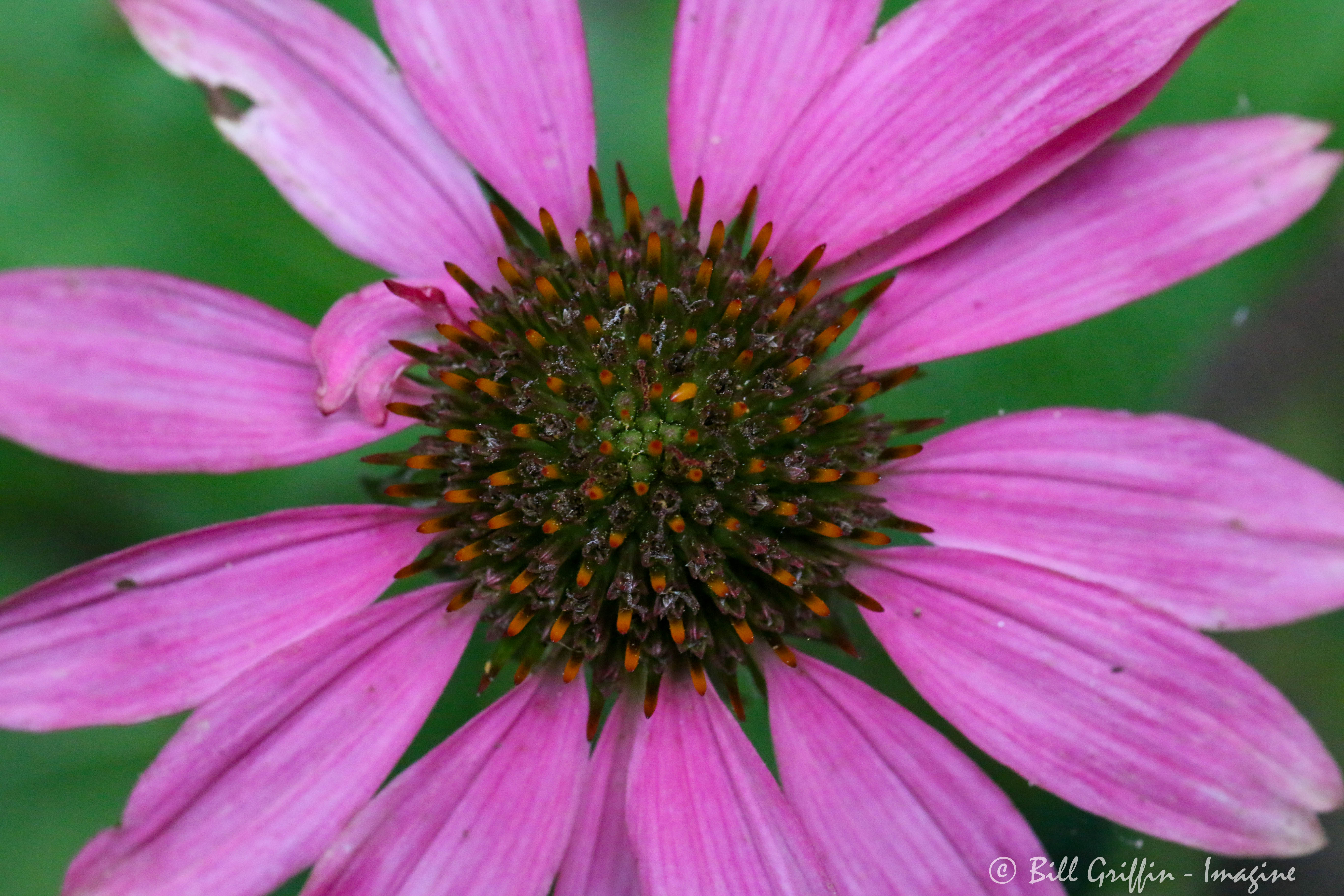
IMG_1827

Read Full Post »

 . 
[with 3 poems by Marilyn Hedgpeth]
 . 
The Lightness of Reprieve
 . 
Standing at our friend’s threshold,
pockets padded with tissues,
we steel ourselves for heartache,
prepare to embrace longer than usual,
voice our true affections,
stutter through farewells.
To our surprise, she rallies,
rises from her sick bed,
responds to the attention,
the memories, the bonds we share.
Glancing back as we leave,
we see her waving from the doorway.
 . 
Later, we knock at the door of a cousin
recovering from a cardiac procedure.
She claims to feel ten years younger.
We fill this bonus time with laughter
and celebrate the lightness of reprieve.
 . 
Arriving home, we cringe to find
ruffled remains of a red-bellied
woodpecker, feathery outline still visible
on our glass door.
We gather its hollow form,
place it tenderly, respectfully,
in a shallow hole, hallowing
the fragility of life
at our own doorstep.
 . 
Marilyn Hedgpeth
from The Lightness of Reprieve, Finishing Line Press, Georgetown, KY; © 2024
 . 
❦ ❦ ❦
 . 
Feb 20, early morning drive: slant light across the fields sets fire to every third tree along the highway. Dark orange, deep red, their crowns glow, a bright haze of flowers at the tips of a million twigs. Almost Spring, and the first maples are blooming.
 . 
Witch hazel has dropped her petals, spent; now maple lifts the baton. Here in the Southeastern USA, maple is one of the earliest trees to bloom. Blossom bud break is triggered in mid-February, primarily by lengthening daylight regardless of weather, weeks before the leaf buds swell and burst. Check the pollen burn in your eyes and nose – you’ll know when those flowers have opened.
 . 
As opposed to most garden flowers which present both pistil and stamen in the same bloom (namely bisexual), maple is, like many trees, monoecious – there are separate male flowers and female flowers on the same tree, even on the same stem. Male red maple flowers look like little ruby crowns of spiky stamens; the female flowers are a bouquet of drooping red pistils.
 . 
But it gets trickier. Some red maples bear only male flowers, while others bear only female (this separation termed dioecious). And individual trees can shift. One year a tree may be male, the next year half and half, the following year all female. The prevalence of Male vs. Female flowers doesn’t seem to be either a cause or an effect of the overall health of the tree. Why?! Why do they do this? What purpose does all this variability serve the tree or the community of red maples?
 . 
I don’t know but the tree knows. Perhaps it’s communicating with all its neighbor maples through its underground network of mycorrhizal fungus, collaborating to decide who’s going to make lots of pollen this year and who’ll make the seeds (and maples do make lots of those little winged seeds). Perhaps their network extends throughout the local woodland and into the next county. Acer rubrum is one of the most plentiful trees east of the Mississippi, from Newfoundland to Florida. Perhaps it creates one vast collective knowing, guiding the roots, the bole, the twigs that will bud into flowers, male or female. Perhaps.
 . 
February into March, every morning the scarlet halo expands. Every day we’re closer to Spring. Every afternoon more sneezes and water from my eyes. Glorious! I trust those maple trees utterly – they certainly know what they’re doing.
 . 
 . 
❦ ❦ ❦
 . 
Mirror Images
 . 
Sliding into a booth,
leather cool to my legs,
we take menus in hand;
we glance around,
tempted by lavish meals
rising before other patrons.
An adjacent mirrored wall
makes the tavern seem
twice its size, twice as lively.
 . 
Across smooth Formica,
you sip ice water,
watching as your doppleganger
tucks a wayward wisp of hair
into her head-scarf.
Maybe that’s an alternate universe,
you say, and this table,
our point of intersection.
Maybe while we grow older, 
grayer, wiser perhaps, 
they grow younger
healthier, more vital and able.
 . 
We toast to what’s possible,
to friendship, regardless.
Condensation drips from our tumblers,
while frost still clings to those
of our glassy companions.
 . 
Marilyn Hedgpeth
from The Lightness of Reprieve, Finishing Line Press, Georgetown, KY; © 2024
 . 
❦ ❦ ❦
 . 
There is, after all, no reprieve. This morning as we’re talking to the palliative care nurse who is  interviewing my mother, my father asks, “Does everyone end up in Hospice?” Or did he say, “Will I end up in Hospice?” It’s a fair question, even for someone not 97 years old. Every year that passes, Dad announces he’s planning to live five more years. One may hope, but perhaps one shouldn’t plan on it.
 . 
The title poem in this first collection by Marilyn Hedgpeth, The Lightness of Reprieve, confronts this reality. Marilyn’s friend will die of cancer very soon and yet the two of them are surprised to share a vibrant afternoon together; Marilyn’s cousin might have died from her heart condition but now feels reborn; Marilyn returns home to confront the death of a beautiful bird on her own doorstep. Other poems throughout the book touch upon our mortality from many different angles, sometimes head on, sometimes in metaphor and with the lightest touch of benediction. I sense a deep abiding theme of sharing. We rarely share with each other this common knowledge that our lives will most definitely end; what we do share is stories and a gift of ripe strawberries; imagination and laughter; silent moments of togetherness; prayer.
 . 
And in sharing don’t we experience reprieve? These are not poems of grief for time lost. These are poems of celebration for time shared. Marilyn has no doubt sat with the bereaved many, many times in her years as a minister, but this is not a book of counsel. These are simply poems of our simple human commonality. I step into the poems and accept my own sadness – sadness lifts as it is borne by many other shoulders. The yoke is not removed from me, but for a few steps along this journey I might almost imagine its lightness.
 . 
 
Marilyn Hedgpeth recently retired as a Presbyterian (USA) Minister of Word and Sacrament after 24 years of “preaching / teaching / leading / loving life.” The Lightness of Reprieve is available from Finishing Line Press HERE
 . 
 . 
❦ ❦ ❦
 . 
Last Leaf
(with a nod to O. Henry)
 . 
One Final Rusty Leaf
clings to the dogwood tree
outside our bedroom window.
Resisting the wind’s wrestling,
it beckons me back to a time
when I painted a single leaf
on our patio wall:
my Hail Mary attempt
to prolong the life of my father
as modern medicine failed,
as the leaves fell.
 . 
Desperate to bring him hope;
venturing outside the boundaries
of my own knowledge and faith,
I scheduled an appointment
with a local healer, Chief Two Trees.
But when travel became impossible,
I resorted to that lone leaf
and a no holds barred prayer.
 . 
After he died, I continued to paint,
self-medicating stroke by stroke,
adding to my winter wall-garden:
fern, forget-me-not, bleeding heart,
wisteria, live-for-ever;
each new leaf, petal, blossom,
balm to my wound.
 . 
Marilyn Hedgpeth
from The Lightness of Reprieve, Finishing Line Press, Georgetown, KY; © 2024
 . 
❦ ❦ ❦
 . 
 . 
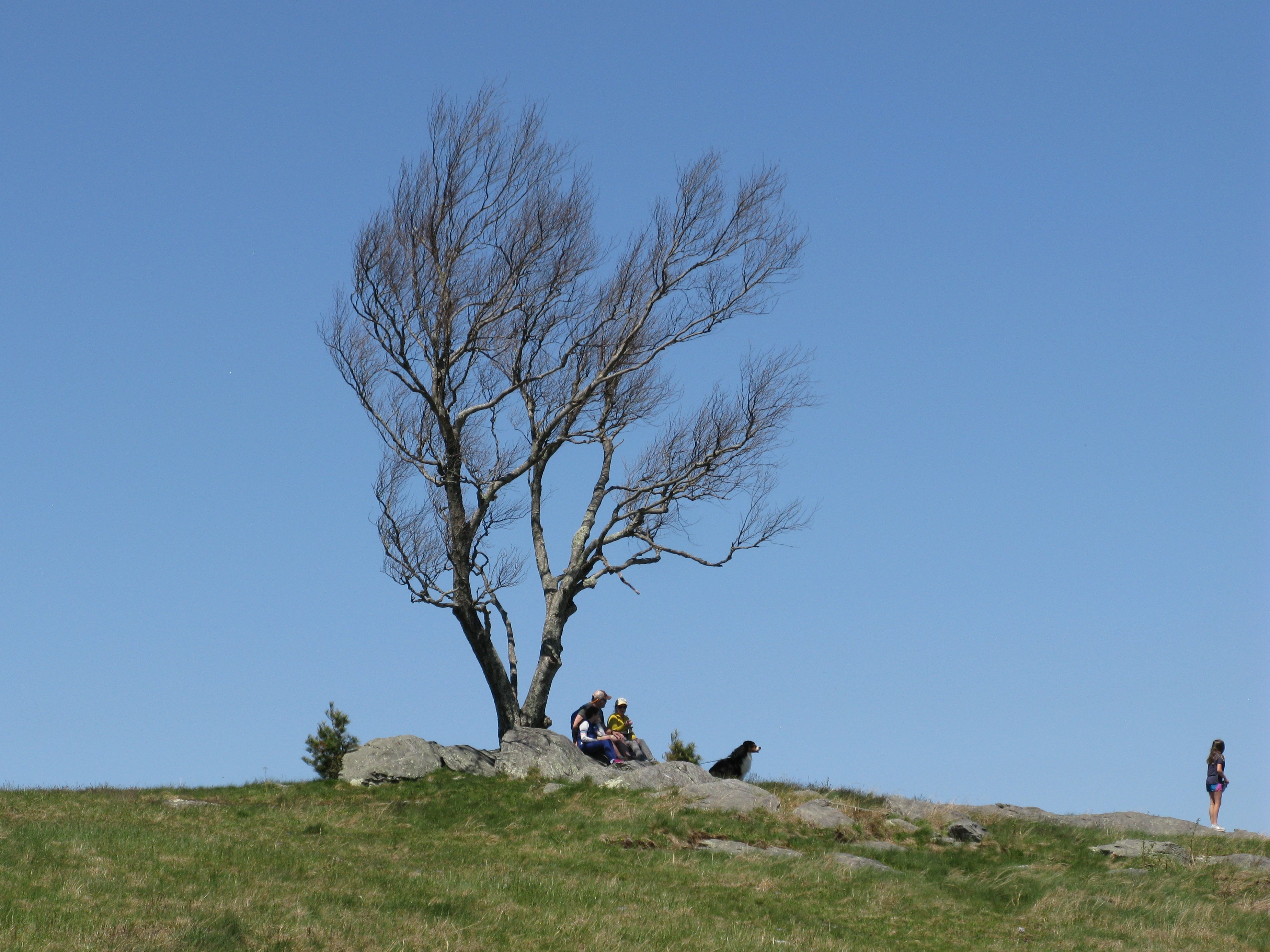
2020-06-11a Doughton Park Tree

Read Full Post »

« Newer Posts - Older Posts »