Feeds:
Posts
Comments

Posts Tagged ‘nature photography’

 . 
[with 3 poems by Frank X Walker]
 . 
Grove
 . 
This was the first time
we really look at each other
and not be able to tell
who master the cruelest
who sorrow the deepest
who ground been the hardest to hoe.
 . 
We was lined up like oaks in the yard
standing with our chins up,
proud chests out, shoulders back,
and already nervous stomachs in.
 . 
We was a grove wanting to be a forest,
ready to see what kind of wood we made from.
 . 
The only thing taller or straighter
than us be the boards
holding up the barracks at our backs,
 . 
though most our feets feel pigeon-toed
and powerful sore
from marching back and forth, every day,
for what seem like more miles
than we walked to get here.
 . 
It take more than pride to stand still
‘neath these lil’ hats not made for shade.
 . 
Soldiering ain’t easy, but it sure beats
the bloody leaves off a bondage.
 . 
Frank X Walker
from Load in Nine Times, Liveright Publishing Corporation (W. W.Norton), New York, NY; © 2024
[based on a photo taken at Camp Nelson, Kentucky, of troops standing at attention outside the Colored Soldiers Barrack]
 . 
❦ ❦ ❦
 . 
1861      One month after Confederate forces fire on Fort Sumter, South Carolina, Kentucky’s Governor issues a formal proclamation of neutrality, but he retreats from any denunciation of slavery, which he believes is not a “moral, social, or political evil.” Four months later Kentucky decides to end neutrality and enters the Civil War on the side of the Union; 200 delegates vote to secede from the rest of the state and form a separate Confederate Kentucky with Bowling Green as capital.
 . 
1862      Abraham Lincoln’s EMANCIPATION PROCLAMATION declares freedom for all enslaved persons in states which are in rebellion against the United States. This leaves slaves in Union-aligned Kentucky still the property of their masters, however.
 . 
1864      The U.S. government’s progress towards making universal emancipation a war aim has caused support for the war and the government among White Kentuckians to dwindle. Military recruitment ebbs. On June 13, U.S. SPECIAL ORDER NO. 20 allows enslaved persons to enlist in the U.S. Army without their owner’s consent and be granted their freedom, the first pathway to legal emancipation in Kentucky. That summer and fall, 14,000 Black men enlist.
 . 
Only Black men who are fit for military duty are emancipated, however. If they are ineligible, they are returned to enslavement, and there is no offer of freedom for their families. Camp Nelson, Kentucky’s largest recruitment and training base, becomes a haven for refugees from slavery, whether escaping from Tennessee, Virginia, and North Carolina or arriving with their newly enlisted Kentucky husbands or fathers. Freedom seekers from the South are considered “contraband of war” and granted freedom, but slaves of White Kentuckians remain legal property of their masters with no formal protections.
 . 
On November 22, 1864, in the midst of a winter storm, Brigadier General Speed S. Frye orders all refugees surrounding Camp Nelson expelled and their shacks destroyed. Of 400 people immediately displaced without shelter or recourse, at least 102 die of exposure and starvation. Frye’s order is quickly rescinded by his superiors in Kentucky but headlines cause an outcry across the States. On December 15, Adjutant General L. Thomas issues ORDERS NO. 29 to require that “all camps enlisting Negroes provide suitable housing and provisions for their families.”
 . 
Within months, the War Department creates the Home for Refugees at Camp Nelson. On March 3, 1865, the US Congress passes laws to emancipate the wives and children of United States Colored Troops soldiers.
 . 
Camp Nelson, Kentucky, is now a National Monument, and includes a memorial obelisk to honor the 102 African Americans who perished in The Expulsion.
 . 
 . 
❦ ❦ ❦
 . 
We Will Prove Ourselves Men
++ Sewn on the regimental flag
++ of the 127th U.S. Colored Troops
 . 
I don’t look the stars and stripes
nor the eagle for mustard
 . 
like the white officers
and some of my free brothers do.
 . 
I think on the slender fingers
that stitched our proud colors
 . 
snapping in the wind,
the same steady hands
 . 
that last held me close,
and pray they hold me again.
 . 
That’s why I’m willing
to trade bullets in a cloud.
 . 
Some confuse our bravery and courage
with our love for our women,
 . 
but many of us just eyeing that flag
and trying our best to get back home.
 . 
Frank X Walker
from Load in Nine Times, Liveright Publishing Corporation (W. W.Norton), New York, NY; © 2024
 . 
❦ ❦ ❦
 . 
My Grandpop died when he was 67 and I was 5. Our families lived hundreds of miles apart – we in New York, then Tennessee, he and Nana in North Carolina – so we visited only two or three times a year. I can’t recall the sound of his voice, I’m not sure if he ever hugged me, but I know a story about him and me that I have retold myself so many times that it is tangibly real. Totally, unquestioningly, personally real:
 . 
We are in the dining room of his house that overlooks Bogue Sound. He, a surgeon, is holding my fingers in his. In the pressure of his fingers I am aware of the bones beneath my skin, and he is teaching me: Carpals, Metacarpals, Phalanges.
 . 
I have many photos of Grandpop, his enigmatic smile. I have copies of articles he published, things he crafted with his hands, an oil painting. I have photos he took of me, even an old 35 mm. silent movie. But the most real, the most present, is this story I keep and hold. Perhaps the artifacts helped me create the story. Perhaps hearing the story as it was told to me by Nana and Mom. However the story comes into being, into life, it brings reality with it.
 . 
So it is with Frank X Walker and his poems in Load in Nine Times. Frank was already deeply involved in resurrecting and creating the stories of Black Civil War soldiers in Kentucky and their families, using scant artifacts to create short biographies and allow these men and women to live (for a project at Reckoning.com). Then he thought to ask the archivist to research a possible relative of his own. And the sky opened.
 . 
Frank’s dedication for the collection of some 100 poems reads thus: For my ancestors, Mary and Randal Edelen, 125th U.S. Colored Infantry and Elvira and Henry Clay Walker, 12th U.S. Colored Troops Heavy Artillery. These folks speak and are joined by dozens of others who lived and suffered and sometimes triumphed. Through poetry they have all come to life, along with the middle decades of 19th century Kentucky. Slave and slave owner, soldier and widow, parent of despair and parent of hope – Frank has honored them and exposed them, judged them and sometimes forgiven them, given them sharp tongues and sharp features and brought their years into sharp, sharp focus.
 . 
And our years as well. What did I know about Civil War Kentucky, USA? As soon as I laid down the book I had to know more. More! Frank educates with timelines and resources but his greatest gift is to enlighten me, in the sense of casting light into dark corners where I had never thought to look. When I discover online some of the photographs he must have used for his own inspiration, those slightly blurred faces now suddenly stand out to me – real men, real women. We each owe it to ourselves to continue to tell our stories and to listen to new ones. Somehow, in this harsh and enervating world, perhaps this is the way we will become more real to each other.
 . 
 . 
Read the excellent interview with Frank X Walker by Jacqueline Allen Trimble as she explores with him the creation of Load in Nine Times, in the Oct 19, 2024 edition of Salvation South.
 . 
 . 
❦ ❦ ❦
 . 
A Black Father Dreams a Son
++ Brig. Gen. Charles Young,
++ 9th U.S. Cavalry Regiment
 . 
It was twelve miles to Maysville and the Ohio River and another
ten to Ripley. A runaway could escape from Mays Lick,
at night, head north, follow the smell of the river and make
the entire distance and crossing by sunrise. A determine one,
on horseback, like Gabriel Young, could make it in half the time.
 . 
Ignoring racism at West Point was easier knowing
my father survived slavery. He joined the 5th and risked his life
so our people would know freedom. I risk mine to protect it.
 . 
If his sacrifice and commitment freed my body, my mother’s books
free my mind. Her skirt was my first classroom.
Every big and small thing I’ve done began at their feet.
 . 
Though born into slavery in Kentucky, I learned to play piano
and violin, speak French and german, before becoming a teacher,
before graduating from West Point, before a career in the military,
and public service.
 . 
Growing up in Ripley showed me what this country could be.
What my parents instilled in me, and Wilberforce proved it.
 . 
I am America’s promise, my mother’s song,
and the reason my father had every right to dream.
 . 
Frank X Walker
from Load in Nine Times, Liveright Publishing Corporation (W. W.Norton), New York, NY; © 2024
[Charles young, born in 1864 into slavery to Gabriel Young and Armenta Bruen in Mays Lick, Kentucy, was the first Black man to achieve the rank of colonel in the Unites States Army, and the highest ranking Black officer in the regular army until his death in 1922. In 2022, in recognition of his exemplary service and barriers he faced due to racism, he was posthumously promoted to brigadier general.]
[these addenda are taken from the Author’s notes]
 . 
❦ ❦ ❦
 . 
 . 
Read Full Post »

Thunderhead Sandstone outcrop below Ft. Harry Falls, GSMNP

 . 
[with poems about Geology . . . (say what?!)]
 . 
Erosion
 . 
Edges fall first,
silt grains cemented
under thousands of years
sloughed away by wind, rain,
footstep of dog,
sandstone alchemized beneath
weight of mountain
turns sand again
 . 
Subtle rubbing of days shapens us anew,
weathering, the
slowest song of change
 . 
No wonder we wake up some days
wondering at who we used to be.
No wonder we don’t always notice
as our outer edges strip away.
 . 
No wonder the children build castles
made of sand at water’s edge,
even though the castles fall.
 . 
They are practicing for
when they too will feel
what once seemed enduring
slip inside the rising tide.
 . 
Emilie Lygren
from What We Were Born For, Blue Light Press, San Francisco CA. © 2021. Reprinted by permission of the author.
 . 
❦ ❦ ❦
 . 
Geology never intended to trip us up. A mountain’s day is steady and measured, calm as the drip of water, languid as the North Pole’s precession that turns to aim the spinning globe at heaven. All night the mountain’s flow, her stretch, recumbent but restless; at first light she yawns and shudders, her turn and crouch and slow rise; then all morning’s long knotting and gathering to her full height; her relentless stride; a forceful journey, this full day’s labor into evening even as her form, still imposing, diminishes and she reclines.
 . 
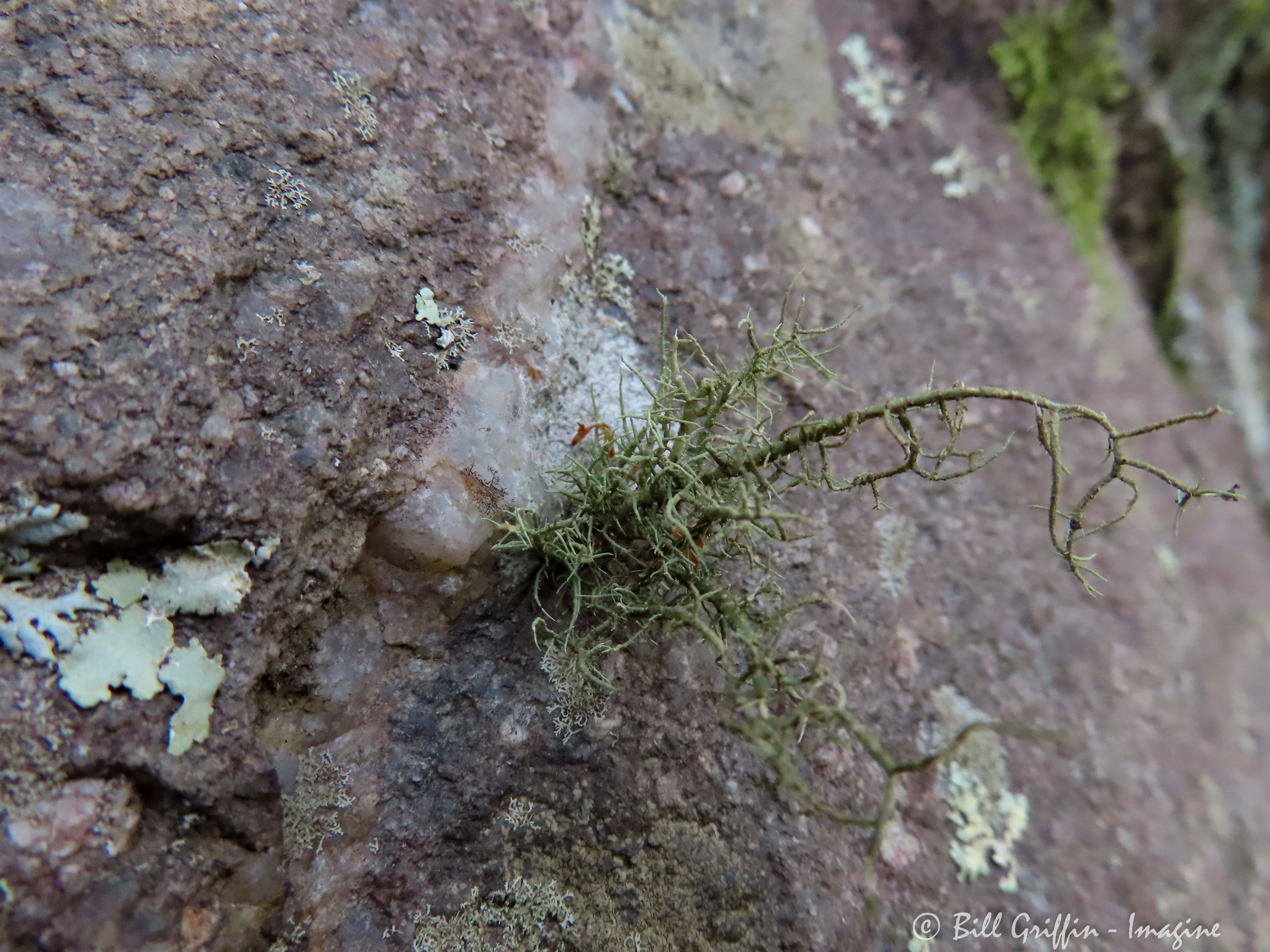
Did the mountain even feel the pinprick of water seeping and freezing in minute fissures at her neck? Perhaps a vague itch as lichens scratch to enlarge their circumference, little acid fingernails, a thimbleful of soil. Windborne seeds – would she notice such a light caress when one descends, then its rootlets, its swelling cambium and lignin? One and now another trunk emerges from the crevice, breathing, drinking sunlight, and here comes the day in mammal-time when gravity prevails. A crack, thunder without lightning, slabs and chunks release and roll downslope until they hold at a narrow rib where it crosses below the mountain’s shoulder. Bedrock settled into the new bed it has found.
 . 
Ten thousand human-years pass until you and I puff into view. We slow our pace to climb over and around. Here embedded in the footpath is a softer stratum that has been polished to ebony by a thousand boots. Here alongside the trail we greet the rounder edges and pitted face of earliest falls, sharper clefts and angles  from falls a mountain-day later. Water proving its strength. Lichens still hard at work. Wait a while and this path will open. Geology never intended to trip us up. She simply hopes that we will slow our frantic climbing. Pause here with her for a moment. Look, and simply see.
 . 

USGS map & quartzite vein in Elkmont (?) Sandstone GSMNP

 . 

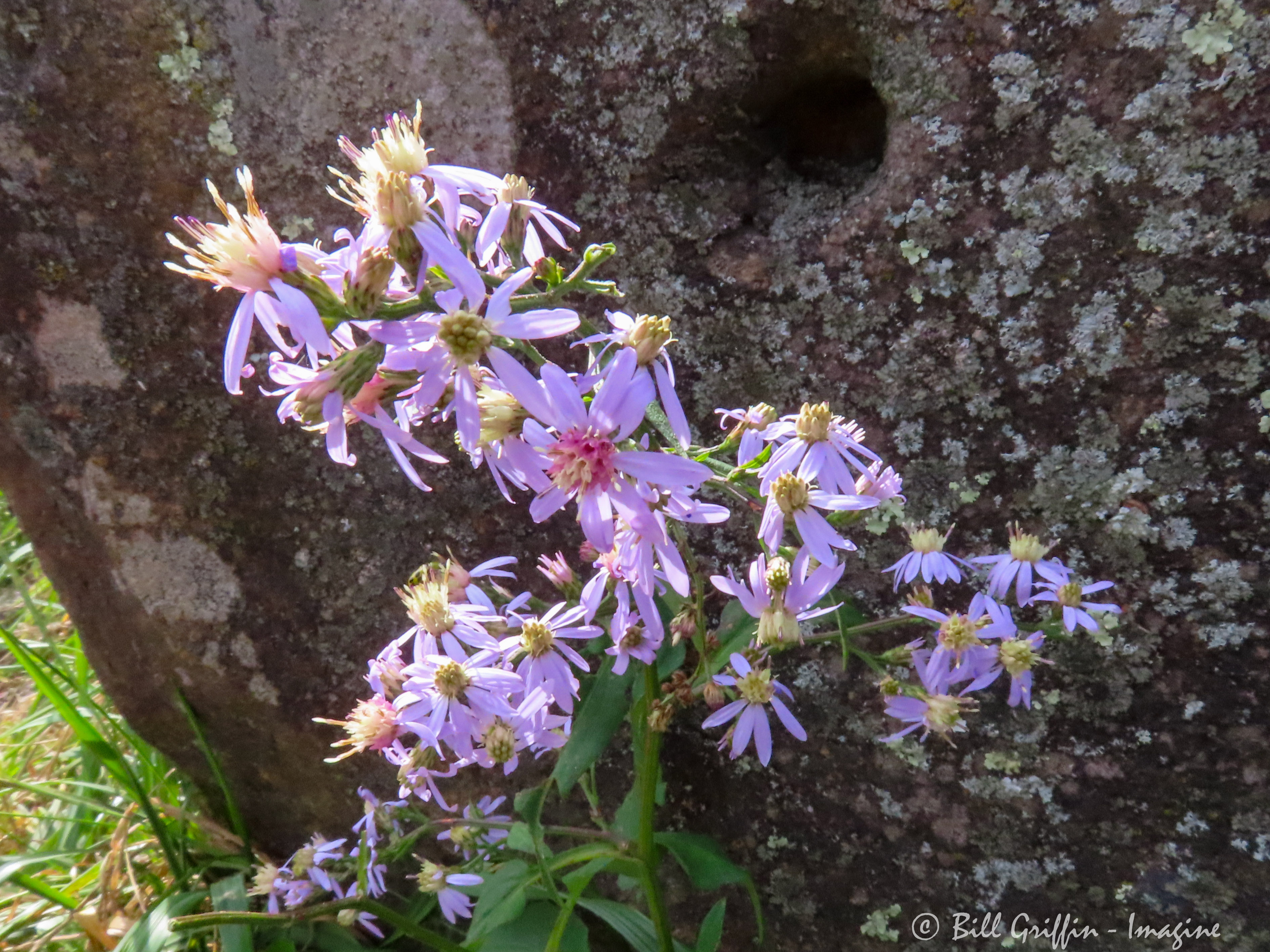
Common Blue Wood Aster & Thunderhead Sandstone GSMNP

 . 
❦ ❦ ❦
 . 
Anything the River Gives
 . 
Basalt, granite, tourmaline, the male wash
of off-white seed from an elderberry,
the fly’s-eye, pincushion nubbins yellow
balsamroot extrudes from hot spring soil,
confetti of eggshell on a shelf of stone.
Here’s a flotilla of beaver-peeled branches,
a cottonwood mile the shade of your skin.
Every day I bring some small offering
from my morning walk along the river:
something steel, blackened amber with rust,
an odd pin or busing shed by the train
or torqued loose from the track, a mashed penny,
the buddy bulge of snowmelt current.
I lie headlong on a bed of rocks,
dip my cheek in the shallows,
and see the water mid-channel three feet
above my eyes. Overhead the swallows
loop for hornets, stinkbugs, black flies and bees,
gone grass shows a snakeskin shed last summer.
The year’s first flowers are always yellow,
dogtooth violet dangling downcast ans small.
Here is fennel, witches’ broom and bunchgrass,
an ancient horseshoe nailed to a cottonwood
and halfway swallowed in it spunky flesh.
Here is an agate polished over years,
a few bones picked clean and gnawed by mice.
Her is every beautiful rock I’ve seen
in my life, here is my breath still singing
from a reedy flute, here the river
telling my blood your name without end.
Take the sky and wear it, take the moon’s skid
over waves, that monthly jewel.
If there are wounds in this world no love heals,
then the things I haul up – feather and bone,
tonnage of stone and the pale green trumpets
of stump lichens – are ounce by ounce
a weight to counterbalance your doubts.
In another month there won’t be room left
on the windowsills and cluttered shelves,
and still you’ll see me, standing before you,
presenting some husk or rusty souvenir,
anything the river gives, and I believe
you will love.
 . 
Robert Wrigley
from The Ecopoetry Anthology, edited by Ann Fisher-Wirth and Laura-Gray Street, Trinity University Press, San Antonio, TX. © 2020
 . 
❦ ❦ ❦
 . 
“Find yourself a stone, one you can pick up and carry,” our instructor tells us. “Then find me bedrock.” All weekend Elizabeth will be offering us something new every few minutes  – strange vocabulary, stranger stories in deep time, paths upward toward heath balds and downward into the past – but first she offers these two commands. Our substratum. We will build everything upon a stone from the Middle Prong of the Little River, edges knocked round, compressed bits of texture a hundred shades of gray (soon we’ll know to call those bits clasts); and ponderous gray stone rising beside the river, its layers, its planes and fissures (soon we’ll know which is bedding and which foliation). Here we begin our weekend course in the Smokies, 500 million years beneath our feet, asking how it all got here.
 . 
I’m taking my final elective offered by Great Smoky Mountains Institute at Tremont in their Southern Appalachian Naturalist Certification Program – Geology of the Smokies. This is the first time Linda has accompanied me to Tremont, so she’s taking her first course. We know from our readings that these are the most folded, tortured, elevated/eroded/re-elevated/re-eroded square miles in North America. We know that for the next 48 hours we’ll be continuously outdoors except a few hours to eat and sleep. From my previous nine courses, I know Elizabeth Davis as an excellent teacher, patient yet challenging. What we don’t yet fully know is just how truly challenging, physically and intellectually, this weekend is going to be. But here we are on Friday night and we should be getting a clue – Elizabeth is leading us on a hike into pitch darkness, across the shallows on a single-log bridge, and has turned us loose on an island to find our river stones.
 . 
Success. No one falls into the river.
 . 
Tomorrow morning we’ll be picking our way up through a pathless boulder field to a massive outcrop of Thunderhead Sandstone (its compressed sediment, clasts, recycled from the Grenville mountains built almost a billion years ago). We’ll spend the afternoon literally on hands and knees beneath laurel and rhododendron, climbing to a heath bald summit where some really cool rocks are exposed and where we’ll take samples of the low pH soil. Sunday morning we’ll hike a trail so hazardous that the Park won’t even include it on their maps, but along the way we’ll cross major and minor fault lines to discover their rocky transitions, investigate geology’s effect on plant communities, devise some crazy poems and songs about our findings, and end up at beautiful Spruce Flat Falls.
 . 
Late Sunday night, after driving five hours, Linda and I will pull into our driveway and our old bones will creak as we lug our gear back into the house in pitch darkness. At least we don’t have to cross a log bridge to make it to the kitchen door, but when we wake in the morning, stiff and aching, will Linda have a few choice cusswords for me after dragging her along on this adventure? Oh yeah, we’re sore, but only in body. What Linda does have for me is a list of books I need to order. And this proclamation: “You know, after this weekend I really love Geology!”
 . 

Nodding Ladies Tresses growing up through Anakeesta Slate GSMNP

 . 

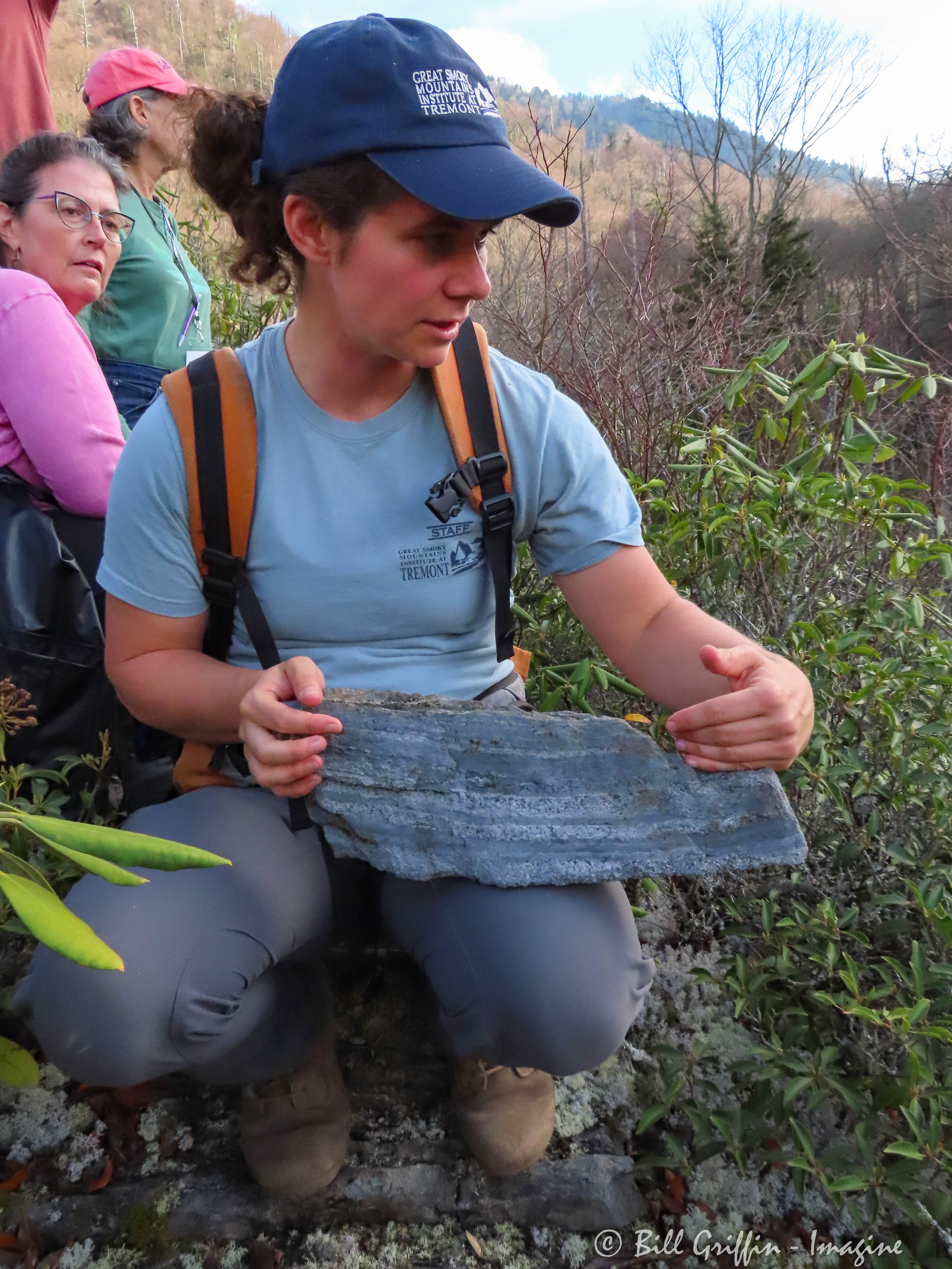
Elizabeth displays bedding vs cleavage at summit of heath bald near Chimney Tops GSMNP

 . 
❦ ❦ ❦
 . 
The End of the Age
 . 
With wash and ripple and with wave,
Slow moving up the long deserted sand,
The little moon went watching the white tide
Flood in and over, spread above the land,
Flood the low marshes, make a silver cover
Where the green sea-weed in a floating mist
Creeps under branch and over.
The wide water spreads, the night goes up the sky,
The era ends.
 . 
Tomorrow comes warm blood with a new race,
Warm hearts that ache for lovers and for friends,
And the pitiful grace
Of young defeated heads.
Tomorrow comes the sun, color and flush
And anguish. Now let the water wash
OUt of the evening sky the lingering reds,
And spread its coolness higher than the heart
Of every silver bush.
Night circles round the sky. The era ends.
 . 
 . 
Geology
 . 
“Look,” said God;
And with slow fingers
Drew away the mantle rock.
Man followed groping
To touch the flesh of his true mother;
And, standing in great valleys,
He saw the ages passing.
 . 
 . 
Fossil
 . 
I found a little ancient fern
Closed in a reddish shale concretion,
As neatly and ans charmingly shut in
As my grandmother’s face in a daguerreotype,
In a round apricot velvet case.
 . 
Janet Loxley Lewis (1899-1998)
from Poetry Magazine, No. 111, The Poetry Foundation. © June, 1920
 . 
❦ ❦ ❦
 . 
Emilie Lygren has published poems and anthologies and developed dozens of publications focused on outdoor science education. Her first collection of poems, What We Were Born For, was selected by the Young People’s Poet Laureate as the Poetry Foundation’s monthly book pick for February 2022.
 . 
Robert Wrigley has said that “poetry can have a redemptive function. It can look at the chaos you see and make a kind of sense of the smallest part of it.” His poems are concerned with rural Western landscapes and humankind’s place within the natural world.
 . 
Janet Loxley Lewis (1899-1998) wrote novels, stories, and librettos, but she considered poetry the superior form. Theodore Roethke describes her poetry as “marked by an absolute integrity of spirit and often by the finality in phrasing that can accompany such integrity.”
 . 
❦ ❦ ❦
 . 
 . 

Great Smoky Mountains Institute at Tremont GEOLOGY course November, 2024

 .  . 
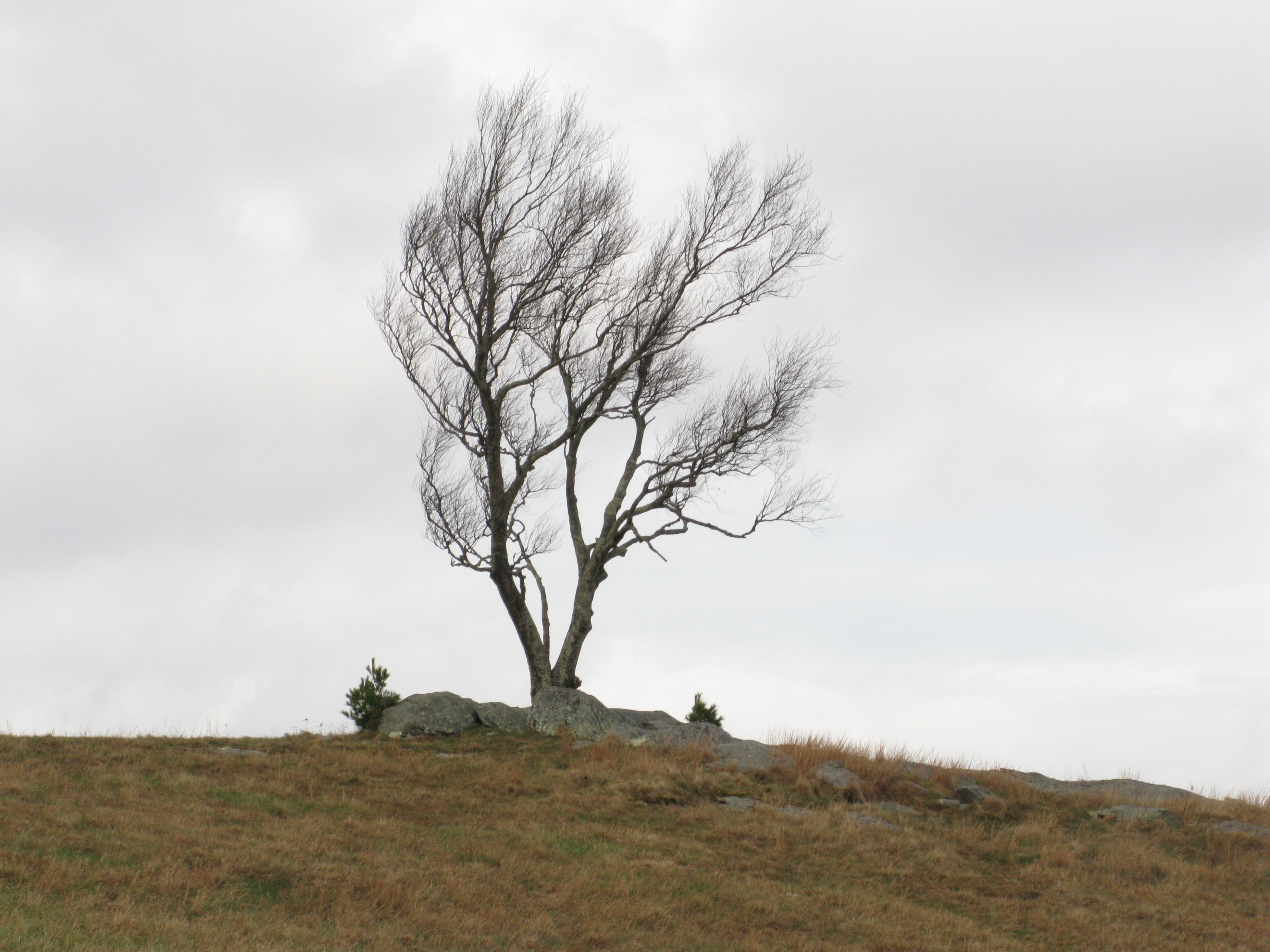
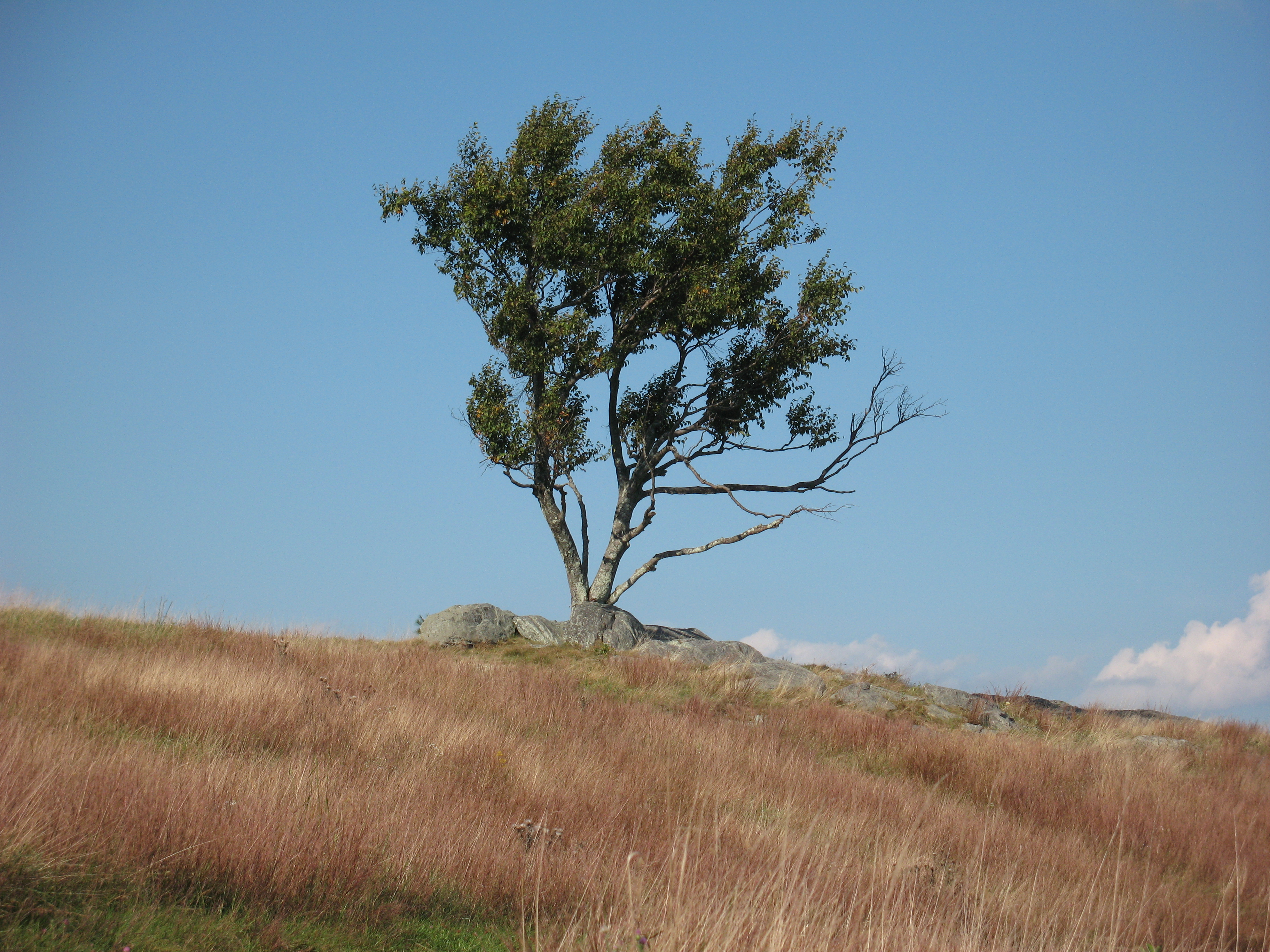
 Doughton Park Tree 2018-02-09

Read Full Post »

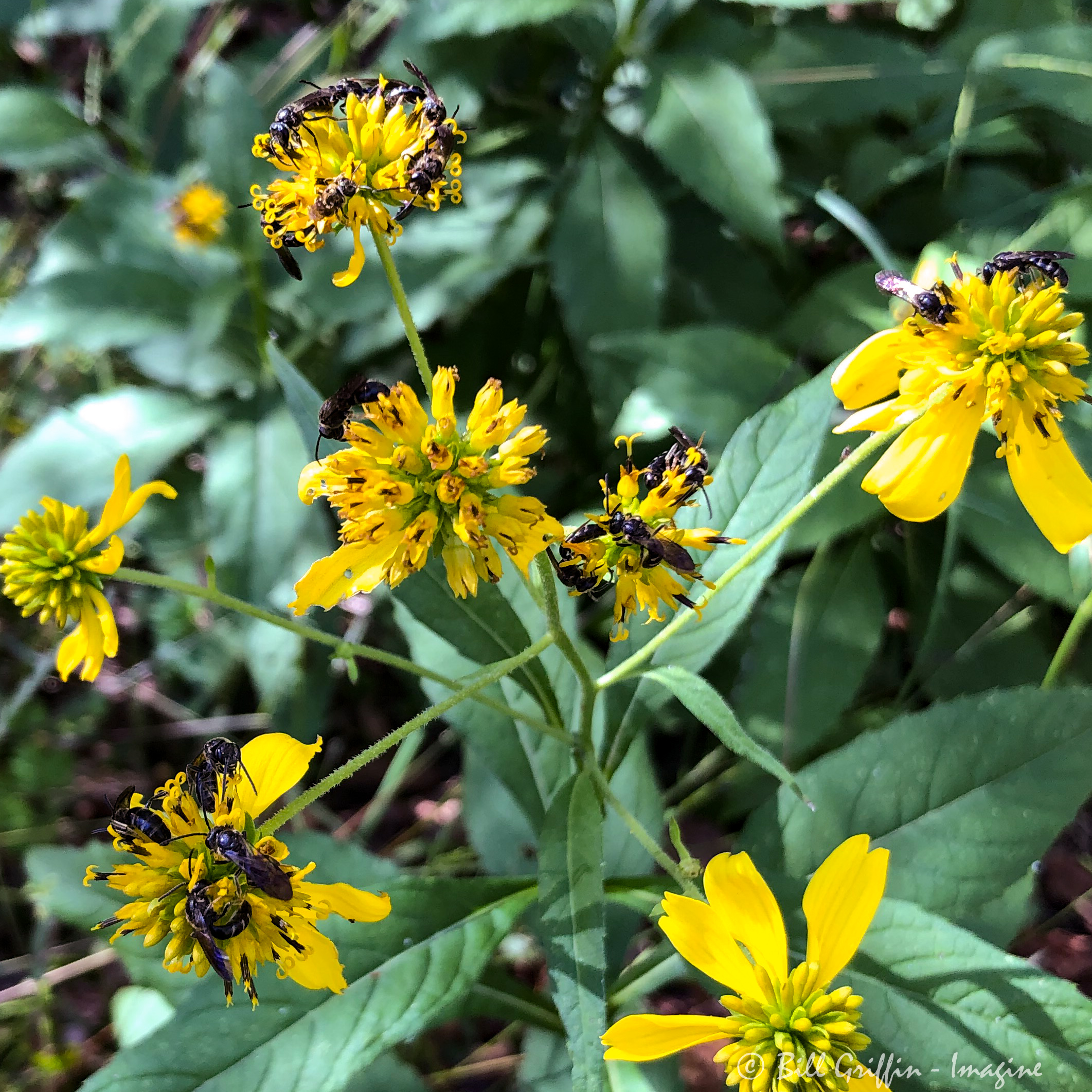
Wingstem, Verbesina alternifolia
 . 
[with 3 poems by Li-Young Lee]
 . 
The Unfound Room
 . 
She is humming in the other room.
 . 
Leaves are falling in one window
of the room in which I sit
listening to her.
 . 
Her voice comes to me
from another part of the house,
and with it
the image of her face.
Throughout our years together, that look of
 . 
absence from her body
and the melody it bears forth
 . 
and total presence to what she’s at
the time inclined to, her neck bent
toward the task or the thing her hands
are disposed to, possessed of, all of her
 . 
given, giving, all of her receiving the shape,
weight, texture, and grade of that particular
and momentary instant of her passing day.
 . 
O almost
all of her, since
part of her goes on humming
over and over that one slow phrase
of a song I can’t now place,
humming in a different part of our house,
 . 
While in the window before me
leaves are falling
from out of a gone part of our year.
 . 
She’s humming a wordless phrase, the song missing,
her voice bearing aloft a familiar bridge
broken off from the before and the after,
a fragment I know, scrap of music
 . 
arriving from some unfound room inside her
where the song entire sings,
the song replete
is singing, even as the dead I still love
have gone ahead, as promised,
to make the unknown nearly habitable.
 . 
Even while they, remembered, are left behind
in a past I can’t find anymore.
 . 
Li-Young Lee
from The Invention of the Darling, W.W.Norton, New York, NY; © 2024
 . 
❦ ❦ ❦
 . 
Autumn is the season of Yellow. Yellow is becoming and going. Yellow is arriving and leaving. Yellow is living again and dying again. As Yellow swells, it fills the ditches, the meadows, forest edges and waste lots. As Yellow fades it leaves feather tufts and seed heads – we wonder, will they sprout again? As Yellow drinks all the blue and green it grows to fill the canopy and the horizon. As Yellow fades, it reveals curvatures and twists and impossible angles – we wonder, is this what death looks like?
 . 
I am fickle. I am so easily tempted by pink and lavender, red and bright orange. And of course purple. Yellow, are you worth anything to me at all? You are so common it would seem to be no effort at all to find you, not worth the effort to see you. Easy to ignore you. But then I pause and shiver and if I’m blessed the shackles of time and distance fall away for a moment. Yellow, you have so many bodies and forms! You are so related and so disparate! Yellow, I will write a new song about you and the refrain will sound like this – wingstem, crownbeard, tickseed / sow-thistle, ragwort, coltsfoot / sunflower, coneflower, goldenrod / yellow, Yellow, YELLOW!
 . 
Autumn is born, Autumn lives, Autumn begins to die and Yellow flies from the ditches and the meadows into the songs of leaves – tuliptree, redbud, sugar maple. Yellow flies higher and curls to umber, ochre, brown butter. Delicious Yellow, raising the color of earth high and holding it for a day before it falls to become earth again. The season of dying again and living again. This season of leaving and arriving. Yellow, long may you reign.
 . 
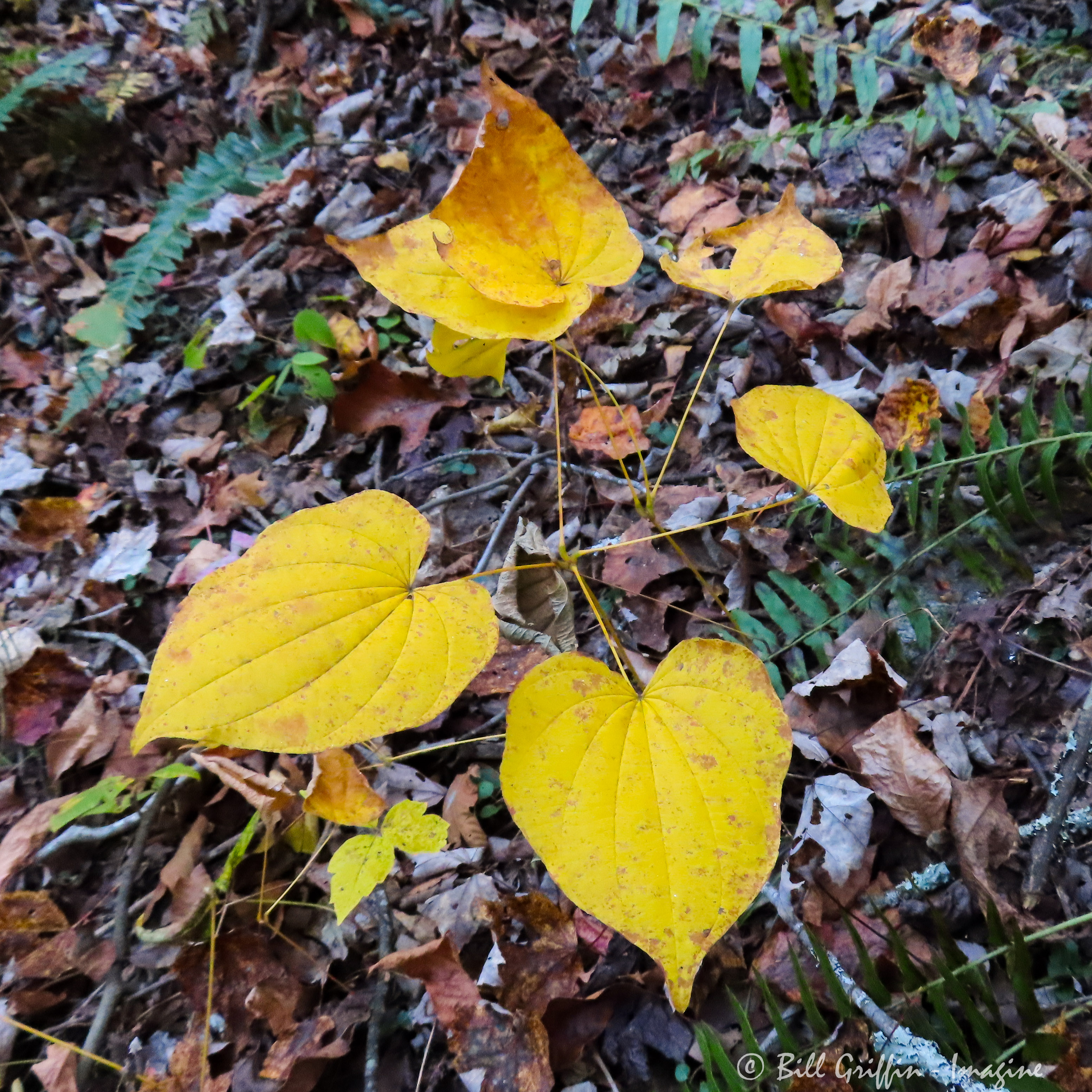
Native Wild Yam, Dioscorea villosa

Native Wild Yam, Dioscorea villosa

 . 
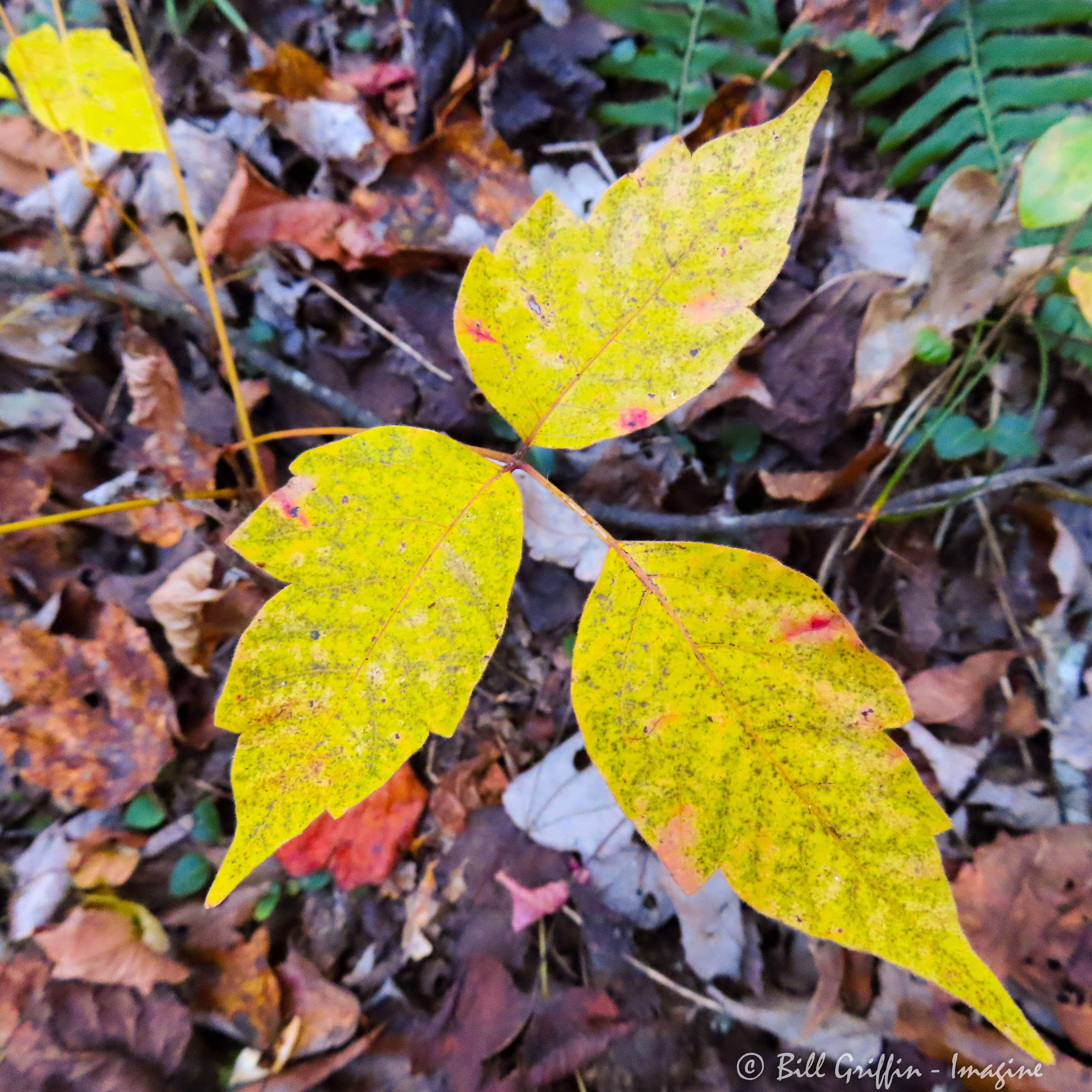
Poison Ivy, Toxicodendron radicans

Poison Ivy, Toxicodendron radicans

 . 
Native Hog Peanut, Amphicarpaea bracteata

Native Hog Peanut, Amphicarpaea bracteata

 . 
❦ ❦ ❦
 . 
The Invention of the Darling
 . 
6.
 . 
The woman you love is singing.
Quick, tell her what you love.
 . 
Don’t tell her what you believe.
Don’t tell her if God is dead or alive.
Don’t tell her what’s wrong with the world
and how to fix everyone in it.
 . 
The woman you love is singing.
Her voice is laying a table in the presence of death.
The service shines, irradiating
the cardinal points,
dividing above from below.
 . 
Now is not the time to quote scriptures.
Now is not the time to repeat manifestoes.
The woman you love is alive
and singing, making a new world
out of all she loves.
 . 
Don’t remain outside of her song.
Whatever enters her singing lives again, twice-born.
And there’s only one way in.
Speak your love clearly.
 . 
So what if no one else can hear her.
So what if no one else witnesses her making
and re-making the world in the image of love.
 . 
Soon, her singing will stop,
and all you’ll hear is the confusion
and violence of a world untouched by her song.
 . 
Remaining outside of her singing has cost you so much.
Quick tell her what you love.
 . 
Li-Young Lee
from The Invention of the Darling, W.W.Norton, New York, NY; © 2024
 . 
❦ ❦ ❦
 . 
Is it I myself who blocks the doorway between me and love? Is death my adversary or my friend? Stop, you Poem, and explain yourself before you go any further! Oh, my poor analytical mind. Oh no, simultaneous equations and stoichiometry and metabolic pathways. Oh the one thing always corresponding exactly to the one other thing. Oh no, desire to make everything fit together.
 . 
And yet doesn’t it? Fit? Perhaps not with my graph paper right angular AB=XY. Not Isaac Newton and William Harvey (and only almost Schrödinger’s Cat). More like a star best seen when I look to its left. The smell of flowers in the woods when nothing is blooming. Or, in The Invention of the Darling, sense is falling petals, wings, the sky within and the sky without, The One and The Many and all of it fit together, all one, all many.
 . 
O Poem Reader, stop! Open your eyes and see the lines inviting you to follow them where there is no path. Close your eyes and see the lines circling and touching and kissing. They explain nothing and they explain everything. And when you have been kissed, you will surely know.
 . 
 . 
Li-Young Lee lives in Chicago, Illinois, USA. Among the many honors awarded his verse are a Paterson Poetry Prize, an American Book Award, and a Lannan Literary Award. The Invention of the Darling, his seventh book, is available from W. W. Norton.
 . 
❦ ❦ ❦
 . 
Going Along
 . 
Rocks.
Streams.
And falls.
 . 
You were making ready to go.
And then you were going.
And then you were gone.
 . 
The bud.
The flower.
The fruit.
 . 
You were leaving.
And then you’d just left.
And then I saw the sky
was a very big question,
and earth no answer.
 . 
And even the birds, the trees,
even the sun, moon, and stars looked like passengers
boarding at their numbered gates.
 . 
Your leaving was on both of our minds
while it lay ahead of you. But we
fast caught up to it, and you
occupied leaving completely,
with no room for another.
 . 
And soon it lay behind me, who was left alone
to fold your clothes and give them away,
even as you left leaving behind, as though leaving
were one more disguise.
 . 
And the whole world seems a moment
from your forgotten childhood,
or an old house someone abandoned in haste, leaving
the back door open wide.
 . 
Winter. Spring. Summer. Fall.
The years follow a very old song
my evry disappearing gesture accompanies,
my each step inflects,
one foot lifting me off the ground,
one foot setting me down on earth.
 . 
Walking, danging, running.
Late. On time. Out of breath.
 . 
Li-Young Lee
from The Invention of the Darling, W.W.Norton, New York, NY; © 2024
 . 
 . 
Thank you to my friend Anne G. for the gift of Li-Young Lee’s book in the midst of all these leavings, Mom gone and Dad going, the sky a very big question and earth . . . an answer?
 . 
fungus
 . 
❦ ❦ ❦
 . 
Doughton Park Tree 2020-11-22

Read Full Post »

« Newer Posts - Older Posts »