Feeds:
Posts
Comments

Posts Tagged ‘nature’

 . 
Saturday morning readers share:
Tabitha Ropp and Felicity Tedder
 . 
In the Field
 . 
The soccer field sits wide and open
light brown grass stretching over like it has all
the time in the world
 . 
A class of students drop onto the grass
clipboard down
eyes peeled ready for anything we find
 . 
Butterflies drift through the cool comforting air
never in a hurry
never needing a reason
 . 
Birds are above us
calling out to the sky
as if the sky actually listens
 . 
The breeze slips through the pine trees,
soft as a whisper, cool enough to make us forget
how heavy the day will feel
 . 
For now the field is ours
still, quiet
breathing with us
 . 
And we sit there,
letting the world be simple
for just a little while
 . 
Tabitha Ropp
West Carteret High School
 . 

West Carteret High School Soccer Field – photo by Jessi Waugh

 . 
This is the assignment:
 . 
To cap off a unit on the biosphere, students sit quietly in the back soccer field for an hour and document the biotic and abiotic limiting factors they observe. At the end of the lab, students are asked to construct a poem featuring their observations – any form is acceptable.
 . 
These two poems I’ve chosen have compelling language and structure, and these students were happy to have their poems selected for publication. 
 . 
Thank you for giving these students a platform to share their poetry. We as educators look to give students the chance to shine –  thank you for helping us with that goal and for sharing the voices of many North Carolina poets.
 . 
– Jessi Waugh
 . 
❀    ❀    ❀    ❀    ❀
 . 
Always Active Biosphere
 . 
A metal obstruction digs into resilient blades of grass.
Joyful adolescents race by.
My pine needles quiver as a black and white ball
strikes me straight on.
 . 
Industrious squirrels race up my bark, in hopes
winter will arrive with fully acorned nests in which
to rest.
Whisps of colored leaves pirouette in the autumn air.
 . 
Soft clouds meander by, masking the cheery rays
with their dreary faces..
A gust tumbles a soaring hawk. Diving sharply in an
elegant feathered display, its eyes fixed on its prize.
 . 
No voices are near. A silence befalls in the sleepy hollow.
Nature, however, speaks loudest when left alone.
The chaos of existence echoes in every direction as the
wind slows to a deadly whisper.
 . 
Felicity Tedder
West Carteret High School
I’m 14 years old, enrolled in Earth and Environmental Science, and on the day I wrote this poem, our class took a trip outside to observe the nature of our habitat, including biotic and abiotic diversity. The factors I noticed are what inspired my writing. I find nature compelling. Once all the noise pollution subsided, I noticed tranquil sounds produced by Mother Nature herself. This simply might just be an absurd thought, but hearing and witnessing the environment do the thing it does best, simply thriving, I knew I had to encapsulate it somehow. Through this freestyle poem from the perspective of my local habitat’s primary tree, a long-needled pine, I personified factors I noticed around me: things that a tree must feel, hear, and see as if it had a heart and legs. I imagine the vile intensity that the tree must feel, being besieged by the leftover impacts of man-made destruction. Disregarding these unrelenting pollutants, I hope this tree’s inner soliloquy brings others solace the next time they take a moment to analyze nature’s unabated, profound motives.
— Felicity
 . 

Dusky Salamander in Carteret County – photo by Jessi Waugh

 . 
West Carteret High School is in Carteret County, North Carolina, USA. We are a public 9-12th grade high school, with about 1100 students, in Morehead City (on Bogue Sound). Approximately 40% of students are economically disadvantaged. I teach Earth and Environmental Science, a required course for graduation since 2000. My students are all 9th & 10th grade, ages 14-16. I’ve been teaching this course for 12 years, off and on. I have a Master’s in Teaching Secondary Science, a Biology degree, and I held National Boards Certification until it expired. I like teaching this course and this age group; it’s my niche. I also teach Biology and Marine Science when needed.
 . 
– Jessi Waugh
 . 
Additional poetry by West Carteret students at Verse and Image:
 . 
❀    ❀    ❀    ❀    ❀
 . 
Thank you for visiting VERSE and IMAGE:
. . . . . every Friday I present one or two poems I’ve read this week that particularly speak to me;
. . . . . every Saturday I present one or two poems submitted by YOU, my readers.
 . 
If you would like to offer a poem for consideration, either by a favorite author or your own work, please view these GUIDELINES for Saturday Readers Share:
 . 
 . 
Also note: after January 1, 2026 I will no longer be sending separate weekly email reminders.
If you would like to receive an email each time a post appears, please SUBSCRIBE to VERSE and IMAGE using the button on the Home Page.
 . 
If you have a hard time finding the SUBSCRIBE button on this WordPress site, you can send me your email address and I will add you to the subscriber list. Send your request to
 . 
COMMENTS@GRIFFINPOETRY.COM
 . 
Thanks again for joining the conversation.
 . 
– Bill
 . 
 . 
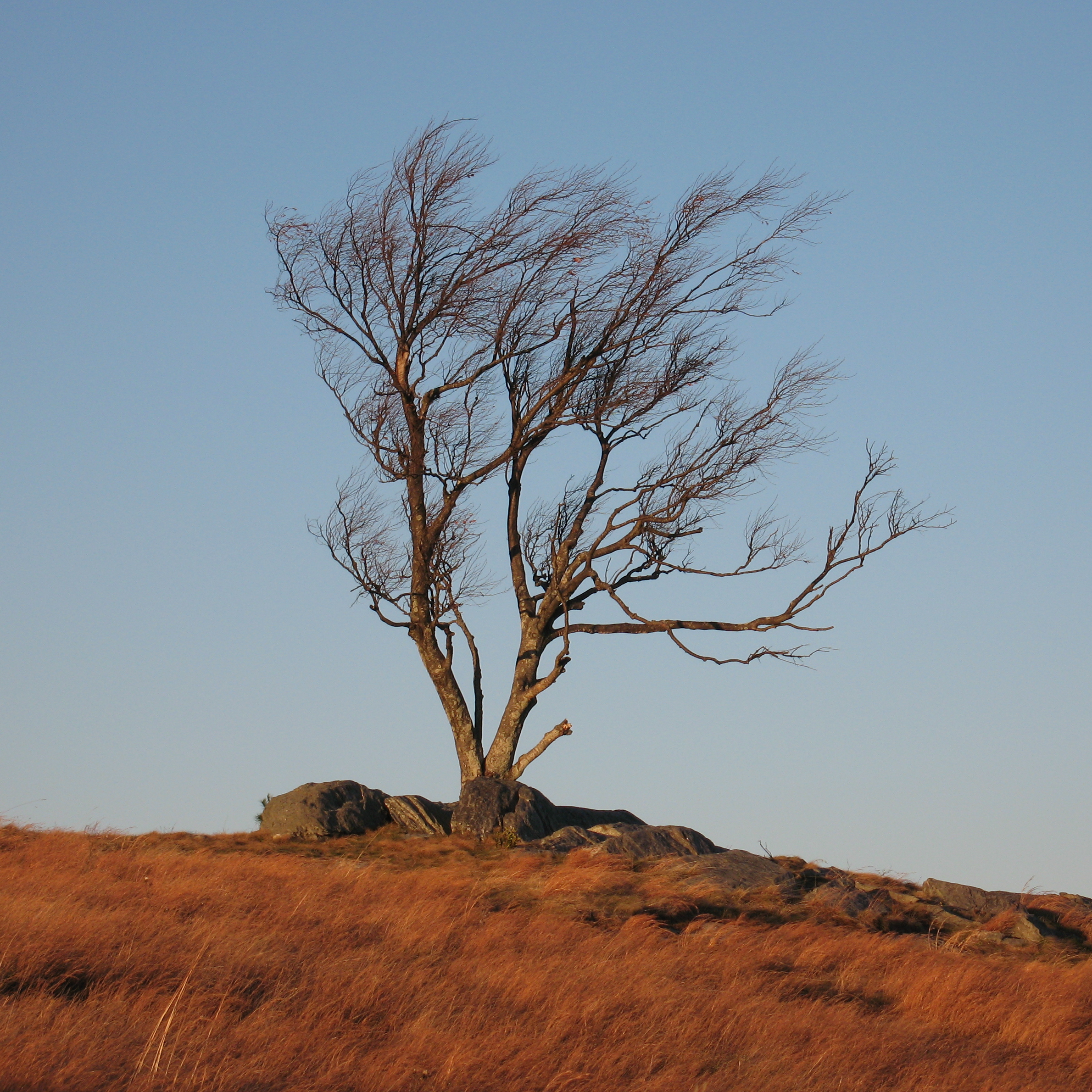
Doughton Park Tree 2020-11-22
 . 

Read Full Post »

[2 poems by Lucinda Trew]
if you wish to grow a garden, first seed
your soul with sadness
 . 
for it helps to have an ache, a molecule
of sorrow that will swell, release and drench
the patch of earth you claim
 . 
like a weather plane sowing stingy clouds
with silver beads of iodide, lush promise of rain
something withheld – a slip of rue, s spore
of woe to bury – a slender sprig of remembering
your shallow place in all of this
 . 
a cloister of green where secrets are safe
where worm and peat, centipede and muddy
trowel will carry melancholy to the seedling
graves you dig
 . 
for a garden is forgiving – a copse confessional
a place for penance – pulling weeds, snapping
roots, kneeling in dirt
 . 
and tending, gently tending, to fragile shoot
breaching bud, those in need of holding up
and the healing grace of fresh tilled ground.
 . 
 . 
when trees fall
 . 
from natural cause – nor’easter, drought
decrepitude – they lean in, one upon another
++++ a prayer of knotty hands
 . 
we pray, too, in other ways, holding one another
close in crook and crutch of branch, and nests
++++ for those in need of cradling
 . 
we unfist fingers, unwind clocks, hold one another
in a basketweave of leaf and twig and comforting
++++ like trees, we slant
 . 
against wind and time, hearts and boughs that break
from storm and thorn and toppled crowns
++++ we ease one another
 . 
to ground, to the resting place of forest floor
to beds of moss and tender mercies yielding to ash
++++ as we all fall down
 . 
Lucinda Trew
from What Falls to Ground, Charlotte Lit Press, Charlotte, NC; © 2025
++++
IMG_9468
 . 
♦   ♦   ♦   ♦   ♦
 . 
I love these poems for their compassion in the deep sense of that word, “suffering together.” In reading these lines I am able to pause and slant against the wind of my own doubt and daily struggles. Lucinda writes, “a poem is a bone / in the graveyard of remembering.” In memory I visit the bones of loss and pain but also the roots and seeds of what may again grow into joy. In the music of Lucinda’s words and phrases, the myth and earthy origins her poems suggest, the impermanence of all things resting the midst of rising sun and growing plant – in these I rediscover hope. Yes, we all fall to ground. Yes, we may ease each other as we fall.
 . 
 . 
Lucinda Trew lives and writes in the red clay piedmont of North Carolina, USA. What Falls to Ground is her debut collection and is available from Charlotte Center for the Literary Arts.
 . 
Additional poetry by Lucinda Trew at VERSE and IMAGE:
 . 
 . 
IMG_1948
 . 
 . 

Saturday’s Submission – Once a week on Saturday I feature one or two poems sent to me by readers. If you would like to consider having your poem appear, please see the GUIDELINES here:

About


Read Full Post »

 . 
[with 3 poems by Denton Loving]
 . 
Lake Sagatagan Summer
 . 
After evensong at the abbey, we walk circles
in the woods, weaving through deerflies
 . 
in kamikaze flights. The cerulean warbler
mates among these trees, we’re told,
 . 
so we keep vigil for blue flickers in the leaves.
So far, nothing. On half-submerged logs
 . 
turtles perch like hard-shelled gods –
We canoe to the deepest part of the lake
 . 
before we can talk about who we were
before the other existed as witness.
 . 
Night descends, and we have to compete
with the liturgy of loons,
 . 
but here, surrounded by water, by darkness,
is the only safe place to tell the truth.
 . 
Denton Loving
from Feller, Mercer University Press, Macon GA; © 2025
 . 
❦ ❦ ❦
 . 
Last month I took a walk in the woods with my brother Bob, visiting from Montana. Here in North Carolina it was 78 and sunny, leaves still on the trees, plenty of shade. Bob wore a long-sleeve shirt rated SPF 50, sun blocking mitts, a neck gaiter pulled up over his ears, and a broad-brimmed hat. Yesterday I spent four hours with Dad at the plastic surgeon’s office. Besides freezing several superficial cancers on Dad’s scalp, she gave him the option of not treating the half-inch basal cell cancer on his nose. After all, he’s 99. What if he should choose to just ignore that cancer?
 . 
My brother seems to be choosing to live another thirty years skin cancer free. My father seems to have chosen never to wear a hat. Bob lives in the future. Dad lives with his past. The sun shines on us all. But this is not a microessay about UV protection or dermatologic wellness.
 . 
God sendeth rain on the just and on the unjust. If you are trying to farm in an arid plain like Judea, rain is not a downer but a blessing. The threatening proposition would seem to be, The sun shines on us all. But here’s a phrase even more ominous – He lives with his past. As Linda and I drive through the neighborhood this morning, she asks me if I’m OK after I let out a deep involuntary sigh. Am I OK? Where did that come from? I tick back – we had just passed the house of a man who used to be my patient. I made a bad choice in his care, he got mad, and he went and found another doctor. Fifteen years ago. You can’t live in a small town for decades without daily reminders of your choices. You can’t live on the earth, it sometimes seems, without your past constantly poking you and calling you out.
 . 
The other night at chorus we men sat and listened while the women rehearsed their own piece, SSAA. There is Linda, intent on the director and facing away from me, but the clear flute of her soprano reaches my heart. For one bright moment I am swept up in perfect love and peace. Tomorrow we’ll again flash our prickles, maybe argue about whether I’m paying attention or choosing to ignore her, but right now every choice I’ve ever made tastes sweet.
 . 
So here’s what Dad didn’t choose: to be alive on the 99th anniversary of his birth. Plenty of years for that ultraviolet to penetrate and warp his squamous cells and basal cells. And even though basal cell carcinoma never kills you, it will keep on growing until it bleeds and hurts. Especially if you are someone who vows on every birthday, as if you actually have a choice in the matter, to live five more. I tell the surgeon, “We choose the knife.” I tell myself, “Choose the music.”
 . 
 . 
This is a bit more of that passage from the fifth chapter of Matthew, Jesus speaking to a crowd of seekers who had followed up a mountainside: You have heard it said, You shall love your neighbor and hate your enemy. But I say to you, Love your enemies, bless them that curse you, do good to them that hate you, and pray for them which despitefully use you and persecute you; that you may be the children of your Father who is in heaven: for he makes his sun to rise on the evil and on the good, and sends rain on the just and on the unjust. [Matthew 5:43-45 ]
 . 
 . 
❦ ❦ ❦
 . 
The Octopus School of Poetry
 . 
Yes, that they have three hearts is remarkable.
So too, the way they navigate man-made mazes.
 . 
That their eight arms simultaneously perform
separate tasks. That they can unscrew jar lids
 . 
even when they’re trapped inside the glass.
But of all the strange facts, I can’t get past
 . 
their ability to squirt jets of black ink,
theatrical for sure, but an effective tactic
 . 
to distract a hungry eel or seal or albatross –
not unlike the poem, shooting fireworks
 . 
to ward off what haunts us. Such a nifty trick.
Almost worth the burden of those extra hearts.
 . 
Denton Loving
from Feller, Mercer University Press, Macon GA; © 2025
 . 
❦ ❦ ❦
 . 
Almost worth the burden of those extra hearts.
 . 
I try to divert my eyes from the cover endorsements when I pick up a new book of poems. You don’t read the last page of a novel first, do you? One joy of reading poetry is the sudden encounter with a line that leaps into revelation – opening a window into the writer’s heart – or into epiphany – opening the reader’s heart.
 . 
Anyhow, I figure I know Denton Loving’s poetry from his books Crimes Against Birds and Tarp. I rub my hands together in anticipation of mountains and hollers, of creatures and musk. And this new book does not disappoint. Denton displays the naturalist’s eye and ear and sensibility; every poem is rich with place and presence. But Feller is even deeper and richer than nature. The natural landscape is simply gesso for the canvas – these poems are about the burden of heart. These are love poems, and loss poems. While the naturalist observes, questions, connects, we are permitted to observe and connect with his deepest feelings and honest vulnerability. These pages are a safe place to tell the truth.
 . 
 . 
Denton Loving publishes interviews and reviews at https://dentonloving.com/ and has just announced a call for poems by Appalachian writers with and about disability, an upcoming anthology edited by Kendra Winchester. Denton is co-founder and editor at EastOver Press and its literary journal Cutleaf. For over a decade, he co-directed the Mountain Heritage Literary Festival at Lincoln Memorial University. He lives on a farm near the Cumberland Gap, where Tennessee, Virginia, and Kentucky meet.
 . 
Feller is available from Mercer University Press.
You may sample Denton Loving’s prior books here in previous posts at VERSE & IMAGE:
 . 
 . 
❦ ❦ ❦
 . 
The Eagle and the Drone
 . 
My soul leapt, you said when you witnessed
the eagle attack the drone in mid-flight –
the drone’s camera capturing its own finish,
the eagle cementing her reign of the sky.
 . 
When you read this, I think you’ll know
the triumphant eagle is not a symbol
of America, and neither is the lost drone.
This is no polemic or war-time parable;
 . 
as far as I can tell, there’s no clear wisdom
gained when we pit nature against technology.
I only know medicine men say eagles bring new vision –
like light through a lens passing obliquely
 . 
from air into a prism’s flat panel of glass,
refracting and separating the sun’s beams –
to help us understand our complicated past
and present, to guide us through the mysteries
 . 
of the future. That reminds me of the last trip
I made to visit you in Florida, when an eagle rose
from one of Highway 417’s narrow strips
of median as you drove me to the airport in Orlando.
 . 
The eagle winged directly toward our windshield,
and we agreed it was a very good omen:
how she caught our eyes, how pure white her bald
head appeared before she flew into the morning sun.
 . 
Denton Loving
from Feller, Mercer University Press, Macon GA; © 2025
 . 
❦ ❦ ❦
 . 
 . 

Read Full Post »

Older Posts »