Feeds:
Posts
Comments

Posts Tagged ‘Main Street Rag Publishing’

[with 3 poems by Pam Baggett]

The last time I saw my best friend Rick was in his hospital room. His counts were so low he couldn’t go home. They would never budge. Oh yes, last time, the idea must have hovered above us like a moth in pale daylight but we didn’t speak it. Isn’t it always easier to count on one more time before the last?

What we did talk about was lighthouses. Linda and I had taken our grandson to the Outer Banks that summer. We’d found the Mexican food truck on Ocracoke just like Rick had described it. We’d climbed Hatteras, Bodie, Currituck. Rick loved to hear our tales, loved those beaches, loved telling us his own stories. That’s how we shared our last couple of hours, transporting ourselves out of that hospital room into places we loved together.

Rick loved stories but in a deeper sense Rick just simply loved. He loved us into his family when our own family was just getting started. Through forty-some years of mountaintops along with several dry rocky valleys in between, he never checked us off his love list. A few days after that visit, Jan called to let us know that the last of Rick’s last times had run out. But last is not the same thing as over.

.     .     .     .     .    .     .

After

Huddled on the porch steps,
sheltered from wind, you crave something deeper
than warmth. Sparrows scratch in the garden,
though the frozen soil yields only stones.
A hound howls from a half-mile away
and caffeine stirs in your blood. Startled
to heel hope nudge, you inch forward into a shard
of sunlight. You’re a few days past Christmas,
overdosed on food and family regret.
Your best friend and your dog
have just died. You know telling people
makes you sound like a Conway Twitty song,
yet you’ve spend hours on the phone,
letting them know who the world has lost.

Sitting out here, throat-sore, silent,
you knit blue fingers around your knees,
rocking, rocking, your thoughts black birds
circling an empty sky.

Pamela Baggett

.     .     .     .     .    .     .

Senecio aureus, Golden Ragwort

.     .     .     .     .    .     .

Let me recommend something. Sit down for an hour with Pam Baggett’s book, Wild Horses; start with the first poem; read straight through to the very end. It is a novella about friendship. It’s about not over. The 29 poems span maybe forty years: Pam & Cindy at 13 crazy about boys but crazier about rock and roll; best friends separated; best friends reunited and still crazy; best friends together through all the last times while one is dying of cancer. Oh my, the music. And of course the stories. The stories we share transport us into places we love together.

.     .     .     .     .    .     .

Dog Dreams

In Cindy’s back yard, far from her mother
snoring in the recliner, we slap mosquitoes
despite a smelly citronella candle,
dodge slobber from the neighbor’s black Lab
who loves Cindy like a favorite chew toy.
Fifty years old, we giggle about our moms
as if we’re still thirteen. Mine answers every doorbell
gripping a suitcase. Cindy’s rubs her eye
until it’s teary, convinced there’s glass.

Almost midnight, Cindy sighs.
Keith Richards is nearly seventy, you know.
I yawn. Who’d have thought he’d make it so long?
Silence. Then Cindy lets me off easy –
Remember when we used to take drugs?
For fun? I bend to tie my shoe, hiding my face.
Why the hell did I promise not to cry?

Her skin goes gray when she tires.
I hug her, and her hair, thinned
from chemo, still smells like the pillow
I slept on all those high school weekends
decades ago. I offer reassurances,
a game of pretend. Pat the Lab
one last time before I leave.

Than night I dream my two dead beagles
race across the neighbor’s lawn
to hurl muscled bodies against me, my dogs
who in this vision belong to someone else.
I think, I have to return them, but then I realize
they’ve claimed me, the way her love
claims me, even as she surrenders
to the cold steady fire burning away inside her.

Pamela Baggett

.     .     .     .     .    .     .

At 3:00 A.M.

Driven from bed’s warm covers,
I stumble to my desk.
Beyond the open window,
a fox barks, some small animal screams.
Gnats spin in drunken spirals
around the lamp. Grief
performs its slow
dazed circuit of my thoughts.

Now, in the hell of your last
days, I clutch at each moment,
trying not to picture
the cold clay blanket
that will soon cover you.

I shiver, a rabbit
that has seen the fox
but waits until the last second,
frozen, before it runs.

Pamela Baggett
all selections from Wild Horses, Pam Baggett, Main Street Rag Publishing, © 2018

.     .     .     .     .    .     .
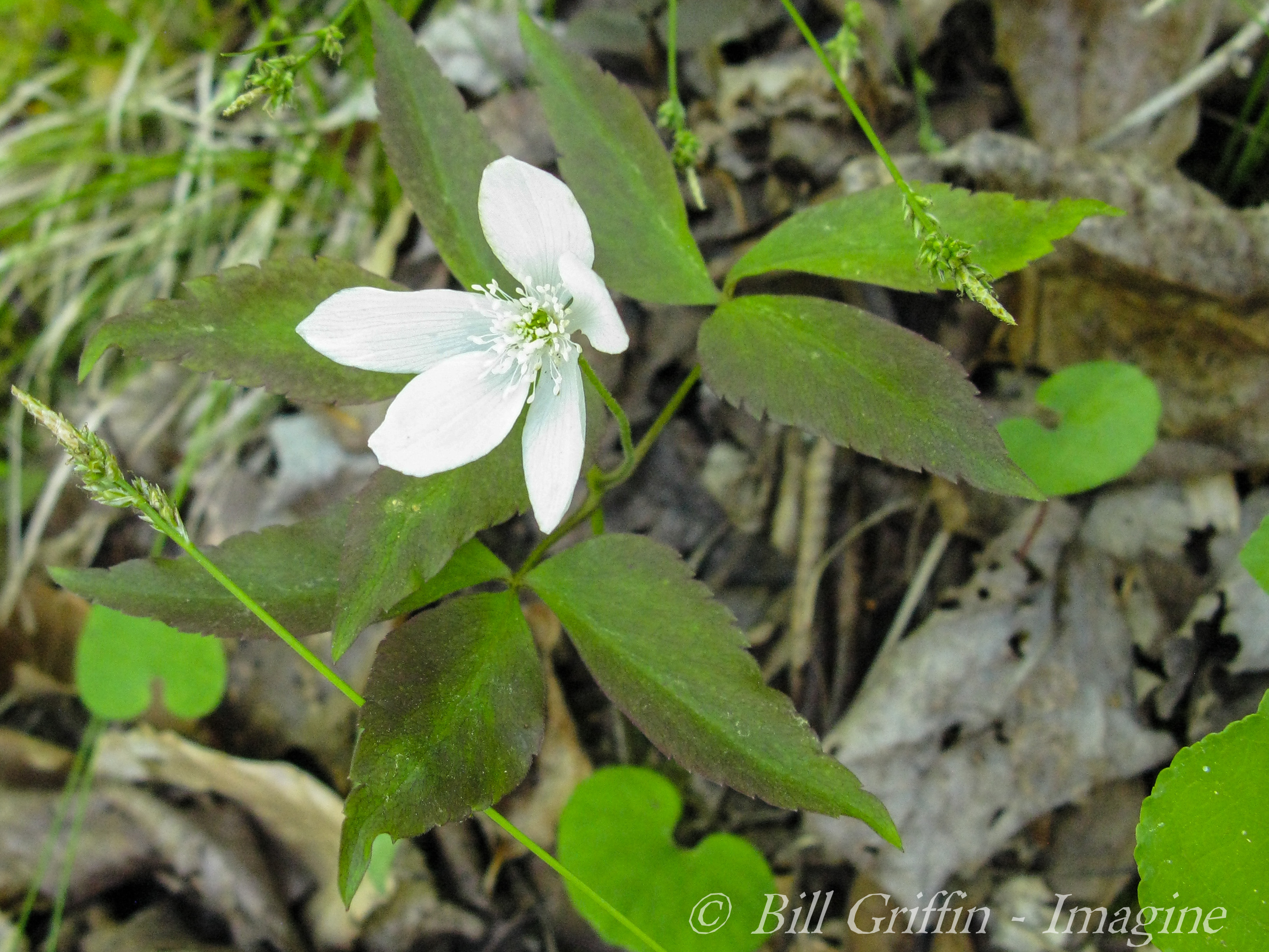
Anemone cinquefolia, Wood Anemone

.     .     .     .     .    .     .
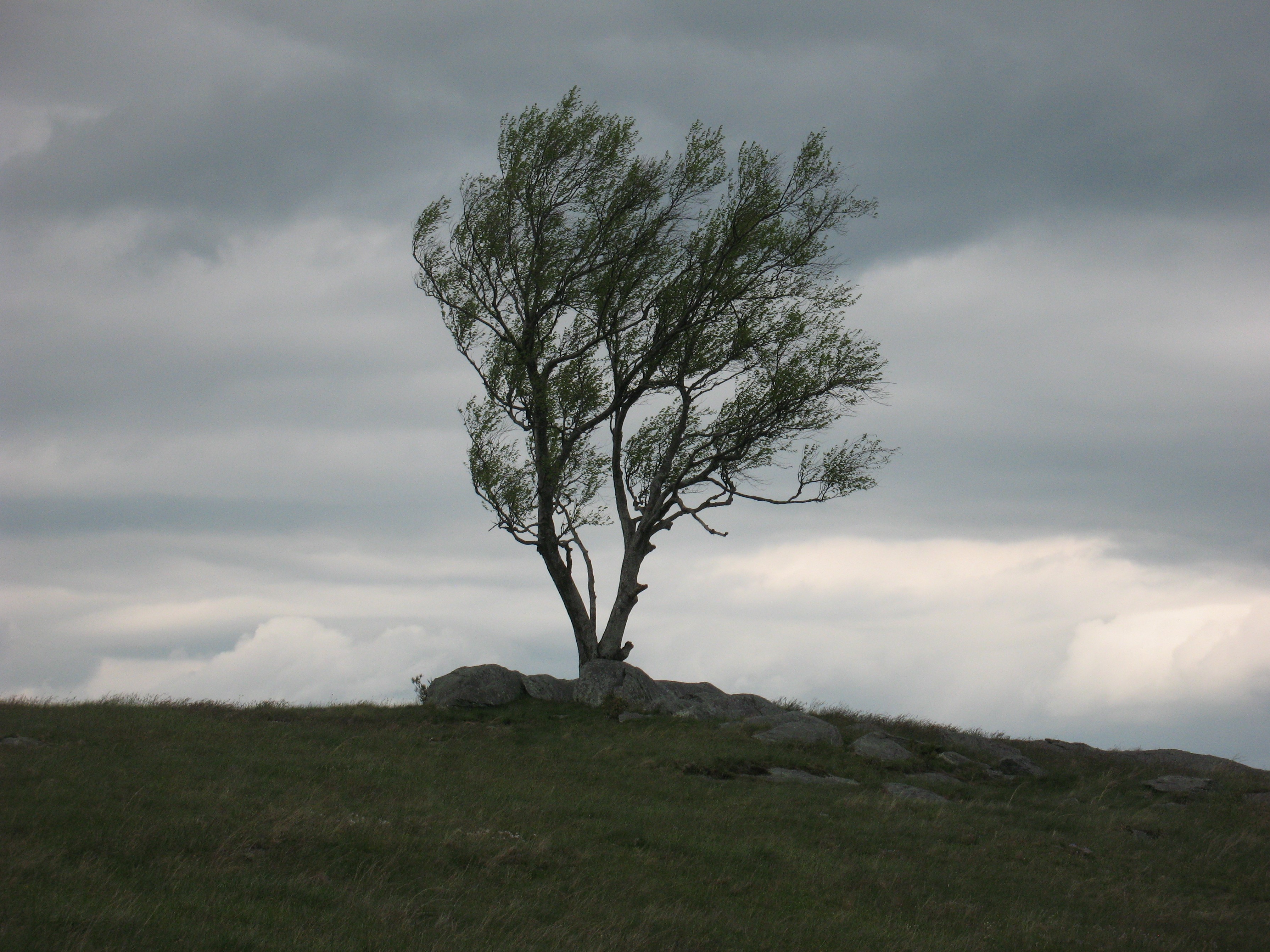
2016-05-08b Doughton Park Tree

Read Full Post »

[with 3 poems by Maureen Ryan Griffin]

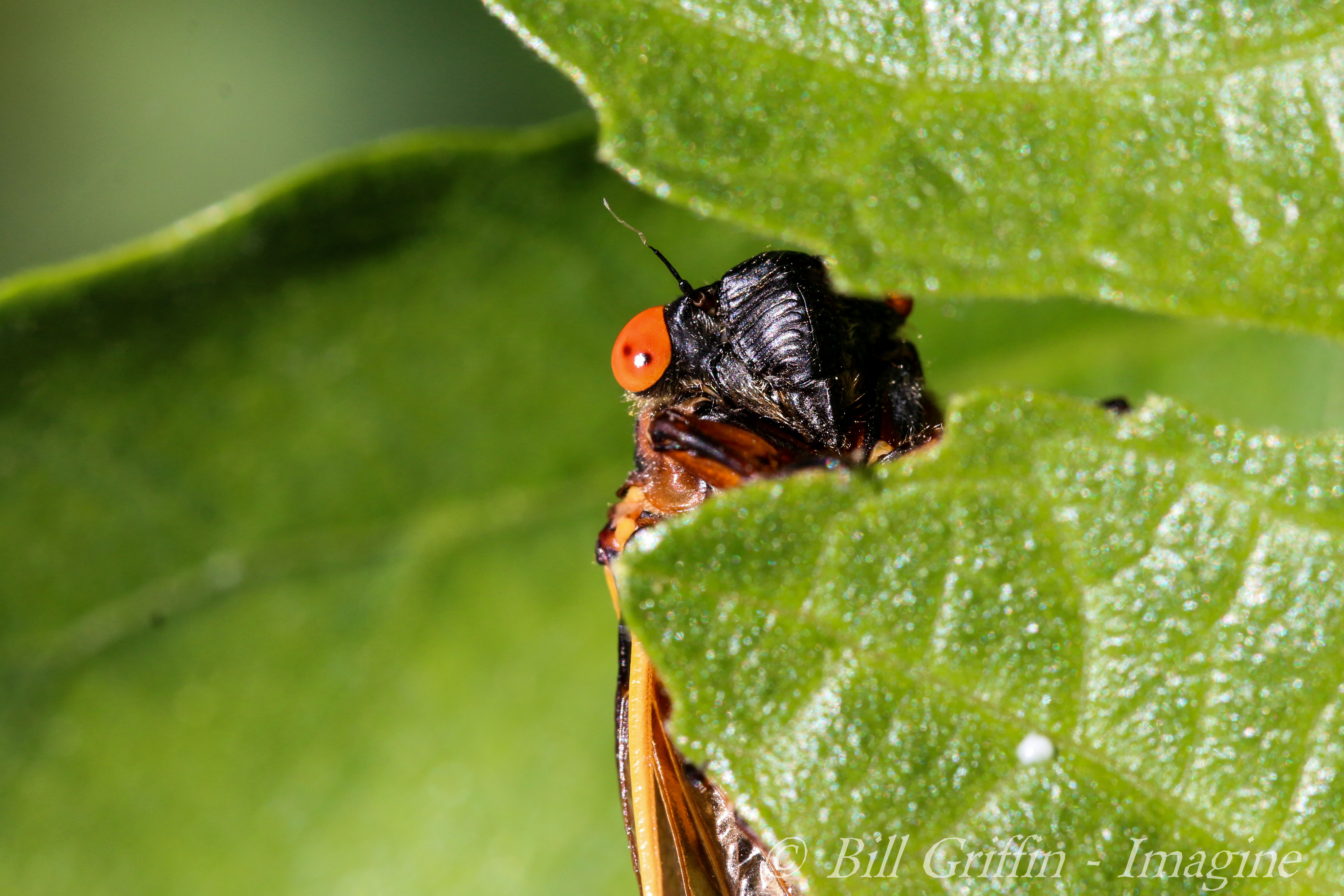
At the National Zoo in DC the Maned Wolves are sniffing them out – crunch; the Red River Hogs have dug up their entire enclosure to welcome them; the Big Cats just couldn’t care less about them; the River Otters bat them like shuttlecocks a few times, then crunch; the Keepers are busy calculating how much less protein to allot each daily feed because of all the crunching of them.

Here in Elkin an army of little workmen fill the trees, each holding in his middle arms and forward arms a tiny leaf blower set on max. Their women can’t resist that sound. Cedar waxwings can’t resist coming down from the heights where they usually hang out to nab nymphs climbing up the oak trees. Yellow-billed cuckoos are planning three broods this summer after checking out the buffet.

In 10th grade Mrs. Schilling made sure we learned the major orders – Lepidoptera, Diptera, Hymenoptera, etc., not least Hemiptera, the True Bugs (you’d better not call a Coleoptera a “bug”). Stink Bugs, you guys are old news after this year’s Hemiptera (suborder Homoptera) emergence — Magicicada septendecim Brood X, The Great Eastern Brood, magical indeed, to you we doff our hats. Second thought I’ll keep mine on.

.     .     .     .     .     .     .

Ten Thousand Cicadas Can’t Be Wrong

Summer sings sweet songs for her supper,
but her golden slippers aren’t for sale – no unless
you happen upon some celestial bargain basement
of goodly delights. There, nearly hidden under
last year’s turquoise silk sky, raspberries ripen, rampant,
as the mourning dove’s plum notes whirr, winged
into basil-drenched dreams. All this, and watermelon, too,
and fireflies, and the daylilies from your mother’s
last garden, double-headed. Just don’t forget
there are chiggers, and mosquitoes, of course, and that heat
everyone speaks of, muggy, tasting of
mildewed shower shoes, sounding for all the world like
kudzu unfurling in Jackson, Mississippi, where Janis Joplin
might have sung supper songs of her own. I don’t know.
I’ve never been there. I do know freedom’s not
just another word for nothin’ left to lose, and that you’ll never
find that bargain basement, no matter how long you look.
Listen, ten thousand cicadas can’t be wrong.
Anybody knows larvae never lie, not as long as
persimmons pucker and peaches procrastinate.
Lollygag in your hammock if you must, whenever
the tomatoes lean, but remember
that the persnickety bookie of guilt and doubt
is keeping score. You can’t hide but you can
run. You can steal the chiggers right out from under
the blackberries. You can rob from the raspberries
in bruised homage to the summer afternoon
the two most beautiful words in the English language,
according to Henry James, whose afternoons
are elsewhere now. Tu connais Uncle Death?
No worries. Aunt Morning will waltz willfully
wanton beyond noon, yea, and onward, well past dusk,
in Sister Summer’s silver slippers, the ones
deep in her closet that she seldom thinks to wear.

Maureen Ryan Griffin

.     .     .     .     .     .     .

.     .     .     .     .     .     .

Could there be a more perfect moment to re-read Maureen Ryan Griffin’s book Ten Thousand Cicadas Can’t Be Wrong? Her poetry is often about the changing seasons, the changes in our lives, the mile markers and wrong turns and new pathways discovered in the process. Nature and human nature interwoven, the book is rich and broad-ranging; I’d add even more selections from the Ten Thousand but when the sun comes out the little leaf-blowers rev up and soon I can’t hear myself think.

[Rather than 10 to the 4th we’re dealing with 10 to the 13th = tens of trillions. But they are nice and crunchy.]

Maureen (no kin to this writer) is best known as “midwife to dreams” for the many writers she has instructed, encouraged, and inspired through the years. Visit her website WORDPLAY and learn more about “spinning words into gold” through her contributions to the award-winning CHARLOTTE READERS PODCAST.

.     .     .     .     .     .     .

I’d like to think it isn’t greed

impelling us
to gather
far beyond need, whatever
our predilection –
++++++ blackberries
++++++ buckeyes
++++++ daylilies
++++++ fireflies
++++++ olive shells
++++++ sand dollars
++++++ stones –
++++++++++++ rather,
the feel of familiar
texture, convexity,
the comfort
of a particular weight
cradled in a palm.
Who knows
what it is that sings
as we fill
+++ baskets to overflowing
with our own peculiar harvests.
We feel the lure
+++ cull just one more
as if it were important to
keep this bit of fruit
from what we think of
as waste, to save
another shell from being
shattered by the sea,
to make ourselves a home among
the things of this world.

Maureen Ryan Griffin

.     .     .     .     .     .     .

When the Leaves Are in the Water

When my brother and I walked
through these woods, he pointed out
subtleties of bark and branches,
read growth rings, spoke of drought
and rainy years. Said I look

like Mother. What I love
about trees: they endure
the seasons. I yearn
to be sweet gum, sugar maple.
My brother named me

ironwood, divined my rusting
heart, too hard to yield
forgiveness. Would we agree on oak,
my gallnuts early griefs
painstakingly transformed?

Arriving at the creek bank,
I let silt run through my fingers,
minute bits of pebble
with unseen roughness.
I wasn’t looking when my hands

turned into hers. I plunge them
into cold creek water.
I once thought
forgiving her was clean,
balsam on a wound

to make it heal. It’s more
like washing hands
before a meal. I have to do it
over and over: forgiveness
to the third power. I feel

it’s time, but loss spirals
deeper each succeeding
season. What will I be without
my holy anger – stripped bare
like the skeleton of a tree,

my stipule scars, my leaf
scars showing. Trees are born
to nakedness – I’m not ready.
My brother told me
the Cherokee believe

it’s a time of great power
when the leaves are in the water.
I fling in handfuls of
hard memories, watch the current
carry them away.

Maureen Ryan Griffin
all selections from Ten Thousand Cicadas Can’t Be Wrong, New and Selected Poems, Main Street Rag Publishing, © 2014 Maureen Ryan Griffin

Magicicada

Brood X

.     .     .     .     .     .     .

.     .     .     .     .     .     .


IMG_6432

Read Full Post »

[with poems by Joan Barasovska and Kathy Ackerman]

Everything or nothing. The radio is off. The screen is frozen. The refrigerator snores. The clock won’t tick any faster, any slower. In an hour we leave for Raleigh to see our grandson (backyard, distanced, masked) but right now nothing is happening

I’m no good at nothing. If I wake in the dark my brain whirls venom trying to bite its tail. Where is dawn’s blessed peace? If I take deep breaths, watch the feeder, daily agendas begin to scroll down the back of my cornea. How many seconds after emptying myself before I fill back up with everything?

We are entering the season of nothing. The azalea may feint a few off-season blossoms but will we ever bloom again? We are in the season of waiting. Where is the so fragrant earth we lost so long ago? Where is the muscle and spunk of summer that convinced us we might carry through? The season of turning. What justice like waters, what righteousness like an ever-flowing stream? When? How do these shortened days stretch so long?

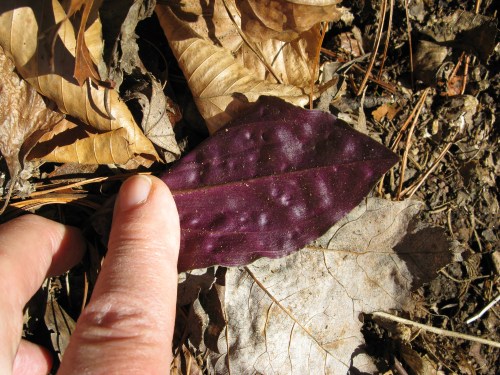
In the woods, something is happening. Orchids are making sugar. How have I missed that? One species will bloom in May, the second in August, but their leaves are now. Their delicate little tenacious tough-ass corms swell all winter waiting to rocket up a spike of summer flowers into a leafed-out overshaded world.

Something is always happening. Something is deeper than those scrolling agendas. Something in the world and something behind my optic chiasm in deep matter. Something that maybe wants me to be still and notice. Something to hope for, to wait for, to go forth and meet.

There is no nothing. It’s all everything.

.     .     .     .     .     .

These two poems are from Kakalak 2020, the annual anthology of Carolina poets. It is an eclectic volume – conversational, confessional, contemplative. Not as many COVID poems as I expected but wait until 2021.

The poems by Joan Barasovska and Kathy Ackerman speak to me of the winding thread that connects our past to our present. Knots and tangles, yes, but also a lashing to secure us in the lashing storm. The something that is happening every day is us becoming human.

.     .     .     .     .     .

Cranefly Orchid, Tipularia discolor

.     .     .     .     .     .

Her Breath

Mike and I exchange a glance
over her cooling body.
Our eyes are dry.
Elsie wears a faded housedress
with a pattern of flowers.
Thirty minutes ago
an aide crossed
her swollen hands.

All morning we sat waiting
while Death rattled her.
She died in the afternoon
while we were out walking.
Our mother took a slow
rollercoaster ride to this day,
dragging us with her on
every shivery dip and climb.

Back from the dead,
Mike said when she woke
from a coma, angry to find herself
in a clean hospice room.
She raged until he put her back home.
Frail, sick, ninety-three, hanging on
ten hears after Dad’s death.
She scolded me yesterday.
I was late for lunch.
I had forgotten to pick up her mail.

Their old bed had been replaced
by a narrow hospital bed
rolled in the hospice workers
while she fumed in the living room
and I boiled water for tea.
Now her jaw is slack,
her last silent treatment.
Above her head hangs
a sad-eyed portrait of me at nine,
painted in blues and grays.

Mike and I are limp with relief.
the secret of Elsie’s anger died with her,
but it was probably sadness.
We are second-generation Americans,
inheritors of the sadness seed.

This mother
lying flat between us
birthed me sixty years ago.
With her last breath,
She’s in a better place
and so am I.

Joan Barasovsaka, Kakalak 2020, Main Street Rag Publishing Company

.     .     .     .     .     .

Adam-and-Eve Orchid, “Puttyroot,” Aplectrum hyemale

.     .     .     .     .     .

Misnomer
for Goliath, my father

i.
This story begins when I believed every word my daddy said.
Honeysuckle, he called them, tending the cuttings
that go all the way back to Rock Creek 50 years,
Aunt Gracie’s yard in the hills where I never lived.

Honeysuckle was all I had to root me to that ancient soil,
so every home I bought I planted some
from Daddy’s supply, rooted in plain clear water.
I wondered why it had no scent, was not a vine,
was pink, for crying out loud.

Now shopping for plants for house #5,
I see the truth in 5-gallon pots before me:
Weigela.

I imagine old Aunt Gracie shooing my father away
from her quilting or canning or sitting alone.
Go cut back that honeysuckle
before it swallows up the outhouse.

Later, seeing his mistake, she didn’t correct him –
a name is just a name –
Grace just glared at tiny Goliath
so proud of his mound of pink and green
already wilting

while the roof of the outhouse
still plushed with yellow sweetness
he’d confuse for 80 years
with a plant that belongs
to the same family, after all,
but so much harder to say.

ii.
Start me some honeysuckle, Daddy, I blurt out
in one of awkward lulls.
I want to imagine his hands on the branch,
the snip of sprigs of coal country
where Gracie’s old feist
barked me all the way to the outhouse and back
when I was too small to know
how hard it is
to keep what lives alive.

Kathy Ackerman, Kakalak 2020, Main Street Rag Publishing Company

.     .     .     .     .     .

.     .     .     .     .     .

Let justice roll down like waters, and righteousness like an ever flowing stream.
Amos 5:24

.     .     .     .     .     .

2019-02-09 Doughton Park Tree

Read Full Post »

« Newer Posts - Older Posts »