Feeds:
Posts
Comments

Posts Tagged ‘Main Street Rag Publishing’

[with 3 poems by Diana Pinkney]

Oh, I couldn’t possibly eat all that. Thank Heavens I haven’t heard Mom utter those words for quite a while now. For the fifty years prior I believe we heard that phrase with each plate set before her. Some impulse ingrained in the 30’s in the genteel South? A mantra for all the new college girls in the 40’s? How, we would ask ourselves behind her back, could someone forever twig slender so fear gaining a pound?

This week at the doctor’s office I watch the nurse enter Mom’s vitals in the computer to make sure she hasn’t lost a pound. Dad admits he hates to nag her to eat her breakfast – too engaged with the paper or too forgetful to take a bite? Yesterday I cooked them both lunch – calm down, it was just 10 minutes in the skillet from Trader Joe’s – and served the plates. It’s no trick, really, just sit across the table from Mom for long enough and she will finally finish what you’ve given her. Don’t forget the milk! The doctor says you need more fluids.

Grandmother, Dad’s Mom, had her own mantra for us grandkids in the 50’s and 60’s: Children are starving in Europe. Yes, swear to God, she actually said that more than once. Chubby me was more than happy to clean his plate, but one breakfast I recall her disapproval. I had scooped up the last Cheerio but there was still milk in the bowl overlying its substratum of teaspoons of sugar. That evening I washed down my cornbread with a big gulp of sudden sickening sweetness Grandmother had rescued from that bowl.

Now I’m clearing the table while Mom stares at the last of her milk, a layer of ice melt above the 2%. In a few minutes, though, as I stand at the sink rinsing, she walks in carrying the empty. I have to say it. Good job, Mom!

❦ ❦ ❦

Super Cuts, Six Months after My Daughter’s Death

The stylist snips, snips my hair, shorter
and shorter. As she works, we talk.

You have children, she asks. Yes,
I answer. Do you? Oh, I have two girls.

How about you? Three, I say, my voice
tight, clipped as the gray strands covering

the floor. My daughter’s hair was long
and red, until it was blonde. She loved

the sun. A little less on the sides, please.
Why didn’t I say I have two children, sons,

and that would have been that. Except that
will never be that. I will always have three

children. Do they live here, she asks?
The sons do. My daughter lives nowhere

and everywhere. It’s good, she says, you
have a girl, too. Yes, I answer, it is good.

Diana Pinckney
from Hummingbirds & Wine, Main Street Rag Publishing, Charlotte, NC, © 2022

❦ ❦ ❦

How impossible to bear, losing a child to death. How much more impossible to write about it. Diana Pinckney in Hummingbirds and Wine overcomes the paralysis of grief, but not as chronicle or biography or personal therapy. Although she confesses I live / behind a veil, these poems are the bridge that leads her and us beyond the Valei of Teeris. These lines are twisting tracks that connect past and present, parent and child, and that connect poet and reader.

On the tree of suffering there is a twig of joy that grows up from dark earth. The root of happiness is the same / as perhaps, both descendants / / of hap – hazard or chance. Diana’s poetry is not rationalization, not sentimentality, not desperate. These are poems that share one moment, then another and another, along the path she has had to walk and which we can now walk together.

❦ ❦ ❦

Sea Turtles

Loggerhead, Leatherback, Ridley or Green, they all drag
themselves onto a beach. Alone under the same moon
on different shores, in their struggle to lay eggs.
Volunteers like Elizabeth spent hours at dawn

searching for the side, clawed tracks, uncovering
and moving the eggs to sand dunes, staking orange
mesh over the nest. Protection, maybe, she said,
from dogs, crabs, lots of things. Oh, my girl, I couldn’t

protect you, holed up in your house in the company
of bottles. Still, in your best years, you waited weeks
for dozens of thin-shelled eggs to split as the tiny feet
tore an opening, and under nodding sea oats, started

their spill up and out. Each one, no bigger than a silver dollar,
struggling to climb into moonlight, and down to the sea’s white foam.

Diana Pinckney
from Hummingbirds & Wine, Main Street Rag Publishing, Charlotte, NC, © 2022

❦ ❦ ❦

Beach Walker

I can still see her stretching in the hazy sun
each morning, strolling the surf, breathing salt

and the musky scent of creatures curled inside
shells – whelks, clams, conchs – once alive.

She so many miles from y city home.
So many Hey Mom’s when I’d lift the phone.

How is it that a heart so loved could weaken
through the days and weeks, and I never knew.

A heart that beat with the rhythm of the sea
and one bright morning would fail her and me.

Diana Pinckney
from Hummingbirds & Wine, Main Street Rag Publishing, Charlotte, NC, © 2022

❦ ❦ ❦


❦ ❦ ❦


Read Full Post »

[with poems by Helen Losse]

Until we find the communal meaning and significance of the suffering of all life, we will continue to retreat into our individual, small worlds in our misguided quest for personal safety and sanity. – fr. Richard Rohr, Center for Action and Contemplation

Follow a six-year old around the yard when flowers are blooming. Most enticing, of course, is the dandelion puffball. Got to pick that one! It takes several tries for her to blow those little dancing featherettes into the breeze – a few seedlets stick to her unicorn t-shirt, a few in her hair. Will they grow there?

Next comes anything purple or pink. She must add a few grape hyacinths on their too-short stems to the bouquet of daffodils we’re cutting for Grandmommy. And some pink azalea, cut that one, Pappy. Oh my, and look what has opened since the sun came out yesterday! She pulls a single bleeding heart and holds it in her palm. We’ll float it in a paper cup of water so she can take it to Mom this evening.

Finally return to the everywhere-flowers, yellow in everyone’s lawn. Walking around the block it’s Truth or Dare – will they paint your fingers if you pick them? Tooth of the Lion, look at the notched incisored leaves. She chooses the brightest flower. Nothing is a weed if someone loves it.

Which is the theme of Easter and of Helen Losse’s book, A Flower More Enduring: Love redeems. God is God of life.

Yellow Blossoms

populate the uncut yard.
Weeds with purple blooms

create asphalt cracks.
Hardy wildflower,

tall blades of Bermuda grass
widen others. I fall to my knees

on the lawn near a budding
thistle. Saints and angels

present but silent, I pray
for a dandelion heart.

Helen Losse

IMG_2931


.     .     .     .     .     .     .

The poems in Helen Losse’s A Flower More Enduring are intensely personal but enticingly universal. Her conversion to the Roman Catholic Church has brought her assurance but also challenge. She finds herself in the company of Mary and the Saints yet still she seeks and seeks . . . what? Perhaps to discover what she had never expected to find.

And Helen’s readers who come from different faith traditions, I being one, or from no tradition at all, may still discover with her an experience which we never expected: the universe reaching toward us in unconditional love. The outstretched hand of human commonality that might unite us in our suffering. The hand we ourselves lift to return that touch, the reaching which is called hope.

.     .     .     .     .     .     .

I cry out to God

on the night of the knife-wind.
Thoughts rise, incense
under waning moon blows with fog.
Phlox darkens the soggy prairie:
downy phlox, moss pink,
phlox the color of lavender.

O, how I cherish God’s creation:
flora, small rocks, tall hills, mountains,
feral beasts, domesticated pets,
each human soul, the Savior
on the Cross: Eucharistic Morsel:
Source of Grace I can’t store
in a lidded basket.

I am a rabbit returning
each night to a summer garden.
I must eat again & again.

Helen Losse
A Flower More Enduring, Main Street Rag Publishing, © 2021 Helen Losse

.     .     .     .     .     .     .


I stand in the shaded bathroom

with it high useless mirrors
into which I cannot see,
asking, “Are we rich?”

Daddy holds me on his knee
but would never tell me (or
any innocent child)

he doesn’t know how he’ll pat the thirty-seven fifty
house payment due on Friday.

Instead, he explains,
“We are rich in love.”

Helen Losse


.     .     .     .     .     .     .

In the Christian liturgical calendar today, 15 April 2022, is known as Good Friday, three days before Easter. On Sunday morning our little congregation will adorn a rough wooden cross with flowers – death conquered by life. Perhaps there’s a subconscious bit of pagan homage to the vernal equinox, but to my mind the message of new life is our foundation. Consider: no person and no thing exists outside the sphere of God’s universal love of life. In the cosmological sense there is no outside; in the spiritual sense no outsider.

A Crucified God is the dramatic symbol of the one suffering that God fully enters into with us — not just for us, as we were mostly taught to think, but in solidarity with us. The Good News is we do not have to hold that suffering alone. In fact, we cannot hold it alone. As we approach Easter, let us remember that we too can follow this path, actively joining God’s loving solidarity with all. What starts in God ends in God. All of reality is moving toward resurrection.

fr. Richard Rohr, Center for Action and Contemplation: Transformed people working together for a more just and connected world.

.     .     .     .     .     .     .

Dandelion on green lawn

A girl bends low, picks a flower
to give to her mother.

The child loves the flower,
a weed adults tend to favor less.

The child blows seeds from the puffball,
whit feathery globe of potential.

The seed is the heart of the flower:
tiny perhaps but profoundly fecund.

Each seed floats with the wind, grows
where it lands, blossoms in sunshine and rain.

Helen Losse

.     .     .     .     .     .     .

.     .     .     .     .     .     .


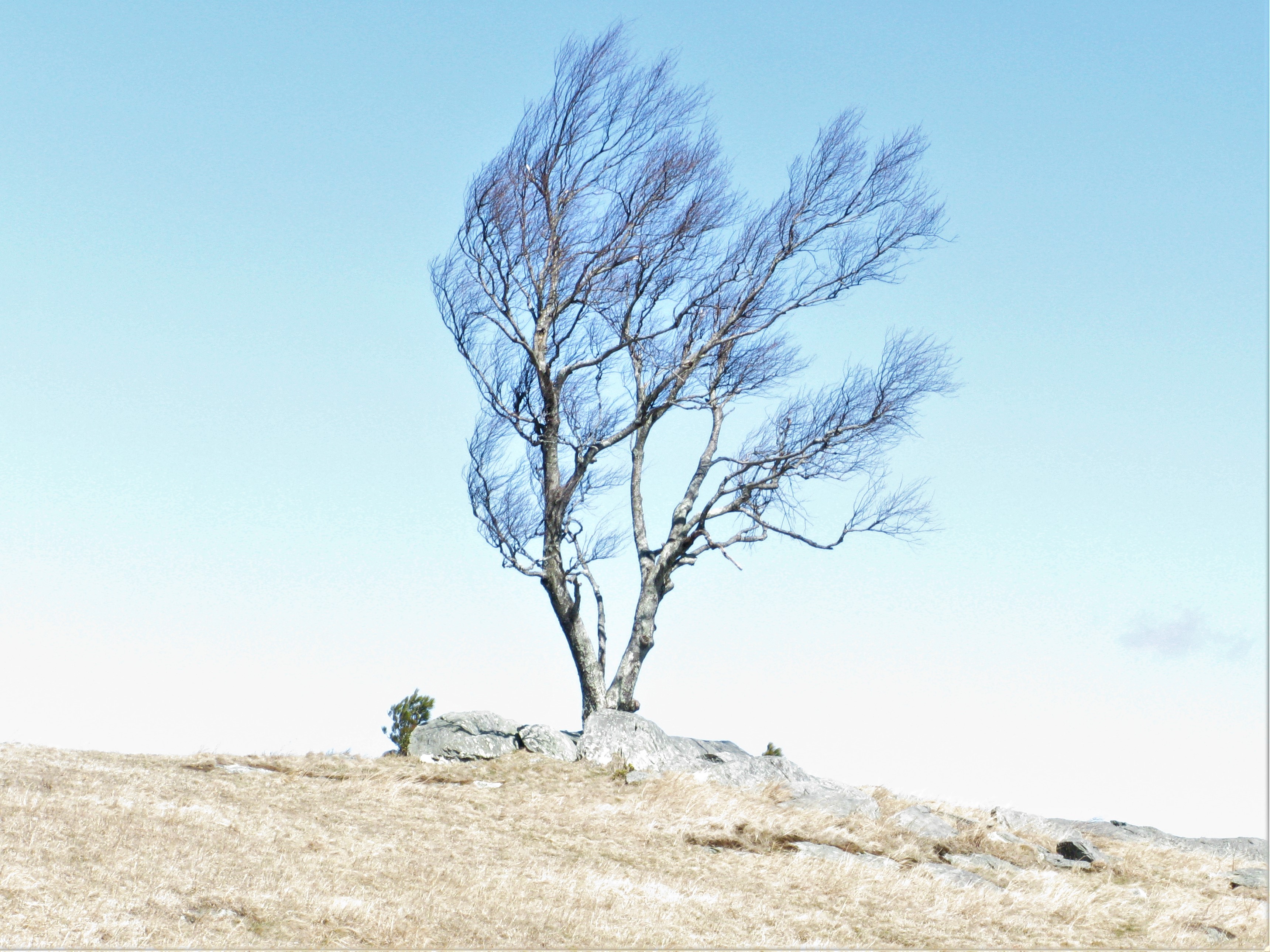
2020-03-07 Doughton Park Tree

Read Full Post »


[with 3 poems from When There Were Horses]

Once upon a time there was a little boy . . . . a frisson of anticipation: the four-year old’s attention is now riveted on Pappy. What mischief will the boy in the story create, what adventure awaits, what danger?

When my grandson used to ask me to tell him a story it was a gift to both of us. Often the stories sprouted spontaneously from our pretending and play, their main characters usually some of his favorite companions like Mousey and Blue Rat. What joy and entertainment when you engage with the characters in a narrative! Even more so if you identify with the characters – their plight, their seeking, their discoveries strike a resonant chord in your own heart. You live a little richer and fuller through them.

But what if you are them?! What if you are the little boy in the story unfolding? What if a door opens and you enter the story and it becomes an extension of your own? The gift the teller gives you in that moment can’t be measured.

So many of the poems in Pat Riviere-Seel’s new book, When There Were Horses, open that door for me. I enter the lines. Not only do I engage, not only identify, but I become a part of the narrative. The resonance moves me to reflect on my own arc, my own plight and seeking. How does that happen?

How does poetry do that stuff? Mmmm, mystery and magic. Art and invitation. I admit I don’t actually know the details or specifics of many of Pat’s narratives but even so I have come to feel a part of them. When I get past asking, “What does she mean by that?” and just enter the flow of how she is creating meaning, then her poems crack open new earth. There, beneath the mud of daily routine, behind the obfuscation of some constant ringing little voice in my head, something waits. Waiting to sprout and bloom. Waiting to sing a new song. Waiting and wanting to peel back all that separates us from each other, and from our inner self. Something is beneath the surface, waiting to break our heart, and to heal it.

.     .     .     .     .     .     .

From the Almanac of Broken Things

I choose this earth that breaks
my heart again and again,

the woods for the way trees
bend, fall, and return to dirt.

I choose the sand dollar, the nautilus
that in brokenness finds new creation.

I choose the favorite doll that no longer cries,
loved into silence, into rags.

I choose the memory of a stranger’s touch
that lifted my face above water. Because

I did not drown, I choose morning,
the gauzy-gray dawn that returns.

I choose the once-wild Palomino
whose beauty can never be tamed.

I choose light from long dead stars
that illuminates without heat.

I choose March with its promise of spring,
the warm days that tease, the blizzard

that insulates and warms the bulbs, the seeds,
all that lies beneath the surface, waiting.

Pat Riviere-Seel
inspired by Linda Pastan’s poem The Almanac of Last Things


.     .     .     .     .     .     .

What the Moon Knows

She knows shadow, how to
slip behind clouds. She’s perfected
the art of disappearing. She knows
how to empty herself into the sky,
whisper light into darkness.
She knows the power of silence,
how to keep secrets, even as men
leave footprints in the dust, try to claim her.
Waxing and waning, she summons
the tides. Whole and holy symbol,
she remains perfect truth, tranquility.
Friend and muse, she knows the hearts
of lovers and lunatics. She knows
she is not the only one that fills the sky,
but the sky is her only home.

Pat Riviere-Seel


.     .     .     .     .     .     .

Enough

Ahead, I see her watching me, pity
or compassion, hard to tell
from this distance. I want to ask her,
my future self, what she knows
and when she knew it. I want to know
whose laughter fills her hours? Does she
still dance? Still run? What does she know
of grace? These days I know so little.

But she’s still faithful, the self I look back
to see at dawn, a quarter century ago,
running out Colbert Creek road between
woods and murmur of the South Toe River, two-lane
Highway 80 South, past Mount Mitchell Golf Course,
down macadam that turns into gravel, clatter across
the low water bridge, out Rock Creek Road,
before she turns toward her dusty driveway,
past grape vines, the garden where the black cat
waits to walk her home. She’s the one who
declared, I am enough. She’s kept her promise.
But now, knowledge brings scraps
falling from bone that offers proof
something happened here in this lost country –
three deaths, one new love.

Pat Riviere-Seel
all selections from When There Were Horses, © 2021 Pat Riviere-Seel, Main Street Rag Publishing, Charlotte NC

.     .     .     .     .     .     .

.     .     .     .     .     .     .

FULL DISCLOSURE: Pat Riviere-Seel is my cousin. Third cousin one generation removed is how I think we figured it. Pat and I first met twenty years ago at a North Carolina Poetry Society meeting at Weymouth Center for the Arts and Humanities in Southern Pines. During a break we were sharing casually about what we’d been doing lately and she mentioned her recent family reunion in Lewisville, NC.

“We met at an old Methodist Church in Lewisville where my Great-Great-Grandfather is buried.”

“No way, we had a family reunion in Lewisville a few years ago and we met at a church, might be the same one, where my Great-Great-Great-Grandfather is buried. His name was J.N.S. Daub.’

“Uh, hmm, mine is named Daub, too. Reverend Daub.”

“I’ve got a photo of the headstone at home. I’ll send you a copy.”

Sure enough, one and the same Daub. That was my maternal Great-Grandmother’s maiden name. Three Daub sisters married three McBride brothers. So Pat and my Mom are third cousins (although separated in age by more than a generation).

All those years, something beneath the surface, waiting.

– – – B

.     .     .     .     .     .     .

2020-11-03a Doughton Park Tree


Read Full Post »

« Newer Posts - Older Posts »