Feeds:
Posts
Comments

Posts Tagged ‘Jennifer Atkinson’

 . 
April 26, 2024
 . 
In order to see birds it is necessary to become a part of the silence.
++++++ Robert Lynd (1879-1949) – naturalist
 . 
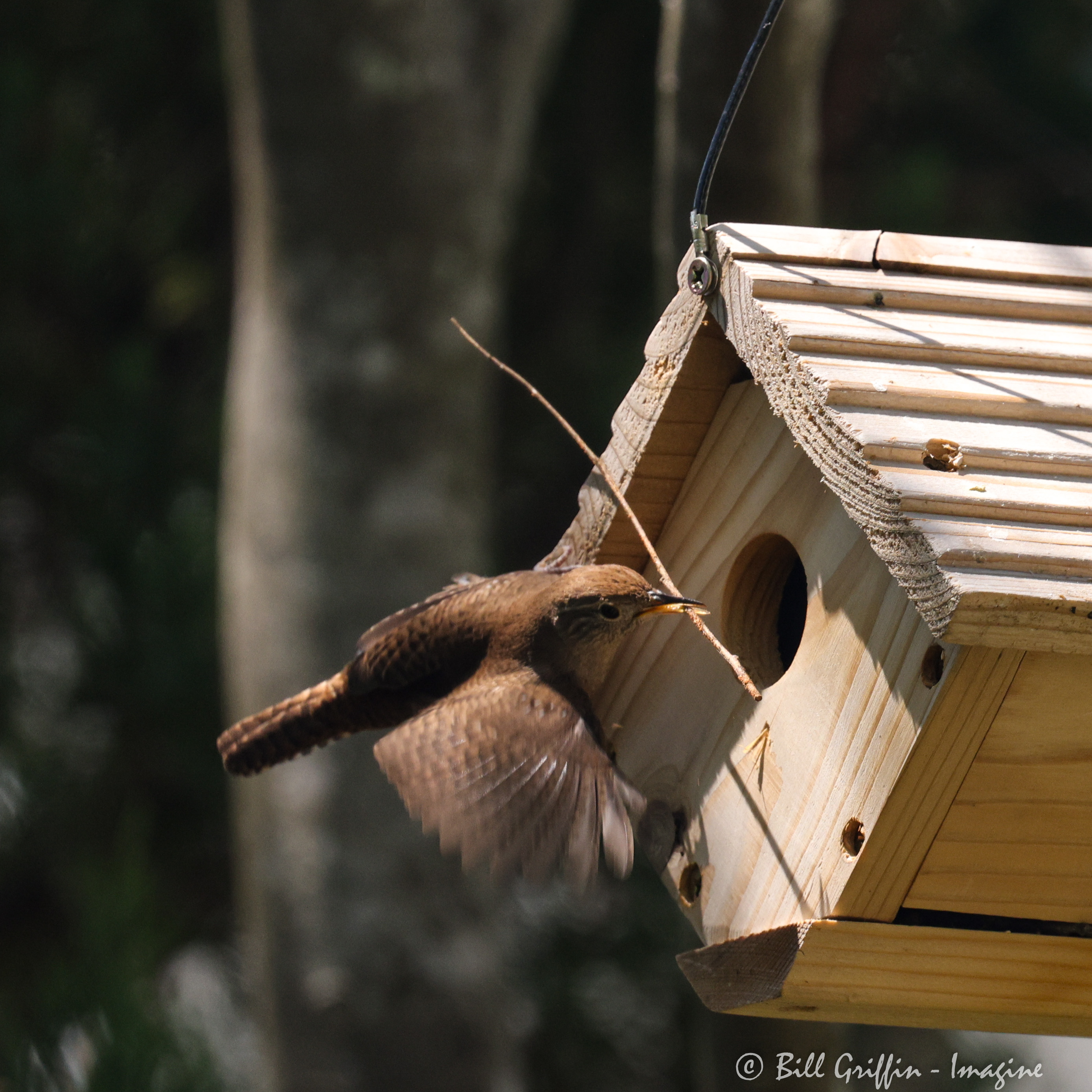
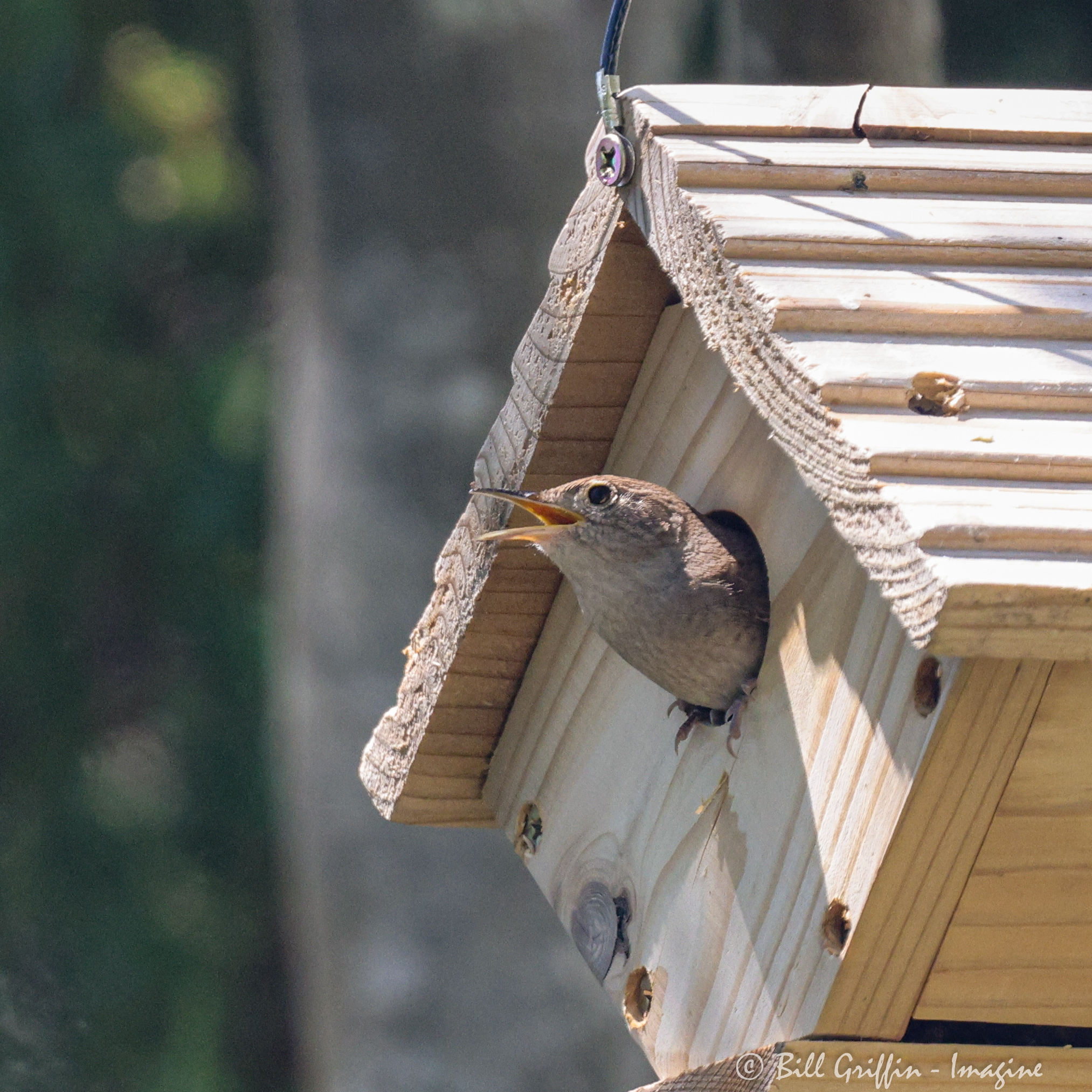
To see a wren in a bush, call it a wren and go on walking is to have seen nothing. To see a bird and stop, watch, feel, forget yourself for a moment, to be in the bushy shadows, maybe then feel wren – that is to have joined in a larger moment with the world.
++++++ Gary Snyder
 . 
Keep a green tree in your heart and perhaps a song bird will come.
++++++ Chinese proverb
 . 
❦ ❦ ❦
 . 
November
 . 
It is an old drama
this disappearance of the leaves,
this seeming death
of the landscape.
In a later scene,
or earlier,
the trees like gnarled magicians
produce handkerchiefs
of leaves
out of empty branches.
 . 
And we watch.
We are like children
at this spectacle
of leaves,
as if one day we too
will open the wooden doors
of our coffins
and come out smiling
and bowing
all over again.
 . 
Linda Pastan (1932-2023)
from Carnival Evening: New and Selected Poems 1968–1998, W W Norton & Co, © 1999
 . 
Shared by Bradley Samore, Plano TX, who writes:
 . 
This poem by Linda Pastan reminds me of our hushed wonder toward the non-human and our tendency to imagine ourselves in relation to what we see. Perhaps there is no objective way to view something as each species, each person, has their own limitations and reference point. Like Gerard Manley Hopkins’ “Spring and Fall”, Pastan makes the connection between the leaves falling and our own human death but also hints at the possibility/impossibility of our rebirth, another budding.
 . 
++++++ Bradley
 . 
 . 
Revelation
 . 
Nothing compares to exploring the land
++++++ but what of becoming part of it
 . 
to sit so still that lizards
++++++ mate by my sandaled feet
 . 
to kneel at the grave where from shadows
++++++ a fox approaches unafraid
 . 
to lie on the grass as daylight fades
++++++ and birds feather the branches above
 . 
Bradley Samore
first appeared in Hoot
 . 
 . 
❦ ❦ ❦
 . 
The charm which Henry [David Thoreau] uses for bird and frog and mink, is patience. They will not come to him, or show him aright, until he becomes a log among logs, sitting still for hours in the same place; then they come around him and to him, and show themselves at home.
++++++ Ralph Waldo Emerson, from his journal, May 11, 1858.
 . 
I hope you love birds, too.  It is economical.  It saves going to Heaven.
++++++ Emily Dickinson
 . 
❦ ❦ ❦
 . 
Kinship
Rootless and restless and
warmblooded, we
blaze in the flare that
blinds us to that slow,
tall, fraternal fire of life
as strong
now as in the seedling
two centuries ago.
 . 
Ursula K LeGuin
 . 
❦ ❦ ❦
 . 
The cockroach and the birds were both here long before we were. Both could get along very well without us, although it is perhaps significant that of the two the cockroach would miss us more.
++++++ Joseph Wood Krutch, from The Twelve Seasons (1949)
 . 
More than at any other time, we feel the strangeness of birds when we stop and pick up a feather in our path. There is nothing on Earth to compare it to; there is no material like it, no form, nothing that functions quite the same way.
++++++ Bruce Brooks, from On the Wing
 . 
 . 
❦ ❦ ❦
 . 
Landscape with Jeffers and the Connecticut River
 . 
Oat stalks hang their oat-heavy heads.
Panic grass shakes in the wind
off a goldfinch’s wing. Cause,
++++ ++++ ++++ ++++ effect, and cause.
 . 
Drone, like the bee, of goldenrod and aster,
tool of the stick-tight and cockleburr,
I park and wade into high riverside grasses.
 . 
A dog gnaws on a box turtle, a spider rides
a floating log, straining the air of its midges and leafbits.
A fisherman lazy as late summer current,
++++ ++++ ++++ ++++ ++++ casts, reels, and casts.
 . 
It occurs to me I am alive, which is to say
I won’t be soon. Robinson Jeffers
from Carmel Point, in “an unbroken field of poppy and lupin”
 . 
ashamed of us all (of himself ), took solace in time,
in salt, water, and rock, in knowing
all things human “will ebb, and all/
++++ ++++ ++++ ++++ Their works dissolve.”
 . 
Me, too. And I’m not always so patient. I’ve caught myself
wishing our spoiler species gone, just swept away,
returned to rust and compost for more deserving earthly forms.
 . 
Meanwhile, flint arrowheads turn up among the plastic
picnic sporks, the glacial crags and bottom silt.
Hawks roost across the river on the now defunct
++++ ++++ ++++ ++++ ++++ nuclear power plant cooling tower,
 . 
flotsam left at the human high water mark.
Like mussel shells, like driftwood or seedpod,
like the current’s corrugations in the sand.
 . 
Here, on this side, a woodchuck sits up, lustrous,
fat on her chestnut haunches, (she thinks herself
queen of her narrow realm) and munches
++++ ++++ ++++ ++++ the fisherman’s crust.
 . 
Who wouldn’t smile? Who doesn’t pity—and love—
the woodchuck not only despite but for her like-human smugness?
How can I not through her intercession forgive
++++ ++++ ++++ ++++ ++++ for now a few things human.
 . 
Jennifer Atkinson
from The Thinking Eye, Parlor Press, © 2016
 . 
Jennifer Atkinson writes in Poems.com:
 . 
But how do we live with our knowledge and the emotional cloud of fear, guilt, anger, grief, and helplessness, a cloud that surrounds us, each of us alone, and all of us together? That cloud has become intrinsic to my ecopoetical work. Burdened with the beauty and loss and malicious awfulness ahead, weighted with the anxiety that hits whenever a winter day dawns without frost on the ground or another ‘unprecedented’ downpour rings in the gutter, how do I live?
 . 
 . 
❦ ❦ ❦
 . 
The bluebird carries the sky on his back.
++++++ Henry David Thoreau
 . 
We lose our souls if we lose the experience of the forest, the butterflies, the song of the birds, if we can’t see the stars at night.
++++++ Thomas Berry
 . 
It is the ancient wisdom of birds that battles are best fought with song.
++++++Richard Nelson
 . 
❦ ❦ ❦
 . 
Rain Light
 . 
All day the stars watch from long ago
my mother said I am going now
when you are alone you will be all right
whether or not you know you will know
look at the old house in the dawn rain
all the flowers are forms of water
the sun reminds them through a white cloud
touches the patchwork spread on the hill
the washed colors of the afterlife
that lived there long before you were born
see how they wake without a question
even though the whole world is burning.
 . 
W.S. Merwin (1927-2019)
from The Shadow of Sirius, Copper Canyon Press, © 2009
 . 
 . 
❦ ❦ ❦
 . 
My favorite weather is bird-chirping weather.
++++++ Terri Guillemets
 . 
You can observe a lot by just watching.
++++++ Yogi Berra
 . 
Look at everything as though you were seeing it either for the first or last time. Then your time on earth will be filled with glory.
++++++ Betty Smith, from A Tree Grows in Brooklyn
 . 
❦ ❦ ❦
 . 
 . 
Special thanks throughout these Earth Day celebrations to my hiking buddy and nature guide Mike Barnett, who has let me into the wilderness and won’t let me leave. Most of the quotations included in these sections are compiled in Mike’s Medicine Bag, which he carries with him into every new adventure
 . 
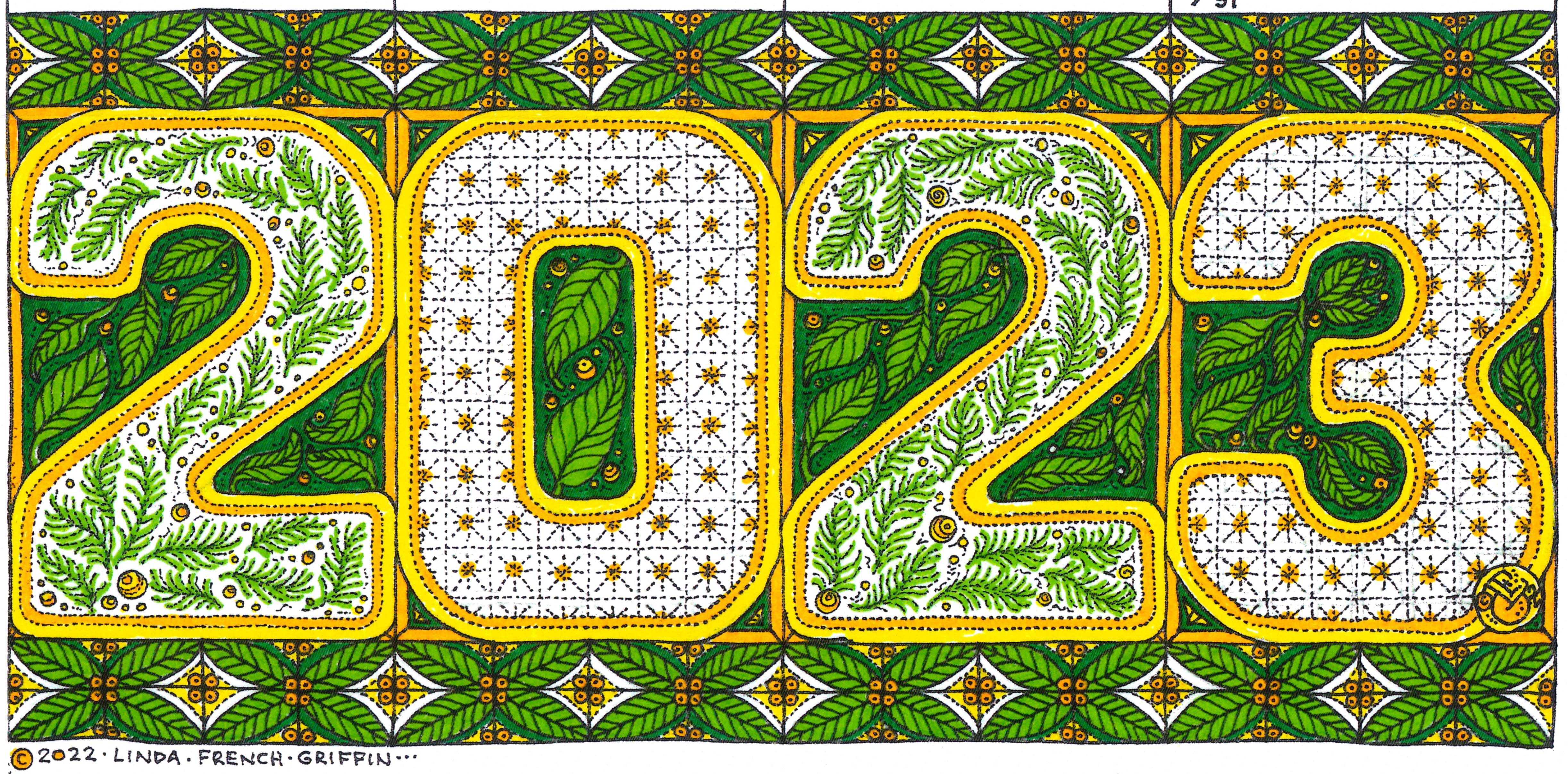
And EXTRA SPECIAL THANKS to my companion in the universe, Linda, who allows the cosmos to flow through her pen onto paper. She has given permission for me to use a few of her drawings throughout these Earth Day celebrations.
 . 
++++++  Bill
 . 
 . 
Read Full Post »


[with poems by Jennifer Atkinson, David Radavich,
Barbara Bloom, Diane Seuss]

Today is Earth Day, April 22. Yesterday, today, and tomorrow we are publishing posts for Earth Day featuring poems submitted by our readers that touch the theme, Wild & Rewild.

Rewilding is a conservation effort aimed at restoring habitat, revitalizing ecosystems, and reintroducing animals and plants that historically occupied these wild spaces.
Rewilding may be as small as converting cow pasture to a bit of riparian Piedmont Prairie along the Mitchell River in Surry County, NC.
It may be as large as creating wildlife corridors down the chain of the Rockies for migrating pronghorns.
It may be as simple as replacing introduced invasives in your yard with native species; as complex as legislation to set aside vast tracts as wilderness.

How does the poet encounter and respond to wildness? A native wildflower struggling in an urban park? A remote mountaintop far from human presence? A wild voice speaking to the heart; wild urges propelling the soul into the unknown?

A wild call from the past, the present, into the future?
For Earth Day 2023, touch the wild. Rewild yourself.

Thank you to the readers of these pages
who have responded to my call for poems this Earth Day.
Watch for new posts on April 21, April 22, and April 23.

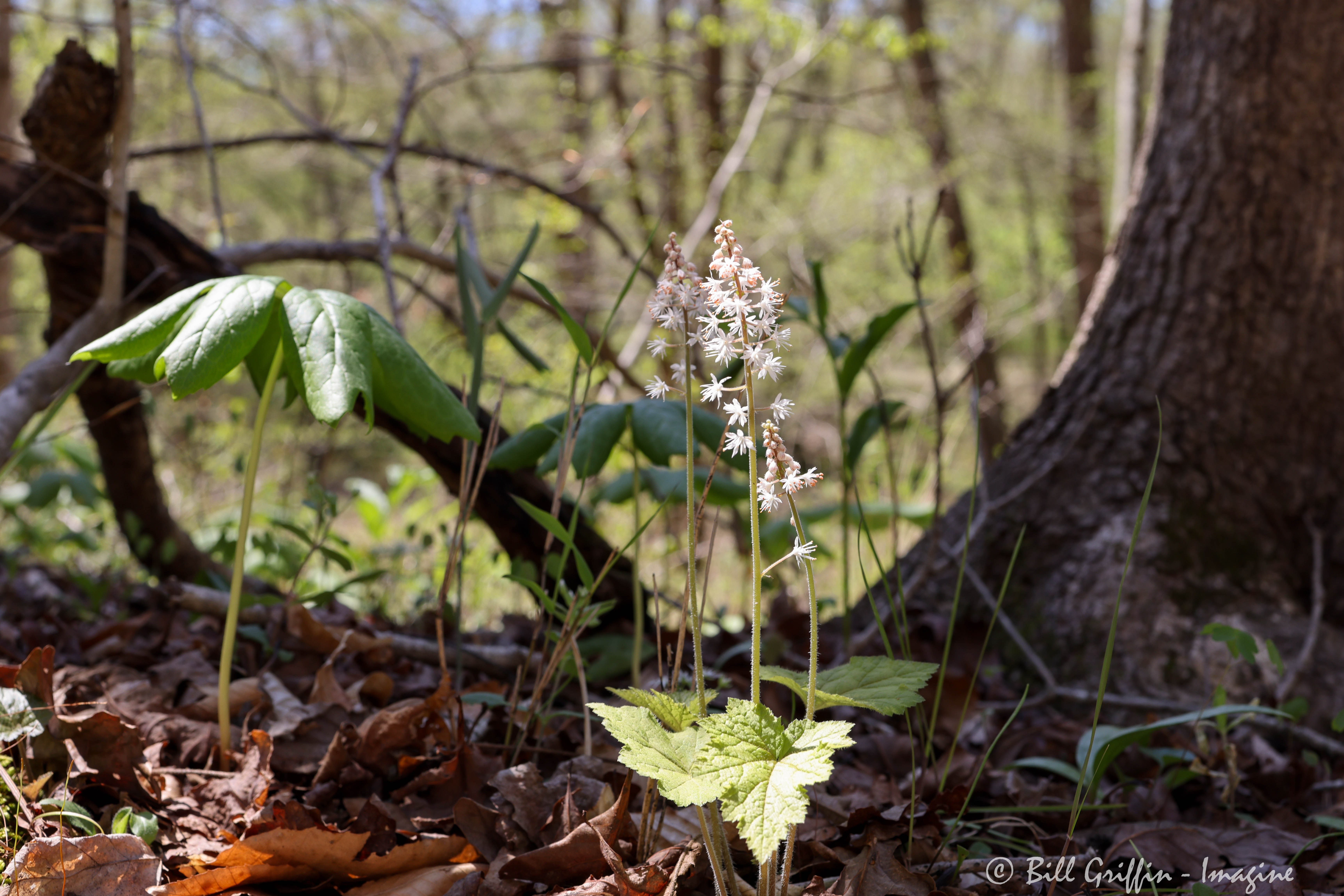
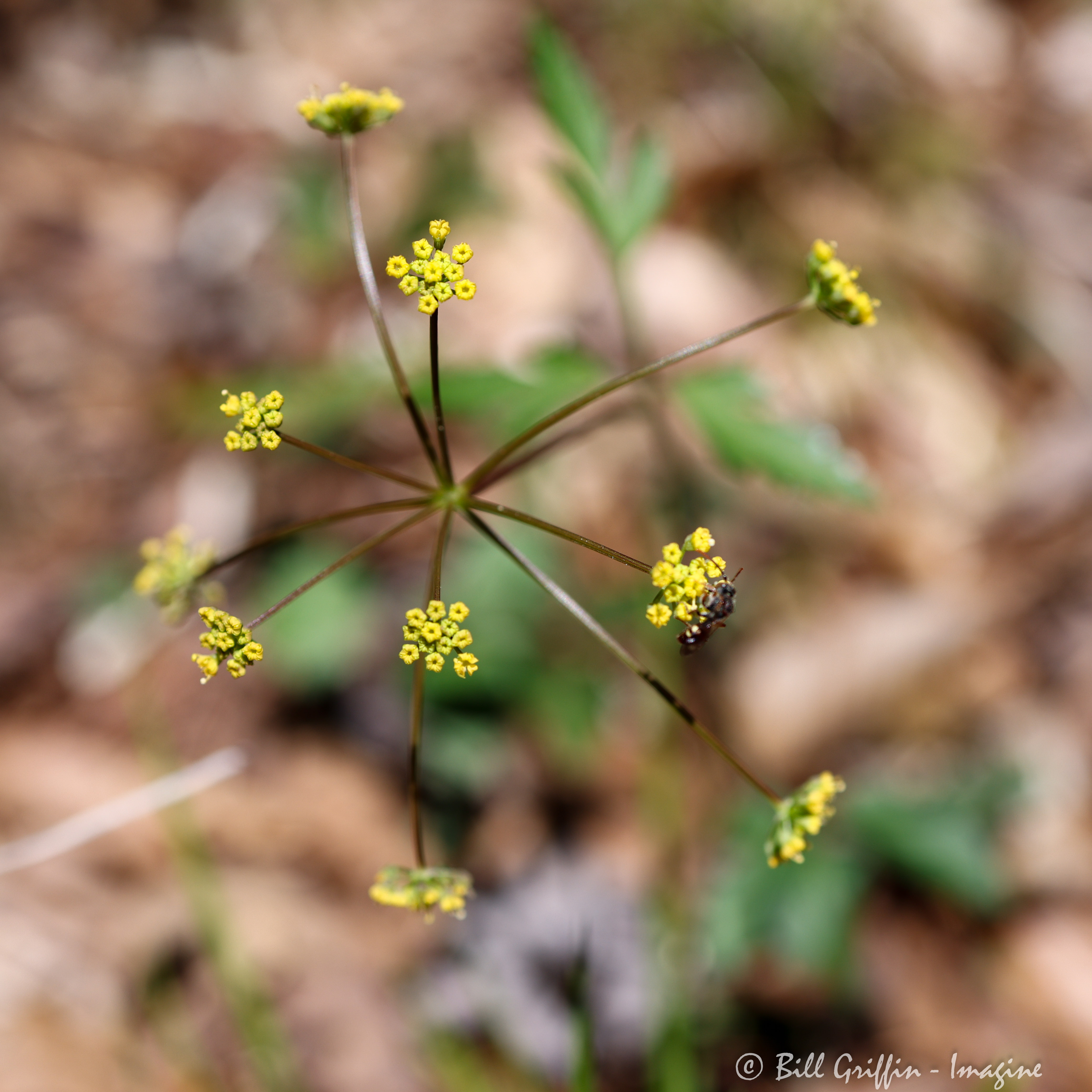
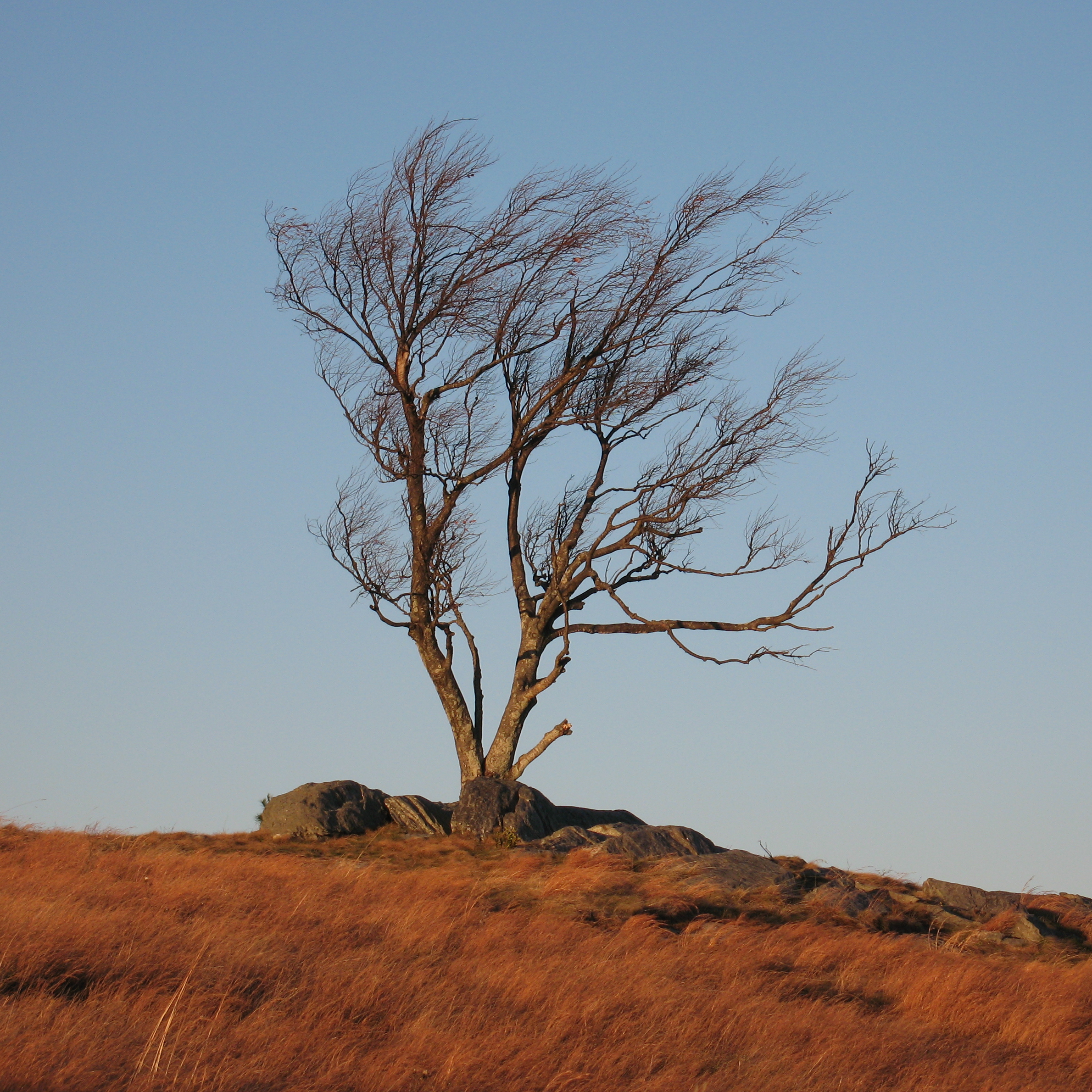
All photographs were taken April 11-17, 2023,
along the Elkin & Allegheny Nature Trail,
part of the Mountains-to-Sea Trail in North Carolina, USA.

Earth Day 2023 art by Linda French Griffin.

❦ ❦ ❦

Landscape with Jeffers and the Connecticut River

Oat stalks hang their oat-heavy heads.
Panic grass shakes in the wind
off a goldfinch’s wing. Cause,
++++ ++++ ++++ ++++ ++++ effect, and cause.

Drone, like the bee, of goldenrod and aster,
tool of the stick-tight and cockleburr,
I park and wade into high riverside grasses.

A dog gnaws on a box turtle, a spider rides
a floating log, straining the air of its midges and leafbits.
A fisherman lazy as late summer current,
++++ ++++ ++++ ++++ casts, reels, and casts.

It occurs to me I am alive, which is to say
I won’t be soon. Robinson Jeffers
from Carmel Point, in “an unbroken field of poppy and lupin”

ashamed of us all (of himself ), took solace in time,
in salt, water, and rock, in knowing
all things human “will ebb, and all/
++++ ++++ ++++ ++++ Their works dissolve.”

Me, too. And I’m not always so patient. I’ve caught myself
wishing our spoiler species gone, just swept away,
returned to rust and compost for more deserving earthly forms.

Meanwhile, flint arrowheads turn up among the plastic
picnic sporks, the glacial crags and bottom silt.
Hawks roost across the river on the now defunct
++++ ++++ ++++ ++++ ++++ nuclear power plant cooling tower,

flotsam left at the human high water mark.
Like mussel shells, like driftwood or seedpod,
like the current’s corrugations in the sand.

Here, on this side, a woodchuck sits up, lustrous,
fat on her chestnut haunches, (she thinks herself
queen of her narrow realm) and munches
++++ ++++ ++++ ++++ the fisherman’s crust.

Who wouldn’t smile? Who doesn’t pity—and love—
the woodchuck not only despite but for her like-human smugness?
How can I not through her intercession forgive
++++ ++++ ++++ ++++ ++++ for now a few things human.

Jennifer Atkinson
Selected by Bill Griffin; from the book THE THINKING EYE, Parlor Press
Appeared online at Poem-a-Day, Poems.com, on March 13, 2023

Jennifer Atkinson’s comments: “But how do we live with our knowledge and the emotional cloud of fear, guilt, anger, grief, and helplessness, a cloud that surrounds us, each of us alone, and all of us together? That cloud has become intrinsic to my ecopoetical work. Burdened with the beauty and loss and malicious awfulness ahead, weighted with the anxiety that hits whenever a winter day dawns without frost on the ground or another ‘unprecedented’ downpour rings in the gutter, how do I live?”

Who wouldn’t despair? Who wouldn’t smile? The daily slog through politics and pollution is too heavy to be borne. The daily green that lights my kitchen window while I make coffee is too beautiful to bear. This poem drives me into the inescapable reality of damaged Earth but also offers a leafy twig of hope.

– Bill Griffin / Elkin, North Carolina

[and I couldn’t resist that title after all the Robinson Jeffers I’ve been reading this past year.]

❦ ❦ ❦

Back Woods

Only in the hills behind
comes solace,

winter white against
the brown verticality of reaching

bare as need,
a few lingering green

hold-outs
crying for mercy,

leaves curled
atop themselves quiet

as abandoned
lovers.

I have already
sided with the deep creviced

ravine and its snow
cheeks incised

with cares in shadow

under a sun that
promises

open sky
open hearts.

David Radavich
first published in Blueline in 2008

This poem is marked by jagged line lengths and abrupt stanza breaks that emphasize the rawness and otherness of the natural world. The speaker feels attracted to the sharp contrasts in color and juxtaposition of “creviced ravine” with the softer “snow cheeks,” but s/he is nonetheless distant from it and can only admire the scene from afar with a kind of wishful, empathetic watching.

– David Radavich / Charlotte, North Carolina

❦ ❦ ❦

Night Swim: Phosphorescence

We’d run down the path to the dock,
our feet knowing the rocks, never stumbling,
never falling, and we’d jump right in,
the ocean calm under the summer stars,
and swim out a little ways,
lifting our hands out of the water
to watch the drops linger and fall from our fingers,
like pearls, like diamonds, and kick our legs hard
for the trail of bright silver we’d leave behind-
and finally climb out, trembling with the chill,
sorry to wipe those jewels from our bodies.

Barbara Bloom
originally published in Pulling Down the Heavens (Hummingbird Press, 2017).

I grew up on a remote coastal homestead in British Columbia, Canada. Living in such a wild and demanding place has shaped the way I see the world. The poem demonstrates how as children we were amazed by the natural world around us, but saw no separation: it was ours to be experienced. I now live in Bellingham, Washington, not too far from where I lived as a child, and surrounded by much of the same beauty and wildness. I count myself lucky for that!

– Barbara Bloom / Bellingham, Washington

❦ ❦ ❦

Young Hare

Oh my love, Albrecht Dürer, your hare
is not a spectacle, it is not an exploding hare,
it is not a projection of the young hare
within you, the gentleness in you, or a disassembled hare,
nor a subliminal or concealed hare,
nor is it the imagination as hare

nor the soul as a long-eared, soft-eared hare,
Dürer, you painted this hare,
some say you killed a field hare
and brought it into your studio, or bagged a live hare
and caged it so you could look hard at a wild hare
without it running off into thorn bushes as hares

will do, and you sketched the hare
and laid down a watercolor wash over the hare
and then meticulously painted in all the browns of hare,
toast brown, tawny, dim, pipe-tobacco brown of hare,
olive, fawn, topaz, bone brown until the hare
became dimensional under your hand, the thick hare

fur, the mottled shag, the nobility of the nose, the hare
toenails, black and sharp and curved, and the dense hare
ears, pod-shaped, articulated, substantial, erect, hare
whiskers and eyebrows, their wiry grace, the ruff of hare
neck fur, the multi-directional fur over the thick hare
haunches, and did I say the dark inside the hare

ears, how I want to follow the darkness of the hare
and stroke the dark within its ears, to feel the hare
ears with my fingers, and the white tuft, the hare
anomaly you painted on its side, and the fleshy hare
cheeks, how I want to squeeze them, and the hare
reticence, how I want to explore it, and the downturned hare

eye, it will not acknowledge or appease, the black-brown hare
eye in which you painted the reflection of a window in the hare
pupil, maybe your studio window, in the hare’s
eye, why does that window feel so intimate in the hare’s
unreadable eye, why do I press my face to the window to see the hare
as you see it, raising your chin to look and then back to the hare

on the page, the thin hair of your brush and your own hair
waving gold down your back, hair I see as you see the hare.
In the hare’s eye you see me there, my swaying black hair.

Diane Seuss
Selected by Joan Barasovska; appears in Still Life with Two Dead Peacocks and a Girl (Graywolf Press, 2018). Albrecht Dürer’s painting is titled “Young Hare.”

I’ve selected this ekphrastic poem because it reflects the artist’s fascination with capturing an exact likeness of nature, his extravagant love of the animal so clearly displayed, and the paradox of killing or caging the hare in order to worship it. Diane Seuss’s masterful craft—see the line endings—and genius for description are on display here.

– Joan Barasovska / Chapel Hill, North Carolina

❦ ❦ ❦

Read Full Post »