Posts Tagged ‘family’
Blooming
Posted in Christian themes, family, Imagery, Photography, poetry, tagged Bill Griffin, family, Finishing Line Press, imagery, Marilyn Hedgpeth, nature, nature photography, NC Poets, poetry, Southern writing, The Lightness of Reprieve on March 1, 2024| 5 Comments »
.
[with 3 poems by Marilyn Hedgpeth]
.
The Lightness of Reprieve
.
Standing at our friend’s threshold,
pockets padded with tissues,
we steel ourselves for heartache,
prepare to embrace longer than usual,
voice our true affections,
stutter through farewells.
To our surprise, she rallies,
rises from her sick bed,
responds to the attention,
the memories, the bonds we share.
Glancing back as we leave,
we see her waving from the doorway.
.
Later, we knock at the door of a cousin
recovering from a cardiac procedure.
She claims to feel ten years younger.
We fill this bonus time with laughter
and celebrate the lightness of reprieve.
.
Arriving home, we cringe to find
ruffled remains of a red-bellied
woodpecker, feathery outline still visible
on our glass door.
We gather its hollow form,
place it tenderly, respectfully,
in a shallow hole, hallowing
the fragility of life
at our own doorstep.
.
Marilyn Hedgpeth
from The Lightness of Reprieve, Finishing Line Press, Georgetown, KY; © 2024
.
❦ ❦ ❦
.
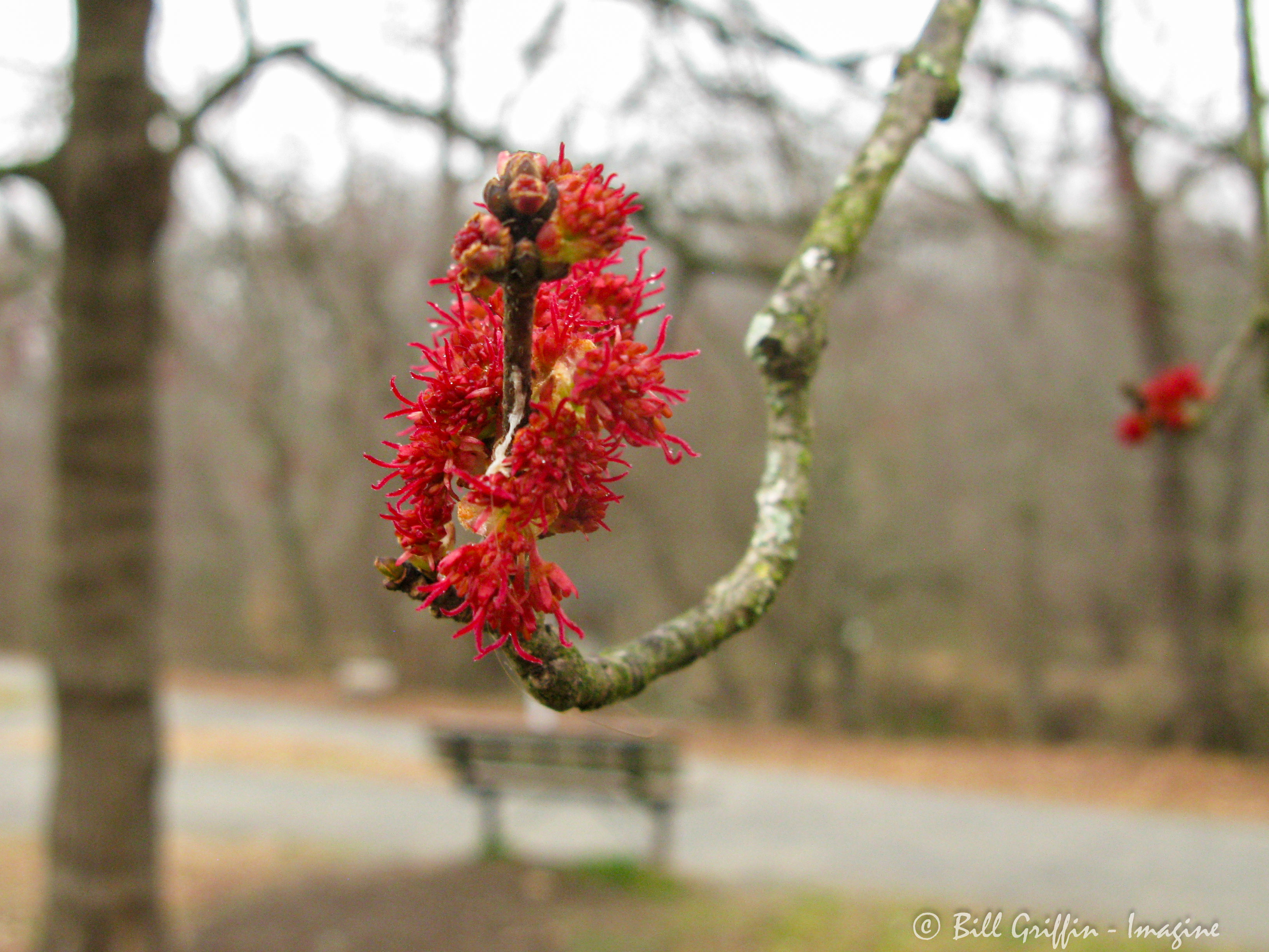
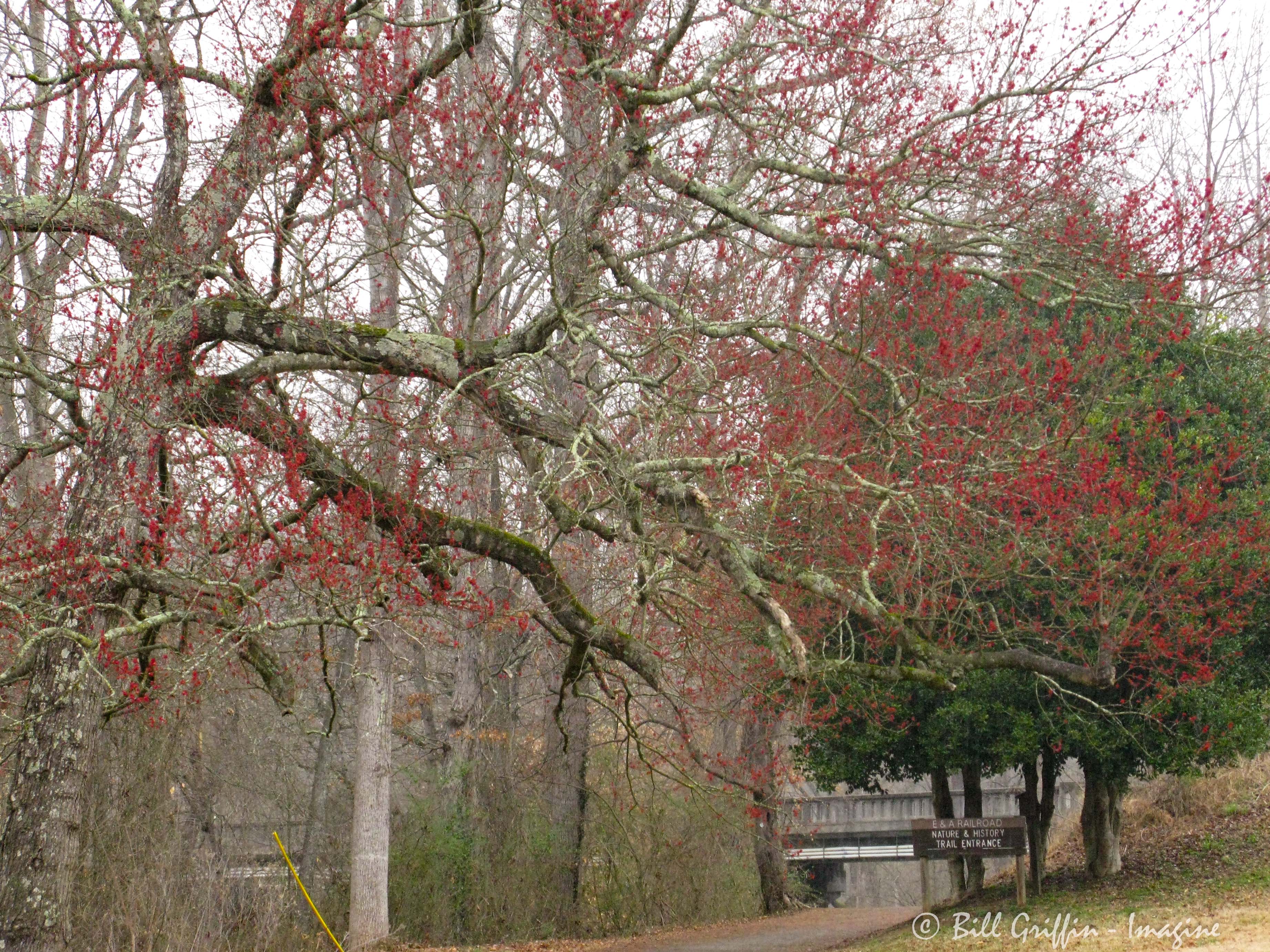
Feb 20, early morning drive: slant light across the fields sets fire to every third tree along the highway. Dark orange, deep red, their crowns glow, a bright haze of flowers at the tips of a million twigs. Almost Spring, and the first maples are blooming.
.
Witch hazel has dropped her petals, spent; now maple lifts the baton. Here in the Southeastern USA, maple is one of the earliest trees to bloom. Blossom bud break is triggered in mid-February, primarily by lengthening daylight regardless of weather, weeks before the leaf buds swell and burst. Check the pollen burn in your eyes and nose – you’ll know when those flowers have opened.
.
As opposed to most garden flowers which present both pistil and stamen in the same bloom (namely bisexual), maple is, like many trees, monoecious – there are separate male flowers and female flowers on the same tree, even on the same stem. Male red maple flowers look like little ruby crowns of spiky stamens; the female flowers are a bouquet of drooping red pistils.
.
But it gets trickier. Some red maples bear only male flowers, while others bear only female (this separation termed dioecious). And individual trees can shift. One year a tree may be male, the next year half and half, the following year all female. The prevalence of Male vs. Female flowers doesn’t seem to be either a cause or an effect of the overall health of the tree. Why?! Why do they do this? What purpose does all this variability serve the tree or the community of red maples?
.
I don’t know but the tree knows. Perhaps it’s communicating with all its neighbor maples through its underground network of mycorrhizal fungus, collaborating to decide who’s going to make lots of pollen this year and who’ll make the seeds (and maples do make lots of those little winged seeds). Perhaps their network extends throughout the local woodland and into the next county. Acer rubrum is one of the most plentiful trees east of the Mississippi, from Newfoundland to Florida. Perhaps it creates one vast collective knowing, guiding the roots, the bole, the twigs that will bud into flowers, male or female. Perhaps.
.
February into March, every morning the scarlet halo expands. Every day we’re closer to Spring. Every afternoon more sneezes and water from my eyes. Glorious! I trust those maple trees utterly – they certainly know what they’re doing.
.
.
❦ ❦ ❦
.
Mirror Images
.
Sliding into a booth,
leather cool to my legs,
we take menus in hand;
we glance around,
tempted by lavish meals
rising before other patrons.
An adjacent mirrored wall
makes the tavern seem
twice its size, twice as lively.
.
Across smooth Formica,
you sip ice water,
watching as your doppleganger
tucks a wayward wisp of hair
into her head-scarf.
Maybe that’s an alternate universe,
you say, and this table,
our point of intersection.
Maybe while we grow older,
grayer, wiser perhaps,
they grow younger
healthier, more vital and able.
.
We toast to what’s possible,
to friendship, regardless.
Condensation drips from our tumblers,
while frost still clings to those
of our glassy companions.
.
Marilyn Hedgpeth
from The Lightness of Reprieve, Finishing Line Press, Georgetown, KY; © 2024
.
❦ ❦ ❦
.
There is, after all, no reprieve. This morning as we’re talking to the palliative care nurse who is interviewing my mother, my father asks, “Does everyone end up in Hospice?” Or did he say, “Will I end up in Hospice?” It’s a fair question, even for someone not 97 years old. Every year that passes, Dad announces he’s planning to live five more years. One may hope, but perhaps one shouldn’t plan on it.
.
The title poem in this first collection by Marilyn Hedgpeth, The Lightness of Reprieve, confronts this reality. Marilyn’s friend will die of cancer very soon and yet the two of them are surprised to share a vibrant afternoon together; Marilyn’s cousin might have died from her heart condition but now feels reborn; Marilyn returns home to confront the death of a beautiful bird on her own doorstep. Other poems throughout the book touch upon our mortality from many different angles, sometimes head on, sometimes in metaphor and with the lightest touch of benediction. I sense a deep abiding theme of sharing. We rarely share with each other this common knowledge that our lives will most definitely end; what we do share is stories and a gift of ripe strawberries; imagination and laughter; silent moments of togetherness; prayer.
.
And in sharing don’t we experience reprieve? These are not poems of grief for time lost. These are poems of celebration for time shared. Marilyn has no doubt sat with the bereaved many, many times in her years as a minister, but this is not a book of counsel. These are simply poems of our simple human commonality. I step into the poems and accept my own sadness – sadness lifts as it is borne by many other shoulders. The yoke is not removed from me, but for a few steps along this journey I might almost imagine its lightness.
.
❦
Marilyn Hedgpeth recently retired as a Presbyterian (USA) Minister of Word and Sacrament after 24 years of “preaching / teaching / leading / loving life.” The Lightness of Reprieve is available from Finishing Line Press HERE
.
.
❦ ❦ ❦
.
Last Leaf
(with a nod to O. Henry)
.
One Final Rusty Leaf
clings to the dogwood tree
outside our bedroom window.
Resisting the wind’s wrestling,
it beckons me back to a time
when I painted a single leaf
on our patio wall:
my Hail Mary attempt
to prolong the life of my father
as modern medicine failed,
as the leaves fell.
.
Desperate to bring him hope;
venturing outside the boundaries
of my own knowledge and faith,
I scheduled an appointment
with a local healer, Chief Two Trees.
But when travel became impossible,
I resorted to that lone leaf
and a no holds barred prayer.
.
After he died, I continued to paint,
self-medicating stroke by stroke,
adding to my winter wall-garden:
fern, forget-me-not, bleeding heart,
wisteria, live-for-ever;
each new leaf, petal, blossom,
balm to my wound.
.
Marilyn Hedgpeth
from The Lightness of Reprieve, Finishing Line Press, Georgetown, KY; © 2024
.
❦ ❦ ❦
.
.
Wisp
Posted in family, Imagery, poetry, tagged Bill Griffin, Debra Kaufman, family, imagery, NC Poets, Outwalking the Shadow, poetry, Redhawk Publications, Southern writing on January 26, 2024| 12 Comments »
.
[with 3 poems by Debra Kaufman]
.
Walking Westerly, My Shadow Precedes Me
.
She does not hear a warning
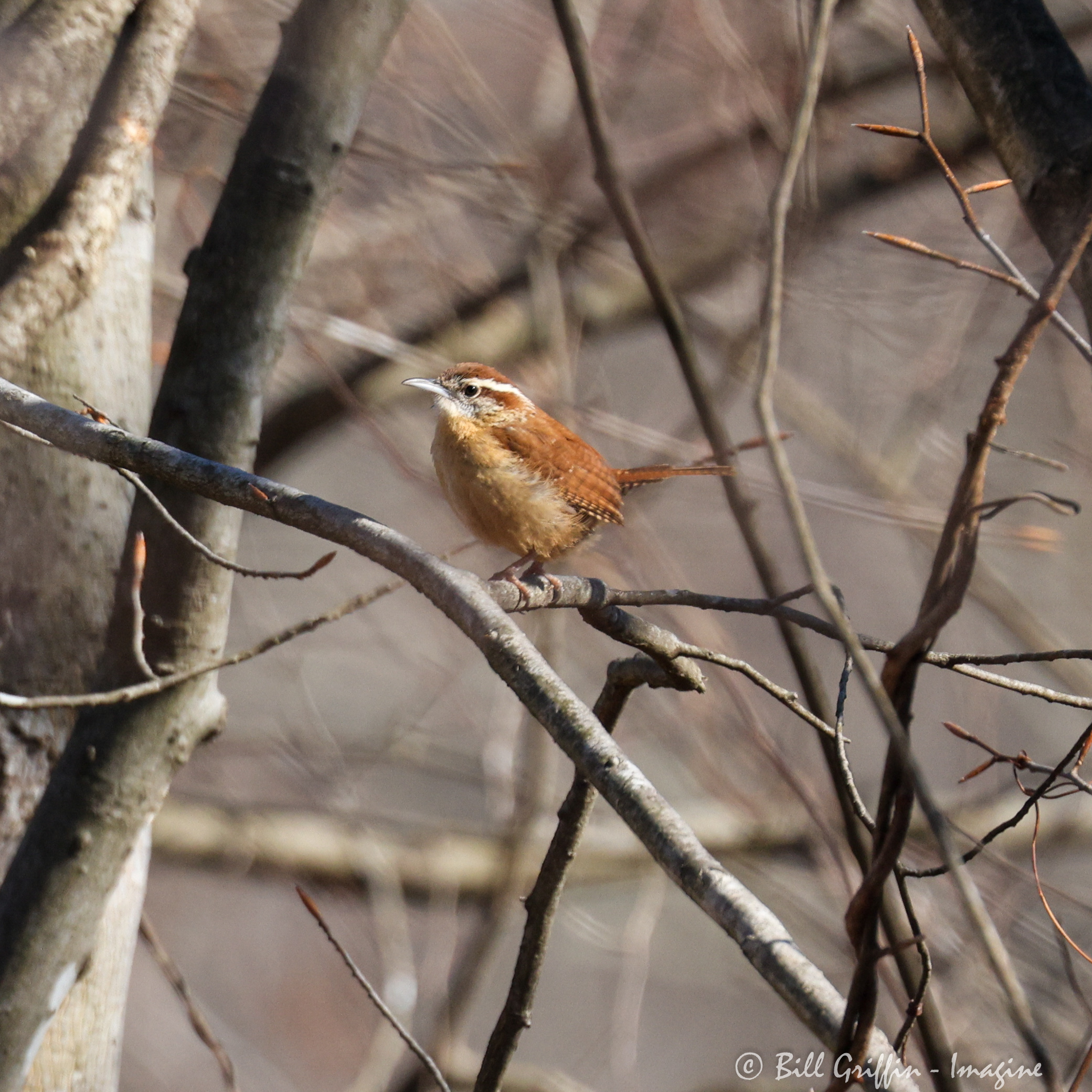
in the wren’s song,
+++++++++ as I do,
or see the ghost moon as an omen.
.
She appears to have a jauntier step,
wilder hair, longer, slimmer limbs.
.
Perhaps she is the me
I once was –
waitress, dancer, diary keeper.
.
Nothing bad
has happened yet.
+++++++++ Soon
.
she will trail a dangerous
fragrance, be sniffed out,
tracked, pinned down.
.
Wind trembles the beech leaves.
The wren calls again.
.
I step toward the past,
she into the future
.
Debra Kaufman
from Outwalking the Shadow, Redhawk Press, Hickory, NC; © 2023.
.
❦ ❦ ❦
.
If you believe that everything is connected;
if you believe that matter and energy are conserved (not to mention angular momentum);
if you believe that the breath you’ve just taken into your body, its oxygen reddening your corpuscles, worked its way up the hill from the great red oak not tumbled in last spring’s tornado, and that when you release it a second from now it will begin to wisp its way back down to wait for the asters you’ve sowed on wind-scoured earth;
if you believe that your body is stardust, its phosphorus and calcium and that fleck of selenium, every element which is heavier than air;
if you believe that no distance is too far and no time too long a thread to tie everything together and extend the connection,
++++++++++ then believe this:
if you believe that matter and energy are conserved (not to mention angular momentum);
if you believe that the breath you’ve just taken into your body, its oxygen reddening your corpuscles, worked its way up the hill from the great red oak not tumbled in last spring’s tornado, and that when you release it a second from now it will begin to wisp its way back down to wait for the asters you’ve sowed on wind-scoured earth;
if you believe that your body is stardust, its phosphorus and calcium and that fleck of selenium, every element which is heavier than air;
if you believe that no distance is too far and no time too long a thread to tie everything together and extend the connection,
++++++++++ then believe this:
.
when that wisp of a woman sitting on the couch beside your father and his baby sister, white-haired tiny flit of a woman no more substance than moonbeam, when she smiles it will light up the string of a million smiles stretching back so far that every smile since must take its cue, all the way back to the very first smile twenty-five years (less thirteen days) before you were born.
.
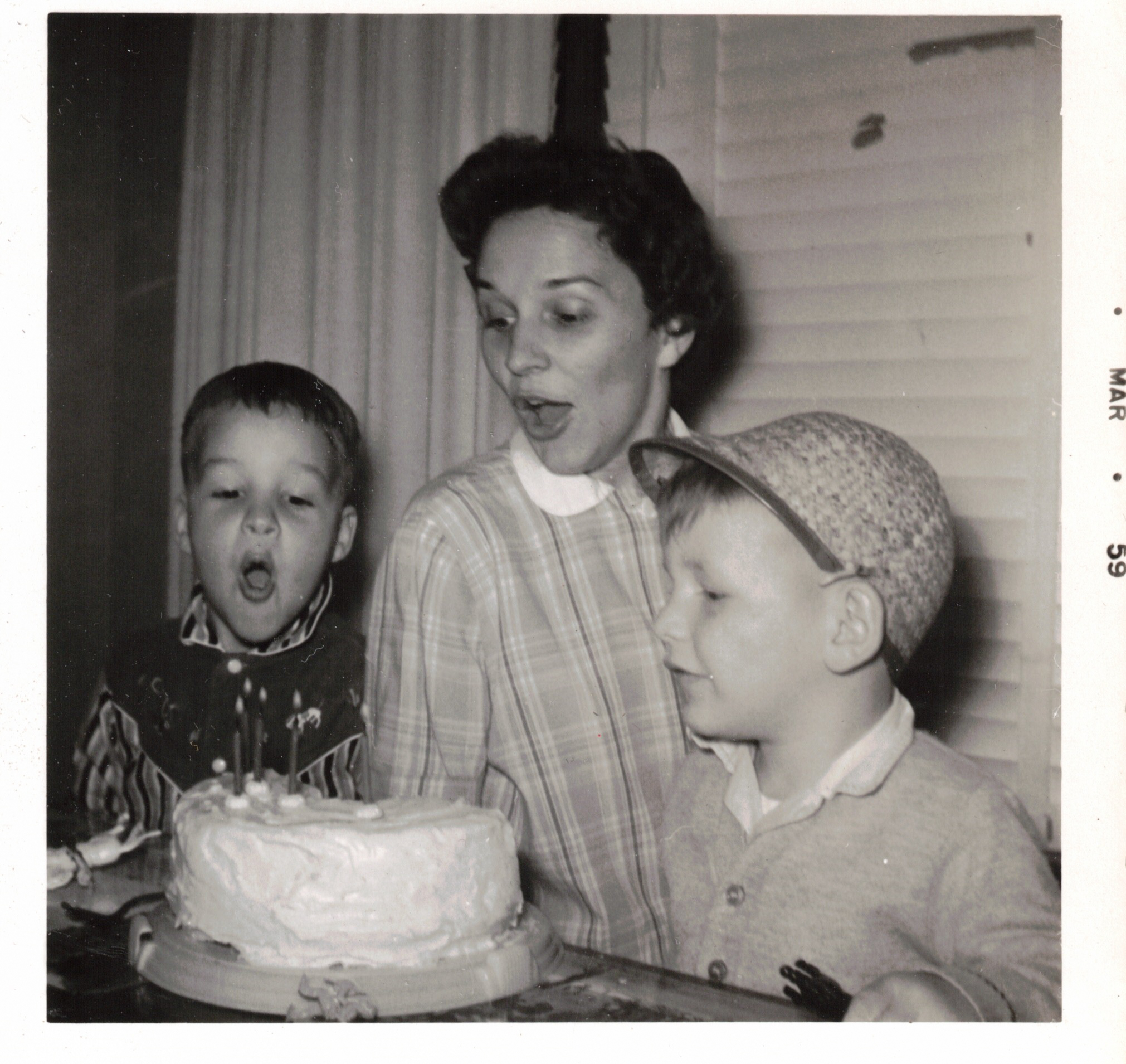
Recall those smiles you can and hold onto them — you dancing while she plays Mozart on the piano and laughs; she holding the cake while you take a deep breath to blow; beaches and playgrounds, jokes and canasta, weddings and first smiles of your own babies shared with her. Most smiles have flown to continue their cycle, petal of a flower she will notice, bug she’ll try to pick up from the carpet, a noise or a vision in some other creature’s thread of existence . . .
.
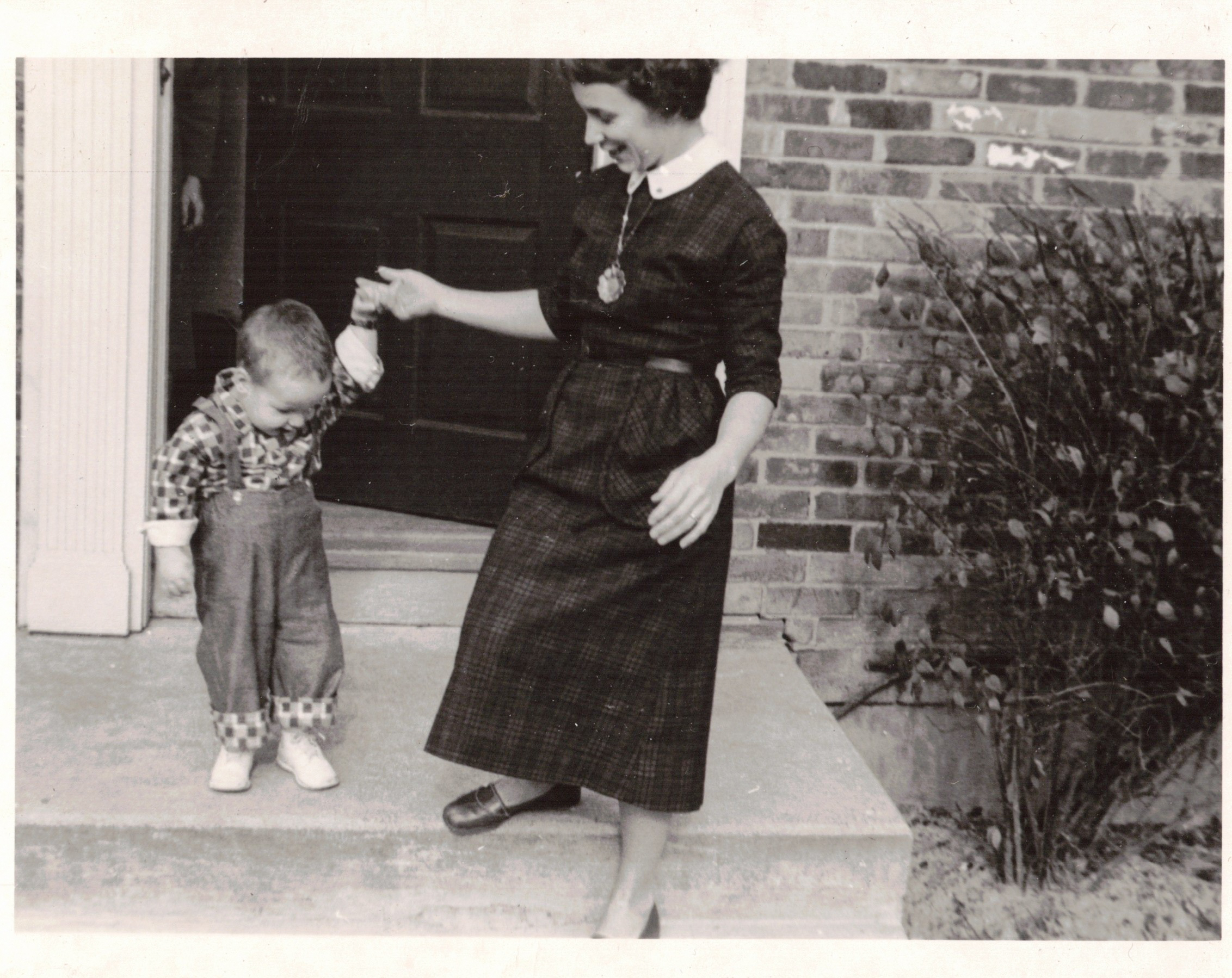
. . . but some precious few smiles are preserved in silver. Layers of atoms on glossy paper. Here’s one that her niece, your cousin, has just handed you, holding its connection to the others over seven decades in the bottom of a carton waiting for your gathering today. You hold it close for her to see and she smiles again.
.
Look! Today’s smile! When you see it, recognize its provenance, its taxonomy, its lineage and inheritance from all that have preceded it. Accept its assurance. So much lost, so much consigned to this or that flimsy drawer in the cupboard of memory (yours) and so many keys to so many drawers misplaced (hers), but still firmly by that long and winding thread as tenuous as breath connected. Every wisp connected.
.
.
❦ ❦ ❦
.
The last time my mother
.
spoke words I heard
I saw her see me in a flash:
You’re my daughter!
We walked the hall,
a circumference
around the single rooms.
Round and round.
Each time we passed
the common room
she’d point to the Christmas lights.
.
On her bed lay a book
of her wedding photos.
I named the names, some small comfort.
I sang “Jacob’s Ladder”
and she smiled in that puzzled way.
.
I meant to rub lotion on her legs –
her skin dry, tissue-paper thin –
but they were calling her
for supper. I kissed her cheek.
She kissed my hand,
did not want to let it go.
.
I hoped we’d see a few sparrows
out her window, but
dark coming early, I saw only
our ghostly selves reflected there.
.
Debra Kaufman
from Outwalking the Shadow, Redhawk Press, Hickory, NC; © 2023.
.
.
❦ ❦ ❦
.
Yet if we do not stare despair in its face
(I hear you say) how will we recognize
.
the silver sliver of moon
when it hangs suspended like a dream?
.
++++++++++ from Bearing / Witness
.
Moonrise this past Monday was 2:37 PM in Elkin, North Carolina, USA. Waxing gibbous, we spot her on the one clear afternoon without rain. We won’t have to worry about finding our way through the darkened house at bedtime. Light will precede us, follow us, attend us. We can’t summon the moon or assign her course; we can only watch and trust she will return. We can only recognize and be grateful.
.
I didn’t want to get out of bed that Monday morning. All the motivations and machinations of the preceding week – phone calls, site visits, family conferences – had cooled and dissipated. Who says energy is conserved? I sat at my desk, the to-do list accruing and scrolling in my head, not knowing how to begin. And then there was Debra Kaufman’s new book waiting patiently at the top of the pile. I opened to the first poem. The clamp on my innards released and breath returned.
. .
Moon, and of course shadow, are recurring images in Outwalking the Shadow. It is no coincidence that metaphor and metamorph are nearly homologues. Images may shift their shapes and meanings, may stand in for any number of times and spaces, but moon and shadow link arms, weave a net, cast it out and draw us in. Debra does more than create contrasts. Her poems are not satisfied to simply cast light into the dark umbra of grief. Enter her lines and welcome the shadow, relive it, discover how and who it has made you. Recognize that light blinds when it glares but enlightens when it glimmers, slivers, almost ephemeral as dream.
.
Recognize that each of us lives with our shadow, and that even moonlight may cast one. Debra’s book is dedicated to her mother, Kathleen, and many of the poems explore her life, their life together, her final days, thereafter. Debra’s poems encompass much, much more than grieving, however. In many of her lines, I hear her speaking the very phrases I have needed to speak to my own heart. Perhaps you, too, have had mornings when you found it a burden to take even one step, when you felt empty and powerless and alone. These poems admit that. We are human and we carry our shadows. But these poems surprise themselves with sudden flashes and connections – a summoning of crows, a lesson learned, a visitation by spirits. Every time I turn another page, I discover more of what I need. Come, let us walk out together. There may still be joy if we open ourselves.
.
❦
.
More about Debra Kaufman, Outwalking the Shadow from Redhawk Press, and how to purchase HERE
.
❦ ❦ ❦
.
Let my heart swing open
.
like French doors to a garden of blowsy flowers,
saloon doors where Kitty serves shots of rye,
a screen door with a farm wife waving you in,
.
or let my heart be a picture window
through which I see everyone I have ever loved,
my breath steaming the glass, come in,
.
we’ll turn up the party lights,
show all the passersby we’re dancing,
or better yet, let’s all spill out into the street,
.
my heart a village music festival –
welcome teachers, firefighters, cashiers, nurses,
shysters and spinsters, salsa dancers a skateboarders,
.
cat lovers, detasselers, twirlers and high-steppers,
come in you scuffed shoes, rhinestones, flannels,
I’ll be a mirror reflecting all y’all’s kindness,
.
your clumsy moves and broken bits,
your sad patience and patient wildness,
your generosity, crankiness, haunted dreams –
.
I’ll be the hostess sprinkling blessings like petals,
saying, The universe is here and so are we –
champagne for everyone!
.
Debra Kaufman
from Outwalking the Shadow, Redhawk Press, Hickory, NC; © 2023.
.
.
❦ ❦ ❦
.
.
❦ ❦ ❦
.


Very true. And not that she ignores the grief and woe of living but somehow makes all of life a…