Feeds:
Posts
Comments

Posts Tagged ‘family’

[with 3 poems by Maria Rouphail]

A stroll down the beach at dusk – I was sixteen and she was almost. Would you call it our first date? I think we held hands. I know we didn’t kiss. Fifty-four years later the beach is still there, although not the pier we walked beneath, things the earth makes, less so human desires. This afternoon she is upstairs writing a letter and I have just cleaned up after lunch. Where have we been and where are we going? Well, in an hour we’ll take a walk beside the river.

Oh Wise One, long-married, specialist in domestic bliss and expert in the cultivation of love, impart your secrets! Are you kidding me? I’ve spent all morning making a list and it is exactly two items long: (ONE) Never Imagine You Know; and, (TWO) Never Quit Working to Find Out. Number One becomes apparent every time I assume or jump to a conclusion or utter as comfort some empty platitude (or, cardinal sin, just wasn’t paying attention). Number Two is the quick corollary as Number One’s immediate aftermath and the sooner engaged the better – not Working to Find Out usually invites conflagration.

Which is probably why love is such a necessary obsession of poetry. Infatuation is the hot minute of attraction; love is the cool hour of reflection. Poetry may germinate unseen underground as the temperature rises, but its sprout becomes visible when the creature is leaned back in chair, pen hovering listless over paper, the image of affection growing into clarity within the cool, reflective mind. And as I reflect further, I perceive that the seeds of most of my own love poems involve messing up with Number One and Two, above, only to be rescued and reconciled by the big sighs and small gods of forbearance and forgiveness.

Even now I imagine her at her desk, pen and paper, that elegant typographer’s script, those meticulous phrases – oh yes, I want to love her and I do.

❦ ❦ ❦

Annunciation
++++ (after Lynn Emmanuel)
+++++++ for Robert

He wants to be born.
So first he enters the dream of the woman
a doctor has told will never conceive.

He lets himself in through the gate
of her sleeping brain
during a hard snow
in late November.

He give himself eyes and hair like hers,
wraps himself in thick fleece, his fingers curving
over the hem, like a paws of a burrowing mammal.

She wakes with the dream of him still clinging,
I’ve birthed a back-eyed baby boy, I’ve carried him
up the aisle of the church to the baptismal font.

She goes to the window where slantwise
snow erases the houses across the street.
Only a curbside lamp on its iron stalk breaks through,
++++ a yellow clot in the boreal blur.

After she has laid aside the dream or forgotten it,
he enters her body sometime in January.
His arrival ignites engines and fires up turbines

with power unknown to her, making her whole
being a construction zone for the laying of foundations,
the framing of the many rooms of his evolving body.

In April, cornerstone and beam well set and level,
he shows her his brain and spine, a string of perfect lights
blinking the in the midnight sky of the sonogram.

The doctor is speechless. But the woman
rehearses the names of her beloved living and dead.
She will pick one of them.

She watches the tiny heart strobe in its cage.
Beacon of what is coming in October.
A swaddling blanket. A christening.

Maria Rouphail
from All the Way to China, Finishing Line Press, © 2022

❦ ❦ ❦

One line echoes in each poem I read in Maria Rouphail’s collection: Even then, / I could not say you did not love me. All the Way to China is a conversation between daughter and mother that spans decades, even generations. Many different speakers inhabit the poems, in many places and circumstances, but the voice of daughter/mother is audible in each, even if only as a whisper. Through harsh treatments, neglect, destructive choices, and pain that whisper of love still works to keep itself alive.

Love is work. In one of Fred Chappell’s novels, a youngster asks his old grandfather how is it possible that he and grandmother have managed to stay married for so many years. The old guy’s answer? “You don’t leave, and you don’t die.” In Maria’s poems, leaving is a frequent threat and dying too soon is a reality, but the magical work of poetry allows the dialogue to continue in spite of, maybe even because of, mortality. Telling a story allows it to discover its meaning. Telling a hard and painful story allows it to discover new meaning that just may open a door to healing.

The final two poems in the book bring meaning and healing forward and invited me to turn back to the first page and read the cycle again: Laudate Omnes (in praise of everything), and Mother and Daughter, Two Voices – III, Daughter. Yes, this collection is the work of love.

❦ ❦ ❦

Laudates Omnes
++++++(for Asher, young grandson)

Let’s talk
to the bees.

++++++Let’s say

Ladies, thank you
each and all

for coming this day
to the hyssop and bergamot.

Thank you
for diving

into the boggy throats
of pale blue sage.

Thank you
for letting sticky

pollen crawl
up your hairy legs.

Thank you
for the sweet spit of the hive.

Now to the trees turn and say,
Brothers,

I don’t know all your name
or what families you belong to,

but you over there,
tall and handsome with your spiky green:

if you and I were lone survivors
of a meteorological catastrophe,

I’d live with you.
I’d hole up under your branches.

Leaves and rain
would be our food and drink each day.

Now let’s say thanks and thanks and thanks
for the hive’s honeyed paradise,

for meadows of thick-maned mares
drowsing with their foals,

for bees, horses, and trees,
ocean, plains, and the sky.

Let’s say thanks
for the darkness between stars

which is not an emptiness,
but a rookery

where God dreams us.
And if we found ourselves

on a comet flying
beyond Pluto’s orbit,

even there we would
be not separate and alone,

but we would be
as now we are

in the heart of things,
the very heart.

Maria Rouphail
from All the Way to China, Finishing Line Press, © 2022

❦ ❦ ❦

Margie’s Daughter Talks Back

Wood. Shell. Bone. Buttons
in every size and color your mother saved for mending.

You, too, saved them,
in the round cookie tin on a high shelf.
Rainy days, and you’d take it down
and we’d remember
buttons from faded summer dresses,
buttons from coats returned from war,
buttons with bits of garments still clinging,
flesh and tendon of them. Red grosgrain,
shock of silver wedding silk,
fingers of fragrance still clinging.
Attar of rose and vetiver still clinging.
Heft and pour, the cascading clack and clatter
of buttons, like coins or pretend jewels.

You, too, loved them.
You and I together breathed the old secrets hanging
like the kitchen smells in that Bronx apartment.
Buttons from a man’s flannel before zippers were.
Your father’s, you said. And the blue bruise
your mother tried to hide with a lock of hair when
you, looking, and in your small voice, asked,
What happened to your eye, Mama?
as she reattached the right arm of your school sweater.
In the next room the bleats of a baby boy,
and a darkness you hoisted onto your twelve-year-old hip
and hauled through the rest of your life.
Hauled it into my life, too.

Would you believe me if I told you?
I have survived the winter.
Here is the faith I’ve entered with myself,
rule, rite, and rigor of it:
I will not belong to whatever happens to me.
It’s OK to say these things.

Maria Rouphail
from All the Way to China, Finishing Line Press, © 2022

❦ ❦ ❦


❦ ❦ ❦

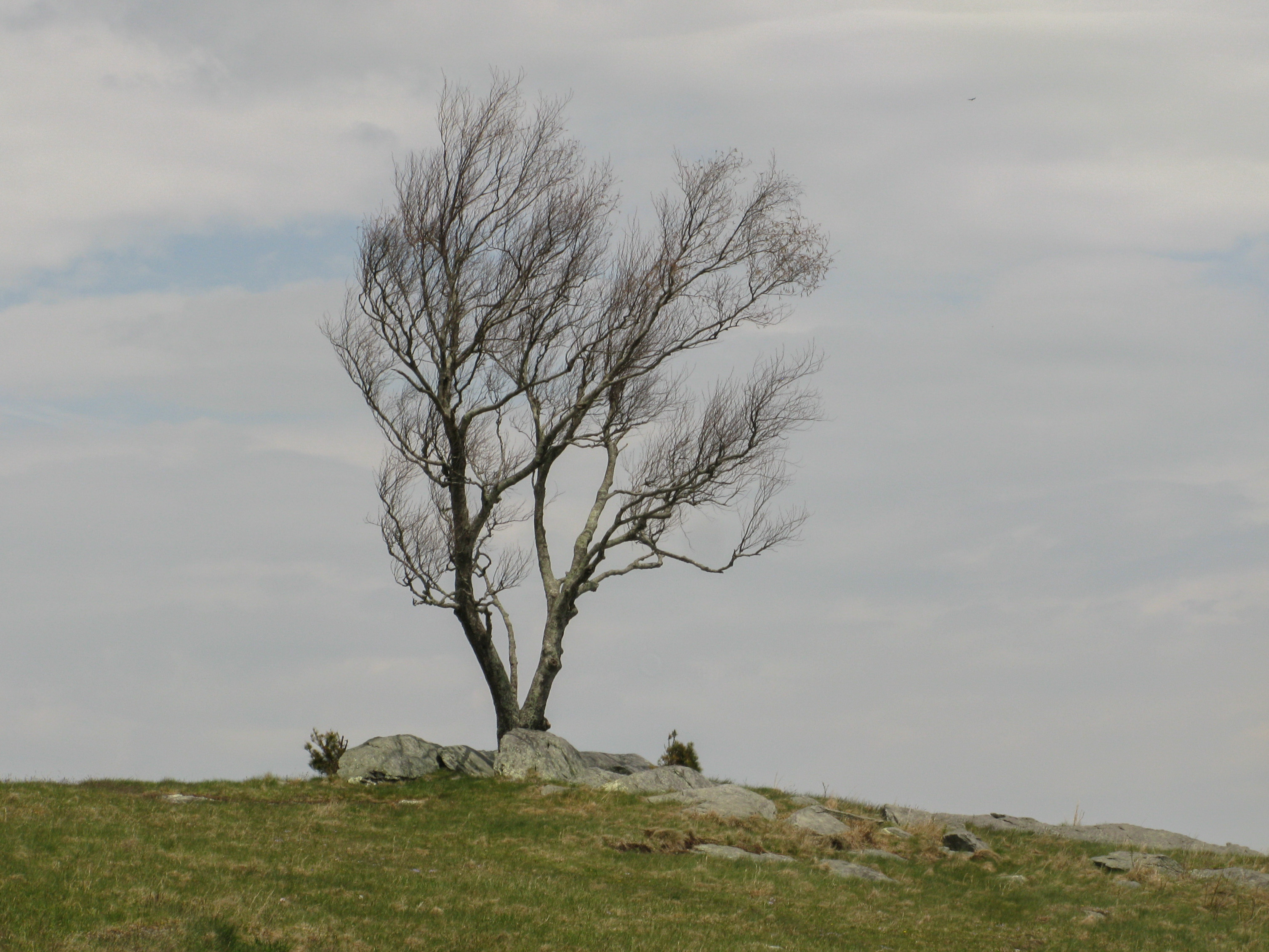
2019-02-09 Doughton Park Tree

Read Full Post »

[with 4 poems by Doug Stuber]

“Look at that one, Mom, a Rainbow Unicorn Skeleton.”

“Oh my, and all the spiders!”

We’re driving through residential Ardmore in Winston-Salem, just the two of us. An outing! On our way to the pharmacy and yes, we’ll pick up a prescription for Dad, but this is one time we made him stay home. Dad’s 96th birthday is Thursday and this is Mom’s chance to pick out a card, maybe a few goodies. And see all the Halloween decorations.

It’s rare that I have Mom all to myself. At her doctor’s appointments Dad tags along, and well he should since Mom’s memory is failing and he needs to tattle on her. The grocery store, the dry cleaners, Trader Joe’s, those are all on Dad’s agenda; usually Mom stays home with the CNA. As Mom ages she’s become more withdrawn, much more passive, but get her one on one and she’ll tell you what she thinks. So here she is riding shotgun, laughing at the yard art, game to grab her cane when we arrive at the store.

While I head to the pharmacist window I leave Mom in the Birthday Card aisle – we have five family birthdays in the next four weeks. When I return, maybe 15 minutes later, she hasn’t picked anything out. I point to a couple that seem likely. She can’t quite decide. That’s OK. I find one with dogs on it that seems right for Dad, get her approval, find some for Allison, Margaret, the Josh’s, subtly nudge her to pick one each. When we finally have our five it’s on to snack selection. I tell her if she’s not sure what Dad would like just get stuff she likes (see how that works?). When we’ve finally paid and returned to the car, I have her put Dad’s chocolates & nuts etc. into the gift bag we bought. Once she’s looked each item over she finally says, “I can’t believe you could pick all that out.” Shoot, Mom, I was wanting you to think YOU picked everything out.

Sadness is just one story we can tell ourselves. I could hold onto Mom’s bewilderment and indecision, nothing like the Mom that raised me. Or I could buckle her in as we laugh, thinking about Dad’s face when he sees his pile of loot. And I could prepare a big build up for the drive home, remind her to look out her window at the Rainbow Unicorn Skeleton, both of us enjoying it again for the first time.

❦ ❦ ❦

Hikaru

One cherry blossom detaches, falls, a single unit
allowing fruit its space, starting its new journey: island
to reflecting pond, orchard to cottage yard, daughter to
love, enhanced by the wind, if even for only six seconds.
Transformed to long-boned genius, long-yearning adult,
considerate friend, purple-green plaid from soft pink,
tan suede boots from five-petalled bloom. Hikaru, as they
say in Japan, hits the town running, arms crossed, cradling
herself like the war-torn victims of Vietnam, but not
worn or torn, she flings enthusiastic youth toward
outstretched limbs. She captures her beginning and future
simultaneously, shedding one form, embracing another,
sweating humid Spring, still awkward in this skin.
Descending unannounced, she moves among mere mortals
spreading joy, quietly demanding obedience, offering all
in exchange for all. Most cannot accept, choose an
easier, less complicated path; but those brave strong souls
born from deep roots, blessed metamorphosed
being who join Miss Cherry soon realize, if for one day,
week, or lifetime, their lives will never be the same

Doug Stuber
from Chronic Observer, Finishing Line Press, Georgetown KY, © 2019

❦ ❦ ❦

Doug Stuber is a crabby pessimistic lyrical idealist. Doug is a sharp-eyed sharp-tongued teary-eyed lover. Humankind, Doug Stuber as chronic observer constantly notices, has royally fucked up and Doug is more than ready to rub our noses in it. Human individuals, Doug reveals over and over in his poetry, are beautiful in their brokenness and he must open his heart. Poetry is silk on the breeze: at first we flinch and claw but with each turn we draw closer together, are drawn, maybe to cocoon or maybe to struggle forth with spread wings and open eyes.

I side with Clark Holtzman in his comment about Doug Stuber’s book: All the poems of Chronic Observer engage the world we are given, natural or political, fair or foul, as the given it is. Buy this book, read it. You’ll see what it means.

❦ ❦ ❦

The Mangrove Blues

The sun sinks.
A pumping heron
Chases dreams into the night,
Resting momentarily
In a life of constant motion.

The wind shakes.
Trees stretch out,
Anticipating winter.
Orange floods
Mangrove and the pines.

The cold turns.
Clouds gather
Over murky surroundings,
Drifting slowly inland
To dump a fresh-new load.

The tears run.
A skipping child
Delivers momentary reprieve.
Gloom infests
The evening of a lonely-hearted man.

Doug Stuber
from Chronic Observer, Finishing Line Press, Georgetown KY, © 2019

❦ ❦ ❦

Rules

It took this long to hide my penchant: Rhymes.
Another reading forces inner looks.
Where is Ed and his heroic Elegy for us?
What happened when we traded love of lines
For time cards, bosses, corporate crooks?

Here’s what happened: life became a chore,
There is not time left to rage creating.
Competitive suburban gardening ins a bust.
What there is left is not elating
Except the love of soul-mates through this door.

The Eagle’s Nest is now a restaurant:
You get a 15-dollar turkey plate up there.
But is a fourth Reich rising from the rust,
Or are we evil, just nonchalant?
Oklahoma City fades like sunset air:

The only lasting image is your own.
One veto and the fascists will shut us down.
One thousand points of veto from the upper crust
Without a batted eyelash from this clown.
What further outrage can we condone?

As long as TV says it is OK
Our lives submit to the worst human rages.
Just when we’ve farmed this place to dust
Some half-assed savior might come our way
Passing manna to those left: food of the ages.

Doug Stuber
from Chronic Observer, Finishing Line Press, Georgetown KY, © 2019

❦ ❦ ❦

❦ ❦ ❦

[Given the approaching season, I just have to include this final poem of Doug’s.]

KC and the Thanksgiving Prayer

I gave a thanksgiving prayer to a new family I met near Asheville. I got twigs and built a triangle (the three goddesses: corn, squash, and beans) and a square (the four directions: North – Winter and cleansing, East: Spring and beginnings, South: Summer and warmth, West: Fall and remembrances). the triangle sits above the square, because it is the goddesses who feed us: corn, squash, and beans.

You start in the square facing West and, while turning right for each new direction, say:

We salute you for your wind and fresh new sky
We salute your wonderful people and cleansing snow
We greet the day with dreams to labor by
We salute your sun and love and fun and go

To green mountains, cold river by the leaves
Of Rhododendron bushes, tall black trees.
A new friend of mine now believes,
Captured by spirits she feels and doesn’t have to see.

Doug Stuber
from Chronic Observer, Finishing Line Press, Georgetown KY, © 2019

❦ ❦ ❦

2016-01-30 Doughton Park Tree

Read Full Post »

[with 3 poems by J. S. Absher]

Building bridges. Maybe as a metaphor the phrase is not quite as worn down, rusty, and liable to drop chunks of concrete as the old Elkin bridge that carried US 21 high above the Yadkin River and railroad tracks. Built in 1931, stretching 1509 feet, named for Hugh G. Chatham, even after it was condemned by DOT in 2008 we still couldn’t bring ourselves to call in the demolition crews for that old bridge until 2010. Spanning a treacherous gulf. Lowering barriers between two rival communities. Safe passage, a more elevated view of life, making connections. Grand old metaphor.

The bridge we built today, though, is not a metaphor. It’s a 50-foot aluminum frame that will span a creek near the Mitchell River to extend the Mountains-to-Sea trail a few more miles. Mike, the engineer, showed us how to lay out the dozens of struts and braces and then we were on them like chicks on a Junebug. We put it together in three sections inside the big Surry County maintenance building at Fisher River Park; later we’ll move it into place, bolt the last connectors, and add planking. Amazing to see pallets of unrecognizable metal pieces becoming a structure.

Some of these volunteers today were born with a torque wrench in their fist but some are like me, tinkering all day with my Erector Set when I was 10. Sweating even with the giant fan blowing, pinching our fingers, joking. I still can’t get the smell of Anti-Seize out from under my fingernails. Someday soon will I hike across that bridge with my grandkids and say, “Hey, that’s one of my bolts!?” Moving out into a new world. Grand old metaphor.

September, 2022, all that’s left of the old Chatham Bridge on the Surry County side is a pleasant pedestrian garden with a long stairway from Gwyn Avenue down to Main Street. And, near the former base of one of those mighty pylons, the Angry Troll Brewery.

❦ ❦ ❦

The Day

The little room’s only window looked out
towards the ridgetop, the Dunkard church in the curve
of the two-lane, and, just beyond, the graveyard.

The morning sun sidled in past the partly
closed slats and resolved into rays and flecks
burning in the light – dust motes, I know,

and likely knew then, too, but still I watched
entranced one morning after our breakfast.
On this day I’d have otherwise forgotten,

probably my grannies were in the kitchen –
Emma with arms stretched out to read who’d died
(she’d be in the Dunkard cemetery soon),

half-crippled Sallie stringing the green beans
(years of suffering and strokes lay just ahead) —
while I stood quietly in the little room

watching the random sparkles in the sunbeam,
worlds I could move with a single breath
of poem or prayer, but could not control.

J. S. Absher
from Skating Rough Ground, © 2022 J. S. Absher, Kelsay Books, American Fork, UT

❦ ❦ ❦

worlds I could move with a single breath / of poem or prayer, but could not control

I have often been moved by Stan Absher’s poetry. Not moved as by a shiver of emotion or a momentary ah ha at his thesis or his craft. Rather I’ve felt myeself shifted into a different awareness, a new plane of being. Translocated. Enlightened. Despite the deep bedrock of conviction in all his work, despite the scholarship and the epiphany, he writes as if he is still searching, searching for truth. A spiritual seeker. So he may claim, but I consider Stan Absher a spiritual finder. I can’t help believing as I read these poems that he has encountered and grasped the numinous, wrestled with God as did Jacob.

Worlds he can move but not control? Perhaps that is the secret Stan conveys and which I would do well to take into my own heart. The seeking itself is intrinsic to the desideratum. The bridge. The poems in Skating Rough Ground cover such a lot of ground. Family history, Christian history, art history, and every topic and observation is put to diligent good work unfolding the petals of the human flower. Stan is in perfect control of his art, which makes even more believable his message that our condition enfolds a great mystery.

One other remark: even though Stan mentions Wittgenstein and his book includes sixteen erudite endnotes, his poems are never high-flown or inaccessible. He is not looking down on us mortals from the heights; he is right here among us. And he is not above a little poke in the ribs or the murmur of a wry joke. These poems are companionable companions – pick up the book and come along on the journey.

[additional information on works by J. S. Absher . . . ]

❦ ❦ ❦

The Conversation of Matter

I could hear things talk. When something was lost,
I stood in the room, asked it to show itself.
Sometimes it spoke an image in the mind – a drawer
++++ to search, a cherry
++++ bureau to look under.

Those who have spent their lives mastering tools
and techniques can hear their material speak,
David crying naked out of Carrara marble
++++ to be rescued from
++++ Agostino’s botched start.

But things usually speak by resisting –
weight too heavy to lift, edge too sharp to hold,
a moving part that grinds and heats and breaks, a poem’s
++++ application of
++++ friction to language –

slow it! stoke it hotter than Gehenna!
salt its path with grit!
keep it from slip-sliding
away on its own melt! flick sawdust into the eye
++++ to make it dilate!
++++ Without friction – so said

Wittgenstein, older and word-worn – language
does not work. If it wears skates on rough ground, it
takes a tumble. Even prayer needs resistance – a stick
++++ crosswise in the throat
++++ garbling words like a sob.

How hard to admit we love the world – how
hard it ought to be – yet its unrequiting
beauty resists abandonment: Show yourself, come out
++++ of hiding, come out
++++ of quarantine, and live.

J. S. Absher
from Skating Rough Ground, © 2022 J. S. Absher, Kelsay Books, American Fork, UT

❦ ❦ ❦

The Creator Praises Birds

Vent and crissum,
lores and crest and comb: I
made them all – the

nares, nape, those
horny bill plates – I in
feathered trochees

made them: peacock,
sparrow, tufted titmouse,
flitting jenny

filled with joy of
beaking worm, of strut and
glide, of piping

double on their
syrinx. Praise how flock and
murmuration

call out warning,
call to fly or roost or
call for pleasure:

See me! Hear me!
Pur-ty! Pur-ty! Pur-ty!
Cheer up! Pibbity!

Praise the brave-heart
tender fledgling, wobbly
winging over

houses, over
pavement, risking all to
climb the air by

beating wind I
too created, rising
heavenward in joy.

J. S. Absher
from Skating Rough Ground, © 2022 J. S. Absher, Kelsay Books, American Fork, UT

❦ ❦ ❦

Read Full Post »

« Newer Posts - Older Posts »