Feeds:
Posts
Comments

Posts Tagged ‘ecology’

 .
 . 
April 21, 2024
 . 
For, lo, the winter is past, the rain is over and gone;
The flowers appear on the earth, the time of the singing of birds is come, and the voice of the turtledove is heard in our land;
The fig tree putteth forth her green figs, and the vines with the tender grape give a good smell.
Arise, my love, my fair one, and come away.
++++++ Song of Solomon 2:11-13
 . 
❦ ❦ ❦
 . 
I Open the Window
 . 
What I wanted
wasn’t to let in the wetness.
That can be mopped.
 . 
Nor the cold.
There are blankets.
 . 
What I wanted was
the siren, the thunder, the neighbor,
the fireworks, the dog’s bark.
 . 
Which of them didn’t matter?
 . 
Yes, this world is perfect,
all things as they are.
 . 
But I wanted
not to be
the one sleeping soundly, on a soft pillow,
clean sheets untroubled,
dreaming there still might be time,
 . 
while this everywhere crying
 . 
Jane Hirshfield
from The Asking, Penguin/Random House, © 2023
 . 
Shared by Debra Kaufman, Mebane, NC, who writes:
 . 
I love the subtlety in every poem by Jane Hirsfield. In her new, profound collection, The Asking, every poem is a kind of inquiry that allows readers to join her in generously observing the world and all its beings. She is never assuming, she investigates even the smallest of gestures or creatures, to stay open each day to possibilities, while still acknowledging the darkness.
 . 
++++++ Debra
 . 
❦ ❦ ❦
 . 
. . . the road is found in the persistent walking of it . . .
++++++ Jane Hirshfield
 . 
May your trails be crooked, winding, lonesome, dangerous, leading to the most amazing view.  May your mountains rise into and above the clouds.
++++++ Edward Abbey
 . 
❦ ❦ ❦
 . 
Fall Changes
 . 
I left those three crows
the last corn in my garden,
and not one thanked me.
 . 
++++++ *
 . 
Bright August sunlight
but just north of the woodpile
a November wind.
 . 
++++++ *
 . 
September begins
with a vee of geese flying
and two fat, slow frogs.
 . 
++++++ *
 . 
All night fallen leaves
pile up under the maples—
old thoughts, cast away.
 . 
++++++ *
 . 
A ragged black glove
high in the oak’s bare branches
flies away, cawing.
 . 
++++++ *
 . 
Through the leafless hedge
a neighbor I’ve never met
waves from her window.
 . 
Patricia Hooper
from Wild Persistence, University of Tampa Press, © 2019
 . 
Shared by David Radavich, Charlotte NC, who writes:
 . 
I greatly admire, Patricia Hooper; Fall Changes is from her book Wild Persistence.  I love the quiet interactions in this poem between the human and the non-human natural worlds – so comfortable and easy, so assumed.  The haiku portraits are subtly varied yet intimately linked, and the mere contemplation of trees and birds and frogs leads the witnesses to greet each other in friendly neighborliness even though they are strangers.  This is a gentle masterpiece of evocative scene-painting.
 . 
 The other poem is called New Emigrants from my book  The Countries We Live In (Main Street Rag, 2012).  This is a more incisive critique of climate change and human greed.
 . 
++++++ David
 . 
 . 
New Emigrants
 . 
These maples have lived
here all their lives,
 . 
turned colors by the season,
offered shade, been
neighborly
 . 
on the edge of the city.
 . 
Who would have thought,
after all this time,
 . 
air could become
the enemy?
 . 
Earth has allied itself
with terrorists
 . 
who decry
the wickedness of weeds.
 . 
Water streams in
under cover of drought,
 . 
fire climbs
out with its fierce
fingers.
 . 
Now some are asking
whether it might be better
for the old limbs
 . 
to give place
to homes and people
and their saving chemicals.
 . 
Already I see wise ones
taking their leaves
north to where ice melts
into soft angels.
 . 
David Radavich, Charlotte, NC
from The Countries We Live In, Main Street Rag Publishing, Charlotte NC © 2012
 . 
 . 
❦ ❦ ❦
 . 
i thank You God for most this amazing
day:  for the leaping greenly spirits of trees
and a blue true dream of sky; and for everything
which is natural which is infinite which is yes.
++++++ e.e.cummings
 . 
❦ ❦ ❦
 . 
Voices of the Air
 . 
But then there comes that moment rare
When, for no cause that I can find,
The little voices of the air
Sound above all the sea and wind.
 . 
The sea and wind do then obey
And sighing, sighing double notes
Of double basses, content to play
A droning chord for the little throats—
 . 
The little throats that sing and rise
Up into the light with lovely ease
And a kind of magical, sweet surprise
To hear and know themselves for these—
 . 
For these little voices: the bee, the fly,
The leaf that taps, the pod that breaks,
The breeze on the grass-tops bending by,
The shrill quick sound that the insect makes.
 . 
Katherine Mansfield
from Poems, London: Constable, © 1923 and New York: Alfred A. Knopf, © 1924
 . 
Shared by Tina Baumis, Goose Creek, SC, who writes:
 . 
Ms. Mansfield enlarged the smallest of movements and voices in a Georgia O’Keefe style, drawing us into the captivating moments she observed when drowning out the sea and wind.  We too, can relate to the drone of the bigger sounds in our day to day lives and rediscover wonder, peace, and joy of nature when we allow ourselves time to immerse into nature’s voices. “The leaf that taps, the pod that breaks, The breeze on the grass-tops bending by,” are lines that speak to me.
 . 
I took a walk in the woods
and came out taller than the trees.++++++ Henry David Thoreau
 . 
This quotation elevates your spirits inspiring you to go outdoors to appreciate the magic we often overlook during our full days. Recharge. Serenity. 
 . 
The California Urban Forest Council holds an annual haiku themed contest.  I was fortunate to have my haiku listed on their Facebook pages. On February 17th, 2024, my haiku was posted. An attempt to evoke feelings as Mr. Thoreau’s quote.
++++++ Tina
 . 
positivity
gather under canopy
mood swings lift with breeze
 . 
Christina (Tina) Baumis
 . 
 . 
❦ ❦ ❦
 . 
We cannot be truly ourselves in any adequate manner without all our companion beings throughout the earth.
++++++ Thomas Berry
 . 
❦ ❦ ❦
 . 
Finally, the southwestern US is home to several species of scolecophidian blindsnakes in the genera Rena and Leptotyphlops. These are tiny and have undifferentiated body scales, meaning that all scale rows around the entire body (including the underside) are the same width. They are iridescent and extremely difficult to count, which has given rise to one of my all-time favorite quotes from a scientific paper: “We castigate the ancient lineage that begat Liotyphlops, for it is obviously the worst designed snake from which to obtain systematic data” (Dixon & Kofron 1983). 
 . 
❦ ❦ ❦
 . 
To celebrate EARTH DAY 2024 we are featuring seven posts of poems submitted by readers – poems by William Blake to Walt Whitman, Robinson Jeffers to A.R.Ammons to Linda Pastan, and by a number of contemporary poets. Check in every day or two – connect to the earth and to each other!
 . 
❦ ❦ ❦
 . 
 . 
2018-02-09 Doughton Park Tree . 

Read Full Post »

 . 
April 19, 2024
 . 
…the path to heaven 
doesn’t lie down in flat miles. 
It’s in the imagination 
with which you perceive 
this world 
and the gestures 
with which you honor it.
++++++ Mary Oliver
 . 
❦ ❦ ❦
 . 
Insects with Long Childhoods
 . 
June bug, stag beetle, cicada –
three, seven, thirteen years as larvae
 . 
feasting underground in the gentle
rot of roots and castoffs, gone generations,
 . 
only a few weeks in the light
sharp as the blades of consciousness, incessant
 . 
buzz, cosmic background of loss
threaded through late summer’s throbbing
 . 
days, lush nights, a brevity so full
it must feel like th eternity they came from.
 . 
I have a child who asks a question
of the air’s every hum. He has not learned grief.
 . 
Sky, he says, and shovels soil into his mouth,
let’s it drip out mud.
 . 
Hannah Fries
from ECOTHEO Review, 3/2024
 . 
Shared by Lynda Rush Myers, Durham NC, who writes:
 . 
The poet, Hannah Fries, reminds me of Pattiann Rogers: scientific, technical, yet capturing the dense brevity of her subjects’ lives. The turn of the poem came as a touching surprise.  Every parent can relate.  A child’s word and actions capture his reality. The mother enjoys the unforgettable moment, knowing her son will learn grief all too soon.
 .
++++++ Lynda
 . 
❦ ❦ ❦
 . 
There is only one subject:  what it feels like to be alive.  Nothing is irrelevant.  Nothing is typical.
++++++ Richard Rodriquez, in American Scholar, Spring 2002
 . 
Those who contemplate the beauty of the earth find reserves of strength that will endure as long as life lasts. There is something infinitely healing in the repeated refrains of nature – the assurance that dawn comes after night, and spring after winter. 
++++++ Rachel Carson (1907-1964)
 . 
❦ ❦ ❦
 . 
The Fly
 . 
Little fly,
Thy summer’s play
My thoughtless hand
Has brush’d away.
 . 
Am not I
A fly like thee?
Or art not thou
A man like me?
 . 
For I dance,
And drink, & sing
Till some blind hand
Shall brush my wing.
 . 
If thought is life
And strength and breath,
And the want
Of thought is death,
 . 
Then am I
A happy fly,
If I live
Or if I die.
 . 
William Blake (1757 – 1827)
from Songs of Experience; in the public domain.
 . 
Shared by Paul Karnowski, Asheville NC, who writes:
 . 
I like the connection Blake makes between the narrator and the “trivial” fly.  Humans too easily dismiss the rest of the natural world because we have the ability to “think.”  But it’s the countless thoughtless acts of blind hands – from other humans – that bring about our demise. Life and death connects us all – from the greatest thinker to the lowliest fly. 
 . 
++++++ Paul
 . 
❦ ❦ ❦
 . 
Am I leading the life that my soul, / Mortal or not, wants me to lead is a question / That seems at least as meaningful as the question / Am I leading the life I want to live.
++++++ Carl Dennis, A Chance for the Soul from Practical Gods
 . 
❦ ❦ ❦
 . 
If I Fell
 . 
Crow knows me.
Can see the difference
between me and another.
 . 
Gave me a feather
I keep
in case I need to fly.
 . 
I know Crow
from Blackbird
and Raven
yet wonder
what Crow
would want
to keep
from me.
 . 
Perhaps a token
of my essence
 . 
in case Crow needs
to dream of flying.
 . 
David Dixon
Poetry In Plain Sight 2024, NC Poetry Society
 . 
Shared by Jenny Bates, Germanton, NC, who writes:
 . 
Life is a process of waking up from a long and ancient sleep of the soul. David Dixon embodies this whether he means to or not in his poetry. This poem I chose to send, If I Fell, has also been chosen for 2024 Poetry in Plain Sight through the NC Poetry Society.
As far as my own poem, it is a plea, a prayer that each of us has to fill up the emptiness inside us in different ways…even the Earth. My poem, Conceived and Born is from my Pushcart nominated book, ESSENTIAL.
 . 
++++++ Jenny
 .
 .
Conceived and Born
 .
There’s no suckling here
 .
as though we were
 .
going to get some anyway
 .
The sanctity of Earth is a fast.
 .
The holy presence of prayer a fast.
 .
We are born of a mother that is not
dependent on us.
 .
She is a planet — and a small, fragile
one at that.
 .
Jenny Bates, Germanton NC
from Essential, Redhawk Publications © 2023
 .
 . 
❦ ❦ ❦
 .
And this our life, exempt from public haunt, finds tongues in trees, books in the running brooks, sermons in stones, and good in everything. I would not change it.
++++++ William Shakespeare, As You Like It
 .
❦ ❦ ❦
 .
To celebrate EARTH DAY 2024 we are featuring seven posts of poems submitted by readers – poems by William Blake to Walt Whitman, Robinson Jeffers to A.R.Ammons to Linda Pastan, and by a number of contemporary poets. Check in every day or two – connect to the earth and to each other!
 .
❦ ❦ ❦
 .
 . 
 .

Read Full Post »


[with poems by Jennifer Atkinson, David Radavich,
Barbara Bloom, Diane Seuss]

Today is Earth Day, April 22. Yesterday, today, and tomorrow we are publishing posts for Earth Day featuring poems submitted by our readers that touch the theme, Wild & Rewild.

Rewilding is a conservation effort aimed at restoring habitat, revitalizing ecosystems, and reintroducing animals and plants that historically occupied these wild spaces.
Rewilding may be as small as converting cow pasture to a bit of riparian Piedmont Prairie along the Mitchell River in Surry County, NC.
It may be as large as creating wildlife corridors down the chain of the Rockies for migrating pronghorns.
It may be as simple as replacing introduced invasives in your yard with native species; as complex as legislation to set aside vast tracts as wilderness.

How does the poet encounter and respond to wildness? A native wildflower struggling in an urban park? A remote mountaintop far from human presence? A wild voice speaking to the heart; wild urges propelling the soul into the unknown?

A wild call from the past, the present, into the future?
For Earth Day 2023, touch the wild. Rewild yourself.

Thank you to the readers of these pages
who have responded to my call for poems this Earth Day.
Watch for new posts on April 21, April 22, and April 23.

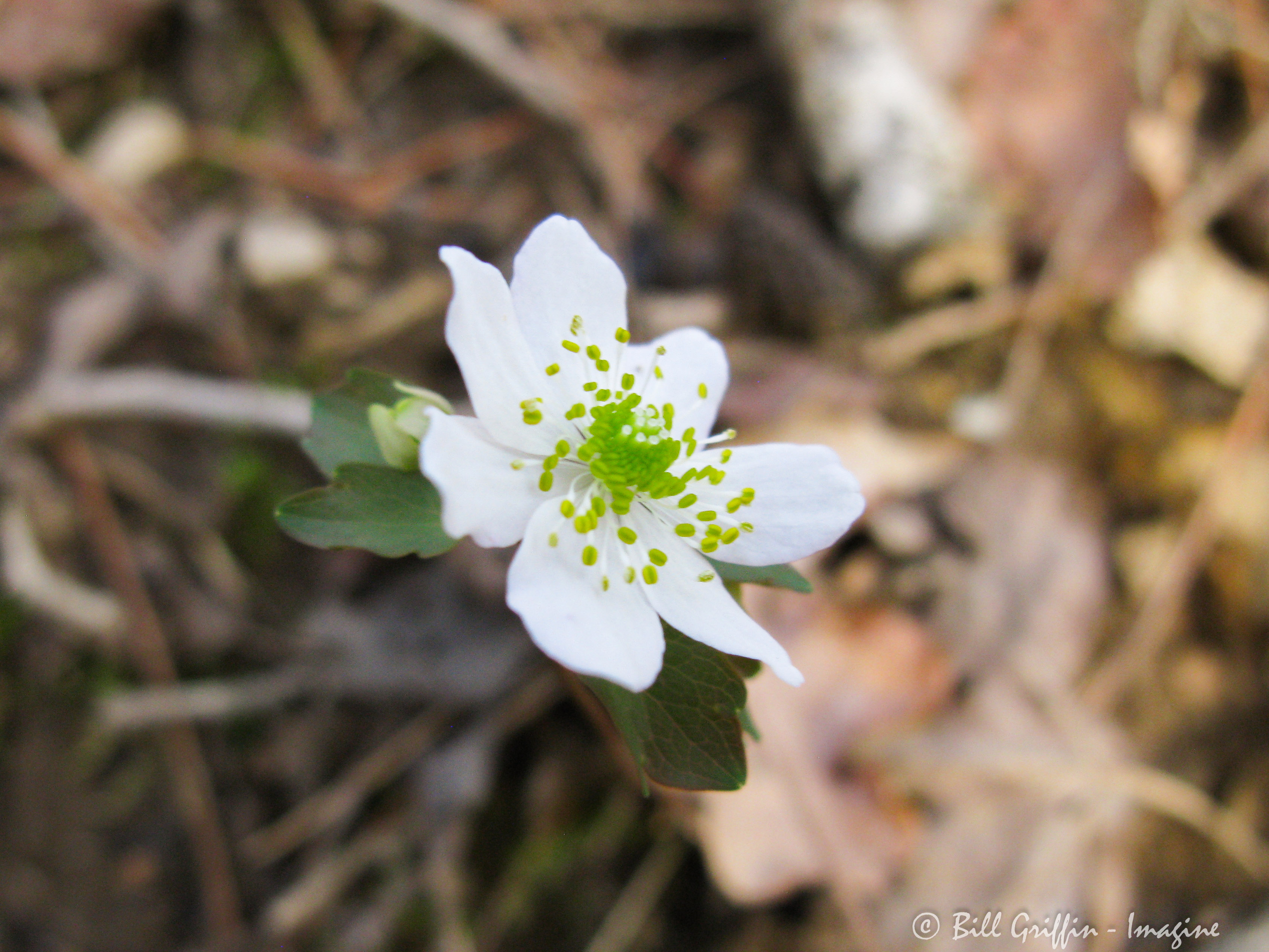
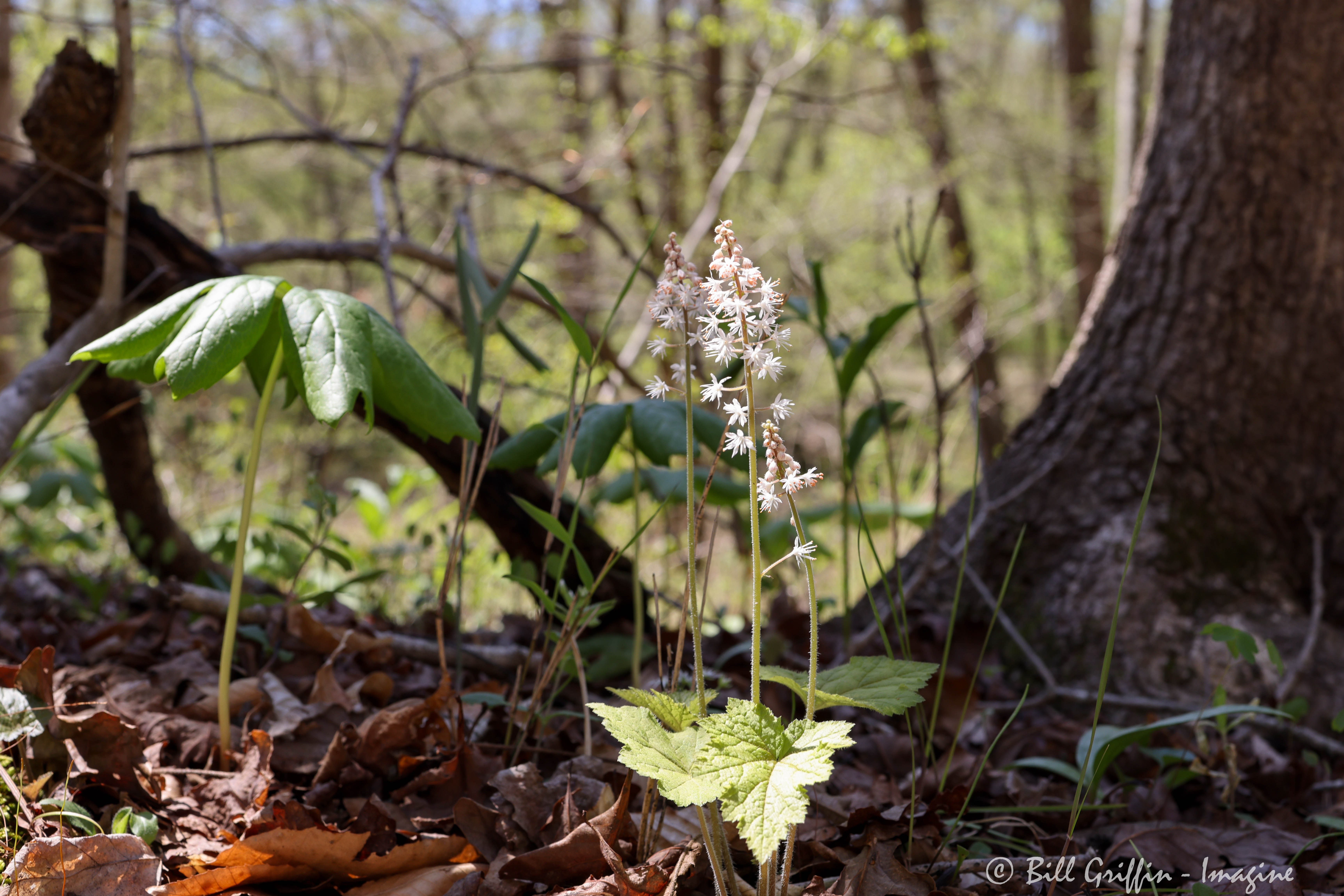
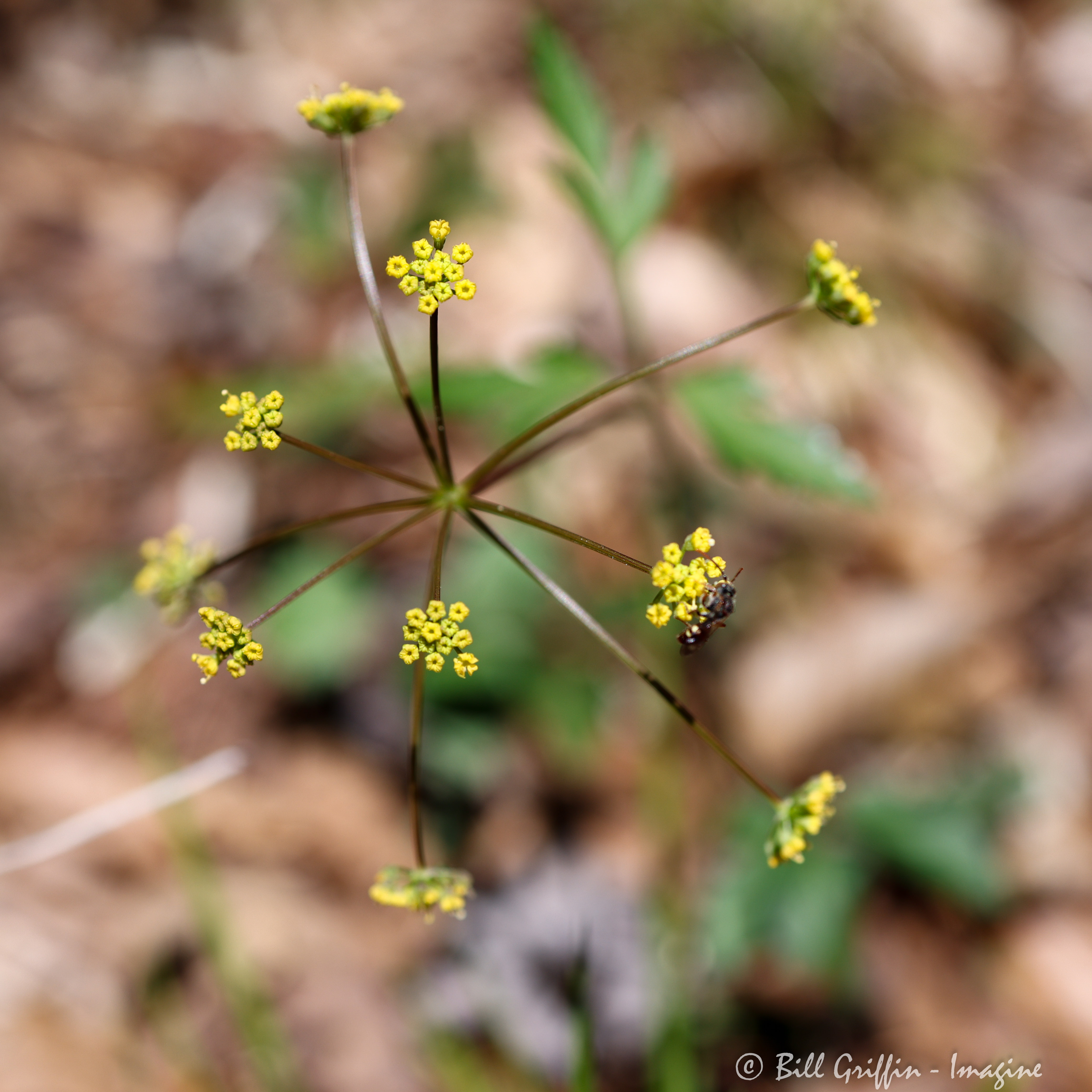
All photographs were taken April 11-17, 2023,
along the Elkin & Allegheny Nature Trail,
part of the Mountains-to-Sea Trail in North Carolina, USA.

Earth Day 2023 art by Linda French Griffin.

❦ ❦ ❦

Landscape with Jeffers and the Connecticut River

Oat stalks hang their oat-heavy heads.
Panic grass shakes in the wind
off a goldfinch’s wing. Cause,
++++ ++++ ++++ ++++ ++++ effect, and cause.

Drone, like the bee, of goldenrod and aster,
tool of the stick-tight and cockleburr,
I park and wade into high riverside grasses.

A dog gnaws on a box turtle, a spider rides
a floating log, straining the air of its midges and leafbits.
A fisherman lazy as late summer current,
++++ ++++ ++++ ++++ casts, reels, and casts.

It occurs to me I am alive, which is to say
I won’t be soon. Robinson Jeffers
from Carmel Point, in “an unbroken field of poppy and lupin”

ashamed of us all (of himself ), took solace in time,
in salt, water, and rock, in knowing
all things human “will ebb, and all/
++++ ++++ ++++ ++++ Their works dissolve.”

Me, too. And I’m not always so patient. I’ve caught myself
wishing our spoiler species gone, just swept away,
returned to rust and compost for more deserving earthly forms.

Meanwhile, flint arrowheads turn up among the plastic
picnic sporks, the glacial crags and bottom silt.
Hawks roost across the river on the now defunct
++++ ++++ ++++ ++++ ++++ nuclear power plant cooling tower,

flotsam left at the human high water mark.
Like mussel shells, like driftwood or seedpod,
like the current’s corrugations in the sand.

Here, on this side, a woodchuck sits up, lustrous,
fat on her chestnut haunches, (she thinks herself
queen of her narrow realm) and munches
++++ ++++ ++++ ++++ the fisherman’s crust.

Who wouldn’t smile? Who doesn’t pity—and love—
the woodchuck not only despite but for her like-human smugness?
How can I not through her intercession forgive
++++ ++++ ++++ ++++ ++++ for now a few things human.

Jennifer Atkinson
Selected by Bill Griffin; from the book THE THINKING EYE, Parlor Press
Appeared online at Poem-a-Day, Poems.com, on March 13, 2023

Jennifer Atkinson’s comments: “But how do we live with our knowledge and the emotional cloud of fear, guilt, anger, grief, and helplessness, a cloud that surrounds us, each of us alone, and all of us together? That cloud has become intrinsic to my ecopoetical work. Burdened with the beauty and loss and malicious awfulness ahead, weighted with the anxiety that hits whenever a winter day dawns without frost on the ground or another ‘unprecedented’ downpour rings in the gutter, how do I live?”

Who wouldn’t despair? Who wouldn’t smile? The daily slog through politics and pollution is too heavy to be borne. The daily green that lights my kitchen window while I make coffee is too beautiful to bear. This poem drives me into the inescapable reality of damaged Earth but also offers a leafy twig of hope.

– Bill Griffin / Elkin, North Carolina

[and I couldn’t resist that title after all the Robinson Jeffers I’ve been reading this past year.]

❦ ❦ ❦

Back Woods

Only in the hills behind
comes solace,

winter white against
the brown verticality of reaching

bare as need,
a few lingering green

hold-outs
crying for mercy,

leaves curled
atop themselves quiet

as abandoned
lovers.

I have already
sided with the deep creviced

ravine and its snow
cheeks incised

with cares in shadow

under a sun that
promises

open sky
open hearts.

David Radavich
first published in Blueline in 2008

This poem is marked by jagged line lengths and abrupt stanza breaks that emphasize the rawness and otherness of the natural world. The speaker feels attracted to the sharp contrasts in color and juxtaposition of “creviced ravine” with the softer “snow cheeks,” but s/he is nonetheless distant from it and can only admire the scene from afar with a kind of wishful, empathetic watching.

– David Radavich / Charlotte, North Carolina

❦ ❦ ❦

Night Swim: Phosphorescence

We’d run down the path to the dock,
our feet knowing the rocks, never stumbling,
never falling, and we’d jump right in,
the ocean calm under the summer stars,
and swim out a little ways,
lifting our hands out of the water
to watch the drops linger and fall from our fingers,
like pearls, like diamonds, and kick our legs hard
for the trail of bright silver we’d leave behind-
and finally climb out, trembling with the chill,
sorry to wipe those jewels from our bodies.

Barbara Bloom
originally published in Pulling Down the Heavens (Hummingbird Press, 2017).

I grew up on a remote coastal homestead in British Columbia, Canada. Living in such a wild and demanding place has shaped the way I see the world. The poem demonstrates how as children we were amazed by the natural world around us, but saw no separation: it was ours to be experienced. I now live in Bellingham, Washington, not too far from where I lived as a child, and surrounded by much of the same beauty and wildness. I count myself lucky for that!

– Barbara Bloom / Bellingham, Washington

❦ ❦ ❦

Young Hare

Oh my love, Albrecht Dürer, your hare
is not a spectacle, it is not an exploding hare,
it is not a projection of the young hare
within you, the gentleness in you, or a disassembled hare,
nor a subliminal or concealed hare,
nor is it the imagination as hare

nor the soul as a long-eared, soft-eared hare,
Dürer, you painted this hare,
some say you killed a field hare
and brought it into your studio, or bagged a live hare
and caged it so you could look hard at a wild hare
without it running off into thorn bushes as hares

will do, and you sketched the hare
and laid down a watercolor wash over the hare
and then meticulously painted in all the browns of hare,
toast brown, tawny, dim, pipe-tobacco brown of hare,
olive, fawn, topaz, bone brown until the hare
became dimensional under your hand, the thick hare

fur, the mottled shag, the nobility of the nose, the hare
toenails, black and sharp and curved, and the dense hare
ears, pod-shaped, articulated, substantial, erect, hare
whiskers and eyebrows, their wiry grace, the ruff of hare
neck fur, the multi-directional fur over the thick hare
haunches, and did I say the dark inside the hare

ears, how I want to follow the darkness of the hare
and stroke the dark within its ears, to feel the hare
ears with my fingers, and the white tuft, the hare
anomaly you painted on its side, and the fleshy hare
cheeks, how I want to squeeze them, and the hare
reticence, how I want to explore it, and the downturned hare

eye, it will not acknowledge or appease, the black-brown hare
eye in which you painted the reflection of a window in the hare
pupil, maybe your studio window, in the hare’s
eye, why does that window feel so intimate in the hare’s
unreadable eye, why do I press my face to the window to see the hare
as you see it, raising your chin to look and then back to the hare

on the page, the thin hair of your brush and your own hair
waving gold down your back, hair I see as you see the hare.
In the hare’s eye you see me there, my swaying black hair.

Diane Seuss
Selected by Joan Barasovska; appears in Still Life with Two Dead Peacocks and a Girl (Graywolf Press, 2018). Albrecht Dürer’s painting is titled “Young Hare.”

I’ve selected this ekphrastic poem because it reflects the artist’s fascination with capturing an exact likeness of nature, his extravagant love of the animal so clearly displayed, and the paradox of killing or caging the hare in order to worship it. Diane Seuss’s masterful craft—see the line endings—and genius for description are on display here.

– Joan Barasovska / Chapel Hill, North Carolina

❦ ❦ ❦

Read Full Post »

« Newer Posts - Older Posts »