Feeds:
Posts
Comments

Posts Tagged ‘Earth Day Every Day’

 . 
April 19, 2024
 . 
…the path to heaven 
doesn’t lie down in flat miles. 
It’s in the imagination 
with which you perceive 
this world 
and the gestures 
with which you honor it.
++++++ Mary Oliver
 . 
❦ ❦ ❦
 . 
Insects with Long Childhoods
 . 
June bug, stag beetle, cicada –
three, seven, thirteen years as larvae
 . 
feasting underground in the gentle
rot of roots and castoffs, gone generations,
 . 
only a few weeks in the light
sharp as the blades of consciousness, incessant
 . 
buzz, cosmic background of loss
threaded through late summer’s throbbing
 . 
days, lush nights, a brevity so full
it must feel like th eternity they came from.
 . 
I have a child who asks a question
of the air’s every hum. He has not learned grief.
 . 
Sky, he says, and shovels soil into his mouth,
let’s it drip out mud.
 . 
Hannah Fries
from ECOTHEO Review, 3/2024
 . 
Shared by Lynda Rush Myers, Durham NC, who writes:
 . 
The poet, Hannah Fries, reminds me of Pattiann Rogers: scientific, technical, yet capturing the dense brevity of her subjects’ lives. The turn of the poem came as a touching surprise.  Every parent can relate.  A child’s word and actions capture his reality. The mother enjoys the unforgettable moment, knowing her son will learn grief all too soon.
 .
++++++ Lynda
 . 
❦ ❦ ❦
 . 
There is only one subject:  what it feels like to be alive.  Nothing is irrelevant.  Nothing is typical.
++++++ Richard Rodriquez, in American Scholar, Spring 2002
 . 
Those who contemplate the beauty of the earth find reserves of strength that will endure as long as life lasts. There is something infinitely healing in the repeated refrains of nature – the assurance that dawn comes after night, and spring after winter. 
++++++ Rachel Carson (1907-1964)
 . 
❦ ❦ ❦
 . 
The Fly
 . 
Little fly,
Thy summer’s play
My thoughtless hand
Has brush’d away.
 . 
Am not I
A fly like thee?
Or art not thou
A man like me?
 . 
For I dance,
And drink, & sing
Till some blind hand
Shall brush my wing.
 . 
If thought is life
And strength and breath,
And the want
Of thought is death,
 . 
Then am I
A happy fly,
If I live
Or if I die.
 . 
William Blake (1757 – 1827)
from Songs of Experience; in the public domain.
 . 
Shared by Paul Karnowski, Asheville NC, who writes:
 . 
I like the connection Blake makes between the narrator and the “trivial” fly.  Humans too easily dismiss the rest of the natural world because we have the ability to “think.”  But it’s the countless thoughtless acts of blind hands – from other humans – that bring about our demise. Life and death connects us all – from the greatest thinker to the lowliest fly. 
 . 
++++++ Paul
 . 
❦ ❦ ❦
 . 
Am I leading the life that my soul, / Mortal or not, wants me to lead is a question / That seems at least as meaningful as the question / Am I leading the life I want to live.
++++++ Carl Dennis, A Chance for the Soul from Practical Gods
 . 
❦ ❦ ❦
 . 
If I Fell
 . 
Crow knows me.
Can see the difference
between me and another.
 . 
Gave me a feather
I keep
in case I need to fly.
 . 
I know Crow
from Blackbird
and Raven
yet wonder
what Crow
would want
to keep
from me.
 . 
Perhaps a token
of my essence
 . 
in case Crow needs
to dream of flying.
 . 
David Dixon
Poetry In Plain Sight 2024, NC Poetry Society
 . 
Shared by Jenny Bates, Germanton, NC, who writes:
 . 
Life is a process of waking up from a long and ancient sleep of the soul. David Dixon embodies this whether he means to or not in his poetry. This poem I chose to send, If I Fell, has also been chosen for 2024 Poetry in Plain Sight through the NC Poetry Society.
As far as my own poem, it is a plea, a prayer that each of us has to fill up the emptiness inside us in different ways…even the Earth. My poem, Conceived and Born is from my Pushcart nominated book, ESSENTIAL.
 . 
++++++ Jenny
 .
 .
Conceived and Born
 .
There’s no suckling here
 .
as though we were
 .
going to get some anyway
 .
The sanctity of Earth is a fast.
 .
The holy presence of prayer a fast.
 .
We are born of a mother that is not
dependent on us.
 .
She is a planet — and a small, fragile
one at that.
 .
Jenny Bates, Germanton NC
from Essential, Redhawk Publications © 2023
 .
 . 
❦ ❦ ❦
 .
And this our life, exempt from public haunt, finds tongues in trees, books in the running brooks, sermons in stones, and good in everything. I would not change it.
++++++ William Shakespeare, As You Like It
 .
❦ ❦ ❦
 .
To celebrate EARTH DAY 2024 we are featuring seven posts of poems submitted by readers – poems by William Blake to Walt Whitman, Robinson Jeffers to A.R.Ammons to Linda Pastan, and by a number of contemporary poets. Check in every day or two – connect to the earth and to each other!
 .
❦ ❦ ❦
 .
 . 
 .

Read Full Post »

 . 
April 15, 2024
 . 
In the end we will conserve only what we love.  
+++ We love only what we understand. 
++++++ We will understand only what we are taught.
+++++++++ Baba Dioum, Senegalese environmentalist
 . 
Everyone enjoys the smell of earth after rain. No one wants to cough every breath.
Everyone thirsts for a drink of cool water. No one wants to sicken from drinking it.
Everyone needs bread. No one wants to go hungry.
 . 
On April 22, 2024 every human being will wake up on the only planet where humans can live (well, not counting a handful of folks waking up on the International Space Station). Seems like cause enough to celebrate! To be honest, though, the threat of what we have lost and are losing so often seems much greater than the joy of what we have saved and are preserving.
 . 
How far have we come since the first Earth Day in 1970? It was just eight years earlier that Rachel Carson published Silent Spring, the wake up call to industrial pollution and the poisoning of the earth. In 1970 there was no Environmental Protection Agency, no Occupational Health and Safety Administration, no Clean Air Act or Clean Water Act. When we protested air and water pollution, we had little inkling of the even greater threat; we couldn’t imagine needing an Intergovernmental Panel on Climate Change.
 . 
Twenty million Americans marched, demonstrated, and celebrated that first Earth Day. Ten percent of the nation’s population. I was a junior in high school photographing our events for the year book: carrying a coffin through the parking lot to signify the dying planet. Earth Day is now celebrated in 193 countries; one billion people are expected to commemorate Earth Day 2024. That still leaves some eight billion to get on board. Legislation and politics won’t take us there. In the end we will conserve only what we love.
 . 
❦ ❦ ❦
 . 
I think it pisses God off if you walk by the color purple in a field somewhere and don’t notice it. People think pleasing God is all God cares about. But any fool living in the world can see it always trying to please us back. . 
+++++++++ Alice Walker, The Color Purple
 . 
 . 
❦ ❦ ❦
 . 
The Field Index
Abandoned field, Orange County, North Carolina
 . 
Asters: lesser stars in these constellations, for the native bees, late-summer smatterings of a color I might call blue, blue petals and fireworks along the margins of the track, and
 . 
broomsedge, bluestems: stooped in the fall and shimmering, shivering in the wind, spinning out seed, bird fodder, tangled (insert here) into brambles, blackberries, this year’s, last year’s canes knotting and weaving, and
 . 
crabgrass: crabby claw and crab leg of a herb: edges into the wilding mint and onion grass, the tall stands of raggedy, wing-stemmed (my favorite) crownbeard gone to seed, where I am with my small dog, and
 . 
dogwood: not here yet, but it will come; also redbud (q.v.) and holly; the birds will bring it, in their guts, its white bracts and inconspicuous flowers, its small understory leaves will open and turn into the sunlight, before the canopy leafs out and shades
 . 
exotics: migrants, stowaways and hitchhikers, too much at home; see invasives, stiff-stemmed privet with its small dark leaves, and the clustered graceful arcs of autumn olive, honeysuckle vines, dead stiltgrass flopped into heaps, good for nothing except time
 . 
ferns: rise and unfurl like our letter f, old as fossils, here before letters and fiddles and bows and Michaux and his acrostics, first and last green under the trees, with
 . 
ghost plants: the ancestors, clusters rising from damp, unsunned patches of leaves along the margins of wood;  also: smatterings of green-and-gold, the droop-headed goldenrod
 . 
honeysuckle: announcing itself in scent on the wind and winding up and around the living and the dead: colors coral (see natives), creamy white curling to yellow (see exotics)
 . 
invasives, see exotics; index of vexed and vicious cycles; see also, kill
 . 
jaywalkers: I, alive, among others, on and off the old farm road, on pirate paths, seed-spreader, compacting soil, alarming insects and deer, stealing berries and sprigs and twigs and clumps of lichen or moss, colored leaves, I
 . 
kill: by ice and drought, sapsuckers, larvae, blight, competition, succession (it happens, why do I grieve?), deer rub and browse, humans; see jaywalkers
 . 
loblolly pine: its spiny cones and bundles of three long needles green, or fallen and draped in the shrubberies; aka oldfield pine, straight up, above all, old-meadow native homesteader in the lobby-lolly soil of this wide floodplain
 . 
milkweed: var. swamp milkweed, its pink inflorescence and faint scent, drawing monarchs among butterflies and pollinators, queen of weeds, fecund, its large brittle-dry pods burst and spewing cloudy seed over the bewilding meadow
 . 
 . 
natives: as in, before our time here, before this language and its metaphors and usages, before people, and which we watch with sorrow as they fall back and dwindle, are cut down; see exotics, see
 . 
oaks, passim, and Osage orange, spiny along the branch bank, its large green nobble-skinned fruit fallen in the path and long grass, bitter, slow to blacken and rot, unscavenged by all but small seed-eaters
 . 
persimmon (native), privet (not; see exotics): one, provender for all comers, all creatures, i.e., small bell-shaped flowers, small sweet ripe fruits; the other just minding its own business, i.e., to thrive
 . 
Queen Anne’s lace: umbels and fine-cut leaves, branching stems, aka wild carrot and medicine, queen unknown and from elsewhere, and the lace medallions for her bodice and gown, for her headdress, her cuff, all scattered to the people (winged and crawling insects), self-seeding
 . 
red cedar: modest, upright, native, pioneer in this process of succession, spindle of evergreen and scent rolled between the fingers (here I am again, breaking the rule of no taking and leaving of souvenirs); and redbud: see understory, flights of pink-purple blossom in the spring woods, pleiades, announcing light and wings again, after all that
 . 
stiltgrass: Japanese, Microstegium vimineum, in summer blithe, feathery and green under the trees over creeper and grass, but poor food, tick haven (see exotics; see also  jaywalkers); and sweetgum: all over this old field, native and opportunistic, prolific and prodigal, Liquidambar of the spiny round seedhead and star-shaped, lobed leaves, their margins calling to mind (my mind) calligraphy or the gestures of dance, delight of form that is mutable and has prickly edges, deliquescence, decadence, a nuisance, really
 . 
tulip tree: tulipifera, the saplings standing here and there, innocuous, like any other small tree, but give them time, they’ll rise; the yellow-and-pale green petals of their flowers say in English “tulip,” the Tutelo-Saponi name lost, yellow-green the heartwood, yellow the leaves in fall, and early to fall
 . 
azalea
 . 
understory: native holly and redbud and dogwood, parsimonious and irregular in habit, sparse fruit, sparse flower; now also autumn olive, privet, and exotic forbs and grasses, the introduced and naturalized, myself and dog under the canopy
 . 
vines: Virginia creeper, close-to-ground native; grape vine, gangly fox grape, looping and loping up branch and stem, dbh often equal to small trees; poison ivy, not the inconspicuous three-leaved forb of the northlands, but (learn this, human) rampant, thick-stemmed, hairy vine, stuck fast to the trunks of trees
 . 
winged elm: small tree of delicate, dry stem, and long, corky flanges along its branches; old (to my eye) before it’s old, strange (to my eye); unknowable why those wings
 . 
x: Xanthium through Xyris in Radford’s Manual, as in chicory and the yellow-eyed grass; also, a sign for canceling and for marking you are here, this is the place, this, my mark, my thumbprint
 . 
yellow poplar: see tulip tree and weep
 . 
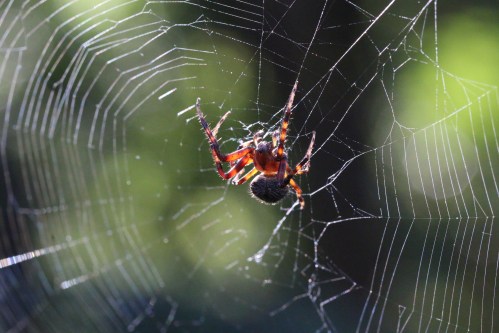
zigzag: of silk in the web of the orb-weaving spider, homespun look-at-me and distraction, quirk among zoologies of abandoned gardens and meadows; zee, zed, the end of bee flights and alphabets
 . 
Maura High
 .
 . 
Notes:
Acrostic: Med. Lat. acrostichis, from Gk. akrostikhis, from akros“at the end, outermost” (from PIE root *ak– “be sharp, rise (out) to a point, pierce”) + stikhos “line of verse,” literally “row, line,” from PIE root *steigh- “to stride, step, rise” [Online Etymological Dictionary]. The Christmas fern’s botanical name is Plystichum acrostichoides (Michaux) Schott.
André Michaux (1746 –1802), French botanist, author of Flora Boreali-Americana (1803; “The Flora of North America”), made at least five visits to North Carolina.
Loblolly: Pinus taeda, From Wikipedia: The word “loblolly” is a combination of “lob,” referring to the thick, heavy bubbling of cooking porridge, and “lolly,” an old British dialect word for broth, soup, or any other food boiled in a pot. In the southern United States, the word is used to mean “a mudhole; a mire,” a sense derived from an allusion to the consistency of porridge. The pine is generally found in lowlands and swampy areas.
Manual of the Vascular Flora of the Carolinas, by Albert E. Radford, Harry E. Ahles, and C. Ritchie Bell (Chapel Hill: University of North Carolina Press, 1968). Commonly known as Radford.
Pleiades, Gk., perhaps literally “constellation of doves” from a shortened form of peleiades, plural of peleias“dove” (from PIE root *pel-“dark-colored, gray”) [Online Etymological Dictionary].
 . 
Shared by Paul Jones, Chapel Hill NC, who writes:
 . 
Maura High knows her field from A to Z. She sings individual songs of the particularity of the place so clearly and precisely that we learn and love the place as she does. Field Index is an ideal field guide to place and the places of nature that compose this quilted lively patch of our earth.
 . 
Every day as I walk my own favorite patch of the planet, Merritt’s Pasture and Morgan Creek, I keep Field Index in mind as a guide that shows how to attend to this world and to prepare for the next.
 , 
+++++++ Paul
 . 
 . 
On an Okra Flower
 . 
A pollinating wasp sliding
from white lip to purple darkness,
the shadow-heart so deep inside,
the plant, itself, tall African
in the kitchen garden’s last row,
speaks of passage and endurance,
those far too common abstractions,
made real here in the summer heat.
 . 
Let it lead us, serve as a guide,
tell how each struggle leads to bliss
and what to bless when we decide
to see the past and present blend
into what we need to know
– a mind aware or in a trance? –
what to keep close, what to shun
made real hear in the summer heat.
 . 
What song can a wasp sing gliding
the flower’s dark throat? A long kiss
like winged tongues tangled deep inside –
a blind passion, an obsession.
I hear it as a prayer now,
music for the world’s whirling dance.
Sound, sight and scent. An orison
made real here in the summer heat
 . 
Paul Jones
from Something Wonderful, Redhawk Publications, Hickory NC, © 2021
 . 
❦ ❦ ❦
 . 
A man’s feet must be planted in his country, but his eyes should survey the world.
++++++++ George Santayana
 . 
To celebrate EARTH DAY 2024 we are featuring seven posts of poems submitted by readers – poems by William Blake to Walt Whitman, Robinson Jeffers to A.R.Ammons to Linda Pastan, and a number of contemporary poets. Check in every day or two – connect to the earth and to each other!
 . 
 . 
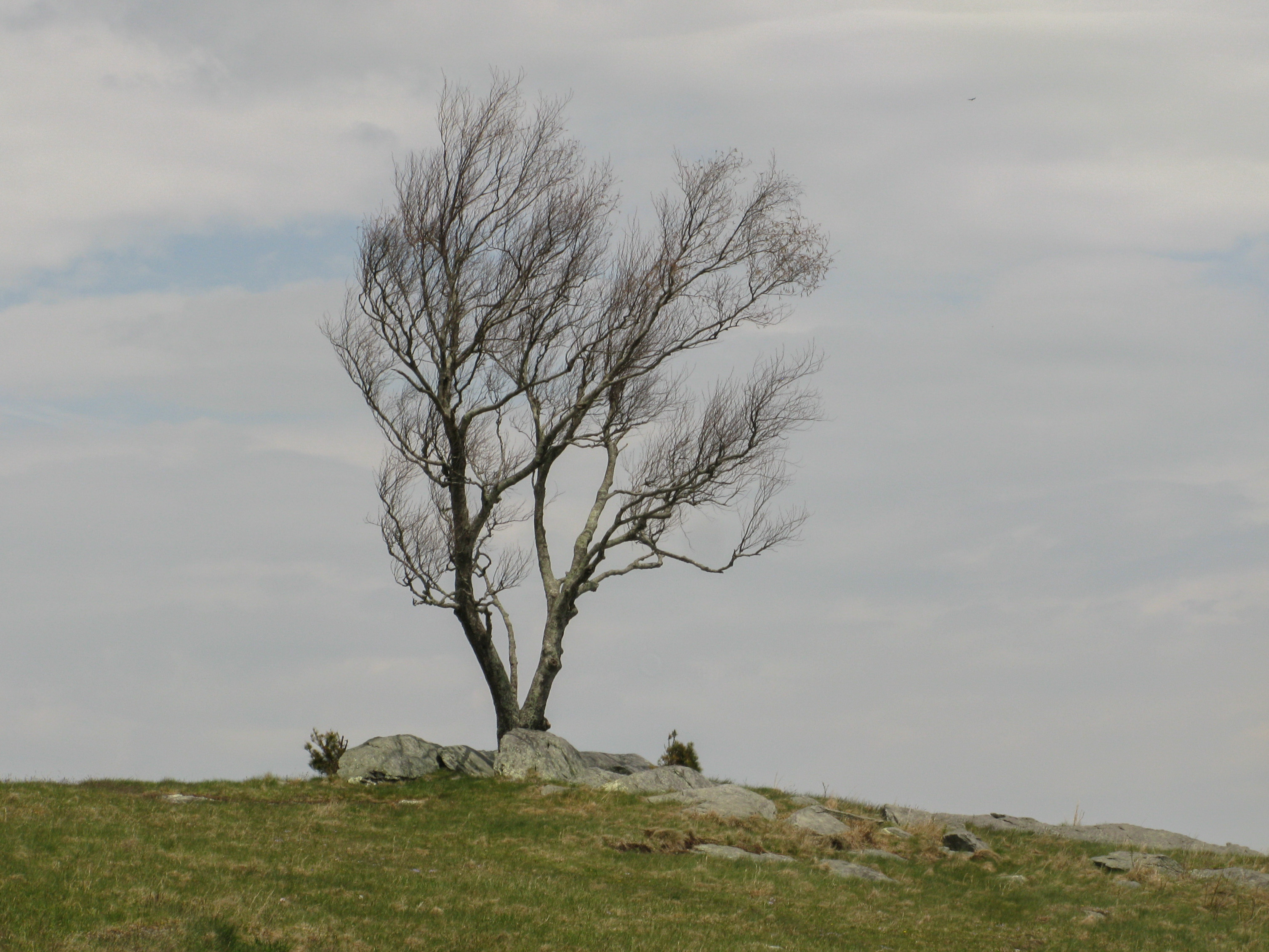
Doughton Park Tree 4/30/2022

Read Full Post »

[poems by George Oppen, Jenny Bates, Matthew Olzmann, Dianna Pinckney]

an offering from Pat Riviere-Seel . . .

  PSALM
-Veritas sequitur …
– George Oppen –

In the small beauty of the forest
The wild deer bedding down—
That they are there!

Their eyes
Effortless, the soft lips
Nuzzle and the alien small teeth
Tear at the grass

The roots of it
Dangle from their mouths
Scattering earth in the strange woods.
They who are there.

Their paths
Nibbled thru the fields, the leaves that shade them
Hang in the distances
Of sun

The small nouns
Crying faith
In this in which the wild deer
Startle, and stare out.

Psalm” by George Oppen, from New Collected Poems, copyright © 1975 by George Oppen, New Directions Publishing Corporation

.     .     .     .     .     .     .

In the introduction to The Ecopoetry Anthology, Laura-Gray Street speaks of George Oppen’s “Psalm” and her epiphany in reading it: language – the Word – is not something that separates us from and elevates us above the rest of this planet. Rather, language is an integral part of our biological selves. The roots of it / Dangle from [our] mouths. We are language-making creatures in the same way that spiders are web-making creatures.

What does the language make of us as we make it? I watch my wife Linda French Griffin at her drawing table. She moves her pencil point across white paper and images take form and grow out of nothing to expand and link and resolve into something entirely new – as I look at her drawings I’m filled with feelings and ideas that grow out of nothing but are linked to all I have felt and known up until that point, and yet are entirely new. Reading a poem, writing a poem, may give substance to inchoate urges we had tried imperfectly to permit to lead us into a new place. Language conjures spirits that clothe themselves with the flesh of newly perceived reality. Language makes us a new person.

Several friends have offered poems that speak to them about our Earth and which offer to gather us all in together to celebrate Earth Day! I’m posting their offerings April 21, 22, and 23. What do you see? What do you hear? What do you notice? What do you feel? How are you changed? What will you do?


.     .     .     .     .     .     .

an offering from Jenny Bates, her poem . . .

Doubts in Other Latitudes

You will not find them on any

geologist’s map; artifacts discarded
glimpses inset
in moments
stagger out of time.

Tippling trinities disrupt
the rhythmic landscape;
beer bottles

####pop cans
########chip bags
foul party of litter.

Earth ambitious
not without
want of amusement
yet with great
vision

####energy

########patience
its commitment of being mindful
confidence to complete its life,

a solitary endeavour.

Terra firma watches human struggle
from a caged window,
doubting its endorsement of evolution.
Dreams of smooth skinned ammonites

from the Jurassic,

Dinosaurs enjoying retirement
in geologic armchairs.

I do not make rubbish, says the ground
as I stir the forest leaves.

“Doubts in Other Latitudes” by Jenny Bates from Visitations (Hermit Feathers Press, 2019)

.     .     .     .     .     .     .

an offering from Lisa Zerkle . . .

Commencement Speech, Delivered to a Herd of Walrus Calves
– Matthew Olzmann –

Young walruses, we all must adapt! For example,
some of your ancestors gouged the world
with four tusks, but you can grow only two.
It’s hard to say what evolution plans for your kind,
but if given a choice,
you should put in a request for thumbs.
Anyway, congratulations! You’re entering
a world that’s increasingly hostile and cruel
and full of people who’ll never take you seriously
though that will be a mistake on their end.
You are more tenacious than they know.
You’ll be a fierce and loyal defender
of those you love. You will fight polar bears
when they attack your friends and sometimes you’ll win.
Of course, odds always favor the polar bear,
but that’s not the point. The point is courage.
The point is bravery. The point is you are all fighters
even when the fight in which you find yourself
ensures unpleasant things will happen to you.
For example, the bear will gnaw apart your skull
or neck until you stop that persistent twitching;
it will eat your skin, all of it, then blubber, then muscle,
then the tears of your loved ones, in that order;
it will savor every bite, and you will just
suffer and suffer until the emptiness can wash over you.
The good news is: things change!
For example: the environment.
Climate change, indeed, is bad for you,
but it’s worse for polar bears whose conservation status
is now listed as “vulnerable” which is one step removed
from “endangered” which is one step removed
from “extinct” which is a synonym
for Hooray! None of you get eaten!
I suppose this will make some people sad.
Even now, they’re posting pictures
of disconsolate polar bears on melting ice floes
drifting toward a well-deserved oblivion.
They say, We need to stop this!
They say, We need to do something, now!
These people are not your friends.
One cannot be on both Team Walrus and Team Polar Bear
at the same time. I’m not saying these people are evil;
I’m saying, it’s time to choose a side.
I’m saying sharpen your tusks, young calves;
your enemies are devious. You need to train
yourself to do what they won’t expect.
For example: use computers, invest
in renewable energies, read Zbigniew Herbert.
Unrelatedly: your whiskers make you appear
to have mustaches, which, seeing as you’re
not even toddlers, is remarkably unsettling.
Babies that look like grown men freak me out.
Like those medieval paintings by so-called masters
where they’d make the face of little baby Jesus
look like an ancient constipated banker.
If that’s what God really looks like,
it’s no wonder we’ve done what we’ve done to the Earth.
Maybe you can repair what we spent lifetimes taking apart.
Replace some screws. Oil some hinges.
This might sound impossible, but have you ever
looked at yourselves? Seriously—take a quick look
and tell me how a walrus face is possible;
everything about it defies the laws of physics.

You will exist beyond the reach of nature.
You will learn to slow your own heartbeat to preserve oxygen
while diving to depths of over 900 feet.
You will stay awake for up to three consecutive days
while swimming on the open sea.
And when the ocean is too rough—
so terrible with longing, so ruptured with heartache—
you’ll find a small island of stone or ice offering refuge.
It will be difficult to climb from the water,
but because there’s hope for us all,
you will hoist yourself up,
using only your front teeth to drag your body
onto the shore.

Commencement Speech, Delivered to a Herd of Walrus Calves” by Matthew Olzmann from POETRY, Published in Issue 19, 2020

.     .     .     .     .     .     .

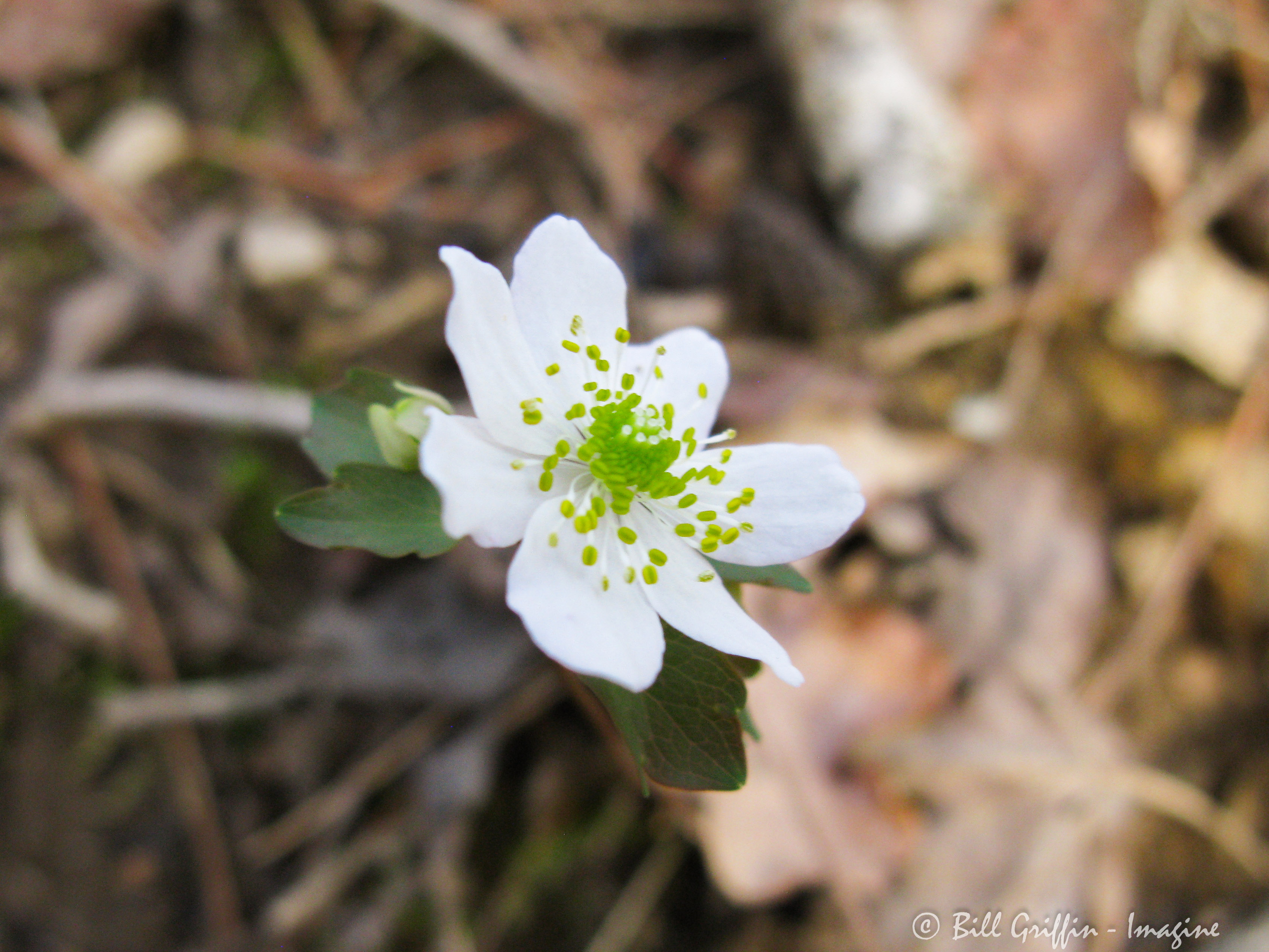
Bloodroot; Sanguinaria canadensis; Mountains-to-Sea Trail above Brinegar Cabin


An offering from Diana Pinckney, her poem . . .

Clapper Rails

Thin, dark flitting invisible
through reedy creeks, these

calls and cackles gleeful
the sun has seeped into trees.

A raucous crowd, near, but not of
the ocean. Who cares if your eyes

ever glimpse a flurry, one or two
fluttering their wings, less graceful

than chickens careening
old barnyards. Marsh hens

natives called them, tracked
and trapped, such poultry

made a foul meal. So tough
no one dared fry or bake.

They ride tides, float eggs in pluff-mud
and shrill black waters. You know

they are close, answering each
other over oyster beds, blue crabs,

every scuttling appetite, the night
grasses alive with hoots rising,

a party you love to be near, not of.

“Clapper Rails” by Diana Pinckney, first published in Wild Goose Poetry Review and collected in Green Daughters, Lorimer Press, © 2011 Diana Pinckney

.     .     .     .     .     .     .

+     +     +     +     +

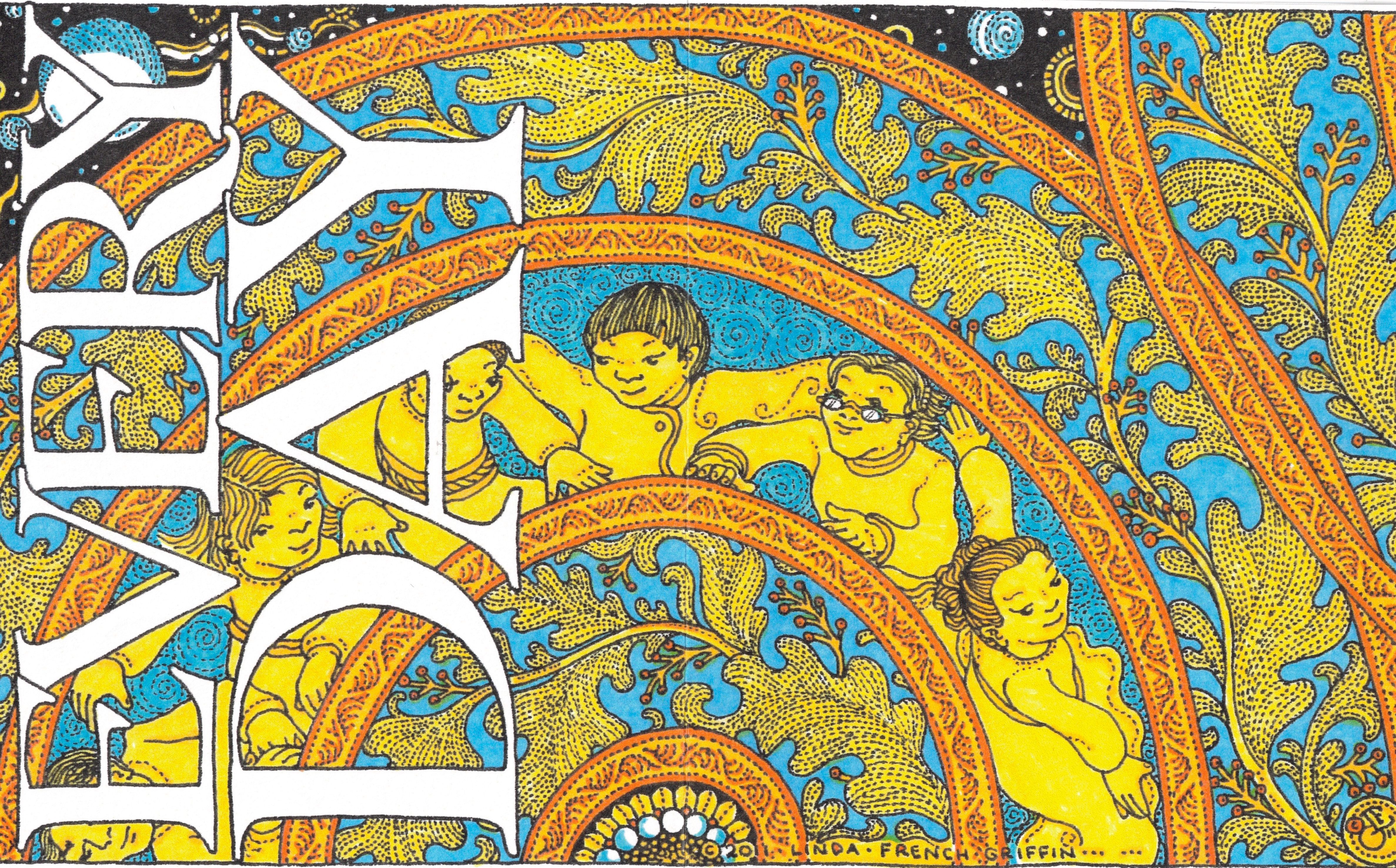
[original artwork by Linda French Griffin (c) 2021]

Read Full Post »

« Newer Posts