Feeds:
Posts
Comments

Posts Tagged ‘Dorianne Laux’

 . 
[with poems from Duet by Dorianne Laux and Joseph Millar]
 . 
Listening to Paul Simon
 . 
Such a brave generation.
We marched onto the streets
in our T-shirts and jeans, holding
the hand of the stranger next to us
with a trust I can’t summon now,
our voices raised in song.
Our rooms were lit by candlelight,
wax dripping on the table, then
onto the floor, leaving dusty
starbursts we’d pop off
with the edge of a butter knife
when it was time to move.
But before we packed and drove
into the middle of our lives
we watched the leaves outside
the window shift in the wind
and listened to Paul Simon,
his tindery voice, then fell back
into our solitude, leveled our eyes
on the American horizon
that promised us everything
and knew it was never true:
smoke and cinders, insubstantial
as fingerprints on glass.
It isn’t easy to give up hope,
to escape a dream. We shed
our clothes and cut our hair,
our former beauty piled at our feet.
And still the music lived inside us,
whole worlds unmaking us in the dark,
so that sleeping and waking we heard
the train’s distant whistle, steel
trestles shivering across the land
that was still our in our bones and hearts,
its lone headlamp searching the weedy
stockyards, the damp, gray rags of fog.
 . 
Dorianne Laux and Joseph Millar
from Duet, Jacar Press, Durham, NC; © 2016
 . 
❦ ❦ ❦
 . 
Here I am again, six years old this time, sitting cross-legged on the floor beside the pinnacle of 1959 technology. I wind it up, carefully lay the 6-inch plastic disc on the little turntable (it’s bright yellow plastic, I will never forget that), and position the needle at the outer groove. The wind-up box is white and red and has a picture of Mickey Mouse grinning; it looks like Mickey’s arm is what holds the stylus. The needle itself juts from a hollow flat cylinder, sort of like a tuna can with perforations; the little holes are what transmit the sound. No electronics, no electricity involved.
 . 
I push a lever and the disk begins to rotate. The needle finds its groove (at least a decade before finding one’s groove will mean anything to me) and in between all the scratches from a hundred earlier renditions – music! The little record finishes, I lift the needle from where it’s begun making little whump whump sounds with each revolution, I place the needle back at groove one, and it starts all over again.
 . 
And even so my mother remained sane to her dying day.
 . 
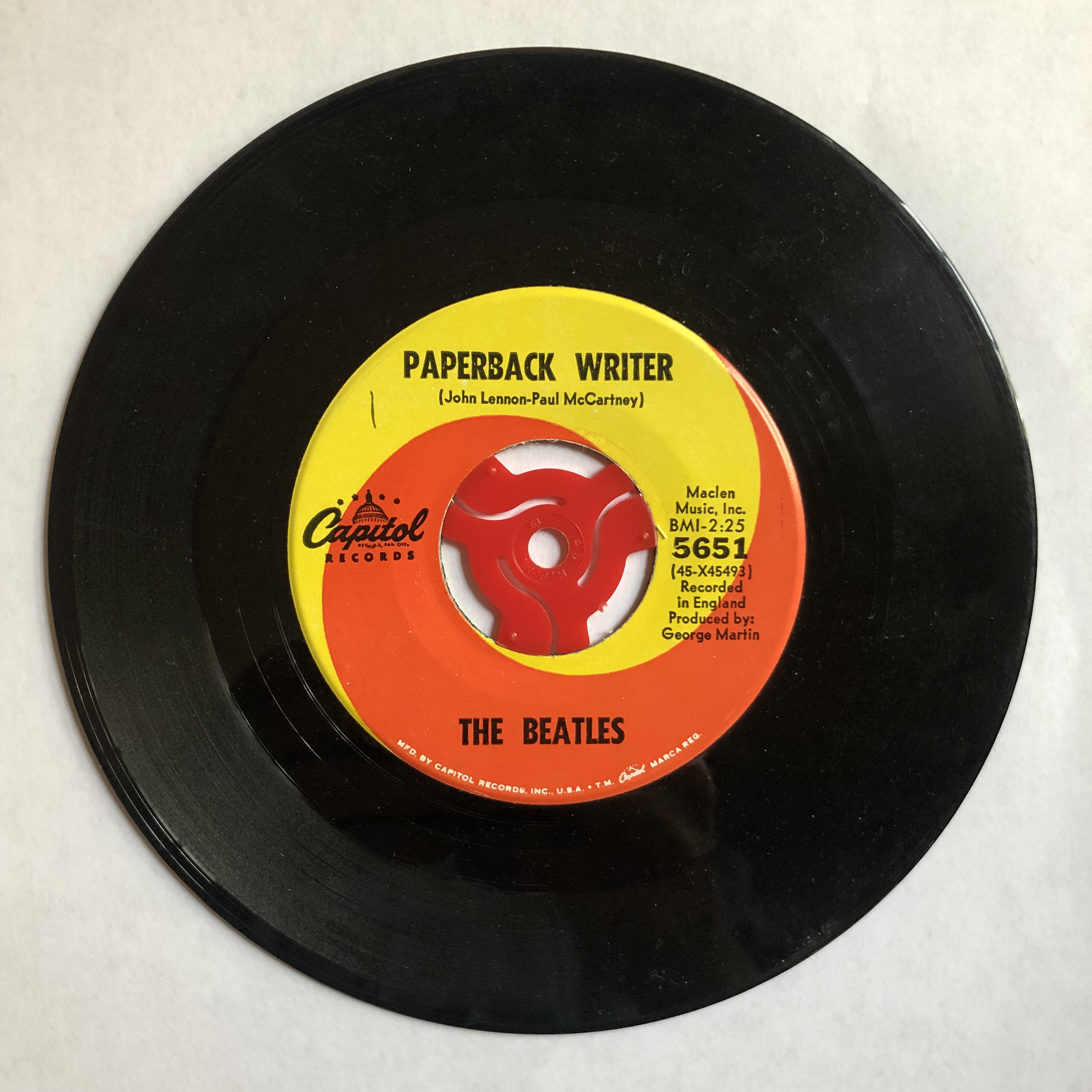
As the years passed, Mom and Dad began to let me listen to their records on the Hi-Fi (mono, not stereo; Uncle Carlyle soldered it himself). It never seemed to drive them crazy to hear Peter and the Wolf or The Music Man a dozen times a day, or even Bobby Darin singing Mack the Knife. Hard core. Finally the big day – I was 11, I had saved my birthday money, I had laid awake at night tallying which of their songs were included: I bought my first LP, Introducing . . . The Beatles.
 . 
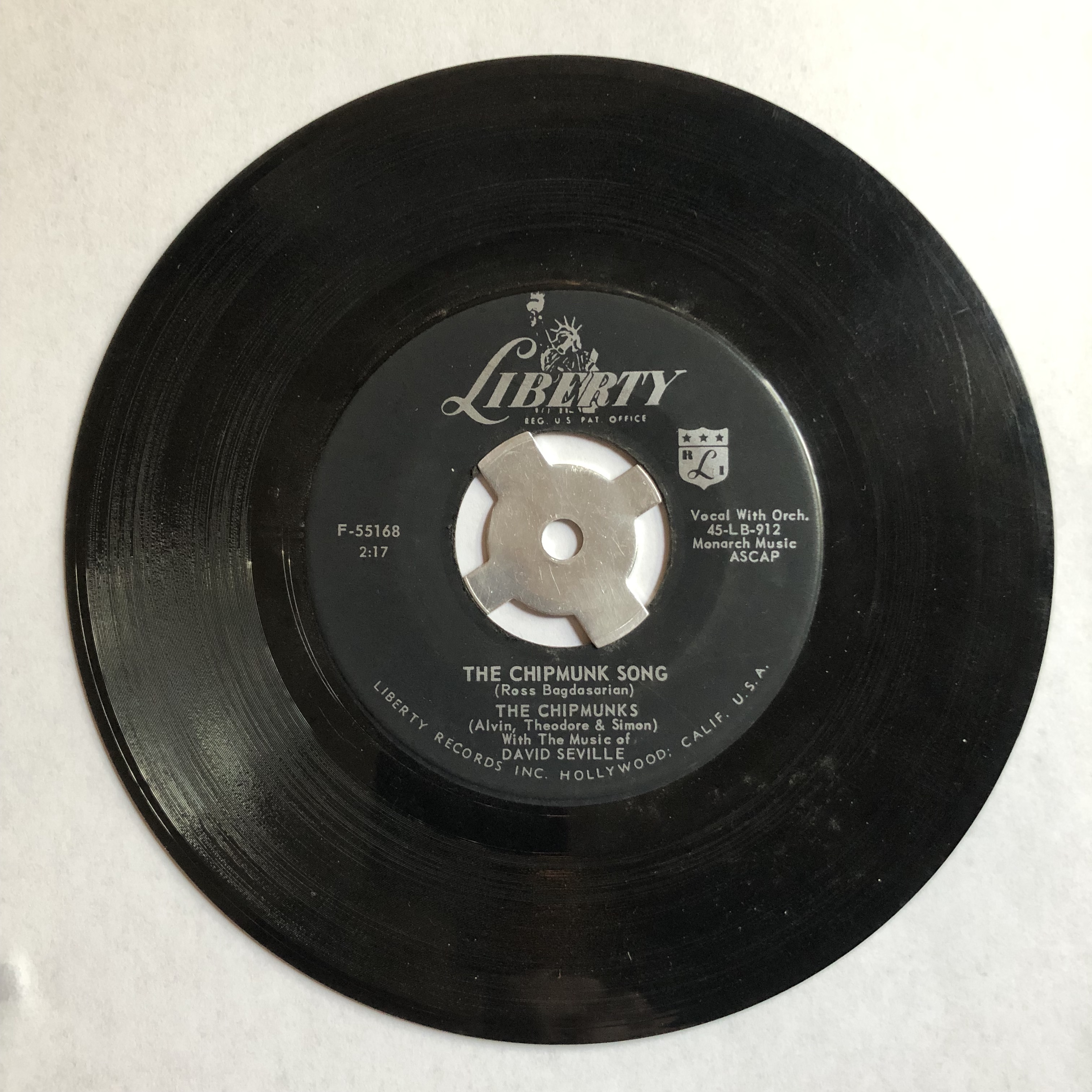
Introducing . . . is an anomaly in Beatles discography. It was released by Vee-Jay Records because Capitol/EMI had farted around about agreeing to a first USA Beatles album and Vee-Jay scooped them. Apparently it was only on the market for a year or so before the suits prevailed and forced them to cease and desist. Anyhow, I listened to that vinyl disc about a thousand times before I bought Beatles ‘65. In fact, I might just go slap it on the old turntable right now. Scratches and all. Please, please me!
 . 

 . 
 . 
And that little yellow record? Easter Parade. Sixty-five years later I still find no evidence that there has ever been such a parade, but now the melody has wormed it’s way in again: “In your Easter bonnet, with all the frills upon it . . .” And even so, my mother somehow remained sane.
 . 
 . 
❦ ❦ ❦
Mick Jagger (World Tour, 2008)
 . 
He stands on stage
after spot-lit stage, yowling
with his rubber mouth. If you
turn off the sound he’s
a ruminating bovine,
a baby’s face tasting his first
sour orange or spitting
spooned oatmeal out.
Rugose cheeks and beef
jerky jowls, shrubby hair
waxed, roughed up, arms
slung dome-ward, twisted
branches of a tough tree, knees
stomping high as his sunken chest.
Oddities aside, he’s a hybrid
of stamina and slouch,
tummy pooch, pouches under
his famous invasive rolling eyes.
He flutters like the pages
of a dirty book, doing
the sombrero dance, rocking
the microphone’s
round black foot, one hand
gripping the skinny metal rod,
the other pumping its victory fist
like he’s flushing a chain toilet.
Old as the moon and sleek
as a puma circling the herd.
The vein in this forehead
pops. His hands drop into fists.
he bows like a beggar then rises
like a monarch. Sir Mick,
our bony ruler. Jagger, slumping
off stage shining with sweat.
O please don’t die. Not now,
not ever, not yet.
 . 
Dorianne Laux and Joseph Millar
from Duet, Jacar Press, Durham, NC; © 2016
 . 
 . 
❦ ❦ ❦
 . 
Uno Voce – when Sandy Beam rehearsed an a capella selection, he required us to blend our tone with each person singing near us until it was as if we all sang with one voice. Vibrato is anathema; sibilance is sin! Of course, Sandy would have been happiest if we had all been boy sopranos, but at least we could strive for that brilliant transparent evocation of light he desired.
 . 
Light and truth evoked by a single voice – not at all unlike these poems in Duet. They are each about music – Bo Diddley, Lightnin’ Hopkins, Paul Simon, James Taylor, Ladysmith Black Mambazo, Cher. They build a portrait in layers of color, tone, and years, filled with the music that infuses our past and vibrates in our bones to create our present. And they are written by the duet of Dorianne Laux and Joseph Millar, but the tones and melodies blend until we readers hear a single voice.
 . 
Not an ear worm in the bunch.
 . 
 . 
Duet is one in the continuation of the Greatest Hits Series, originally conceived by editor Jennifer Bosveld at Pudding House Press in 2000 and acquired by Sammy Greenspan of Kattywampus Press in 2010. Jacar Press was asked to take over the series under the careful eye of series editor David Rigsbee in 2017. More about the book, the Series, and Jacar Press HERE
 . 
 . 
❦ ❦ ❦
 . 
 . 
 . 
❦ ❦ ❦
 . 
 . 
 . 
Read Full Post »

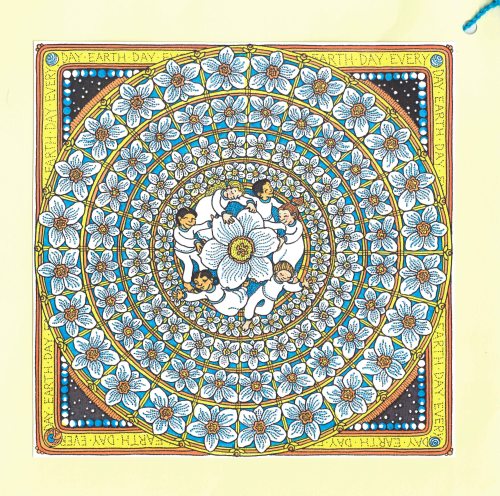
Earth Day artwork by Linda French Griffin

[with poems by Dorianne Laux and Tony Hoagland]

The sensual man conforms thoughts to things; the poet conforms things to his thoughts. The one esteems nature as rooted and fast; the other, as fluid, and impresses his being theron.

Ralph Waldo Emerson, Nature, 1836

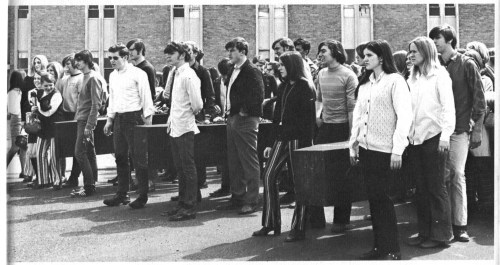
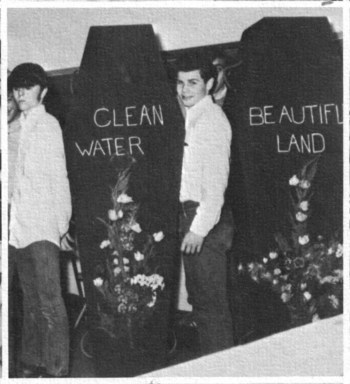
April 22, 1970 – the entire student body of Aurora High School is milling around outdoors in the Ohio springtime. In the front parking log five or six big black coffins are set up like grim milestones. The coffins bear epitaphs like “Clean Water” and “Beautiful Land” – the administration has granted the Student Council’s request to have an assembly to celebrate the first Earth Day.

I am taking photos for Borealis, the yearbook; my girl friend Linda French is assistant editor. She is vastly more the environmental activist than I. Our little farm town / bedroom community is forty miles from Cleveland and where the Cuyahoga River crosses our local golf course it’s only an insubstantial creek. The year before, though, the Cuyahoga River where it enters Lake Erie in downtown Cleveland caught fire and burned, and not for the first time. No big deal – oil slicks and pollution mean progress, full employment. Forget about it.

Maybe we all would have forgotten, except Time Magazine published articles about the burning river and then in December National Geographic featured it on the cover – “Our Ecological Crisis.” Congress had established the Environmental Protection Agency in January 1970; by spring even we kids in sleepy Aurora must be worrying how much longer we’ll have clean water and beautiful land.

Earth Day 1970

.     .     .     .     .     .     .

A couple of years ago Linda and I took a road trip to northeastern Ohio to visit all the old haunts. The high school has additions and facilities we can’t even figure out. The golf course is now a reclaimed and replanted nature preserve with walking trails. There’s lots of new development in Aurora but there are still cow pastures and horses.

We also paid our first visit to Cuyahoga Valley National Park. Designated a National Recreation Area in 1974, the same year we got married and moved to North Carolina, it became a National Park in 2000. Between Akron and Cleveland it comprises more than 33,000 acres following the river and the old Ohio & Erie Canal and reaching all the way into metropolitan Garfield Heights – the nation’s largest urban park. Even outside the Park the Cuyahoga is cleaned up, restored, back in the business of fish and wildlife and recreation instead of oil slicks. In 1970 if you fell into the river it meant an immediate trip the ER; now you just climb back up on your paddle board.

Without catching on fire.

Earth Day 1970

Earth Day 1970

.     .     .     .     .     .     .

These two poems are collected in The Ecopoetry Anthology, edited by Ann Fisher-Wirth and Laura-Gray Street, Trinity University Press, San Antonio, Texas, © 2013.

Dorianne Laux has taught creative writing at NC State University and elsewhere. Her most recent book among many is Only as the Day Is Long: New and Selected Poems (W. W. Norton, 2019).

Tony Hoagland (1953-2018) was born in Fort Bragg, NC, and taught at the University of Houston and Warren Wilson College. His many books of poetry include Unincorporated Personas in the Late Honda Dynasty (Graywolf Press, 2005)

.     .     .     .     .     .     .

Life is Beautiful

+++++++++ and remote, and useful,
if only to itself. Take the fly, angel
of the ordinary house, laying its bright
eggs on the trash, pressing each jewel out
delicately along a crust of buttered toast.
Bagged, the whole mess travels to the nearest
dump where other flies have gathered, singing
over stained newsprint and reeking
fruit. Rapt on air they execute an intricate
ballet above the clashing pirouettes
of heavy machinery. They hum with life.
While inside rumpled sacks pure white
maggots writhe and spiral from a rip,
a tear-shaped hole that drools and drips
a living froth onto the buried earth.
The warm days pass, gulls scree and pitch,
rats manage the crevices, feral cats abandon
their litters for a morsel of torn fur, stranded
dogs roam open fields, sniff the fragrant edges,
a tossed lacework of bones and shredded flesh.
And the maggots tumble at the center, ripening,
husks membrane-thin, embryos darkening
and shifting within, wings curled and wet,
the open air pungent and ready to receive them
in their fecund iridescence. And so, of our homely hosts,
a bag of jewels is born again into the world. Come, lost
children of the sun-drenched kitchen, your parents
soundly sleep along the windowsill, content,
wings at rest, nestled in against the warm glass.
Everywhere the good life oozes from the useless
waste we make when we create – our streets teem
with human young, rafts of pigeons streaming
over squirrel-burdened trees. If there is
a purpose, maybe there are too many of us
to see it, though we can, from a distance,
hear the dull thrum of generation’s industry,
feel its fleshly wheel churn the fire inside us, pushing
the world forward toward its ragged edge, rushing
like a swollen river into multitude and rank disorder.
Such abundance. We are gorged, engorging, and gorgeous.

Dorianne Laux
from Smoke, BOA Editions Ltd., © 2000 Dorianne Laux

.     .     .     .     .     .     .

Wild

In late August when the streams dry up
and the high meadows turn parched and blond,

bears are squeezed out of the mountains
down into the valley of condos and housing developments.

All residents are therefore prohibited
from putting their garbage out early.

The penalty for disobedience will be
bears: large black furry fellows

drinking from you sprinkler system,
rolling your trashcans down your lawn,

bashing through the screen door of the back porch to get their
first real taste of a spaghetti dinner,

while the family hides in the garage
and the wife dials 1-800-BEARS on her cell phone,

a number she just made up
in a burst of creative hysteria.

Isn’t that the way it goes?
Wildness enters your life and asks

that you invent a way to meet it,
and you run in the opposite direction

as the bears saunter down Main Street
sending station wagons crashing into fire hydrants,

getting the police department to phone
for tranquilizer guns,

the dart going by accident into the
neck of the unpopular police chief,

who is carried into early retirement
in an ambulance crowned with flashing red lights,

as the bears inherit the earth
full of water and humans and garbage,

which looks to them like paradise.

Tony Hoagland
from Unincorporated Personas in the Late Honda Dynasty, Graywolf Press, © 2005 Tony Hoagland.

.     .     .     .     .     .     .

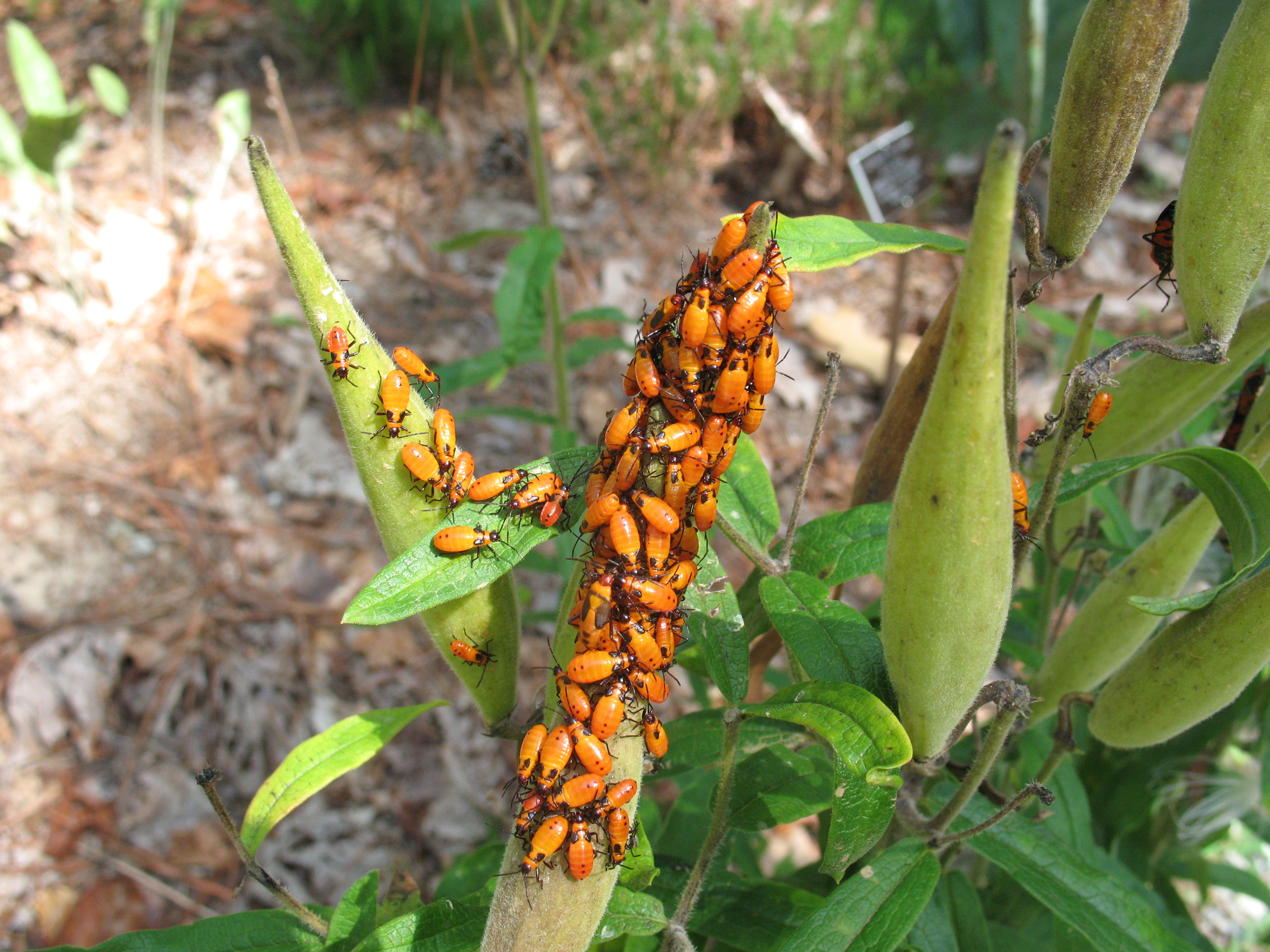
Liverwort, Marchantia species; Liverworts are primitive nonvascular plants, perhaps the most primitive true plants still in existence.

Isn’t life beautiful? Not always pretty but always beautiful. Often messy, invariably smelly, predictably unpredictable, unexpectedly weird, but always beautiful. Scrunch down low enough to notice; don’t let it bite you (much); take off your anthropocentric glasses; what did I tell you – beautiful!

.     .     .     .     .     .     .

+     +     +     +     +

[original artwork by Linda French Griffin (c) 2021]

Read Full Post »

I just finished reading Abraham Lincoln, Vampire Hunter by Seth Grahame-Smith . . . while on hold to Time-Warner Cable.  Seriously.  I called the help line, heard the perky attendant mention, “We are currently experiencing thirty minute hold times,” and went back upstairs for my book.  Read the last 35 pages in 30 minutes and was just about to start the appended excerpt of G-Smith’s latest book when a human being answered.  Is there some cosmic irony in the fact that someone who turns his TV on less than an hour a week (except during the Olympics) spends about that same amount of time reading a book while waiting to have the TV fixed?

Reading while on hold – what a concept.  The problem is the inane music they play.  First was a scratchy version of Beethoven’s Für Elise, then what sounded like an instumental version of (I swear I’m not making this up) 70’s disco, followed by smooth sax jazz so generic that static would have been preferable.  And then the sequence repeated.  I hope it didn’t do some subliminal damage to my auditory cortex while I read how John Wilkes Booth (spoiler alert!!) became a vampire.

What would you think about this alternative – listening to poetry while on hold?  Something catchy and non-generic that would make you smile, make you cry (nothing, however, that would make you cuss the cable company, or the service desk, or that trembling help guy in the corporate basement in Hamtramck, MI). Someone reading with feeling and verve and a little bit sexy.  Some astounding turn of phrase or unexpected conclusion that compels you to say, when the human interrupts, “WAIT!  Put me back on hold, please.”

IMG_3687

Next time your internet connection has spiraled into a black hole in the Greater Magellenic Cloud, or your dishwasher is autodialing a porn site in Belarus, or you’re trying to track down your personal banker who has absconded to her luxury condo on the coast of Belize, wouldn’t you rather listen to Dorianne Laux read this while you await succor?

.      .     .     .     .

Singing Back the World

I don’t remember how it began.
The singing.  Judy at the wheel
in the middle of Sentimental Journey.
The side of her face glowing.
Her full lips moving.  Beyond her shoulder
the little houses sliding by.
And Geri.  Her frizzy hair tumbling
in the wind wing’s breeze, fumbling
with the words.  All of us singing
as loud as we can. Off key.
Not even a semblance of harmony.
Driving home in a blue Comet singing
I’ll Be Seeing You and Love Is a Rose.
The love songs of war.  The war songs
of love.  Mixing up verses, eras, words.
Songs from stupid musicals.
Coming in strong on the easy refrains.
Straining our middle aged voices
trying to reach impossible notes,
reconstruct forgotten phrases.
Cole Porter’s Anything Goes.
Shamelessly la la la-ing
whole sections.  Forgetting
the rent, the kids, the men,
the other woman.  The sad goodbye.
The whole of childhood.  Forgetting
the lost dog.  Polio.  The grey planes
pregnant with bombs.  Fields
of white headstones.  All of it gone
as we struggle to remember
the words.  One of us picking up
where the others leave off.  Intent
on the song.  Forgetting our bodies,
their pitiful limbs, their heaviness.
Nothing but three throats
beating back the world – Laurie’s
radiation treatments.  The scars
on Christina’s arms.  Kim’s brother.
Molly’s grandfather.  Jane’s sister.
Singing to the telephone poles
skimming by.  Stoplights
blooming green.  The road,
a glassy black river edged
with brilliant gilded weeds.  The car
as immense boat cutting the air
into blue angelic plumes.  Singing
Blue Moon and Paper Moon
and Mack the Knife, and Nobody Knows
the Trouble I’ve Seen.

by Dorianne Lux

collected in Poetry 180, edited by Billy Collins, © 2003 Random House

.     .     .     .     .

IMG_7516

Read Full Post »