Feeds:
Posts
Comments

Convolutions

 . 
[with 3 poems by Beth Copeland]
 . 
Fog
 . 
Morning fog erases the mountain and trees.
No, not an erasure but unseen.
 . 
Not an erasure but unseen.
The mountain, the laurel still green.
 . 
Unlike the mountain and laurel still green,
the dearly departed lie beneath white sheets.
 . 
The deer depart beneath white sheets
of fog, stepping into a forgotten dream
 . 
of fog slipping into a forgotten dream
the ghost mountain dreams.
 . 
The ghost mountain dreams.
Crows fly to pines on mascara wings.
 . 
Crows fly to pines on mascara wings,
mourning. Fog erases the mountain, the trees.
 . 
Beth Copeland
from I Ask the Mountain to Heal My Heart, Redhawk Publications, The Catawba Valley Community College Press, Hickory NC; © 2025
 . 
❦ ❦ ❦
 . 
It’s a big web, here in the corner of our screened porch, but I’m not ready yet to broom it down. The spider is a jointed dried kernel in its center; when I blow, she doesn’t twitch. I don’t see an egg pouch or spiderlings. The strands are not an orb but a diffuse tangle, a chaos of delicate angles and tensions — a miniature of filaments revealed by the background microwave radiation that weave the structure of our entire universe. And what are they made of, those filaments? These I can see before me are nanometer reworkings of hemolymph from mosquitoes denied the opportunity to bite me. Most visible when dusted with pollen. A mess. But I and my broom are not ready yet to offend, to say farewell to the tribe of spiders.
 . 
Last week we visited Blue Whales with our grandson, turning eight. The North Carolina Museum of Natural Sciences in Raleigh is hosting this exhibit of the largest creatures that have ever lived on our planet – the mystery of their migrations, language, culture; the vital interconnections between their diet of krill, their massive enriching orange poop, and the entire deep ocean ecology. Linda and I stood in silence before the model of a blue whale brain and a model of our own. The whale’s is twice as large and twice as complex, convoluted with its twisting gyri and deep sulci. Surely such an abundance of neurons and synapses must create thoughts as complex as our own. Or more so. And yet blue whales struggle to survive as a species in a world degraded by human beings. I am thinking of that brain and I am not ready yet to say farewell to the tribe of whales.
 . 
Chapel Hill cartoonist Keith Knight draws a weekly panel titled (th)ink. Today’s is a portrait of and quotation by James Baldwin (1924-1987): “To be a Negro in this country & to be relatively conscious is to be in a rage almost all the time.” Human being who is relatively conscious, choose your own rage focal point du jour – human beings caged like animals in a Florida concentration camp; children intentionally starved to advance a particular political agenda; boosting fossil fuels burned to appease a few billionaires; an ocean filled with plastic nanoparticles and deafening human vibrations where blue whales may soon be extinct? Some days I feel like I am not ready to go on living. Some days I am more than ready to say goodbye to the tribe of humans. In a few years I will depart as an inhabitant of planet Earth. Some years after that the last memory of my having been an inhabitant will finally depart as well. On that day, will any whales still remain to swim the depths? Will any love between humans remain, or any love for other creatures? I am not ready yet to answer.
 . 
 . 
❦ ❦ ❦
 . 
October Valentine
 . 
A heart-shaped leaf spied in the weeds on my walk
down the hill to the mailbox. I didn’t see a redbud tree
 . 
on the roadside, so it must have lifted on the wind
and dropped – a gift! – near my feet. Is it a message
 . 
from someone I love – my sweet mother in a halo of light,
my father singing the names of trees in his strong baritone?
 . 
Or is it from someone I’ve never seen and may never meet?
 . 
As I hike up the hill, I tuck the leaf in my pocket, rubbing it
with my thumb – as if I could read it – skin to skin – by osmosis.
 . 
Halfway home, I stop to study it. Cerise with splotches of green,
dark spots, a wormhole bored like a bullet wound, a battered
 . 
heart, like yours, like mine, but maybe its scars make it more
beautiful than before. My friends, there’s still so much
 . 
love in this world even when you’re alone.
 . 
Beth Copeland
from I Ask the Mountain to Heal My Heart, Redhawk Publications, The Catawba Valley Community College Press, Hickory NC; © 2025
 . 
❦ ❦ ❦
 . 
Is it strange for me to be toying with despair while reading a book of healing and love like Beth Copeland’s I Ask the Mountain to Heal My Heart? Actually, if you’re not toying with despair you are the strange one. Give grudging thanks, though. Thank the stars and the mysterious hemlocks and the dark fecund earth that in a world full of rage and despair there are poems like Beth Copeland’s. These poems know the feeling of being lost in endless night. These poems have been battered, they have fallen, they have doubted plenty of times whether there is any wholeness or healing available to them, but these poems stand up to testify, My friends, there’s still so much love in this world even when you’re alone.
 . 
Often I tell myself it is ridiculous to imagine that any sort of inner peace is possible. I have my share of personal regrets and ongoing grief, and even though I’m tempted to look around and envy those people who don’t, when I’m really honest I admit that no one escapes whipping. But peace can’t be a wall built around my sadness – walls keep more things in than out. Despair is inevitable. How foolish is it, then, and how strange, to spend a few hours with a book of words arranged in lines on paper and discover the tightness in my throat is easing? The mountain has rested in one place for 480 million; today its peak is less than a third of its height when it was first thrust up in the big crunch. Does it reflect on loss and diminishment, or does it find peace in the weight of its daily being? Am I inflamed and scarred by the revelations of Beth Copeland’s battles and pain, or am I grateful for her gratitude and strengthened by her strength?
 . 
The tribe of human beings seems determined to destroy itself. The tribe of human beings seems determined to link arms and hearts in love. Perhaps discovering a moment of beauty is not a cowardly attempt to escape dire reality – perhaps it is the only thing capable of healing us.
 . 
 . 
Explore REDHAWK Publications, including Beth Copeland’s I Ask the Mountain to Heal My Heart and Shibori Blue: Thirty-Six Views of the Peak HERE.
 . 
Sample poems from Shibori Blue at Verse & Image HERE.
 . 
More information about the North Carolina Museum of Nature Sciences HERE.
Dive into the K Chronicles with Keith Knight HERE.
 . 
 . 
❦ ❦ ❦
 . 
My Daughter Paints a Mountain
 . 
She wasn’t thinking as her brush swept
across canvas in wave-length strokes,
 . 
channeling a crest she’d never seen,
while I was still in the Sandhills
 . 
where there aren’t any hills, just fields
of cotton, soybeans, and cedar stumps
 . 
in swamp water, sleeping on an air mattress
in a small apartment with prints and paintings
propped against walls instead of hung,
newly separated, newly sober, living
 . 
between the husband and home I’d left
and a haven I hadn’t found yet.
 . 
*****
 . 
As I drove up a steep road to see a house
in the Blue Ridge, a large buck leapt
 . 
in front of the car to welcome me,
and I knew I’d found my new home.
 . 
I didn’t know the mountain seen at the top
of the hill was the mountain she’d painted
 . 
months before, and she didn’t know I’d move
to that house with a view of the mountain
 . 
she’d painted as if in a dream or fugue.
How could her mountain – purple, lavender,
 . 
pink, and forest green swirled to a peak
with white streak of snow against a blue sky –
 . 
mirror the one framed in my window?
Was it coincidence or synchronicity
 . 
that the mountain in her mind’s
eye was more map than metaphor?
 . 
It was a message from the universe:
You’re home. Open the door.
 . 
Beth Copeland
from I Ask the Mountain to Heal My Heart, Redhawk Publications, The Catawba Valley Community College Press, Hickory NC; © 2025
 . 
 . 
❦ ❦ ❦
 . 
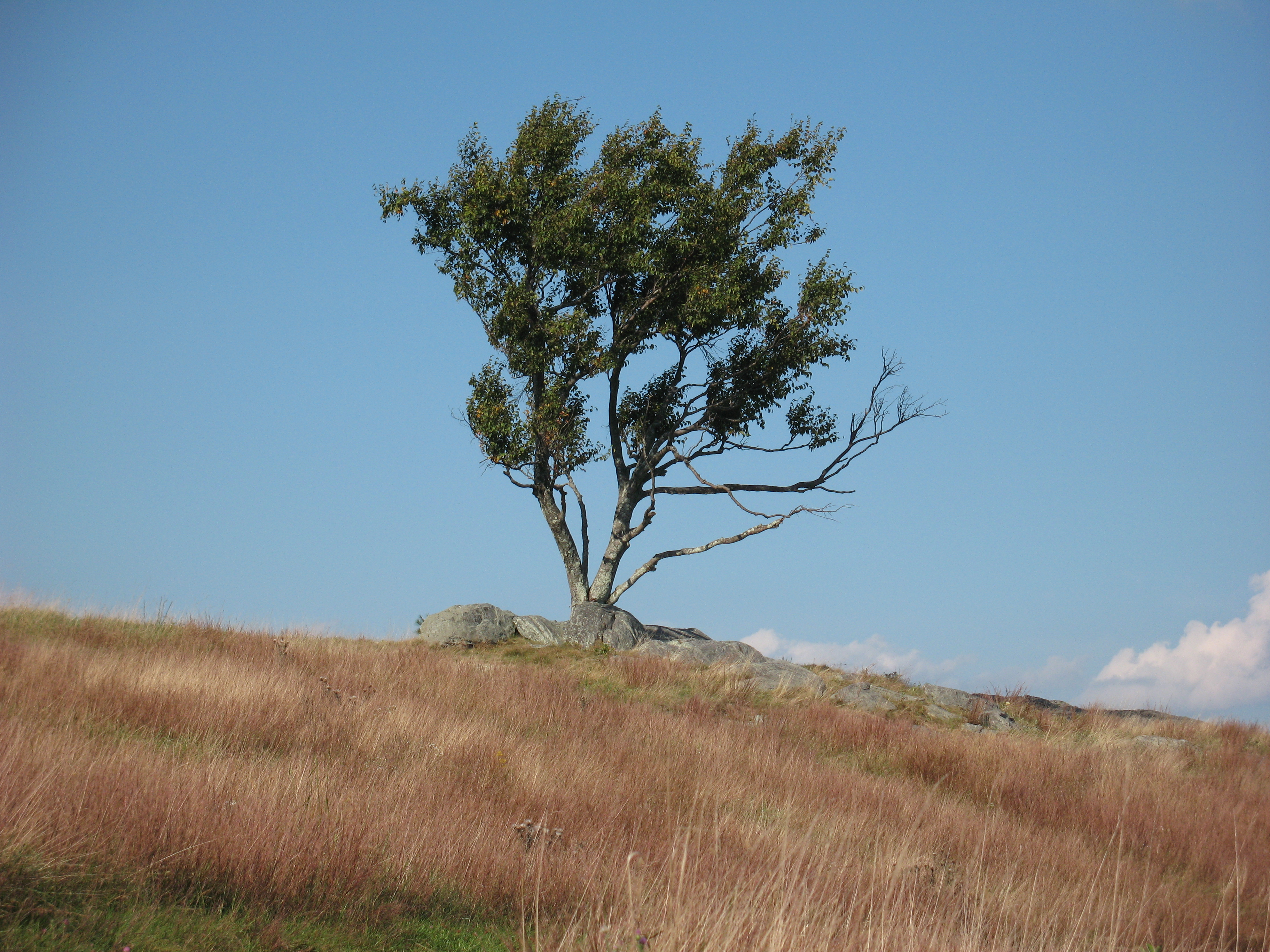
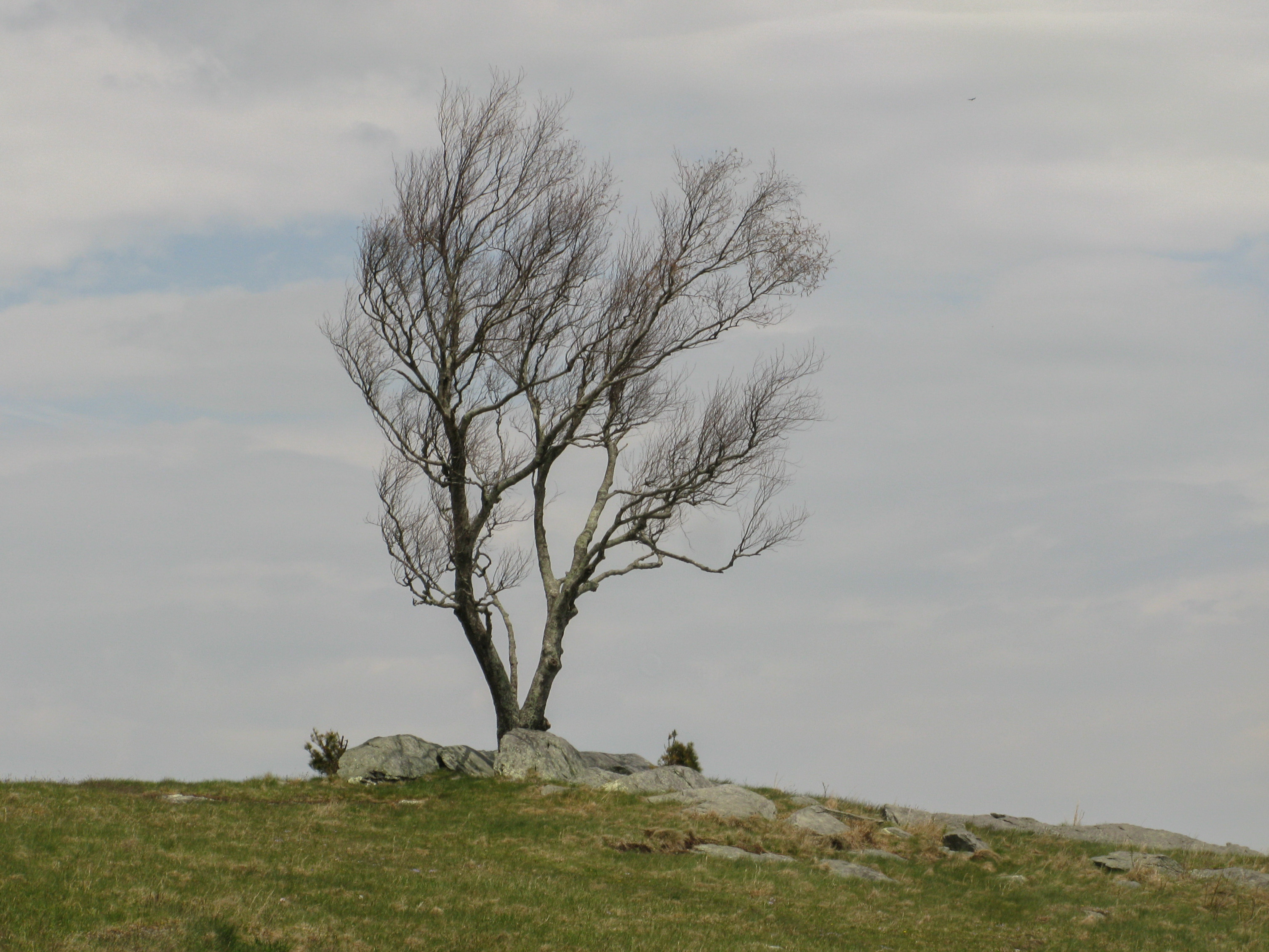
Doughton Park Tree 2020-11-22
 . 
❦ ❦ ❦
 . 

Duet

 . 
[poems from VISIONS Issue 110]
 . 
Cataract
 . 
That woman, somewhere in her seventies,
walking this past week without her husband,
her greeting smile the same but not the same,
water like a cataract behind her,
 . 
has managed to sew the morning round her,
given the air she parts the electricity
of apprehension. It recedes. The river
finds its level, and our walk assumes
 . 
The silence of a stranger’s unacknowledged
pain; guessing at the gap between her day
and ours, and shamed of it – who isn’t
shamed by fear and rendered speechless by it?
 . 
A dozen steps or so, and she recedes,
and suddenly there’s too much song and shade.
We’d stepped around the space he’d occupied
as if he were more vivid in his absence.
 . 
Ted McCarthy, Clones, Ireland
from VISIONS, Issue 110, © 2025
 . 
❦ ❦ ❦
 . 
Will the mowers quiet themselves, becoming blind to their appointed vectors? Will the heat pump rest from its pumping? We wait on the porch in fading light for transition / transformation. All afternoon and evening the rattle, grate, thrill of cicadas, but when daylight succumbs they will one by one release their reins to the katydids. The first movement of the day’s symphony, adagio, will merge without intermission into the forest’s boisterous nighttime allegretto. We wait to enter that moment, the duet of final dying cicada and first katydid newly risen. For a few minutes the two will sing together.
 . 
Alchemy it is, a dash of dappled hardwood shade, one lick of humid breeze, stir briefly with cicada song and you will transport me into the presence of my grandmother. Nana holds a dripping glass of tea for 10-year old me as I climb the sandy bluff up from Bogue Sound, between crowding live oaks, little skiff beached below, in my hand a string of croakers and spots. Nana and 20-year old me are in her driveway in Winston, red oaks towering, about to drive her ancient Plymouth to Piggly Wiggly but the “jawflies” are so loud she can’t think what she needs. I will spend half the afternoon trying to down one from its high branch with her BB gun. It decrescendos as it falls.
 . 
This morning I have exercised my gray cells and cochleae by picking out individuals from amidst the cacophony. One species of cicada is a continuous dry rattle like softly shaken maracas. Another is a sinusoidal sharp-edged rasp, a scraper pulled across a guiro. Then a third sudden loud rising crescendo crests and slows, falls back into stillness. And now at once they all cease, all except a single insistent rasp repeated ten times, twenty, and when it finishes its duet is still audible in a faint far tree. The music of their tymbales, the vibration of the living desperate to connect.
 . 
 . 
❦ ❦ ❦
 . 
At the Goodbye Door
 . 
Wind knocks on your door; a mackintosh
slung over its arm, a sigh like coyotes
 . 
as they grate their teeth, their rheumy eyes contagious
with stars, tongues slavered with hope –
 . 
their coats reminiscent of ones you donated to the thrift,
collars roughed up, delicate threads a reminder of what binds –
 . 
how we were together long enough to retrieve the inexplicable.
Satiated, we purged ourselves: You at the goodbye door,
 . 
me sweeping the floor where you stood and always a crooner
in the background singing, Loves a Difficult Wing.
 . 
Dianna MacKinnon Henning, Janesville, California
from VISIONS, Issue 110, © 2025
 . 
❦ ❦ ❦
 . 
we were together long enough
to retrieve the inexplicable,
the spring that swallowed itself –
who isn’t shamed by fear
and rendered speechless by it?
the old fields grow, indifferent
+++++++ lines from Visions Issue 110
 . 
To Bradley Strahan, for forty-five years of gleaning from fields across all the world to plant and harvest Visions-International, Thank You. To Cal Nordt, for over a decade of encouragement and support behind the scenes and for now lifting the harrow of editor, also Thank You. And to Katie LaRosa, for keeping alive the vision of design and art in the service of words, Bravo. This first issue produced by Cal Nordt is again truly international, as are all past issues, although North Carolina is also well represented with poems by J. S. Absher, Rebecca Pierre, Adrian Rice, and Cal himself. The poetry of Visions has always been brief in lines, deep in heart, brilliant in space and atmosphere – this new issue continues the lineage.
 . 
 . 
Information about previous issues of Visions-International, as well as other creative endeavors by Bradley Strahan, is available HERE.
For information about Visions under the imprint Cynosura Press, click HERE.
For submissions to Visions, contact Cal Nordt at calnordt@gmail.com
 . 
 . 
❦ ❦ ❦
 . 
Spring
 . 
The cunning master of nature
sensed my burning thirst
proffered his hand
to the lush spring
and hauled it in.
Driven by immense thirst
I pressed my lips
upon the dry sand
and let my soul wander
through underground paths
weaving like thread
through minerals and crystals,
searching for the spring
that swallowed itself.
 . 
Risto Vasilevski, Smederevo, Serbia
from VISIONS, Issue 110, © 2025
 . 
❦ ❦ ❦
 . 
 . 
Breaking Cloud
 . 
It was the crackle in the airport air
that made me think of Austerlitz
or some such flat, fat battlefield
of long ago; a river, sleek these days
and undisturbed. How easily the ground
is ploughed, the iron underneath stirred
as if always there. After the unease
of take-off, news became history,
a movement of horsemen and grenadiers
on hand-drawn maps. Now clouds part,
vapour trailing like a harrow, a brief
shudder as the landing gear comes down.
Contact, and the bump of runway lights;
impossible, as we taxi, to believe
earth now as other than unshakable.
Still, never more than a breath from anxiety –
for how long more will our children prosper?
The old fields grow, indifferent, their shot
and bone dissolving at the root.
 . 
Ted McCarthy, Clones, Ireland
from VISIONS, Issue 110, © 2025
 . 
Doughton Park Tree 2025-07-10
 . 

.    .    .    .    .

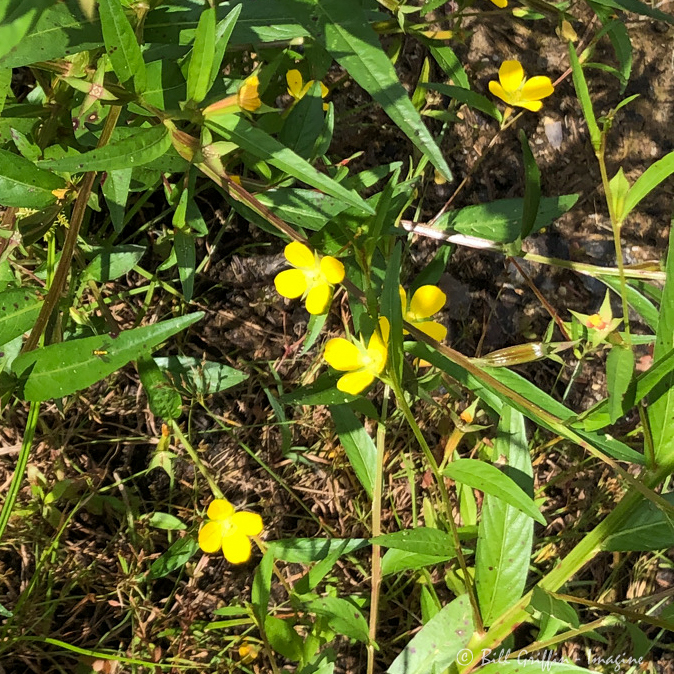
Several friends have asked me to keep them informed whenever I schedule a guided naturalist hike in our area. I am planning one (maybe two) wildflower hikes in September as celebration of the founding of the Mountains-to-Sea Trail:
Friday, September 12
(and if there’s interest I’ll lead a reprise on Saturday, September 27).

 . 

Sign up at MeetUp.com to receive notifications and to register for events.
Thanks — Bill
 . 
MeetUp.com — MST Segment 6 Events — September 12

Acuity

 . 
SUMER is icumen in,
+++  Lhude sing cuccu!
Groweth sed, and bloweth med,
+++ And springth the wude nu—
+++ +++ Sing cuccu!
 . 
Anonymous. c. 1250
 . 
 . 
Kahhk, says our local cuccu/cuckoo, the yellow-billed variety, or kowk-kowk-kowk-kowk-KOWK, and often with a preamble tk-tk-tuk-tuk-tuk like a two-stroke engine that won’t quite start but which clearly heralds summer is a-coming in. Yesterday evening as the thermometer lied to us that it would soon dip below ninety and as even the cicadas were gravelling A-flat instead of their usual bright C, I heard two cuckoos in conversation. One was to our west and the other just east of Elkin Creek, where Linda and I were carving a path through the humidity like tired scows. Loudly sing, cuckoo!
 . 
So that I can hear you! I want to pretend my auditory acuity is not diminishing, but I am forced to confess my limitation when we’re sitting on the back porch and Linda asks (innocently? perhaps not), “Oh, didn’t you hear the Pewee?” Then I focus my attention and cast my receptive net into the green rollers of oak and hickory until, yes!, now I hear it, humble plaintive song of Eastern Wood Pewee, really one of my favorite birds. I would hate to have missed it.
 . 
The songs of birds are half their personality. Half their presence and their being. And birds are half the personality of the forest. Oh yes, today I will kneel to appreciate the Cranefly Orchid, just beginning to bloom right now mid-July. I’ll focus my gaze on a few centimeters of floral spike rising from the deep shade, but all around me 360 degrees are Vireo, Flycatcher, Woodpecker, Thrush, unseen but unceasing. I might toy with the idea of hearing aides so that I don’t have to ask Linda to repeat herself so often, but I will be ultimately convinced when I miss another Pewee.
 . 
 . 
 . 
The Common Cormorant
 . 
The Common Cormorant or shag
Lays eggs inside a paper bag.
The reason you will see no doubt
It is to keep the lightning out.
But what these unobservant birds
Have never noticed is that herds
Of wandering bears may come with buns
And steal the bags to hold the crumbs.
 . 
Christopher Isherwood (1904-1986)
 . 
[from A Great Big Ugly Man Came Up and Tied His Horse to Me, A Book of Nonsense Verse illustrated by Wallace Tripp; Little, Brown & Company © 1971]
 . 
It’s not in summer that cormorants visit Elkin but during spring or fall migration. A few will chance upon our little town reservoir, a welcoming spot for a rest and a snack. Just as Wallace Tripp captured her, a cormorant will perch on the pump housing in the middle of the lake, fluff out her wings to dry, beak tipped up, utterly satisfied. There must be something attractive in the water around her, bream or bass or crappie, because she and her buddies will hang around for a few days before they make like a tree and get out of here. They have summer plans elsewhere.
 . 
Summer. Birds. Bird poems. This summer our grandson is helping us comb through basement and garage for those preserved toys and mementos it’s time to release into the wild. Duplos – can we really bear to give them away? And the books, the books, the books! We no longer have any teething babes to relish those old board books, and even our 8- and 9-year olds are feeling too grown up for most of my favorite tomfoolery, but I must hold onto my Wallace Tripp. The Emperor of Anthropomorphism. In fact, when I slide into senescence I hope my family has the good sense to pack away all my process theology, quantum reality, and cosmology and just prop me up with Tomie dePaola (for benediction) and Tripp (for belly laughs) to make me young again.
 . 
 . 
The Windhover     
 . 
To Christ our Lord 
 . 
I CAUGHT this morning morning’s minion, king-
+++ dom of daylight’s dauphin, dapple-dawn-drawn Falcon, in his riding
+++ Of the rolling level underneath him steady air, and striding
High there, how he rung upon the rein of a wimpling wing
In his ecstasy! then off, off forth on swing,
+++ As a skate’s heel sweeps smooth on a bow-bend: the hurl and gliding
+++ Rebuffed the big wind. My heart in hiding
Stirred for a bird,—the achieve of; the mastery of the thing
 . 
Gerard Manley Hopkins (1844–1889)
 . 
 . 
When we first moved to Elkin in 1981, Chatham Manufacturing still employed 3,000 men and women working three shifts making blankets and upholstery. As I drove home on summer evenings past the lake of cars in the Chatham parking log, I often spotted a Windhover perched on an overhead wire . Hoping, no doubt, to pounce on a house sparrow drawn to someone’s spilled fries or cigarette butts. We don’t call them Windhovers here in the US, and by DNA analysis our American Kestrel is actually not closely related to Hopkins’s Eurasian Kestrel, but on other summer evenings as I drove home through Surry County corn and soybean fields I was stirred more than once to see a tiny falcon hovering above some ill-fated mouse or grasshopper before rocketing into its stoop. Whenever I read Hopkins’s poem, I feel again the ecstasy of that momentary communion with perfect wild creation.
 . 
Who has never felt the desire to be caught up and become part of that creative spirit? An encounter with a wild thing, the embrace of a child, standing transfixed before a work of art, connection with one perfect phrase read in print, writing a line deep and true: experiences of creation and acts of creativity are so intermingled as to be indistinguishable. Teach me half the gladness / That thy brain must know, / Such harmonious madness / From my lips would flow / The world should listen then, as I am listening now.
 . 
bird
 . 
To a Skylark                   (excerpt)
 . 
Hail to thee, blithe Spirit!
Bird thou never wert,
That from Heaven, or near it,
Pourest thy full heart
In profuse strains of unpremeditated art.
 . 
Higher still and higher
From the earth thou springest
Like a cloud of fire;
The blue deep thou wingest,
And singing still dost soar, and soaring ever singest.
. . .
 . 
What thou art we know not;
What is most like thee?
From rainbow clouds there flow not
Drops so bright to see
As from thy presence showers a rain of melody.
 . 
Like a Poet hidden
In the light of thought,
Singing hymns unbidden,
Till the world is wrought
To sympathy with hopes and fears it heeded not:
. . .
 . 
Sound of vernal showers
On the twinkling grass,
Rain-awaken’d flowers,
All that ever was
Joyous, and clear, and fresh, thy music doth surpass.
 . 
Teach us, Sprite or Bird,
What sweet thoughts are thine:
I have never heard
Praise of love or wine
That panted forth a flood of rapture so divine.
. . .
 . 
We look before and after,
And pine for what is not:
Our sincerest laughter
With some pain is fraught;
Our sweetest songs are those that tell of saddest thought.
 . 
Yet if we could scorn
Hate, and pride, and fear;
If we were things born
Not to shed a tear,
I know not how thy joy we ever should come near.
 . 
Better than all measures
Of delightful sound,
Better than all treasures
That in books are found,
Thy skill to poet were, thou scorner of the ground!
 . 
Teach me half the gladness
That thy brain must know,
Such harmonious madness
From my lips would flow
The world should listen then, as I am listening now.
 . 
Percy Bysshe Shelley (1792—1822)
 . 
2020-11-03b Doughton Park Tree
.    .    .    .    .
Several friends have asked me to keep them informed whenever I schedule a guided naturalist hike in our area. I am planning one (maybe two) wildflower hikes in September as celebration of the founding of the Mountains-to-Sea Trail:
Friday, September 12
(and if there’s interest a reprise on Saturday, September 27).
Sign up at MeetUp.com to receive notifications and to register for events.
Thanks — Bill
 . 
 . 
 .