Feeds:
Posts
Comments

Archive for the ‘Imagery’ Category

 + 
[with 3 poems by Sarah Small]
 + 
Dad, Peeling Apples
 + 
++++++ The color of wheat
bread speckled
like the skin of a Golden Delicious,
freckles on top of freckles
and tiny nicks
from his knife, dots of blood
turned to brown scabs.
My father’s hands
 + 
have never changed. Every night
a different apple
skinned naked,
split and seeded without him
ever looking down, loving the fit
 + 
of apple
in the left hand, brown-handled
knife in the right.
He licks the tip of his finger
where the juice runs clear
and skewers a slice
 + 
for me, which I take
regardless
of whether I want
an apple or whether
the flesh has begun to brown
around the edges.
 + 
When he is done,
knife set down and fingers wiped
clean against the legs
of his beige corduroys, I will take
the leathered back
of his hand to my cheek
and hold it there, begging
 + 
his weathered roots to spread
their soil-caked fingers
long and strong
as deep as the generations will go.
 + 
Sarah Cummins Small
from Stitches, Finishing Line Press, Georgetown, Kentucky. © 2025
 + 
❦ ❦ ❦
 + 
Last week I was out on the Mountains-to-Sea Trail with Bob and Steve digging ditches. “Erosion mitigation features” – yeah, ditches. Along one stretch we kept turning up huge earthworms, dozens of them, fat and long as little snakes. As we rescued each one and chucked him/her off the trail, Bob turned to me, local naturalist, and asked, “Say Bill, can you tell which is male and which is female?” Smirk on, Bob. If I recall correctly from Mrs. Schilling’s high school biology, every worm is both. One end is boy and the other end is girl, hermaphrodites. When they want to make little wormlets, they line up parallel head to tail and exchange genetic material. Slimy but exciting!
 + 
Thank you Hermes, Aphrodite, and Mrs. Schilling, whose motto was, “There’s no place in the world for weak women!” Everybody, now, hands on! as we dissected our earthworm. And each 9-week term Mrs. Schilling also sent us out collecting: leaves, insects, fungi. In mid-winter Ohio it was bare bud identification time, each labeled per Linnaeus. I’ve never forgotten Acer rubrum and Quercus alba. My lab partner Dave tried to foist off the bare tip of his defunct Christmas tree as one of his collected buds. Just before he turned his project in, I replaced its label (Pinus pinus?) with Gluteus maxiumus. It was exactly five minutes before Mrs. Schilling’s menacing contralto penetrated to our back row table: “Mr. Mason, come forward!”
 + 
Mrs. Schilling was one of my three most memorable teachers (Mr. Geigel, English, and Herr Watt, German, the other two). I am still in love with Latin binomials and squishy things thanks to her. Mrs. Schilling would certainly never shrink from describing in the most squirm-inducing detail the reproductive habits of earthworms. And at age 15 who is not obsessed with sex in all its varieties, manifestations, and practices? I can’t in all honesty confess that the mystery has even now been fully dispelled, although I think I may have finally figured out the convoluted sex life of ferns. (Listen up, y’all, that’s pronounced Thallus.)
 + 
When I was 12, Dad never sat me down for THE TALK. He just handed me a slim pamphlet, mysteriously titled Where You Came From, then sent me off to read it somewhere my little brother couldn’t peep. “When you’re finished, let me know if you have any questions.” I returned it to him later with the 1965 equivalent of “All good,” but for at least the next two years I still confused female anatomy with British monarchy (Elizabeth Regina). And now I’m supposed to be the one to sit Dad down at 98 and explain to him the facts of why he can’t be asking his physical therapist out on a date? I think I’d rather just stick with the earthworms.
 + 
 + 
❦ ❦ ❦
 + 
War
 + 
++++++ Our mother is beautiful
Without makeup, with the round balls
Of her cheekbones like crabapples
Or plums, and her crooked front
Tooth. But with a little
Pencil to shade in the sharp arch
Of eyebrows and bright red lipstick, she becomes
A black-and-white
Photograph hung in a young man’s barracks
Where in the early evening before dark
And after a green supper, one soldier lies
Sideways on his cot facing her,
Tracing the soft outline of her cheek
With one knuckle, three fingers from his lips
To hers and back. We will never be
So carefully memorized.
 + 
Sarah Cummins Small
from Stitches, Finishing Line Press, Georgetown, Kentucky. © 2025
 + 
❦ ❦ ❦
 + 
We will never be / so carefully memorized – Sarah Small begins her collection Stitches with a portrait of her parents in the 1940’s, deeply imagined, drawn deep from her heart. Poem by poem she pieces a quilt of memory and legacy, reverence and longing. This is one poetry collection that left me wanting more when I had turned the final page. Its beautiful pattern gradually emerges, on each page so carefully felt and conveyed. The simplest things conceal the greatest mysteries. Within the simplest the greatest is revealed.
 + 
The poet’s eye and ear, her imagery and music, each delicate detail and meticulous observation, all the lives shared, every secret revealed: the colors and textures arrange themselves until we recognize not only the poet’s family but our own place among the tribe of humankind. These are indeed the stitches that gather us into a single human family.
 + 
 + 
Stitches is Sarah Cummins Small’s debut collection and is available HERE.
The book’s cover art and design are by Summer Small.
 + 
 + 
❦ ❦ ❦
 + 
Unstitched
 + 
I am held together
by tiny stitches
on small scraps of feed sack,
snatches of wool, snips of gingham.
A patchwork of pastels—
a slipshod collage of cotton.
I’ve been silk, satin, taffeta;
I’ve been flowers, polka-dots, and plaid.
 + 
Thin white thread
++++ ++++ zig-zags
++++ across
++++ ++++ the decades
++++ hemming me in, keeping me
from ripping.
 + 
I’ve been zipped.
++++ Buttoned.
++++ ++++ Unsnapped.
I’ve been bumblebunched, twisted,
and straightened. Held pins in my mouth,
pricked fingers, and calloused
my thimble-less thumbs.
 + 
I am done.
Unravel me now:
Rip out the seams
one by one, untwist strings
and untangle knots. Fold me gently.
What I haven’t finished—
take now.
Begin again.
 + 
Sarah Cummins Small
from Stitches, Finishing Line Press, Georgetown, Kentucky. © 2025
 + 
❦ ❦ ❦
 + 
Just a reminder that I m leading a naturalist hike the morning of Friday, September 12, 2025 on the Mountains-to-Sea Trail near Elkin and you are invited. During the month of September we celebrate the birthday of the MST! It’s an easy walk, 2 hours or so, lots of stops to check out flora and fauna. Sign up at:
 + 
 + 
And if you can’t come on the Friday, we will probably repeat the hike on Saturday, September 27. Sign up with Elkin Valley Trails Association at Meetup.com to receive notices.
 + 
 + 
❦ ❦ ❦
 + 
2014-06-30a Doughton Park Tree

Read Full Post »

 . 
[with 3 poems by Jack Kristofco]
 . 
The Walkways at the Marsh
 . 
counterfeit geometry,
as if our straight lines matter,
railing, spindles, planks,
pressure-treated pathways
over bluegill, newt,
below the heron’s pterodactyl flap to
shifting clouds,
across an azure sky;
 . 
sun pays close attention to the boards,
like children lined at school,
the impudence of rooflines
in their misbegotten hope
of order out of chaos,
believing in a dreaming land of precept
in a teeming world
that seethes alive, primeval,
crawling in its mess
beneath our feet
 . 
Jack Kristofco
from After the Harvest, The Orchard Street Press, Gates Mills OH; © 2025
 . 
❦ ❦ ❦
 . 
When I wasn’t looking it crept up out of the jungle (below my driveway). Never seen before, unnamed, it has climbed into the reluctant arms of the hemlock and draped itself like a boa for the cotillion. What the ? What stealthy hand sowed these seeds? From what alien universe has it landed here? But when I look closer at the pale frill and awkward angles around each blossom, I realize I know its sister well.
 . 
After the tornado introduced light to our wooded lot, I gathered seeds from autumn pastures and broadcast them on the new bare clay. My friend Joe brought me labeled paper bags from his own Mitchell River meadows. Boneset, ironweed, asters, goldenrod, wild senna – I thought I knew what would sprout to fill my little parcel, but seeds have their own agenda. Two years after the bulldozer finished clearing away downed trunks, I am discovering the unexpected. I (try to) ignore the invasive Japanese stiltgrass, and I’m not at all surprised by Fireweed which rises everywhere at the least sunny opportunity, but how did this spleenwort get here? Which Symphiotrichum aster is this? I don’t recall pulling seeds from boneset six feet tall. And these giant leaves now lifting above my head can only be from the pumpkin I tossed down here after Halloween three years ago.
 . 
Soil seed bank / bud bank – some annuals and perennials will survive, buried in earth, longer than human generations. Can that be possible? Still viable five years from now? Piece of cake. Charles Darwin was the first to systematically consider the soil seed bank in 1859 when he noticed sproutings from muck dug out of the bottom of a lake. University Ag departments publish studies of weed seed persistence; Lambsquarters will still germinate after 40 years and possibly 1600 years. And some seeds are just waiting for a good scorching to spring forth.
 . 
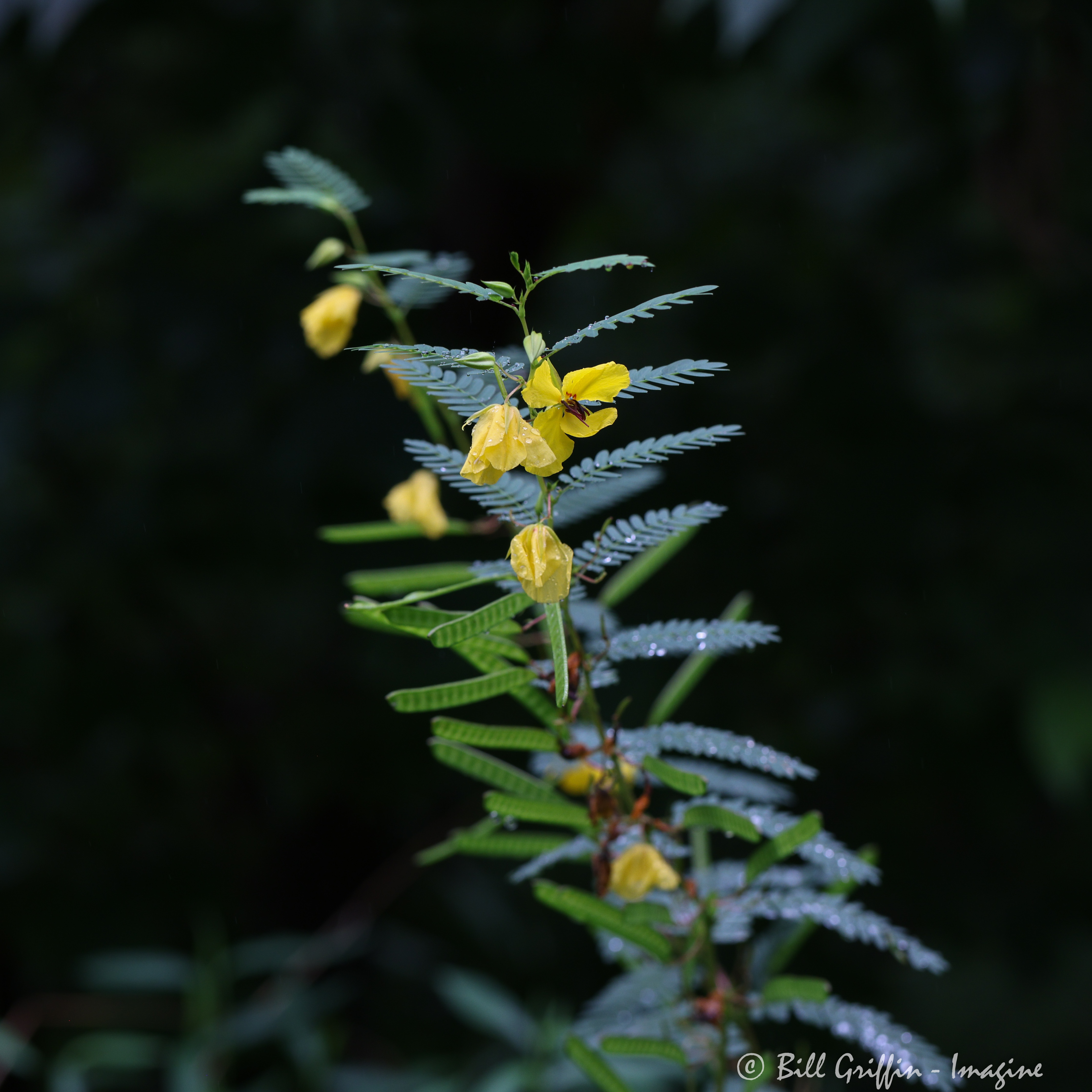
So what about this delicate vine I have never seen in 40 years of living here? Has it been waiting for this unusually wet summer? Or did a blue jay drop its seeds here last fall? Gently lobed leaves, truly unworldly blossom with narrow angled corolla and robot-finger pistil and stamens, it has to be a smaller, paler relative of gaudy Maypops – Passionflower. I will loop its tendrils away from the hemlock and into the sunlight maple and simply say, “Welcome to the Jungle.”
 . 
 . 
❦ ❦ ❦
 . 
Creed
 . 
we watch the comet rifle by,
light our milky pebble in a sky
so vast we only hold it with
some primal clutch of faith:
fidelity of those who know that god has died
or never was
because they’ve never seen the corpse,
aren’t impressed with winding sheets and veils,
though they seek the certitude
embraced by hearts they don’t respect,
+++ bowed heads and cathedrals
+++ where with confidence they pray for resurrection
+++ from this maze;
 . 
even the agnostics all believe,
+++ if only in their unbelief,
the truth of their uncertainty,
lighthouse on the journey
through the saints and sinners sea,
faithful travelers all,
milky-eyed sojourners
every one
 . 
Jack Kristofco
from After the Harvest, The Orchard Street Press, Gates Mills OH; © 2025
 . 
❦ ❦ ❦
 . 
After the harvest the trucks rumble heavy to the silos and disgorge their corn to be elevated, a plenty, certitude for the seasons. The man stands in the middle of the bare field. Perhaps he imagines the tall stalks still reaching above his head, elbow to elbow, their humid breath and the creak of their joints. Perhaps he notices lesser things that have thrived in the corn’s shade, a twisted morning glory, a puffball, moss. The field has opened – he can see to the treeline and hear the buntings singing their territories, he can feel hot September on his back. All the giving in and the taking away, the uncertainty of sowing and bearing fruit, the golden wealth has been removed and is distant. The man feels his feet on earth; here some wealth remains.
 . 
Jack Kristofco’s new collection, After the Harvest, cultivates contradiction and ambiguity. Life, as he demonstrates, is convoluted. He discovers even in the innocent paths of his childhood the latent struggles to come – a quiet ride with his father reminds him that some day he will take the wheel. The world of school kids playing baseball and dreaming of the girl across the street held us but a moment / then rose up all at once / and threw us to the fancy of the wind. We might strive to impose some order on existence, strive all our lives in fact for straight walkways and neat flower beds, but in a moment the stooping hawk of uncertainty will slice it all to bits.
 . 
Maybe I should embrace uncertainty. Maybe there are times when not being able to decide is exactly the right decision. Maybe it’s worth reflecting from time to time that there might be other right paths besides the one I seek so desperately to dig and smooth for myself. Jack describes meditating on his reflection in a pond – when he finally stands he sees himself both rise and sink. Our daily reality can never be quantized, regimented, predictable, no matter how we might desire it. Uncertainty itself is the lighthouse on our journey, and we are milky-eyed sojourners every one.
 . 
 . 
Jack Kristofco is founder of The Orchard Street Press in Ohio and editor of its annual poetry journal, Quiet Diamonds. Explore back issues as well as the Press’s many published poetry collections HERE.
 . 
Check out a list of plants whose seeds can persist in the soil seed bank for ten, twenty, thirty years and even longer HERE.
 . 
 . 
❦ ❦ ❦
 . 
The Hawk and the Man Watch the Yard
 . 
he looks across the slices
of a setting sun
splintering through trees
at peace with all his trim and sweeping,
lines of roses,
green of bright hydrangea leaves,
newly painted house for birds,
spray to keep the deer away
 . 
while on a silver maple in the neighbor’s yard,
its nest behind a school
where children study science and the paradigms
that lead to roses in a flower bed,
a red-tail pivots its sleek head,
jet-black eyes
to scan the sea of green and brown,
the arrogance of rooflines and concrete,
seeking any movement, any twitch,
a shadow, a fateful turn to light,
 . 
and then it falls
with such a sudden strike
it startles every leaf and branch,
the blossoms and the man
 . 
slicing their contentment
like a knife
 . 
Jack Kristofco
from After the Harvest, The Orchard Street Press, Gates Mills OH; © 2025
 . 
❦ ❦ ❦
 . 
 . 
2016-10-17b Doughton Park Tree
 . 

Read Full Post »

 . 
[poems from VISIONS Issue 110]
 . 
Cataract
 . 
That woman, somewhere in her seventies,
walking this past week without her husband,
her greeting smile the same but not the same,
water like a cataract behind her,
 . 
has managed to sew the morning round her,
given the air she parts the electricity
of apprehension. It recedes. The river
finds its level, and our walk assumes
 . 
The silence of a stranger’s unacknowledged
pain; guessing at the gap between her day
and ours, and shamed of it – who isn’t
shamed by fear and rendered speechless by it?
 . 
A dozen steps or so, and she recedes,
and suddenly there’s too much song and shade.
We’d stepped around the space he’d occupied
as if he were more vivid in his absence.
 . 
Ted McCarthy, Clones, Ireland
from VISIONS, Issue 110, © 2025
 . 
❦ ❦ ❦
 . 
Will the mowers quiet themselves, becoming blind to their appointed vectors? Will the heat pump rest from its pumping? We wait on the porch in fading light for transition / transformation. All afternoon and evening the rattle, grate, thrill of cicadas, but when daylight succumbs they will one by one release their reins to the katydids. The first movement of the day’s symphony, adagio, will merge without intermission into the forest’s boisterous nighttime allegretto. We wait to enter that moment, the duet of final dying cicada and first katydid newly risen. For a few minutes the two will sing together.
 . 
Alchemy it is, a dash of dappled hardwood shade, one lick of humid breeze, stir briefly with cicada song and you will transport me into the presence of my grandmother. Nana holds a dripping glass of tea for 10-year old me as I climb the sandy bluff up from Bogue Sound, between crowding live oaks, little skiff beached below, in my hand a string of croakers and spots. Nana and 20-year old me are in her driveway in Winston, red oaks towering, about to drive her ancient Plymouth to Piggly Wiggly but the “jawflies” are so loud she can’t think what she needs. I will spend half the afternoon trying to down one from its high branch with her BB gun. It decrescendos as it falls.
 . 
This morning I have exercised my gray cells and cochleae by picking out individuals from amidst the cacophony. One species of cicada is a continuous dry rattle like softly shaken maracas. Another is a sinusoidal sharp-edged rasp, a scraper pulled across a guiro. Then a third sudden loud rising crescendo crests and slows, falls back into stillness. And now at once they all cease, all except a single insistent rasp repeated ten times, twenty, and when it finishes its duet is still audible in a faint far tree. The music of their tymbales, the vibration of the living desperate to connect.
 . 
 . 
❦ ❦ ❦
 . 
At the Goodbye Door
 . 
Wind knocks on your door; a mackintosh
slung over its arm, a sigh like coyotes
 . 
as they grate their teeth, their rheumy eyes contagious
with stars, tongues slavered with hope –
 . 
their coats reminiscent of ones you donated to the thrift,
collars roughed up, delicate threads a reminder of what binds –
 . 
how we were together long enough to retrieve the inexplicable.
Satiated, we purged ourselves: You at the goodbye door,
 . 
me sweeping the floor where you stood and always a crooner
in the background singing, Loves a Difficult Wing.
 . 
Dianna MacKinnon Henning, Janesville, California
from VISIONS, Issue 110, © 2025
 . 
❦ ❦ ❦
 . 
we were together long enough
to retrieve the inexplicable,
the spring that swallowed itself –
who isn’t shamed by fear
and rendered speechless by it?
the old fields grow, indifferent
+++++++ lines from Visions Issue 110
 . 
To Bradley Strahan, for forty-five years of gleaning from fields across all the world to plant and harvest Visions-International, Thank You. To Cal Nordt, for over a decade of encouragement and support behind the scenes and for now lifting the harrow of editor, also Thank You. And to Katie LaRosa, for keeping alive the vision of design and art in the service of words, Bravo. This first issue produced by Cal Nordt is again truly international, as are all past issues, although North Carolina is also well represented with poems by J. S. Absher, Rebecca Pierre, Adrian Rice, and Cal himself. The poetry of Visions has always been brief in lines, deep in heart, brilliant in space and atmosphere – this new issue continues the lineage.
 . 
 . 
Information about previous issues of Visions-International, as well as other creative endeavors by Bradley Strahan, is available HERE.
For information about Visions under the imprint Cynosura Press, click HERE.
For submissions to Visions, contact Cal Nordt at calnordt@gmail.com
 . 
 . 
❦ ❦ ❦
 . 
Spring
 . 
The cunning master of nature
sensed my burning thirst
proffered his hand
to the lush spring
and hauled it in.
Driven by immense thirst
I pressed my lips
upon the dry sand
and let my soul wander
through underground paths
weaving like thread
through minerals and crystals,
searching for the spring
that swallowed itself.
 . 
Risto Vasilevski, Smederevo, Serbia
from VISIONS, Issue 110, © 2025
 . 
❦ ❦ ❦
 . 
 . 
Breaking Cloud
 . 
It was the crackle in the airport air
that made me think of Austerlitz
or some such flat, fat battlefield
of long ago; a river, sleek these days
and undisturbed. How easily the ground
is ploughed, the iron underneath stirred
as if always there. After the unease
of take-off, news became history,
a movement of horsemen and grenadiers
on hand-drawn maps. Now clouds part,
vapour trailing like a harrow, a brief
shudder as the landing gear comes down.
Contact, and the bump of runway lights;
impossible, as we taxi, to believe
earth now as other than unshakable.
Still, never more than a breath from anxiety –
for how long more will our children prosper?
The old fields grow, indifferent, their shot
and bone dissolving at the root.
 . 
Ted McCarthy, Clones, Ireland
from VISIONS, Issue 110, © 2025
 . 
Doughton Park Tree 2025-07-10
 . 

.    .    .    .    .

Several friends have asked me to keep them informed whenever I schedule a guided naturalist hike in our area. I am planning one (maybe two) wildflower hikes in September as celebration of the founding of the Mountains-to-Sea Trail:
Friday, September 12
(and if there’s interest I’ll lead a reprise on Saturday, September 27).

 . 

Sign up at MeetUp.com to receive notifications and to register for events.
Thanks — Bill
 . 
MeetUp.com — MST Segment 6 Events — September 12

Read Full Post »

« Newer Posts - Older Posts »