Feeds:
Posts
Comments

Archive for the ‘poetry’ Category

[poems by Gary Snyder, Wendell Berry, Rose Fyleman, David Radavich]

an offering from Craig Kittner . . .

Piute Creek
– Gary Snyder –

One granite ridge
A tree, would be enough
Or even a rock, a small creek,
A bark shred in a pool.
Hill beyond hill, folded and twisted
Tough trees crammed
In thin stone fractures
A huge moon on it all, is too much.
The mind wanders. A million
Summers, night air still and the rocks
Warm. Sky over endless mountains.
All the junk that goes with being human
Drops away, hard rock wavers
Even the heavy present seems to fail
This bubble of a heart.
Words and books
Like a small creek off a high ledge
Gone in the dry air.

A clear, attentive mind
Has no meaning but that
Which sees is truly seen.
No one loves rock, yet we are here.
Night chills. A flick
In the moonlight
Slips into Juniper shadow:
Back there unseen
Cold proud eyes
Of Cougar or Coyote
Watch me rise and go.

Piute Creek” by Gary Snyder from Riprap and Cold Mountain Poems. Copyright © 2009 by Gary Snyder

.     .     .     .     .     .     .

an offering from Alana Dagenhart . . .

The charming landscape which I saw this morning, is indubitably made up of some twenty or thirty farms. Miller owns this field, Locke that, and Manning the woodland beyond. But none of them owns the landscape. There is a property in the horizon which no man has but he whose eye can integrate all the parts, that is, the poet.

Ralph Waldo Emerson, Nature, 1836

Poet, will you put the parts back together? The seed, the roots, the petals that have been thrashed and trampled? The bits that once meshed and fit now distracted and ignored? The air we can’t taste, the sunlight we can’t breathe, the stone beneath our feet, the water in our hair? Who will put us back together and put us into the places where we belong, all together?

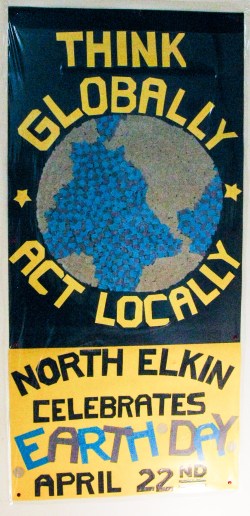
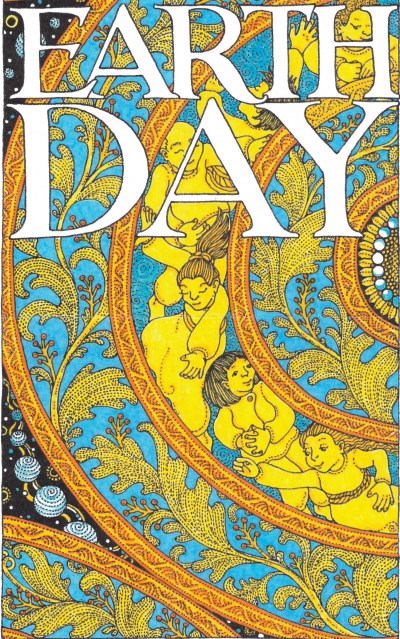
Several friends have offered poems that speak to them about our Earth and which offer to gather us all in together to celebrate Earth Day! I’m posting their offerings April 21, 22, and 23. What do you see? What do you hear? What do you notice? What do you feel?

.     .     .     .     .     .     .

an offering from both Lynda Rush-Myers and Kitsey Burns Harrison . . .

The Peace of Wild Things
– Wendell Berry –

When despair for the world grows in me
and I wake in the night at the least sound
in fear of what my life and my children’s lives may be,
I go and lie down where the wood drake
rests in his beauty on the water, and the great heron feeds.
I come into the peace of wild things
who do not tax their lives with forethought
of grief. I come into the presence of still water.
And I feel above me the day-blind stars
waiting with their light. For a time
I rest in the grace of the world, and am free.

The Peace of Wild Things” by Wendell Berry, from Collected Poems (North Point Press), © 1985

.     .     .     .     .     .     .

an offering from Kitsey Burns Harrison . . .

Mice
– Rose Fyleman –

I think mice
are rather nice;
Their tails are long,
their faces small;
They haven’t any
chins at all.
Their ears are pink,
their teeth are white,
They run about
the house at night;
They nibble things
they shouldn’t touch,
and, no one seems
to like them much,
but, I think mice
are rather nice.

Mice” by Rose Fyleman (1887-1957)

.     .     .     .     .     .     .


Roundleaf Yellow Violet; Viola rotundifolia; Mountains-to-Sea Trail above Brinegar Cabin

an offering from David Radavich, his poem . . .

Enough

Rare is better:
The price soars
when you lack
what you need.

A poem carries
everything
in your pocket
like a mind.

Love can be
stored in a cell
whose DNA
heartens life.

Music is soul
saving, the simplest
math and finding
one solution.

O earth that is
rare and good,
sing to the unclean
with your seas.

“Enough” by David Radavich, originally appeared in Iodine Poetry Journal

.     .     .     .     .     .     .


+     +     +     +     +

[original artwork by Linda French Griffin (c) 2021]

Read Full Post »


[poems by Joy Harjo, Wendell Berry, Mary Hennessy]

an offering from Debra Kaufman . . .

Remember
– Joy Harjo –

Remember the sky that you were born under,
know each of the star’s stories.
Remember the moon, know who she is.
Remember the sun’s birth at dawn, that is the
strongest point of time. Remember sundown
and the giving away to night.
Remember your birth, how your mother struggled
to give you form and breath. You are evidence of
her life, and her mother’s, and hers.
Remember your father. He is your life, also.
Remember the earth whose skin you are:
red earth, black earth, yellow earth, white earth
brown earth, we are earth.
Remember the plants, trees, animal life who all have their
tribes, their families, their histories, too. Talk to them,
listen to them. They are alive poems.
Remember the wind. Remember her voice. She knows the
origin of this universe.
Remember you are all people and all people
are you.
Remember you are this universe and this
universe is you.
Remember all is in motion, is growing, is you.
Remember language comes from this.
Remember the dance language is, that life is.
Remember.

Remember”; Copyright ©1983 by Joy Harjo from She Had Some Horses by Joy Harjo

.     .     .     .     .     .     .

There is something we want to hear that poetry speaks to us. We don’t know what it is until we feel its vibrations. How could we know? Do you only see what you know you want to see and never turn around and the redbud has burst into bloom? Do you only smell what you know you want to smell and baking shortbread never wafts you into Nana’s kitchen?

Poetry wants to say to us the thing we didn’t know we wanted to hear but deep within us we do know and do desire. Remember all is in motion, is growing, is you. / Remember language comes from this. (Joy Harjo).

Several friends have offered poems that speak to them about our Earth and which offer to gather us all in together to celebrate Earth Day! I’m posting their offerings April 21, 22, and 23. What do you see? What do you hear?

.     .     .     .     .     .     .

Linda French Griffin

an offering from Catherine Carter . . .

A Purification
– Wendell Berry –

At start of spring I open a trench
in the ground. I put into it
the winter’s accumulation of paper,
pages I do not want to read
again, useless words, fragments,
errors. And I put into it
the contents of the outhouse:
light of the sun, growth of the ground,
finished with one of their journeys.
To the sky, to the wind, then,
and to the faithful trees, I confess
my sins: that I have not been happy
enough, considering my good luck;
have listened to too much noise;
have been inattentive to wonders;
have lusted after praise.
And then upon the gathered refuse
of mind and body, I close the trench,
folding shut again the dark,
the deathless earth. Beneath that seal
the old escapes into the new.

A Purification” by Wendell Berry from New Collected Poems. Counterpoint © 2012

.     .     .     .     .     .     .


Plantainleaf Pussytoes; Antennaria plantaginifolia; Mountains-to-Sea Trail above Brinegar Cabin

an offering by Mary Hennessy, her poem . . .

Repeat After Me:

jettison the idea of shelter.
Say it’s like a camera,
one more thing to hold between

ourselves and the world.
In hand, an invitation by library card
to leave the room of a little life.

Move out unwashed and unredeemed.
Wear a raggedy-assed back pack
like a harness.

The smell of pressed meat
from the back of the bus,
The curve at the top of the world

visible. Something you could Braille-
the almost arc of it.
You tell me that the composer Ravel repeats

every line, I say, “so do the birds.”
Sometimes they go on repeating
until I lose count.

Without looking up you say, “the world
will be gone a long time before anyone notices.”
The world will be gone a long time.

“Repeat After Me” © Mary Hennessy, first appeared in Pinesong 2018, annual anthology of the North Carolina Poetry Society

.     .     .     .     .     .     .

+     +     +     +     +

[original artwork by Linda French Griffin (c) 2021]

Read Full Post »

[including a poem by Rebecca Lindenberg]

I am still not sure what Will was thinking but he was very distant that evening. It was the last night of our backpacking trip through the Smokies. I knew he lived for wilderness – maybe he was simply ruing how long it would be until he’d have another chance to return to these mountains. Maybe he was doubting his chosen vocation, family doctor, the hectic office where we’d be working together again day after tomorrow. Maybe . . . maybe each of us longs to hang onto those few moments when we really feel we belong in the universe. And then they slip away.

We’d planned this trip together, just the two of us, for months. Now we were cooking our last supper. We had distanced ourselves from Mt. Collins shelter and the other hikers with their butane stoves that roared like jet liners. Will had fashioned a little alcohol stove out of a 7-Up can. Our noodles and dried vegetables simmered in silence.

When we’d finished eating and Will picked up the “stove,” his funk hit bottom. Our heat had fried a pygmy salamander (Desmognathus wrighti). Will lifted its weightless form and we grieved. We didn’t have much of anything more to say to each other that night.

In the morning we headed south on the AT to where our car waited at Clingman’s Dome. Bleached dead Frazer Fir flanked the trail with their mute accusations but the sun was cool and jeweled the dew on ridgeline grasses. About a mile from trail’s end, Will stopped and pointed. Perched on a stem sunning itself – Jordan’s Red-cheeked salamander, Plethodon jordani. Endemic to the Smokies, endangered, icon of biodiversity, preservation, and evolutionary variety. Was it waiting here to condemn us or to offer absolution?

Or to invite us to keep traveling until we discover where we belong?

.     .     .     .     .     .     .

It feels terrible to feel terrible // and so we let ourselves / start to forget.

There are plenty of pygmy salamanders but let me not forget that one. I haven’t heard a whip-poor-will in five years; let me not forget. I can choose to love this or that or the other . . . or you – let me not forget to hold tight to the choices that will hold you and me together.

We celebrate Earth Day with the other inhabitants of our single habitable planet on April 22, but how we venerate earth day depends on the choices we make every day.

They’re not wonders, but signs // and therefore can be read.


[#Beginning of Shooting Data Section]<br /> Nikon CoolPix2500<br /> 0000/00/00 00:00:00<br /> JPEG (8-bit) Normal<br /> Image Size: 1600 x 1200<br /> Color<br /> ConverterLens: None<br /> Focal Length: 16.8mm<br /> Exposure Mode: Programmed Auto<br /> Metering Mode: Multi-Pattern<br /> 1/59.9 sec - f/8<br /> Exposure Comp.: 0 EV<br /> Sensitivity: Auto<br /> White Balance: Auto<br /> AF Mode: AF-S<br /> Tone Comp: Auto<br /> Flash Sync Mode: Front Curtain<br /> Electric Zoom Ratio: 1.00<br /> Saturation comp: 0<br /> Sharpening: Auto<br /> Noise Reduction: OFF<br /> [#End of Shooting Data Section]

.     .     .     .     .     .     .

A Brief History of the Future Apocalypse

Worlds just keep on ending and
ending, ask anybody who survived

an earthquake in an ancient city
its people can’t afford to bolt

to the bedrock, or lived to testify
about the tyrant who used his city’s roofs

like planks to walk people off,
his country’s rivers like alligator pits

he could lever open and drop a whole
angry nation into. Ask anyone

who was watched their own ribs emerge
as hunger pulls them like a tide,

who watched bloody-sheet-wrapped
bodies from the epidemic burn,

or fled any of the wars to come.
The year I was eleven, I felt

the ground go airplane turbulent
beneath me. Its curt shuddering

brought down a bridge and a highway
I’d been under just the day before.

And I was not afraid, but should have been
the first time love fell in me like snow.

How could I know it would inter us
both, so much volcanic ash –

how could I not? The world must
end and I think it will keep ending

so long as we keep failing to heed
the simple prophecies of fact –

hot-mouthed coal-breathing machines
fog our crystal ball, war is a trapdoor

sprung open in the earth that a whole
generation falls through, love ends,

if no one errs, in death. When
my love died, I remember thinking

this happens to people every day,
just – today, it’s our world

crashing like an unmanned plane
into the jungle of all I’ve ever

had to feel, or imagine knowing.
It feels terrible to feel terrible

and so we let ourselves
start to forget. That must be it.

Why else would we let the drawbridge
down for a new army, water

the Horseman of Famine’s red steed
with the last bucket from the well

or worse – give up then. A heart
sorrow-whipped and cowering

will still nose its ribcage to be petted.
Will still have an urge for heroics.

And anyway, when has fear of grief
actually kept anyone from harm.

Some hope rustles in my leaves
again. It blows through, they eddy

the floor of me, unsettling
all I tried to learn to settle for.

Would I be wiser to keep
a past sacrament folded in my lap

or would I be more wise to shake
the gathered poppies from my apron,

brush off soft crimson petals
of memory and be un-haunted –

I don’t know. So I choose you and we
will have to live this to learn what happens.

And though it’s tempting to mistake
for wonders the surge of dappled

white-tailed does vaulting through
suburban sliding glass doors,

they are not. Not vanishing bees
blown out like so many thousands

of tiny candle-flames, neither
the glinting throngs of small black birds

suddenly spiraling out of the sky,
the earth almost not even dimpling

with the soft thuds of feathered weight.
Nor the great wet sacks of whale

allowing the tide to deposit them alive
on a strand, nor even the sudden

translucent bloom of jellyfishes.
They’re not wonders, but signs

and therefore can be read. I didn’t
always know that apocalypse

meant not the end of the world but
the universe disclosing its knowledge

as the sea is meant to give up its dead,
the big reveal, when the veil blows back

like so many cobwebs amid the ruins
and all the meaning of all the evidence

will shine in us to finally see –
And there you’ll be and I’ll know you

not by the moon in your voice but the song
rung in my animal self. For I feel you,

my sure-handed one, with something
sacreder than instinct but just as fanged.

Then unfold me the way you know
I want so I can watch the stars

blink back on over the garden as we grapple
in the dimming black like little, little gods.

Rebecca Lindenberg

from Best American Poetry 2019; Major Jackson, editor, David Lehman, series editor; Scribner Poetry 2019
first appeared in Southern Indiana Review; reprinted by permission from Rebecca Lindenberg

More by Rebecca . . . https://www.poetryfoundation.org/poets/rebecca-lindenberg

.     .     .     .     .     .     .

Rebecca Lindenberg teaches in the MFA program at Queens University, Charlotte, and is an Assistant Professor at the University of Cincinnati where she is also Poetry Editor of the Cincinnati Review. She holds a Ph.D. in Literature and Creative Writing from the University of Utah. She is the author of Love, an Index (McSweeney’s 2012) and The Logan Notebooks (The Center for Literary Publishing at Colorado State 2014), winner of the 2015 Utah Book Award.

.     .     .     .     .     .     .

[#Beginning of Shooting Data Section]<br /> Nikon CoolPix2500<br /> 0000/00/00 00:00:00<br /> JPEG (8-bit) Normal<br /> Image Size: 1600 x 1200<br /> Color<br /> ConverterLens: None<br /> Focal Length: 11.8mm<br /> Exposure Mode: Programmed Auto<br /> Metering Mode: Multi-Pattern<br /> 1/30 sec - f/4<br /> Exposure Comp.: 0 EV<br /> Sensitivity: Auto<br /> White Balance: Auto<br /> AF Mode: AF-S<br /> Tone Comp: Auto<br /> Flash Sync Mode: Front Curtain<br /> Electric Zoom Ratio: 1.00<br /> Saturation comp: 0<br /> Sharpening: Auto<br /> Noise Reduction: OFF<br /> [#End of Shooting Data Section]

.     .     .     .     .     .     .

[Behind the scenes karma: I received Best American Poetry 2019 as a gift last Christmas (Oh Santa, you are so good at taking hints!) but I hadn’t read it until this week. I was hoping to discover something that would evoke April as Earth Month anticipating Earth Day, resigned to forgoing my usual focus on Carolina writers. Rebecca Lindenberg’s poem leapt from the page; it is the best of the Best, the Best American Poem of 2019 in my opinion. It wasn’t until after I had asked her permission to use it that I discovered Rebecca’s connection to Queens University and probably to many of the other writers who have appeared in this space. Karmic connection comes through.  – B ]

Read Full Post »

« Newer Posts - Older Posts »