Feeds:
Posts
Comments

Archive for the ‘poetry’ Category

[with poems from Black Nature]

Spring is the blinding chartreuse of winter wheat twelve inches high with last year’s corn stubble poking through. Spring is pocks of yellow narcissus in the woods where a settler’s cabin once stood. And Spring is a deepening lilac blanket that seeps across fallow fields like a flood tide blooming – what is that?

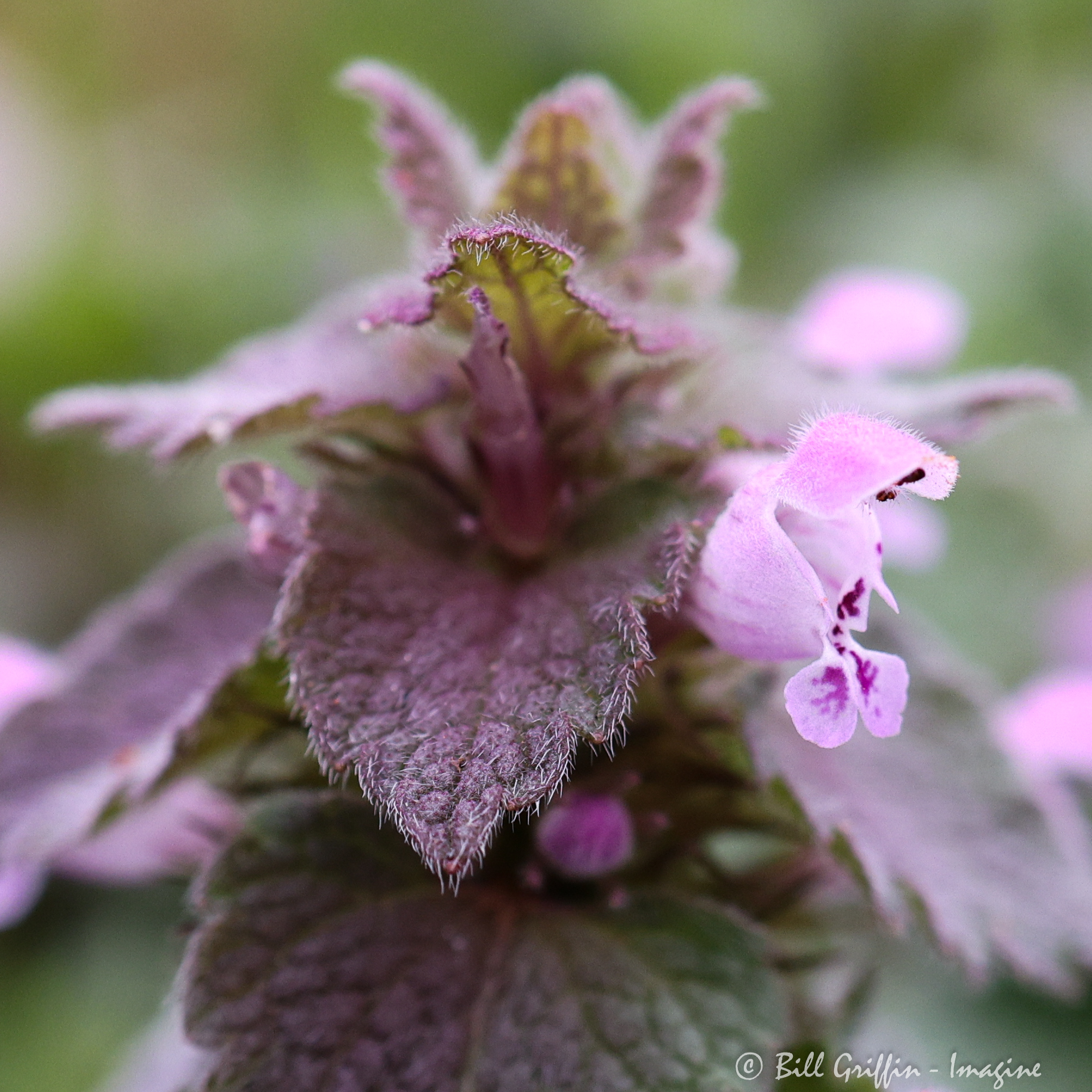
Henbit, Deadnettle, and Creeping Charlie, that’s what. As the earliest spring ephemerals are cautiously blooming in the leafless forest, out in broad sun these three are turning the earth extravagant purple. Driving country roads, I’ve often wondered why fields become so colorful before visited by the plow, and when starting out on nature trails to find the real wildflowers, I’ve casually noticed bright pink and magenta sequins in the hardpack around the parking lot but never scrunched down to look.

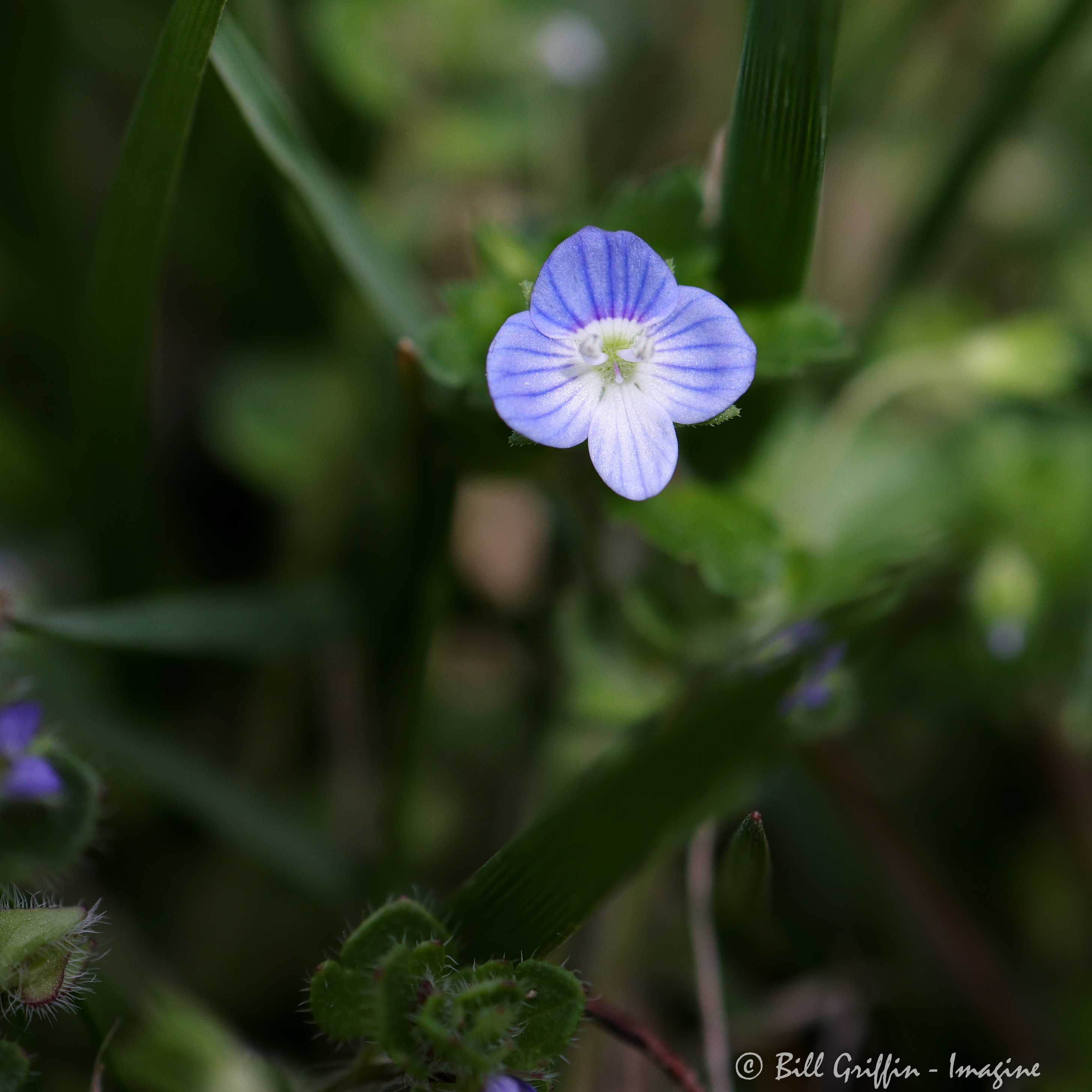
And for the most part not many want to get to know these three members of the mint family, Lamiaceae. They’re weeds, for goodness sake, and introduced non-natives: Henbit from Europe, Deadnettle from the Mediterranean to Western Siberia, Charlie from almost everywhere in temperate Eurasia. But check out those little flowers, even though they’re smaller than the nail on your pinky: typical Mint with five petals partially fused, a long tube and hood on Henbit, broader lower lips on the other two. Streaked and spotted, really pretty if you kneel, even better with a magnifier. I plucked a sprig of Henbit for Linda and she kept it in water in a bottle cap in the kitchen for a week.

You’ve notice Creeping Charlie, also called Creeping Jenny, when you’ve strolled a neglected lawn and smelled spice from the crushed leaves. Deadnettle and Henbit don’t have the typical mint aroma but all three are edible, raw or stewed, and were probably brought here intentionally by early settlers. Before the discovery of hops, Creeping Charlie was used to brew ale, for flavor and clarity. Which causes me to ponder what these little mints are called – does one accrue more names the farther one wanders from one’s roots? Creeping Charlie especially – known as Alehoffs, Cat’s Foot, Field Balm, Gill-over-the-hill, Ground-ivy, Hay Maids, Runaway Robin (and there are at least three other totally unrelated plant species that go by the moniker Creeping Charlie).

Gotta go now – in a few minutes it’ll be too dark to go out front beside the road and pick my salad.

❦ ❦ ❦

Can’t leave out their secret true names:
Lamia amplexicaule
Lamia purpurea
Glechoma hederacea

❦ ❦ ❦

Locus

for Ralph

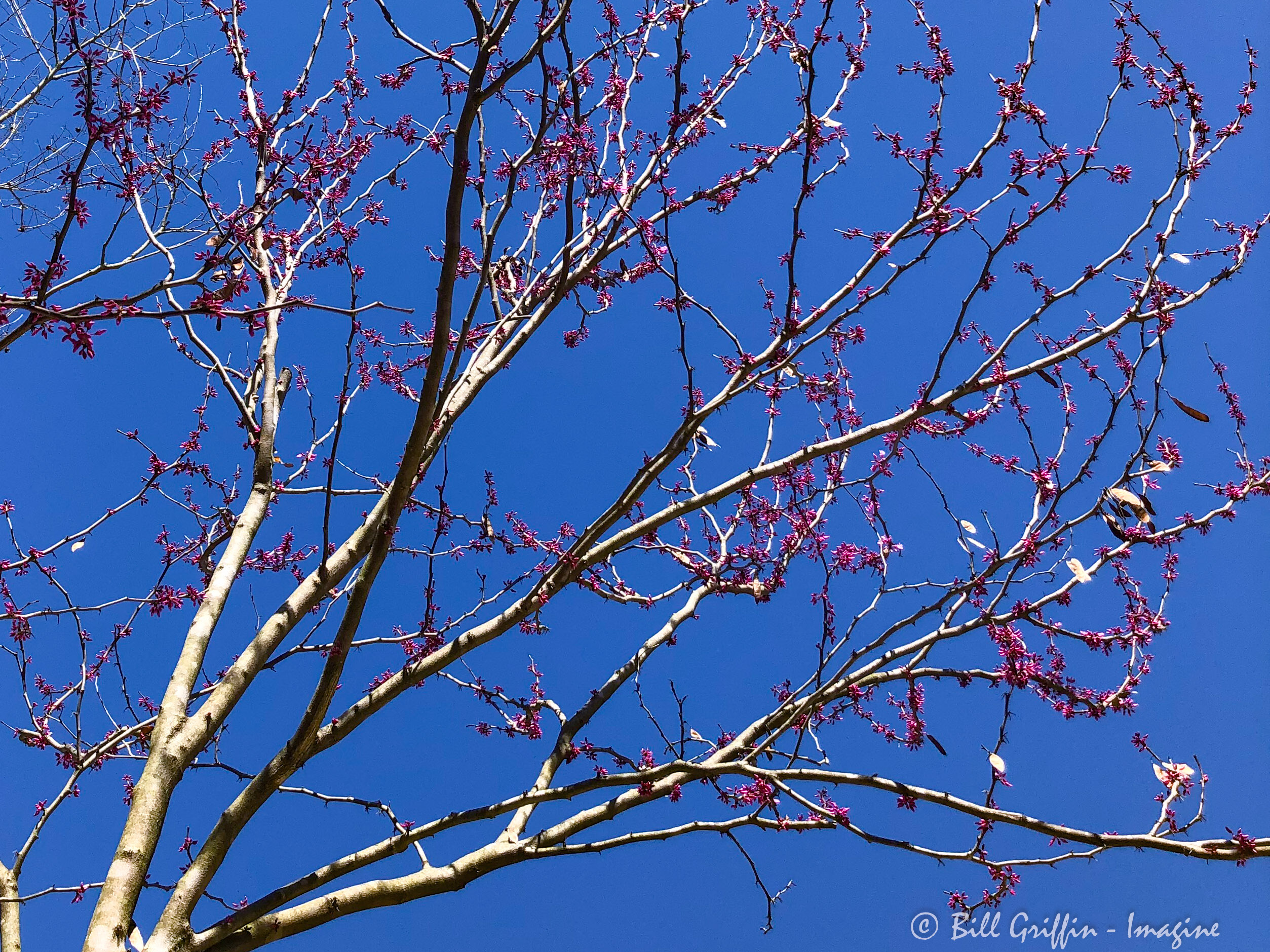
Here redbuds like momentary trees
+++++ of an illusionist;
here Cherokee rose, acacia, and mimosa;
here magnolias – totemic flowers
+++++ wreathing legends of this place.
Here violent metamorphosis,
+++++ with every blossom turning
deadly and memorial soldiers,
their sabres drawn, charging
+++++ firewood shacks,
apartheid streets. Here wound-red earth
+++++ and blinding cottonfields,
rock hills where sachems counseled,
where scouts gazed stealthily
+++++ upon the glittering death march
of De Soto through Indian wilderness.
+++++ Here mockingbird and
cottonmouth, fury of rivers.
Here swamp and trace and bayou
+++++ where the runagate hid,
the devil with Spanish pistols rode.
+++++ Here spareness, rankness harsh
brilliances; beauty of what’s hardbitten,
knotted, stinted, flourishing
+++++ in despite, on thorny meagerness
thriving, twisting into grace.
+++++ Here symbol houses
where the brutal dream lives out its lengthy
dying. Here the past, adored and
+++++ unforgiven. Here the past –
soulscape, Old Testament battleground
of warring shards whose weapons kill.

Robert Hayden
from Black Nature: Four Centuries of African American Nature Poetry, edited by Camille T. Dungy, © 2009 University of Georgia Press, Athens GA.
❦ ❦ ❦

This week I’ve been spending time with an anthology I’ve been reading off and on over the past year, Black Nature: Four Centuries of African American Nature Poetry, edited by Camille T. Dungy. The poems are arresting and transporting. I’m drawn to them for the nature, and for the black nature. Many of the poems evoke a deep, heartfelt connection to this earth, and many of them speak in voices and share messages I haven’t found in other nature poetry anthologies. Or haven’t found in quite the same tone. Always more to learn, imagination always expanding, life always becoming larger.

ROBERT HAYDEN (1913-1980) published his first collection of poems, Heart-Shape in the Dust, in 1940. He received the grand prize for poetry at the First World Festival of Negro Arts in Dakar, Senega, in 1966 for Ballad of Remembrance. Hayden was appointed as Consultant in Poetry to the Library of Congress in 1976, the first African American to hold the position.

FRANK X WALKER, born in 1961 in Danville, KY, is a founding member of the Affrilachian Poets and a recipient of the 2005 Lannan Literary Poetry Fellowship. He has authored four poetry collections and edited two poetry anthologies, and serves as the editor of Pluck! Journal of Affrilachian Art and Culture.

LUCILLE CLIFTON (b. 1936) has published thirteen books of poetry, a memoir, and more than sixteen books for children. Her honors include the 2001 National Book Award, an Emmy Award, a Lannan Literary Award, and the 2007 Ruth Lilly Prize, among many other awards and honors. In 1999 she was elected a Chancellor of the Academy of American Poets and she has served as Poet Laureate for the State of Maryland.

[biographies adapted from the anthology]

❦ ❦ ❦

Wind Talker

+++ Ocian in view! O! the joy.
+++ William Clark

If I could make my words
dress they naked selves in blackberry juice
lay down on a piece a bark, sheep
or onion skin, like Massa do

If I could send a letter home to my wife
gloat it in the wind, on wings or water

I’d tell her ‘bout Katonka
an all the wide and high places
this side a the big river.
How his family, numbering three
for every star in the sky
look like a forest when they graze together
turn into the muddy M’soura
when the thunder along, faster than any horse
making the grass lay down
long after the quiet has returned.
How they don’t so much as raise a tail
when I come ‘round with my wooly head
and tobacco skin, like I’m one a them
making the Arikar and Mandan think me
“Big Medicine”
Katonka, who walks like a man.

Today we stood on the edge a all this
looked out at so much water
the mountains we crossed to get here
seem a little smaller.

As I watch fish the size a cabins dance in the air
and splash back in the water like children playing
I think ‘bout her an if we gone ever be free
then I close my eyes and pray
that I don’t live long enough
to see Massa make this ugly too.

Frank X Walker
from Black Nature: Four Centuries of African American Nature Poetry, edited by Camille T. Dungy, © 2009 University of Georgia Press, Athens GA.

❦ ❦ ❦

mulberry fields

They thought the field was wasting
and so they gathered the marker rocks and stones and
piled them into a barn +++ they say that the rocks were shaped
some of them scratched with triangles and other forms +++ they
must have been trying to invent some new language they say
the rocks went to build that wall there guarding the manor and
some few were used for the state house
crops refused to grow
I say the stones marked an old tongue and it was called eternity
and pointed toward the river +++ I say that after that collection
no pillow in the big house dreamed +++ I say that somewhere under
here moulders one called alice whose great grandson is old now
too and refuses to talk about slavery +++ I say that at the
masters table only one plate is set for supper +++ I say no seed
can flourish on this ground once planted then forsaken +++ wild
berries warm a field of bones
bloom how you must I say

Lucille Clifton
from Black Nature: Four Centuries of African American Nature Poetry, edited by Camille T. Dungy, © 2009 University of Georgia Press, Athens GA.

❦ ❦ ❦

2016-10-17a Doughton Park Tree

Read Full Post »

[poems from Word and Witness: A. R. Ammons, Julie Suk, Peter Makuck]

Carnage ensues at the table while I make coffee. As all the other animals look on in abject silence, large plush Starfish (carnivore, you know) has captured Baby Chick and is eating him with authentic suck-the-juice-right-out-of-you sound effects.

I remark that I’m going to be sad to miss little yellow Chicky. My grandson looks up, all innocence, and simply reminds me, “That’s just the way the food chain works.”

So it must be. Nine years before the publication of Darwin’s The Origin of Species, Alfred Lord Tennyson had already warned us (“she” being Nature, “types” being species):

. . .
She cries, ‘A thousand types are gone:
I care for nothing, all shall go.

‘Thou makest thine appeal to me:
I bring to life, I bring to death:
The spirit does but mean the breath:
I know no more.’ And he, shall he,

Man, her last work, who seem’d so fair,
Such splendid purpose in his eyes,
Who roll’d the psalm to wintry skies,
Who built him fanes of fruitless prayer,

Who trusted God was love indeed
And love Creation’s final law–
Tho’ Nature, red in tooth and claw
With ravine, shriek’d against his creed –

Who loved, who suffer’d countless ills,
Who battled for the True, the Just,
Be blown about the desert dust,
Or seal’d within the iron hills?

+++++ from In Memoriam A. H. H. (1850)

Shall we weep for Baby Chick? For the extinctions accelerating around us? For ourselves, our loss? A few years back I was leading a group of Junior Highs on a nature walk when we spotted a marvelously large spider shuffling along the path ahead of us. When we reached it, though, we found it was not the legs of the spider that were walking but the legs of the pint-sized wasp that had stung and paralyzed it and now dragged it to a favorable spot for egg laying. In an instant the spider transformed from an object of fear and loathing to a spike of compassion in our hearts.

This week a very talkative red shouldered hawk is haunting the woods out back. No coincidence: that’s where the bird feeders hang. We hope he’s eyeing the squirrels – there are more than enough squirrels, eat all you want Sir Hawk. And the mice that come for the seeds dropped to the ground from the feeders, and then store them in our basement, yes, eat them, too. But please, not the cute chipmunk who hides in the ivy or the finches we love. Alas, I guess we don’t get to choose. That’s just how the food chain works.

But wait – do all our choices come to nothing? Our love, our suffering of countless ills, our battles for the True and Just – is the end of all these to be blown to desert dust? Can’t we choose to engage with embattled Nature? Can we reduce our relentless consumption of the planet, choose leaders of vision and intelligence, make peace with our brothers and sisters? How lengthy shall I extend this list? Shall we abandon hope and just accept our place in the food chain while the warming earth devours us?

If a spider can inspire a moment of compassion in a 13-year old, I will have to accede that there may yet be hope for our species.

❦ ❦ ❦

The Yucca Moth

++ The yucca clump
is blooming,
++ tall sturdy spears
spangling into bells of light,
++ green
in the white blooms
++ faint as a memory of mint.

I raid
++ a bloom,
spread the hung petals out,
++ and, surprised he is not
a bloom-part, find
++ a moth inside, the exact color,
the bloom his daylight port or cove:

though time comes
++ and goes and troubles
are unlessened,
++ the yucca is lifting temples
of bloom: from the night
++ of our dark flights, can
we go in to heal, live
++ out in white-green shade
the radiant, white, hanging day?

A. R. Ammons
collected in Word and Witness: 100 years of North Carolina Poetry, Carolina Academic Press, © 1999 North Carolina Poetry Society

❦ ❦ ❦

This week a friend asked me to send him the table of contents of Word and Witness for a project on biodiversity he’s considering The book was published by the North Carolina Poetry Society in 1999 and edited by Sally Buckner with an afterword by Fred Chappell, who was NC Poet Laureate at the time. It spans the full 20th Century of North Carolina poetry and poets, and as I was scanning the TOC to email my friend a PDF, I re-discovered the names of so many folks who have inspired and befriended me over the last two decades.

Poetry continues to thrive in “the writingest state.” Word and Witness is 261 pages; it would be a real challenge to prepare Volume II for just the first quarter of the 21st Century and limit it to that length. I believe it is still possible to purchase a copy from Carolina Academic Press. You need to get yourself one.

❦ ❦ ❦

Waiting for the Storyteller

Once more we wait for the storyteller
to step into the margin and reveal intentions:
why the first letter flowered,
spiraling down the page with intricate designs,
the hand translating what the tongue began.

Clues drop, mostly forgotten,
so on and so on stacked like bricks,
crumbling when we look back,
a voice once close now a stranger.

All through the book we wild-guess the villain,
so deceived by this one or that
we look for reprieve, a surprise ending,
the page turning to a house in the woods,
dogs locked up, gun put a way.

In the still forest of words,
where the hidden appears in its season,
hills darken and move in.
Like lean horses that have rocked a long way home,
they circle the pool of our hands.
A deer riffles through leaves, then a bird
sings begin again, begin again.

Julie Suk
collected in Word and Witness: 100 years of North Carolina Poetry, Carolina Academic Press, © 1999 North Carolina Poetry Society

❦ ❦ ❦

Dogwood Again

Home from college, I’d leave my reading,
climb the hill through trees behind the house,
listen to a rough wind suffer through
new leaves and, too aware of myself, ask why?

The answer could have been stone wall,
wind or some other words. In April, our house
lived in the light of those first white petals
and now I think more about hows than whys –

How, whenever we fished at Pond Meadow,
my father dug a small one up, carefully
wrapped the rootball in burlap, and trucked it
home until our hard blazed white all around,

and how, at Easter, those nighttime blossoms
seemed like hundred of fluttering white wings.
Again that tree goes into the dark loaded
with envy, those leaves full of light not fading.

And this morning, a fogbright air presses
against the blank white pane and would have us
see the way mist burns from within, shimmers,
slowly parts, and flares upon an even whiter tree,

tinged now with orange, and how a soft fire
runs to the farthest cluster of cross-like petals,
each haloed with clear air, finely revealed.

Peter Makuck
collected in Word and Witness: 100 years of North Carolina Poetry, Carolina Academic Press, © 1999 North Carolina Poetry Society

❦ ❦ ❦

Bios adapted in part from Word and Witness:

After growing up on a tobacco farm near Whiteville, A. R. Ammons (1926-2001) received a degree from Wake Forest College, and served as an elementary school principal, but he lived most of his adult life outside his native state. His interest in writing developed during long hours aboard ship when he served a term of duty with the Navy. In 1964 he joined the faculty at Cornell University, where he was ultimately Goldwin Smith Professor of English. Among his many honors are the Bollingen Prize, the national Book award (twice), the MacArthur Fellowship, and the 1998 Tanning Prize from the Academy of American Poets.

A native of Alabama, Julie Suk (b. 1924) has lived for many years in Charlotte, where she worked in a nature museum. In addition to authoring six volumes of her own poetry, she has co-edited (with Anne Newman) Bear Crossings: An Anthology of North American Poets. Her collection The Angel of Obsession won the 1991 University of Arkansas national poetry competition, and in 1993 she won the Bess Hokin Prize given by Poetry magazine. In 2004 Julie received the Irene Blair Honeycutt Lifetime Achievement Award from Central Piedmont Community College; her book The Dark Takes Aim won the 2003 North Carolina Poetry Society’s Brockman-Campbell Book Award and The Oscar Arnold Young Award from The Poetry Council of North Carolina.

Among previous occupations, Peter Makuck (b. 1940) lists, “truck driver, painter, mechanic,” but he is best known as writer and as Distinguished Professor of Arts and Sciences at East Carolina University. Pilgrims won the Zoe Kincaid Brockman Award for the best book of poems by a North Carolinian in 1989. In 2010 Long Lens: New & Selected Poems was nominated for a Pulitzer Prize. In addition to his eight collections of poetry, he has published numerous short stories and essays. Peter has received the International Poetry Forum’s Charity Randall Citation; a Connecticut native, he has been a Fulbright Lecturer at the Universite de Soavoie, Chambery, France. He founded Tar River Poetry in 1978 and served as editor until 2006.

❦ ❦ ❦

Doughton Park Tree 2021-10-23

Read Full Post »

[with 4 poems by Stephen Cushman]

What did Daddy Buffalo say to his little boy when he dropped him off at school?

Bi Son.

Bert (5) and I watch the little herd of elk graze along the gentle Uwharrie slope. They are all females except one chesty bull with a rack of antlers twice as tall as Bert. Every few minutes he raises his head and eyes us. He ignores six bison when they approach from the east, although drawing near they snort and the white-rumped cow elk back away. Grazing resumes.

Bert is the animal man. He will correct you immediately if you refer to bison as “buffalo,” whether in his home menagerie of plastic creatures or here at the North Carolina Zoological Park near Asheboro. Bison and elk once roamed the Carolina piedmont prairie; their grazing plus fires from lightning and intentional burns by indigenous tribes maintained the open expanses encountered by European settlers. Today we learn that the last native eastern bison was killed by hunters in 1799. And from Zoo interpretive displays we also learn that what we see here are Woodland Bison from Canada, a different subspecies from the slightly smaller Plains Bison we’ve watched at Yellowstone.

We’ve also learned something else this morning: these are not elk!

Cervus canadensis is one of the largest species of the deer family, Cervidae. When English settlers arrived in North America, they named creatures they met to match vaguely similar species back home, taxonomy be damned. (European Robins are not even in the same Family as American Robins.) In English the word Elk refers to the European moose, Alces alces, also Family Cervidae, but by the 17th century moose had been extirpated from the British Isles. Having never seen one, for most Englishmen the concept of Elk had grown a little fuzzy. They may have just used the word to mean Big Deer, and these were definitely some big deer.

So if we don’t want to be a big disappointment to Bert by calling bison “buffalo,” what shall we call elk? Wapiti, derived from a Shawnee and Cree word for “white rump,” is the term for Cervus canadensis preferred by Zoo educators and taxonomists. It is the same species reintroduced to Yellowstone in Montana and to North Carolina in Great Smoky Mountains National Park, and native across Canada and Alaska (with subspecies in China and Siberia). Wapiti and Bison, preserving the Atlantic piedmont prairie ecosystem for thousands of years, we bow to you.

❦ ❦ ❦

Not all English settlers called the big deer Elk. The native British Red Deer, Cervus elaphus, is a dead ringer for Cervus canadensis. Until the advent of molecular phylogenetics, in fact, the two were considered to be the same species. Sir William Talbot’s 1672 English translation of John Lederer’s Latin Discoveries called the North American species Red Deer, but noted in parentheses that they were for their unusual largeness improperly termed Elks by ignorant people. *

❦ ❦ ❦

The Rain in Maine

fell also on the Etchemins, their name for us
humans, us builders of fish weirs,

us real people, as opposed to monsters,
animals, or the ghosts of others

back for a visit to glacial moraine
above the beach where clamming thrived

and the canoe route south could make good use
of easy portage across a bar

exposed at low tide, for which they also
must have had words, maybe one meaning

the waters inhale or the earth whale breaches,
as they would have had words for various arrowheads,

the kind meant for deer rather than seals
or for making war on trespassing tribes,

who bad as they were weren’t so pathetic
as to need such abstractions

as religion, as nature, as beauty removed
from whatever gray weather the eagle glides through.

Stephen Cushman
from Keep the Feast, Louisiana State University Press, © 2022

❦ ❦ ❦

Stephen Cushman’s book is a feast – of imagining, of unexpected encounters and epiphany, of wordplay, of luscious sensuality and sheer rejoicing – but after reading and re-reading I am still asking myself if there is one specific feast he’s admonishing us to keep. The miraculous feast at Cana, stale water becoming wine that exceeds even the host’s best vintage? The poet’s groaning board of allusion and figurative language? A banquet of awe and praise in the presence of the numinous? Biophilic diversity shared with all creatures and creation?

Keep all these feasts. Attend and partake. Pry open mind and soul and feel the inrush of delight. Keep the Feast relishes the twists and turns, the movement, the sink of stomach as the bottom drops out and the soar of heart when the object of adoration appears. The middle section, a long poem of 26 verses with the same title as the book, is loosely configured like Psalm 119, but it is as if the Psalmist, Jalāl al-Dīn Rumi, and Steve Martin spent all night together on Mt. Ararat – the mystical language of prophesy and ecstasy with a 21st century voice. Look out, Reader! You may remain hungry for more.

Stephen Cushman is general editor of the fourth edition of the Princeton Encyclopedia of Poetry and Poetics (2012) and Robert C. Taylor Professor of English at the University of Virginia. Keep the Feast is his seventh collection of poetry.

❦ ❦ ❦

from Keep the Feast
section 23

Whither can thy servant turn
+++++ and not find thee there before him?
Whither can his eye revolve
+++++ and not see dust thou art raising?
How can his ear, even if deaf,
+++++ shut out the buzz of constant current
charging the wind with thy high voltage
+++++ and effervescing through his blood stream?
Behold, how doggedly days do their job
+++++ and how the hours persevere!
Soon they will demolish thy servant
+++++ and dismantle his worshipful voice.
If he should cover his head with ashes,
+++++ pay him not the slightest mind.
Do not let him get away
+++++ with some glib quip or facile finale.

Stephen Cushman
from Keep the Feast, Louisiana State University Press, © 2022

❦ ❦ ❦

Green Zebra
++++ Live in each season as it passes; breathe the air, drink the drink,
++++ taste the fruit, and resign yourself to the influence of each.
+++++++ – HDT

Help, Theophrastus,
or you, lewd Linnaeus,
with classes for plants and Sexual System

That borders on porn, “nine men in the chamber
of only one bride” sounds pretty wild
and might keep her happy, that passel of stamens
for only one pistil,
+++++ +++++ +++++ but where is the wild
found anymore,
what’s the vicinity
that hasn’t been tilled by husbandry wholly
to nothing but cult, -ivated, -ivar;
+++++ +++++ +++++ +++++ take Adoration,
cocktail hybrid, or flat-globe Celebrity
or even Enchantment, all engineered
one way or another,
+++++ +++++ +++++ while here we were thinking,
when madly monandrous

+++++ +++++ +++++ +++and mounted like wolves
howling full moon beyond the tame pale,
we had evaded human improvement,
+++++ +++++ +++++ +++++ only to find
in ancient love manuals
+++++ +++++ +++++ we might as well be
a Cherokee Purple, another Big Rainbow,

or this zingy beauty with flavorful flesh
striped green and yellow.

Stephen Cushman
from Keep the Feast, Louisiana State University Press, © 2022

❦ ❦ ❦

Woe to Us Hypocrites

Hemingway’s fantasy
of days when we’re free
to shoot whom we please
hasn’t got a chance
luckily for us
who trust we’re the marksmen
and never the targets
so when you come home
from drudging through Monday
to news an old enemy,
nasty-cuss nemesis,
had open-heart surgery,
don’t whoop and cheer,
just send him a card,
maybe some mums,
that dish of green beans
you’ve nearly perfected,
garlic, hot chili oil,
and bow to hypocrisy
for keeping the peace
with smiling mimesis
in spite of the anger
for which we’re still liable
to judgement and fire;
there must be a reason
it’s a translator’s freebie,
a piece of the Greek
that’s English to us.

Stephen Cushman
from Keep the Feast, Louisiana State University Press, © 2022

Wingspan

❦ ❦ ❦

* Elk history and taxonomy on Wikipedia


2020-09-08b Doughton Park Tree

Read Full Post »

« Newer Posts - Older Posts »